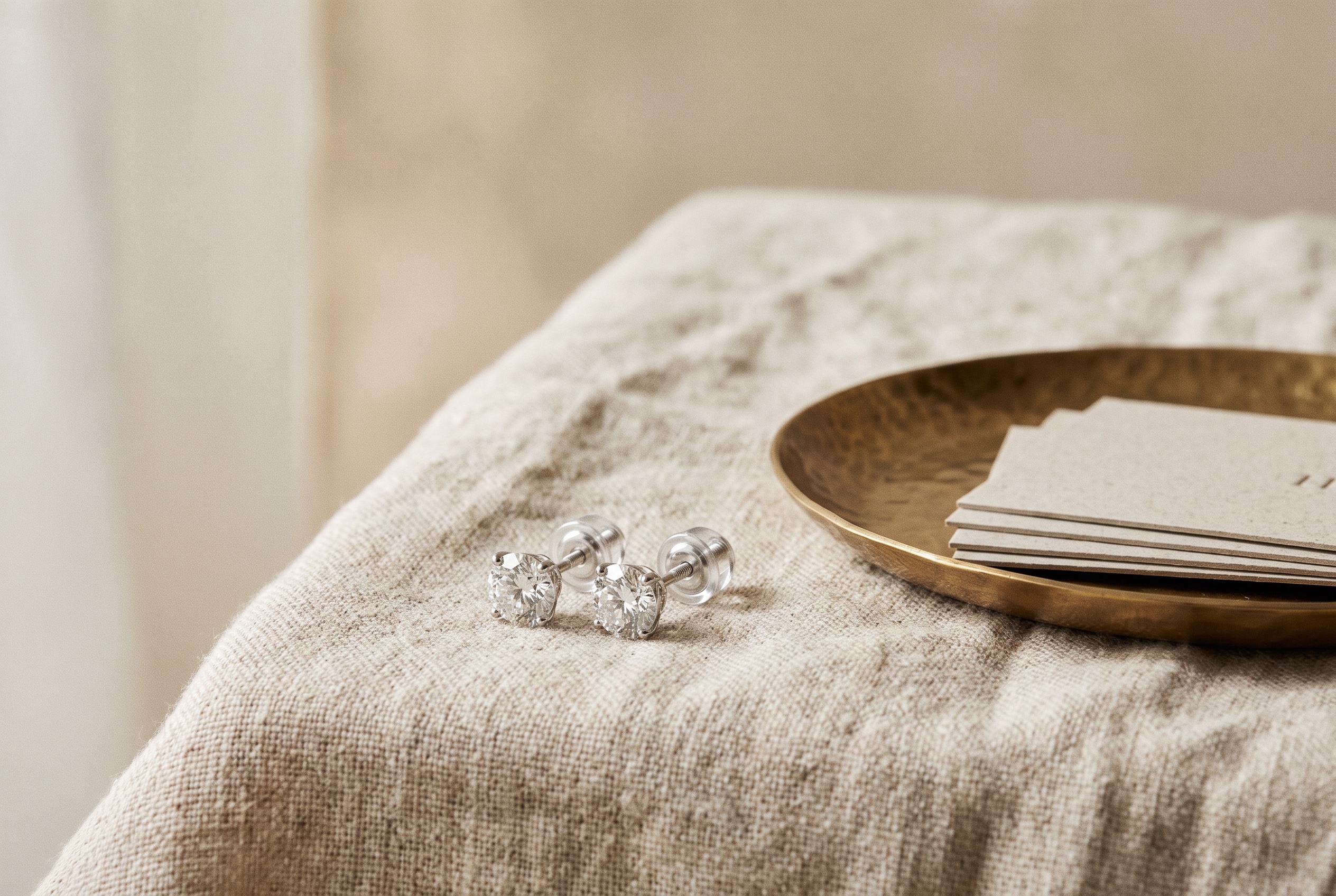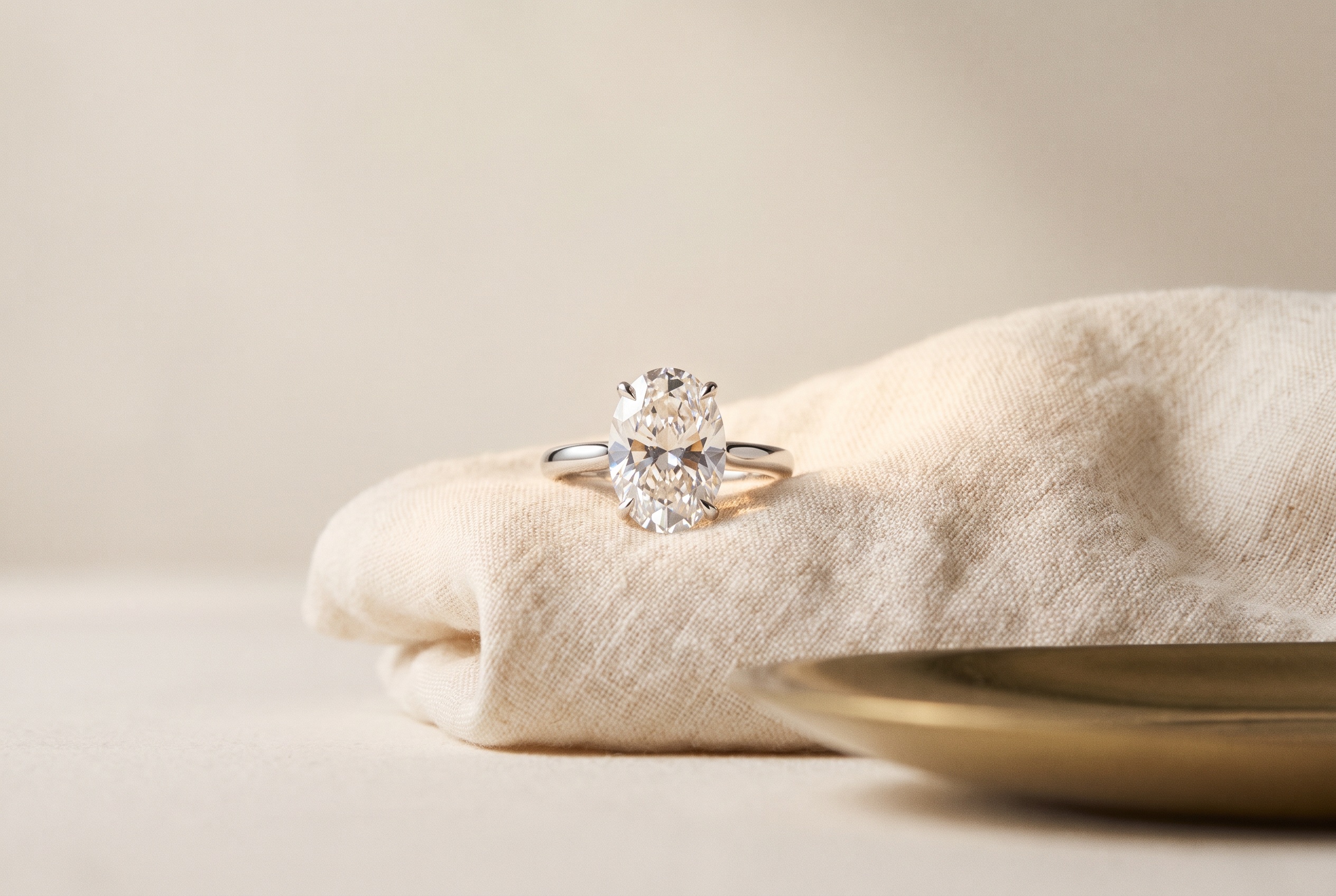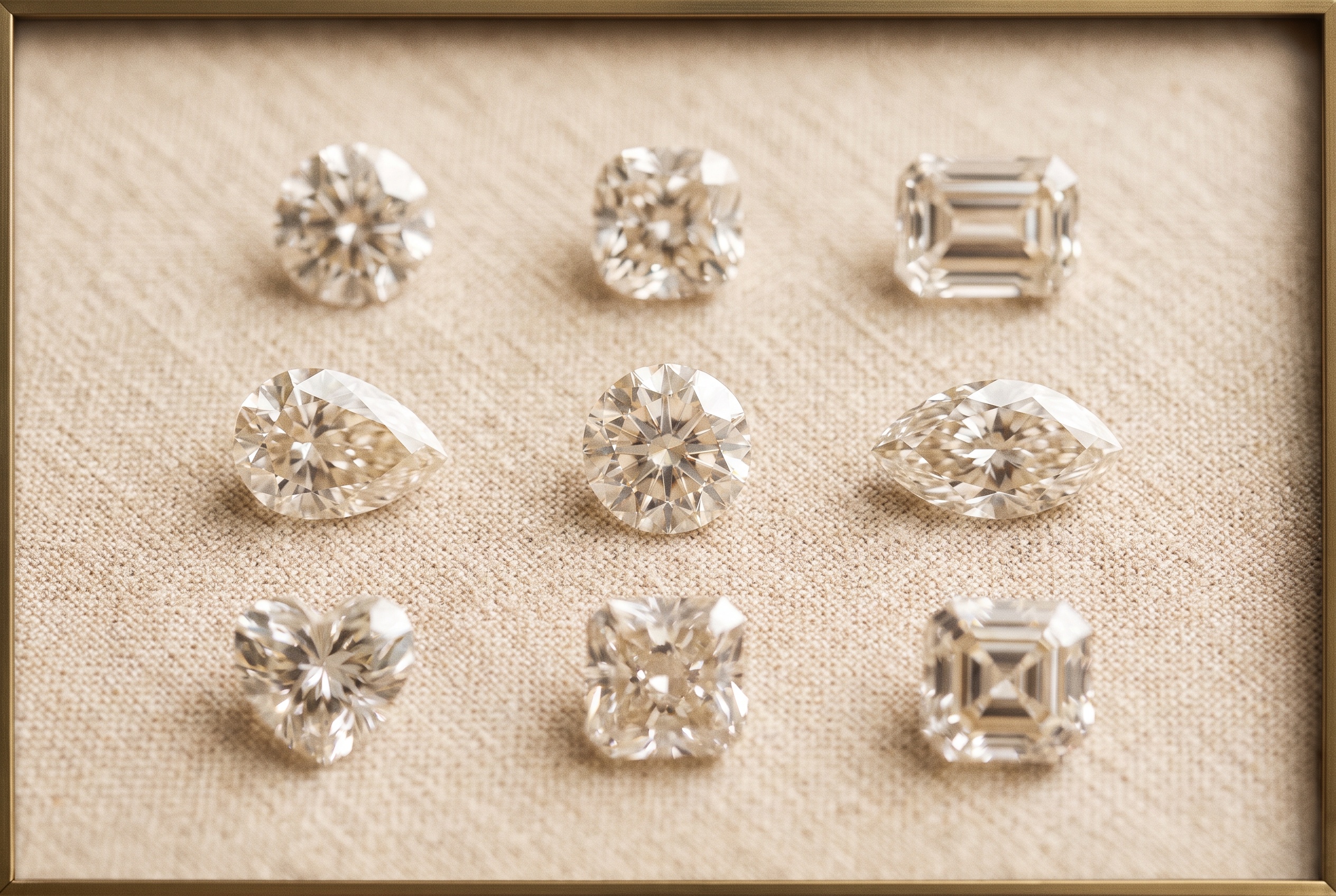

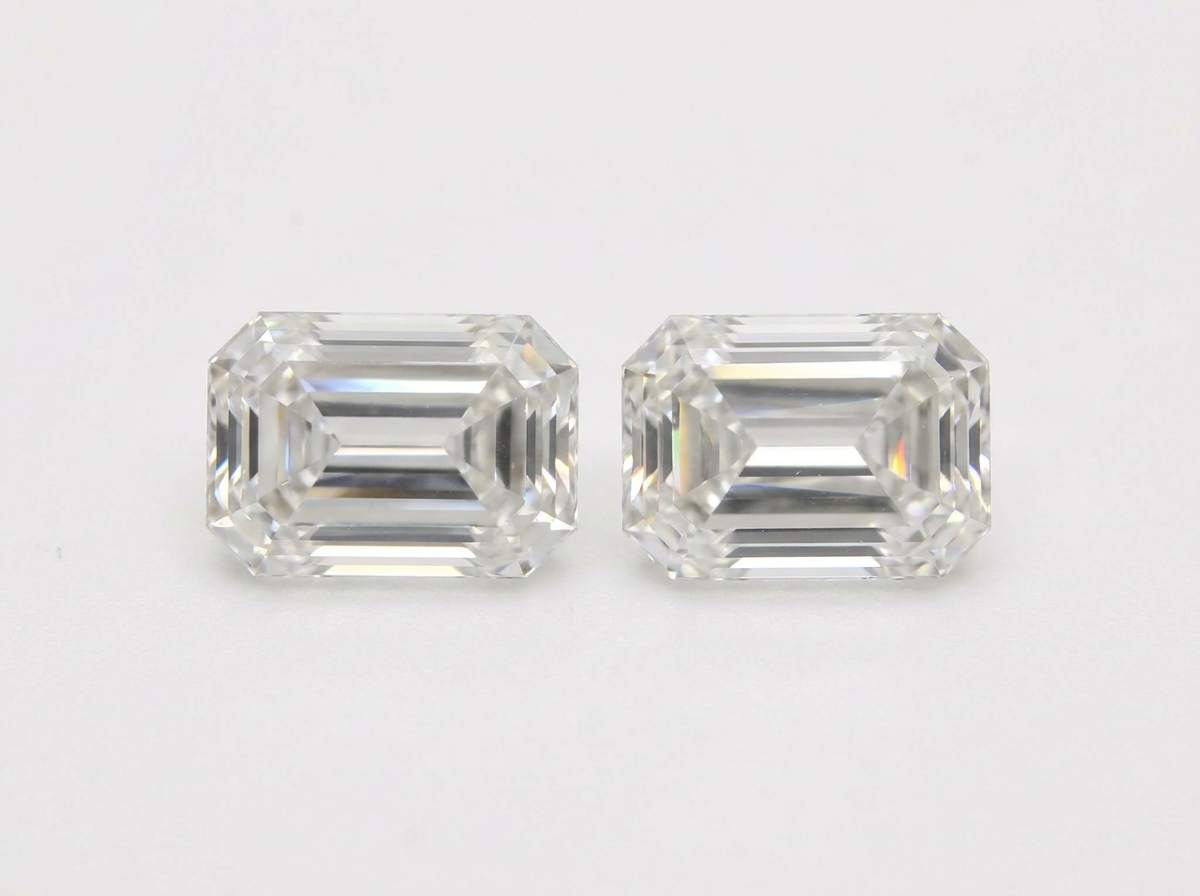
A matched pair or matched set is two or more calibrated diamonds cut to read as one stone repeated — consistent in size, angle, and color/tone — and every calibrated shape has its own version of what makes that hard. Guru Diam matches Trapezoid, Trap Brilliant, Tapered Baguette, Hexagon, Chevron, Cadillac, Shield, and Bullet in-house, calibrated and IGI-gradable on request, across thousands of on-hand pieces from our New York Diamond District desk.
Matching is its own discipline, not a smaller version of grading
Grading a single stone is a solo exercise: one color, one clarity, one cut grade, done. Matching is a comparison exercise, and it doesn't get easier as the shape gets simpler — it gets harder, because there's nothing to hide behind. Two round brilliants a shade apart in color can still both look "nice." Two trapezoids a shade apart, sitting on either side of the same center stone, read as visibly mismatched the moment the ring is on a finger. The eye doesn't grade each stone independently; it compares them directly, side by side, under the same light, and any gap in size, angle, or tone shows up as an obvious flaw rather than a minor variance.
That's why matched-pair sourcing depends on depth of inventory and in-house cutting, not just access to loose stock. Pulling "two similar stones" from a mixed lot is not the same as pulling a true pair cut to the same spec — our companion guide to how matched-pair sourcing works covers that mechanic in full: tolerances for shape, size, color, clarity, and cut, plus how studs and larger focal pairs get individually certified. This page is the shape-by-shape companion to that guide — it's specifically about the calibrated accent and side-stone shapes, where the matched set is typically sold as parcel/pair goods, IGI-gradable on request, rather than certified stone-by-stone the way a pair of stud-weight center diamonds would be.
The comparison problem also compounds with headcount. A two-stone pair has one relationship to get right — stone A against stone B. A five-stone graduated half-eternity run has ten. A full channel-set band can run past twenty stones, each judged not just against its neighbor but against the ends of the run under one sweep of light. That's why depth of on-hand calibrated stock matters more as a set gets bigger: an eternity band needs a batch pulled — or cut — together, not assembled piecemeal from whatever similar sizes happen to be on hand that week.
What "matched" actually means: size, angle, color, and clarity tolerance
"Matched" gets used loosely in the trade, so it's worth breaking into the four things a gemologist is actually comparing when a pair or set gets pulled and approved.
Size. Calibrated shapes are cut to standard millimeter dimensions specifically so a stone bought today sets flush against one bought last quarter. Size matching is measured on the physical spread — length and width, or diameter for symmetrical shapes — not carat weight. Carat weight is a weak proxy here: two stones can carry identical weight and still look mismatched face-up if one is cut a touch deeper and the other a touch shallower, because the extra weight is hiding in the pavilion where nobody sees it. A true match holds the visible spread dimensions tight to its partner, not just the number on the invoice.
Angle and proportion. Step-cut shapes especially — Tapered Baguette, Hexagon, Chevron, and the step-cut version of Trapezoid — have almost nothing but their crown angle, table percentage, and facet proportions to look at, since there's no scattered brilliant-cut sparkle to distract the eye. A taper angle that's a couple of degrees off between two stones in the same set reads immediately once mounted, because step-cut facets act like parallel mirrors: any asymmetry in that "hall of mirrors" effect shows up as an obvious visual seam.
Color and tone. Matching color is a face-up exercise, not a certificate-comparison exercise. Two stones a half grade apart on paper can read identical once mounted, depending on cut quality and the metal they're set against; two stones on the same paper grade can read differently if one runs a shade warmer. Guru Diam's gemologists compare candidate stones side by side under consistent lighting before a set ships, which is a different check than confirming both fall in the same nominal grade bucket.
Clarity. Stones in a matched set don't need an identical clarity grade — they need to avoid visible asymmetry. An eye-clean table next to a table with a feather near the girdle reads as mismatched even if both stones are nominally the same grade on a report, because one draws the eye and the other doesn't. The practical standard is whether the pair looks clean and consistent at typical viewing distance.
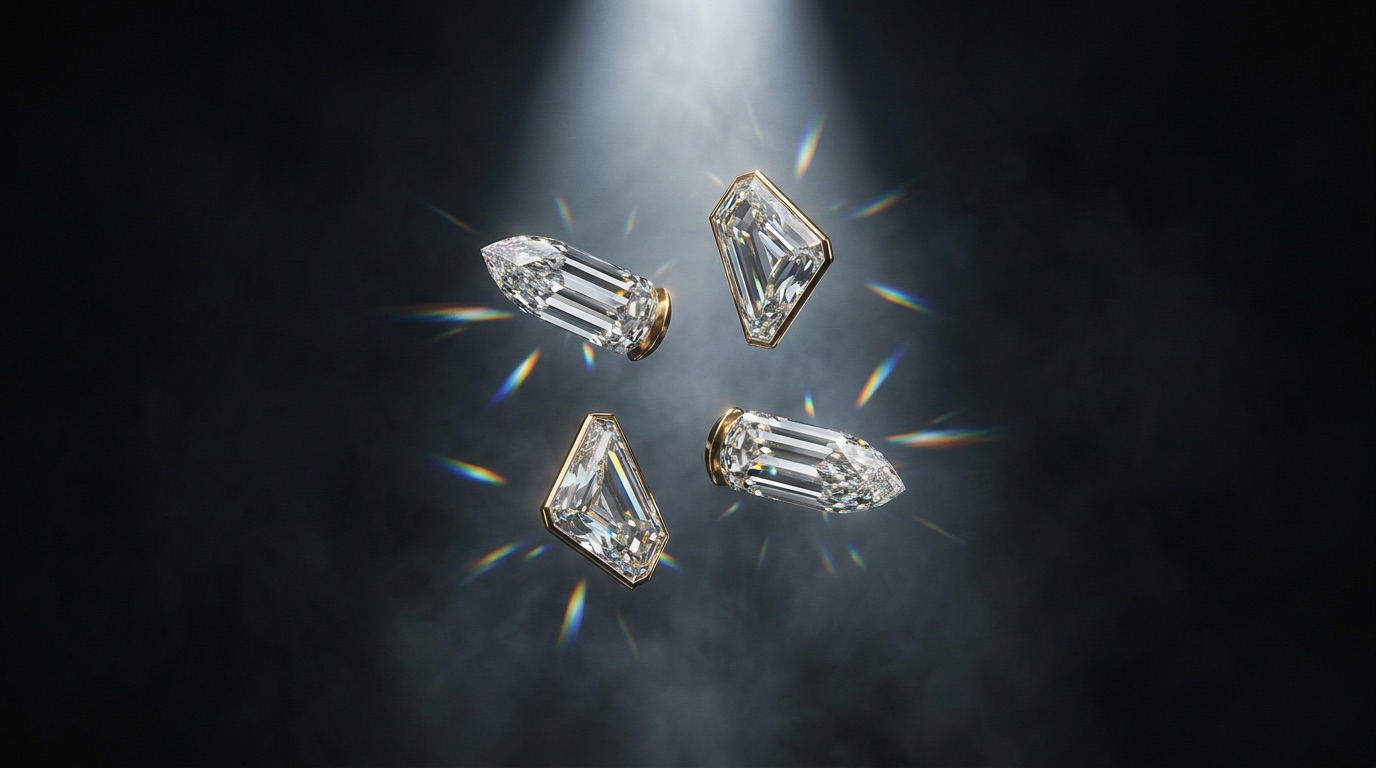
Orientation. Directional shapes — Cadillac, Bullet, Kite, Half-Moon — add a fifth dimension that round or square shapes don't have: mirroring. Two Cadillacs cut to identical spec but pointed the same direction are not a matched pair; they're two of the same stone. A true pair is a mirror image of itself, broad end in on one side and broad end out on the other (or however the specific setting calls for it), so the finished piece reads symmetrical rather than lopsided.
Matched pairs by shape: what makes each one hard to match
Every calibrated shape below is a side stone or accent first, a standalone stone second — its whole job is to sit next to something else and read as consistent. What "consistent" means, and what breaks it, changes shape to shape.
Trapezoid — step-cut and brilliant
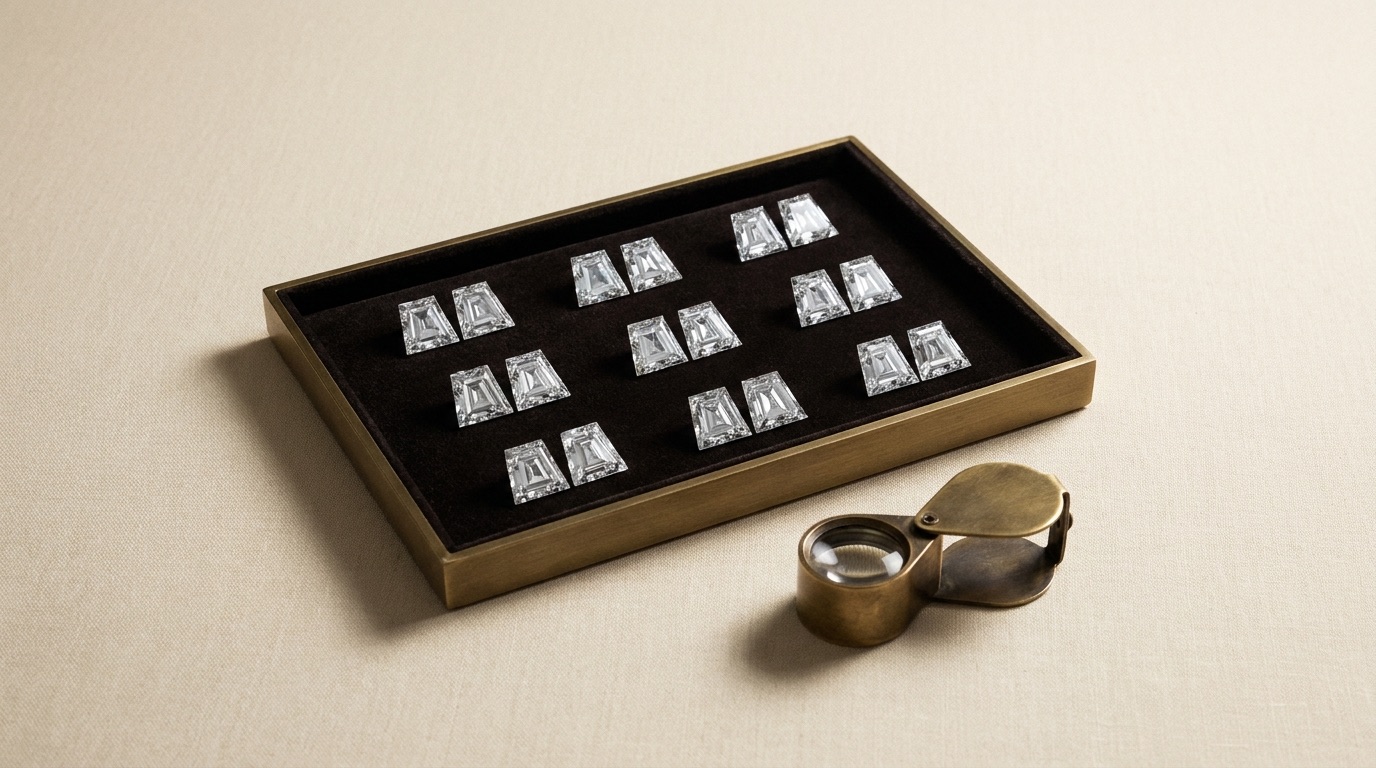
Trapezoid is the default all-purpose side stone, and it comes in two faceting styles that need to be matched separately: Trap Step Cut, with broad, flat facets for a quiet, geometric accent, and Trap Brilliant, multi-faceted for more fire. The matching challenge is size and angle consistency across every stone in a set — a three-stone ring needs two that mirror each other exactly, a channel or eternity band needs a graduated run that reads seamless end to end. Mixing faceting styles within one set is the most common sourcing mistake; a step-cut and a brilliant trapezoid of the same millimeter size do not read as a match once mounted. Guru Diam holds 1,267+ Trap Step Cut and 886+ Trap Brilliant stones on hand specifically so a true same-faceting set can be pulled rather than approximated. Trapezoid pairs are the most common request for three-stone shoulders and for the tapered ends of Art Deco-style line bracelets, where a graduated run has to shrink evenly from center to clasp.
Step cuts as a category — Tapered Baguette, Hexagon, Chevron
Step-cut shapes share a specific matching problem: flat, broad facets have nowhere to hide a tone or proportion mismatch the way a brilliant cut's scattered sparkle can. A Tapered Baguette has to match its partner's taper angle exactly to follow a shank's curve — an angle mismatch is visible immediately once set, and a channel of them needs every stone in the run cut to the same progression rather than assembled from whatever similar tapers happen to be in stock. A Hexagon used as an accent has to match its neighbors' side lengths and table proportions, since a step-cut's "hall of mirrors" flash makes any uneven facet obvious — this matters most in halo work, where several hexagons ring a center stone and any one of them running slightly larger throws off the whole perimeter. A Chevron is the strictest case of all — chevrons are set point-to-point or side-by-side to form a continuous V pattern, so every stone in a row has to match in size, angle, and tone, and mirrored orientation has to be specified up front for designs that point stones in both directions. Across all three, the fix is the same: calibrated stock deep enough to pull a genuinely matched run, not one stone at a time from scattered lots.
Cadillac — directional pairs for Art Deco settings
A Cadillac is directional — broader at one end, tapering to a narrower end — which means a matched pair isn't just two same-size Cadillacs, it's two mirror images: one oriented broad-end-in and one broad-end-out, or however the setting calls for it. Get the orientation wrong on one stone in the pair and it reads as backward next to its partner, even if the size and color match perfectly. Cadillac pairs show up most often flanking an Old Mine or Emerald-cut center stone, where the antique-adjacent taper echoes the center's own geometry — which is also why orientation matters so much: a Cadillac pointed the wrong way undercuts the exact visual rhythm the setting is going for. Guru Diam calibrates and mirrors Cadillac pairs in-house from 468 pieces on hand, cut to the taper a specific setting needs.
Shield — five-sided pairs for emerald and radiant centers
A Shield pair has two things that both need to match: the flat top edge, which has to sit flush against the center stone's girdle at the same height on both sides, and the base, which comes in a pointed or a rounded variant — mixing the two within one pair is an easy mistake if a set is pulled from mixed stock rather than matched to spec. Halo builds raise the stakes further, since several Shields graduated around a perimeter all need to agree in angle and tone, not just the two flanking a three-stone center. Buyers ordering Shield pairs should specify the base style along with size and color range up front — it's a detail that's easy to leave off a request and expensive to catch after a set has already shipped. 206+ Shield stones are on hand, calibrated and mirrored in-house.
Bullet — mirror-image pairs for three-stone and channel work
A Bullet has one flat end and one tapered tip, and the entire shape only works as a true mirror pair — the flat end has to butt cleanly against the center stone's corner on both sides, and the taper has to run identically in length and angle so the ring reads symmetrical from either shoulder. Even a small mismatch in taper angle is obvious once both stones sit on either side of a baguette or emerald-cut center. For graduated channel-set runs, the full sequence needs to come from one matched batch rather than a handful of close-enough pieces. 576+ Bullet stones are on hand for pulling true mirrored sets.
Matched pairs beyond calibrated shapes: round, oval, pear, marquise, and cushion
Everything above covers the calibrated accent tier — Trapezoid, the step-cut family, Cadillac, Shield, and Bullet — sold as parcel/pair goods, IGI-gradable on request, and typically under a carat. Round, oval, pear, marquise, and cushion diamonds get matched too, but usually at a different weight and for a different job: stud earrings, three-stone centers, and halo focal pairs, where each stone is often 0.30ct or larger and gets individually certified — IGI, GIA, or GCAL, per the buyer's preference — rather than graded to spec as a set.
The matching logic shifts by shape at that tier too. Round brilliants demand the tightest diameter and crown-height alignment of any shape, since a round stone has nowhere to hide unevenness. Ovals, pears, and marquise shapes prioritize length-to-width ratio over strict weight matching, because two stones of identical carat weight can look dissimilar if one runs narrow and the other runs wide. Cushions split the difference, needing outline consistency and face-up brightness to track together.
Guru Diam covers this tier across a cluster of dedicated guides rather than folding it into this shape-by-shape page: our matched pairs for stud earrings guide walks through round-brilliant stud sourcing specifically, our full matched-pairs guide covers round, oval, cushion, pear, marquise, emerald, asscher, and the antique cuts side by side, our fancy color matched pairs guide covers colored stone pairs, and our Old Mine Cut matched pair guide covers antique-cut pairs, where hand-faceted irregularity makes matching its own separate challenge again. If you're sourcing a round, oval, pear, marquise, or cushion pair specifically, those pages go deeper on that tier than this one does — this page stays focused on the calibrated accent shapes.
How Guru Diam matches a set in-house
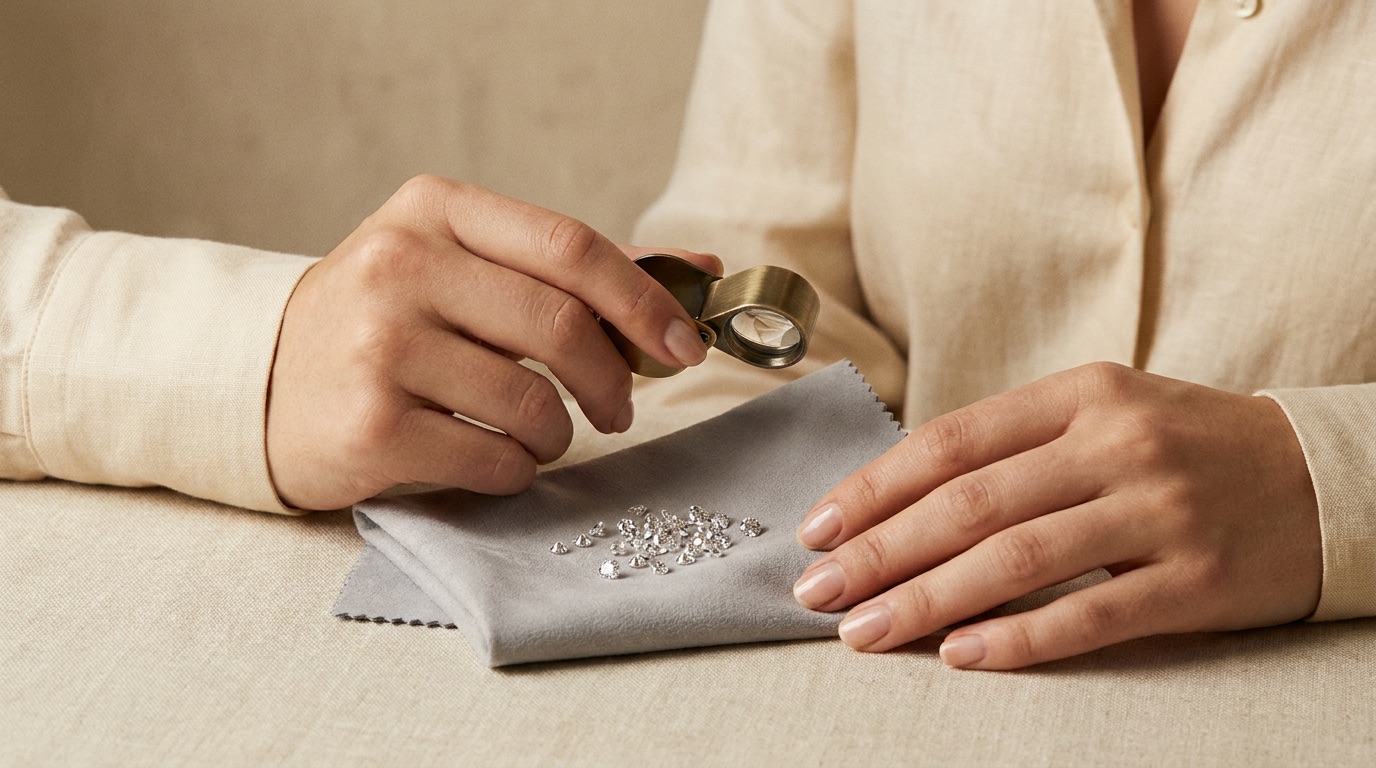
A request for a matched set starts the same way regardless of shape: a gemologist pulls candidate stones from on-hand calibrated inventory in the target size and color range, then checks them against each other rather than against a spec sheet in isolation. That means measuring diameter, taper angle, and table proportions with a loupe and gauge, then doing a face-up color and tone comparison under consistent light — the same check described above, applied stone by stone until a set reads as one shape repeated rather than several similar shapes assembled together. For directional shapes, orientation gets confirmed and mirrored before the set is packed, not left for the setter to sort out.
If the exact spec isn't already sitting in stock — an unusual size, a tighter color range, a longer graduated run than current inventory supports — the same process runs against fresh material, and the set gets cut and calibrated in-house to close the gap rather than approximated from whatever is closest on the shelf. That in-house control is what turns a matched set from a special request into a standard one: Guru Diam isn't brokering finished parcels from third-party cutters and hoping two happen to match, it's cutting and calibrating to the pair or run as a single job. Every calibrated set is IGI-gradable on request once approved.
Where matched sets go: three-stone rings, halos, and channel or eternity bands
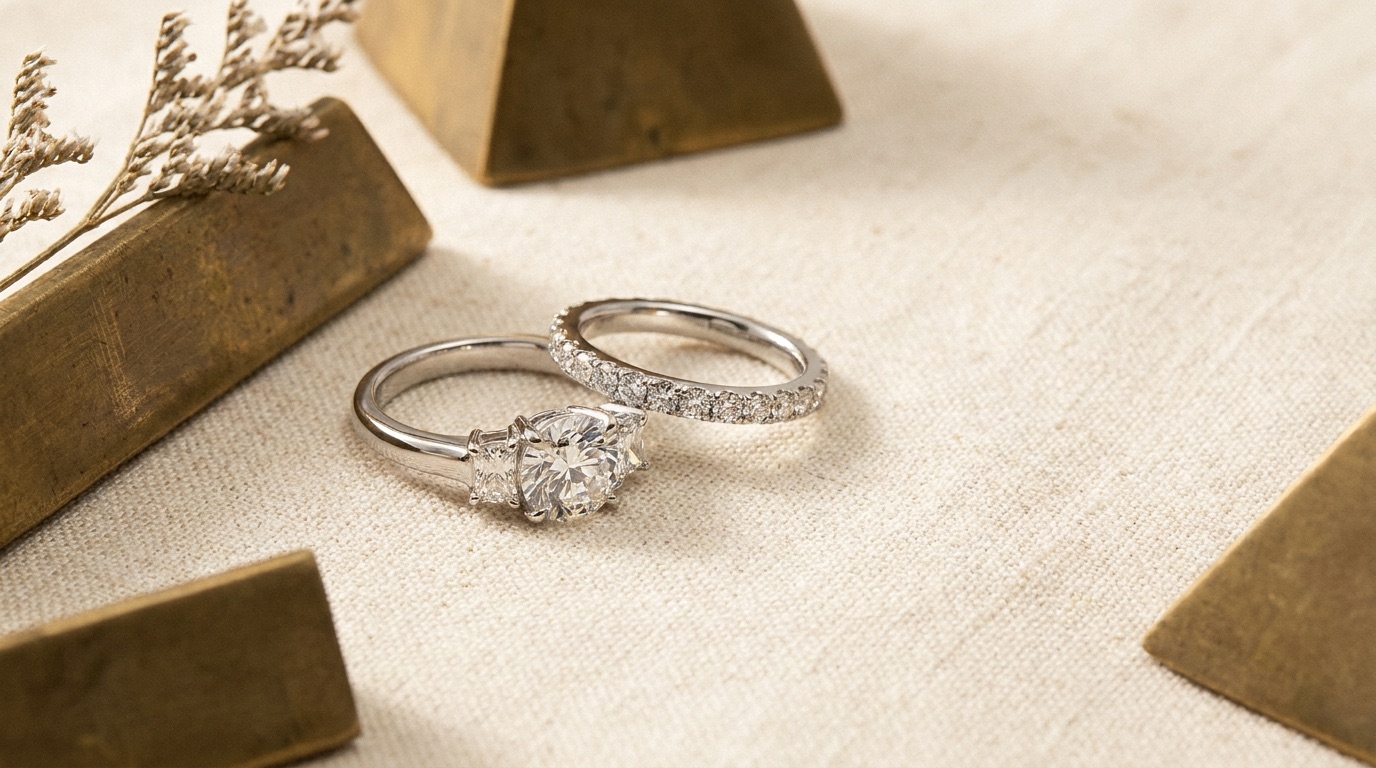
Calibrated accent shapes are side-stone shapes first, which means their end use is almost always a setting that puts two or more of them next to a center stone or next to each other. A three-stone ring is the simplest case — two matched Trapezoids, Cadillacs, Shields, or Bullets flanking a center diamond, where the pair's job is to read as a symmetrical frame rather than draw attention to itself. Halo settings raise the stone count: a ring of Hexagons, Shields, or small Trapezoids around a center stone needs every piece in that perimeter to agree in size and tone, since the eye reads a halo as one continuous ring of light, and a single stone running a shade off breaks that continuity.
Channel and eternity settings are the deep end of matching. A channel-set band running Tapered Baguettes or Bullets down the shank, or a full eternity band in Trapezoid or Chevron, needs a long, continuous run cut and matched together — not a pair, but a batch, where the first stone and the last have to look like they came from the same hand. Art Deco-style line bracelets and cuffs push the logic further, often calling for a graduated run that tapers smoothly from a larger center stone down to smaller stones at each end. Stud earrings and other focal-weight pairs follow a different track — individually certified round, oval, pear, or cushion stones, covered in the guides linked above — rather than the calibrated parcel/pair approach this page focuses on.
What drives matched-pair pricing
Matched-set pricing runs on a different logic than pricing a single loose stone, because the cost isn't just the sum of the stones — it's the sourcing work of finding or cutting stones that agree with each other. A few factors move the number most:
- Faceting complexity. A step-cut shape (Trap Step Cut, Tapered Baguette, Hexagon, Chevron) generally carries a tighter matching tolerance than a brilliant-cut shape of the same outline, since flat facets show proportion gaps scattered sparkle would mask.
- Size. Larger calibrated stones are rarer at any given tolerance, so both the per-stone price and the difficulty of finding a matching partner go up together.
- Set size. A two-stone pair is the simplest case; a graduated run or a full channel-set sequence multiplies the stone-to-stone comparisons that have to hold, which adds sourcing time before the diamonds are even priced.
- Color and tone precision. A wider acceptable color range is easier to fill from stock; a narrow, specific tone match — common when a jeweler is matching against an existing piece — takes longer to source.
- In-stock versus cut-to-spec. Sets pulled from current inventory ship fastest and price against standard stock rates. Sets cut fresh to close a gap carry the added cost of a dedicated cutting run.
- Orientation and mirroring. Directional shapes — Cadillac, Bullet, Kite — require selecting or cutting true mirror images rather than two identical stones, which narrows the pool of qualifying candidates.
Because these factors compound differently for every request, Guru Diam doesn't publish a flat per-shape matched-set price list — quotes are run against the actual shape, size, color range, and set size a buyer needs.
Ordering a matched set wholesale
Across every shape above, the sourcing question is the same: does the supplier have enough depth in that specific shape to pull a true match, or cut one to spec if the exact set isn't already on hand? Guru Diam runs calibrated cutting in-house rather than brokering from third-party lots, which is what makes matched sets — mirrored pairs, graduated runs, mixed-faceting corrections — a standard request instead of a special one. In-stock sets ship same-day from New York; anything outside current stock moves through CAD to a finished piece in 4–6 days from our New York and Los Angeles desks.
To request a matched set, send the shape (and faceting style, for Trapezoid), target size, color/tone range, and the piece it's going into — three-stone ring, eternity band, halo, or channel setting. That context is what lets us pull the tightest match from stock or cut a new set to close the gap. Open a wholesale account at /signup, or book time with a gemologist at /book-appointment to review a specific project. See our full pillar guide to wholesale lab-grown diamonds for the rest of our calibrated and center-stone inventory.
Common mistakes buyers make sourcing matched sets
A handful of ordering mistakes show up repeatedly, and all of them cost time to fix after the fact. Ordering by carat weight alone instead of millimeter size and faceting style is the most common — two stones of equal weight can be cut to different proportions and simply not look matched once set. Leaving orientation unspecified for a directional shape is the second most common — Cadillac, Bullet, and Kite all need mirroring called out explicitly, since "two matching stones" and "a true mirror pair" aren't the same request. A third is requesting a graduated run without specifying end sizes — a channel or eternity band needs a defined start and finish to progress evenly, not just an instruction to "taper down." And a fourth is sourcing a set across multiple separate orders spread over time: stones pulled from different cutting batches months apart can drift slightly in tone or proportion, so a full set should be ordered and cut together in one request whenever possible.
Frequently Asked Questions
What makes matching a calibrated side stone harder than grading a single diamond?
Grading a single stone stands alone; matching compares two or more stones directly, side by side, under the same light. Gaps in size, angle, or tone that would be a minor variance on a single stone read as an obvious flaw once two or more stones sit next to each other in a setting.
Can I get a matched Trapezoid set in either step-cut or brilliant faceting?
Yes, but the two shouldn't be mixed within one set — a step-cut and a brilliant trapezoid of the same millimeter size don't read as a match once mounted. Specify the faceting style along with size and color when requesting a matched Trapezoid set.
Are matched side-stone sets individually certified like a pair of stud diamonds?
No. Calibrated side-stone shapes — Trapezoid, Cadillac, Shield, Bullet, and the step-cut family — are sold as parcel/pair goods, IGI-gradable on request, graded to spec for the match rather than certified stone by stone. Larger focal pairs, like stud-weight diamonds, are certified individually — see our matched-pairs guide for that distinction.
Do round, oval, pear, marquise, and cushion diamonds get matched the same way as calibrated side stones?
No — they're a different tier. Round, oval, pear, marquise, and cushion pairs are typically stud-earring or focal-weight stones, 0.30ct and up, individually certified (IGI, GIA, or GCAL) rather than graded to spec as parcel goods. See our stud earrings guide and full matched-pairs guide for that tier.
How do I order a matched set for a specific ring design?
Send the shape, target size, color/tone range, and the setting it's for — three-stone ring, eternity band, halo, or channel setting. Guru Diam works from on-hand calibrated stock first and cuts to spec in-house when the exact set isn't already available.
How fast can I get a matched set that isn't currently in stock?
In-stock sets ship same-day from New York. A custom-cut set outside current inventory moves through CAD to a finished piece in 4–6 days from our New York and Los Angeles desks.