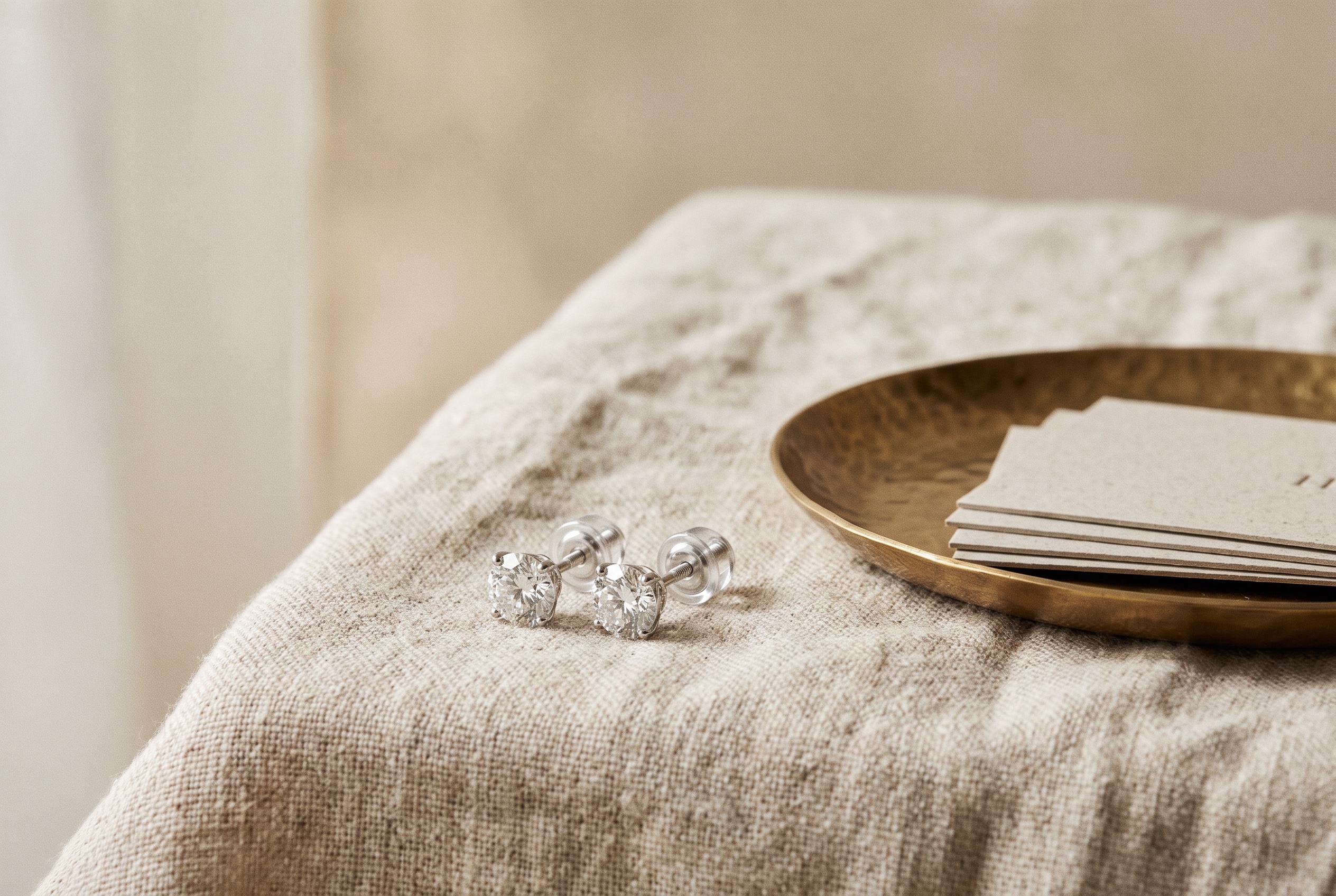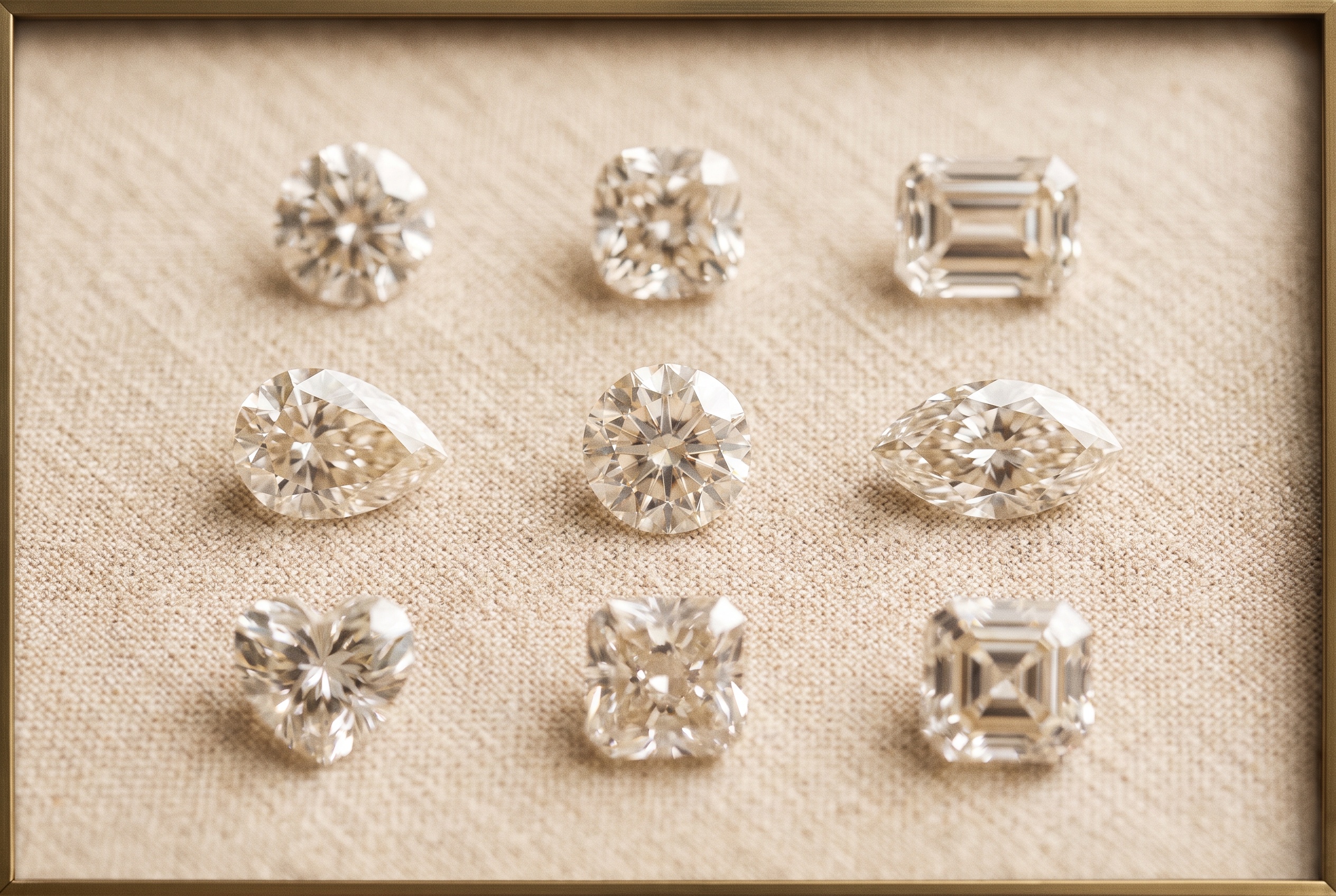

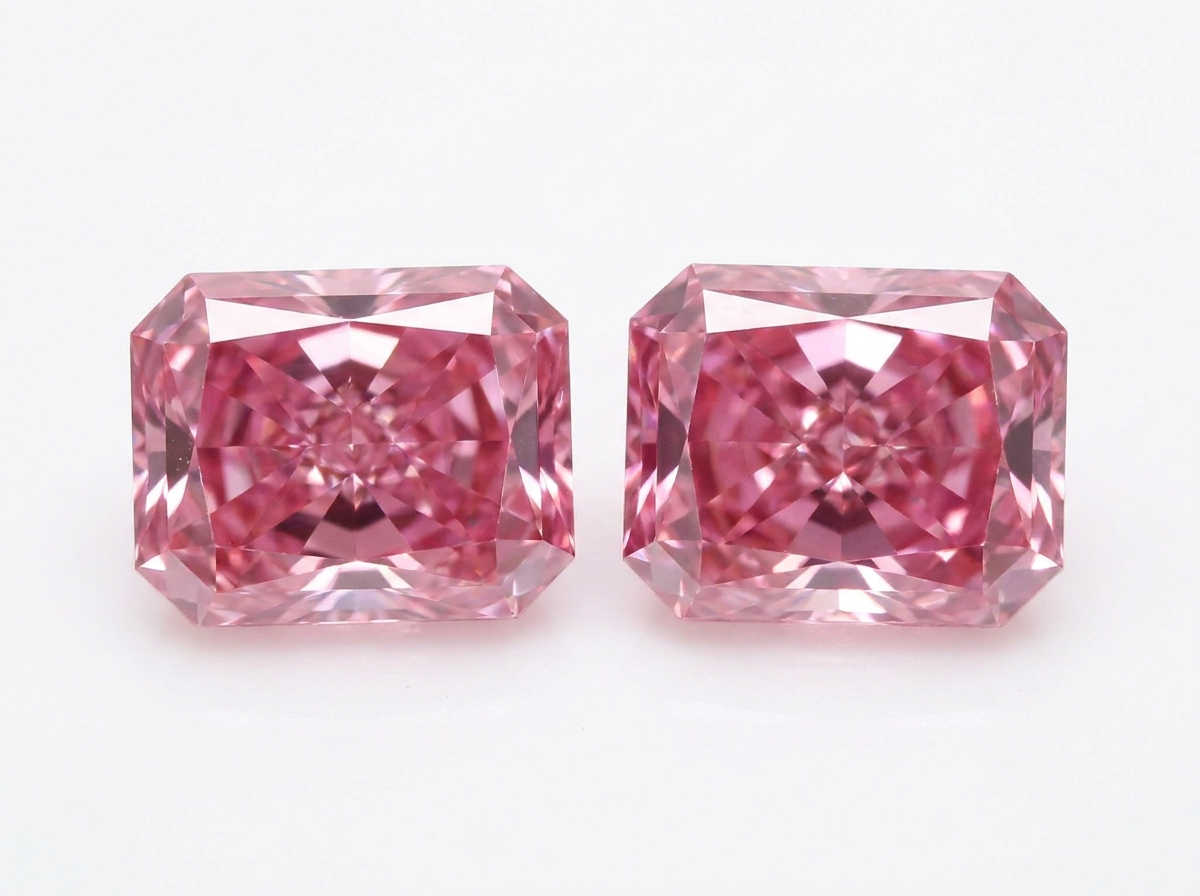
A fancy color matched pair is two fancy color diamonds — Yellow, Pink, Blue, or Green — selected or cut to align in both hue and outline, sold together for use as stud earrings or side stones. Guru Diam holds roughly 85 fancy color matched pairs on hand across ten-plus shapes, CVD-grown and matched in-house from New York and Los Angeles. Pairs are sold as quality-matched parcel goods by default; individual IGI, GIA, or GCAL certification is available per stone on request.
Most matched-pair sourcing guides only talk about colorless diamonds, because matching two clear round brilliants is a solved problem — the shape is standardized and the only variable is size. Fancy color pairs are a different job entirely, and almost nobody writes about it because almost nobody carries the depth of stock to do it well. This page covers what's actually on hand right now, how the matching and grading work, what drives price, how a matched pair compares to buying a single certified stone, and how a wholesale buyer with a fancy color pair request should actually order.
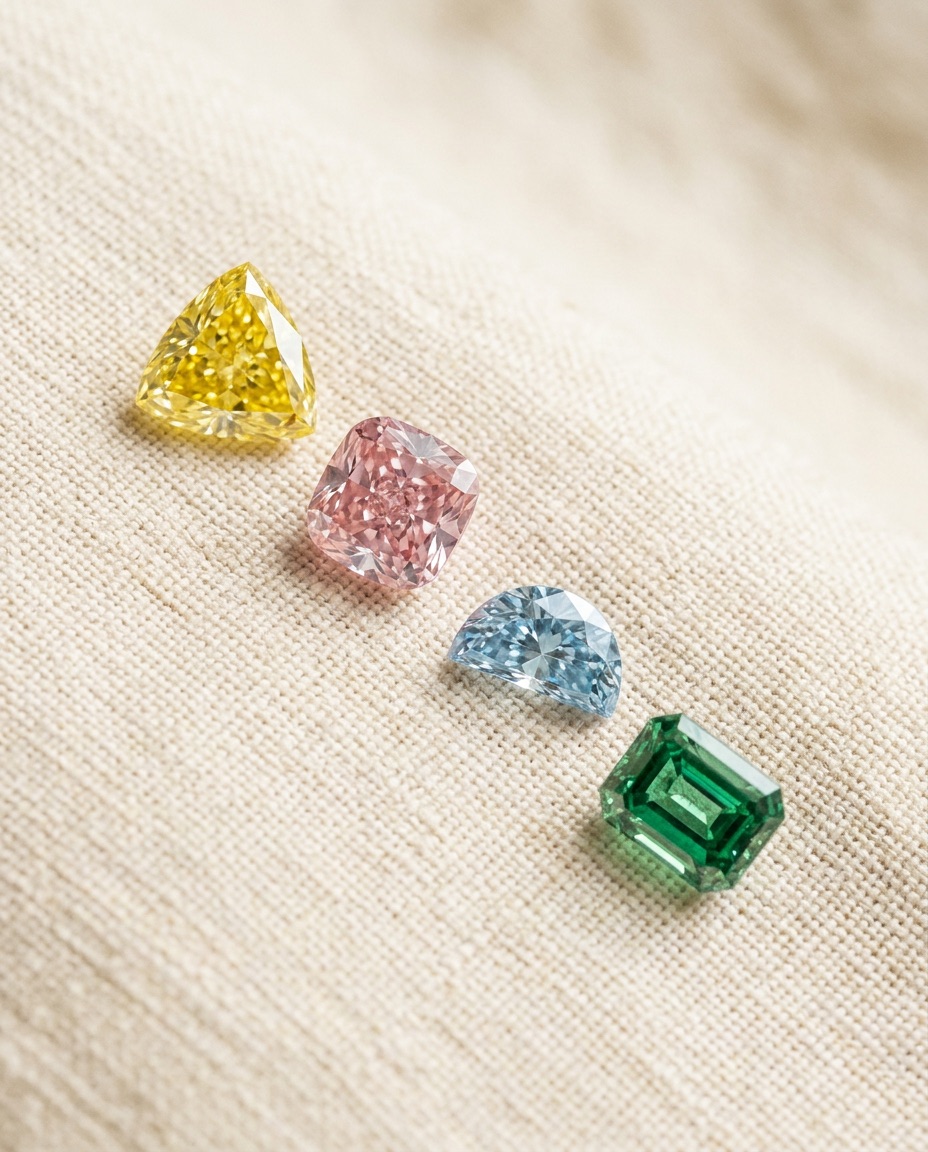
What a Fancy Color Matched Pair Actually Is
A fancy color matched pair is exactly two stones, not a parcel of loose fancy color melee sold by weight. Both stones are selected — or cut, when the order is made-to-spec — so that they read as a single visual unit once mounted: same hue family, same depth of color, same outline, and close enough in size that neither stone reads as the "smaller one" once set. That's the entire point of a pair. A jeweler buying two similar fancy yellow stones separately, on two different invoices, from two different lots, is not buying a matched pair — they're buying two stones that happen to both be yellow, and the risk of a visible mismatch once they're set side by side is real.
Matched pairs exist because certain settings put two stones in direct comparison: stud earrings, three-stone rings, and any design using flanking side stones next to a center stone. In every one of those settings, the eye compares the two stones automatically — there's no way to disguise a hue or tone gap once they're both in the same field of view. That's different from calibrated fancy color melee used across a pavé or halo, where dozens of small stones blend together and no single stone is scrutinized on its own. A matched pair is a two-stone problem with zero room to average out an off stone.
It's also worth separating "matched pair" from "similar pair." A jeweler can find two roughly similar fancy color stones in almost any decent-sized lab-grown inventory — same shape, same color name, close enough in size. What that search doesn't produce is a pair that's been checked against each other and finalized specifically because they agree. The difference only shows up once both stones are set, which is exactly the point at which it's too late to fix cheaply, so the matching has to happen before the sale, not after.
Why Fancy Color Pairs Are Harder to Match Than Colorless Pairs
A colorless matched pair only has to agree on one thing: outline and size. A fancy color pair has to agree on two things at once — outline and color — and color is the harder of the two to control. Hue, saturation, and tone all have to read as visually identical under the same light, not just fall into the same grading bucket. Two "Fancy Yellow" stones can carry noticeably different warmth; two "Fancy Pink" stones can lean noticeably more purple or more orange, even when both would grade out under the same color-grade term on paper.
Set them side by side in stud earrings and any mismatch is immediately visible, because studs and side stones put both stones in direct, constant comparison — there's no setting or angle that hides a hue gap between two earrings a client wears every day. That's before shape enters the picture. A buyer asking for a fancy color pair in Radiant, Half Moon, or Trillion needs both stones cut to the same outline and proportions on top of matching color, which is exactly why most wholesalers who carry fancy color stock at all carry it as loose singles, not as pre-matched pairs. Matching requires pulling from real depth across a shape and color range, not approximating from whatever two stones happen to be left in a parcel.
Color Grading Basics: Hue, Tone, and Saturation in a Matched Set
Fancy color diamonds are graded on three variables, and a matched pair has to control all three at once. Hue is the color family itself — yellow, pink, blue, or green, plus any secondary or modifying hue (a pink stone can carry a purplish or orangy modifier, for example). Tone is how light or dark the color reads. Saturation is how strong or intense the color is — the difference between a pale wash of pink and a deep, saturated pink. The standard trade grading scale runs from Faint and Very Light up through Fancy Light, Fancy, Fancy Intense, and Fancy Vivid, with Fancy Dark and Fancy Deep covering the deeper end of the scale.
Two stones can land in the same named grade — both "Fancy Intense Yellow," say — and still not match, because that single grade term covers a range of hue and tone, not one exact color. Matching a pair means narrowing inside that range until both stones sit close enough that a side-by-side comparison under consistent light shows no visible gap. That's a physical comparison, done stone against stone, not a paperwork exercise — which is part of why fancy color pairs take real depth of stock to assemble well. A supplier holding one or two stones per shape and color can't make that comparison; a supplier holding a real range can.
Secondary hues add another layer. A pink stone with a purplish modifier and a pink stone with an orangy modifier can both be called "Fancy Pink" on a grading report, yet look distinctly different once they're side by side — one will read cooler, the other warmer, under the same light source. The same applies to blue (some lean greenish, some lean steel-grey before warming) and to green (some lean yellowish, some lean bluish). Matching for a pair means controlling for the secondary hue as well as the primary one, which is a finer cut than most single-stone grading conversations ever get into.
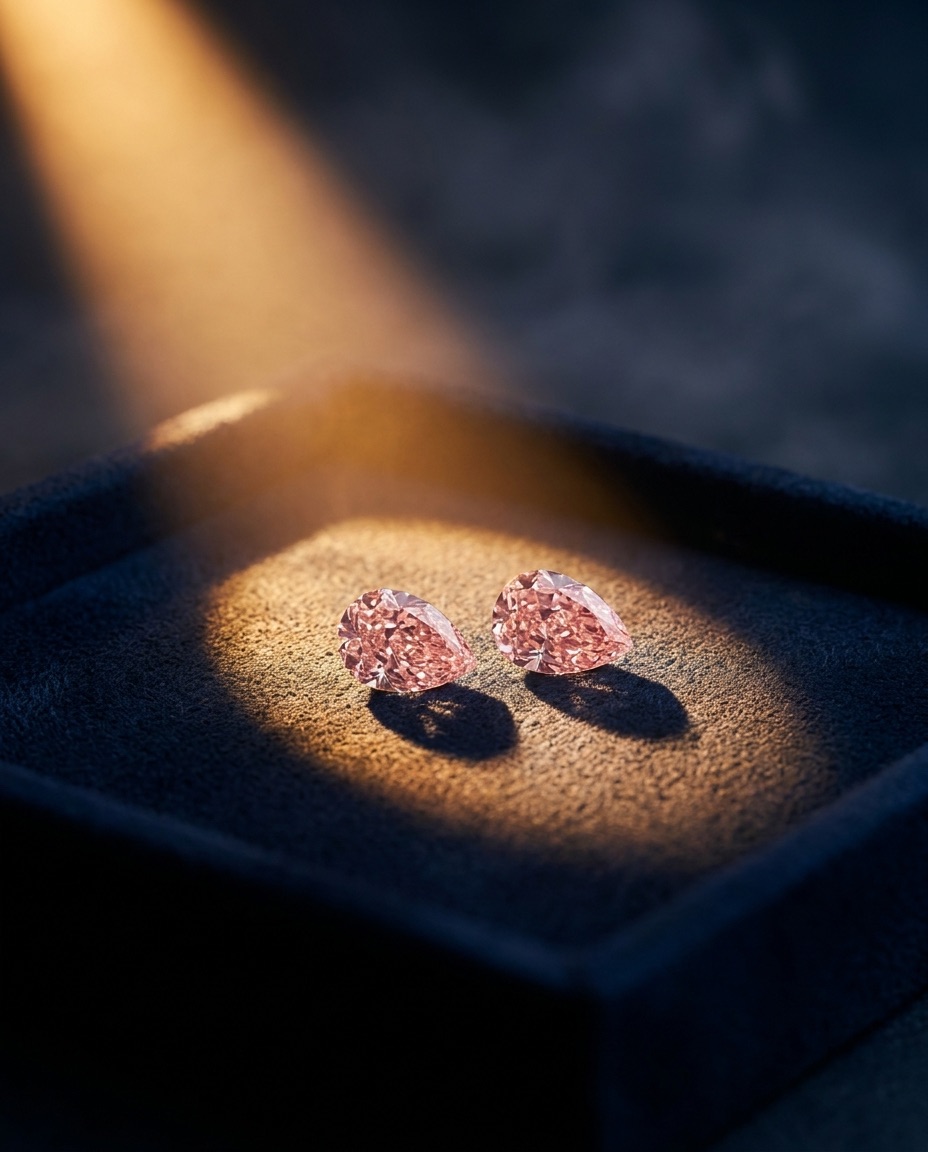
Shape and Size: Matching the Outline, Not Just the Color
Color is only half the match. The second half is the outline — length-to-width ratio, corner treatment, facet symmetry — and a shape like Trillion, Half Moon, or Cadillac has more ways to drift out of alignment than a round brilliant does. Two Trillion stones cut to slightly different proportions will look mismatched in a mounting even if the color is dead-on, because the eye picks up outline differences faster than color differences at normal viewing distance. The same goes for size: a matched pair doesn't need to be identical to the hundredth of a carat, but the visual footprint — the face-up spread — has to read as even once both stones are set.
This is why cutting and color-matching happening under the same roof matters more for fancy color pairs than it does almost anywhere else in the catalog. When both stones in a pair can be cut to spec rather than pulled from whatever's already faceted, outline matching stops being a limitation and becomes a design input — a buyer can request a specific length-to-width ratio for a Radiant or Emerald pair and get both stones cut to hit it, rather than hunting through existing stock for a close-enough match.
Fancy Color Matched Pairs On Hand, By Shape
Guru Diam produces and matches fancy color stones in-house, which is what makes holding real pair stock across this many shapes possible. Current on-hand fancy color matched pairs, by shape:
| Shape | Matched pairs on hand |
|---|---|
| Radiant | 15 |
| Trillion | 13 |
| Half Moon | 10 |
| Trap Brilliant | 8 |
| Round | 7 |
| Triangle | 7 |
| Cadillac | 6 |
| Chevron | 6 |
| Trap Step Cut | 6 |
| Emerald | 4 |
| Assorted additional shapes | 3+ |
| Total | ~85 |
Color availability spans the standard Guru Diam fancy palette — Yellow, Pink, Blue, and Green — though the color mix within each shape shifts as stock turns over. Radiant and Trillion carry the deepest bench, reflecting where side-stone and stud demand runs heaviest; Round and Emerald sit further down the list, which tracks lighter overall demand for fancy color in those two shapes rather than any difficulty matching them. If a specific shape/color combination isn't showing in current inventory, that's a cutting request, not a dead end — see the ordering section below.
How Guru Diam Sources and Matches Fancy Color Pairs In-House
Because cutting and color-matching both happen on the same floor, a pair doesn't get assembled by shopping two separate purchases into a rough approximation of each other — stones are selected against each other directly, checked side by side under consistent light for hue and tone before a pair is finalized. That in-house control is also what makes shape flexibility realistic: a Trillion pair, a Half Moon pair, and a Cadillac pair all go through the same matching discipline, so a buyer isn't limited to whichever single shape happens to have the deepest stock that week.
This is also why fancy color pairs are worth asking about even outside the shapes listed above. The ~85 pairs on hand reflect current inventory, not the limit of what can be matched — for a project that needs a specific shape, size, or color combination not currently in stock, that's a direct conversation with the cutting floor rather than a wait-and-hope order against someone else's parcel.
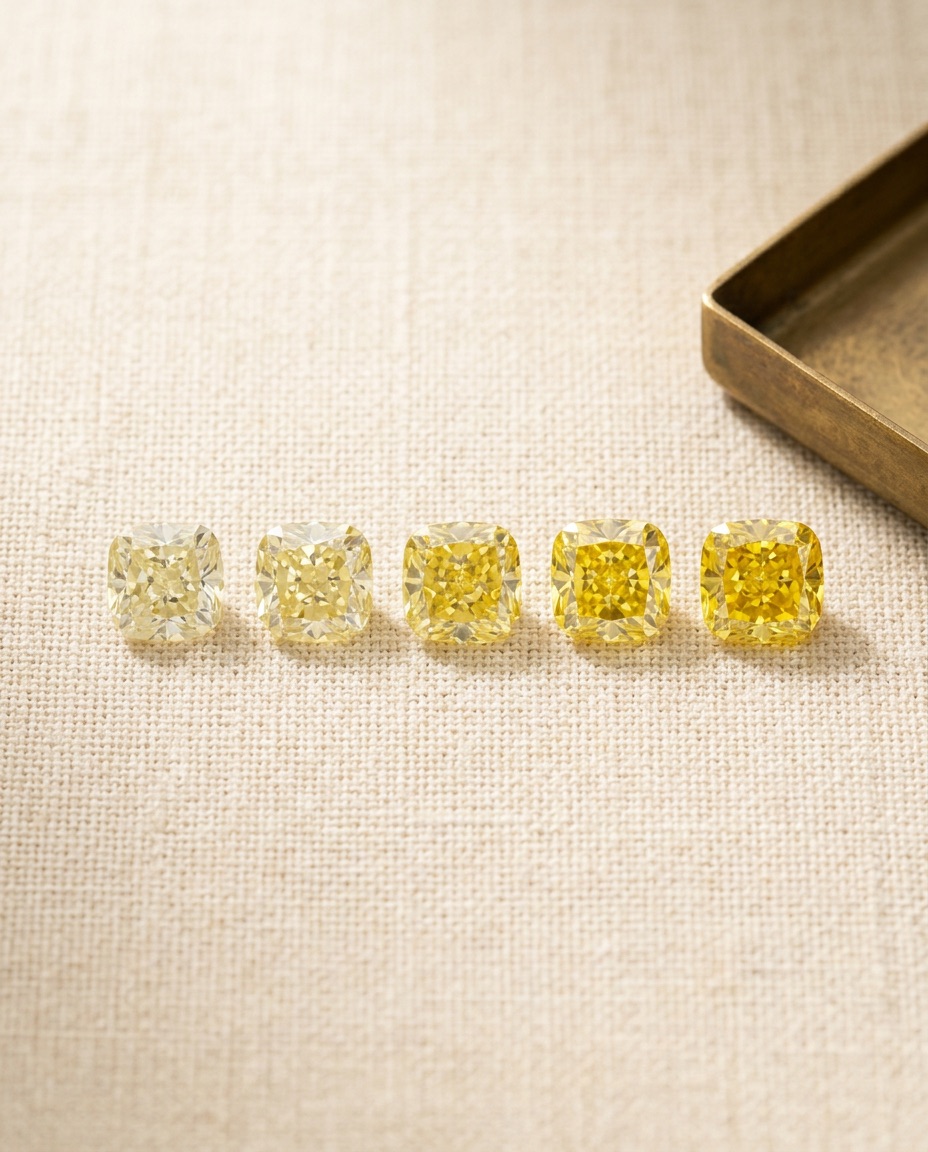
Certification on Matched Pairs: What's Standard, What's On Request
Fancy color matched pairs follow the same logic as the rest of Guru Diam's calibrated side-stone catalog: the default is an in-house, quality-matched pair, not two individually lab-certified stones. Every pair is checked stone against stone for hue, tone, and saturation consistency under controlled light before it's sold as a set — that physical comparison is the real quality control on a matched pair, and it's a check a lab certificate doesn't actually perform, since two certified stones can carry different papers and still not match each other visually.
For buyers who want a certificate attached to each stone — common on pairs at 0.30 carat and up going into stud earrings, or on projects where a client specifically wants paperwork on a flanking stone — individual certification through IGI, GIA, or GCAL is available on request, priced and quoted separately from the base pair. It's worth asking for pricing both ways on a given order: parcel-matched and individually certified, since the certification premium is easier to justify on some projects than others, and the visual match itself doesn't change either way.
What Drives Fancy Color Matched Pair Pricing
Color hue is the first lever. Blue and pink stones command a premium over yellow at equivalent size and saturation, because rough in those hues is scarcer to begin with; green sits in similar territory to blue and pink; yellow is the most available of the four and prices accordingly. Saturation is the second lever within a given hue — a Fancy Vivid stone costs meaningfully more than a Fancy Light stone in the same color family, because vivid saturation is rarer at any given size.
Shape and cutting complexity matter too. A calibrated fancy shape — Trap Brilliant, Chevron, Cadillac — takes more cutting precision to match against a partner stone than a round does, and that labor shows up in price. Size is the fourth factor, and it compounds across two stones rather than one: a 0.20ct pair costs more than double a single 0.20ct stone, because the second stone has to match the first rather than simply exist. Match tightness is the fifth and least obvious factor — a pair matched to a tight hue/tone tolerance costs more to assemble than a "same general color" pair, because narrowing the match means passing over more near-misses to land on two stones that actually agree. Certification, where requested, is priced as a separate add-on rather than baked into the base pair cost. None of this changes the trade structure: pricing is wholesale throughout, with no retail markup layered on top.
In practice, two buyers requesting the "same" pair can land on different prices once these factors are priced individually. A 0.15ct Fancy Yellow Radiant pair matched to a loose tolerance prices well below a 0.30ct Fancy Vivid Pink Trillion pair matched to a tight tolerance with individual certification on each stone — same product category, entirely different cost stack. Asking for a written quote that itemizes color, saturation, shape, size, match tolerance, and certification separately makes it easier to see where the price is actually coming from, and easier to adjust one variable (drop the certification, loosen the tolerance, switch shapes) if the target price needs to move.
Styling and Use-Case Guidance: Earrings, Side Stones, and Three-Stone Settings
Stud earrings are the single most common use for a fancy color matched pair, and they're also the least forgiving — two stones sitting a few inches apart on a client's ears get compared constantly, in every mirror and every lighting condition, for as long as the earrings are worn. That makes stud work the strongest argument for a tightly matched pair over two stones that are merely close.
Side-stone work is the second major use case: a matched pair flanking a center stone in a three-stone ring, or set symmetrically on either side of a halo. Here the pair doesn't need to outshine the center stone — it needs to read as a deliberate, coordinated frame, which puts a premium on the pair matching each other more than either matching the center stone exactly. A fancy color pair can also work as a color accent against a colorless center, a common ask when a client wants a colored detail without committing to an all-fancy-color piece.
For buyers who want the pair mounted rather than shipped loose, Guru Diam cuts, sets, and polishes finished jewelry in-house, and custom earring or ring settings built around a matched pair finish in 4–6 days once the pair and mounting spec are confirmed — the loose pair itself ships same-day out of current stock, and the 4–6 day window applies specifically to the finished, set piece.
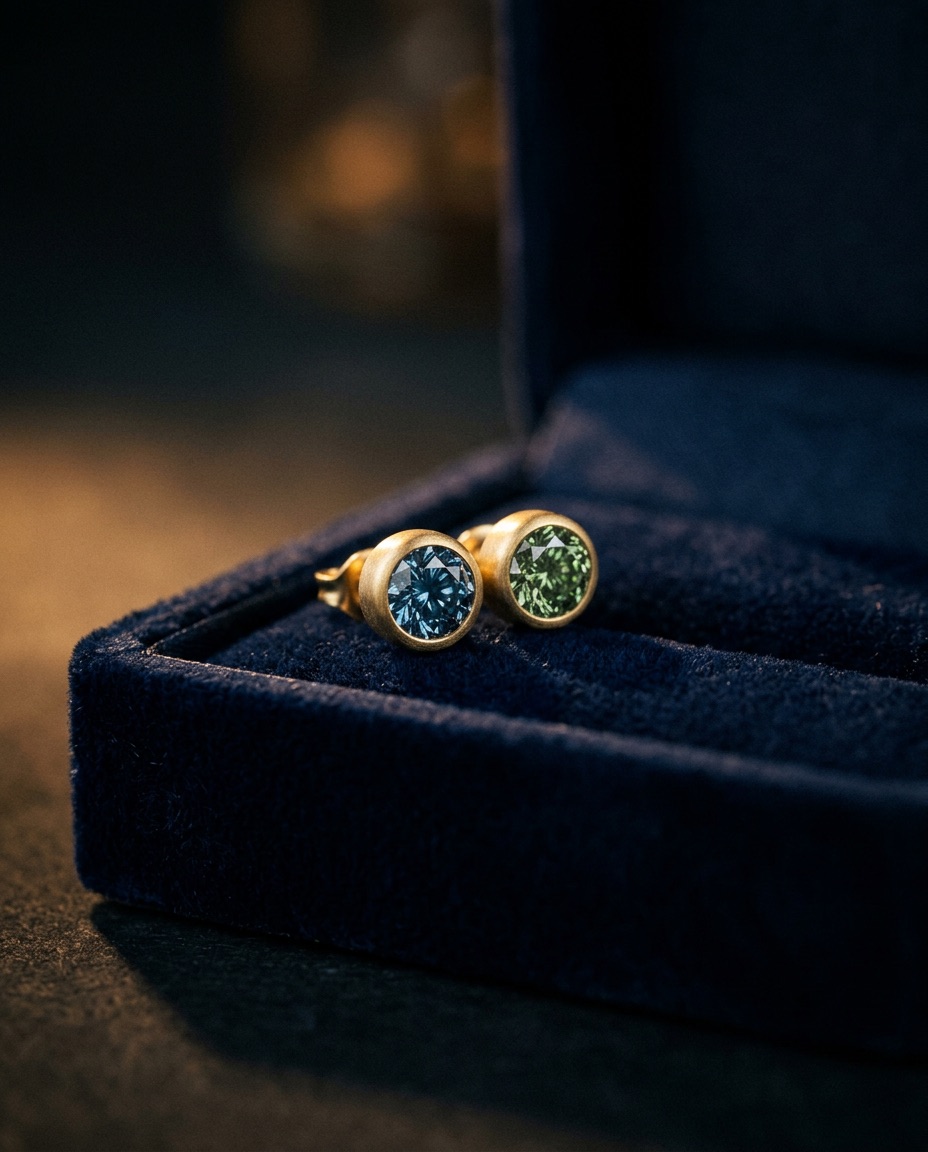
Matched Pairs vs. a Single Certified Fancy Color Stone
These solve different problems, and mixing them up leads to the wrong order. A single certified fancy color stone — sold loose, individually graded by IGI, GIA, or GCAL — is the right call for a solitaire pendant, a single-stone ring, or any piece where one stone stands alone and its paperwork needs to travel with it. Pricing is straightforward: one stone, one grade, one certificate, priced on its own merits.
A matched pair is a different product built for a different job: two stones bought and priced together specifically because they're going to sit next to each other. Buying two single certified stones separately and hoping they match is the wrong way to source for stud earrings or side-stone work — nothing in the certification process checks whether stone A and stone B look identical once mounted, because each stone is graded independently against its own grading scale, not against a partner stone. A matched pair skips that risk entirely by starting from the comparison instead of ending with it. The trade-off is that a matched pair, by default, doesn't carry individual certification on each stone the way a single loose stone does — which is exactly why certification is offered as an on-request add-on for pairs rather than a standard inclusion. Buyers choosing between the two should match the product to the setting: single certified stones for solo work, matched pairs for anything putting two stones in the same field of view.
There's a middle option worth knowing about: a matched pair with individual certification added on request, which gets a buyer both the visual match and per-stone paperwork. That's the right call when a client wants documentation on flanking stones for insurance or resale purposes but the design still calls for two stones that visually agree — it costs more than a parcel-matched pair, but it's still a different, cheaper path than sourcing two single certified stones independently and hoping the color lines up.
How to Order Fancy Color Matched Pairs Wholesale
Start with the spec: shape, color, approximate size per stone, and whether the pair needs individual certification. Check current on-hand inventory against the shape table above — Radiant, Trillion, Half Moon, Trap Brilliant, Round, Triangle, Cadillac, Chevron, Trap Step Cut, and Emerald all carry live stock as of this writing. If the shape and color combination is on hand, it ships same-day; if it isn't, that's a direct request to the cutting floor rather than a dead end, since the ~85 pairs on hand reflect current inventory, not the outer limit of what can be matched to order.
Guru Diam sells trade-only, with no retail markup, from New York Diamond District and Los Angeles desks. Open a verified wholesale account at /signup and book time with a gemologist at /book-appointment to review current fancy color pair inventory, request individual certification on a pair, or spec out a custom shape/color/size match.
FAQ
What is a fancy color matched pair?
Two fancy color diamonds — in Yellow, Pink, Blue, or Green — selected or cut to match each other in both color (hue, saturation, and tone) and outline, sold together for use as stud earrings or side stones flanking a center stone.
Which shapes are currently available as fancy color matched pairs?
Current on-hand stock spans Radiant, Trillion, Half Moon, Trap Brilliant, Round, Triangle, Cadillac, Chevron, Trap Step Cut, and Emerald, with roughly 85 matched pairs on hand across all shapes combined. Because matching is done in-house, additional shapes can be cut and matched to order.
Why is matching fancy color diamonds harder than matching colorless diamonds?
A colorless pair only needs to match on outline and size. A fancy color pair has to match on outline and color at the same time, and color is harder to control — two stones within the same grading term can still read as visibly different in hue or tone once set side by side.
Are fancy color matched pairs certified?
By default, no — fancy color matched pairs are sold as in-house, quality-matched pairs rather than two individually lab-certified stones, consistent with how Guru Diam handles the rest of its calibrated side-stone catalog. Individual certification through IGI, GIA, or GCAL is available per stone on request, which is common for larger pairs going into stud earrings. Ask for pricing both ways when requesting a quote.
Can I get a fancy color pair in a shape or color not listed in current stock?
Yes. The on-hand counts reflect current inventory, not the limit of Guru Diam's matching capability. Because cutting and matching happen in-house, a specific shape, color, or size combination can be requested directly for made-to-order cutting.
Should I buy a matched pair or two single certified stones for stud earrings?
A matched pair, in almost every case. Two individually certified stones are graded independently, and nothing in that process checks whether they look identical once mounted side by side — which is exactly the comparison stud earrings force. A matched pair is built and checked against that comparison directly; individual certification can still be added to a matched pair on request.