
Matched Pairs for Stud Earrings: The Highest-Turn SKU for Independent Jewelers

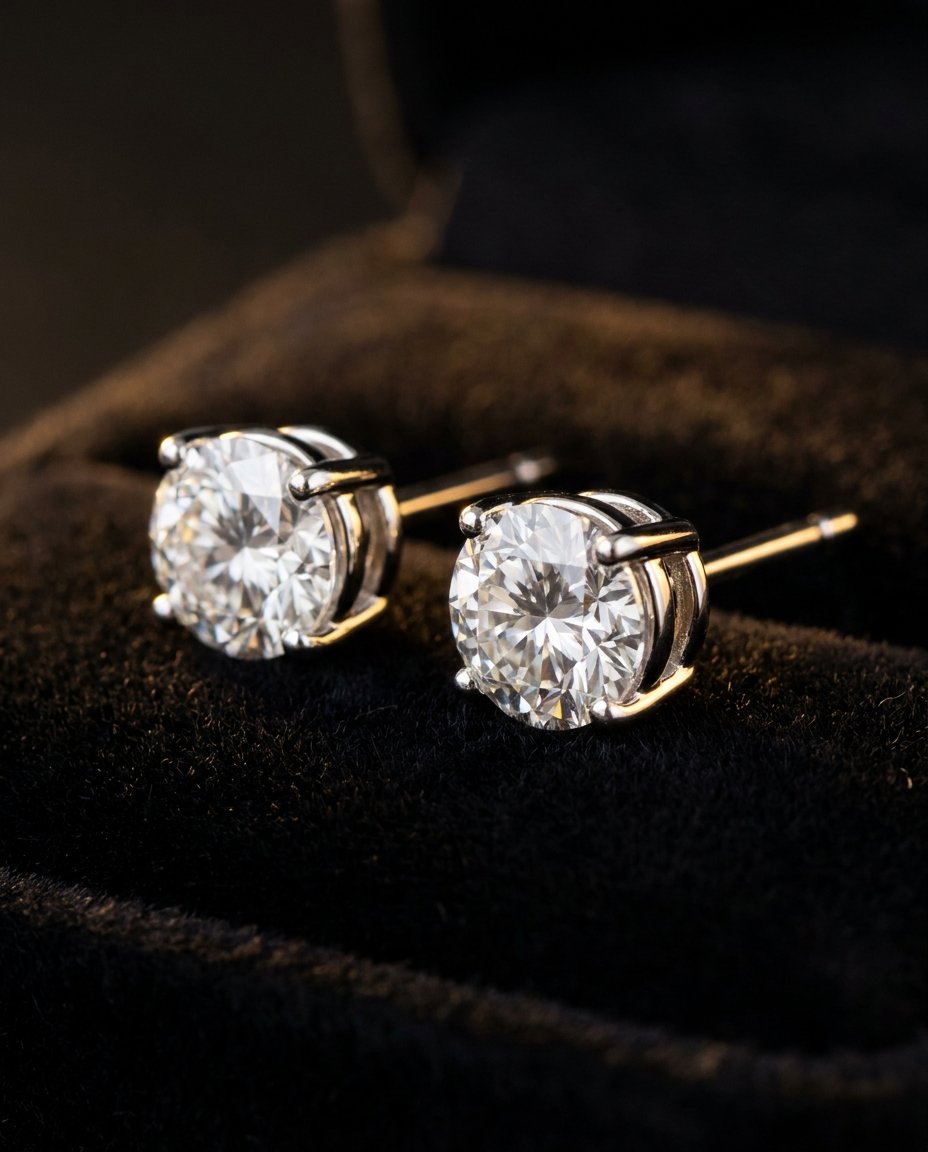
Matched diamond pairs for stud earrings wholesale are the fastest-turning SKU most independent jewelers can stock: a calibrated pair, a clean white-gold or platinum four-prong basket, and a sub-$1,500 retail ticket move year-round on birthdays, anniversaries, graduations, and gifting — no proposal required. Buy the pair pre-matched at trade, set it in one of three or four stock sizes, and sell a finished stud the same week it lands.
Studs do not get the attention engagement rings do, and that is exactly why they are underrated on the showcase. An engagement ring is a once-a-relationship purchase with a long consideration cycle. A pair of diamond studs is a repeat, low-friction, gift-driven purchase that a customer buys for themselves, for a spouse, for a daughter's eighteenth, for a milestone they want to mark this weekend. The unit economics are clean, the inventory risk is low if you build it off pairs instead of finished goods, and the customer almost never agonizes over the cert the way a center-stone buyer does. This is a turn play, and the engine behind it is the matched pair.
Why are diamond studs the highest-turn SKU for an independent jeweler?
Three reasons, and they compound.
Occasion frequency. A diamond stud has more buying occasions than almost any other fine-jewelry item. It is a self-purchase, a "first real diamond" gift, an anniversary upgrade, a push present, a graduation gift, and a safe choice for the buyer who does not know the recipient's ring size or taste. Diamond jewelry generally carries high perceived value and strong margins precisely because it is tied to occasions, and studs touch more occasions than any single ring style.
Spec tolerance. Studs sit on an earlobe and are seen from across a room, not loupe-distance on a hand. That means you can run a slightly lower color grade without a perceptible penalty — the trade has long advised that stud buyers can drop into the near-colorless or faint range that would be visible in a ring but reads white in an earring. As Rare Carat's pairing guidance notes, what matters far more than chasing a top color grade is that the two stones match each other. That gives you a wider, cheaper sourcing pool and protects margin.
Conversion speed. There is no "let me think about the proposal" cycle. Price, sparkle, and a mirror close most stud sales on the spot. Your only job is to have the size the customer wants, in the metal they want, at a believable price — which is an inventory problem, not a selling problem, and inventory problems are solvable with the right pair program.
The catch: studs only turn fast if your capital turns fast. Stocking dozens of finished studs in every size-metal-quality permutation ties up cash. The fix is to stock matched pairs as loose, paired inventory and finish to order — or carry a thin run of bestsellers finished and build the long tail off pairs. More on that below.
What makes a true matched pair for studs (and what tolerance can you live with)?
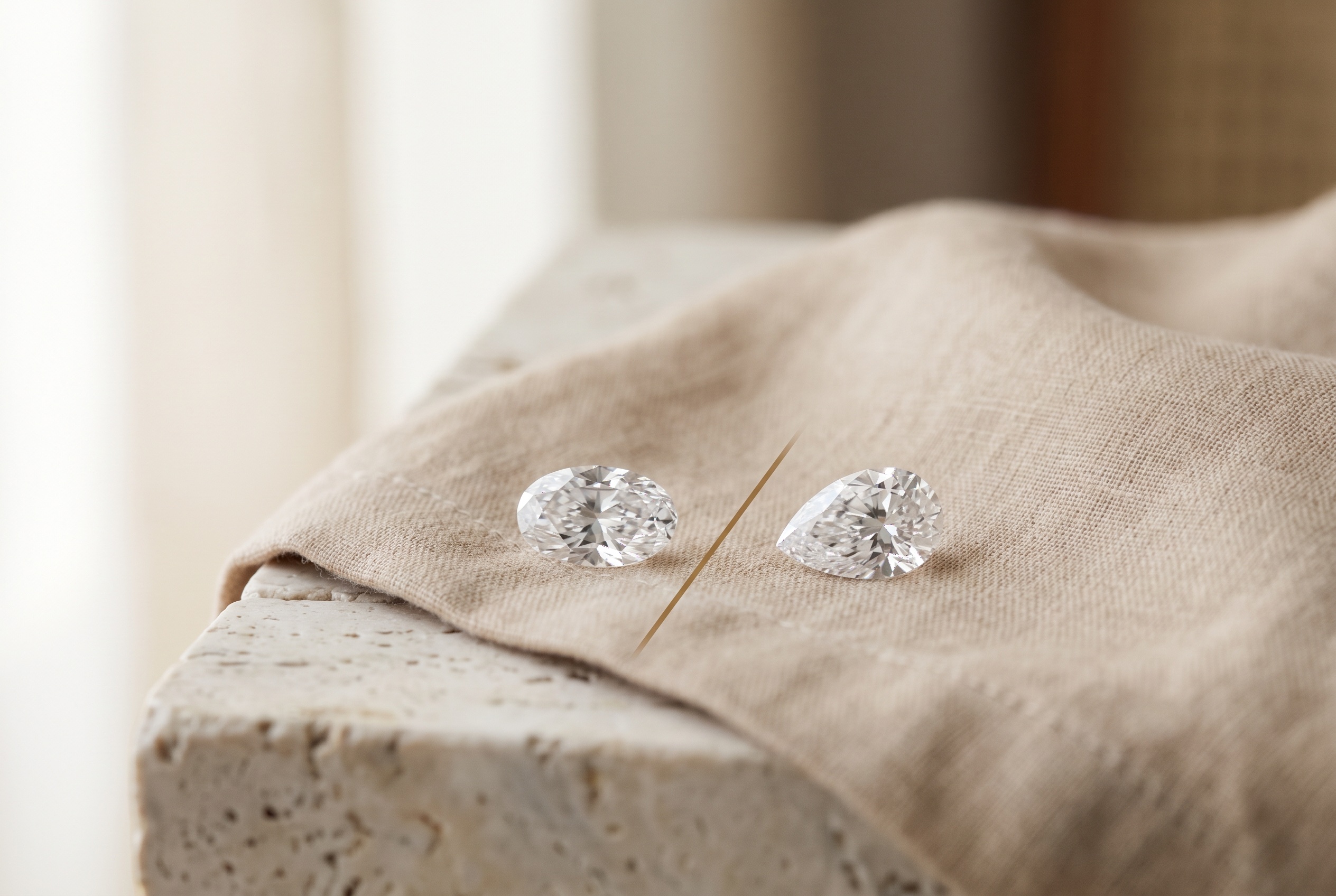
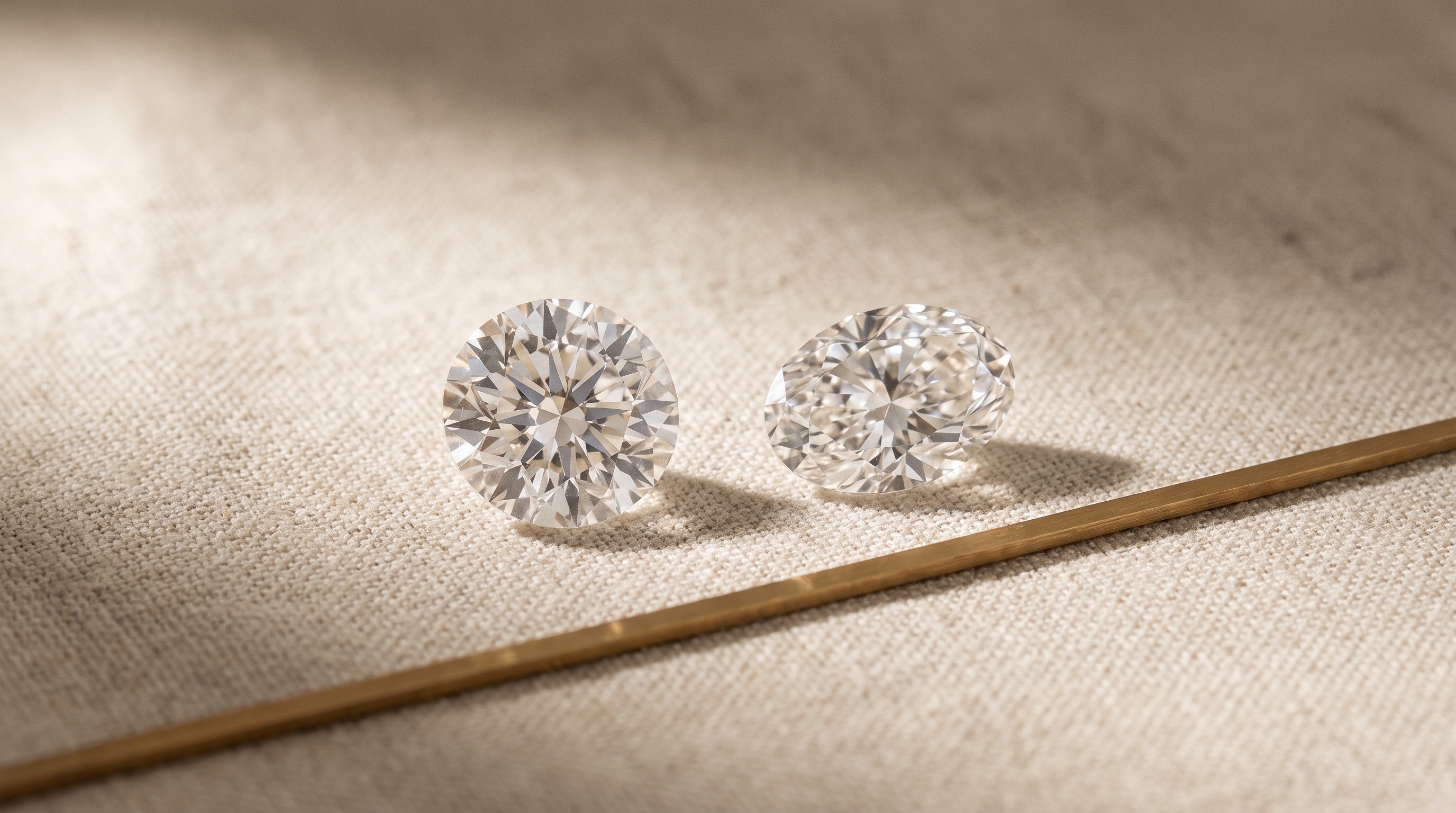
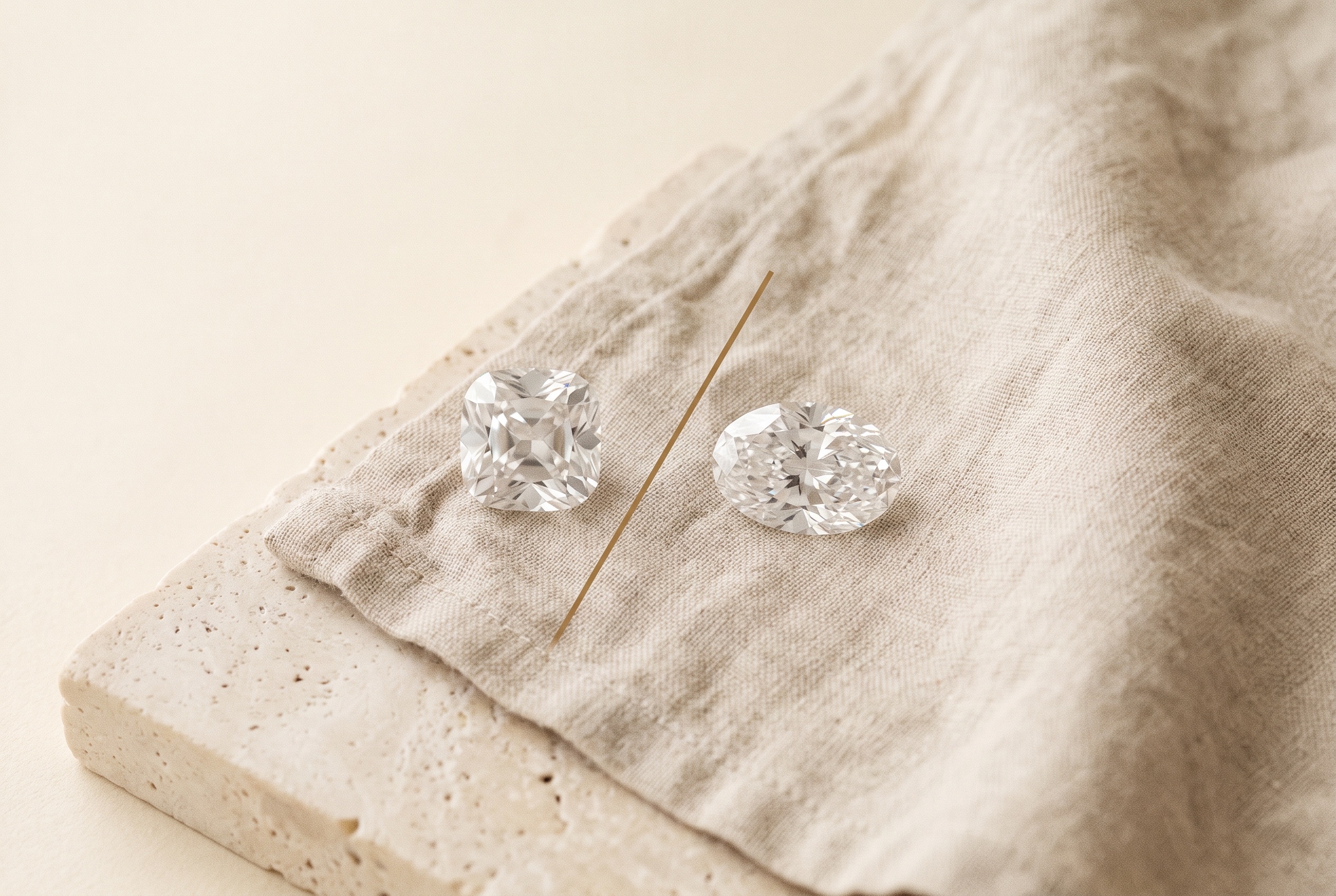
A matched pair is two stones intentionally selected and verified to sit close enough that, worn an inch apart on two ears, the eye reads them as identical. For studs the priorities, in order, are cut and symmetry, then size (diameter), then color, then clarity.
Cut leads because sparkle is what the eye catches first. Two rounds with the same carat weight but different cut grades will throw light differently, and a customer turning their head in a mirror will see one ear "pop" more than the other. Diameter matters next because a 0.2 mm difference in face-up size is visible side by side even when the carat weights are nearly equal. Color and clarity matter least at stud distance — but they still must match each other, because a faint warmth difference reads as "one looks dingy."
| Attribute | Matched-pair target for studs | Why this tolerance works |
|---|---|---|
| Cut grade | Identical (e.g., both Excellent/Ideal) | Sparkle mismatch is the most visible defect; keep it zero |
| Symmetry & polish | Identical or within one sub-grade | Governs how light returns; bench-critical for face-up read |
| Diameter (face-up) | Within ~0.10–0.20 mm | Side-by-side size difference becomes visible beyond this |
| Carat weight | Within ~0.05 ct of each other | Pre-set pairs are routinely matched to ~0.05 ct |
| Color | Same grade, or within one grade | Reads identical at stud distance; deeper drop OK if matched |
| Clarity | Comparable; eye-clean both | Inclusions invisible at distance, but both must be clean |
These are working tolerances, not gemological dogma — pre-set stud pairs are commonly matched to within about 0.05 ct of carat weight, and the operative rule across the trade is that both stones share the same color and cut so the earrings complement each other. For the full purchase-order tolerance language and the inspection sequence the bench cares about, see our deeper guide to sourcing matched pairs of diamonds at wholesale. If you are also building fancy-shape side-stone sets, the matched fancy-shape pairs guide covers the trickier symmetry math on trapezoids, half-moons, and epaulettes.
The decision that protects you: buy the pair certified and sold as a unit, not two singles you match yourself from a parcel. When you assemble the pair, you own the matching risk and the orphan-single risk. When the supplier physically compares the two stones face-up and certifies them as a pair, that risk transfers up the chain.
How do you size a stud program? The carat-to-millimeter cheat sheet
Customers buy studs by look, not by carat. They say "about this big," touch their ear, and point. Your job is to translate that into a total carat weight (tcw — the combined weight of both stones) and a face-up diameter. Round brilliants dominate studs, so this is the table to keep on the counter.
| Total carat weight (pair) | Per-stone weight | Approx. diameter each | Typical positioning |
|---|---|---|---|
| 0.25 ct tw | ~0.125 ct | ~3.1 mm | Entry / teen / second-hole |
| 0.50 ct tw | ~0.25 ct | ~4.1 mm | The volume seller — "first diamonds" |
| 0.75 ct tw | ~0.375 ct | ~4.6 mm | Step-up gift |
| 1.00 ct tw | ~0.50 ct | ~5.1 mm | The hero ticket — most-requested |
| 1.50 ct tw | ~0.75 ct | ~5.8 mm | Anniversary / self-purchase upgrade |
| 2.00 ct tw | ~1.00 ct | ~6.5 mm | Statement / milestone |
| 3.00 ct tw | ~1.50 ct | ~7.4 mm | Top of the lab-grown opportunity |
Diameters are nominal for well-cut rounds; confirm against the actual stone measurements on each cert. Two notes that protect your margin:
- Stones below 0.20 ct each are technically melee. GIA defines melee as diamonds weighing less than 1/5 carat (0.20 ct), roughly under 3.8 mm. Your 0.25 ct tw studs are melee-grade goods and should be sourced and priced as calibrated melee pairs, not as individually certified stones — see our calibrated melee guide for how that category prices.
- The 1.00 ct tw "hero" is your anchor. It is the most-requested size and the easiest to merchandise against a round number. Build your finished-goods run around it.
The three- or four-SKU finished run
You do not need fifteen finished studs. You need a thin, deliberate run that covers the demand curve, with everything else finished to order off pairs:
- 0.50 ct tw — the everyday volume seller and the most common gift size.
- 1.00 ct tw — the hero ticket; the size people name out loud.
- 2.00 ct tw — the aspirational anchor that makes the 1.00 ct feel reasonable.
- (Optional) 0.25 ct tw — second-hole / teen / add-on, finished cheaply in melee pairs.
Carry those finished in white gold four-prong baskets (the default — easy to upsell to platinum). Everything in between, and every metal or quality variation, you build to order from loose certified pairs in 4–6 days.
Should you stock finished studs or build them off loose pairs?
This is the inventory decision that determines whether studs actually turn your capital or just sit in the case looking like they turn.
| Model | Capital tied up | Speed to sale | Best for |
|---|---|---|---|
| Finished studs in every size/metal/quality | High — many dead permutations | Instant (if you have the size) | High-traffic mall/retail with predictable mix |
| Loose certified pairs, finish to order | Low — one pair serves any metal | 4–6 days to finish | Independents managing cash and a long tail |
| Hybrid: thin finished run + pair backstock | Moderate, controlled | Instant on bestsellers, fast on the rest | Most independent jewelers |
For the typical independent, the hybrid wins. You hold the three or four bestselling finished studs for the walk-in who wants to leave wearing them, and you hold loose matched pairs as backstock that can be finished into any metal, any back style, on demand. One loose 1.00 ct tw pair can become white-gold studs, platinum studs, or martini-set studs depending on what the customer wants — that is three finished SKUs of flexibility from one piece of inventory.
The reason this works now is turnaround. Custom and finish-to-order used to mean a 9-to-19-day wait that killed the impulse. Guru Diam completes custom and finished pieces in 4–6 days, which is inside the window where a stud customer will still wait. A customer who picks a loose pair on Saturday can be wearing finished studs the following week — fast enough to feel like service, not a special order. See how the 4–6 day custom turnaround compresses the cycle, and how to run a finish-to-order program without an in-house bench.
Request verified trade pricing on matched pairs: Request a Wholesale Account to see live wholesale pricing on certified pairs from both our NYC and LA inventory.

How do certificates work on a matched pair — one cert or two?
This trips up jewelers new to the category, so be precise with your customer.
Loose matched pairs above the melee threshold are typically sold with two individual certificates — one per stone — each from a recognized lab, plus a pair designation from the supplier confirming the two were matched as a unit. You hand the customer both certs; the takeaway is that each stone is independently graded and the two are documented as a deliberate pair. Melee-grade pairs (your 0.25 ct tw and smaller) are generally not individually certified — melee is sold by parcel and calibration spec, not stone-by-stone reports, which is normal and correct for that size.
Which lab matters in 2026. Following GIA's October 2025 overhaul of its lab-grown diamond service, GIA no longer issues the familiar 4Cs color/clarity grades on lab-grown stones — it now describes them as "Premium" or "Standard." As JCK reported, GIA's rationale is that more than 95% of lab-grown diamonds fall into a narrow color-and-clarity band, making the natural-diamond nomenclature less meaningful for them. The practical consequence for your stud program: IGI's stone-by-stone 4Cs reports are now the de facto standard for lab-grown studs, because they still give you and your customer the discrete D/E/F and VVS/VS grades that make matching legible. When you buy a lab-grown pair, expect IGI reports; when you buy natural, GIA's 4Cs report still applies. For a deeper read, see GIA vs IGI certified lab-grown diamonds and how to read an IGI/GIA certificate.
A talk track you can reuse at the counter: "Each stone is independently certified, and they were matched as a pair — so you're getting two graded diamonds that were chosen to look identical on you, not two stones we hoped would be close." That sentence closes the cert question and reinforces value in one line.

Does lab-grown change the stud math in 2026?
Materially, yes — and in your favor on the showcase.
Lab-grown wholesale prices fell hard through the recent cycle: Edahn Golan's wholesale price data, reported by WatchPro, put the 2025 decline at roughly 26% year over year, with the steepest pressure on large goods — three-carat rounds down about 32% — while smaller sizes held far better. The same data shows the market stabilizing into 2026, with quarterly drops narrowing sharply and some small-stone categories actually ticking up as Chinese HPHT producers held the line on rough costs.
What that means for a stud program:
- The 1.00–3.00 ct tw tier is where the consumer opportunity is largest, because that is where lab-grown pricing fell most. A customer who could afford 0.50 ct tw natural studs can now reach 1.00 or 2.00 ct tw in lab-grown for a similar ticket — a real upsell you can run honestly.
- Small-stone pairs (your 0.25–0.50 ct tw) are holding price, so do not assume your melee-grade studs get cheaper every quarter. Buy at calibration, not on the expectation of a falling floor.
- Stability is good for your inventory, not bad. A stabilizing wholesale floor means a pair you buy today is less likely to be underwater next quarter — which makes holding loose pair backstock safer than it was two years ago.
Run lab-grown and natural side by side in your stud case. Let the customer choose; most stud buyers, who are gifting or self-purchasing rather than signaling on a left hand, take the bigger lab-grown look at the same money.
How do you build a fast-moving stud program off pair inventory?
Put it together into a playbook:
- Anchor the finished run. Stock 0.50, 1.00, and 2.00 ct tw studs finished in white-gold four-prong baskets. Add 0.25 ct tw if you have a teen/second-hole customer base.
- Backstock loose certified pairs, weighted to the hero sizes (1.00 and 1.50 ct tw), so you can finish to any metal and back style in 4–6 days.
- Standardize the mounting menu — four-prong basket (default), martini (lower profile), and bezel (active lifestyle) — so finishing is fast and quotable.
- Lead lab-grown on the 1.00 ct+ tier, where the price drop gives the customer the most visible size for the money; keep natural available for the purist.
- Spec every pair to the tolerance table before it ships, with cut/symmetry locked identical, so you never eat a mismatch return.
- Source from a real-time feed. A supplier with API/CSV inventory feeds lets you check pair availability and finish-to-order without a phone call, which is what keeps a turn play turning.
Done this way, studs do exactly what the highest-turn SKU is supposed to do: they convert fast, they sell across every occasion, and they tie up almost no capital because one loose pair stands in for a dozen finished permutations. The earring category is where most independents quietly make their steadiest gross margin — studs are the engine inside it.
Frequently Asked Questions
What is the most popular diamond stud size to stock?
The 1.00 ct total weight pair (roughly 0.50 ct / ~5.1 mm per ear) is the most-requested "hero" size and the one customers name out loud, so anchor your finished run around it. The 0.50 ct tw pair is the everyday volume seller and the most common gift size. Stocking those two finished, with a 2.00 ct tw aspirational pair and the rest finished to order off loose pairs, covers the demand curve without tying up capital.
Do both diamonds in a stud pair need the same color and clarity grade?
They should match each other far more than they need to hit a top grade. Because studs are seen at room distance, not loupe distance, you can run a near-colorless grade that would show in a ring without a visible penalty — what matters is that the two stones share the same color and clarity so neither ear looks warmer or cloudier. Cut and symmetry are the strictest spec: keep those identical, because a sparkle mismatch is the most visible defect.
How tightly do matched-pair diamonds need to be sized for studs?
Aim for face-up diameters within about 0.10–0.20 mm and carat weights within roughly 0.05 ct of each other. Beyond that, a side-by-side size difference becomes visible across two ears even when the weights look nearly equal. Always buy the pair certified and sold as a unit so the supplier — not you — owns the matching risk, rather than assembling a pair yourself from two singles in a parcel.
Should I stock finished studs or loose certified pairs?
For most independent jewelers, a hybrid model wins: hold three or four bestselling sizes finished for the walk-in who wants to leave wearing them, and hold loose certified matched pairs as backstock that can be finished into any metal or back style in 4–6 days. One loose pair stands in for many finished permutations, so you cover a long tail of size, metal, and quality combinations while tying up far less cash.
Which certificate should lab-grown diamond studs carry in 2026?
Expect IGI stone-by-stone 4Cs reports on lab-grown pairs. After GIA's October 2025 change, GIA describes lab-grown diamonds only as "Premium" or "Standard" rather than issuing the familiar color and clarity grades, so IGI's discrete D/E/F and VVS/VS reports have become the de facto standard for matching lab-grown stones legibly. Natural diamond pairs still carry GIA 4Cs reports. Melee-grade pairs (0.25 ct tw and smaller) are sold by calibration and parcel, not individual certs.
Are lab-grown diamond studs cheaper to stock now?
In the larger sizes, yes. Wholesale lab-grown prices fell about 26% in 2025 with the steepest drops on bigger goods, so the 1.00–3.00 ct total weight tier offers customers a much larger look for the money — a genuine, honest upsell. Smaller pairs (0.25–0.50 ct tw) held their price better and the market is stabilizing into 2026, so buy small-stone pairs at calibration spec rather than betting on a continually falling floor.
Studs are the rare fine-jewelry SKU that sells itself if the inventory is right — and the inventory is right when it is built on certified, calibrated pairs you can finish in days, not weeks. Guru Diam carries 11,000+ IGI/GIA-certified stones with matched pairs in stock and same-day shipping from our New York and Los Angeles desks, plus a 4–6 day finish-to-order custom service — all under one roof. Request a Wholesale Account to see live trade pricing on matched pairs, or book an appointment with our trade desk to build your stud program off the right pairs.