
A Trap Step Cut (trapezoid) diamond is a four-sided calibrated side stone with two parallel edges of different lengths and a flat, step-faceted table — built to flank a center stone in three-stone rings, channel settings, and graduated eternity work. Guru Diam stocks 1,267+ Trap Step Cut stones on hand, calibrated and color/tone-matched, gradable by IGI, GIA, or GCAL on request.
What is a trap (trapezoid) step cut diamond?
The trapezoid step cut is a calibrated shape, not a center-stone cut — its whole purpose is to sit beside or around a larger stone and read as a clean, uniform accent. Geometrically it's a quadrilateral with one pair of parallel sides of unequal length: the shorter parallel edge typically sits nearest the center stone, the longer edge sits toward the shoulder or outer band, and the two non-parallel sides taper between them. That taper is what lets a trapezoid hug the curve of a center stone's girdle instead of leaving a gap the way a straight-sided baguette would.
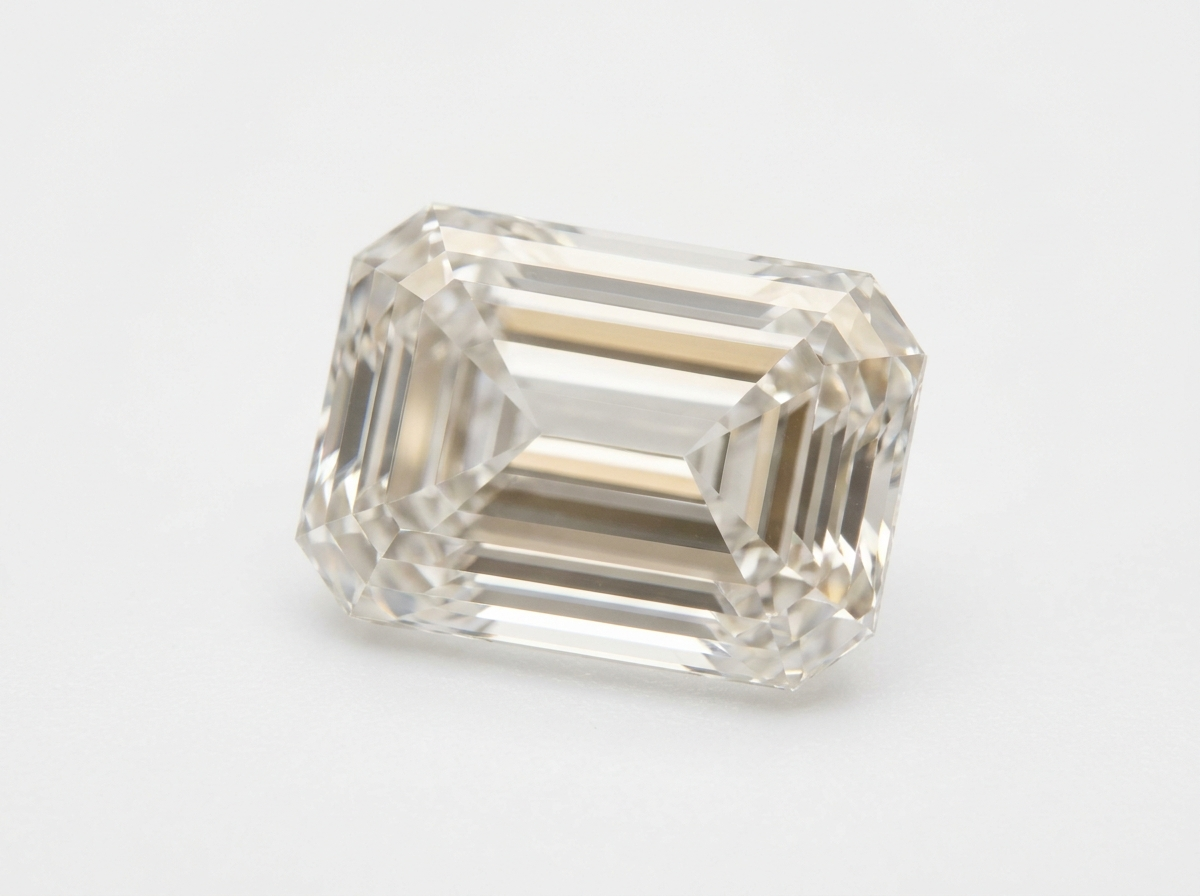
The step-cut faceting — broad, flat, parallel planes arranged in concentric rows around the table rather than the triangular and kite-shaped facets of a brilliant cut — keeps trapezoids from competing with the center stone's fire. Instead they contribute a quiet, geometric flash: long linear reflections instead of scattered sparkle. That restraint is the entire trade case for the shape. A jeweler doesn't buy trapezoids because they're dazzling on their own; they buy them because they disappear into a supporting role without looking cheap or busy next to a well-cut center stone.
Because trapezoids are always sold and set in relation to something else — a center stone, a matching mate, a graduated run — they're a calibrated shape by definition. "Calibrated" means cut to a fixed, repeatable millimeter dimension rather than cut to maximize weight retention from a single rough crystal, which is how most fancy shapes are cut. That distinction matters more for trapezoids than almost any other shape in the catalog, because a trapezoid that's 0.2mm off spec won't sit flush in a pre-fabricated setting or won't visually match its mate.
Anatomy of the cut: facet structure and proportions
A trapezoid step cut is built from the same architectural logic as an emerald cut or a baguette, just on a four-sided trapezoidal outline instead of a rectangle. From the top down: a flat table facet sits at the center, surrounded by one or more concentric rows of trapezoidal and triangular step facets that "stair-step" down the crown to the girdle, then mirror that stepping down the pavilion to either a flat culet or a sharp point, depending on the depth the cutter is working with.
The two proportions that matter most for how a trapezoid actually performs in a setting are the length-to-width ratio between the parallel edges and the taper angle of the non-parallel sides. A shallow taper reads as nearly rectangular and works well running alongside a straight shank; a steeper taper is built specifically to point into the corner of a cushion, radiant, or emerald-cut center stone. Corner treatment is the other variable buyers ask about — trapezoids can ship with sharp, unrounded corners for a crisp Art Deco line, or with lightly truncated corners to reduce chipping risk in a claw or channel setting. Both are standard on request; neither is a "better" cut, they're suited to different mounting styles.
Table size and crown height on trap step cuts run flatter than on a brilliant cut of comparable dimensions — that's intentional. A high crown on a side stone throws the stone's height out of alignment with the center stone and the shoulder stones around it, which is a fast way to end up with an uneven, "lumpy" profile when the ring is viewed in profile. Cutters working trapezoids are optimizing for a level sightline across the whole top of the ring, not for maximum brilliance out of any single stone.
Where trapezoids fit in the trade: use cases
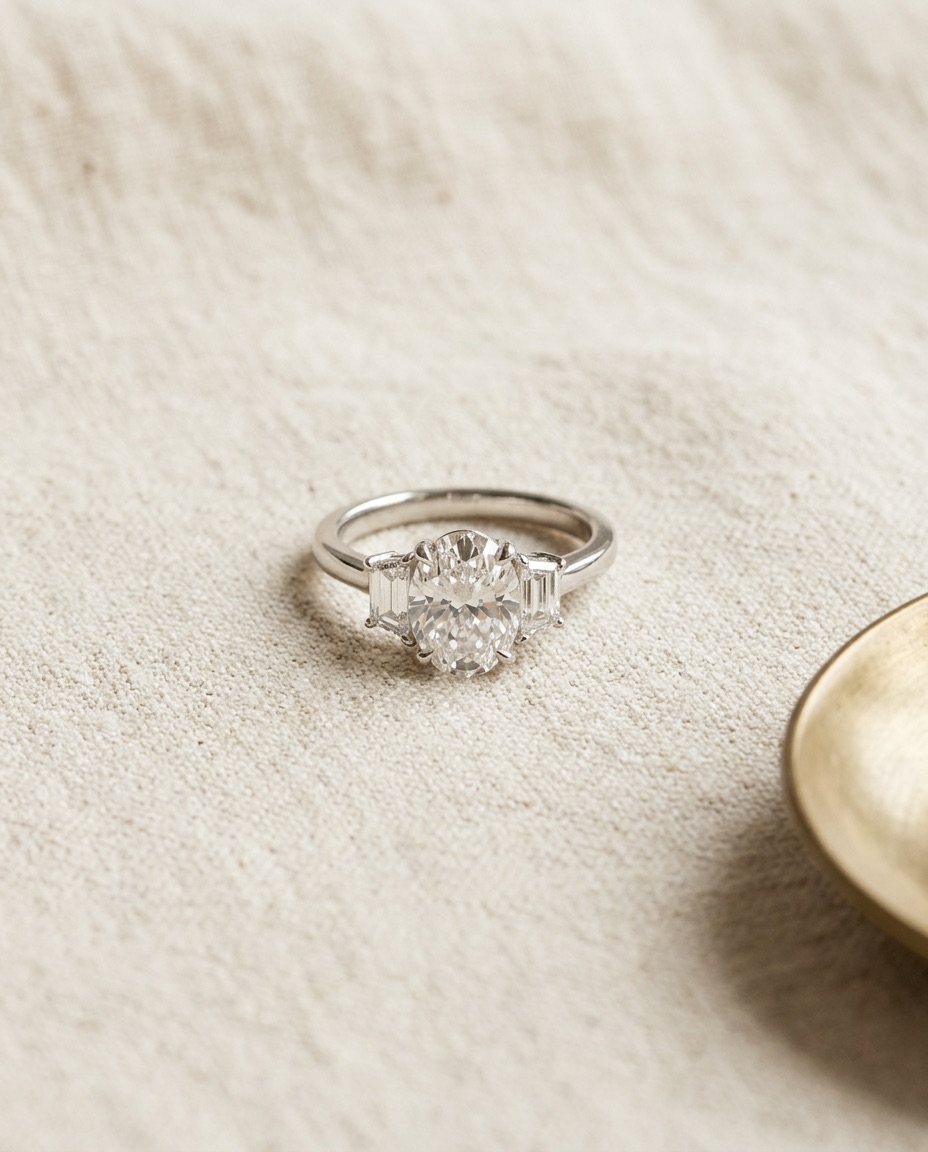
Three-stone rings are the anchor use case. A pair of trapezoids — one on each side of a round, oval, cushion, emerald, or radiant center — is one of the more forgiving three-stone configurations to execute well, because the flat step facets read as a clean geometric frame regardless of what shape sits in the middle. That versatility is why trapezoid three-stone rings show up across price points and style categories, from minimalist modern builds to Art Deco-inspired pieces.
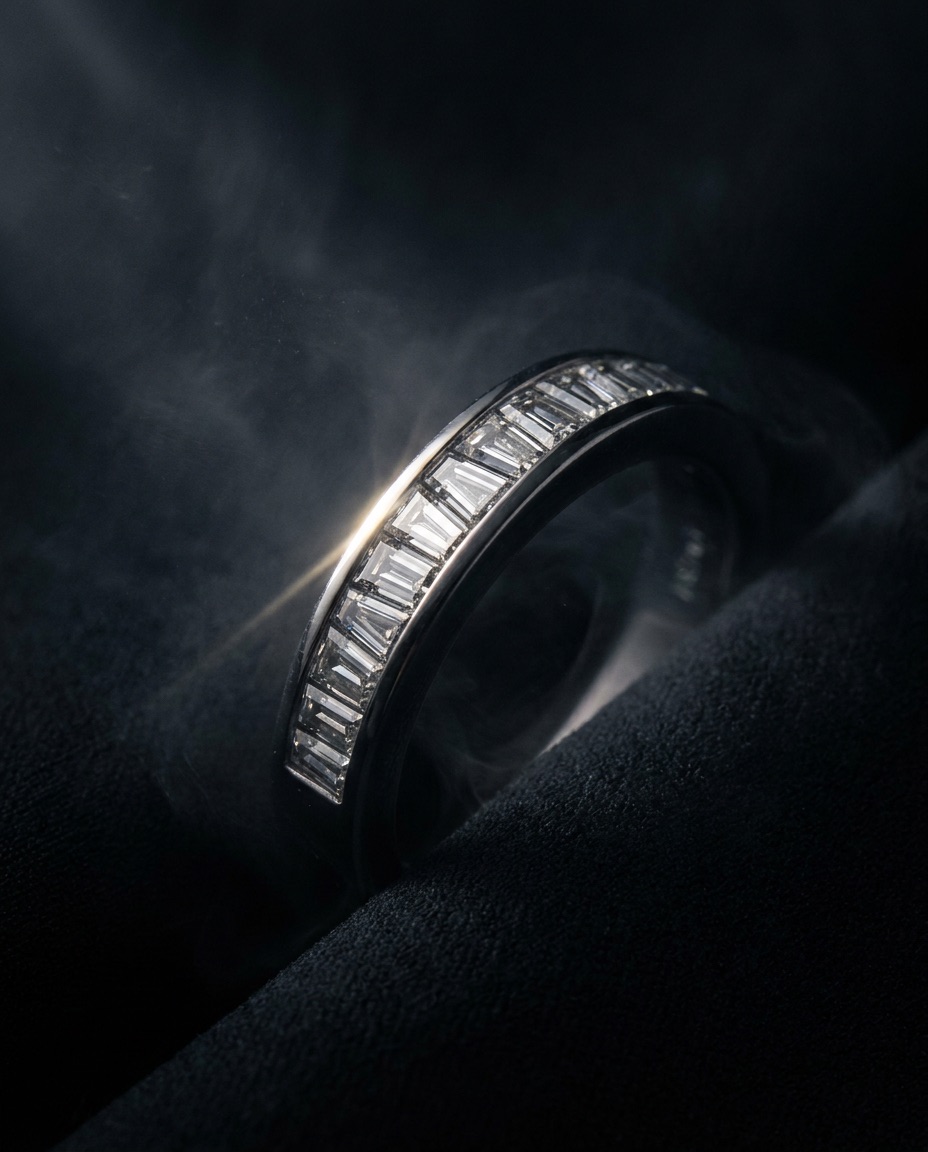
Channel settings are the second major use case, and the one where matching depth matters most. A channel-set band running a graduated series of trapezoids — larger near the center, tapering down toward the shank — needs every stone in that run to share the same taper angle and color/tone family, or the graduation reads as uneven rather than deliberate. This is a heavier lift for a supplier than a single pair, since a graduated channel run might call for six, eight, or more stones cut to a shared spec.
Graduated eternity bands use the same logic on a full circumference rather than a partial channel — trapezoids (sometimes alternating with baguettes or round brilliants) running the full band, tapering from a larger stone at the top down to smaller stones at the base. Trapezoids also show up as shoulder accents flanking a halo, as the outer frame in step-cut cluster rings, and — for buyers building tapered baguette look-alikes on a budget — as a substitute where a true tapered baguette isn't available in the exact taper needed.
How Guru Diam sources and cuts trap step cut diamonds
Guru Diam's trapezoid inventory is CVD lab-grown, cut in-house to calibrated spec rather than sourced pre-cut from third-party parcels. Cutting in-house is what makes true set-matching possible at scale: a cutter working from rough with a specific channel run or three-stone order in mind can hold taper angle, table alignment, and color grouping consistent across the whole set in a way that's much harder to guarantee when pulling individual stones from mixed lots.
Stones are cut across a size range wide enough to cover the common use cases above — small graduated melee-range trapezoids for channel and eternity work, up through larger individually-sized trapezoids for three-stone side stones flanking a 1ct+ center. Because the shape only exists in relation to a setting or a mate, Guru Diam holds calibrated trapezoids as on-hand inventory rather than cutting to order for every request — 1,267+ stones on hand at any given time, organized by size and tone family so a matched pair or a graduated run can be pulled same-day rather than cut fresh, which is the difference between a same-week order and a multi-week wait on a shape this dependent on matching.
For buyers with a nonstandard taper angle, an unusual length-to-width ratio, or a large graduated run that needs to be cut as one continuous lot, custom-cut trapezoid orders are also available — cut in-house to the exact spec the setting calls for, rather than approximated from stock sizes.
Grading and quality considerations for trapezoid side stones
How a trapezoid is graded depends on where it falls on the size spectrum. Smaller, melee-range trapezoids — the kind used in dense channel or eternity runs — ship as calibrated parcel or pair goods against a DEF+/VS+ quality baseline rather than individually certified; that's standard practice across the trade for any calibrated side-stone shape at that size, since certifying each stone in a 20-stone channel run individually would multiply cost with no real benefit to the buyer. Larger trapezoids, generally 0.30ct and up — the size range used for three-stone side stones flanking a substantial center — can be individually graded and certified by IGI, GIA, or GCAL on request, the same as any other loose stone at that weight.
For matched sets, color and tone consistency across the whole set matters more than the color grade of any individual stone in isolation. Two D-color trapezoids that were cut from different rough with slightly different fluorescence or tint can still look mismatched sitting side by side, while two G-color stones cut and sorted together as a set will read as uniform. That's why sourcing matched trapezoids from a single supplier working from controlled inventory beats assembling a set piecemeal from multiple vendors — the match is the quality metric, not just the individual grade.
Clarity considerations run the same direction as color: because trapezoids are set low-profile as accent stones rather than held up for loupe inspection the way a center stone is, VS-range clarity is the practical trade standard — clean enough that inclusions aren't visible face-up at a glance, without paying a premium for a clarity grade the setting won't showcase. Symmetry between paired or graduated stones — matching taper angle and facet alignment, not just matching outline dimensions — is the detail that separates a set that reads as intentional from one that reads as assembled.
Pricing factors for wholesale trapezoid diamonds
Carat weight is the first lever, same as any diamond, but it interacts with the shape in a specific way: because trapezoids are cut to a fixed calibrated dimension rather than to maximize retained weight, the per-carat pricing curve is flatter across common sizes than it is for a shape like round brilliant, where every fraction of a carat above a round-number threshold jumps in price.
Matching is the second lever, and it's the one that's specific to calibrated side stones. A single trapezoid priced in isolation is cheaper, carat for carat, than the same stone sold as one half of a matched pair or one link in a graduated run — because a matched set requires pulling from a narrower slice of available inventory (same taper, same tone family, same cut date if fluorescence consistency matters) rather than any stone that hits the target dimensions. Buyers pricing out a three-stone ring or a channel band should expect the "matched set" premium to scale with how many stones are in the set and how tight the tolerance needs to be.
Color and clarity tier move price the way they do on any diamond — DEF colorless commands more than GHI near-colorless, VS clarity more than SI — but because trapezoids are accent stones rather than the visual focal point, most wholesale buyers land in the G–H, VS1–VS2 range as the sweet spot between cost and face-up performance. Corner treatment (sharp vs. truncated) and taper angle don't meaningfully move price on their own; they're spec choices, not quality tiers. Quantity has the expected effect — a full graduated eternity run priced per-stone comes down as the order size grows, since larger cutting runs amortize the matching effort across more finished stones.
Styling and resale guidance for jewelers
For three-stone rings, the taper angle of the trapezoid should echo the shoulder line of the setting, not just the outline of the center stone. A steep taper pointing hard into a round or oval center reads more Art Deco; a shallow taper that nearly parallels the shank reads more contemporary minimalist. Both are current, and stocking both taper families lets a jeweler offer the same center-stone-plus-trapezoid concept across two very different aesthetic customers without changing the core build.
In channel and eternity work, the graduation itself is the design statement — a run that steps down smoothly from center to shank reads as deliberate craftsmanship, while an uneven step reads as a cost-cutting shortcut even when the stones themselves are good quality. This is the area where sourcing a true matched graduated set from a single cut run pays off visibly in the finished piece.
Trapezoids pair well with antique center-stone cuts — Old Mine, Old European, and other period-inspired shapes — where a pair of clean-lined step-cut trapezoids provides visual contrast against a softer, more romantic center stone without fighting it for attention; that pairing is a common request from jewelers building vintage-revival collections. For buyers working in fancy color, calibrated trapezoid melee is also available in yellow, pink, blue, and green — matching the same color range Guru Diam carries across its certified fancy color loose stone and melee lines — for jewelers building color-accented three-stone or halo pieces. Trapezoids ship unbranded by default, so resellers price and present finished pieces built around them as their own work.
Trap step cut vs. trap brilliant
Both are trapezoid-outline stones; the difference is entirely in the faceting, not the shape. Step cut uses broad, flat facets arranged in concentric rows — the classic side-stone look, built for uniformity and a quiet linear flash rather than fire. Trap brilliant uses multi-facet brilliant-style cutting adapted to the trapezoid outline, which produces noticeably more scintillation and fire out of the same footprint, at the cost of some of the clean geometric uniformity that makes step cuts blend so easily into a matched set.
The practical buying rule: choose step cut when the trapezoids need to disappear into a supporting role — flanking a high-fire center stone, running a long graduated channel where consistency matters more than sparkle — and choose trap brilliant when the side stones are meant to hold their own visually, for example in a design where the "center stone" is itself relatively low-fire (an antique cut, a step-cut center) and the trapezoids are doing some of the work of catching light. See the Trap Brilliant wholesale guide for facet counts, sourcing, and pricing on that cut specifically.
Trap step cut vs. baguette
Baguettes and trapezoids are close cousins in the step-cut family — both are elongated, flat-faceted calibrated shapes built for the same supporting role — but the outline geometry is different in a way that changes where each one is used. A straight baguette is a rectangle: parallel long sides, square ends, and it holds a constant width along its full length. A tapered baguette narrows from one end to the other but keeps parallel long sides. A trapezoid is neither — its two parallel sides are the short ends, of different lengths, connected by two angled sides, which gives it a wedge-shaped footprint a baguette can't replicate.
That geometry difference drives the use-case split. Straight baguettes run cleanly in a channel alongside a rectangular shank or frame a step-cut center stone's straight edges. Tapered baguettes handle a gradual narrowing toward the shank in a three-stone or channel build. Trapezoids are the shape to reach for when the side stone needs to meet the curved or angled girdle of a round, oval, cushion, radiant, or emerald-cut center stone at a wider angle than a tapered baguette's gentle narrowing can cover — which is most three-stone engagement ring work, since round and oval centers are the volume sellers. Buyers building a full step-cut accent program typically stock both: baguettes for straight-line channel and frame work, trapezoids for anything flanking a curved or angular center. See the baguette diamonds wholesale guide for sizing and channel-set sourcing on that shape.
Common mistakes buyers make sourcing trapezoids
The most frequent error is buying trapezoids as single stones from whatever lot happens to be available, then trying to assemble a matched pair or a graduated run after the fact from unrelated inventory. Two trapezoids that individually meet spec on paper — same carat weight, same color grade — can still look visibly mismatched side by side if they weren't cut and tone-sorted as a set. The fix is sourcing the whole set from one cutting run, not stone-by-stone.
A second common mistake is under-specifying the taper angle or corner treatment when placing an order, then getting stones that technically match the requested dimensions but don't sit flush against the center stone's girdle or don't match the setting's prong geometry. Providing the setting's CAD or a reference sketch alongside the size spec avoids this. A third is treating trapezoid grading like center-stone grading — chasing a high individual clarity or color grade on an accent stone that will be set low-profile and viewed at a glance, which drives up cost without a visible payoff in the finished piece; matching quality across the set is the metric that actually shows.
How to order trapezoid diamonds wholesale from Guru Diam
Guru Diam calibrates trapezoids by size and tone and matches sets to spec — CVD lab-grown, cut in-house, gradable by IGI, GIA, or GCAL on request. Loose trapezoid inventory is on-hand and ready to ship — 1,267+ stones in stock now, organized by size and tone family for same-day pulls on standard pairs and short graduated runs; larger custom-cut runs are quoted against the specific taper and quantity needed.
For buyers who want the finished piece rather than loose stones — a three-stone ring or a channel-set band built around a trapezoid set — Guru Diam's custom jewelry line turns a spec'd design into a finished ring in 4–6 days, unbranded by default for resale. Open a wholesale account for live pricing and to request a matched set or a custom taper for a specific project.
FAQ
What is a trap step cut diamond used for? Trap step cut (trapezoid) diamonds are calibrated side stones used to flank a center stone in three-stone rings, or in graduated sets for channel and eternity settings. They're chosen for uniformity and quiet geometric flash rather than as a standalone center stone.
How are trapezoid diamonds matched for a project? Matching is done by size, taper angle, and color/tone across the full set needed for a piece — a pair for a three-stone ring, or a graduated run for a channel setting. Deep on-hand inventory, cut in-house from controlled rough, lets a supplier pull a genuinely matched set rather than approximating from scattered lots.
Are trap step cut diamonds certified? Melee-range trapezoids are typically sold as calibrated parcel or pair goods against a quality baseline rather than individually certified — standard for any calibrated side stone at that size. Larger trapezoids, generally 0.30ct and up, can be individually graded and certified by IGI, GIA, or GCAL on request.
What's the difference between a trap step cut and a trap brilliant? Same trapezoid outline, different faceting. Step cut uses broad, flat facets for a clean, uniform, low-fire look built for matched sets. Trap brilliant uses multi-facet brilliant cutting on the same outline for noticeably more sparkle, at some cost to the uniformity that makes step cuts blend into a set.
How is a trapezoid different from a baguette? A baguette is a rectangle (or a gently tapered rectangle) with parallel long sides throughout. A trapezoid's parallel sides are the short ends, of different lengths, joined by two angled sides — a wedge shape a baguette doesn't have. Trapezoids are the better fit for flanking a curved or angular center stone; baguettes suit straight-line channel and frame work.
What sizes and colors are available for wholesale trapezoid orders? Guru Diam stocks calibrated trapezoids across the sizes used in channel, eternity, and three-stone work, in standard white DEF–GHI color ranges, plus fancy color trapezoid melee in yellow, pink, blue, and green on request. Custom taper angles and graduated runs are cut in-house to spec for larger or nonstandard orders.