
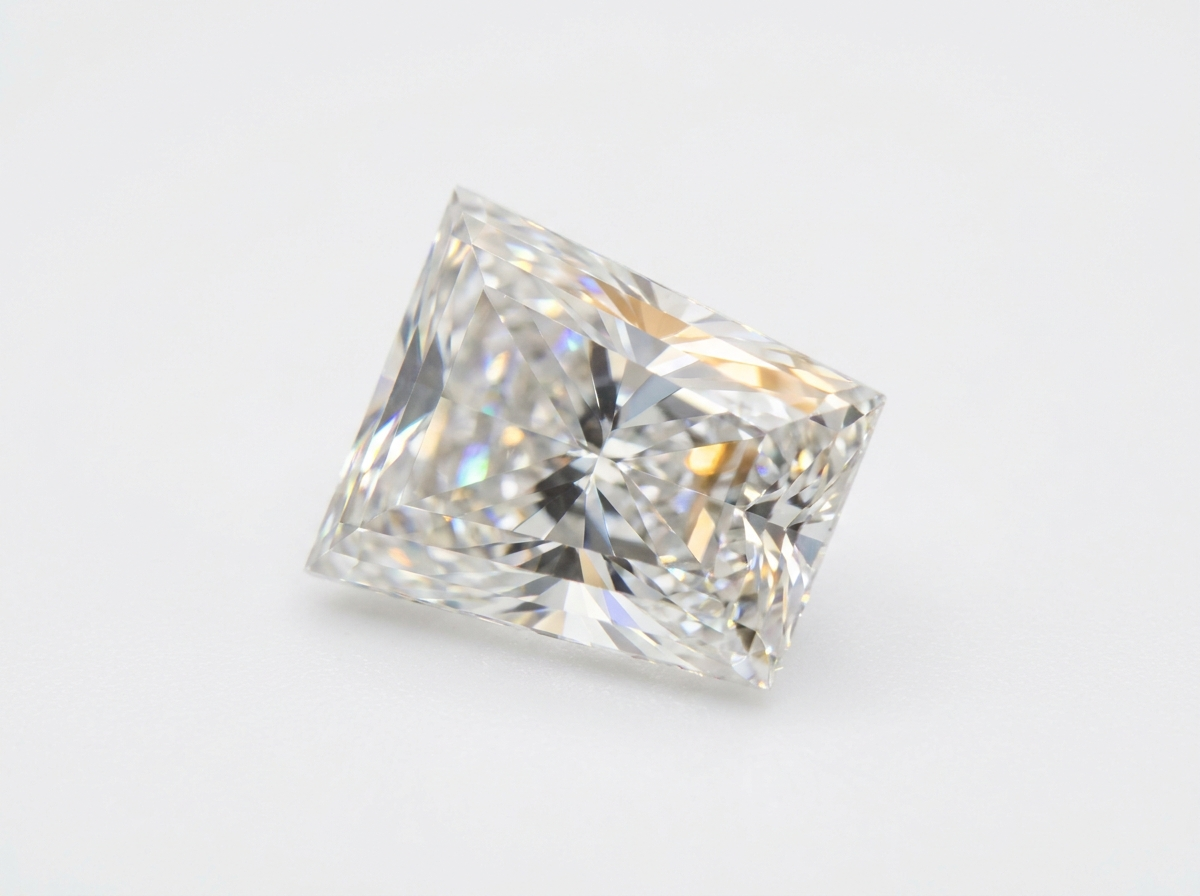
Trap Brilliant diamonds are trapezoid-outline side stones cut with brilliant (multi-facet) faceting instead of flat step facets, giving noticeably more fire than a standard trapezoid step cut while keeping the same calibrated four-sided shape. Guru Diam stocks 886+ Trap Brilliant stones, calibrated and matched for pavé, three-stone, and channel work — this guide covers the facet structure, grading, pricing, and ordering details jewelers need before specifying them on a build sheet.
What is a Trap Brilliant diamond?
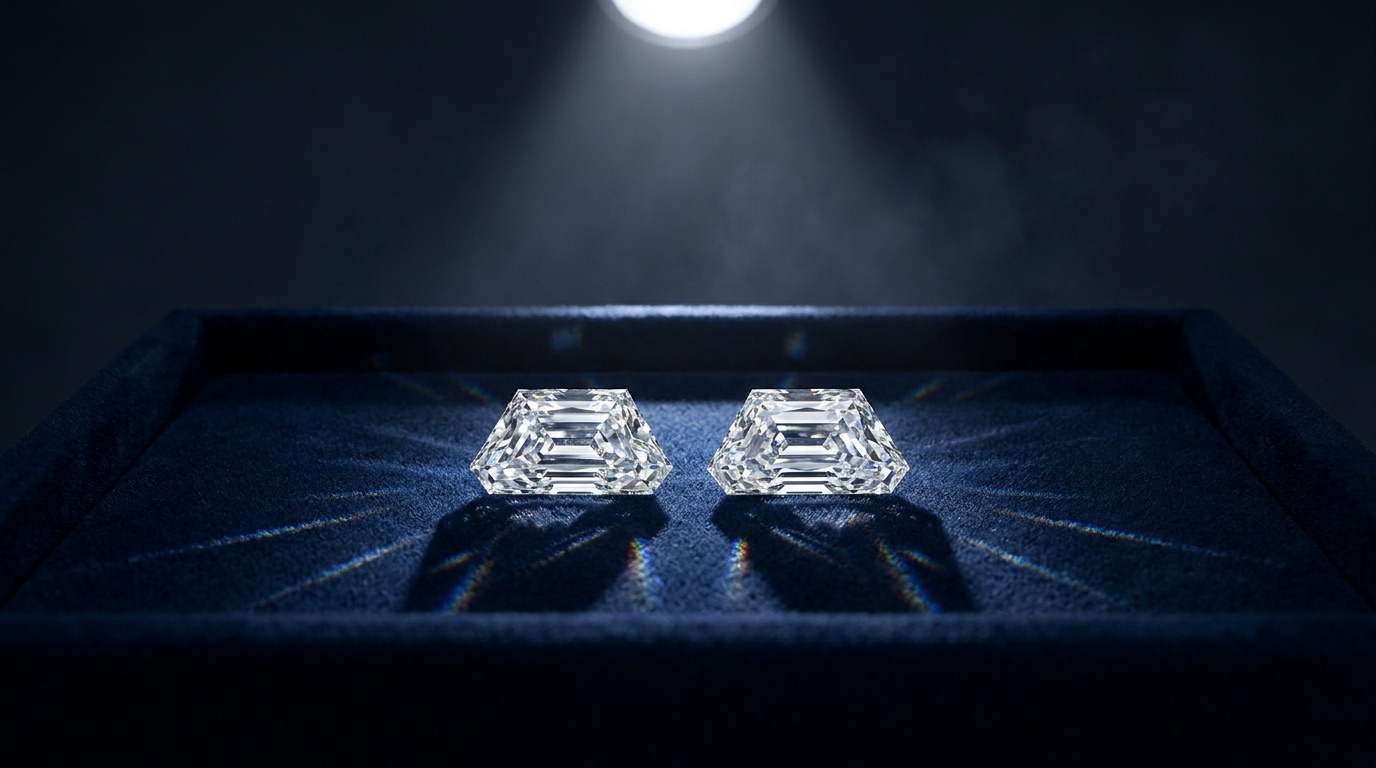
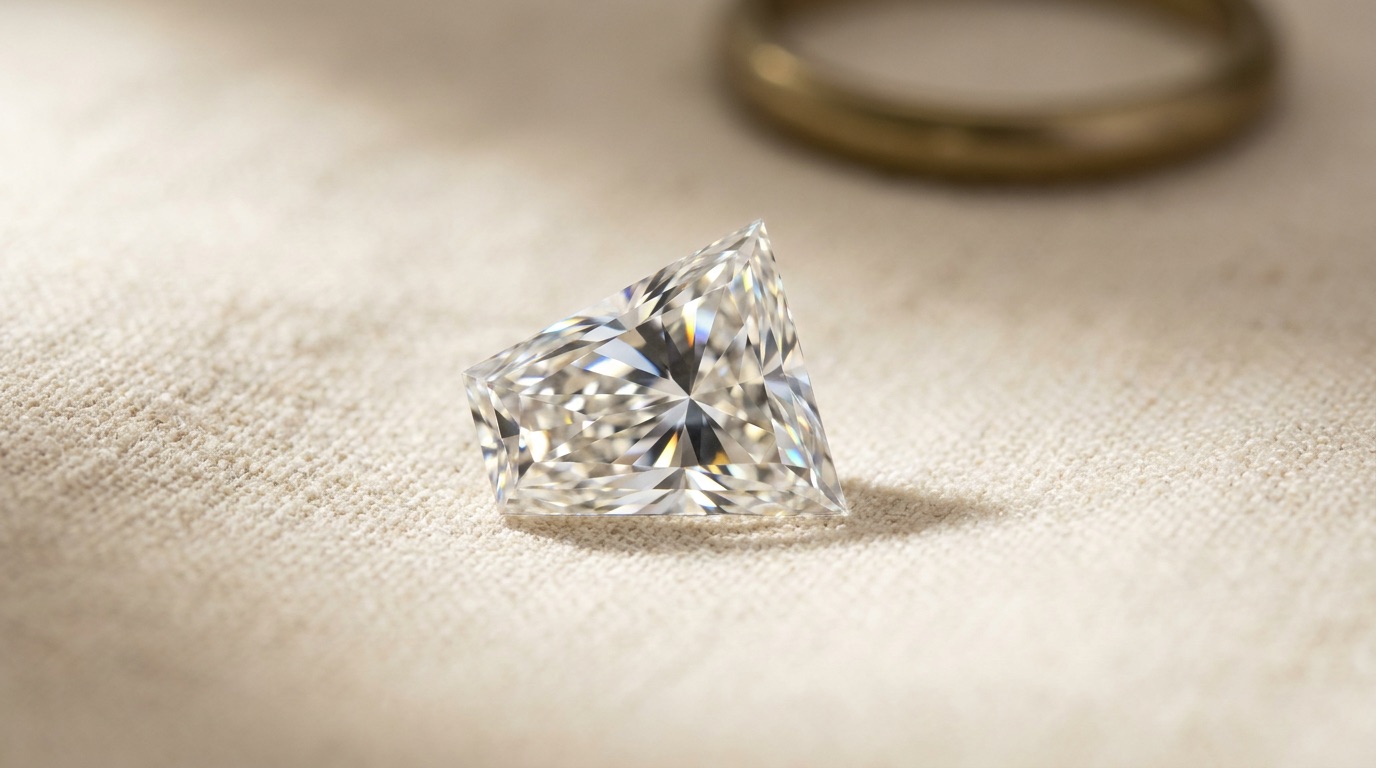
A Trap Brilliant is a trapezoid-outline diamond — four sides, two parallel (a shorter top edge and a longer bottom edge, or vice versa) and two slanted — cut with a brilliant facet arrangement rather than parallel step facets. "Trapezoid" describes the outline; "brilliant" describes what happens on the surface. The same outline can be finished either way, and the two results behave completely differently under light even though they're the same silhouette on a mounting.
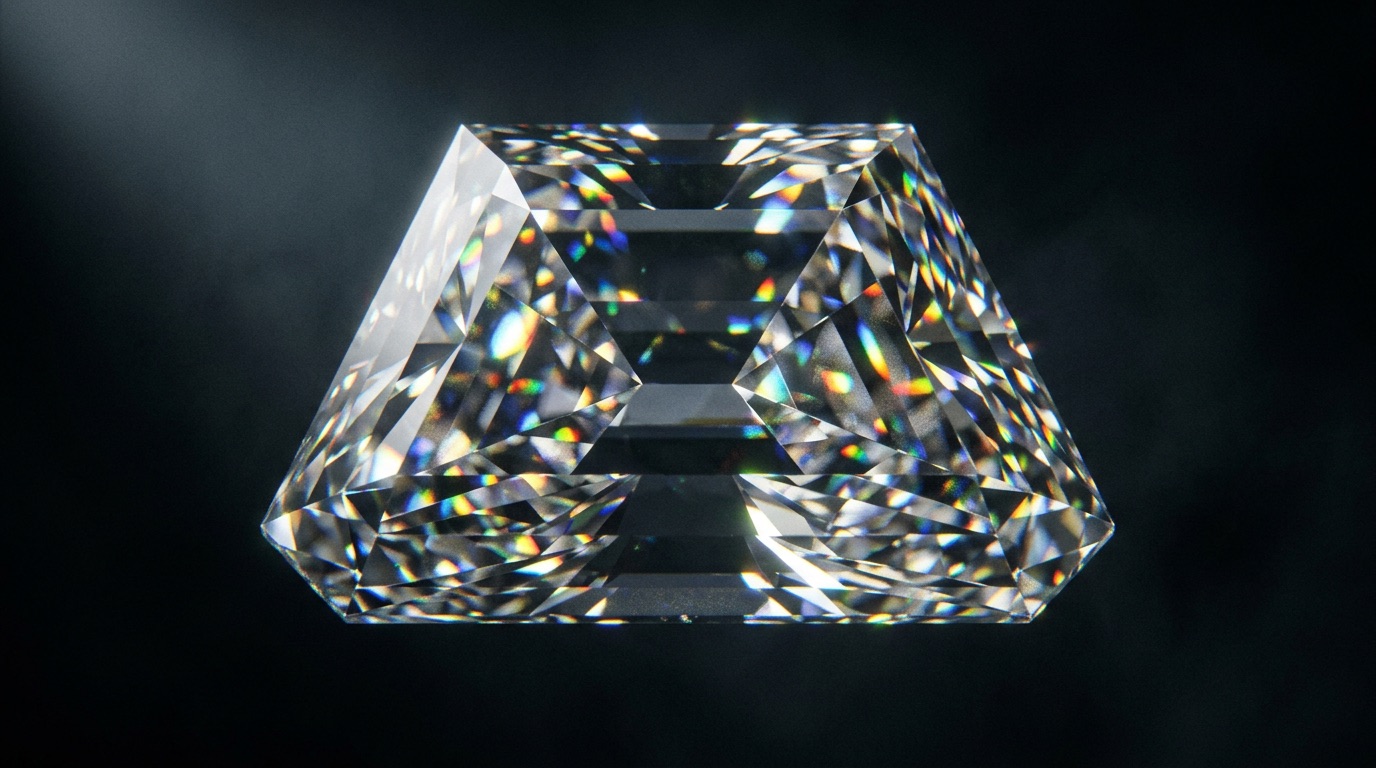
Step-cut trapezoids (sometimes just called "trap cut" in trade shorthand) use long, flat, rectangular facets running parallel to the girdle — the same faceting logic as an emerald or baguette cut. Light moves through those facets in broad flashes rather than pinpoint sparkle, which reads as clean and architectural. A Trap Brilliant swaps that facet pattern for a kite-and-triangle arrangement radiating outward from the table, closer to what you'd see on a princess or radiant cut scaled down and reshaped to a four-sided trapezoid. More facet junctions means more light-return events, which is the entire source of the extra fire — the outline hasn't changed, only how the surface breaks up light.
Because the shape is calibrated rather than a one-off custom cut, Trap Brilliant stones are produced and sold to fixed millimeter dimensions and length-to-width ratios, the same convention used across other trade calibrated shapes. That's what makes them usable as side stones in the first place — a jeweler specifying a 4.5mm x 6mm Trap Brilliant pair needs every pair at that size to actually match, not just approximate it.
Facet anatomy: why brilliant faceting changes a trapezoid's performance
Faceting a trapezoid is a harder engineering problem than faceting a round brilliant, and it's worth understanding why, because it explains most of the price and quality variance between suppliers. A round brilliant has 360 degrees of rotational symmetry to work with — the same facet pattern repeats evenly around the stone. A trapezoid has none. It has a short parallel edge, a long parallel edge, and two non-parallel sides at different angles, so the crown and pavilion facets have to be individually calculated to meet cleanly at the corners and along both slanted edges without creating dead zones or uneven light return.
A well-cut Trap Brilliant typically carries somewhere in the 25–33 facet range depending on the exact house pattern, well below a round brilliant's 57–58, but arranged so the kite and triangle facets still sit close enough to the girdle plane to catch light from a wide range of viewing angles. Cut too shallow and the stone windows — you see straight through the table to the setting metal underneath, which is a visible, obvious defect on a side stone sitting right next to a bright center diamond. Cut too deep and the stone looks small for its millimeter footprint and can develop dark areas near the short parallel edge where facets converge poorly. Trapezoids are also more prone to a mild bowtie-style extinction band running across the shorter axis than most people expect from a shape this compact, and it shows up specifically on stones cut without properly calculated crown and pavilion angle relationships — not something you can safely scale down from round-brilliant proportions and expect to work.
The trapezoid shape in trade context
Trapezoid side stones have been a fixture of three-stone ring construction for close to a century, most visibly in Art Deco-era work where a rectangular or emerald-cut center stone was framed by a pair of trapezoids or tapered baguettes to extend the geometric line of the setting. Step-cut trapezoids dominated that era because step-cut faceting technology and the emerald/baguette family were the era's dominant cutting style — brilliance wasn't the point, geometric symmetry was.
Brilliant-faceted trapezoids are a more recent addition to the calibrated side-stone category, largely because faceting a clean brilliant pattern onto a non-round, non-rotationally-symmetric outline at small calibrated sizes is a harder cutting problem than step-cutting the same outline, and it only became commercially practical at scale once precision faceting equipment and lab-grown production volume made cutting small, exacting brilliant-pattern accent stones economical rather than a bespoke, one-off job. The trade now treats Trap Brilliant as the standard answer whenever a client wants side stones that keep pace with a brighter center stone — a round, cushion, or oval brilliant — rather than sitting next to it as a quiet flat frame.
Trap Brilliant vs. Trap Step Cut — which to choose
Choose Trap Brilliant when the setting calls for more sparkle and less flat geometry — a three-stone ring where the side stones should still catch light actively, or a pavé/halo build where brilliance needs to read consistently across every stone. Choose the step cut when uniformity and a quiet, architectural look matter more than fire — a step-cut center stone (emerald, Asscher) paired with step-cut trapezoids reads as a single continuous line of faceting rather than two competing textures, which is exactly what some clients want. Both are calibrated to the same trapezoid outline; the faceting is the entire decision.
There's a practical rule of thumb worth passing to clients who can't decide: match the side-stone faceting family to the center stone's faceting family unless the client specifically wants contrast. A step-cut center with brilliant-faceted trapezoid sides creates visible tension between a quiet center and sparkly accents — sometimes intentional, sometimes just a mismatch nobody asked for. A brilliant center (round, cushion, radiant, oval) with Trap Brilliant sides keeps the whole hand reading as one consistent level of sparkle. When the center stone is a step cut and the client still wants side-stone fire, that's a legitimate design choice — just flag it as a deliberate contrast rather than a default.
How Guru Diam cuts and sources Trap Brilliant diamonds
Guru Diam's Trap Brilliant stones are CVD lab-grown and cut, faceted, and calibrated in-house end to end — rough selection, cutting, polishing, and final calibration all happen under one roof rather than being split across multiple outside vendors, which is what keeps a matched pair or a larger matched set consistent instead of assembled after the fact from stones cut on different equipment at different times. That in-house control matters more for a shape like this than it does for round brilliants, because the facet junctions on a trapezoid are unforgiving of small angle drift between stones that are supposed to sit as a mirrored pair.
Because the outline is calibrated, Guru Diam holds standing inventory across the common millimeter and carat ranges rather than cutting every order from scratch — that's the difference between a jeweler getting a matched set the same week versus waiting on a custom cutting run. When a request falls outside the standard calibrated sizes — a non-standard length-to-width ratio, an unusual carat target, or a larger set for channel or eternity-style work — those go to a custom cutting queue rather than pulled from stock, and lead times run longer than an on-hand order.
Grading & quality considerations specific to this shape
Trapezoid side stones live or die on matching, not on any single stone's individual grade. Because they're almost always sold and set as a pair (or a larger symmetric set for channel work), the thing that shows on a finished ring isn't "is this one stone well cut" — it's "do these two stones look identical sitting three millimeters apart from a center diamond that's drawing all the attention." A few points that matter more here than on most other shapes:
Length-to-width ratio consistency. A pair that's off by even a fraction of a millimeter in the L/W ratio reads as visibly mismatched once set, even if each stone individually measures within spec. Calibrated stock is cut to fixed ratios precisely so this doesn't happen.
Color and clarity matching across the pair. Two stones can both grade, say, G/VS2 on paper and still look different face-up if one runs warmer or has an inclusion positioned differently relative to the facet pattern. Guru Diam matches pairs visually as well as by grade before they ship as a set.
Symmetry of the facet junctions. On a shape this small, a facet that meets the girdle a fraction off from its mirror facet on the other side of the stone is visible to the naked eye once light hits it at the wrong angle — this is the single most common quality issue on poorly cut trapezoid brilliants and the reason in-house cutting control matters.
Certification convention. Trap Brilliant stones are sold as calibrated parcel or matched-set goods, IGI-gradable on request, rather than individually certified — the same convention used across other calibrated side-stone shapes. For larger trapezoids used as a feature or center stone rather than a side stone — outside the typical calibrated size range — individual IGI, GIA, or GCAL grading can be arranged; ask the desk when placing the order if that's the intended use.
Pricing factors for Trap Brilliant diamonds wholesale
A handful of variables move the price on a Trap Brilliant order, roughly in order of impact:
Carat weight and millimeter size. The baseline driver, same as any diamond — larger stones cost more per piece and, past a certain size, per carat.
Color and clarity tier. Matching a pair to a specific center-stone color grade (say, sides that need to read as colorless as an F/G center) costs more than sourcing from broader color/clarity stock, because the matching pool narrows.
Set size. A single stone, a matched pair, and a larger matched set (three, four, or more stones for channel or eternity-style side work) each have a different pricing structure — larger sets take more of the available matching inventory per order and cost more to assemble consistently.
Standard calibration vs. custom sizing. Stock calibrated millimeter sizes and ratios price lower and ship faster because they're pulled from on-hand inventory. A non-standard L/W ratio or an odd carat target routes to custom cutting, which costs more and takes longer.
Fancy color. Trap Brilliant is available in fancy color on request within Guru Diam's confirmed fancy color range — yellow, pink, blue, and green — priced separately from white/colorless stock and generally quoted per request rather than listed at a fixed rate, since fancy color matching across a pair narrows the sourcing pool further than color-grade matching on white stones.
None of these are list-priced publicly the way a catalog SKU would be, because a matched set is inherently a sourcing job, not a shelf pull — open a wholesale account for live pricing on a specific size, color, and set count.
Styling & use-case guidance for jewelers reselling Trap Brilliant stones
Three-stone rings
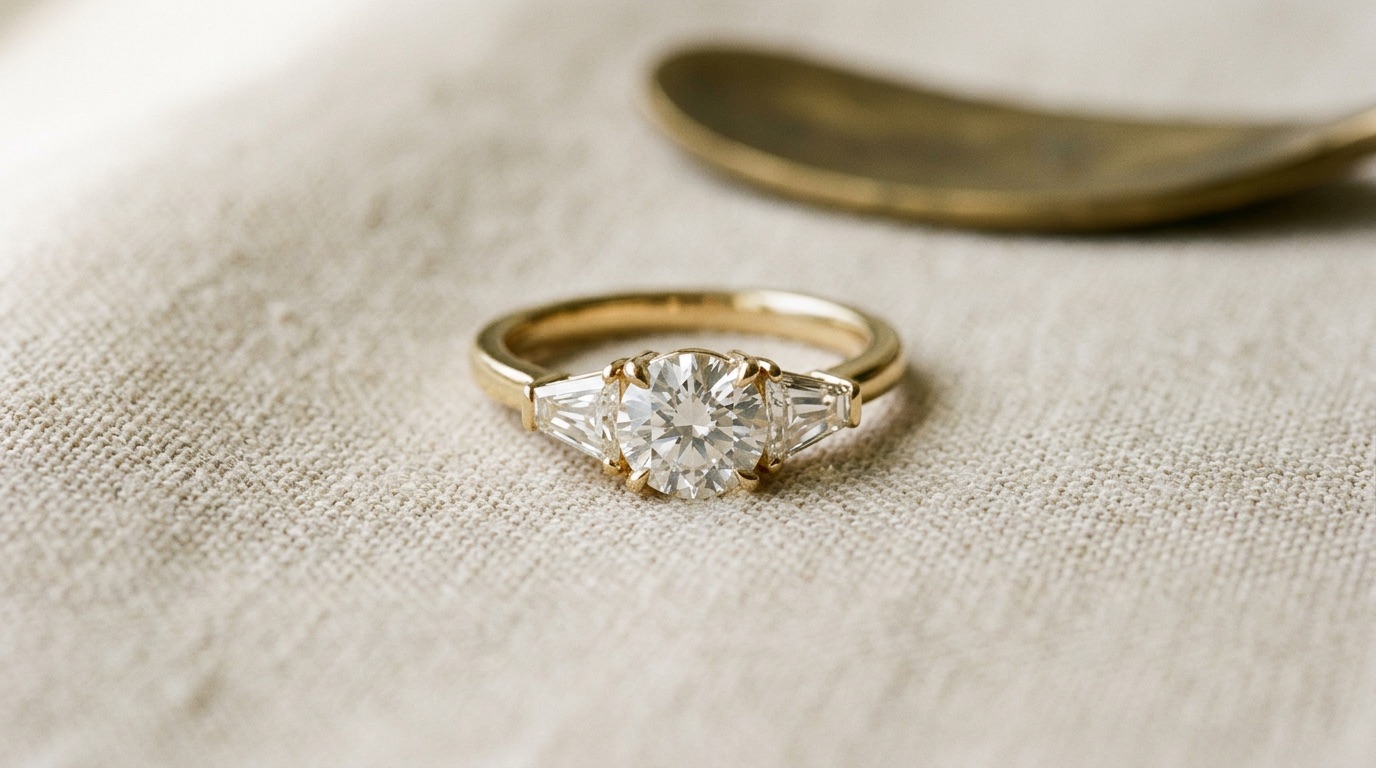
The classic application. Trap Brilliant pairs flank an oval, round, cushion, or radiant center stone, sized so the shorter parallel edge sits against the center stone and the longer edge runs toward the shank. Because Trap Brilliant carries real fire rather than the flatter step-cut look, it's the right call whenever the client wants the whole ring reading as continuously sparkly rather than a bright center framed by quiet geometry.
Pavé and halo work
Where the setting calls for a run of small calibrated accents around a halo or down a band, brilliant faceting keeps every stone contributing sparkle at a consistent level — a step-cut trapezoid dropped into a pavé run would read as a flat gap in an otherwise sparkling line. This is where Guru Diam's deep on-hand stock across sizes matters most, since a pavé or halo build often needs more matched pieces than a simple three-stone pair.
Channel and cluster settings
Larger matched sets — beyond a simple pair — get used in channel-set side clusters, where a run of trapezoids graduates in size along the shank. This is a custom matching job by nature: every stone in the run needs to hold the same color, clarity, and cut quality while the size steps down, which is a harder sourcing task than matching a single pair and priced accordingly.
Earrings and studs
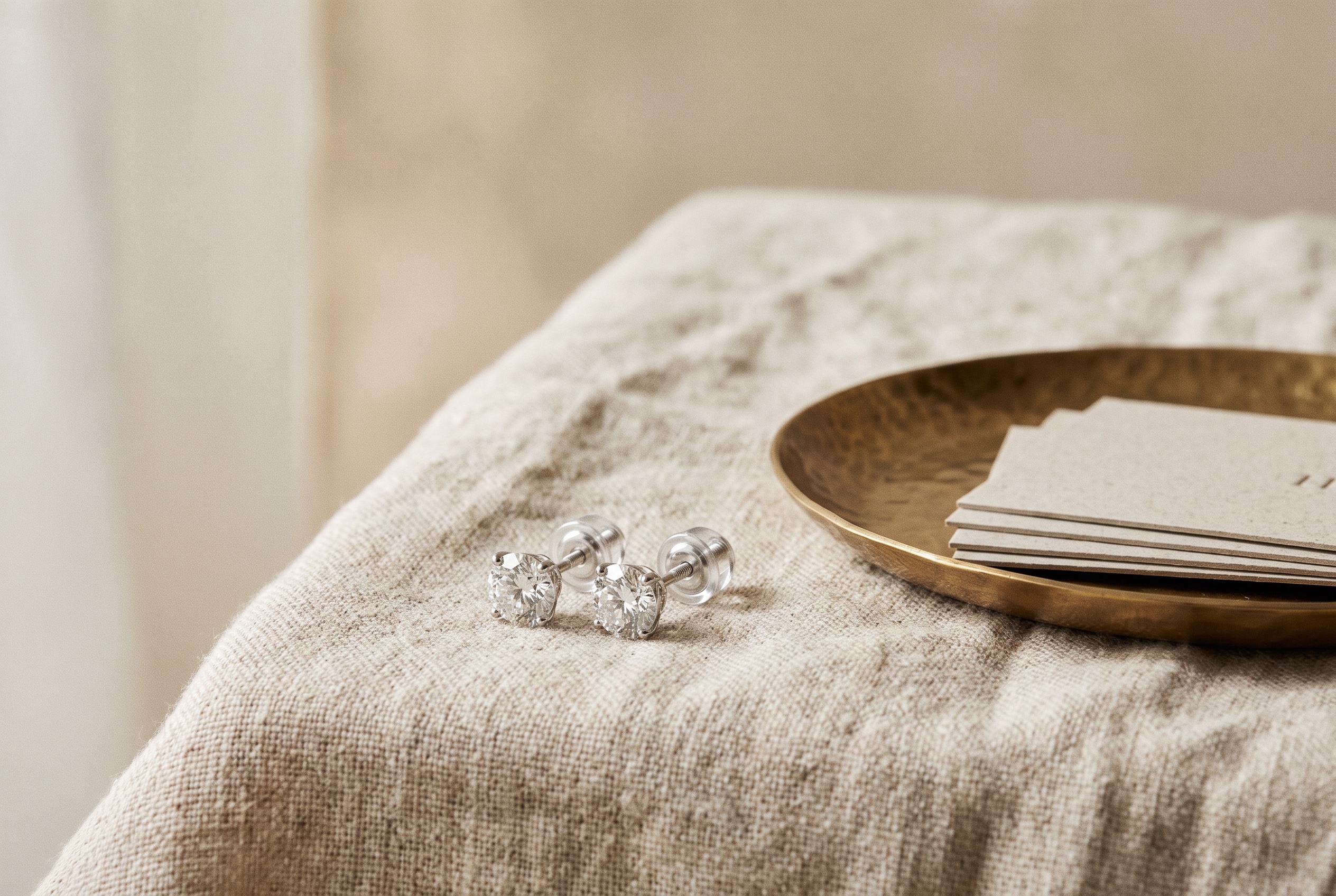
A matched pair of Trap Brilliant stones set as simple studs or as the drop element in a earring design reads as more architectural than a round brilliant pair while still carrying real sparkle — a middle ground clients sometimes want when a plain round stud feels too safe and a step-cut baguette stud feels too quiet.
Matching and sourcing
Like any calibrated side stone, Trap Brilliant orders are a matching problem first — size, angle, and tone need to be consistent across every stone in a set. Guru Diam holds deep on-hand stock across sizes specifically to support true matched sets rather than approximated ones, CVD lab-grown, IGI-gradable on request. When a jeweler needs a set larger than what's sitting in current calibrated stock — a four- or six-stone channel run, for example — that request goes through the same in-house cutting operation that produces the standing inventory, rather than being farmed out to source loose stones from multiple lots and hope they match well enough once they arrive.
Open a wholesale account for live pricing and to request a matched set for a specific project from our New York Diamond District desk.
Trap Brilliant compared to baguette and trillion side stones
Two other calibrated shapes come up constantly in the same conversation as trapezoids, and it's worth knowing where each one fits relative to a Trap Brilliant.
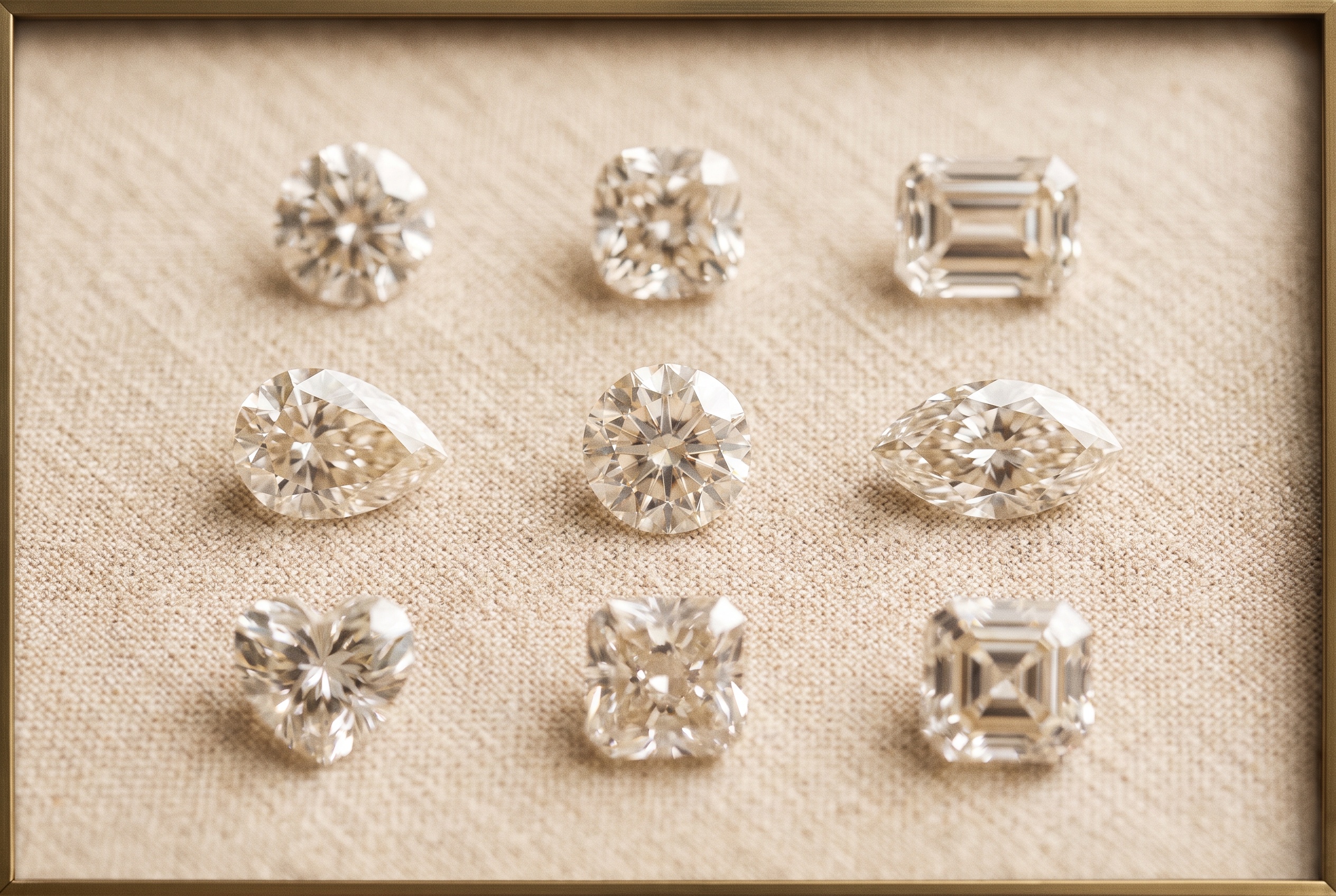
Baguette (straight or tapered). A baguette is a rectangular step cut — parallel long sides instead of a trapezoid's slanted sides — and it's almost always cut as a step cut rather than a brilliant, since the whole appeal of a baguette is the clean, elongated line it draws down a shank or across a halo. Where a trapezoid sits at an angle framing a center stone, a tapered baguette runs in a straight or graduated line, most often in channel or eternity-style work. If a client wants fire to match a brilliant center stone in that same channel-run application, Trap Brilliant is the closer match; if they want the quiet architectural line a baguette is known for, step-cut is the right call regardless of outline.
Trillion. A trillion is a triangular shape, almost always cut with brilliant faceting, and reads as more geometrically aggressive than a trapezoid — three points instead of a four-sided outline with two parallel edges. Trillions get used as side stones on a similar range of center shapes as trapezoids do, but the pointed corners make them a bolder, more angular styling choice, while a trapezoid's parallel top edge gives it a softer, more grounded look against the center stone. A client choosing between the two is usually choosing between "architectural and pointed" (trillion) and "geometric but softened" (Trap Brilliant).
All three shapes are calibrated goods in Guru Diam's inventory, cut and matched under the same in-house process, so switching a build sheet between them mid-project is a sourcing conversation rather than a different vendor relationship.
How to order Trap Brilliant diamonds wholesale from Guru Diam
Loose Trap Brilliant stones are on-hand inventory — in stock now, ready to ship against a wholesale order, not a made-to-order product with a production wait. Placing an order is a sourcing conversation, not a checkout flow: specify the millimeter size and L/W ratio, color and clarity target, and set count (single, pair, or larger matched set), and the desk pulls from current calibrated stock or routes the request to custom cutting if it falls outside standard sizing.
Wholesale accounts get live pricing rather than list pricing, since a matched set's price depends on exactly what's being matched. Guru Diam serves 2,000+ active wholesale accounts across independent jewelers, designers, and manufacturers, and Trap Brilliant is one of dozens of calibrated shapes carried alongside antique cuts, fancy color stones, and finished jewelry lines. If the project calls for Guru Diam to also set the finished piece — a three-stone ring or a channel-set band built around the Trap Brilliant sides — that moves into custom jewelry production, where finished rings are turned around in 4–6 days once the design is confirmed; the loose-stone sourcing and the finished-piece build are two separate steps with two separate timelines, so flag upfront which one the order needs.
FAQ
What's the difference between Trap Brilliant and a regular trapezoid? "Regular trapezoid" usually means the step-cut version — flat, broad facets. Trap Brilliant is the same trapezoid outline cut with brilliant (multi-facet) faceting instead, producing more fire and sparkle for the same shape.
When should I use Trap Brilliant instead of Trap Step Cut side stones? Use Trap Brilliant when you want the side stones to actively sparkle alongside the center stone — common in three-stone rings and pavé builds. Use the step cut when a flatter, more uniform geometric look is the goal.
Are Trap Brilliant diamonds certified? They're sold as calibrated parcel/matched-set goods, IGI-gradable on request, rather than individually certified — the same convention as other calibrated side-stone shapes. Larger trapezoids used as a feature or center stone can be individually graded through IGI, GIA, or GCAL on request.
How many Trap Brilliant stones do I need for a set to match well? A basic three-stone ring needs a matched pair. Pavé, halo, or channel builds need larger matched sets, and the more stones in the run, the more critical consistent color, clarity, and cut quality become across every piece — which is why larger sets are priced and sourced as a distinct job from a simple pair.
Can I get Trap Brilliant diamonds in fancy color? Yes, on request, within Guru Diam's confirmed fancy color range — yellow, pink, blue, and green. Fancy color matched sets narrow the sourcing pool further than white/colorless matching, so lead time and pricing are quoted per request.
What size range does Guru Diam carry in Trap Brilliant? Standard calibrated sizes are held as on-hand inventory across the common millimeter and carat ranges used in three-stone and pavé work; non-standard ratios or larger carat targets route to custom cutting. Open a wholesale account for the current size list and live pricing.