
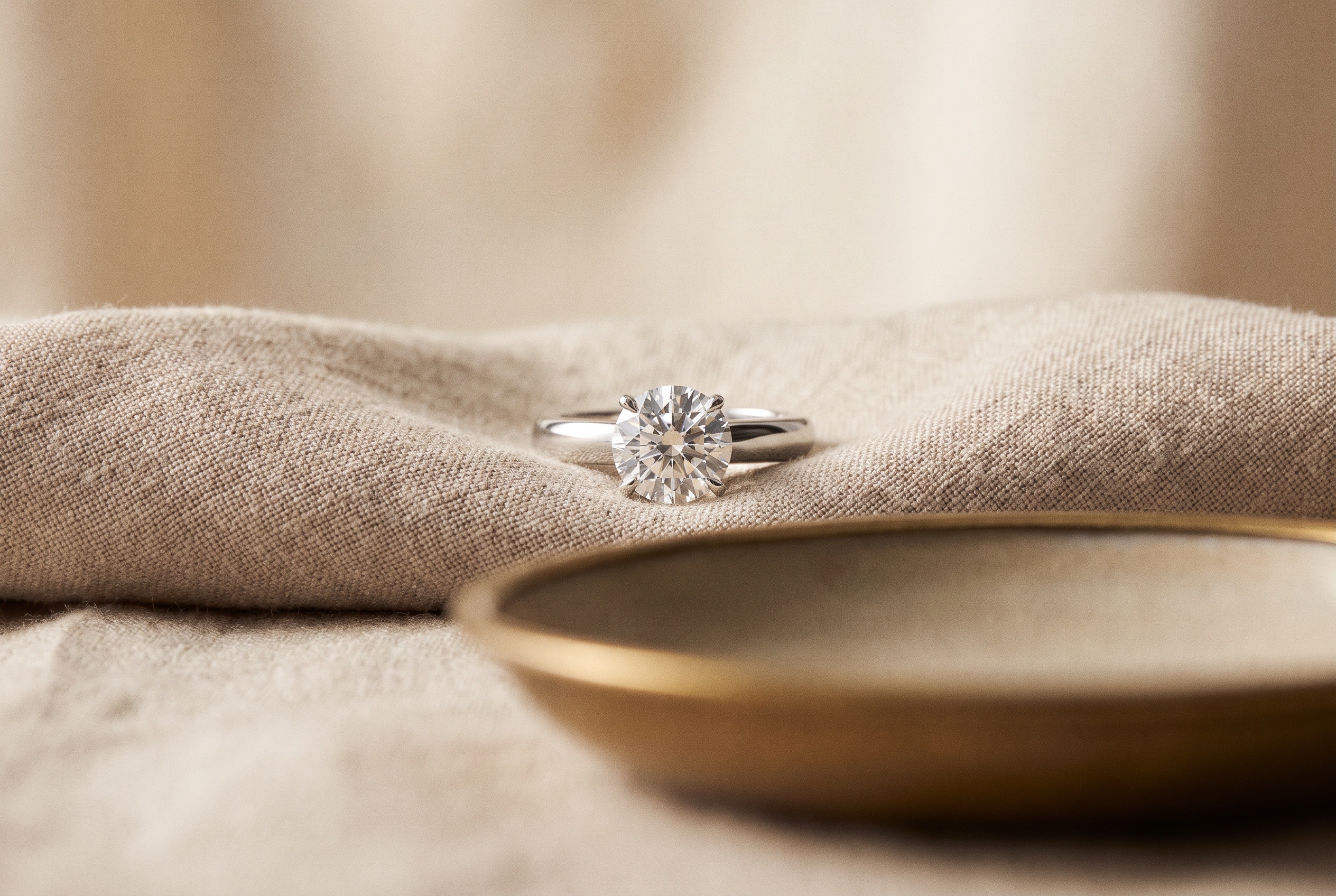
A 3 carat lab-grown diamond sits in the statement-piece range — roughly 9.4mm in diameter for a well-proportioned round brilliant — and prices well below a natural stone of comparable grade, though the gap between lab-grown and natural pricing widens noticeably at this size compared to more common bridal weights like 1 carat. Price at 3 carats is still driven by the same 4Cs (cut, color, clarity, carat) that determine pricing at any weight, but each factor carries more absolute dollar impact once the base carat weight itself is this large.
This guide breaks down what actually moves the price of a 3-carat lab-grown diamond, how it compares to the 2-carat and 4-carat sizes that bracket it, how shape affects cost at this size, what certification adds, how lab-grown pricing compares to natural at 3 carats specifically, and how to buy at wholesale with confidence in what's driving the number on a quote.
Where 3 Carats Sits in the Sizing Landscape
Three carats sits just past the upper edge of standard bridal shopping and into what the trade generally treats as a statement or large center-stone category. As covered in our diamond size chart guide, a round brilliant at this weight measures approximately 9.4mm in diameter — a clear, immediately visible step up from the 8.2mm of a 2-carat stone, though a smaller jump than the leap from 1 to 2 carats.
| Carat Weight | Approx. Round Brilliant Diameter | Sizing Tier |
|---|---|---|
| 1.00 ct | 6.5mm | Standard bridal range |
| 2.00 ct | 8.2mm | Upper bridal / statement range |
| 3.00 ct | 9.4mm | Statement / large center stone |
| 4.00 ct | 10.1mm | Large statement center stone |
| 5.00 ct | 11.0mm | Very large statement center stone |
This non-linear relationship — where diameter grows more slowly than weight as carat size increases — is a direct consequence of weight scaling with volume while diameter is a single linear measurement. It's a useful framing for a retail conversation with a buyer choosing between adjacent sizes, since the visible size difference between 3 and 4 carats is real but proportionally smaller than the price difference typically implies.
3 Carat vs. 2 Carat vs. 4 Carat: How to Choose Between Them
- 2 carats sits at the upper edge of what most buyers would still call a standard bridal size, generally carrying a meaningfully lower total price than 3 carats at comparable color and clarity. See our 2 carat lab-grown diamond price guide for the full breakdown at that size.
- 3 carats is the point where a stone starts reading unambiguously as a statement piece to most observers, while still remaining practical for everyday wear on the majority of hand sizes — a genuine middle ground between accessible bridal sizing and the more dramatic upper carat weights.
- 4 carats represents a further step into statement territory, with a modestly larger visible diameter and typically a real price premium over 3 carats, particularly once rough scarcity and per-stone pricing volatility both increase further at the top end of common trade sizes. Our 4 carat lab-grown diamond guide covers that size in depth.
For buyers who want a genuinely large stone without the highest premiums that come with crossing into 5-carat-plus territory, 3 carats is frequently the size that balances visual impact against total cost — a consideration worth raising directly with any buyer comparing quotes across adjacent weights rather than fixing on one number without context.
What Drives 3 Carat Lab-Grown Diamond Pricing
| Factor | Effect on Price at 3 Carats |
|---|---|
| Cut | Carries outsized weight at this size — a poorly cut 3-carat stone looks visibly duller across its much larger table than the same cut flaw would on a 1-carat stone, so buyers at this size are less willing to compromise on cut grade |
| Color | Color differences become more visible to the naked eye at 3 carats than at smaller sizes, since a larger table shows more body color; D-F commands a real premium over G-H at this weight specifically |
| Clarity | VS1-VS2 remains a common sweet spot, though buyers at 3 carats more frequently step up to VVS given how much more surface area is available for an inclusion to become visible |
| Shape | Round brilliant commands the highest per-carat price; fancy shapes typically run 15-30% less per carat, and the dollar savings at 3 carats are proportionally larger than at smaller weights |
See our 4Cs of diamonds guide and diamond pricing guide for a fuller breakdown of how these factors interact across carat weights generally.
Round Brilliant vs. Fancy Shapes at 3 Carats
| Shape | Relative Per-Carat Price vs. Round | Approx. Dimensions at 3ct |
|---|---|---|
| Round brilliant | Baseline (highest) | ~9.4mm diameter |
| Oval | 15-20% less | ~12.2mm × 8.6mm |
| Cushion | 15-20% less | ~9.0mm × 9.0mm |
| Emerald | 20-25% less | ~10.1mm × 7.5mm |
| Pear | 20-25% less | ~12.5mm × 8.4mm |
| Marquise | 20-30% less | ~15.2mm × 7.5mm |
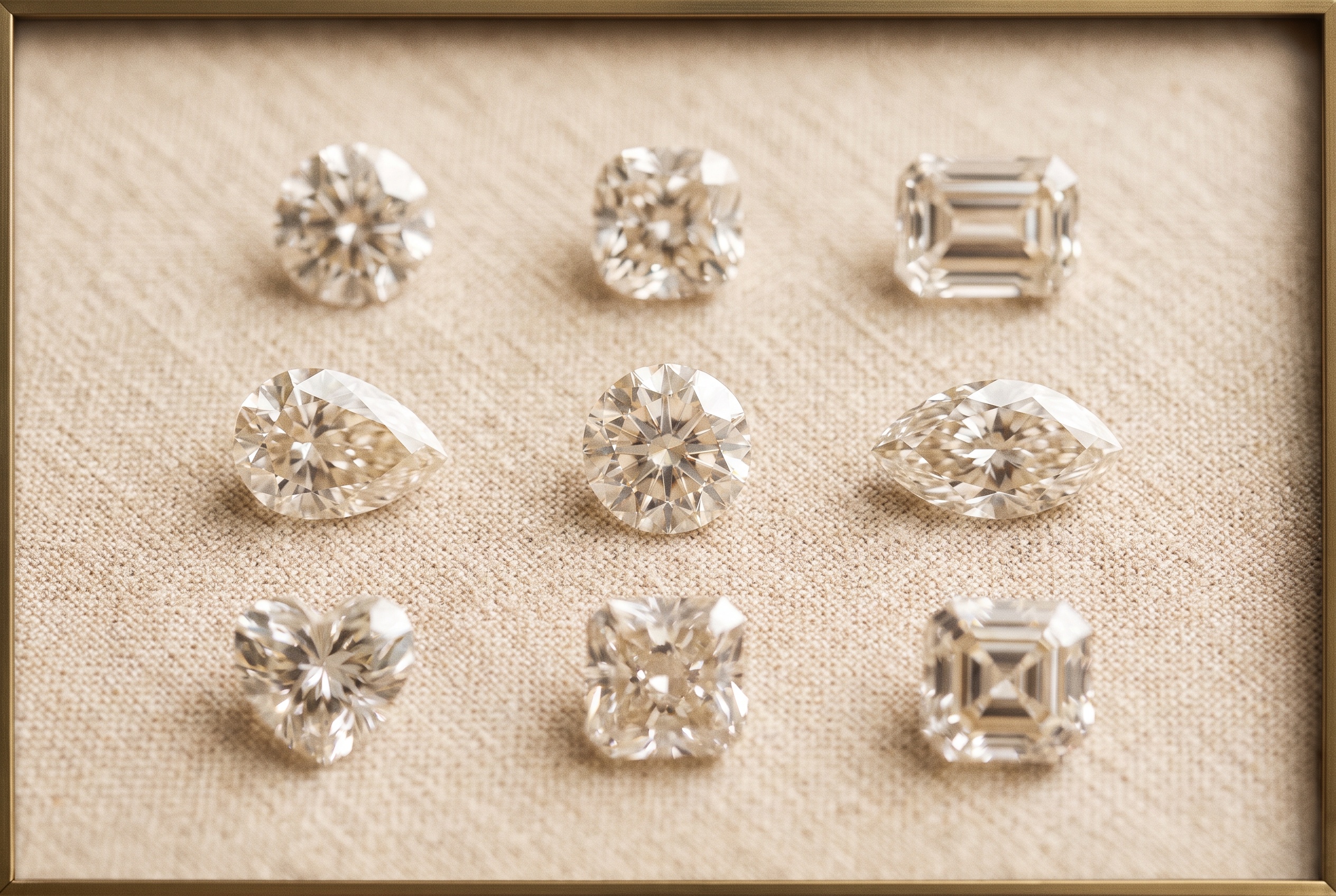
At 3 carats, the dollar gap between round brilliant and a fancy shape at the same clarity and color becomes substantial in absolute terms, even though the percentage discount is similar to what applies at smaller weights. Elongated shapes like oval, pear, and marquise also deliver meaningfully more visible surface area per carat than round at this size, which is part of why fancy shapes see disproportionate demand once buyers move into the 3-carat-plus range specifically for statement pieces — a longer profile reads dramatically larger on the hand than a round of the same weight. Our marquise diamond guide covers this elongation effect in more depth.
What Certification Adds to the Price at This Size
Certification is effectively universal at 3 carats in the trade-quality segment of the market — buying an uncertified stone this large carries a level of risk that almost no serious buyer or retailer accepts, given how much value rides on accurate grading at this weight. The documentation premium a certificate adds is proportionally similar to what it adds at smaller sizes, but the absolute dollar value of that verification is much higher, since a grading error or misrepresentation at 3 carats is a far more costly mistake than the same error would be on a smaller stone.
- IGI is the most common certifying lab for lab-grown diamonds specifically, with strong international trade recognition.
- GIA carries the strongest overall trade and consumer name recognition across both natural and lab-grown, often commanding a modest premium reflecting that recognition — a premium some buyers consider worth paying specifically at larger, more expensive sizes.
- GCAL is known for particularly rigorous light-performance and cut-grade analysis, valuable at a size where cut quality has an outsized visual impact.
Lab-Grown vs. Natural: 3 Carat Price Comparison
The price gap between lab-grown and natural diamonds widens as carat weight increases, and 3 carats is a size where that widening becomes especially pronounced. Natural rough large enough to yield a well-proportioned 3-carat polished stone is genuinely scarce, since larger rough crystals occur far less frequently than the smaller rough that yields 1-carat finished stones — a scarcity dynamic that doesn't constrain lab-grown production the same way, since CVD growth time scales with manufacturing capacity rather than being limited by what a mine happens to yield at a given size. The result is that a natural 3-carat diamond of a given color and clarity grade typically prices at a substantially larger multiple of its lab-grown equivalent than the same comparison would show at 1 carat.
This gap reflects fundamentally different cost structures rather than a quality difference: natural diamond pricing at large sizes reflects genuine geological rarity, while lab-grown pricing reflects CVD production time, equipment, and energy cost, which scales more predictably with size than natural rough scarcity does. For a retailer positioning a 3-carat statement piece at a specific price point, this widening gap is one of the more compelling arguments for lab-grown at this size specifically, since the relative savings versus natural become more dramatic as carat weight climbs. Our lab-grown diamond guide covers the CVD growth process in more depth.
How Color and Clarity Choices Change the Price at 3 Carats
- G-H color with VS1-VS2 clarity remains a viable trade sweet spot at 3 carats, though buyers more frequently step up toward F color or better given how much more visible a faint tint becomes across a larger table.
- I color is a riskier choice at 3 carats than at 1 carat — warmth that would be nearly invisible on a smaller stone can become noticeable at this size, particularly in a white metal setting with no warm tone to offset it.
- SI1 clarity can still be eye-clean at 3 carats depending on inclusion position, but the margin for error narrows as the stone's face-up surface area grows — our eye-clean diamond guide covers how to evaluate this on a specific stone rather than assuming by grade alone.
Fluorescence and Its Effect on 3 Carat Pricing
Strong fluorescence — particularly blue fluorescence — can modestly reduce price relative to a non-fluorescent stone of the same grade, and that discount carries more absolute dollar value at 3 carats than at smaller weights given the higher base price. For a value-conscious buyer sourcing at this size, a stone with strong fluorescence and otherwise strong grading can represent a genuine, meaningful savings opportunity, provided the specific stone is reviewed to confirm no visible haziness — a step worth taking more seriously at this price point than at a smaller, lower-stakes carat weight.
How 3 Carat Lab-Grown Pricing Has Moved Over Time
Lab-grown diamond pricing at 3 carats has fallen substantially as CVD production has scaled to consistently produce larger rough, a trend that has made statement-size lab-grown center stones considerably more accessible than they were even a few years ago. This trajectory has moved faster and further at larger carat weights than at 1 carat specifically, since production capacity for bigger rough was the later-maturing part of the lab-grown supply chain to scale. For a jeweler who hasn't sourced at 3 carats recently, confirming current pricing rather than working from an older reference point is especially worth doing at this size, since the gap between "current" and "a year or two old" pricing can be more pronounced here than at more common, more stable bridal weights.
Typical Trade Price Ranges Across Quality Tiers at 3 Carats
Exact pricing depends on a specific supplier and current market conditions, but a useful way to think about 3-carat lab-grown pricing is in relative tiers rather than fixed dollar figures, since the underlying market moves:
| Quality Tier | Typical Grading Combination | Relative Price Positioning |
|---|---|---|
| Value tier | I-J color, SI1-SI2 clarity, Good-Very Good cut | Lowest price point that still holds up as genuinely eye-clean in most settings, though the margin for a visible flaw is tighter than at smaller weights |
| Trade sweet spot | F-H color, VS1-VS2 clarity, Very Good-Excellent cut | A meaningful step up from the value tier, and the most commonly stocked combination for 3-carat statement inventory |
| Premium tier | D-F color, VVS1-VVS2 clarity, Excellent-Ideal cut | A substantial premium over the trade sweet spot, appealing to buyers who want top grading specifically to match the piece's overall statement-level investment |
Unlike at 1 carat, where most retail volume concentrates heavily in the trade sweet spot, 3-carat buyers skew somewhat more toward the premium tier — a stone this size is already a significant purchase, and buyers at this price point more often extend the additional budget for top grading than a buyer sourcing a more standard bridal-size stone.
Common Buyer Mistakes When Shopping by Price Alone at This Size
- Comparing quotes without confirming identical grading. At 3 carats, a small grading gap between two quotes can represent a substantial dollar difference — any comparison needs to hold the 4Cs constant to be meaningful.
- Underweighting cut grade. A poorly cut stone looks visibly duller across a larger table than the same cut flaw would on a smaller stone, making cut grade a genuinely higher-stakes line item at this size than at 1 carat.
- Not verifying certification independently. Given how much value a 3-carat stone represents, a certificate number should always be checked against the issuing lab's own database rather than taken at face value.
- Treating 3 carats as simply "three times the price" of 1 carat. Because per-carat pricing accelerates with size, and because larger stones carry proportionally higher scrutiny on cut and color, total price at 3 carats is typically well above a straight multiple of 1-carat pricing at the same grading combination.
3 Carat Lab-Grown Diamonds in Different Settings
- Solitaire settings — see our solitaire setting guide — let a 3-carat stone stand entirely on its own, which is a common choice at this size specifically since the stone itself already reads as a statement piece without additional framing.
- Halo settings can push a 3-carat center stone's apparent visual footprint even further, a choice some buyers make specifically to maximize presence for a milestone anniversary or upgrade piece.
- Three-stone settings pair a 3-carat center with two smaller side stones, changing the total stone budget calculation meaningfully beyond the center stone price alone at this size.
Buying 3 Carat Loose vs. Pre-Set
A jeweler or designer sourcing a 3-carat lab-grown stone can buy loose for a fully custom build, or source a pre-set finished piece where the stone is already mounted. Given the significant value a 3-carat stone represents, loose sourcing is the more common path at this size, since it lets a buyer present multiple candidate loose stones side by side for direct comparison before committing to a specific one — a meaningfully more consultative sales process than at a smaller, more commoditized carat weight where pre-set inventory turns over faster.
Comparing Quotes Across Multiple Suppliers
When evaluating quotes for a 3-carat stone, the most reliable comparison holds every variable constant except price: same shape, same color grade, same clarity grade, same cut grade, and the same certifying lab. Given the higher stakes at this size, requesting quotes on a specific, fully-specified stone — down to the certificate number where a supplier has one in hand — is especially worth doing at 3 carats, since even a small grading difference between two quotes can represent a meaningful dollar gap on its own, independent of whether one supplier is genuinely offering a better deal.
Insurance and Appraisal Considerations at 3 Carats
A 3-carat stone represents enough value that most buyers insure it separately rather than relying solely on a standard homeowner's or renter's policy, and an accurate independent appraisal — distinct from the diamond's grading certificate — is standard practice before binding a jewelry insurance policy at this size. The grading certificate documents the stone's 4Cs; the appraisal translates that grading into a current replacement-cost figure for insurance purposes, and the two documents serve genuinely different functions even though buyers sometimes conflate them. For lab-grown stones specifically, it's worth confirming an appraiser is current on lab-grown replacement-cost benchmarks, since lab-grown pricing has moved substantially over recent years and an appraisal built on outdated reference pricing can either overinsure or underinsure a piece at this value tier.
Seasonal Demand Patterns for Statement-Size Center Stones
Demand for 3-carat-and-above center stones follows a somewhat different rhythm than standard 1-carat bridal demand — while engagement season still drives a real share of volume, statement-size purchases also see meaningful demand tied to milestone anniversaries, upgrade purchases (a couple replacing an original smaller center stone), and self-purchase occasions that don't track the same holiday and Valentine's Day concentration seen at more standard sizes. A jeweler stocking or sourcing at this weight benefits from planning inventory with this broader, less seasonally concentrated demand pattern in mind, rather than assuming the same restocking calendar that applies to core 1-carat bridal inventory.
Sourcing 3 Carat Lab-Grown Diamonds at Wholesale
Guru Diam supplies certified CVD lab-grown diamonds — no HPHT anywhere in the catalog — with IGI, GIA, and GCAL certification all available, across round brilliant and the full range of fancy shapes. Statement-size inventory in the 3-carat range ships same-day on in-stock stones from New York (before 6pm EST) and Los Angeles (before 4pm PST).
Buyers can browse current 3-carat inventory through the certified diamonds category, and buyers building a full piece around a 3-carat center stone can work through custom jewelry for a setting finished in 4-6 days. For buyers weighing this size against adjacent weights, our 2 carat lab-grown diamond price guide, 4 carat lab-grown diamond guide, and diamond size chart guide cover how price and visible size scale further in both directions. Trade accounts can review terms at the wholesale hub or apply through trade partner.
Frequently Asked Questions
How much does a 3 carat lab-grown diamond cost?
Price varies significantly by cut, color, clarity, shape, and certifying lab, but a 3-carat lab-grown diamond consistently prices well below a natural stone of comparable grade, with the gap widening further than it does at 1 carat. Getting an accurate figure requires pricing a specific combination of the 4Cs rather than a single blanket number.
Why is a 3 carat lab-grown diamond so much cheaper than a natural one?
The gap widens at larger sizes because natural rough capable of yielding a well-proportioned 3-carat polished stone is genuinely scarce, while lab-grown production capacity scales with manufacturing investment rather than being limited by what a mine happens to yield at that size. That's a structural supply difference, not a quality difference.
Is 3 carats a good size for an engagement ring?
Three carats is a genuine statement size that reads clearly as a large center stone while generally remaining practical for everyday wear on most hand sizes — a middle ground between standard bridal sizing and the more dramatic 4-carat-plus range.
What shape is cheapest for a 3 carat lab-grown diamond?
Round brilliant commands the highest per-carat price of common shapes. Elongated fancy shapes like oval, pear, and marquise typically price 15-30% lower per carat while also appearing larger face-up at the same weight, with the dollar savings more pronounced at this size than at smaller weights.
What color and clarity should I choose for a 3 carat lab-grown diamond?
F-H color with VS1-VS2 clarity is a common trade sweet spot at this size, though buyers more often step up toward top color and clarity grades than they do at smaller weights, given how much more visible a faint tint or inclusion becomes across a larger stone's surface.
Does certification matter more at 3 carats than at smaller sizes?
Yes — certification is effectively universal in the trade-quality segment at this weight, since the dollar value at risk from an unverified or misrepresented stone is far higher than at a smaller, lower-cost carat weight.