
A lab-grown diamond is a real diamond — chemically, physically, and optically identical to a mined diamond — grown in a controlled laboratory environment instead of forming naturally underground over billions of years. It has the same crystal structure, the same hardness, and the same brilliance as a natural diamond; the only difference is where and how it formed, not what it's made of.
The term gets searched constantly by people who've heard the phrase but aren't sure what it actually means: is it a real diamond, a synthetic substitute, or something in between? This guide covers how lab-grown diamonds are made, how they compare to natural diamonds and to simulants like moissanite, how they're graded and certified, and what to know before buying one.
Is a Lab-Grown Diamond a Real Diamond?
Yes. This is the single most common misconception the term causes, and the clearest way to answer it is with what a diamond actually is: a mineral made of pure carbon atoms arranged in a specific crystal lattice structure. A lab-grown diamond has that exact same carbon structure — it isn't a diamond-like material or a convincing substitute, it's carbon crystallized into a diamond, produced by replicating the conditions under which natural diamonds form (extreme heat and pressure, or a carbon-rich plasma environment) inside a controlled facility rather than deep in the earth's mantle. Gemologically, chemically, and physically, a lab-grown diamond and a natural diamond are the same material.
How Lab-Grown Diamonds Are Made
There are two production methods used across the lab-grown diamond industry:
CVD (Chemical Vapor Deposition)
A small diamond seed is placed inside a sealed chamber filled with carbon-rich gas. The gas is heated to a plasma state, which causes carbon atoms to separate from the gas and deposit onto the seed layer by layer, gradually building a diamond crystal from the bottom up over several weeks. CVD is the more modern of the two methods and allows for tighter control over the growth environment.
HPHT (High Pressure, High Temperature)
HPHT recreates the extreme heat and pressure conditions found deep underground, compressing carbon source material around a diamond seed inside a mechanical press until it crystallizes into a diamond. HPHT was the original lab-grown production method, developed decades before CVD became commercially viable.
Both methods produce genuine diamond material, and specialized equipment (rather than the naked eye or a standard loupe) is required to distinguish a lab-grown stone from a natural one, since the two are visually indistinguishable to a jeweler without that equipment.
Lab-Grown vs. Natural Diamonds: What Actually Differs
| Factor | Lab-Grown | Natural |
|---|---|---|
| Chemical composition | Pure carbon, diamond crystal structure | Pure carbon, diamond crystal structure |
| Hardness | 10 on the Mohs scale | 10 on the Mohs scale |
| Brilliance and fire | Identical light performance for equivalent cut quality | Identical light performance for equivalent cut quality |
| Formation time | Weeks to a few months | 1 billion to 3 billion years |
| Formation location | Controlled laboratory chamber | Deep underground, brought to the surface by volcanic activity |
| Detectability | Requires specialized lab equipment to distinguish from natural | Requires specialized lab equipment to distinguish from lab-grown |
| Price (equivalent 4Cs) | Significantly lower | Higher, driven by scarcity of natural supply |
| Certification | GIA, IGI, GCAL all certify, clearly labeled as lab-grown | GIA, IGI, GCAL all certify, clearly labeled as natural |
The one difference that isn't cosmetic or optical is origin — and origin is exactly what a certified grading report exists to document, so a buyer never has to take a seller's word for which type of stone they're purchasing.
Are Lab-Grown Diamonds Graded the Same Way as Natural Diamonds?
Yes — the same 4Cs framework (carat, cut, color, clarity) and the same grading scales apply to both. A lab-grown diamond can be graded Flawless through Included on clarity and D through Z on color using identical criteria to a natural stone. What differs is the report itself: GIA, IGI, and GCAL all issue a distinct report type for lab-grown diamonds — clearly headed as such, using a separate report-number series — so the certification always makes the origin explicit rather than leaving it ambiguous.
Lab-Grown Diamonds vs. Diamond Simulants (Moissanite, CZ)
This is a separate distinction that's frequently confused with the lab-grown vs. natural question, but it's a different comparison entirely. A lab-grown diamond is a diamond — pure carbon, diamond crystal structure. Moissanite and cubic zirconia (CZ) are simulants: different materials entirely (moissanite is silicon carbide; CZ is a synthetic zirconium oxide) that are cut to resemble a diamond's appearance but do not share its chemical composition, hardness, or long-term durability. A gemologist can distinguish a simulant from a diamond (lab-grown or natural) using basic tests that don't apply to distinguishing lab-grown from natural diamonds, since simulants are a genuinely different mineral rather than the same mineral formed differently.
Why Lab-Grown Diamonds Cost Less Than Natural Diamonds
The price gap comes down to supply, not quality. Natural diamond supply is fixed by geology — every natural diamond that will ever exist has already formed, and mining simply extracts from a finite, depleting resource. Lab-grown diamond supply scales with production capacity: more growth chambers and more facilities can produce more diamonds, the same way manufacturing capacity scales for any produced good. That structural difference in scarcity — not a difference in the material itself — is why a lab-grown diamond of equivalent cut, color, clarity, and carat weight consistently costs a fraction of its natural counterpart.
Common Myths About Lab-Grown Diamonds
- "Lab-grown diamonds aren't real diamonds." They are — same carbon crystal structure, same hardness, same optical properties as a natural diamond.
- "Lab-grown diamonds are the same as moissanite or CZ." No — those are different minerals entirely (simulants), while a lab-grown diamond is genuine diamond material.
- "You can tell a lab-grown diamond apart with the naked eye." You can't. Distinguishing lab-grown from natural requires specialized equipment even for trained gemologists.
- "Lab-grown diamonds don't hold any value." Like natural diamonds, lab-grown stones are not generally purchased as a financial investment vehicle — but they are genuine, certifiable, gradeable diamonds with real market value, just at a different price point driven by supply economics rather than material quality.
- "All lab-grown diamonds are made the same way." Two distinct production methods exist — CVD and HPHT — producing genuine diamond material through different processes.
How to Tell If a Diamond Is Lab-Grown
Because lab-grown and natural diamonds are visually and physically identical to the naked eye, the only reliable way to know a stone's origin is through its certification. A legitimate GIA, IGI, or GCAL report will state clearly whether a diamond is natural or laboratory-grown, and lab-grown stones are frequently laser-inscribed on the girdle with the words "Laboratory-Grown" alongside the report number — visible under magnification. Buying certified, and verifying the report number against the issuing lab's database, is the only dependable way to confirm origin.
Lab-Grown Diamond Quality: The 4Cs Still Apply
Because lab-grown diamonds are graded on the same scales as natural diamonds, the same quality principles apply when choosing one:
- Cut has the largest impact on visible brilliance — a well-cut lab-grown diamond will outperform a poorly cut one regardless of color or clarity grade.
- Color ranges D (colorless) through Z, with G–J generally appearing colorless once set, the same as in natural stones.
- Clarity ranges Flawless through Included, and lab-grown production allows for a higher proportion of high-clarity output than is typical in natural mining yield.
- Carat measures weight, and because lab-grown supply isn't constrained by natural scarcity, larger carat weights are generally more accessible at a given budget than in natural stones.
Environmental and Ethical Considerations
Lab-grown diamonds don't require mining, which removes the land disturbance and extraction footprint associated with natural diamond production, though laboratory growth does require significant energy input, and the net environmental comparison depends heavily on the specific energy source powering a given facility rather than being a blanket advantage either direction. On the ethical-sourcing side, lab-grown diamonds sidestep the conflict-mineral concerns historically associated with certain natural diamond supply chains, since there's no extraction stage where those concerns originate — though reputable natural diamond suppliers today also operate under the Kimberley Process and other traceability standards addressing the same concerns from the mining side.
A Brief History of Lab-Grown Diamond Technology
The idea of growing diamonds in a lab dates back to attempts throughout the 20th century, but consistent, verifiable success came with General Electric's HPHT breakthrough in 1954, which produced genuine (if small and mostly industrial-grade) diamond crystals for the first time. HPHT diamonds remained primarily an industrial product — used in cutting tools and abrasives rather than jewelry — for decades, because early output wasn't gem-quality at meaningful sizes. CVD technology developed through the 1980s and 1990s and reached commercial viability for gem-quality stones in the 2000s, and it was CVD's ability to produce larger, higher-clarity crystals with more consistent results that made lab-grown diamonds commercially viable for fine jewelry rather than industrial use alone. GIA began grading lab-grown diamonds for the jewelry trade in 2007, a milestone widely treated as the point when lab-grown diamonds transitioned from a lab curiosity into a legitimate jewelry category.
How Lab-Grown Diamond Prices Have Changed Over Time
Lab-grown diamond prices have fallen substantially since gem-quality CVD production scaled up commercially, following a pattern typical of manufactured goods as production capacity expands: more growth facilities and improved process efficiency have steadily lowered the cost per carat, even as quality and average carat size available have both increased. This is a meaningful difference from natural diamond pricing, which tends to hold steadier or rise over time because natural supply can't expand the way manufactured supply can. Buyers comparing lab-grown prices from a year or two ago to current pricing should expect today's prices to be lower for equivalent quality — a pattern that's been consistent since commercial-scale CVD production took hold, and one worth factoring in for anyone assuming lab-grown pricing is static.
Lab-Grown Diamond Sizes and Availability
Because lab-grown supply isn't limited by the scarcity that constrains natural diamond mining, larger carat weights are considerably more accessible in lab-grown material at a given budget. A 3-carat natural diamond of strong color and clarity commands a steep price premium tied directly to how rare natural stones of that size are; a 3-carat lab-grown diamond of comparable quality, while still a meaningful purchase, doesn't carry that same rarity premium, since production capacity — not geological chance — determines how many large, high-quality lab-grown stones reach the market. This has made larger center stones and larger matched-pair sets meaningfully more attainable for buyers who specifically want size and clarity together, rather than trading one off against the other.
Lab-Grown Diamonds in Engagement Rings and Fine Jewelry
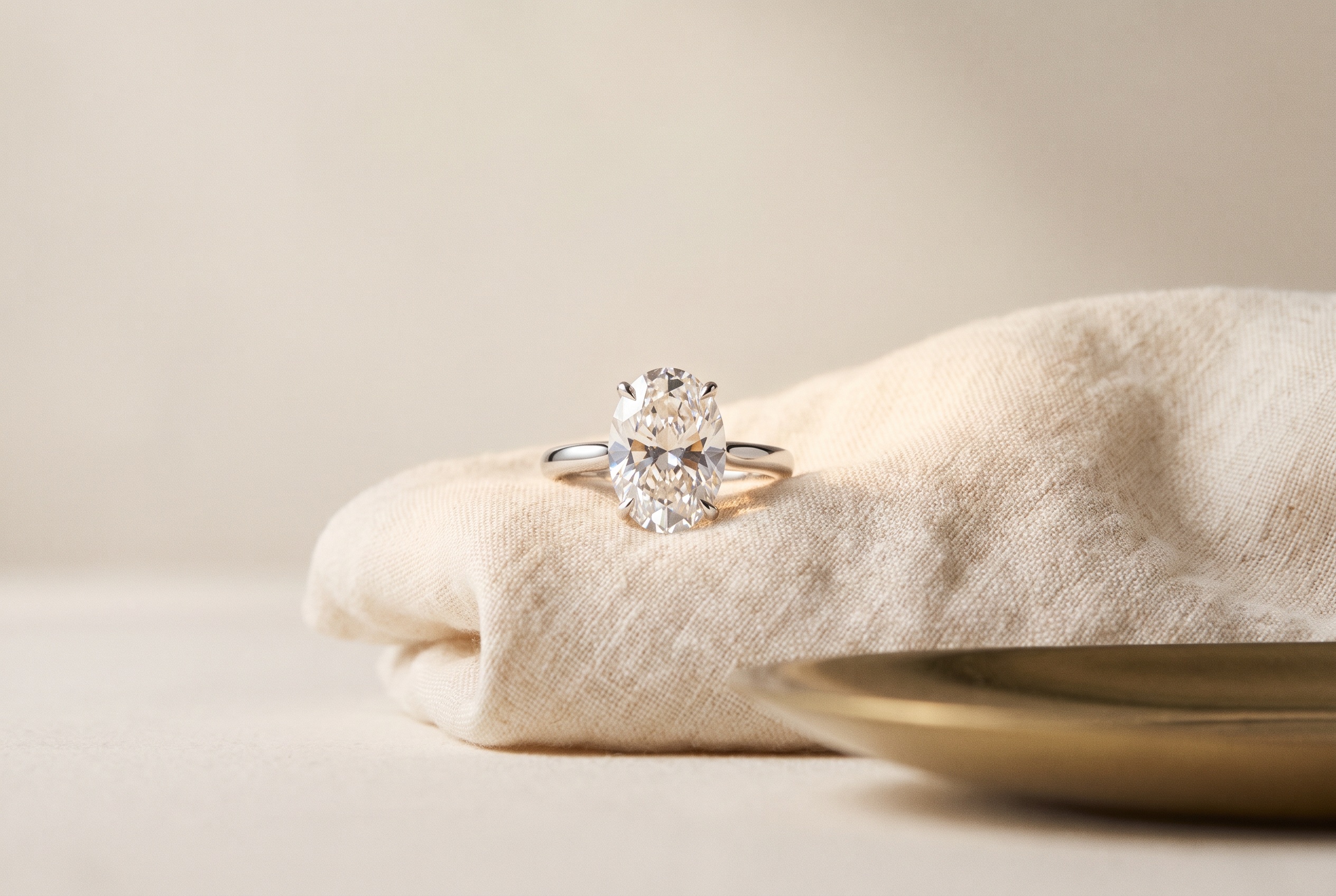
Lab-grown diamonds have become a mainstream choice for engagement rings and fine jewelry generally, not a niche or budget-only alternative — driven largely by the combination of identical appearance to natural diamonds and a meaningfully lower price point for the same specifications. For a given budget, choosing lab-grown over natural typically allows a buyer to size up in carat weight, step up in clarity or color grade, or both, without changing the total spend. Jewelers and designers report this tradeoff — same look, more stone for the money — as the primary reason clients choose lab-grown rather than any environmental or ethical motivation alone, though those factors do influence some buyers' decisions as well.
Where Lab-Grown Diamonds Are Sold
Lab-grown diamonds are now sold across the full range of the trade — from major retail jewelry chains to independent jewelers to wholesale suppliers serving trade buyers. Availability has expanded rapidly since the technology became commercially viable, and lab-grown inventory now spans the same shape and cut range as natural diamonds, including standard cuts (round, oval, cushion, princess), antique-style cuts (old mine, old European), and fancy color stones (yellow, pink, blue, green).
Lab-Grown Diamonds and Fancy Colors
One area where lab-grown production has genuinely expanded what's accessible is fancy color diamonds. Natural fancy color diamonds — vivid yellow, pink, blue, and green stones — are exceptionally rare, since the specific trace elements or structural conditions that produce color occur in only a small fraction of natural diamond formation. Lab-grown production can introduce controlled amounts of specific elements (nitrogen for yellow, boron for blue, for example) during growth to reliably produce fancy color stones, making saturated color available at a fraction of natural fancy color pricing. This has made fancy color lab-grown melee and loose stones — yellow, pink, blue, and green — accessible for jewelry designs that would be cost-prohibitive in natural fancy color material.
Lab-Grown Diamond Durability and Long-Term Care
Because a lab-grown diamond has the identical crystal structure and hardness (10 on the Mohs scale, the hardest known natural material) as a natural diamond, it requires exactly the same care: routine professional cleaning, periodic prong and setting checks, and the same caution around hard knocks that could chip a girdle or facet edge on any diamond regardless of origin. There is no durability difference between lab-grown and natural diamonds of the same cut and clarity grade — both will hold up to daily wear in fine jewelry indefinitely under normal conditions, and neither requires special handling the other doesn't.
Lab-Grown Diamonds and Shape Availability
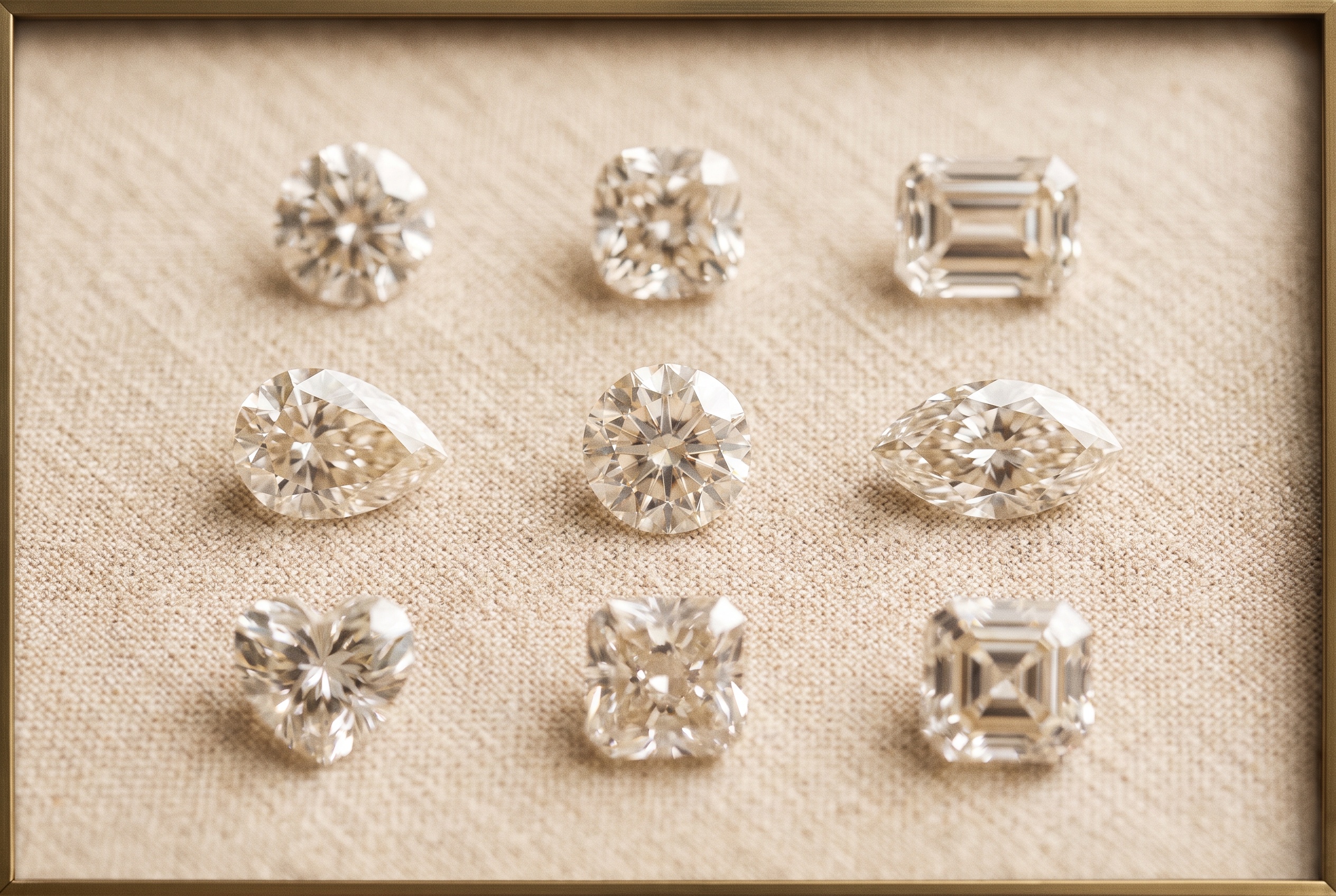
Lab-grown production has caught up to natural diamond shape availability across most of the standard and fancy categories — round, oval, cushion, princess, emerald, pear, marquise, radiant, and heart are all widely available in lab-grown material. Antique-style cuts (old mine, old European, and other historic faceting styles) are less commonly stocked in lab-grown than in natural inventory, largely because these cuts are a smaller, more specialized niche overall rather than because of any technical limitation in growing rough suitable for antique-style cutting — a lab-grown crystal can be cut into any style a cutter chooses, the same way natural rough can. Buyers looking for lab-grown antique cuts specifically may need to work with a supplier who stocks that niche deliberately rather than assuming every general lab-grown retailer carries it.
Lab-Grown Diamond Melee vs. Loose Center Stones
Lab-grown diamonds are sold in two broad categories that follow different sourcing and certification conventions. Melee — small stones generally under a carat, commonly used as accent and pavé stones — is typically sold as uncertified parcel goods against a consistent quality baseline (a defined color and clarity range) rather than individually graded, since certifying each tiny stone individually wouldn't be practical at that scale or price point. Loose stones at roughly 0.30 carats and above, used as center stones or larger accent stones, are individually certified with a report specific to that one stone. Understanding which category a given lab-grown diamond falls into matters for buyers: asking for individual certification on melee, or accepting parcel-quality assurance for a center stone, are both mismatches with how the trade actually structures certification by stone size.
Sourcing Lab-Grown Diamonds Wholesale
Guru Diam is a trade-only wholesale supplier carrying a CVD lab-grown catalog alongside natural diamonds, certified loose stones, and finished jewelry — one supplier across the full range rather than a manufacturer specializing narrowly in a single production method. Every lab-grown stone we carry is available with IGI, GIA, or GCAL certification, clearly documenting origin so buyers can source with full confidence in what they're reselling. In-stock inventory ships same-day from both our New York and Los Angeles locations, and custom pieces built around a lab-grown center stone are finished in 4–6 days. Buyers evaluating specific quality tiers may find our VVS clarity guide and round brilliant cut guide useful next steps, and buyers building out a certified order specifically can review our GIA certified lab-grown diamonds guide for a closer look at how certification works for this category.
Lab-Grown Diamonds and Retailer Transparency
Reputable retailers and wholesalers disclose lab-grown origin clearly at every stage — in product listings, on invoices, and through the accompanying grading report — rather than leaving it ambiguous or requiring a buyer to ask. This transparency isn't just good practice; several jurisdictions now have specific disclosure requirements for lab-grown diamond sales, treating undisclosed origin as a form of consumer deception given how visually indistinguishable lab-grown and natural stones are without certification. Buyers evaluating a new supplier can treat clear, upfront lab-grown disclosure — rather than vague language like "eco-friendly diamond" or "sustainable diamond" used to obscure origin — as a basic marker of a trustworthy source.
Frequently Asked Questions
What is a lab-grown diamond?
A lab-grown diamond is a real diamond grown in a controlled laboratory environment rather than forming naturally underground. It has the same chemical composition, hardness, and optical properties as a natural diamond — the difference is origin, not material.
Is a lab-grown diamond a fake diamond?
No. It's genuine diamond material — pure carbon in a diamond crystal structure — produced through a different process than natural formation, not a substitute or imitation.
What is the difference between a lab-grown diamond and moissanite?
A lab-grown diamond is chemically a diamond. Moissanite is a different mineral (silicon carbide) cut to resemble a diamond's appearance but with a different chemical composition, hardness, and optical properties — it's a simulant, not a diamond.
How can you tell if a diamond is lab-grown or natural?
The two are visually identical to the naked eye and even to a jeweler's loupe. The only reliable way to determine origin is through certification — a GIA, IGI, or GCAL report will state clearly whether a stone is natural or laboratory-grown, often confirmed by a laser inscription on the girdle.
Are lab-grown diamonds cheaper because they're lower quality?
No — the price difference comes from supply economics, not quality. Natural diamond supply is fixed by geology, while lab-grown supply scales with production capacity, which is what drives the price gap between diamonds of equivalent cut, color, clarity, and carat weight.
Can lab-grown diamonds be certified?
Yes. GIA, IGI, and GCAL all certify lab-grown diamonds using the same 4Cs grading criteria applied to natural diamonds, issuing a clearly labeled lab-grown report type so origin is always documented.
Guru Diam is a trade-only wholesale diamond supplier with locations in New York and Los Angeles, carrying a CVD lab-grown catalog alongside natural diamonds, certified loose stones, and finished jewelry across standard, antique, and exotic cuts. Browse certified inventory in the certified diamonds category, explore fancy color options through fancy color loose diamonds, or build a custom piece through custom jewelry. Trade accounts can review current inventory and terms at the wholesale hub or apply through trade partner.