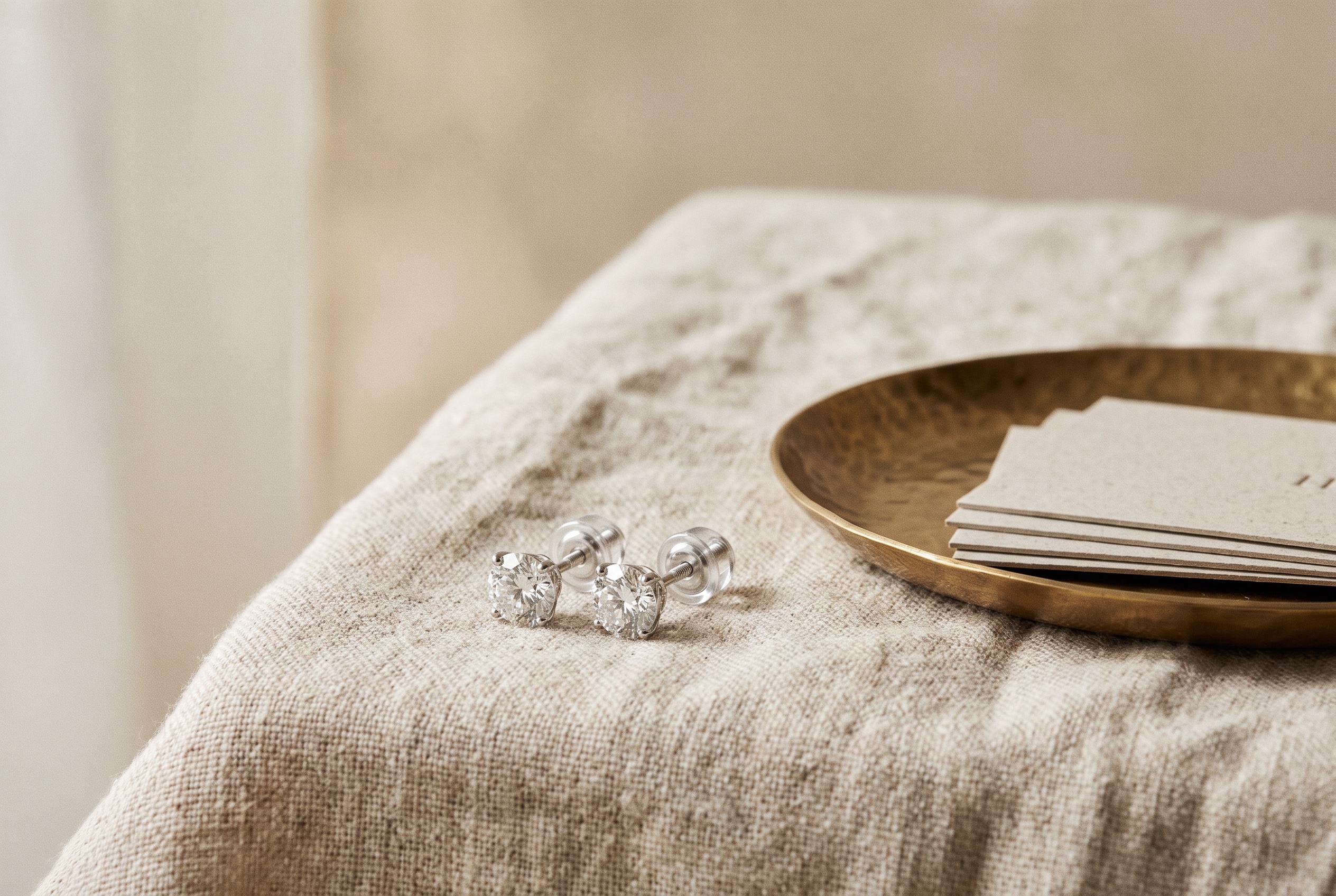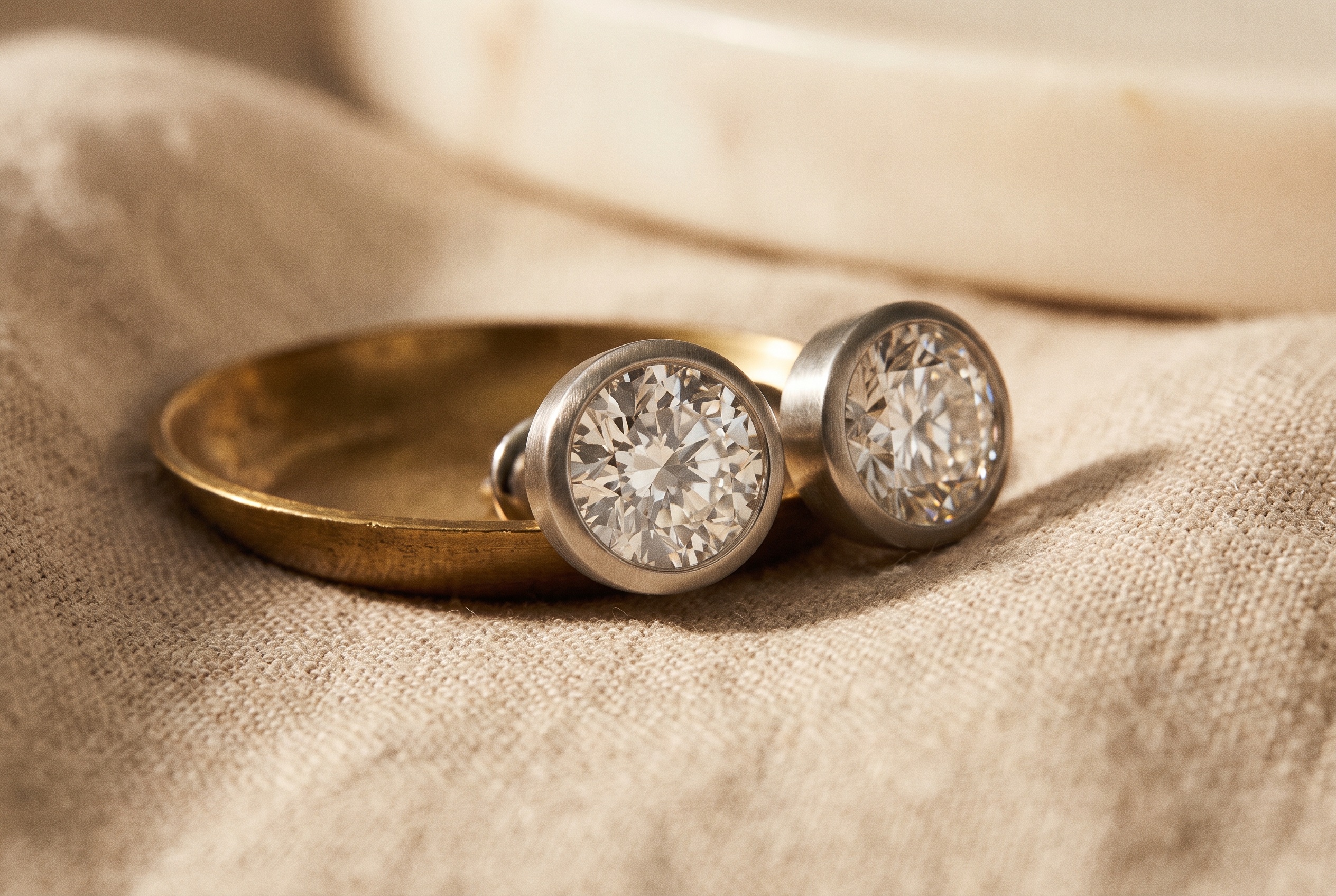

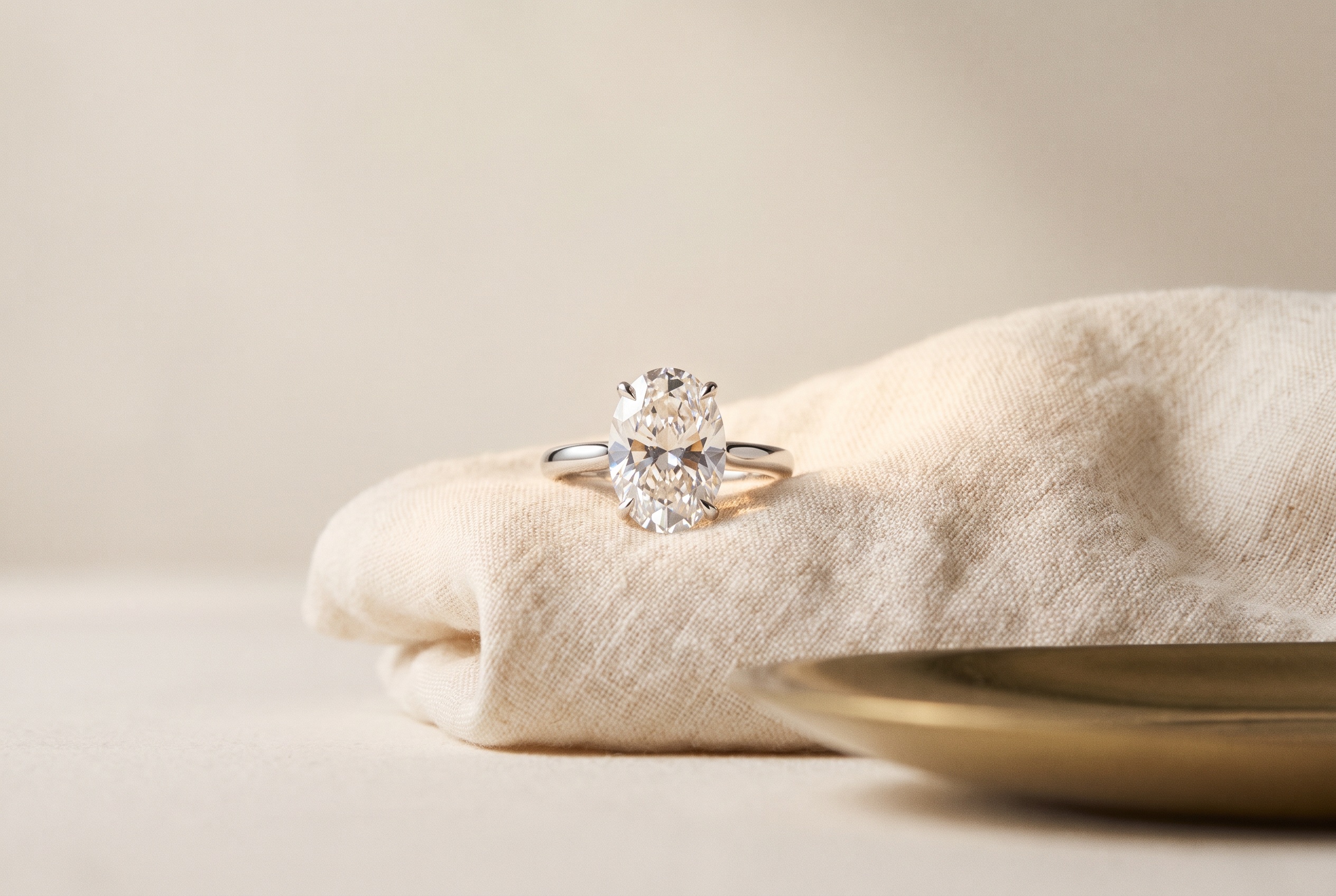
A 4 carat lab-grown diamond is a substantial center stone — roughly 10.1mm in diameter for a well-proportioned round brilliant, large enough to function as a genuine statement piece rather than a standard bridal center stone. Lab-grown production has made this size range considerably more accessible than the equivalent natural stone, since CVD growing capacity scales with manufacturing investment rather than being constrained by geological scarcity, but a stone this large still comes with real evaluation considerations that don't apply the same way to smaller, more common carat weights.
This guide covers what actually changes at the 4-carat size specifically: how it compares to the 3-carat and 5-carat sizes that bracket it, what to prioritize on the 4Cs at this scale, how shape choice affects both appearance and value at 4 carats, setting considerations for a stone this size, why lab-grown makes this size range meaningfully more attainable than the natural equivalent, and what a buyer should actually check before committing to a stone at this scale.
Where 4 Carats Sits in the Sizing Landscape
Four carats sits in a genuine "large center stone" tier — well beyond the most common bridal range (roughly 0.75 to 2 carats), and large enough that it reads as a statement piece rather than a standard engagement or anniversary stone. As covered in our diamond size chart guide, a round brilliant at this weight measures approximately 10.1mm in diameter — noticeably larger than the 6.5mm of a 1-carat stone, and a jump that's immediately visible even to someone without a trained eye for diamond sizing.
| Carat Weight | Approx. Round Brilliant Diameter | Sizing Tier |
|---|---|---|
| 1.00 ct | 6.5mm | Standard bridal range |
| 2.00 ct | 8.2mm | Upper bridal / statement range |
| 3.00 ct | 9.4mm | Statement / large center stone |
| 4.00 ct | 10.1mm | Large statement center stone |
| 5.00 ct | 11.0mm | Very large statement center stone |
The step from 3 to 4 carats is a meaningfully smaller jump in diameter than the step from 1 to 2 carats, illustrating the non-linear relationship between carat weight and visible diameter covered in more depth in the size chart guide — weight scales with volume, while diameter is a linear measurement, so each additional carat adds progressively less visible size as the stone gets larger.
4 Carat vs. 3 Carat vs. 5 Carat: How to Choose Between Them
Buyers considering a stone in this general range often triangulate between three adjacent sizes rather than fixing on one number in isolation:
- 3 carats is a slightly more common large-stone size, generally carrying a lower total price than 4 carats at comparable color and clarity, and sitting just below the visual threshold where a stone reads as unmistakably oversized on smaller hands.
- 4 carats is a deliberate middle step — visibly larger than 3 carats, but without the price and proportion jump that comes with crossing into 5-carat-plus territory, where rough scarcity (even accounting for lab-grown's different supply dynamics) and per-stone pricing volatility both increase further.
- 5 carats represents a further, more dramatic step up in both visual presence and typically in price, and sits closer to the upper range of what's practical for everyday wear on many hand sizes and lifestyles, particularly in a ring rather than a pendant or earring setting.
For buyers who want a genuinely large stone without the most extreme statement-piece proportions, 4 carats is frequently the size that balances visual impact against everyday wearability — a consideration that matters more for a ring than for a pendant, where a larger stone doesn't interact with hand movement, glove-wearing, or the practical friction of daily manual tasks the same way.
Why the 4Cs Matter More at This Size
As covered in our diamond pricing guide, the 4Cs multiply against each other rather than adding up — meaning the same percentage quality difference produces a much larger absolute dollar swing on a 4-carat stone than on a smaller one. This has practical implications for how a buyer should prioritize their evaluation at this size specifically:
- Color differences become more visible. Body color is easier to detect in a larger stone simply because there's more material for light to travel through and a larger table to view it through — a color grade that would look essentially colorless at 1 carat can show a faint, detectable tint at 4 carats. Buyers shopping this size range often move up the color scale (toward D-F or G-H rather than accepting a grade they'd be comfortable with in a smaller stone) specifically to compensate for this size-driven visibility effect, covered in more depth in our diamond color scale guide.
- Clarity characteristics are easier to spot. The same logic applies to clarity — inclusions that would be invisible without magnification in a small stone can become noticeable to the naked eye at 4 carats, particularly ones sitting under the table where they're most visible face-up. Our eye-clean diamond guide covers how this threshold shifts with stone size in more detail.
- Cut quality has an outsized visual payoff. A well-cut stone at 4 carats delivers dramatically more visible brilliance and fire than a poorly cut stone of the same weight, and because the stone itself is already a focal point at this size, cut quality differences are more immediately apparent to anyone looking at the piece than they would be on a smaller, less attention-drawing stone.
- Fluorescence is worth checking specifically at this size. Strong blue fluorescence can occasionally give a larger stone a slightly hazy or oily appearance in strong UV-rich light (direct sunlight, for instance) — an effect that's more likely to be noticed on a large, prominent stone than on a smaller one, making fluorescence a line item worth reviewing explicitly rather than skipping past on a stone this size.
Shape Considerations for a 4 Carat Stone
Shape choice interacts with size in a few specific ways at the 4-carat mark:
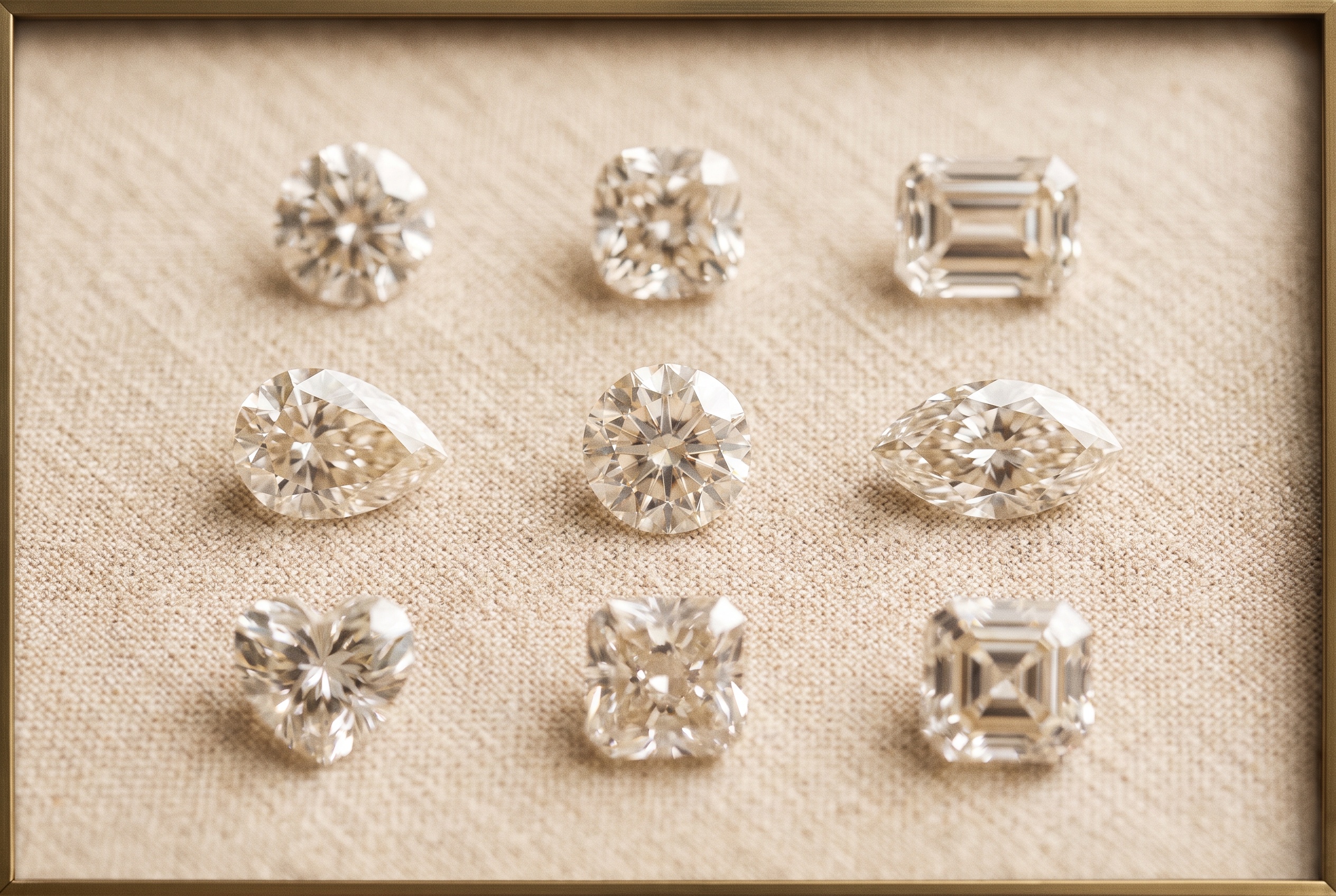
| Shape | Approx. Dimensions at 4 ct | Consideration at This Size |
|---|---|---|
| Round brilliant | ~10.1mm diameter | Commands the highest per-carat price of common shapes at this size, and rough scarcity for a clean, well-proportioned 4-carat round is a genuine factor even in lab-grown material, since larger flawless-potential rough is still less abundant than smaller rough in any growth process |
| Oval | ~13.0mm × 9.5mm | Reads noticeably larger than round at the same weight due to elongation — a popular choice for buyers who want maximum visual size impact at this carat weight specifically |
| Cushion | ~10.3mm × 10.3mm | A softer, romantic silhouette that reads slightly smaller than an elongated shape at the same weight but larger than a princess or asscher |
| Emerald | ~11.0mm × 8.0mm | The open step-cut table shows off clarity more transparently than a brilliant-cut shape, making clarity selection at this size especially important for an emerald cut specifically |
| Pear | ~13.5mm × 8.7mm | A dramatic, elongated statement shape at this weight; bow-tie effect (a shadow across the center) is worth checking carefully on any individual stone at this size, since it's more visible on a larger stone |
At 4 carats, the practical difference between shapes in terms of everyday wearability becomes more pronounced than it is at smaller sizes — an elongated shape like oval or pear at this weight extends noticeably further up and down the finger than a round or cushion of the same weight, which is worth trying on rather than judging from a photo or spec sheet alone.
How Lab-Grown Makes This Size Range More Accessible
A 4-carat natural diamond of strong color and clarity sits deep into the steep end of the natural pricing curve, since large, clean natural rough is dramatically scarcer than smaller rough — a scarcity that compounds sharply at every step up in size, as covered in our diamond pricing guide. Lab-grown production doesn't face that same geological constraint: CVD growing capacity scales with manufacturing investment and process efficiency rather than the luck of what a given rough deposit happens to contain, which has made stones in the 3-to-5-carat range considerably more attainable at a given budget than the natural equivalent.
This doesn't mean a 4-carat lab-grown stone is inexpensive in absolute terms, or that large lab-grown rough is trivially easy to grow to gem quality — larger CVD crystals still require longer growth cycles and carry a higher production risk of internal strain or inclusions forming during the extended growth period than smaller crystals do, which is part of why larger lab-grown stones still command a real premium over smaller ones even without the natural-diamond rarity dynamic layered on top. But the difference in accessibility between a 4-carat natural stone and a 4-carat lab-grown stone of comparable color and clarity remains substantial, and has been one of the more significant factors opening up this size range to a meaningfully broader range of buyers than could previously consider it.
Setting Considerations for a 4 Carat Center Stone
- Prong security matters more at this size and value. A stone this large and valuable benefits from a secure prong configuration — typically 6 prongs rather than 4 for a round brilliant this size — and periodic professional inspection, since the consequences of a loose prong are more significant with a stone of this size and value than with a smaller accent or standard bridal-range center stone.
- Band and shank proportions should scale with the stone. A very thin band can look visually disproportionate under a 4-carat center stone, and can also be under-engineered to support the stone's weight and the leverage it exerts during daily wear — a jeweler should size the shank thickness deliberately relative to the center stone rather than defaulting to a standard bridal-weight band.
- Consider a setting style that suits the stone's visual weight. A cathedral setting (covered in our cathedral setting guide) can complement a large center stone's presence with its own elevated, architectural profile, while a simpler, lower-profile solitaire setting lets an already-prominent stone stand entirely on its own without competing design elements.
- Weigh ring versus pendant or earring placement. A 4-carat stone in a ring interacts with hand movement, glove use, and daily manual tasks in a way the same stone doesn't in a pendant, where it simply hangs and catches light without the same wear-and-impact exposure — buyers torn on placement should weigh lifestyle fit for a stone this prominent as seriously as the aesthetic decision.
What to Check Before Buying a 4 Carat Lab-Grown Diamond
- Certification from a reputable lab (IGI, GIA, or GCAL), with lab-grown origin clearly disclosed on the report — non-negotiable at this size and price point, given how much is riding on the stated grade being accurate.
- Actual millimeter dimensions, not just carat weight, checked against the size chart above and adjusted for the specific shape, since cut depth can meaningfully change how large a 4-carat stone actually looks once set.
- Color and clarity evaluated with size-driven visibility in mind, rather than applying the same comfort threshold a buyer might use for a smaller stone — what reads as eye-clean or colorless at 1 carat doesn't automatically read the same way at 4 carats.
- Fluorescence grade, given the slightly elevated risk of a hazy appearance in strong light on a larger stone with strong blue fluorescence.
- Cut quality and light performance, ideally viewed in person or on video under multiple lighting conditions rather than judged from a certificate's cut grade alone, since a stone this size is a genuine focal point where light performance differences are readily visible.
- Setting engineering appropriate to the stone's size and weight, as covered above — prong count, shank thickness, and overall structural support scaled to match a stone of this scale rather than a standard template sized for a smaller center stone.
How a 4 Carat CVD Rough Crystal Is Actually Grown
Growing a piece of CVD rough large enough to yield a clean 4-carat polished stone takes meaningfully longer than growing rough for a small accent stone, which is worth understanding since it explains part of why larger lab-grown stones aren't simply proportionally priced against smaller ones. In Chemical Vapor Deposition production, a diamond seed plate sits in a sealed chamber filled with carbon-rich gas, heated to a plasma state so carbon atoms deposit onto the seed in successive layers. Reaching a rough crystal large enough for a 4-carat finished stone (accounting for the 40-60%+ weight loss typical of cutting) requires a substantially longer growth run than a small crystal needs — and the longer a growth run continues, the more opportunity there is for microscopic strain, unwanted inclusions, or growth irregularities to develop within the crystal, since more time and material means more chances for the process to introduce an imperfection somewhere in the lattice.
This is the core reason larger CVD rough isn't simply "the same process run longer for free" — production risk scales with growth duration, and a grower attempting a large rough run accepts a real chance that a given attempt won't yield gem-quality material at the end, alongside the straightforward extra time and energy cost of the longer run itself. That risk and cost structure is reflected in how larger lab-grown stones are priced relative to smaller ones, even without the geological rarity dynamic that drives natural diamond pricing at large sizes. For a fuller explanation of the CVD growth process itself, see our guide on what a lab-grown diamond is.
Insurance and Documentation for a Stone This Size
A 4-carat center stone represents a significant enough value that formal insurance and thorough documentation are worth treating as a standard part of the purchase, not an optional afterthought:
- A standalone jewelry insurance policy or rider, separate from a standard homeowner's or renter's policy, is typically the more appropriate coverage for a stone at this value — many general property policies cap jewelry claims well below what a 4-carat stone and its setting are worth, or exclude loss and mysterious disappearance entirely.
- A current appraisal, distinct from the grading certificate, establishes replacement value for insurance purposes specifically — a certificate documents the stone's 4Cs grading, while an appraisal translates that grading into a dollar figure for coverage.
- High-resolution photos and the certificate number on file, kept somewhere separate from the piece itself, make both an insurance claim and a police report meaningfully easier to process in the event of loss or theft.
- Periodic re-appraisal, since market pricing for lab-grown material has continued shifting as production scales industry-wide — a policy underwritten against an outdated appraisal value can leave a buyer over- or under-insured relative to current replacement cost.
Sourcing a 4 Carat Lab-Grown Center Stone at Wholesale
A stone at this scale is a significant order for any jeweler or designer, and it benefits from a sourcing relationship that can provide real documentation and, ideally, direct video or in-hand review before a client commits — not just a certificate and a set of stated specs. Guru Diam supplies certified CVD lab-grown diamonds with IGI, GIA, and GCAL certification all available, across round brilliants and the fancy shapes covered above, giving buyers a single source for evaluating shape, size, and quality tradeoffs at this scale side by side.
Buyers sourcing a large center stone can browse current inventory through the certified diamonds category, and buyers building a full piece around a stone this size can work through custom jewelry for a setting engineered specifically for the stone's proportions, with cutting, setting, and polishing handled in-house and finished pieces delivered in 4-6 days. For buyers exploring the natural side of large center stones as a comparison point, natural inventory is also available; for accent and halo work paired with a large center stone, matching pairs and calibrated melee sourcing round out a full build. Trade accounts can review current terms at the wholesale hub or apply through trade partner. Buyers weighing this size against the adjacent 3-carat and 5-carat tiers may also find our broader diamond pricing guide useful for understanding how price scales across that range.
Frequently Asked Questions
How big is a 4 carat lab-grown diamond in millimeters?
A well-proportioned 4.00-carat round brilliant measures approximately 10.1mm in diameter. Fancy shapes measure differently at the same weight — an oval runs roughly 13.0mm × 9.5mm, reading noticeably larger due to its elongated outline.
Is a 4 carat lab-grown diamond much cheaper than a natural one of the same size?
Yes, substantially — lab-grown diamonds trade at a steep discount to natural diamonds of comparable size and quality, and that gap widens further at larger carat weights where natural rough scarcity becomes more extreme. This has made the 3-to-5-carat range considerably more accessible in lab-grown material than in natural stones of comparable color and clarity.
Do color and clarity matter more at 4 carats than at smaller sizes?
Yes — both body color and clarity characteristics become easier to see to the naked eye as a stone gets larger, simply because there's more material and surface area for the eye to scan. Many buyers shop a slightly higher color and clarity grade at 4 carats than they would be comfortable with in a smaller stone specifically to compensate for this effect.
What shape looks biggest at 4 carats?
Elongated shapes like oval and pear read visibly larger than round or cushion cuts at the same carat weight, since more of the stone's weight is spread across a longer visible footprint rather than concentrated in a compact, rounder outline.
What setting works best for a 4 carat center stone?
A secure 6-prong setting is generally recommended over 4 prongs for a stone this size and value, and the band or shank should be proportioned to visually and structurally support a stone of this scale rather than using a standard thinner bridal-weight band. Cathedral and simple solitaire settings both work well, depending on whether the buyer wants added architectural presence or a cleaner, unadorned frame.
Should I choose 3, 4, or 5 carats for a large center stone?
It depends on the balance between visual impact and everyday wearability the buyer wants — 4 carats is often chosen as a middle step that's clearly larger than 3 carats without the more dramatic price and proportion jump that comes with 5 carats and up, particularly for a ring intended for regular daily wear.