
A diamond size chart converts a stone's millimeter diameter (its actual physical, visible width) into the corresponding carat weight for a given shape, since carat weight alone doesn't tell a buyer how large a diamond will actually look on the hand. Two diamonds of identical carat weight can look meaningfully different in size depending on their shape and how deep or shallow they're cut, which is exactly why a millimeter-based size chart is a more reliable way to judge visible size than carat weight by itself.
This distinction trips up a lot of buyers who assume carat weight is a direct, linear stand-in for size — it isn't, because carat is a measure of mass, not diameter, and diamond density plus cut proportions both affect how much visible width a given weight actually produces. This guide covers the full mm-to-carat chart for round brilliants (the shape most charts are built around), how the same weight looks different across other common shapes, why cut depth changes visible size at a constant carat weight, how millimeter size compares to melee sizing conventions, and practical guidance for choosing a stone based on how it will actually look rather than the number on a certificate alone.
Why Carat Weight Isn't the Same as Visible Size
A carat is a unit of mass — exactly 200 milligrams — and it says nothing directly about a stone's diameter. Diamond is a dense material, and the relationship between weight and visible diameter depends on the stone's shape and its specific proportions (particularly depth percentage, meaning how much of the stone's weight sits below the girdle versus spread out horizontally). Two 1.00-carat round brilliants, cut to different depth percentages, can measure noticeably different diameters — a diamond cut too deep concentrates more of its weight below the girdle, out of sight, and measures smaller across the top than a well-proportioned stone of the identical carat weight. This is one of the most common reasons a buyer ends up disappointed by a diamond that's technically the ordered carat weight but looks smaller than expected once set.
Round Brilliant Diamond Size Chart: MM to Carat
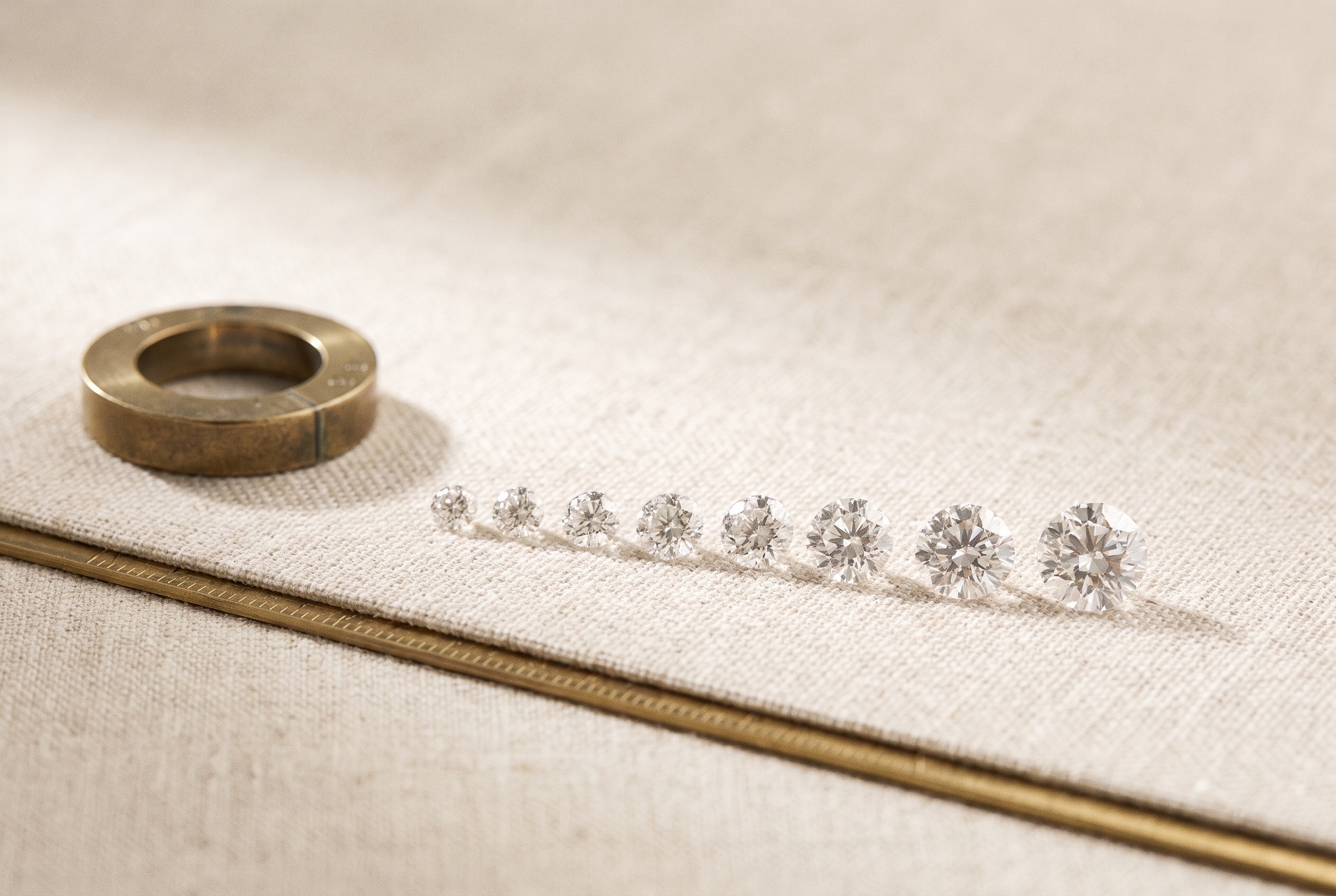
The table below shows the standard, widely used mm-diameter-to-carat-weight relationship for a well-proportioned round brilliant. These figures represent typical, well-cut proportions — a stone cut noticeably deeper or shallower than standard will shift the actual diameter for a given weight, sometimes by several hundredths of a millimeter or more.
| Diameter (mm) | Approximate Carat Weight |
|---|---|
| 3.0 | 0.10 ct |
| 3.5 | 0.15 ct |
| 4.0 | 0.25 ct |
| 4.5 | 0.34 ct |
| 5.0 | 0.50 ct |
| 5.5 | 0.66 ct |
| 6.0 | 0.75–0.79 ct |
| 6.5 | 0.88–0.92 ct |
| 6.6 | 1.00 ct |
| 7.0 | 1.10–1.20 ct |
| 7.5 | 1.35–1.40 ct |
| 8.0 | 1.50–1.60 ct |
| 8.2 | 1.75 ct |
| 8.7 | 2.00 ct |
| 9.5 | 2.50 ct |
| 10.0 | 3.00 ct |
| 10.9 | 3.75–4.00 ct |
| 11.8 | 5.00 ct |
Note the range widening at larger sizes — the spread between "approximate" figures grows because cut-proportion variation has a larger absolute effect on weight as the stone itself gets bigger, which mirrors the same multiplicative pricing effect covered in our diamond pricing guide: small proportional differences matter more, in both weight and dollar terms, on a large stone than on a small one.
How Size Compares Across Different Diamond Shapes
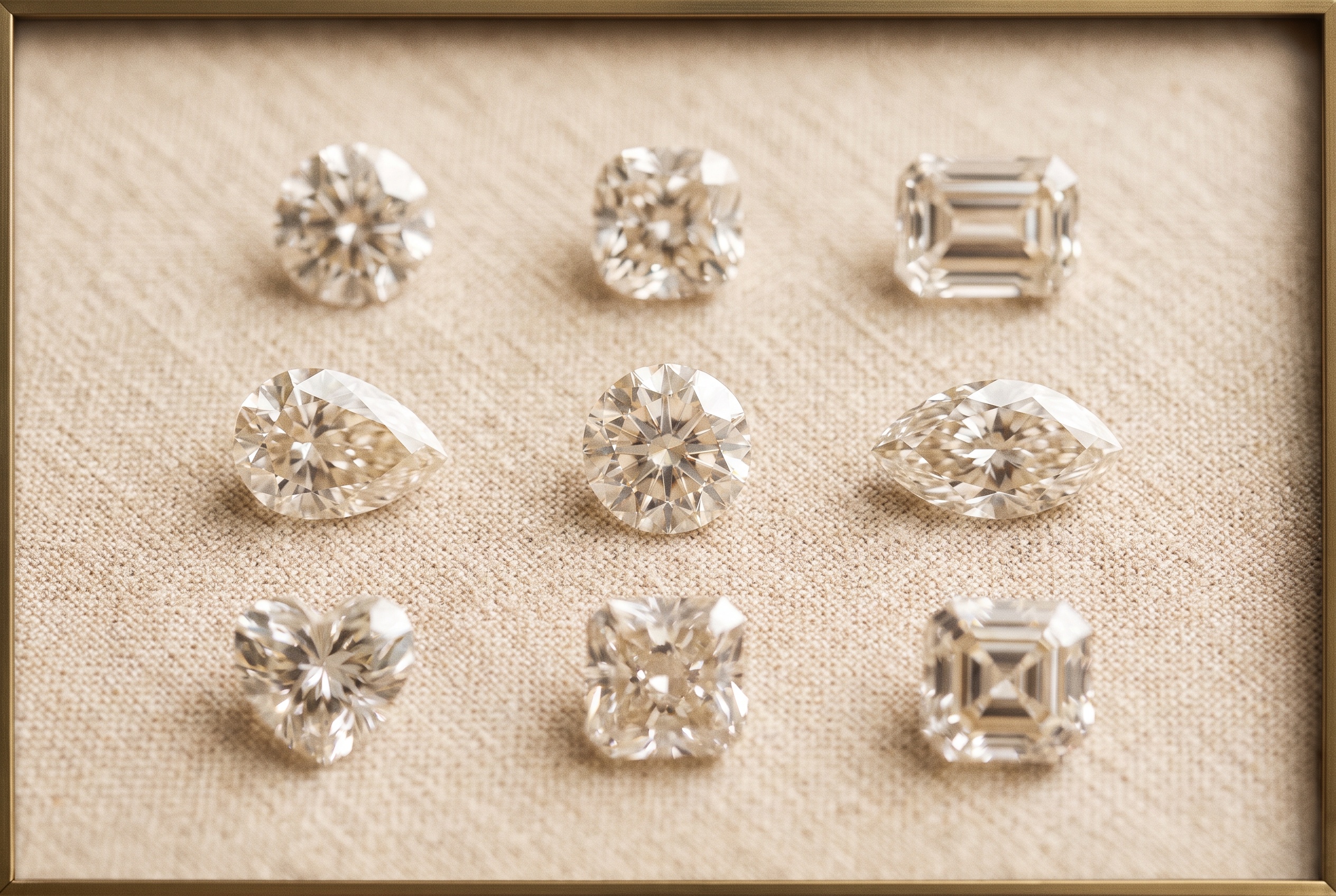
Round brilliant is the reference point most size charts are built around, but fancy shapes don't follow the same mm-to-carat relationship, because a non-round outline distributes the same carat weight across a different footprint. At the same carat weight, elongated shapes generally look larger face-up than round or compact shapes, because more of their weight is spread across a longer visible surface rather than concentrated in a compact, deep form:
| Shape | Approx. Dimensions at 1.00 ct | Visual Size Tendency |
|---|---|---|
| Round brilliant | 6.5mm diameter | Reference baseline — reads as its actual physical footprint |
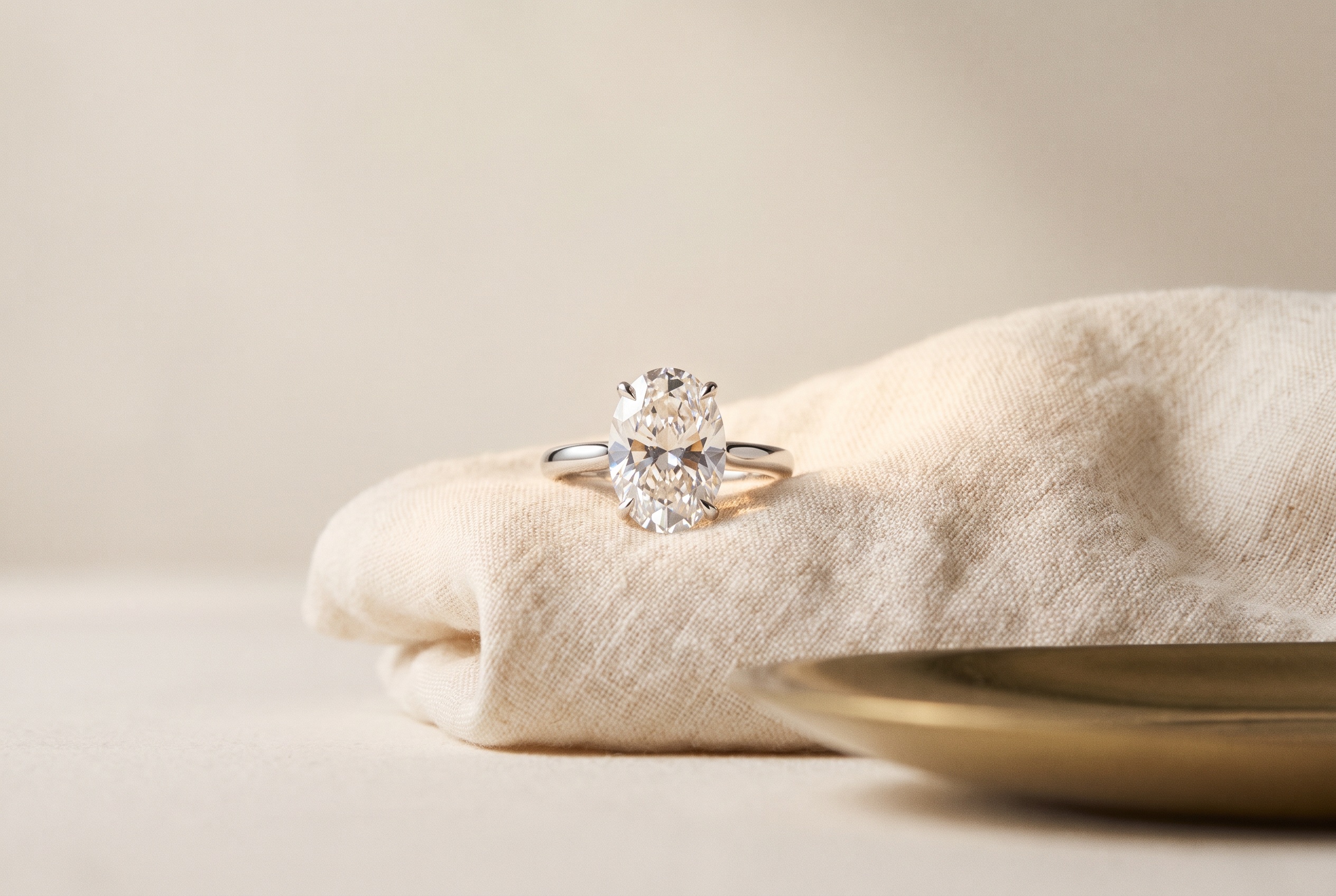
| Oval | 7.7mm × 5.7mm | Looks noticeably larger than round at the same weight, due to its elongated outline |
| Marquise | 10.0mm × 5.0mm | Among the largest-looking shapes per carat, due to its pronounced elongation — see our marquise diamond guide for more on this effect |
| Pear | 8.5mm × 5.5mm | Looks larger than round, similar to oval, due to elongation |
| Emerald | 6.9mm × 5.0mm | Large, open table gives a bigger visual footprint impression than its dimensions alone suggest |
| Cushion | 6.5mm × 6.5mm | Similar footprint to round, sometimes reads very slightly smaller due to rounded corners softening the outline |
| Princess | 5.5mm × 5.5mm | Looks smaller than round at the same weight, since more weight sits deep in the stone's pointed pavilion |
| Asscher | 5.5mm × 5.5mm | Similar to princess — compact footprint, weight concentrated deeper in the stone |
This is why two buyers comparing a 1-carat oval and a 1-carat princess side by side are often surprised at how different they look, despite identical certificates showing the same carat weight — the shape itself, independent of weight, is doing real visual work.
Why Cut Depth Changes Visible Size at a Fixed Weight
Depth percentage — the stone's total depth (table to culet) measured as a percentage of its average diameter — is the single biggest lever affecting how large a diamond of a given carat weight actually looks. A diamond cut deep (a high depth percentage) hides more of its weight below the girdle, where it isn't visible face-up, producing a smaller apparent diameter than a diamond of the same weight cut to standard, well-proportioned depth. A diamond cut shallow (a low depth percentage) spreads more weight outward, producing a larger visible diameter — but pushed too far, an overly shallow cut sacrifices light performance, producing a stone that looks bigger but noticeably less brilliant, sometimes described as having a visible "fisheye" effect where the culet reflects up through the table.
Practical takeaway for buyers: a certificate's stated millimeter dimensions are more reliable than carat weight alone for judging how a stone will actually look once set, and comparing the stated diameter against the chart above (adjusted for shape, per the table above) is a more accurate way to predict apparent size than assuming carat weight scales predictably with visible size.
Diamond Size vs. Melee Size: Two Different Conventions
It's worth being clear that "diamond size" means something different depending on which segment of the trade is being discussed. This chart addresses center and near-center stones — generally 0.30 carats and above, individually certified and sized by both carat weight and millimeter diameter as covered above. Melee — small accent stones, typically in the 0.8mm–9.0mm range used for pavé, halo, and channel work — is conventionally sized and sold by millimeter diameter directly rather than by carat weight per stone, and sold as uncertified parcel goods against a quality baseline rather than individually graded. A buyer or jeweler asking "what size is this diamond" needs to specify which category they mean, since a melee supplier quoting "2mm" stones and a center-stone supplier quoting "0.03 carat" stones may be describing the same physical size through two entirely different conventions.
How to Use a Size Chart When Actually Choosing a Stone
- Start from the millimeter diameter, not the carat weight, when visual size is the priority. If the goal is a stone that looks a certain size on the hand, working from the mm figure (and the shape-specific visual tendencies above) is more predictive than working from carat weight alone.
- Check the certificate's stated measurements directly rather than assuming standard proportions. A stone's actual millimeter dimensions are printed on its grading report — comparing that real figure against the chart is more accurate than assuming any individual stone matches the chart's "typical" proportions exactly.
- Consider the setting's effect on apparent size alongside the stone itself. As covered in our guides on cathedral settings and halo-style designs, a setting can meaningfully change how large a center stone reads — a halo in particular is a common strategy for buyers optimizing perceived size against a fixed carat budget.
- Weigh shape choice as a genuine size lever, not just an aesthetic one. A buyer choosing between a 1-carat round and a 1-carat oval isn't just making a style decision — the oval will read as visibly larger for the identical spend on carat weight, which is a meaningful practical factor for budget-conscious buyers.
- Remember magic-size carat breakpoints interact with millimeter size non-linearly too. As covered in our diamond pricing guide, certain carat weights carry disproportionate price premiums — a stone just under a benchmark weight can offer nearly identical millimeter size at a meaningfully lower price than a stone just over it.
Size Chart Considerations Specific to Fancy Color and Antique Cuts
The mm-to-carat relationships above are built around standard modern cutting proportions, which don't always apply cleanly to antique and specialty cuts. Old Mine and Old European cuts, for instance, were historically cut deeper and with smaller tables than a modern round brilliant, meaning an antique-cut stone of a given carat weight typically measures a noticeably smaller diameter than a modern round brilliant of the same weight — a genuine, well-documented characteristic of the style rather than a grading inconsistency, and one covered in more depth in our dedicated guides on the old mine cut and old European cut. Buyers comparing an antique-cut stone against a modern chart figure should expect the antique stone to look smaller at the same carat weight, not treat that difference as an error.
Fancy color diamonds don't have a different physical size relationship from white diamonds of the same shape — color doesn't change a stone's mm-to-carat math — but because fancy color stones are priced and evaluated differently (color intensity and hue often outweigh size as the primary value driver), buyers shopping that category sometimes weight the size conversation differently than they would for a colorless center stone.
How to Estimate Diamond Size Without a Certificate in Hand
Buyers evaluating a stone before a certificate is available — comparing options at a counter, reviewing a supplier's inventory sheet, or sanity-checking a listing — can still get a reasonable size estimate using a few practical methods:
- A leaf gauge or millimeter ring gauge. A simple, inexpensive measuring tool that reads a stone's diameter directly by placing it in a graduated slot — widely used at jewelry counters specifically because it doesn't require removing the stone from its setting or mount to get a workable diameter reading.
- Comparing against a known reference object. A US dime measures 17.9mm across, and a standard pencil eraser is roughly 5-6mm wide — rough, informal comparisons like these won't replace an actual measurement but can help someone visualize an unfamiliar millimeter figure before seeing the stone in person.
- Cross-referencing the stated carat weight against this chart's shape-specific ranges. If only carat weight and shape are known — no certificate or physical stone in hand yet — the tables above give a reasonable estimated diameter range to expect, useful for a preliminary size conversation before a specific stone is selected.
- Requesting the certificate's measurement field directly. For any purchase past the casual-browsing stage, the stone's actual lab-measured dimensions (printed on the IGI, GIA, or GCAL report) are the only fully reliable figure — every method above is a reasonable estimate, not a substitute for the graded measurement on a specific stone.
Common Size Chart Misconceptions
A few misunderstandings come up often enough with size charts specifically that they're worth addressing directly:
- "Carat weight doubles, size doubles." It doesn't — carat is a measure of mass (volume × density), while visible diameter is a linear measurement, and the two don't scale together in a simple 1:1 way. Doubling a stone's carat weight increases its diameter by roughly 26%, not 100%, because volume scales with the cube of linear dimension while weight tracks volume directly.
- "A size chart applies equally to every stone of that shape." Charts like the ones above describe typical, well-proportioned stones — a specific stone cut noticeably deeper, shallower, or with an atypical length-to-width ratio (especially relevant for fancy shapes like oval, pear, and marquise, where ratio varies meaningfully stone to stone) will deviate from the chart's average figure, sometimes significantly.
- "Bigger millimeter size always means better light performance." Not necessarily — a shallow cut can increase visible diameter at the cost of brilliance and fire, producing a stone that measures larger on paper but looks duller and less lively face-up than a smaller, better-proportioned stone. Size and light performance are related but distinct qualities, and optimizing purely for one can come at the expense of the other.
- "Melee is graded the same way as center stones." As covered above, melee is conventionally described by millimeter size and sold as parcel goods against a quality baseline, not individually certified by carat weight the way a center stone is — treating a melee size spec like a center-stone carat spec is a common sourcing mismatch.
Using Size Charts for Budget Planning
Because visible size and carat weight don't move in lockstep, a size chart is a genuinely useful budgeting tool for buyers trying to hit a specific look without necessarily paying for the largest possible carat weight. A few practical strategies that follow directly from the size relationships covered above:
- Choosing an elongated shape to maximize apparent size per dollar. Since oval, pear, and marquise shapes read larger than round or princess at the same carat weight (and often price at a discount to round per carat, as covered in our diamond pricing guide), a buyer prioritizing visual size over shape preference can get more apparent size for the same or lower total spend by choosing an elongated fancy shape.
- Buying just under a magic-size carat breakpoint. A stone at 0.90-0.99 carats measures a nearly identical diameter to a 1.00-carat stone of the same shape and proportions, while pricing meaningfully lower per carat — a straightforward way to capture nearly all of the visual size at a lower cost.
- Pairing a moderate center stone with a halo. As covered earlier, a halo setting increases perceived size around a smaller center stone without requiring the carat-weight cost of a larger solitaire stone — a common strategy specifically for buyers optimizing perceived size against a fixed budget.
- Prioritizing cut quality within a target diameter range. Since a well-cut stone at a given diameter shows more brilliance and fire than a poorly cut stone of the same diameter, spending relatively more on cut quality and relatively less on maximizing raw carat weight often produces a more visually impressive result for the same total budget.
Sourcing Diamonds by Size and Shape at Wholesale
Getting size right — not just carat weight, but the actual visible footprint a stone will produce once set — matters most at the point of sourcing, before a piece goes into production, since a stone that measures smaller than expected is a much harder problem to fix after a client has seen a rendering than before an order is placed. Guru Diam supplies certified loose diamonds across round brilliants, regular fancy shapes, and antique cuts, with full millimeter dimensions available alongside carat weight on every certified stone (IGI, GIA, and GCAL certification all available), so buyers can evaluate actual visible size rather than relying on carat weight as a proxy.
Buyers building a program around visual size and shape variety can browse the certified diamonds category across shapes, source calibrated melee by millimeter size through matching pairs for pavé and halo work, and look at fancy color loose diamonds for stones outside the standard white-diamond range. Trade accounts can review terms at the wholesale hub or apply through trade partner, and full custom builds — including setting choices that affect apparent size, like the cathedral and halo styles referenced above — run through custom jewelry, with cutting, setting, and polishing handled in-house and finished pieces delivered in 4-6 days.
Frequently Asked Questions
What size is a 1 carat diamond in millimeters?
A well-proportioned 1.00-carat round brilliant measures approximately 6.5mm in diameter. Fancy shapes at the same carat weight measure differently — an oval runs roughly 7.7mm × 5.7mm and a princess cut runs roughly 5.5mm × 5.5mm, which is why carat weight alone doesn't determine how large a diamond looks.
Why do two diamonds of the same carat weight look different sizes?
Shape and cut depth both affect visible size independent of carat weight. Elongated shapes like oval, pear, and marquise spread the same weight across a larger visible footprint than a round or princess cut, and a diamond cut too deep hides more weight below the girdle, producing a smaller apparent diameter than a well-proportioned stone of identical weight.
Is millimeter size or carat weight more important when choosing a diamond?
It depends on the priority — carat weight determines price and is the standard grading unit, but millimeter diameter is the more accurate predictor of how large a stone will actually look once set. Buyers focused specifically on visual size should check a stone's stated mm dimensions on its certificate rather than relying on carat weight alone.
How is melee diamond size measured differently from center stone size?
Melee — small accent stones typically 0.8mm to 9.0mm — is conventionally sized and sold by millimeter diameter directly, as uncertified parcel goods against a quality baseline. Center and near-center stones, generally 0.30 carats and above, are sized and sold primarily by carat weight, with millimeter dimensions listed on an individual certificate.
Do antique cut diamonds look smaller than modern cuts at the same carat weight?
Yes, generally — Old Mine and Old European cuts were historically cut deeper with smaller tables than a modern round brilliant, so an antique-cut stone typically measures a smaller visible diameter than a modern round brilliant of identical carat weight. This is a well-documented characteristic of the style, not a grading inconsistency.
Does a diamond's shape affect how big it looks in a ring setting?
Yes — both the stone's inherent shape (elongated shapes read larger per carat) and the setting itself affect apparent size. A halo setting, for example, is commonly used specifically to increase perceived size around a given center stone without increasing its actual carat weight.