
A 5 carat diamond sits well into statement-piece territory, and its price varies enormously depending on whether it's natural or lab-grown, and by cut, color, and clarity — the gap between the least and most expensive 5-carat stone of respectable trade quality can span a multiple of many times over, driven primarily by the natural-versus-lab-grown split and the steep, non-linear way pricing accelerates at this size specifically.
This guide breaks down what actually determines a 5-carat diamond's price: how natural and lab-grown pricing diverge dramatically at this weight, how the 4Cs interact at 5 carats specifically, how shape affects both price and visible size, what to check on certification, and how to source a stone this size at wholesale.
Why 5 Carats Is a Pricing Inflection Point
Diamond pricing isn't linear with carat weight — price accelerates disproportionately as weight increases, because larger clean rough (natural) or larger flawless-potential CVD crystals (lab-grown) are progressively harder to produce than smaller ones. Five carats sits meaningfully past the common bridal range (roughly 0.75-2 carats) and past the "large statement" range (3-4 carats) into a size where per-carat pricing can jump sharply again, particularly on the natural side.
| Carat Weight | Approx. Round Brilliant Diameter | Pricing Tier |
|---|---|---|
| 1.00 ct | 6.5mm | Standard bridal — deepest inventory, most linear pricing |
| 2.00 ct | 8.2mm | Statement range — noticeable per-carat premium begins |
| 3.00 ct | 9.4mm | Large statement — natural pricing accelerates sharply here |
| 5.00 ct | 11.0mm | Major statement — steepest pricing tier on the natural side; lab-grown remains comparatively linear |
Natural vs. Lab-Grown: The Defining Price Split at 5 Carats
The single biggest factor in what a 5-carat diamond costs is whether it's natural or lab-grown, and the gap between the two is at its widest at this size. Natural rough large and clean enough to yield a 5-carat polished stone is genuinely rare — geological scarcity compounds sharply with size, since large, gem-quality rough crystals form far less frequently than smaller ones. Lab-grown CVD production doesn't face that same constraint in the same way: growing a larger rough crystal takes longer and carries higher production risk (more opportunity for strain or inclusions over a longer growth run), but that cost scales with manufacturing investment and process efficiency rather than the luck of what a given deposit happens to contain.
The practical result: a natural 5-carat diamond of strong color and clarity can price at many multiples of a lab-grown stone of the identical grade — a gap that has made this size range genuinely accessible in lab-grown material to a far broader range of buyers than could previously consider a stone this large. See our lab-grown diamond guide and 4 carat lab-grown diamond guide for more on how this dynamic plays out just below this size.
How the 4Cs Move Price at 5 Carats
Every point of quality difference has an outsized dollar effect at 5 carats compared to smaller stones, since the 4Cs multiply against a much larger base carat weight:
- Color — body color is markedly easier to detect at this size due to the sheer volume of material light travels through; buyers at 5 carats frequently move up the color scale toward D-F specifically to compensate, a bigger absolute cost jump than the same move at 1 carat.
- Clarity — inclusions invisible at smaller sizes can become eye-visible at 5 carats, particularly under the table; VS-and-above grading is far more common at this weight than at standard bridal sizes, where SI grades are routinely acceptable.
- Cut — a stone this size is inherently a focal point, so cut quality differences in light performance are immediately visible in a way they simply aren't on a smaller, less attention-drawing stone.
- Fluorescence — worth checking specifically at this size, since strong blue fluorescence has a somewhat higher chance of producing a visible haze on a larger stone under strong light than on a small one.
Our 4Cs of diamonds guide and clarity chart guide cover the grading scales referenced here in full detail.
Shape Considerations at 5 Carats
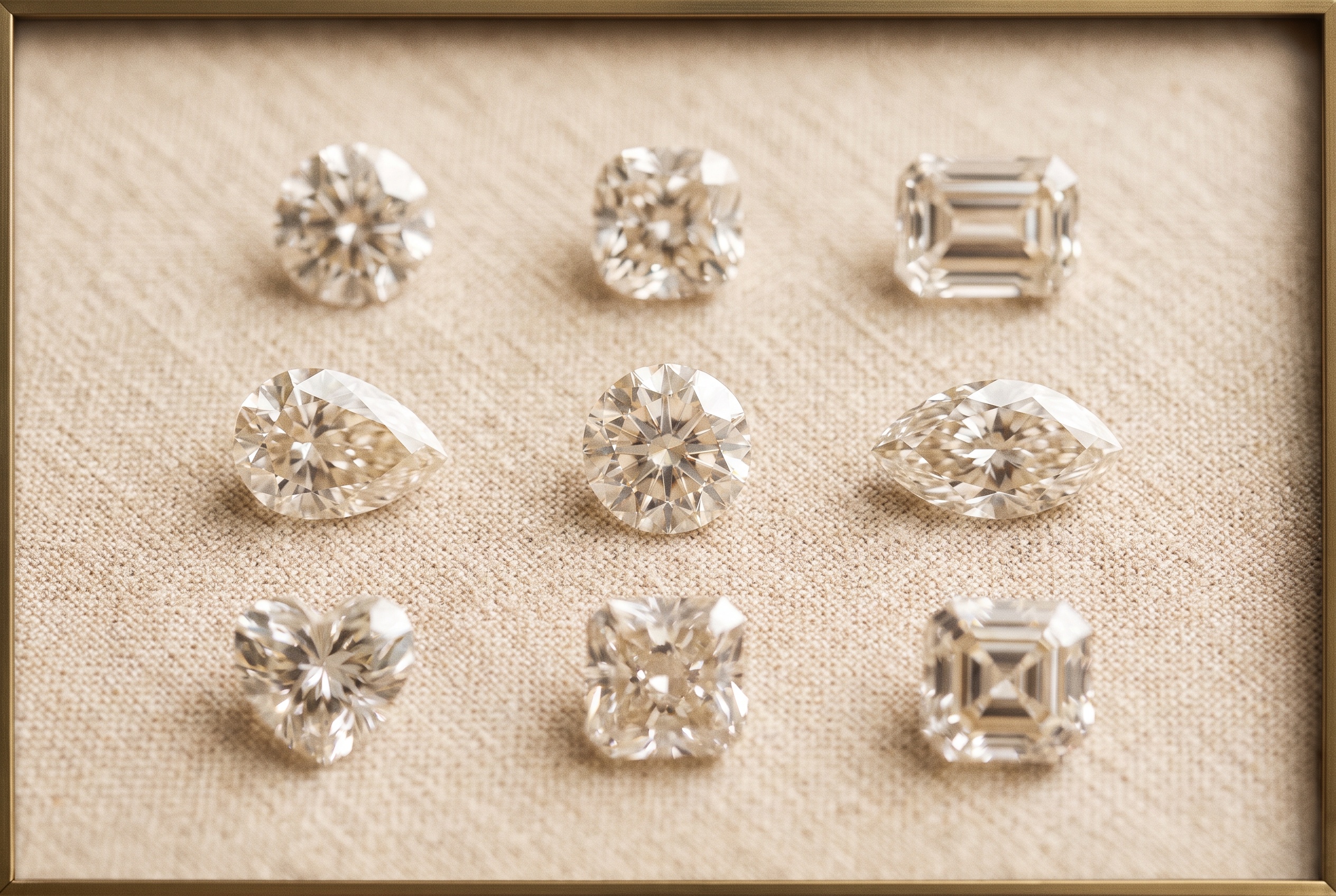
| Shape | Approx. Dimensions at 5ct | Consideration at This Size |
|---|---|---|
| Round brilliant | ~11.0mm diameter | Highest per-carat price; clean large round rough (natural) is especially scarce at this size |
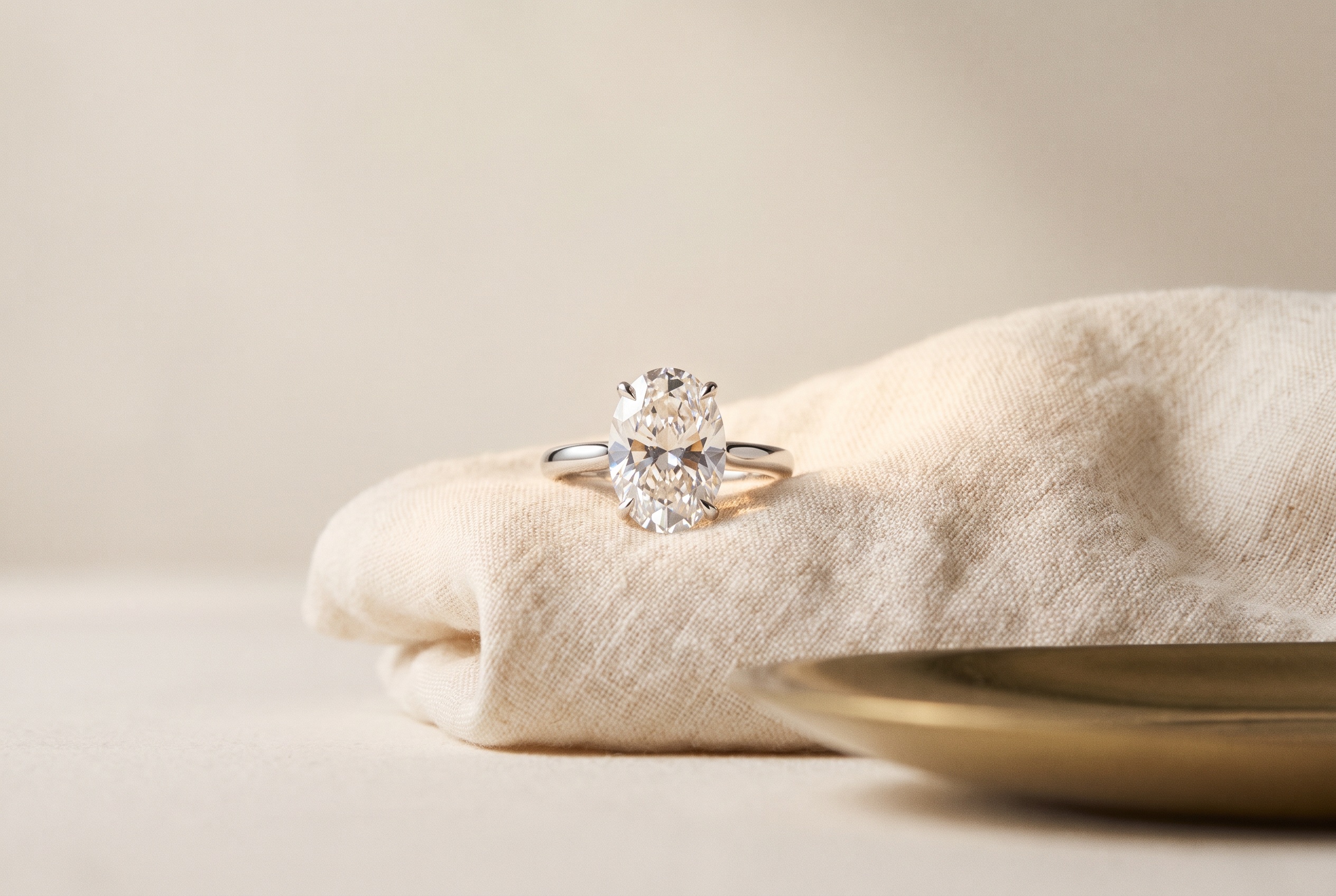
| Oval | ~14.5mm × 10.5mm | Reads dramatically larger than round due to elongation, a popular choice for maximizing visual scale at 5 carats |
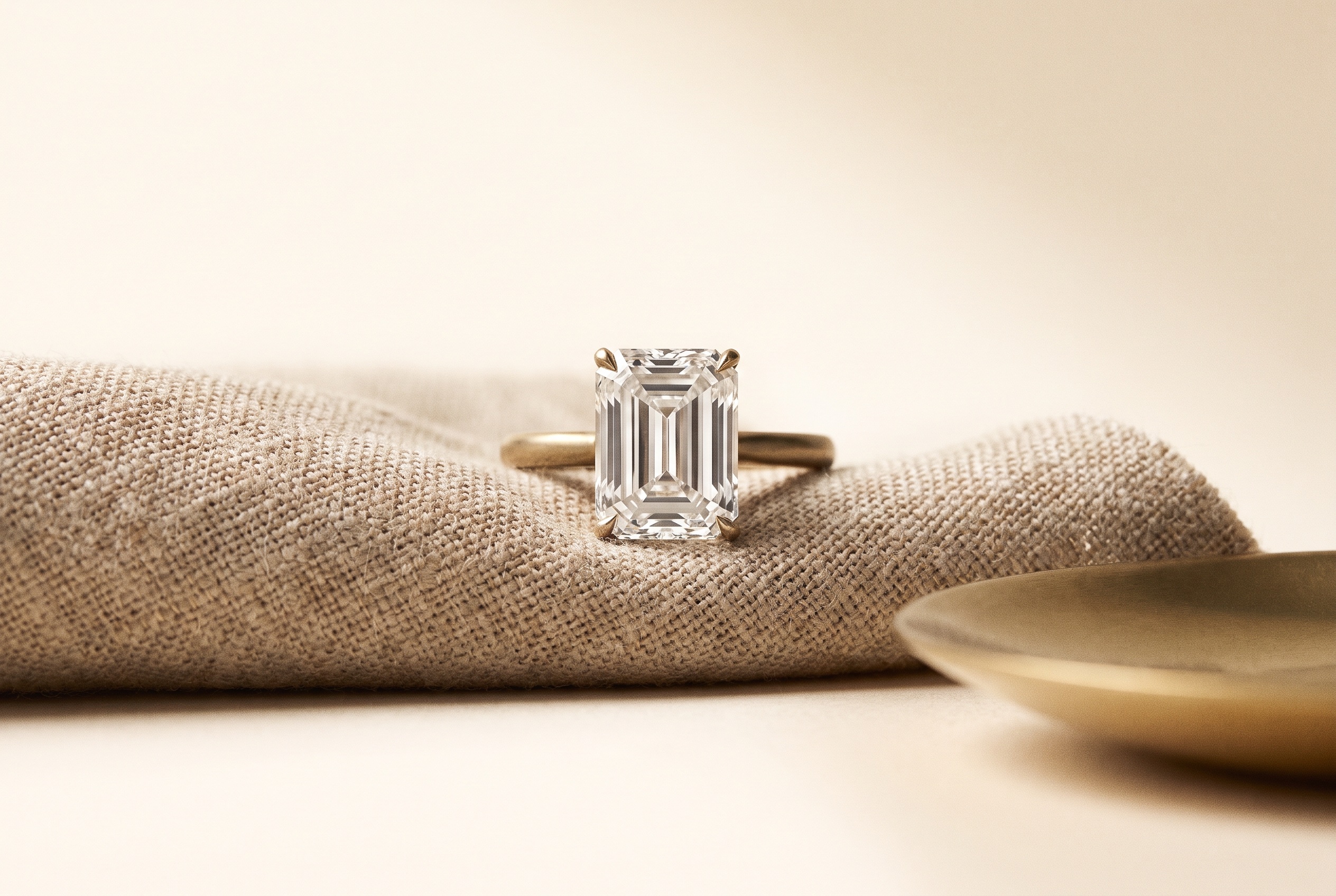
| Emerald | ~12.0mm × 9.0mm | Open step-cut table makes clarity especially important to verify carefully at this size |
| Cushion | ~11.3mm × 11.3mm | Softer outline, slightly smaller visual footprint than an elongated shape at the same weight |
| Pear | ~15.0mm × 9.6mm | Dramatic elongated statement shape; bow-tie effect worth checking carefully on the individual stone |
Certification at 5 Carats: Non-Negotiable
Given the value concentrated in a single stone at this size, independent certification from a recognized lab — IGI, GIA, or GCAL — isn't optional. A buyer should confirm the report number against the issuing lab's own lookup tool, review actual measurements against the stated carat weight and shape, and, for lab-grown stones, confirm CVD origin is clearly and unambiguously disclosed on the report. Our GIA-certified natural diamonds guide and GIA-certified lab-grown diamonds guide cover what each report actually documents.
Why Large Clean Rough Is So Scarce on the Natural Side
The scarcity that drives natural 5-carat pricing isn't just about size — it's about the compounding probability of a large piece of rough also being clean and well-formed enough to yield a 5-carat finished stone after cutting. Larger rough crystals have statistically more opportunity to contain internal flaws, inclusions, or structural irregularities simply because there's more volume in which a flaw can occur, and the cutting process itself typically removes 40-60%+ of the original rough weight to reach a well-proportioned finished stone. A rough crystal has to be considerably larger than 5 carats to begin with, and largely clean throughout, to survive cutting into a 5-carat polished stone with strong clarity — a combination that becomes exponentially less common as target size increases. This is the underlying mechanism behind the steep, non-linear natural pricing curve at this weight, distinct from simple supply-and-demand market dynamics.
How Large CVD Rough Is Grown for Lab-Grown 5 Carat Stones
Lab-grown rough large enough to yield a 5-carat finished stone requires a substantially longer CVD growth run than smaller rough, and that extended timeline carries its own production risk — more time in the growth chamber means more opportunity for microscopic strain or unwanted inclusions to develop within the crystal lattice before the run completes. This is why larger lab-grown stones still command a real premium over smaller ones despite lab-grown production not facing the same geological scarcity dynamic as natural diamonds: production risk and cost scale with growth duration, even without rarity layered on top. A grower attempting a large rough run accepts a real chance the attempt won't yield gem-quality material, a cost that's reflected in how finished large lab-grown stones are priced. See our lab-grown diamond guide for a fuller explanation of the CVD process itself.
5 Carats Across Different Jewelry Types
How a 5-carat stone is priced and set changes somewhat depending on what it's set into, since exposure to daily wear and impact varies significantly by jewelry type:
- Rings — a 5-carat center stone in a ring interacts with hand movement, glove use, and daily manual tasks, making setting security (prong count, shank engineering) the highest-priority consideration of any placement.
- Pendants — a stone this size in a pendant simply hangs and catches light without the same impact exposure a ring sees, making pendant settings a popular choice for buyers who want to wear a large stone with lower daily-wear risk.
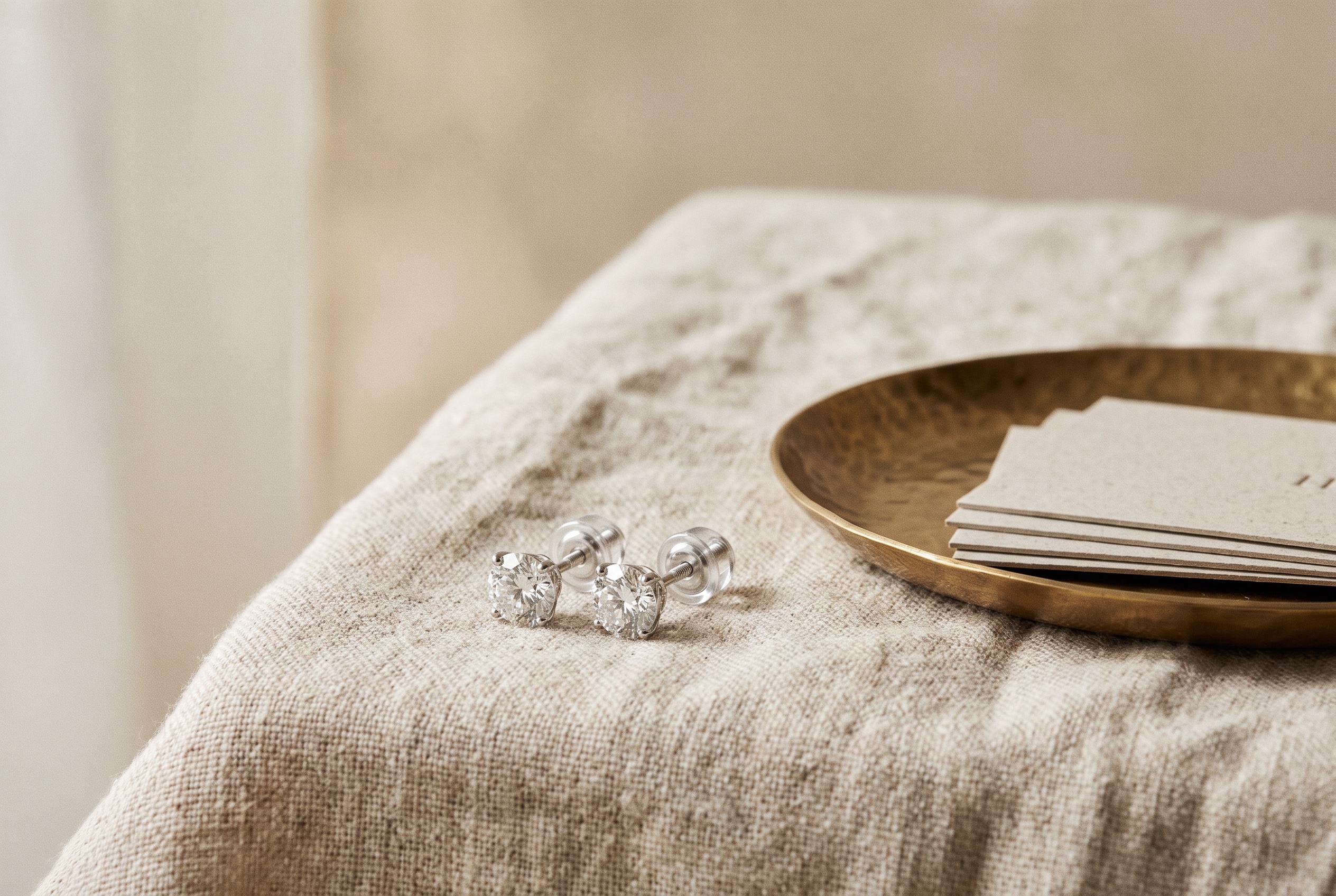
- Earrings — less common at 5 carats per stone given the total value of a matched pair at this size, but when sourced, secure post and backing engineering matters even more than in a ring, given the stone's prominence and the lower surface area available for secure mounting.
Buyers undecided on placement should weigh lifestyle fit for a stone this prominent as seriously as the aesthetic decision, since the practical wear considerations differ meaningfully by jewelry type at this scale.
Resale and Long-Term Value Considerations
A 5-carat diamond, natural or lab-grown, represents a significant enough purchase that long-term value considerations are worth discussing with a buyer at time of sale, even though Guru Diam's own role is sourcing rather than resale brokering. Natural diamonds at this size have historically held value more predictably in the resale and estate market than lab-grown stones, reflecting natural diamond's established secondary market infrastructure and continued rarity-driven pricing floor. Lab-grown resale value is a newer and still-developing market, with pricing more directly tied to current production cost trends than to any scarcity premium — a genuine consideration for a buyer thinking about a stone at this scale as a long-term asset rather than purely a piece to wear and enjoy. Neither consideration should override a buyer's primary reason for choosing natural or lab-grown, but it's a fair topic to raise directly at this price point rather than leaving it unaddressed.
Insurance and Documentation for a 5 Carat Stone
- A standalone jewelry insurance policy or rider is typically necessary at this value — many general property policies cap jewelry coverage well below what a 5-carat stone and setting are worth.
- A current appraisal, separate from the grading certificate, establishes replacement value specifically for insurance purposes.
- High-resolution photos and the certificate number kept on file separately from the piece itself simplify both a claims process and law enforcement report in the event of loss.
Setting Considerations for a 5 Carat Center Stone
A stone at this scale demands setting engineering that matches its size and value — a secure 6-prong configuration is standard practice over 4 prongs for a round brilliant this large, and band or shank thickness should be sized deliberately to support the stone's weight rather than defaulting to a standard bridal-weight band. A cathedral setting (see our cathedral setting guide) suits a stone this prominent particularly well, giving it an elevated architectural frame that matches its visual weight.
What to Check Before Buying a 5 Carat Diamond
| Item | Why It Matters at 5 Carats |
|---|---|
| Independent lab certification, verified against the lab's own database | Non-negotiable given the value at stake in a single stone |
| Actual millimeter measurements vs. stated carat weight | Confirms proportional cut rather than an unusually deep or shallow stone cut to hit a target weight |
| Fluorescence grade | Slightly elevated risk of visible haze on a large, strongly fluorescent stone under bright light |
| Video or in-person review of light performance | A stone this size is a genuine focal point; cut quality should be confirmed beyond the certificate's grade alone |
| Setting engineering scaled to the stone | Prong count and shank thickness should match a stone of this size and value, not a standard template |
Comparing a 5 Carat Purchase Against Buying Two Smaller Stones
Some buyers at this budget level weigh a single 5-carat statement stone against an alternative — for example, a pair of smaller matched stones for earrings, or a strong center stone paired with substantial side stones in a three-stone or halo build. Neither approach is objectively better; it depends entirely on the intended piece and the buyer's priority between a single dramatic focal point versus a distributed design. A jeweler fielding this conversation should be ready to price both paths concretely rather than assuming a single large stone is automatically the preferred or higher-value option — a well-executed halo or three-stone design using a somewhat smaller center stone plus quality side stones can deliver comparable visual drama at a meaningfully different total cost structure than a single 5-carat solitaire, worth laying out explicitly for a buyer who hasn't already committed to the single-stone approach.
Working With a Supplier on a Purchase This Size
Given the value concentrated in a single 5-carat stone, the sourcing relationship matters more here than it does for standard bridal-range purchases. A buyer at this level should expect and request video or high-resolution imagery showing the stone's actual light performance, not just certificate figures, along with a clear return or inspection window before final commitment. A supplier unwilling to provide this level of pre-purchase transparency on a stone at this price point is a meaningful red flag, independent of how attractive the quoted price might otherwise look — the standard due diligence practices covered in our diamond wholesaler guide apply with extra weight at this value tier.
Lead Time Expectations for a 5 Carat Stone
Unlike common bridal-range weights that most wholesalers hold in reasonably deep in-stock inventory, a 5-carat stone of specific desired grading is more likely to require either sourcing from a smaller pool of existing in-stock large stones or a made-to-order search against a buyer's exact specifications, particularly on the natural side where large clean rough availability fluctuates. Buyers and jewelers working toward a specific timeline — an event date, for instance — should build in meaningfully more lead time flexibility for a stone at this size than they would for a standard 1-carat purchase, and should communicate any hard deadline to a supplier early rather than assuming same-day or next-day availability applies uniformly across every carat weight in a catalog.
Documentation to Request Alongside a Quote
Given the value at stake, a buyer or jeweler evaluating a 5-carat stone should request more than just the certificate number before committing. High-resolution imagery from multiple angles, ideally video showing the stone's light performance under movement, and — where possible — a plot diagram showing inclusion location from the certifying lab all give a far more complete picture than grading numbers alone. For natural stones specifically, some buyers also request an independent second opinion from a separate gemologist before finalizing a purchase at this value, a reasonable practice given how much is riding on the stated grade being accurate. A supplier confident in their inventory and grading accuracy should have no hesitation supporting this level of due diligence on a purchase this size.
Budgeting Across the Natural-to-Lab-Grown Spectrum
Rather than treating the natural-versus-lab-grown decision at 5 carats as strictly binary, some buyers benefit from thinking through the full spectrum of options a supplier carrying both catalogs can offer: a top-color, top-clarity natural stone at one end, a comparably graded lab-grown stone at a fraction of the cost at the other end, and a range of intermediate choices in between — a slightly lower natural color or clarity grade, for instance, that still delivers real natural-diamond rarity at a somewhat more accessible price than the absolute top grades. Walking a buyer through this full spectrum, rather than presenting natural and lab-grown as a single binary choice, often surfaces an option that better matches both their budget and their priorities than either extreme would on its own.
Sourcing a 5 Carat Diamond at Wholesale
A stone at this scale is a significant order, and it benefits from a sourcing relationship that provides real documentation and, ideally, direct video or in-hand review before a client commits. Guru Diam supplies both certified natural diamonds and CVD lab-grown diamonds — no HPHT anywhere in the catalog — with IGI, GIA, and GCAL certification all available, giving buyers a single source for comparing natural and lab-grown options at this size side by side.
Buyers can browse current inventory through the certified diamonds category, and buyers building a full piece around a stone this size can work through custom jewelry for a setting engineered specifically for the stone's proportions, finished in 4-6 days with cutting, setting, and polishing all handled in-house. For accent and halo work paired with a large center stone, matching pairs rounds out a full build. Trade accounts can review terms at the wholesale hub or apply through trade partner.
Working With a Jeweler or Designer on a 5 Carat Purchase
A purchase at this scale is rarely a fast, self-directed transaction the way a smaller standard bridal purchase often is — most buyers benefit from working closely with a jeweler or designer who can help interpret certification data, weigh the natural-versus-lab-grown tradeoffs against budget and priorities, and oversee setting engineering appropriate to a stone this significant. For a jeweler serving this segment of the market, that consultative role is a genuine part of the value being delivered alongside the stone itself, and it's worth budgeting the time for a thorough, unhurried conversation rather than treating a 5-carat inquiry the same way as a routine standard-size request.
Frequently Asked Questions
How much does a 5 carat diamond cost?
It varies enormously by whether the stone is natural or lab-grown, plus cut, color, and clarity — natural 5-carat stones of strong quality can price at many multiples of a lab-grown stone with an identical grading report. Getting an accurate figure requires pricing a specific combination of these factors rather than a single blanket number.
Why is a natural 5 carat diamond so much more expensive than lab-grown?
Natural rough large and clean enough to yield a 5-carat polished stone is genuinely rare, since geological scarcity compounds sharply with size. Lab-grown production cost instead scales with manufacturing investment and growth time, which doesn't face the same rarity constraint, making the price gap between the two widest at this size range.
What shape looks biggest at 5 carats?
Elongated shapes like oval and pear read visibly larger than round or cushion cuts at the same carat weight, spreading more of the stone's weight across a longer visible footprint rather than a compact round outline.
Do I need special insurance for a 5 carat diamond?
Yes, typically — a standalone jewelry insurance policy or rider is usually necessary at this value, since many general property policies cap jewelry claims well below what a 5-carat stone and setting are worth.
What setting works best for a 5 carat center stone?
A secure 6-prong setting is standard for a stone this size and value, with the band or shank proportioned to visually and structurally support it rather than a standard thinner bridal-weight band. Cathedral settings are a common choice for their elevated, architectural frame.
Should color and clarity grading be stricter at 5 carats?
Yes — both body color and clarity characteristics become significantly easier to see to the naked eye at this size, so buyers typically shop a higher color and clarity grade at 5 carats than they'd accept in a smaller stone to keep the same face-up appearance.