
Yes, GIA certifies lab-grown diamonds — it has since 2007, using the same 4Cs grading criteria (carat, cut, color, clarity) applied to natural diamonds, but issuing a distinct report type clearly labeled "Laboratory-Grown Diamond Grading Report" so origin is never ambiguous. A GIA-certified lab-grown diamond carries the same grading rigor as a natural GIA report, just documented against a different point of comparison.
Buyers searching for "GIA certified lab-grown diamonds" are usually looking for one of two things: confirmation that GIA certification of lab-grown stones is legitimate and reliable, or actual inventory to buy or resell. This guide covers how GIA's lab-grown reports work, how they differ from natural diamond reports and from IGI/GCAL alternatives, what to check on a certificate before buying, and — for jewelers and designers building recurring supply — how to source GIA-certified lab-grown inventory through a wholesale channel rather than shopping listing by listing.
Does GIA Certify Lab-Grown Diamonds?
GIA began grading lab-grown diamonds in 2007 and has certified them continuously since, applying the same core grading methodology it uses for natural diamonds: independent examination under controlled lighting and magnification, assessment against the 4Cs, and issuance of a standardized report. GIA was, for years, more conservative than some other labs about extending full grading services to lab-grown material, which is part of why a GIA lab-grown report is often treated as a particularly credible signal in a category where certification standards vary more than they do for natural diamonds.
How a GIA Lab-Grown Report Differs From a Natural Diamond Report
The two report types are deliberately distinct, not just relabeled versions of each other:
- Header wording — a lab-grown report is headed "Laboratory-Grown Diamond Grading Report"; a natural report is headed "Diamond Grading Report."
- Report number prefix — lab-grown reports use a separate numbering series from natural diamond reports, making the two instantly distinguishable in GIA's database.
- Mandatory laser inscription — since 2020, GIA requires the words "Laboratory-Grown" plus the report number to be laser-inscribed on the girdle of every lab-grown diamond it grades, visible under magnification. This inscription requirement does not apply to natural diamond reports.
- Grading scale notation — color and clarity grading for lab-grown diamonds historically used a slightly compressed scale range in some periods of GIA's program; current GIA lab-grown reports use the same D–Z color and FL–I3 clarity scales as natural reports, so the grading language reads identically once you're looking at the report itself.
GIA vs. IGI vs. GCAL for Lab-Grown Diamonds
| Lab | Lab-Grown Volume | Grading Tendency | Turnaround | Best For |
|---|---|---|---|---|
| GIA | Lower volume than IGI, but widely regarded as the strictest standard | Conservative — grades tend to run stricter | Slower | Higher-value lab-grown center stones, buyers prioritizing the strictest available grading standard |
| IGI | Highest lab-grown certification volume worldwide | Can run slightly more generous than GIA on a comparable stone | Faster, generally the industry default for lab-grown turnaround | Most lab-grown wholesale and retail inventory, faster-moving supply chains |
| GCAL | Smaller volume, cut-precision specialty | Technical, strong on light-performance documentation | Moderate | Buyers prioritizing verified cut precision and light performance data |
IGI currently certifies the largest share of lab-grown diamonds in the market, which is why lab-grown inventory searches surface far more IGI-certified stones than GIA-certified ones — this reflects certification volume and lab preference across suppliers, not a quality gap between the labs.
What to Check on a GIA Lab-Grown Diamond Certificate
- Confirm the header explicitly says "Laboratory-Grown." A legitimate certificate never obscures this.
- Verify the report number directly on GIA's official report-check tool, not from a screenshot or PDF alone.
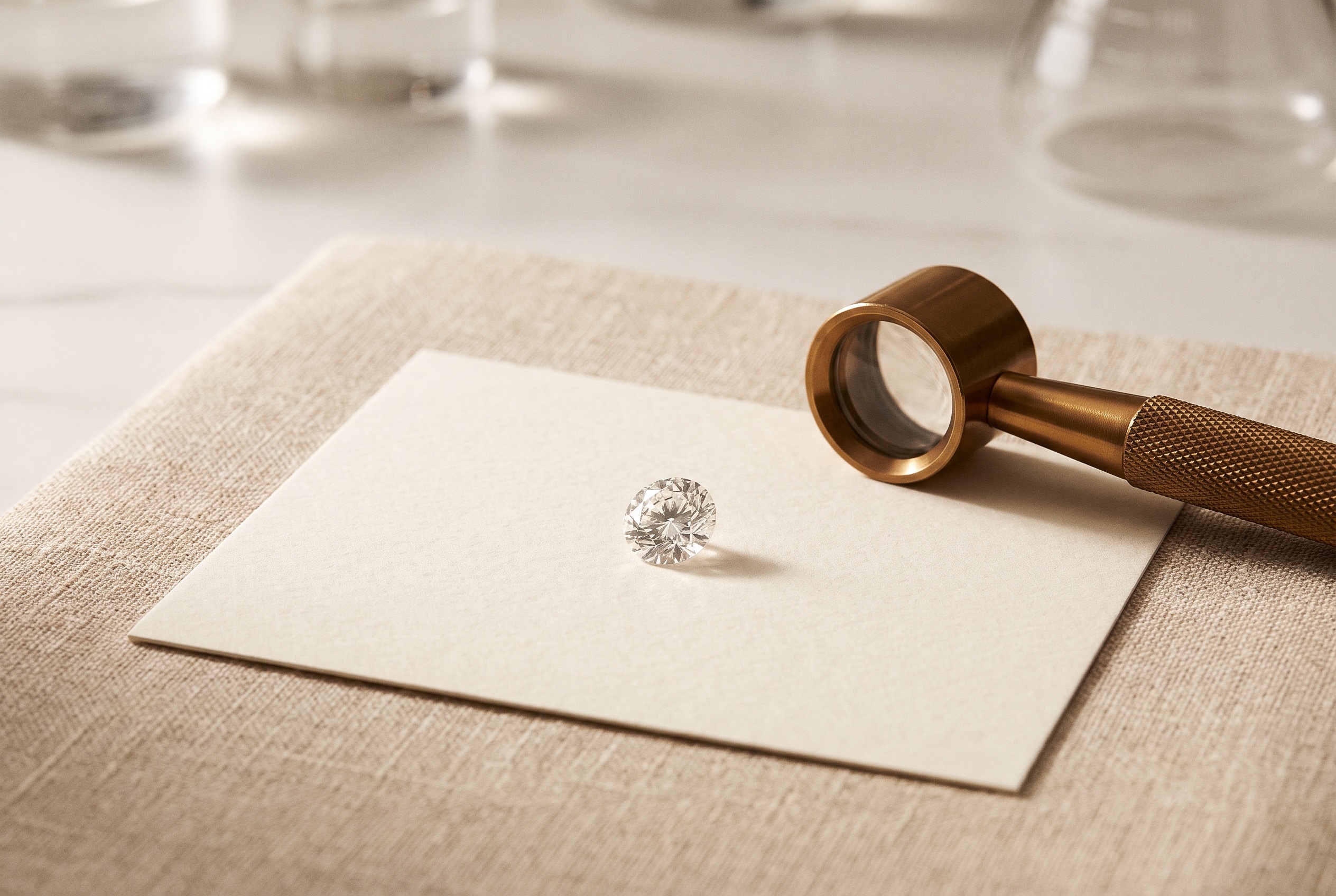
- Check for the laser inscription on the girdle under magnification — it should read "Laboratory-Grown" plus the matching report number.
- Confirm the growth method if it's listed — GIA reports may note whether a stone was produced by CVD or HPHT.
- Check for treatment notes. Some lab-grown diamonds undergo post-growth treatment (such as HPHT annealing to improve color); a GIA report will disclose this in the comments section if applicable.
GIA Grading Scale for Lab-Grown Diamonds
The same 4Cs apply, graded on the same scales used for natural diamonds:
- Carat — measured identically, to the hundredth of a carat.
- Cut — graded Excellent through Poor for round brilliant lab-grown diamonds, with fancy shapes receiving proportion measurements and a cut description rather than a numeric grade, same as natural stones.
- Color — D (colorless) through Z, assessed against the same master-stone comparison method.
- Clarity — Flawless through Included, based on inclusions and blemishes under 10x magnification.
Because lab-grown production allows tighter control over growth conditions than natural formation permits, a higher proportion of lab-grown output lands in the higher color and clarity tiers compared to natural mining yield — which is part of why high-grade lab-grown stones (VVS clarity, D–F color) are considerably more accessible on price than natural stones at the same grade.
Are GIA-Certified Lab-Grown Diamonds More Expensive Than IGI-Certified?
Generally, yes, modestly — a GIA report is often perceived as carrying more weight due to GIA's reputation for conservative, consistent grading, and that perception shows up as a small premium on GIA-certified lab-grown stones relative to comparable IGI-certified stones. The gap is far smaller than the gap between lab-grown and natural diamonds overall, and for most buyers the practical difference in appearance between a GIA-graded VS1 and an IGI-graded VS1 lab-grown diamond of the same cut and color is negligible. The certification choice matters more for resale and buyer confidence than for any visible difference in the stone itself.
Finding GIA-Certified Lab-Grown Inventory as a Trade Buyer
Consumer-facing searches for "GIA certified lab-grown diamonds" are typically looking for a single stone to buy once. Trade buyers — jewelers, designers, and manufacturers — are solving a different problem: sourcing a consistent, reliable supply of certified lab-grown stones across repeat orders, often across multiple shapes, sizes, and grades for different clients or product lines at once. That shifts the real question from "which listing has the stone I want" to "which supplier can consistently deliver certified inventory across the range I need, order after order." A wholesale relationship with a supplier who carries certified lab-grown stock across shapes and grades — rather than sourcing one stone at a time from scattered listings — is the more reliable way to build that supply chain, particularly for buyers who need matched pairs, specific antique cuts, or fancy color lab-grown stones that don't show up reliably in single-stone consumer inventory.
Verifying a GIA Report Number for Lab-Grown Stones
The verification process is identical to natural diamond reports: enter the report number into GIA's official online lookup tool, and confirm the returned record matches the stone's measurements, carat weight, and grading details. Because lab-grown reports use a distinct numbering series, a report number that returns a natural diamond record — or no record at all — when checked against a stone being sold as lab-grown is an immediate red flag.
Common Questions Buyers Have About GIA Lab-Grown Certification
- "Does GIA grade lab-grown diamonds as strictly as natural ones?" Yes — the grading methodology and criteria are the same across both report types.
- "Will a GIA-certified lab-grown diamond say 'lab-grown' forever, even after resale?" Yes — the laser inscription and report designation are permanent and travel with the stone.
- "Is a GIA lab-grown report as trusted as a GIA natural report?" Within the lab-grown category specifically, yes — GIA's standards for lab-grown grading mirror its natural diamond rigor, even though the two markets have different typical certification-lab preferences overall.
- "Can a lab-grown diamond be resubmitted to change its report from lab-grown to natural?" No — origin is a physical property of the stone, not something a report can alter, and GIA's inscription and database record make any attempt to misrepresent origin traceable.
History of GIA's Lab-Grown Grading Program
GIA's involvement with lab-grown diamonds began in 2007, when it started issuing grading reports for the category — a notable moment because GIA had, at that point, spent decades building its reputation almost entirely around natural diamond grading, and extending that same rigor to lab-grown material signaled the category was being taken seriously as genuine jewelry-grade product rather than a novelty. In the years since, GIA has periodically updated its lab-grown reporting standards as the category matured: the 2020 requirement for mandatory laser inscription identifying a stone as laboratory-grown was one of the more significant updates, closing a gap where earlier lab-grown stones could theoretically be resold without an inscription permanently tying the physical stone to its lab-grown report. Today, GIA's lab-grown grading program mirrors its natural diamond program closely in rigor, even though the two categories still see different typical certification-lab preferences across the broader market.
Growth Method Disclosure: CVD vs. HPHT on a GIA Report
A GIA lab-grown diamond report can note the growth method — CVD or HPHT — used to produce the stone, since the two methods can occasionally leave subtly different internal growth characteristics that a trained gemologist can sometimes identify. This disclosure matters to some buyers more than others: for most jewelry applications, a well-cut, well-graded lab-grown diamond performs identically regardless of which growth method produced it, but buyers or suppliers with a specific catalog policy — carrying CVD material exclusively, for instance — will want to confirm growth method directly on the certificate rather than assuming based on the seller's general description alone, since a report is the only fully independent confirmation of how a specific stone was actually produced.
Lab-Grown Diamond Treatments and Post-Growth Processing
Some lab-grown diamonds undergo post-growth treatment to improve color or clarity — most commonly HPHT annealing applied after CVD growth to lighten a brownish tint that can occur in as-grown CVD material, a step distinct from HPHT used as a primary growth method. A GIA report discloses any such treatment in its comments section, since treatment history is a material fact about the stone that affects both its grading and, in some cases, its long-term stability under extreme conditions like re-cutting or repair work. Buyers should always check the comments section of a certificate for treatment disclosures rather than assuming an untreated stone based on the headline 4Cs alone — this applies to both lab-grown and natural diamonds, though the specific treatment types differ between the two categories.
GIA Certification and Matched Pairs
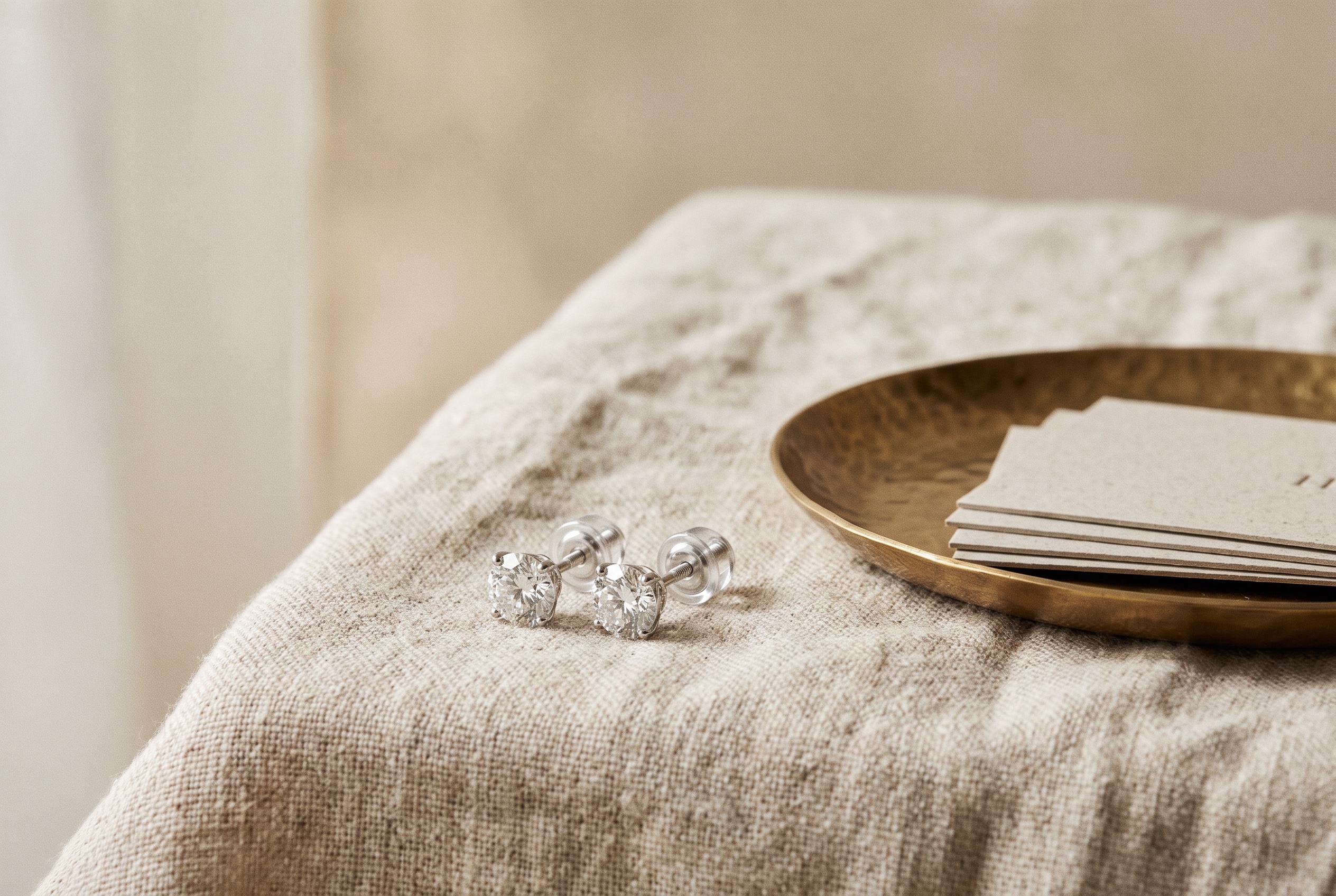
For jewelers sourcing GIA-certified lab-grown diamonds for stud earrings or symmetrical side stones, certification alone doesn't guarantee two stones will look like a true matched pair — two individually GIA-certified stones with identical 4C grades can still differ subtly in face-up appearance depending on inclusion position, fluorescence, and cut execution within the tolerances of their shared grade. Sourcing matched pairs benefits from a supplier who can compare candidate certified stones directly against each other before shipping, rather than assembling a pair from two separately certified stones pulled from different inventory batches based on grade alone. It's worth noting this applies specifically to loose stones at 0.30 carats and above, where individual certification is standard — melee-sized stones (roughly under a carat, and specifically the sub-0.30-carat range used in pavé and accent settings) are typically sold as uncertified parcel goods against a quality baseline rather than individually graded, which is a separate sourcing category from certified center and near-center stones.
Common Mistakes Buyers Make When Sourcing Certified Lab-Grown Diamonds
- Assuming any "certified" claim is equivalent. A listing that says "certified" without naming the lab could mean GIA, IGI, GCAL, or in rarer cases a far less rigorous in-house or regional lab whose standards don't hold up to independent scrutiny — always confirm the specific issuing lab, not just that a certificate exists.
- Not checking the report number before paying. This takes minutes and is the single most effective way to catch a mismatched or fraudulent certificate before it becomes a costly problem.
- Comparing grades across labs as if they're identical. A GIA VS1 and an IGI VS1 are not necessarily interchangeable given the labs' differing grading tendencies — treat cross-lab comparisons as approximate, not exact.
- Overlooking the comments section. Treatment disclosures and growth-method notes live there, not in the headline 4Cs, and skipping this section means missing material facts about the stone.
- Sourcing single stones from scattered listings for a recurring order need. This works for a one-time purchase but breaks down fast for a jeweler who needs consistent certified supply across multiple orders — a standing wholesale relationship solves a problem that listing-by-listing sourcing can't.
Why Certification Consistency Matters More at Wholesale Volume
A single retail buyer checking one certificate is a one-time task. A jeweler or designer placing recurring wholesale orders is effectively checking certification consistency across dozens or hundreds of stones a year, across multiple clients with different certification preferences — some wanting GIA specifically, others fine with IGI, some prioritizing GCAL's cut-precision documentation. At that volume, the practical question shifts from "is this one stone properly certified" to "does this supplier's inventory reliably carry accurate certification across every lab I might need, order after order" — which is a supplier-relationship question as much as a per-stone verification question, and the reason established wholesale buyers tend to consolidate certified sourcing with one or two trusted suppliers rather than re-verifying every stone from a new source each time.
GIA-Certified Lab-Grown Diamonds Across Shapes
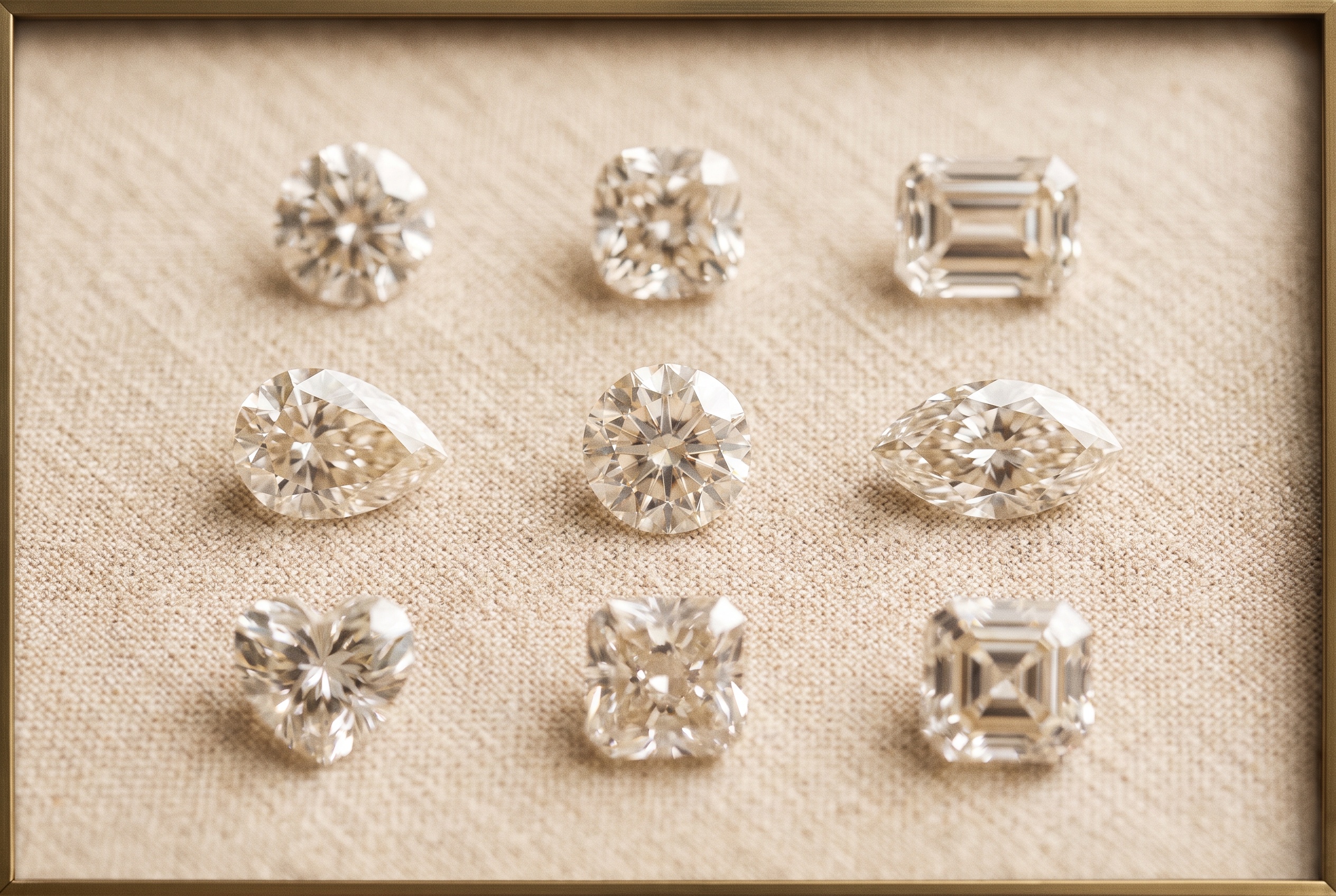
GIA's lab-grown grading program covers the same shape range as its natural diamond program — round brilliant, the regular fancy shapes (oval, cushion, emerald, pear, marquise, radiant, princess, heart), and antique-style cuts where a supplier stocks lab-grown rough suitable for that faceting style. Certification depth follows the same pattern as natural stones too: round brilliants receive a numeric cut grade, fancy shapes receive detailed proportions and a cut description, and antique cuts benefit from viewing actual stone photos alongside the certificate rather than relying on grade alone. A buyer sourcing GIA-certified lab-grown stones across multiple shapes for different pieces should expect this same variation in how much the certificate alone tells them, shape by shape.
Fancy Color GIA-Certified Lab-Grown Diamonds
GIA also certifies fancy color lab-grown diamonds — yellow, pink, blue, and green — documenting hue, tone, and saturation using the same color-origin-agnostic language it applies to natural fancy color stones, while the report clearly states the lab-grown origin. Because lab-grown production can introduce the specific trace elements responsible for color during controlled growth, fancy color lab-grown stones are considerably more available and more affordably priced than natural fancy color diamonds of comparable saturation, making GIA-certified fancy color lab-grown melee and loose stones a growing category for designers building colored-stone pieces without natural fancy color pricing.
Sourcing GIA-Certified Lab-Grown Diamonds Wholesale
Guru Diam carries CVD lab-grown diamonds with GIA, IGI, and GCAL certification available across standard, antique, and fancy color shapes — not a single-lab, single-shape catalog, but a supplier built for jewelers and designers who need certification flexibility across a full range of stones and repeat orders. Because certification lab preference varies by client and by resale context, we carry stock across all three labs rather than defaulting to whichever certifies fastest. In-stock certified inventory ships same-day from both our New York and Los Angeles locations, and custom pieces built around a certified lab-grown center stone are finished in 4–6 days. Buyers sourcing specific quality tiers may also find our lab-grown diamond guide and VVS clarity guide useful for building out a full order, and buyers weighing lab-grown against a natural sourcing mix can review our GIA certified natural diamonds guide for the equivalent breakdown on the natural side of the catalog.
What a GIA Report Number Prefix Tells You at a Glance
Experienced buyers can often tell a lab-grown GIA report from a natural one just by glancing at the report number format, before even reading the header — GIA's lab-grown reports use a numbering series distinct from natural diamond reports, a structural separation that exists specifically so the two categories can never be confused in GIA's own database or in a quick visual check. This is a useful secondary confirmation alongside the explicit "Laboratory-Grown" header wording and the girdle inscription, though the official report-check lookup remains the only fully reliable verification step, since report number formats can in principle be forged on a fraudulent physical document even if the underlying database record cannot.
Frequently Asked Questions
Does GIA certify lab-grown diamonds?
Yes. GIA has graded lab-grown diamonds since 2007, using the same 4Cs criteria applied to natural diamonds, and issues a distinct "Laboratory-Grown Diamond Grading Report" clearly labeled to prevent confusion with natural diamond certificates.
How is a GIA lab-grown report different from a natural diamond report?
The header explicitly states "Laboratory-Grown," the report uses a separate numbering series, and since 2020 the stone must carry a laser inscription reading "Laboratory-Grown" plus the report number on its girdle — none of which applies to natural diamond reports.
Is GIA or IGI better for lab-grown diamond certification?
Neither is objectively better — IGI certifies the largest volume of lab-grown diamonds and offers faster turnaround, while GIA is generally viewed as the more conservative, strict grading standard. GIA-certified lab-grown stones often carry a modest price premium reflecting that reputation.
How do I verify a GIA lab-grown diamond certificate is real?
Look up the report number on GIA's official report-check tool and confirm it returns a record matching the stone's measurements and grading details, and check for the required laser inscription on the girdle under magnification.
Are GIA-certified lab-grown diamonds more expensive than IGI-certified ones?
Generally yes, by a modest amount, reflecting GIA's reputation for stricter grading — though the difference is far smaller than the overall price gap between lab-grown and natural diamonds.
Where can jewelers source GIA-certified lab-grown diamonds wholesale?
Through a wholesale supplier carrying certified stock across shapes and certification labs, rather than sourcing single stones from scattered consumer listings — this matters most for buyers who need consistent supply across repeat orders, matched pairs, or specific cuts.
Guru Diam is a trade-only wholesale diamond supplier with locations in New York and Los Angeles, carrying CVD lab-grown diamonds with GIA, IGI, and GCAL certification available across standard, antique, and fancy color shapes, alongside natural diamonds and finished jewelry. Browse certified inventory in the certified diamonds category, source matched pairs through matching pairs, or apply for a trade account through trade partner. Current inventory and terms are available at the wholesale hub.