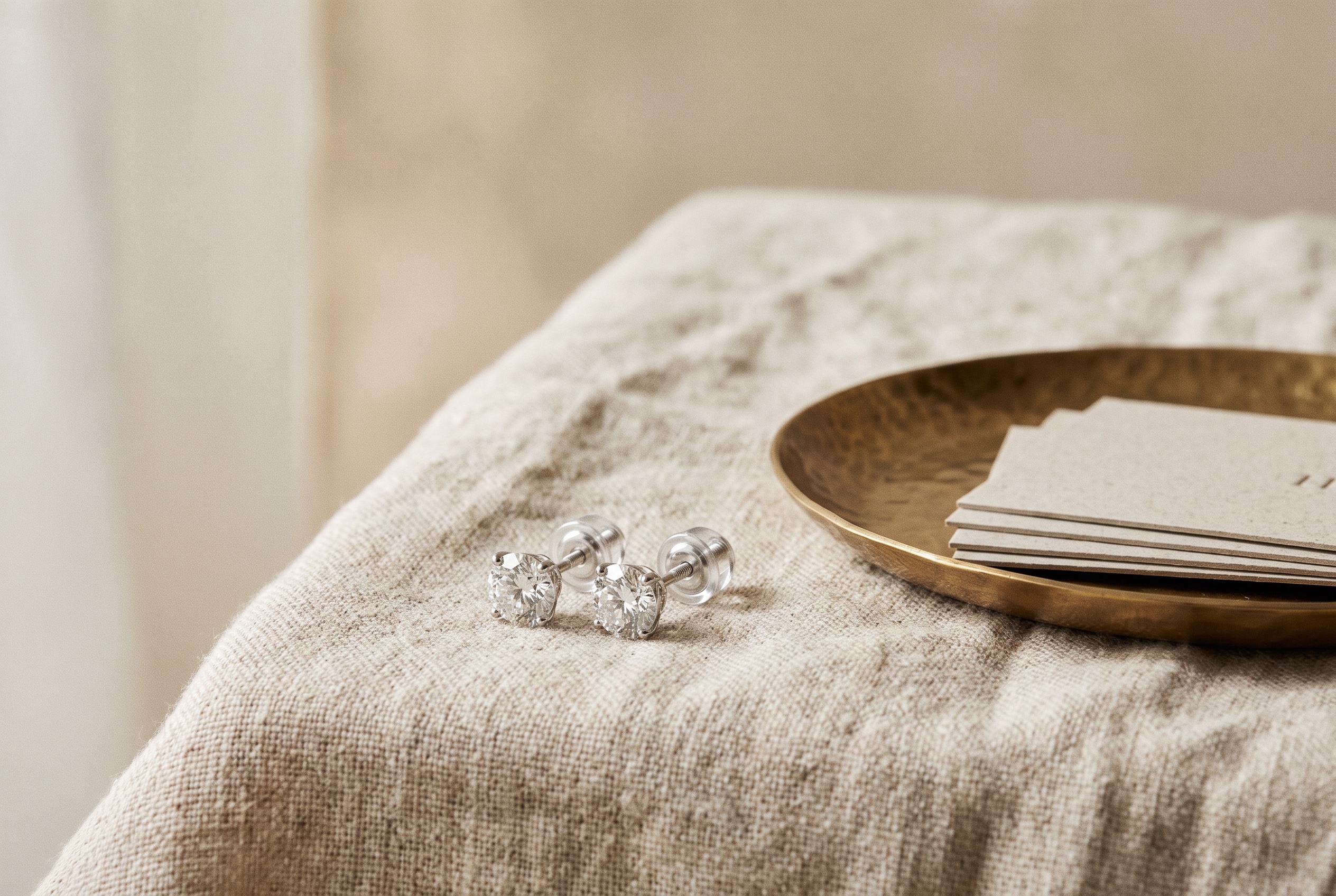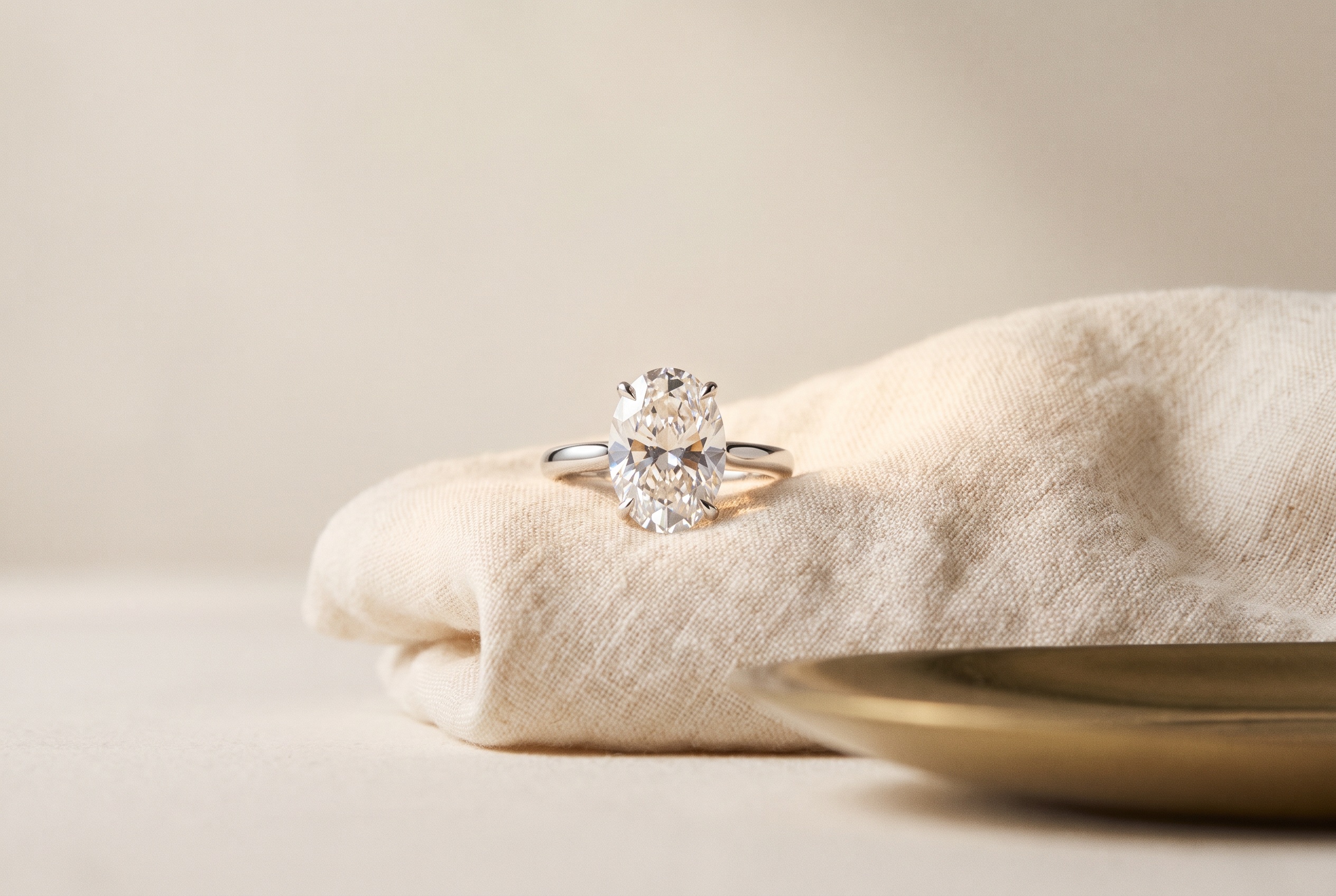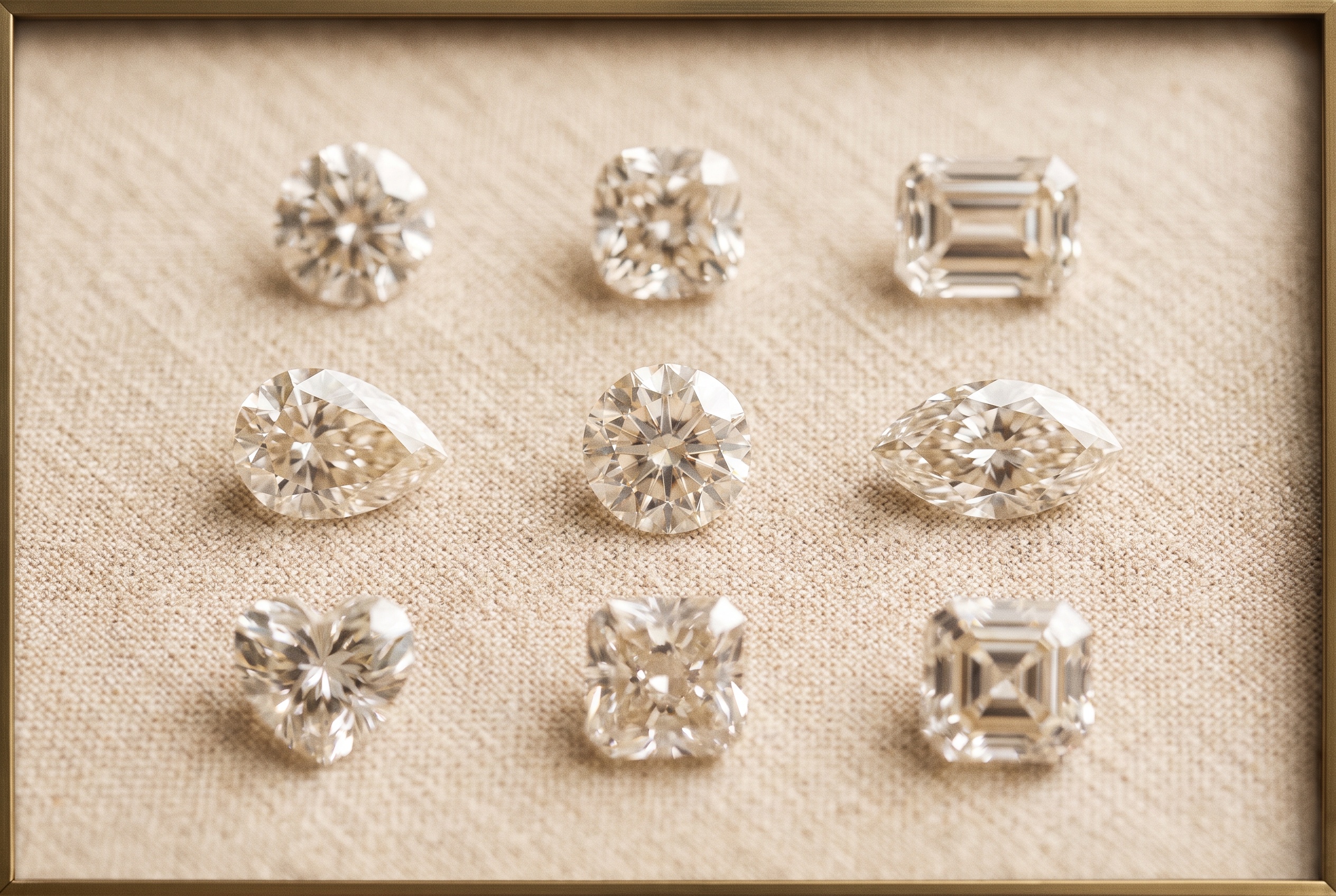

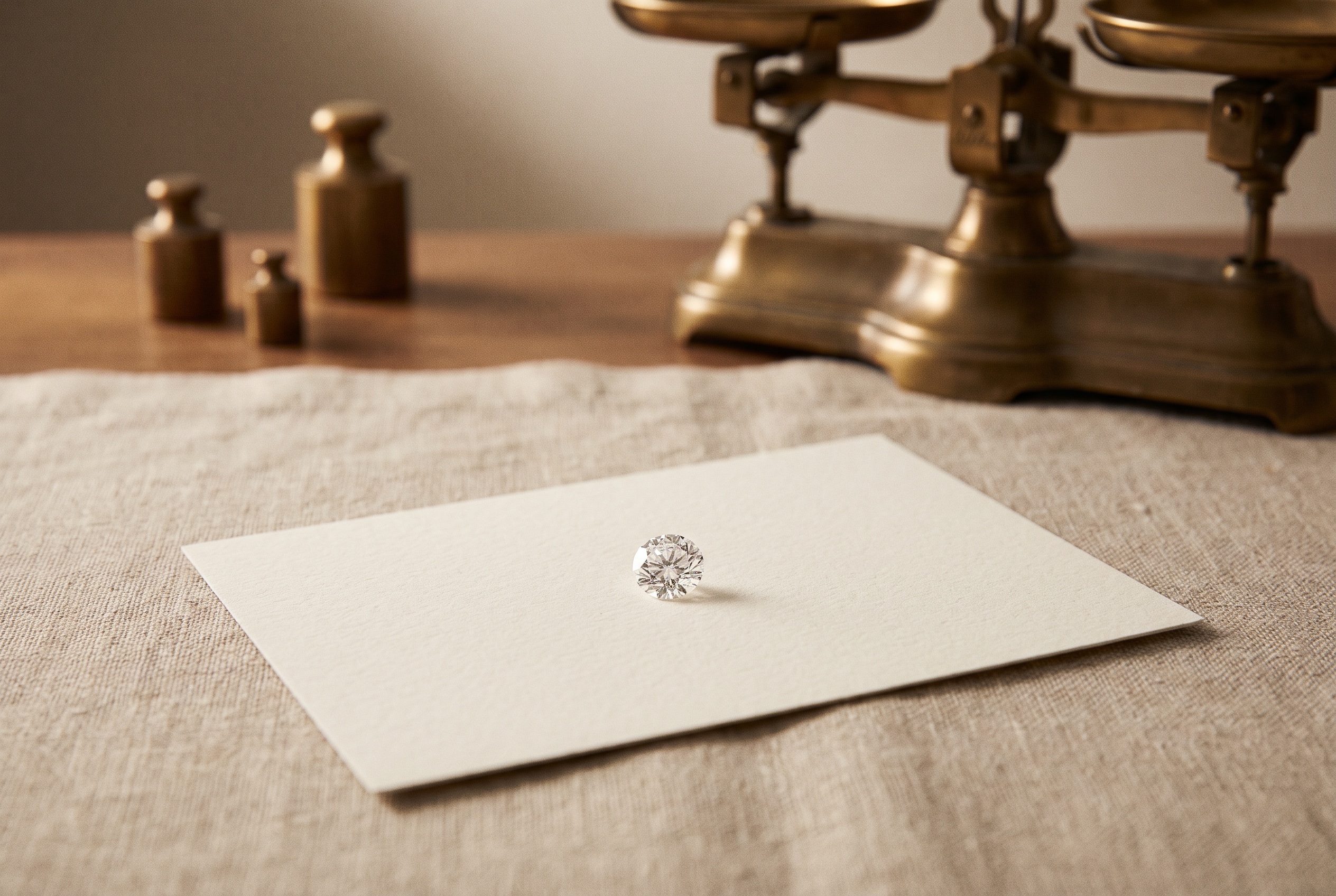
A GIA-certified natural diamond is a natural (mined) diamond that has been independently graded by the Gemological Institute of America and issued a diamond grading report documenting its carat weight, cut, color, clarity, and other identifying characteristics. GIA is widely regarded as the strictest and most consistent grading lab in the trade, which is why "GIA certified" functions as shorthand for a diamond's grade being trustworthy rather than inflated.
Buyers searching for GIA-certified natural diamonds are usually trying to answer one of two questions: what does the certification actually guarantee, and how do I make sure the stone I'm looking at matches its paperwork. This guide covers how GIA grading works, what's on a GIA report, how GIA compares to IGI and GCAL, and what to check before buying a certified natural diamond — loose or set.
What GIA Certification Actually Means
GIA (the Gemological Institute of America) is a nonprofit research and educational institute founded in 1931 that also operates the diamond trade's most widely referenced grading laboratory. When a natural diamond is "GIA certified," it means the stone was submitted to a GIA lab, examined by trained gemologists under controlled lighting and magnification, and issued a diamond grading report — often called a "cert" — that documents the stone's measurable characteristics.
Certification is not a guarantee of beauty or value in isolation. It's a guarantee of accurate, independently verified information: the report describes what the stone is, not whether it's a good deal at the price being asked. A GIA report on a natural diamond confirms the stone's origin as natural (as opposed to lab-grown or simulated), records its 4Cs, and notes any treatments the stone has undergone.
How to Read a GIA Diamond Grading Report
A GIA report is a standardized document, and once a buyer knows what each section means, comparing two stones side by side becomes straightforward. The core sections are:
- Report number — a unique identifier that can be looked up on GIA's own site to confirm the report is genuine and matches the stone.
- Shape and cutting style — round brilliant, emerald cut, cushion, oval, and so on.
- Measurements — the stone's dimensions in millimeters (length × width × depth).
- Carat weight — measured to the hundredth of a carat.
- Color grade — D through Z on GIA's scale, D being colorless.
- Clarity grade — Flawless through Included, based on inclusions and blemishes visible under 10x magnification.
- Cut grade — Excellent through Poor, applicable to standard round brilliant cuts; fancy shapes receive a cut description rather than a numeric grade.
- Polish and symmetry — separate grades assessing the finish quality of the facets and how precisely they align.
- Fluorescence — how strongly, if at all, the stone glows under UV light.
- Proportions diagram — a visual breakdown of the stone's table, depth, crown, and pavilion proportions.
- Comments — any additional identifying characteristics or notable inclusions (a "plotting diagram" often accompanies this, mapping inclusion locations).
The 4Cs on a GIA Natural Diamond Report
Carat
Carat measures weight, not size — one carat equals 0.2 grams. Two diamonds of the same carat weight can look different in diameter depending on how deep or shallow they're cut, which is why carat alone is a poor proxy for how large a stone will actually look set in a ring.
Cut
Cut grade reflects how well a diamond's proportions, symmetry, and polish allow it to interact with light — it is the single factor most within human control (as opposed to color and clarity, which are largely set by nature) and the factor with the largest visible impact on brilliance. GIA issues a numeric cut grade (Excellent to Poor) only for standard round brilliant cuts.
Color
GIA's color scale runs D (colorless) to Z (light yellow or brown), graded by comparing the stone against a set of master stones under controlled lighting. Most natural diamonds sold in fine jewelry fall in the G–J range, where color is not obviously visible to the naked eye once set.
Clarity
Clarity grades run from Flawless (no inclusions or blemishes visible at 10x magnification) down through Included, based on the size, number, position, and visibility of internal and surface characteristics. Most inclusions at VS clarity and above are invisible without magnification.
GIA vs. IGI vs. GCAL: Certification Comparison
| Lab | Founded | Known For | Grading Tendency | Best For |
|---|---|---|---|---|
| GIA | 1931 | Strictest, most widely referenced natural diamond grading standard | Conservative — grades tend to run stricter than other labs | Higher-value natural stones, resale and appraisal contexts where the strictest standard matters |
| IGI | 1975 | Largest lab-grown diamond certification volume worldwide, faster turnaround | Grades can run slightly more generous than GIA on comparable stones | Lab-grown diamonds and natural stones where turnaround speed matters |
| GCAL | 2001 | Cut-precision focus, laser inscription and light-performance analysis | Precise, technical, strong on cut-quality documentation | Buyers prioritizing verified light performance and cut precision |
None of the three labs is "better" in an absolute sense — they serve overlapping but distinct parts of the trade. What matters most for a buyer is knowing which lab graded a specific stone and understanding that a grade from a stricter lab (GIA, generally) is not directly comparable to the same nominal grade from a lab known for slightly looser standards without accounting for that difference.
Why GIA Certification Matters When Buying Natural Diamonds
Certification exists to solve an information problem: a diamond's value depends heavily on characteristics that are difficult or impossible to assess accurately without training and equipment. Without a trusted third-party report, a buyer is relying entirely on the seller's representation of the stone's quality. GIA certification matters specifically because:
- It's independently issued. GIA has no financial stake in the sale of any individual stone, unlike a seller grading their own inventory.
- It's consistent across submissions. The same grading criteria apply whether a stone is submitted by a major wholesaler or an individual seller.
- It's verifiable. Report numbers can be checked against GIA's database to confirm a report genuinely exists and matches the stone being sold.
- It supports resale and insurance. Appraisers and insurers widely recognize GIA reports, which simplifies both processes later.
Natural Diamonds vs. Lab-Grown Diamonds: Does GIA Certify Both?
Yes — GIA has certified lab-grown diamonds since 2007, but the two report types are visually distinct and clearly labeled to prevent confusion. A GIA report for a lab-grown diamond states "Laboratory-Grown Diamond Grading Report" in the header, uses a different report number prefix, and (since 2020) requires laser inscription of the report number along with the words "Laboratory-Grown" directly on the stone's girdle. A natural diamond report carries no such inscription requirement and is headed simply "Diamond Grading Report." The two are never interchangeable, and a legitimate GIA report will always make clear which type of stone it describes.
Common GIA Report Terms Explained
- Table percentage — the width of the flat top facet relative to the stone's total width, expressed as a percentage.
- Depth percentage — the stone's total depth (top to bottom) relative to its width.
- Girdle — the narrow band around the widest part of the diamond, described as thin, medium, thick, or a range (e.g., "thin to slightly thick").
- Culet — the small facet at the very bottom point of the stone, if present; ideally "none" or "very small" on a well-cut diamond.
- Fluorescence — categorized None, Faint, Medium, Strong, or Very Strong; strong blue fluorescence can very occasionally give a lower-color stone a slightly hazy look in direct UV-heavy light, though this is uncommon and stone-specific.
- Clarity characteristics — plotted symbols (feather, crystal, cloud, needle, etc.) mapping the type and location of inclusions found.
How to Verify a GIA Certificate Is Authentic
Certificate fraud — pairing a lower-quality stone with a report for a different, higher-grade stone — is uncommon but not unheard of, which is why verification is worth doing on any significant purchase:
- Look up the report number directly on GIA's official report-check tool rather than trusting a photo or PDF of the certificate alone.
- Confirm the measurements match. The listed dimensions, carat weight, and any laser inscription should match the physical stone.
- Check for a laser inscription on the girdle, viewable under magnification, matching the report number — many (though not all) GIA-certified stones carry this.
- Buy from a supplier who provides the physical or verifiable digital report before purchase, not just a grade summary in a product listing.
What GIA Certification Doesn't Tell You
A GIA report is thorough, but it isn't the whole story of how a stone will actually look:
- It doesn't show you the stone. Two diamonds with identical 4C grades can still look subtly different in person — inclusion position, light performance nuances, and fluorescence effects aren't always fully captured by grades alone.
- Cut grade only applies fully to round brilliants. Fancy shapes (oval, cushion, emerald, pear, and others) receive proportion measurements and a cut description but not GIA's numeric Excellent-to-Poor grade, which means evaluating fancy-shape cut quality requires more buyer judgment or supplier guidance.
- It doesn't grade price. Certification confirms what a stone is; it says nothing about whether the asking price is fair relative to comparable stones.
GIA Certification Across Different Diamond Shapes
GIA's grading process applies to every diamond shape, but the depth of what the report tells you varies by shape category:
- Round brilliant receives a full numeric cut grade (Excellent through Poor) because GIA has established proportion standards specific to the round brilliant's facet structure.
- Regular fancy shapes — oval, cushion, emerald, pear, marquise, radiant, princess, heart — receive detailed proportion measurements and a cut description in the comments, but not a numeric grade, since no single proportion formula predicts light performance as reliably across these varied outlines.
- Antique-style cuts — old mine, old European, and other historic cutting styles — are graded on the same 4Cs but require more buyer judgment on cut quality, since the faceting deliberately departs from modern light-performance optimization in favor of the softer, warmer look these cuts are prized for. A GIA report on an antique cut documents proportions and clarity precisely, but evaluating whether a specific stone's antique cut is well-executed benefits from viewing actual photos or video alongside the certificate.
This is one of the more common points of confusion for buyers moving from round brilliants to fancy or antique shapes for the first time: the absence of a numeric cut grade on a fancy-shape report isn't a gap in GIA's rigor, it reflects that cut quality for non-round shapes is genuinely harder to reduce to a single number.
Diamond Origin, Conflict-Free Sourcing, and Certification
A GIA grading report documents a diamond's physical characteristics — it is not, by itself, a chain-of-custody or conflict-free sourcing document. Conflict-free sourcing for natural diamonds is typically addressed through the Kimberley Process Certification Scheme, an international framework that tracks rough diamonds from mine to export to prevent conflict diamonds from entering the legitimate trade, along with individual suppliers' own sourcing warranties passed down the supply chain on invoices. Buyers specifically concerned with sourcing transparency should ask a supplier directly about Kimberley Process compliance and sourcing warranties in addition to reviewing the GIA grading report — the two serve different, complementary purposes, and neither substitutes for the other.
Does GIA Certification Add to the Price of a Natural Diamond?
Certification itself carries a grading fee paid by whoever submits the stone (typically the wholesaler or cutter, well before the stone reaches a retail or trade buyer), and that cost is generally already baked into the price of any certified stone rather than appearing as a separate line item to the end buyer. The more relevant price effect isn't the certification fee itself — it's that GIA's strict, consistent standard tends to command a modest premium over comparable stones certified by a lab known for looser grading, simply because buyers and appraisers trust the grade more. For most buyers, that premium is worth paying specifically because it reduces the risk of a stone being graded more favorably than it would be under stricter scrutiny — the certification cost functions as insurance against overpaying for an inflated grade, not just a fee for paperwork.
GIA Certification and Diamond Appraisal or Insurance
Independent appraisers and jewelry insurers widely rely on GIA reports as a starting point for valuation, since the report already documents the exact characteristics an appraisal would otherwise need to assess from scratch. A GIA-certified natural diamond is generally faster and less expensive to appraise than an uncertified stone, because the appraiser's job shifts from grading the stone independently to confirming the physical stone matches its existing report and applying current market pricing to those known characteristics. For insurance purposes, most policies specifically ask for a grading report or a full appraisal referencing one — buyers planning to insure a significant natural diamond purchase should keep the original GIA report on file indefinitely, not just at time of purchase.
Uncertified vs. Certified Natural Diamonds: What's the Risk?
Uncertified natural diamonds do exist in the market, usually at a lower price than an equivalent certified stone, and the price gap is exactly the risk being priced in. Without an independent report, a buyer has no verification that the seller's stated grade is accurate — a stone represented as VS1 clarity with no certificate could genuinely be VS1, or it could be a grade or two lower, and there's no way to know without either trusting the seller entirely or having the stone independently graded after purchase. For loose stones intended for a significant purchase — an engagement ring center stone, a wholesale order for resale — the cost of GIA certification is almost always worth it relative to the risk of paying certified-grade prices for an uncertified stone that doesn't actually meet that grade. Uncertified stones make more sense at lower price points where the cost of certification would be disproportionate to the stone's value, such as small melee-sized accent stones sold as parcel goods rather than individually graded.
How to Compare Two GIA-Certified Stones Side by Side
When evaluating two certified natural diamonds against each other, the 4Cs on the report are the starting point, not the whole comparison:
- Match cut grade first — a stone with a lower cut grade rarely makes up for it with better color or clarity, since cut has the largest effect on visible brilliance.
- Compare clarity characteristics, not just the letter grade — two VS2 stones can have very differently positioned inclusions; the plotting diagram shows whether an inclusion sits under the table (more visible) or near the girdle (less visible).
- Check fluorescence if color grade is a priority — strong fluorescence occasionally affects the face-up look of lower-color stones, though this is stone-specific and not automatic.
- Look at actual photos or video when available, rather than relying purely on the grades — this is especially useful for fancy shapes where cut isn't numerically graded.
- Confirm both reports are from the same lab where possible — comparing a GIA grade directly against an IGI grade requires mentally adjusting for the labs' differing grading tendencies rather than treating the letters as equivalent.
Buying GIA-Certified Natural Diamonds Wholesale
For jewelers, designers, and manufacturers sourcing natural diamonds for resale, certification consistency across a supplier's inventory matters more than it does for a single retail purchase — a wholesale buyer building recurring orders needs to trust that grading standards hold steady from one order to the next, not just that one stone checks out. Guru Diam carries GIA-certified natural loose and center diamonds alongside its CVD lab-grown catalog, with IGI and GCAL certification also available depending on the stone. Every certified natural diamond ships with its full report, and in-stock inventory ships same-day from both the New York and Los Angeles locations. Buyers comparing certification bodies across an order can review our VVS clarity guide for more detail on how clarity grading interacts with cut and shape when evaluating specific stones.
Frequently Asked Questions
What does GIA certified mean for a natural diamond?
It means the diamond has been independently examined by the Gemological Institute of America and issued a grading report documenting its carat weight, cut, color, clarity, and other identifying characteristics, confirming the stone is natural rather than lab-grown or simulated.
Is GIA better than IGI for natural diamonds?
GIA is generally considered the strictest, most conservative grading standard in the trade, which makes it the most widely trusted lab for higher-value natural stones, resale, and appraisal contexts. IGI is a legitimate lab as well, but its grades can run slightly more generous than GIA's on a comparable stone.
How can I verify a GIA certificate is real?
Look up the report number directly on GIA's official report-check tool, confirm the listed measurements and carat weight match the physical stone, and check for a laser inscription on the girdle matching the report number where present.
Does a GIA report guarantee a diamond is a good value?
No. A GIA report confirms what the diamond is — its 4Cs and identifying characteristics — but it doesn't grade or guarantee the price being asked relative to comparable stones.
Can GIA certify lab-grown diamonds too?
Yes, GIA has certified lab-grown diamonds since 2007, but the report is clearly labeled "Laboratory-Grown Diamond Grading Report" with a distinct report number prefix, and the stone typically carries a laser inscription identifying it as lab-grown.
What's the difference between cut grade and clarity grade on a GIA report?
Cut grade reflects how well the stone's proportions and finish allow it to interact with light, and is issued numerically only for round brilliant cuts. Clarity grade reflects the number, size, and visibility of internal and surface inclusions, and applies across all shapes.
Guru Diam is a trade-only wholesale diamond supplier with locations in New York and Los Angeles, carrying GIA-certified natural diamonds alongside CVD lab-grown stones, standard and antique cuts, and finished jewelry. Browse certified inventory in the certified diamonds category, source matched pairs through matching pairs, or build a custom piece through custom jewelry. Trade accounts can review current inventory and terms at the wholesale hub or apply through trade partner.