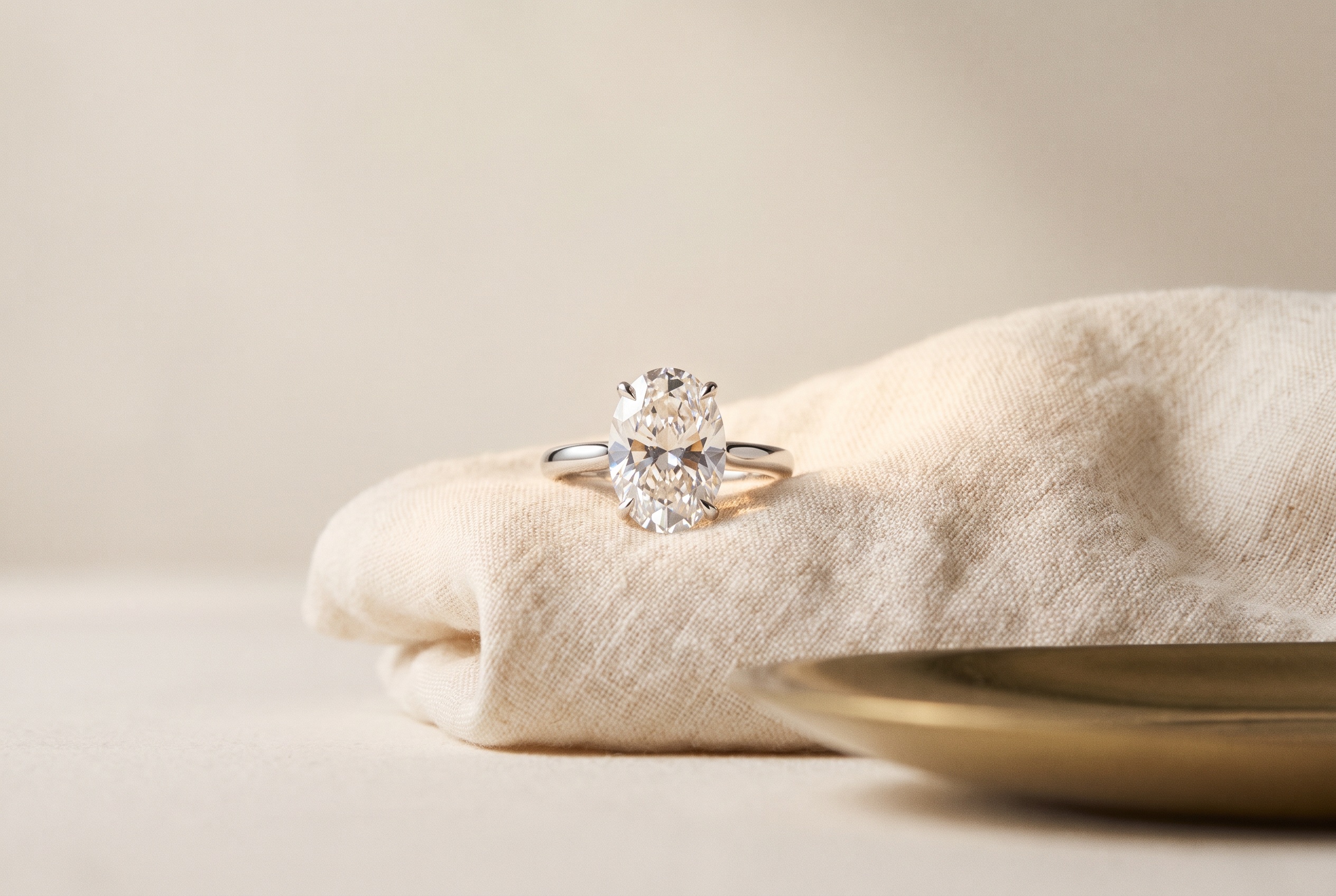

A cathedral setting is a ring style where the shank rises up in two arching, curved sections on either side of the center stone before meeting the head or basket that holds it — a design that lifts the stone higher off the finger and echoes the soaring, arched architecture of a cathedral ceiling, which is where the style gets its name. The raised arches add height and light exposure to the center stone while also creating a distinctive silhouette that reads as more elevated and architectural than a flush, low-profile setting.
Cathedral settings are one of the more consistently requested engagement ring styles, but they also come with real tradeoffs that don't always get covered alongside the style's obvious visual appeal — a taller setting changes how the ring wears day to day, what it pairs well with, and how it holds up over years of use. This guide covers what actually defines a cathedral setting versus similar styles, the structural anatomy of the arches themselves, how cathedral settings compare to prong, halo, and bezel styles, the genuine pros and cons of wearing one, which center stone shapes and sizes suit the style best, metal and durability considerations, how cathedral settings pair with wedding bands, and what to check before committing to one.
What Defines a Cathedral Setting
The defining feature of a cathedral setting is structural, not decorative: the metal shank doesn't run flat and low across the top of the finger the way it does on a solitaire or bezel setting — it curves upward on both sides of the center stone, forming two symmetrical arches that support a raised head or basket. The stone sits noticeably higher off the finger as a direct result of that structure, rather than as a separate design choice layered on top of a standard band.
This distinguishes a cathedral setting from a few styles it's sometimes confused with:
- Standard prong setting (non-cathedral): The shank stays relatively flat and low, with the prongs rising directly from a low-profile band to hold the stone closer to the finger.
- Trellis setting: Similar in spirit — the shank also rises toward the stone — but a trellis setting typically uses crossing, basket-weave-style metal arches rather than the cleaner, more architectural double-arch of a true cathedral, and often incorporates more decorative metalwork in the rise itself.
- Tension setting: Uses the compressed strength of the metal band itself to grip the stone from the sides with no visible prongs at all — a fundamentally different mechanism from a cathedral's arch-and-basket structure, even though both styles raise the stone's visual profile.
Anatomy of a Cathedral Setting
| Component | Role |
|---|---|
| Arches (cathedral shoulders) | The two curved sections of the shank that rise from the band toward the head, giving the setting its name and its height |
| Head / basket | The structure at the top of the arches that actually holds the center stone, typically 4 or 6 prongs, though a basket-style head with more metal coverage is also common |
| Gallery | The open space underneath the stone, between the arches — a larger, more open gallery allows more light to enter the stone from underneath, which is one of the stated advantages of the raised design |
| Shank | The lower, unraised portion of the band that wraps the finger — often plain, but can carry pavé, milgrain detailing, or other embellishment where it meets the arches |
| Bridge / shoulder detail | Optional decorative elements at the point where the arches meet the shank, sometimes including small accent stones or filigree-style metalwork on more ornate versions |
Cathedral vs. Other Popular Setting Styles
| Setting Style | Stone Height | Light Exposure | Snag Risk | Best For |
|---|---|---|---|---|
| Cathedral | High — stone sits elevated above the finger | Excellent — open gallery lets light in from the sides and underneath | Moderate-to-higher — raised prongs and arches catch on fabric more than a flush setting | Buyers who want a classic, architectural silhouette and maximum stone visibility |
| Standard prong (low-profile) | Low-to-moderate | Good | Lower | Buyers who want a traditional look with less day-to-day snag risk |
| Halo | Low-to-moderate, but visually larger | Good around the perimeter; center stone slightly shadowed by the halo | Lower — halo sits close to the finger | Buyers maximizing perceived size on a given carat budget |
| Bezel | Low — metal rim surrounds the stone at the girdle | Reduced — metal rim blocks some light entry compared to open prongs | Very low — the smoothest, most snag-resistant profile of any common style | Buyers with active hands or hands-on jobs who still want a center stone |
| Tension | Moderate-to-high, stone appears to float | Excellent — no metal beneath or around the sides of the stone | Low — smooth exterior profile | Buyers wanting a modern, minimal look; least resizable style, as covered in our ring size guide |
Advantages of a Cathedral Setting
- Elevated, architectural silhouette. The raised arches create visual drama and a distinctive profile from the side view — a cathedral ring reads differently in profile than a flush setting even when the center stone and carat weight are identical.
- Superior light performance. Because the stone sits higher and the gallery beneath it is more open, more ambient light reaches the stone from underneath and the sides, which can genuinely improve brilliance and fire compared to a lower, more enclosed setting — this is a real optical effect, not just a styling preference.
- Makes the stone appear larger. Elevating a stone and giving it more visual separation from the band tends to make the same carat weight read as slightly larger and more prominent than the identical stone in a flush setting.
- Pairs distinctively with vintage and Art Deco-inspired designs. The arched shoulders lend themselves naturally to filigree, milgrain, and other period-inspired detailing, making cathedral a popular base structure for antique-style engagement rings.
- Easier to clean underneath. The open gallery beneath the stone, while it does collect some debris over time like any setting, is generally easier to reach with a soft brush during routine cleaning than a fully enclosed or bezel-style setting.
Drawbacks and Practical Considerations
- Higher snag risk. The raised profile — both the arches and the elevated prongs — catches on clothing, hair, gloves, and fabric more than a low-profile or bezel setting, which matters for buyers with active jobs, small children, or hands-on hobbies.
- More exposed to impact. A stone sitting higher off the finger is more exposed to direct knocks than a flush-set stone, which can increase the odds of a chipped stone or bent prong over years of daily wear, particularly for buyers who don't remove rings for manual work or sports.
- Can feel less comfortable for some wearers. The raised structure sits more prominently against adjacent fingers than a low-profile ring, which some wearers notice when making a fist or wearing gloves, though this varies significantly by individual hand shape and how snugly rings are worn on adjacent fingers.
- Slightly more complex to resize. Because the arches carry structural weight (unlike a plain shank section), resizing a cathedral setting by a full size or more sometimes requires more careful work than a simple flat-band resize, to avoid distorting the arch's proportions — still generally more resizable than an eternity band or tension setting, but worth flagging to a jeweler before ordering if future resizing is a real possibility.
Which Center Stone Shapes Work Best in a Cathedral Setting
Cathedral settings are shape-flexible, but some pairings are more common and more visually successful than others:
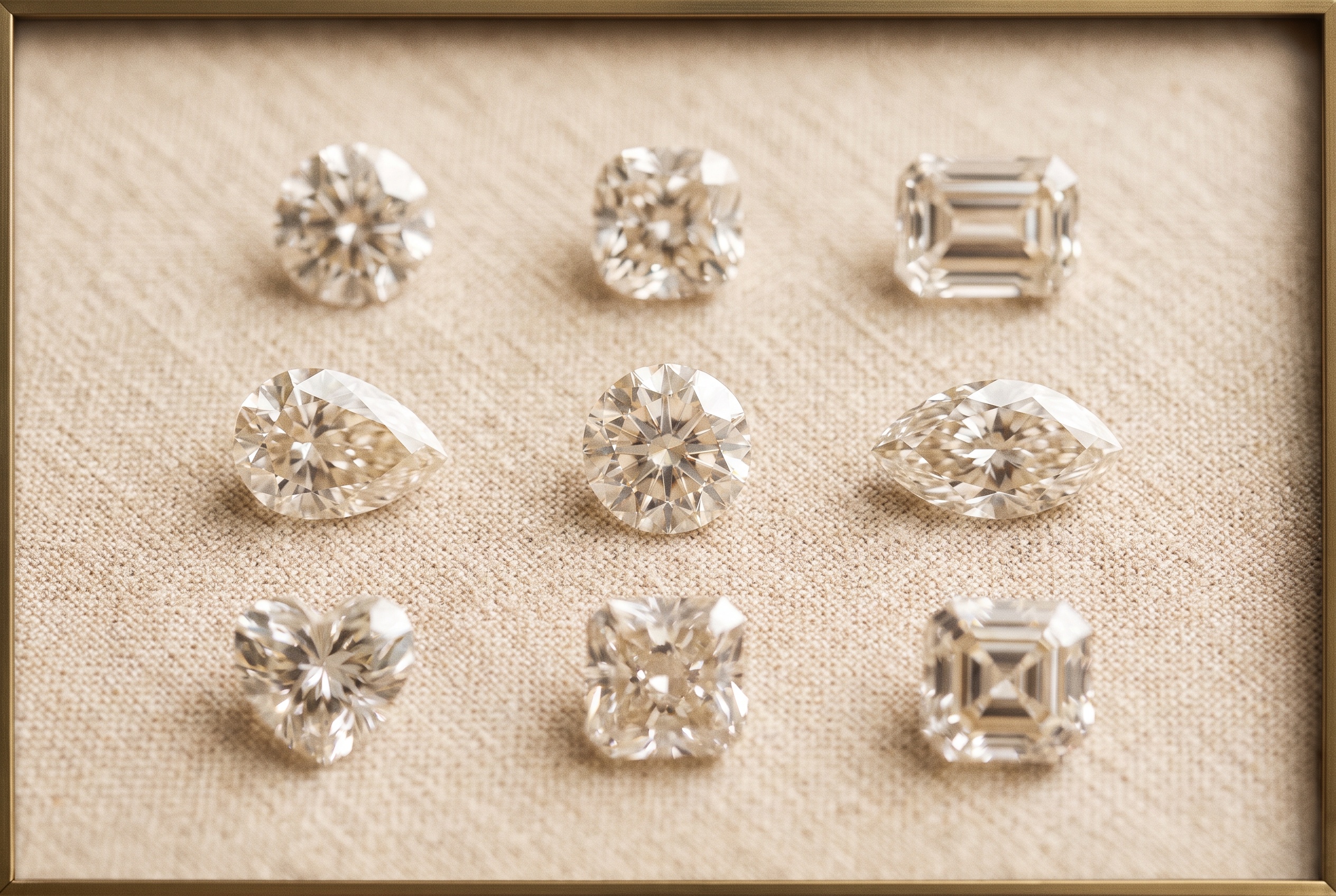
- Round brilliant. The most common pairing by far — the round's symmetry complements the arch's own symmetrical curve, and the round's light-performance profile is amplified further by the setting's open gallery.
- Oval and pear. Elongated shapes work well with a cathedral's vertical lift, since the added height reinforces the shape's natural elongation rather than fighting it.
- Cushion and princess. Both pair well, though a cathedral's rounded arches read as a slightly softer visual contrast against a princess cut's sharp corners than a matching angular setting would.
- Emerald and other step cuts. Workable, but step cuts often pair more traditionally with a lower, cleaner setting that doesn't compete visually with the stone's own strong linear facet pattern — a cathedral setting on an emerald cut is a legitimate but less common choice.
- Antique cuts (Old Mine, Old European). A strong pairing for buyers building a period-appropriate vintage design, since the arched cathedral silhouette is itself a design element with genuine historical roots in early-20th-century ring construction.
Metal Choice and Durability
Because a cathedral setting's arches carry structural load — supporting the head and, by extension, the stone — metal choice matters more here than it does for some lower-profile styles:
| Metal | Durability for Cathedral Arches | Notes |
|---|---|---|
| Platinum | Excellent | Dense and highly durable; holds fine detail well and resists metal loss from bending over years of wear, though it develops a matte patina over time that some wearers polish out and others prefer |
| 18k white/yellow/rose gold | Very good | Strong and widely used for cathedral designs; slightly softer than platinum, meaning very thin or delicate arch designs benefit from a slightly heavier gauge than they would in platinum |
| 14k gold | Good | Harder and more scratch-resistant than 18k due to higher alloy content, a practical choice for buyers prioritizing daily durability over the marginally higher purity of 18k |
Regardless of metal, a jeweler should confirm the arch gauge (metal thickness) is adequate for the specific design before finishing a custom cathedral piece — an overly thin or delicate arch, especially in a design with pierced or filigree detailing, is more prone to bending or metal fatigue over years of wear than a properly proportioned one.
Pairing a Cathedral Engagement Ring with a Wedding Band
The raised arches that define a cathedral setting are also the style's most significant band-pairing consideration: a straight wedding band often can't sit flush against the engagement ring's curved shoulders, leaving a visible gap between the two rings when worn together. A few approaches address this:
- Curved or contoured wedding bands designed specifically to nest against a particular cathedral profile, following the arch's curve rather than running straight.
- A slight gap by design, which some wearers and jewelers treat as an acceptable, even intentional, aesthetic rather than a flaw to correct — this is a matter of personal preference more than a technical requirement.
- Custom-fitted bands made specifically to match the engagement ring's exact arch geometry, which is the most precise (and typically most involved) solution for a buyer who wants a seamless fit between the two rings.
Buyers planning to stack a cathedral engagement ring with a wedding band should raise this pairing question at the design stage, ideally with both rings designed or at least reviewed together, rather than treating the wedding band as an afterthought purchased separately once the engagement ring is already finished.
What to Check Before Ordering a Cathedral Setting
- Prong count and thickness on the head. A raised setting puts more leverage on the prongs during an impact than a flush setting does, so confirming adequate prong count (6-prong heads generally offer more security than 4-prong for larger or more valuable center stones) and prong gauge is worth doing explicitly, not assuming.
- Gallery height relative to hand size and lifestyle. A very tall cathedral profile suits some hands and lifestyles better than others — a buyer with an active job or small children may want a more moderate rise than the tallest version of the style.
- Wedding band pairing plan, as covered above, ideally decided before the engagement ring's exact arch profile is finalized.
- Metal gauge appropriate to the specific arch design, particularly for any pierced, filigree, or intentionally delicate-looking arch detailing.
- Resizing expectations, since a cathedral's structural arches make resizing marginally more involved than a plain band, though still well within normal jeweler capability for most designs and size ranges.
A Brief History of the Cathedral Setting
The cathedral setting's arched shoulders trace back to a genuine architectural analogy, not just a marketing description invented later — the style rose to particular prominence during the Art Deco and Edwardian periods of jewelry design, when designers were actively borrowing structural and decorative motifs from architecture more broadly, including pointed arches, geometric symmetry, and vertical emphasis reminiscent of Gothic cathedral construction. That period also popularized pairing the raised arch structure with filigree metalwork and milgrain edging, a combination still closely associated with vintage-style cathedral rings today. The style fell in and out of prominence across subsequent design eras but never disappeared entirely, and it has remained one of the more consistently requested engagement ring silhouettes precisely because the structural logic behind it — elevate the stone, open up the gallery, create a distinctive profile — solves a real design problem rather than following a passing trend.
Cathedral Setting Variations Worth Knowing
Not every ring described as "cathedral" follows an identical template — several recognized variations exist within the broader category, and understanding the differences helps a buyer describe what they actually want more precisely:
- Classic cathedral. Clean, smooth arches with minimal additional ornamentation — the purest expression of the style's architectural logic, letting the raised silhouette itself do the visual work.
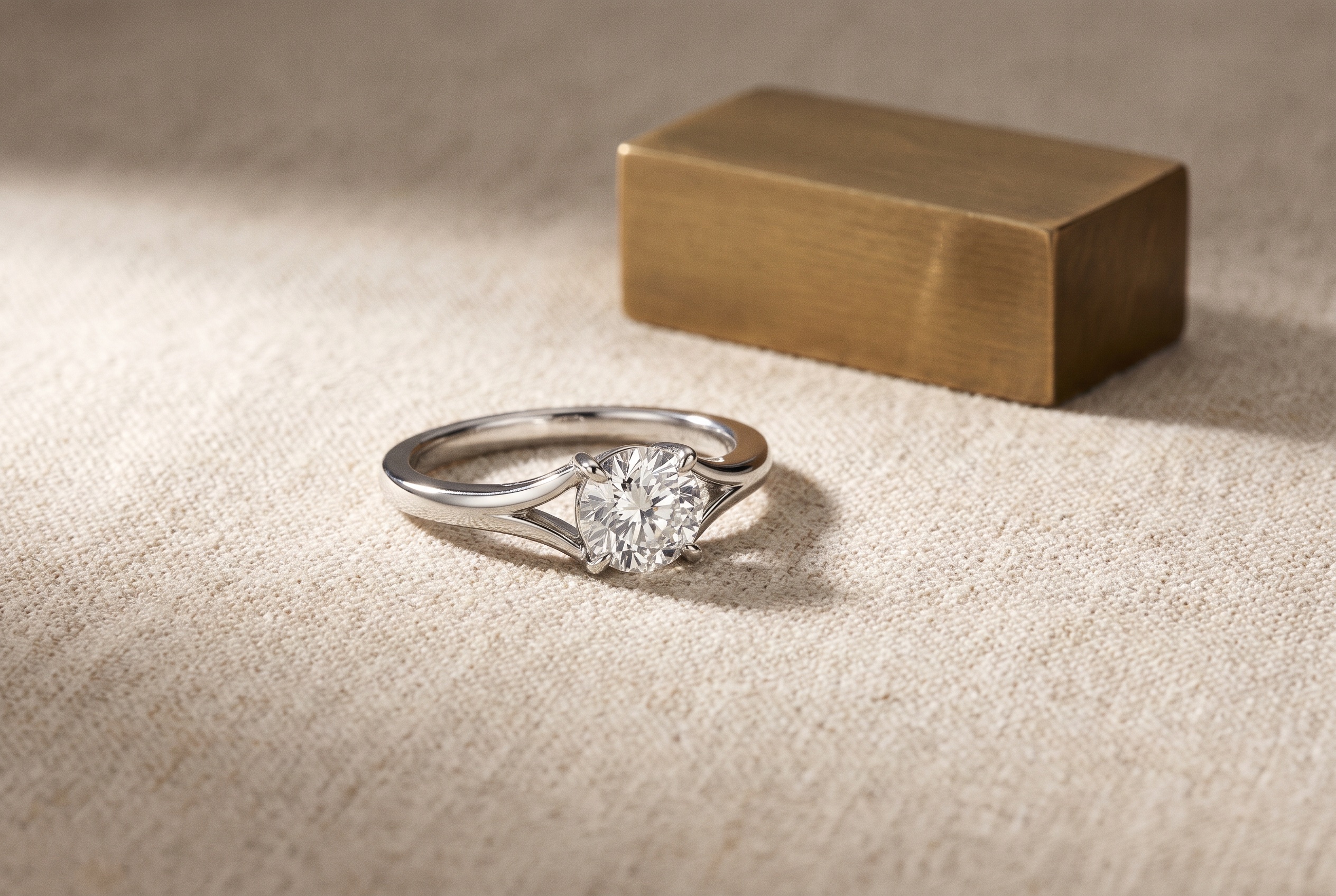
- Split-shank cathedral. The band splits into two separate strands as it approaches the arches, adding visual lightness and often incorporating a row of pavé along each strand before they merge into the arch structure.
- Pavé cathedral. Diamond pavé runs along the arches themselves, adding sparkle to the raised shoulders in addition to the center stone — a popular choice for buyers who want maximum overall brilliance rather than a single-focal-point look.
- Vintage/filigree cathedral. Incorporates pierced metalwork, milgrain beading, or engraved detailing into the arch structure, drawing directly on the style's Art Deco and Edwardian roots for a period-accurate look.
- Modern minimalist cathedral. A contemporary take that keeps the structural arch but strips away all decorative detailing, favoring clean lines and a lower, more subtle rise than the classic or vintage versions — a bridge between the cathedral silhouette and a more understated aesthetic.
These variations aren't mutually exclusive — a split-shank pavé cathedral with light milgrain detailing is a perfectly normal combination in custom order work, and specifying which elements matter most to a client up front makes for a more efficient design process than iterating through renderings to discover preferences by trial and error.
Common Mistakes Buyers Make When Choosing a Cathedral Setting
- Choosing the setting before considering hand size and lifestyle. The tallest, most dramatic cathedral profiles look striking in a photo or on a display tray but can feel disproportionate or impractical on a smaller hand, or simply impractical for someone whose daily routine involves frequent glove use or manual tasks. Trying a range of arch heights in person, where possible, surfaces this mismatch before an order goes into production rather than after.
- Not planning the wedding band pairing early enough. As covered above, a cathedral's curved shoulders complicate flush pairing with a straight band — buyers who don't think through this until after the engagement ring is finished sometimes end up compromising on a band design they wouldn't have chosen if the two pieces had been planned together.
- Underestimating snag risk for a given lifestyle. A buyer who works with their hands, handles small children frequently, or plays sports regularly should weigh the style's elevated profile honestly against those daily realities rather than choosing purely on appearance and discovering the tradeoff later.
- Skipping a prong-security conversation for a larger center stone. Because a cathedral setting exposes the stone and prongs to more direct impact than a flush setting, a larger or more valuable center stone benefits from an explicit conversation about prong count and gauge rather than defaulting to whatever a standard template happens to specify.
Maintenance and Long-Term Care for a Cathedral Setting
Because the design elevates and exposes both the stone and the prongs more than a flush setting, routine maintenance matters slightly more for a cathedral ring than it does for lower-profile styles:
- More frequent prong checks. A jeweler inspection roughly every six to twelve months is a reasonable baseline for any prong-set ring, but a raised cathedral setting that sees an active lifestyle benefits from checking a bit more often, since exposed prongs are more prone to gradual bending from repeated minor impacts than fully protected ones.
- Cleaning the open gallery. The same open structure that lets in more light for brilliance also collects lotion, soap residue, and dust underneath the stone over time — a soft brush and mild solution reach this area more easily than in a fully enclosed setting, which is a genuine maintenance advantage of the style even though the exposure itself is also the source of the higher snag risk.
- Being deliberate about removal during manual activity. Given the elevated profile's higher impact exposure, removing a cathedral ring before heavy manual work, sports, or activities involving thick gloves is a more meaningful habit for this style than it would be for a bezel setting, where the stone sits protected at the same level as the band.
Sourcing Cathedral Setting Rings and Center Stones at Wholesale
A cathedral setting's raised structure and open gallery reward a well-cut center stone more than a flush, low-profile setting would, since more of the stone's light performance is actually visible from the side and underneath rather than partially shadowed by surrounding metal — which makes cut quality on the center stone a genuinely higher-stakes decision for this particular style than it might be for a bezel or halo build. Guru Diam supplies certified loose diamonds — natural and CVD lab-grown, with IGI, GIA, and GCAL certification all available — across round brilliants and the fancy and antique shapes that pair especially well with a cathedral's architectural profile, giving buyers a single source for both the stone and the style decision that goes with it.
For jewelers and designers building cathedral pieces to order, the custom jewelry program handles the full build in-house — cutting, setting, and polishing all managed internally, with finished pieces delivered in 4-6 days — including matched wedding band pairings designed alongside the engagement ring rather than as an afterthought. Center stones can be sourced through the certified diamonds category, with matched melee and side-stone sets available through matching pairs for cathedral designs that incorporate pavé along the shank or shoulders. Buyers building a fancy-color cathedral piece can browse fancy color loose diamonds. Trade accounts can review terms at the wholesale hub or apply through trade partner. For buyers still finalizing sizing on a custom cathedral build, our ring size chart guide covers how to get an accurate measurement before production begins.
Frequently Asked Questions
What makes a ring a "cathedral setting" specifically?
A cathedral setting is defined by its shank arching upward on both sides of the center stone before meeting the head that holds it, creating two symmetrical raised arches — the style is named for its resemblance to cathedral architecture. This distinguishes it from a low-profile prong setting, where the band stays flat and the prongs rise directly from it.
Is a cathedral setting more likely to snag or catch on things?
Yes, generally — the raised arches and elevated prongs sit more prominently than a flush or bezel setting, which increases the odds of catching on clothing, hair, or gloves. Buyers with active jobs or hands-on lifestyles should weigh this against the style's visual and light-performance advantages.
Can a cathedral setting engagement ring be paired with a straight wedding band?
Not always cleanly — the curved arches often leave a visible gap against a straight band. Curved or contoured wedding bands designed to follow the specific arch profile, or a custom-fitted band made to match, are the more common solutions for wearers who want the two rings to sit flush together.
Does a cathedral setting make a diamond look bigger?
Yes, typically — elevating the stone and giving it more visual separation from the band tends to make the same carat weight read as slightly larger and more prominent than an identical stone in a flush, low-profile setting.
Is a cathedral setting harder to resize than a regular band?
Slightly, yes — because the arches carry structural weight, resizing by a full size or more requires more careful work to preserve the arch's proportions than a plain flat-band resize would. It's still generally well within normal resizing capability, unlike a full eternity band or tension setting, but it's worth flagging to a jeweler in advance.
What diamond shapes look best in a cathedral setting?
Round brilliant is the most common and classic pairing, and elongated shapes like oval and pear work especially well with the style's vertical lift. Cushion, princess, and antique cuts like Old Mine and Old European also pair successfully, particularly for vintage-inspired designs.