Natural vs Lab-Grown Melee Diamonds: The Full Comparison for Jewelers
Natural and lab-grown melee diamonds differ in one fundamental way — where they come from — and that single difference cascades into separate size ranges, quality grades, price levels, and disclosure rules. Natural melee is mined; Guru Diam's is round only, 0.8mm-4.0mm, in an EF/GH x VS/SI grid. Lab-grown melee is grown via CVD; it spans a wider 0.8mm-9mm range at a DEF+/VS+ default grade. Physically and optically the two are effectively identical — the differences that matter to a jeweler are sourcing, price, and what you have to tell your customer.
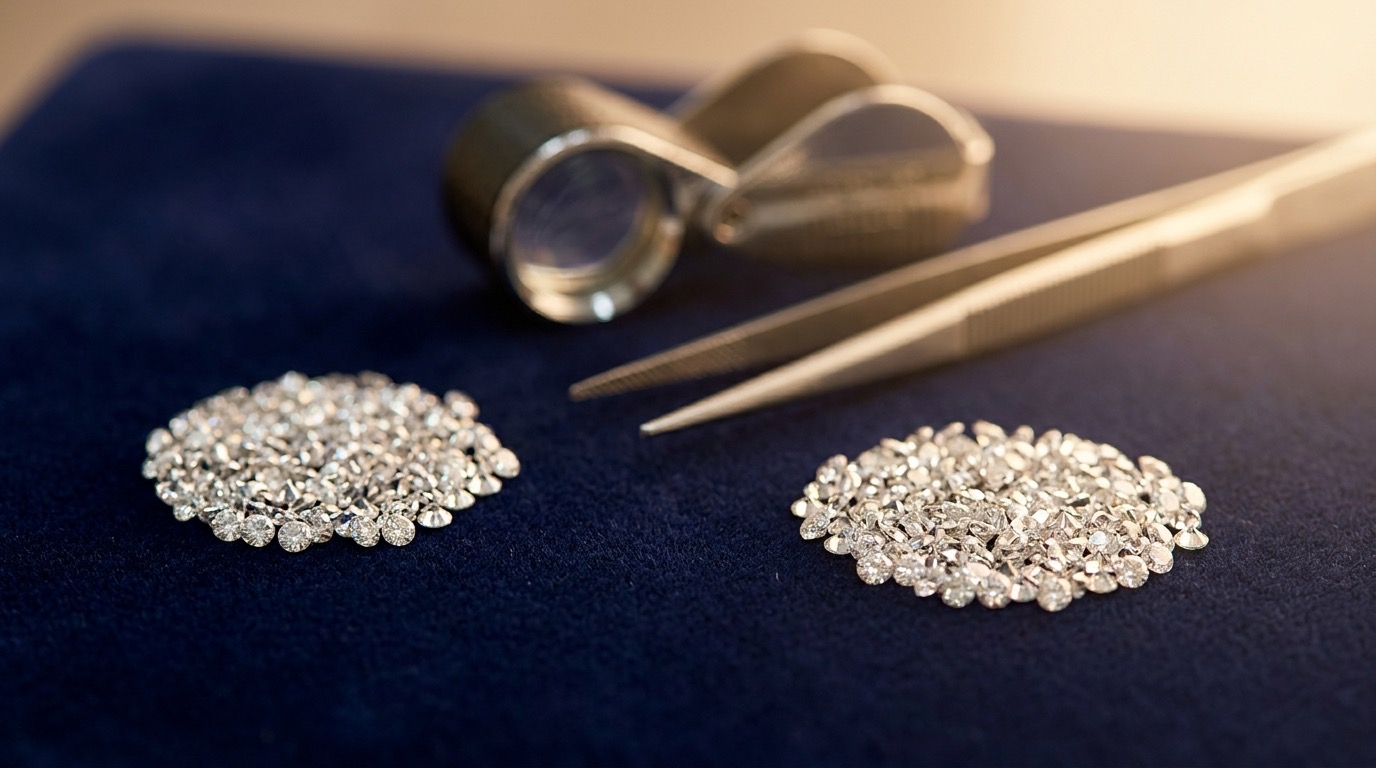
What's the Core Difference Between Natural and Lab-Grown Melee Diamonds?
The core difference is origin, full stop. Natural melee diamonds formed in the earth over geologic time and are mined; lab-grown melee is grown in a controlled lab environment using CVD (chemical vapor deposition) technology. Both are real diamond — same carbon crystal structure, same optical and physical properties — they simply came from different places.
At Guru Diam, natural and lab-grown melee are run as two entirely separate product lines: different size ranges, different quality grids, different pricing, and they should never be confused with each other on a spec sheet or a customer conversation. This post exists to lay both lines side by side so you can see exactly where they match, where they diverge, and which one fits a given job — not to blend them into one hybrid spec. For the natural-only spec and full pricing, see our natural melee buying guide; the lab-grown spec lives on its own separate page.
Every fact in this post is attributed to the line it belongs to. When we say "natural," we mean Guru Diam's mined round melee, 0.8mm-4.0mm, EF/GH x VS/SI. When we say "lab-grown," we mean Guru Diam's CVD melee, 0.8mm-9mm, DEF+/VS+. Neither claim crosses over to the other line.
CVD stands for chemical vapor deposition — a diamond seed is placed in a sealed chamber, and carbon-rich gas is broken down under controlled heat and pressure so carbon atoms deposit onto the seed, building a diamond crystal layer by layer over weeks. It's a manufacturing process, not a simulation of one; the output is genuine diamond, just grown rather than mined. Natural melee, by contrast, went through no manufacturing step at all — it was extracted from rough that formed over geologic time, then cut, polished, and sorted like any mined diamond. Neither process is a shortcut on the other; they're two different ways of arriving at the same material.
Natural vs Lab-Grown Melee: The Quick Comparison
| Attribute | Natural Melee | Lab-Grown Melee (CVD) |
|---|---|---|
| Origin | Mined | Grown via CVD |
| Size range (round) | 0.8mm-4.0mm | 0.8mm-9mm |
| Quality grade | EF/GH color x VS/SI clarity (2x2 blended grid) | DEF+/VS+ (single default grade, D-F color and VS clarity or better) |
| Certification | Sieve/size-graded parcel goods, not individually certified | Sieve/size-graded parcel goods, not individually certified |
| Typical price position | Higher per carat at a comparable size and grade | Generally lower per carat at a comparable size and grade |
That table is the whole comparison at a glance. The sections below walk through why each row is what it is, and where to go for the full depth on any one of them.
How Do Natural and Lab-Grown Melee Compare Physically and Optically?
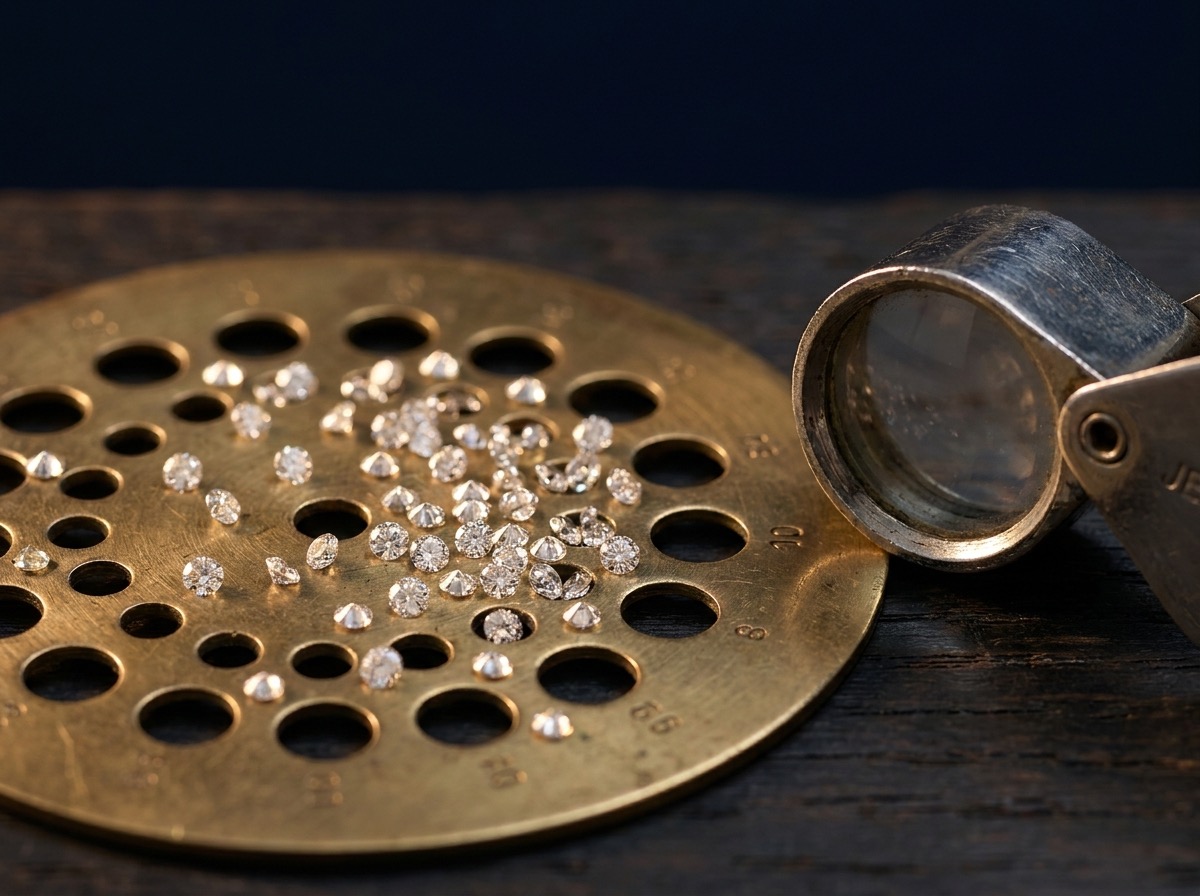
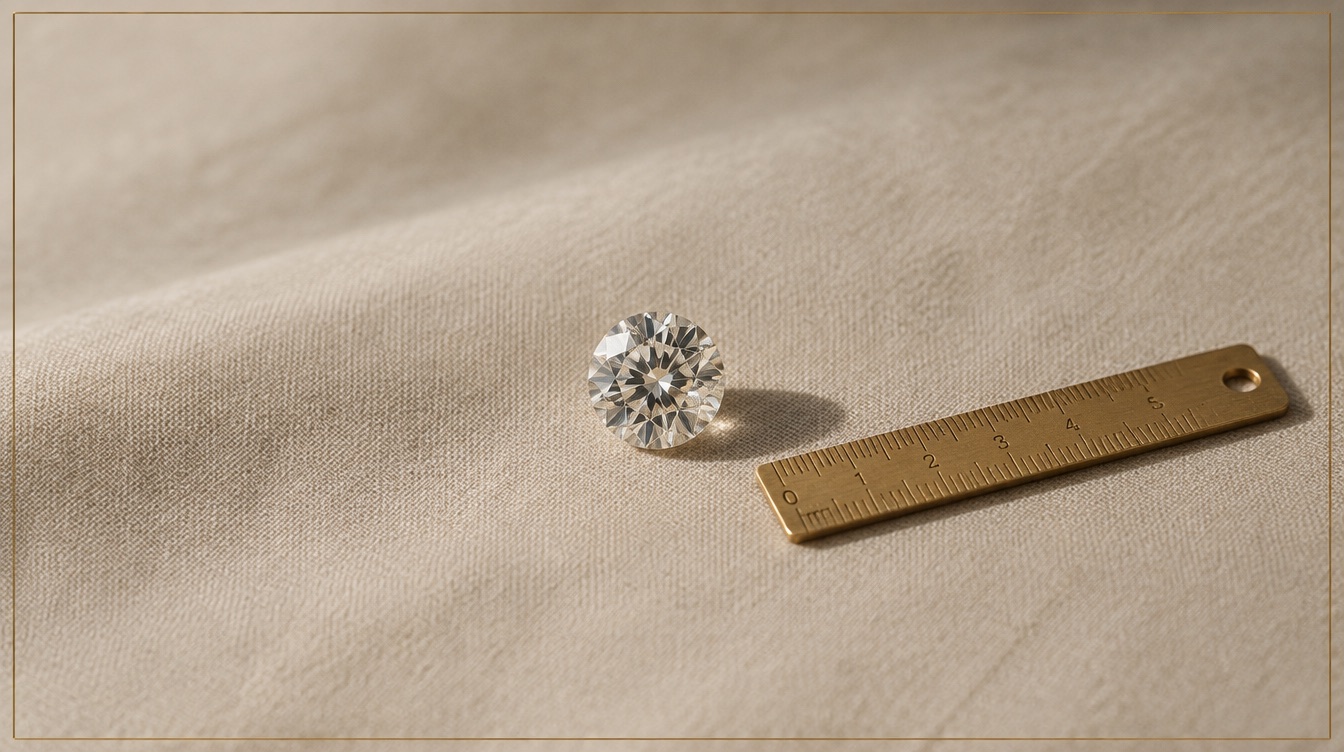
Lab-grown diamonds made via CVD are chemically and crystallographically the same material as natural diamonds — pure carbon in a diamond crystal lattice. That means the same hardness (10 on the Mohs scale), the same refractive index, and the same fire and brilliance under light. A trained gemologist with lab equipment can tell them apart by growth-pattern artifacts invisible to the naked eye; a jeweler or customer looking at a finished piece cannot.
For a mounting, this means natural and lab-grown melee of the same size and grade perform identically — they set the same, wear the same, and photograph the same. The practical differences a jeweler needs to plan around aren't in the stone's physical behavior; they're in what's available (size range and grade), what it costs, and what you're required to disclose. Those are the next four sections. For a full deep-dive on wear, hardness, and how the two hold up in a mounting over years of use, see our durability and optics comparison.
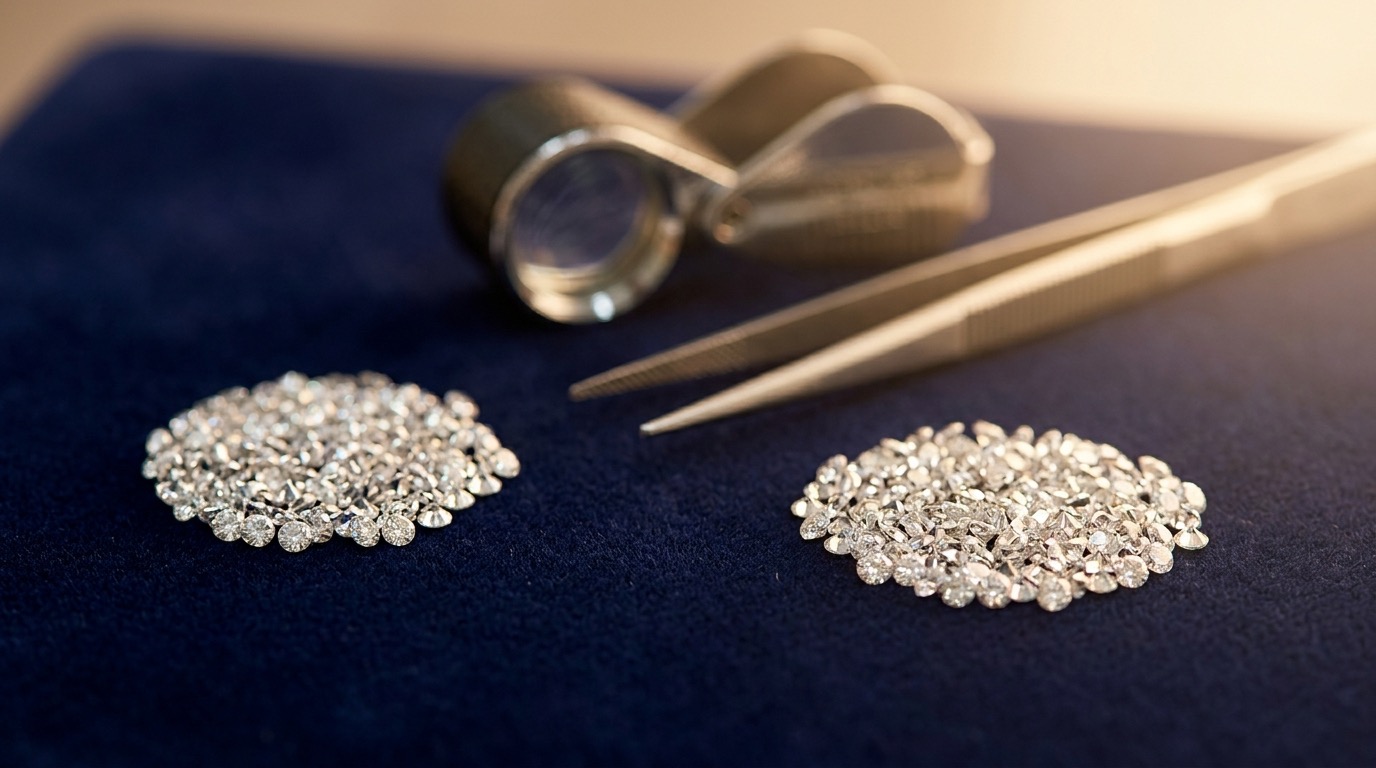
Because the two are visually and physically indistinguishable at melee scale, verification is a lab function, not a bench function. GIA and other labs use spectroscopy and fluorescence-pattern equipment to identify growth artifacts left behind by either natural crystal formation or the CVD process — tools no jeweler keeps on a bench. That's part of why parcel provenance matters more at intake than at point of sale: once a stone is loose in a tray with no paperwork attached, no amount of visual inspection will tell you which line it came from.
What Sizes Are Available in Natural vs Lab-Grown Melee?
Natural melee at Guru Diam is currently round only, 0.8mm to 4.0mm — that's a real, stated ceiling, not a rounded approximation. Above 4.0mm, natural round melee isn't yet sourced on this line.
Lab-grown (CVD) melee covers a wider band, 0.8mm to 9mm, because larger CVD rough is more consistently available at scale than larger natural melee-size rough. If a job calls for an accent stone above 4.0mm, lab-grown is currently the only melee line that reaches it — the alternative on the natural side is stepping up to loose certified natural diamonds rather than melee pricing.
For jobs that stay under 4.0mm, both lines are live options and the choice comes down to grade, price, and disclosure, not availability. For the full mm-to-carat-to-sieve breakdown on the natural side, see our natural melee size chart.
In practice, the size overlap covers most of what actually crosses a bench: pavé, halo, and eternity work is almost entirely sub-3mm, and even tennis bracelet lines rarely run past 3.5mm-4mm per stone before the piece stops reading as "melee" and starts reading as a line of small solitaires. The 4mm-9mm band on the lab-grown side matters most for larger accent stones — shoulder stones on a bridal setting, or a statement piece where the "melee" is doing more visual work than a typical pavé line. If your production sits entirely in the sub-3mm range, size range alone won't decide this for you; grade and price will.
What Color and Clarity Grades Does Each Line Come In?
Natural melee comes in a 2x2 quality grid: EF (E-F color) and GH (G-H color), each in VS and SI clarity — four working grades total, each a blended range sorted against a master stone rather than an exact single grade guaranteed stone by stone. EF has no pricing below 1.70mm; GH is the available color at those smaller sizes. See our natural melee color and clarity guide for the full breakdown of what each grade looks like set.
Lab-grown melee runs on a different model: rather than a 2x2 grid, it ships at a single default grade, DEF+/VS+ — D-F color and VS clarity or better. That's a tighter, whiter, cleaner floor than natural's GH/SI band, and it's the reason lab-grown melee reads as a premium-looking stone even at its standard grade.
Practically: if a job needs a specific color/clarity combination below DEF+/VS+ — say, a budget GH SI grade for production work — natural is the line that offers that flexibility. If a job wants a consistently white, clean look without grade-shopping, lab-grown's single default grade removes that decision.
This also changes how you spec an order. On natural, you're picking one of four named grades and matching it to the job — EF VS for a bridal piece sitting close to a colorless center stone, GH SI for a fashion piece where cost matters more than a marginal color difference. On lab-grown, there's no grade decision to make on color and clarity — you're specifying size and quantity against one known floor. That makes lab-grown melee simpler to quote and reorder consistently, while natural gives you a cost lever to pull when a job doesn't call for the top grade.
How Does Pricing Compare Between Natural and Lab-Grown Melee?
As a general rule in the trade, lab-grown melee prices lower per carat than natural melee at a comparable size and grade — natural rough is scarcer and the mining/sorting chain behind it carries more cost than a controlled CVD growth process. Guru Diam's natural melee pricing starts around $370-450/ct in the smallest sizes and rises with size and grade toward $840-900/ct at 4.0mm; treat all figures as approximate and confirmed at quote, since melee is priced per parcel against sieve bands, not to the exact cent.
The size of that gap isn't fixed across the board — it tends to compress at the smallest sizes, where both natural and CVD rough are relatively efficient to produce, and widen at larger melee sizes, where natural rough scarcity has more room to show up in price. That's a directional pattern, not a promise for any specific size band; the only way to know the actual gap at your size and grade is a live quote against both lines.
We don't stack the full natural and lab-grown price tables side by side in this post — that comparison, size band by size band, is the entire subject of our dedicated natural vs lab-grown melee price comparison. If a live number for both lines at your exact size and grade is what you need right now, message us on WhatsApp or reach out through Contact for a confirmed quote.
Are Natural and Lab-Grown Melee Diamonds Certified the Same Way?
Yes — and this is one of the few things both lines share entirely. Melee, natural or lab-grown, isn't individually or parcel-certified in either case, because certification cost exceeds stone value below roughly 0.20ct. Both lines ship as sieve/size-graded parcel goods, sorted comparatively against a master stone rather than accompanied by a per-stone certificate. This is standard trade practice across the industry, not a shortcut specific to either line.
Where certification does apply to both origins is at a larger size: loose stones at 0.30ct and above ship IGI- or GIA-certified, whether natural or lab-grown — that's a separate product tier from melee, not something to expect at melee sizes. For more on what "uncertified parcel goods" actually means and why it's normal, see our certified vs uncertified melee guide.
What Disclosure Rules Apply When Selling Both Lines?
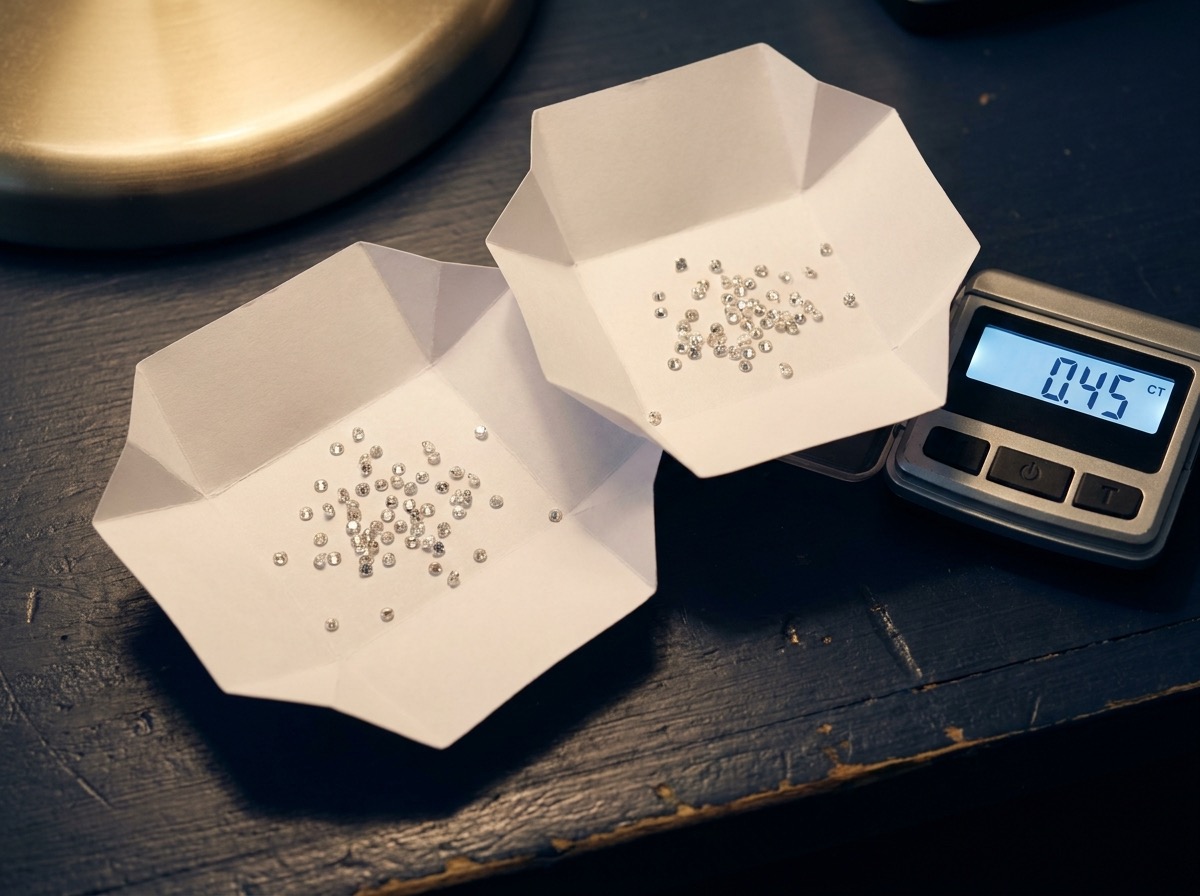
FTC guidance requires that a diamond's origin be disclosed to the end consumer — a lab-grown stone has to be identified as lab-grown (or a synonym like "laboratory-created") at the point of sale, and that obligation doesn't shrink because the stone is melee-sized rather than a center stone. That applies at the retail level, whether the melee is set into a $400 pavé band or a $40,000 tennis bracelet.
For a wholesale buyer, the practical upshot is that natural and lab-grown melee should stay clearly separated on your own paperwork and inventory, not just at final sale — if a repair job or a custom build mixes the two lines, you need to know which stones are which before they're set, not after a customer asks. The full disclosure requirements, including what documentation to keep, are covered in our disclosure and certification comparison.
Does Resale Value Differ Between Natural and Lab-Grown Melee?
Directionally, yes — natural diamonds have historically held resale and secondary-market value better than lab-grown, largely because lab-grown supply has scaled faster and continues to expand, while natural supply is fixed by what's already been mined. At melee sizes specifically, this matters less than it does for a center stone, since melee is rarely resold as loose goods — it's valued as part of the finished piece.
Where it does matter is in how a piece is marketed and appraised: a bridal or heirloom-positioned piece often leans natural for resale and sentiment framing, while a fashion or trend piece can lean lab-grown without much resale impact. The full resale and retail-markup comparison, including how this plays out at different price points, is in our resale and markup comparison.
How Should You Frame Natural vs Lab-Grown Melee to Customers?
Because the two are physically identical, the framing conversation is really about what the customer values, not what the stone does. A customer buying into natural diamonds is usually buying into rarity, geologic origin, and the idea that a finite resource holds a different kind of significance — that framing works for engagement, heirloom, and legacy pieces where the story matters as much as the sparkle. A customer choosing lab-grown is usually optimizing for size or quality per dollar, or making a values-based choice tied to sourcing they can point to as controlled and traceable.
Neither pitch requires overstating the other line — a natural sales conversation doesn't need to disparage lab-grown quality (it's the same diamond, and claiming otherwise is easy to disprove), and a lab-grown pitch doesn't need to claim natural is somehow inferior. The honest version of both pitches holds up: natural costs more because it's scarcer and took longer to reach the bench; lab-grown costs less because manufacturing scales in ways mining can't. Customers respond better to a clear, honest tradeoff than to a sales pitch that oversells either side.
For a piece where a customer is undecided, the practical move is often to quote both at the same size and grade tier and let the price and story do the deciding — melee-heavy pieces (pavé bands, halos, eternity rings) are exactly where that price gap is most visible per finished piece, since the total carat weight compounds the per-carat difference more than it would on a single center stone.
Can You Mix Natural and Lab-Grown Melee in the Same Piece?
Physically, nothing stops you — a jeweler could set natural melee around one section of a piece and lab-grown around another. In practice, this is a bad idea for two reasons. First, disclosure: a piece with both origins needs both disclosed clearly, which gets confusing fast on a single item's paperwork and sales description. Second, and more practically, once natural and lab-grown melee are mixed in one parcel or one job without careful tracking, there's no visual way to re-sort them afterward — the naked eye can't tell them apart, and even most jewelers' loupes can't either.
If you ever need to confirm whether a given batch of loose melee is natural or lab-grown — inherited stock, a returned job, or stones from an unclear source — that requires actual screening equipment, not inspection. See our natural melee screening guide for how that verification actually works. The safer standing practice is to keep the two lines in separately labeled inventory from the moment they arrive, and never combine them into one working parcel.
Which Should a Jeweler Stock — Natural, Lab-Grown, or Both?
Most working jewelers end up stocking both, because they serve different customer conversations rather than competing head to head. Natural fits bridal, heirloom, and investment-framed sales where origin carries weight with the customer. Lab-grown fits price-sensitive fashion work and any job where a customer has explicitly asked for lab-grown, sight unseen, size-for-size, at a lower price point.
The business-side question — how much of each to carry, at what grades, and how to think about margin across both — is a deeper inventory decision than this comparison post covers. Our dedicated 2026 stocking guide walks through that decision in full, including how to read your own customer mix before committing carats to either line.
How Do You Order Natural or Lab-Grown Melee from Guru Diam?
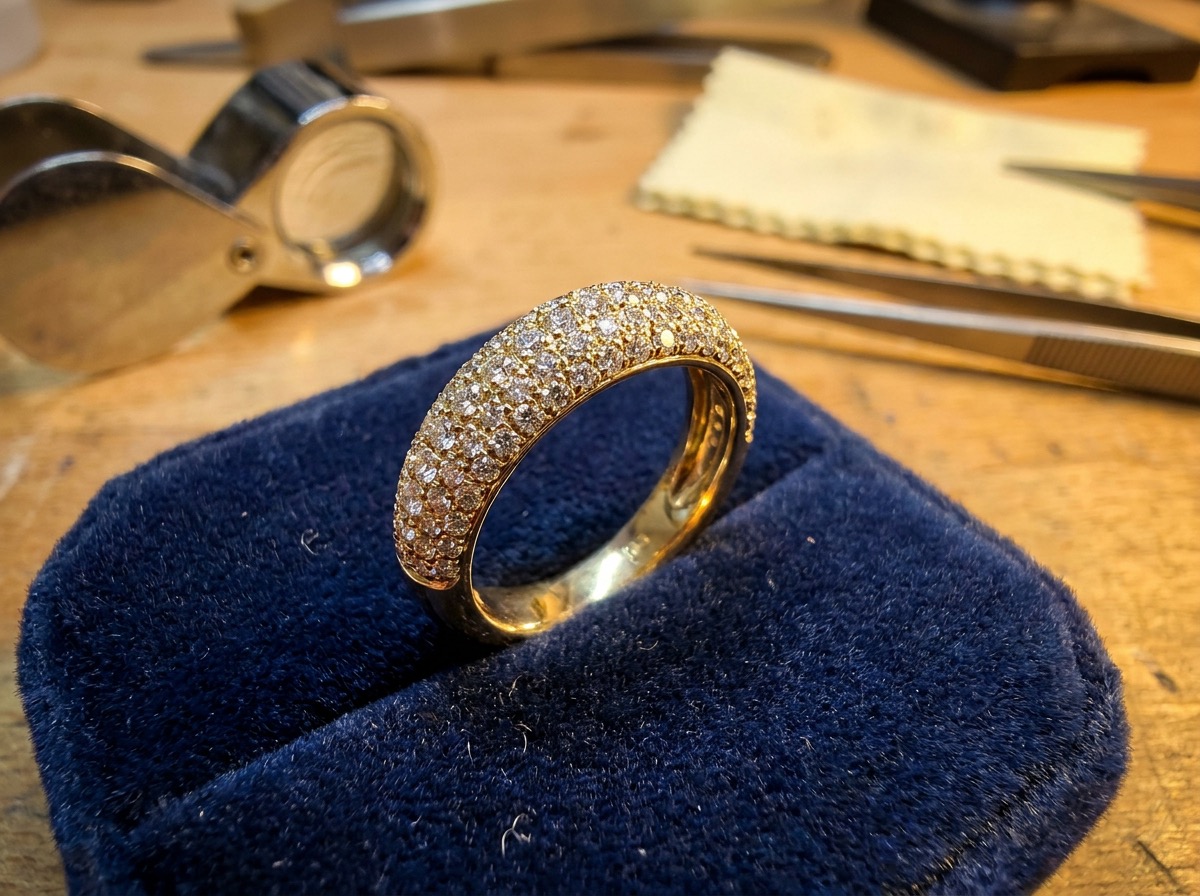
Both lines are ordered the same way: specify your millimeter size (or tight range), your quality grade, and your total carat need, and state clearly whether you want natural or lab-grown — that one word at the top of your request prevents any mix-up on our end. Guru Diam runs both lines out of its New York (36 West 47th Street, Suite 601A, New York, NY 10036) and Los Angeles (607 S Hill Street, Suite 241, Los Angeles, CA 90014) trade desks. Orders placed before 6pm EST out of New York ship same day; orders placed before 4pm PST out of Los Angeles ship same day, subject to the parcel being in stock at your size and grade.
For a confirmed price on either line, or a quote that mixes both lines across one job, message us on WhatsApp or reach out through Contact.
Frequently Asked Questions
Are natural and lab-grown melee diamonds physically different?
No — both are real diamond with the same crystal structure, hardness, and optical properties. The difference is origin: natural melee is mined, lab-grown melee is grown via CVD. Neither a jeweler nor a customer can tell them apart by eye; only specialized screening equipment can.
What size ranges do natural and lab-grown melee cover at Guru Diam?
Natural round melee is currently priced 0.8mm to 4.0mm. Lab-grown (CVD) melee covers a wider 0.8mm to 9mm range. For jobs under 4.0mm, both lines are options; above 4.0mm, lab-grown is the melee-priced option.
What quality grades does each line come in?
Natural melee comes in a 2x2 grid — EF or GH color, each in VS or SI clarity. Lab-grown melee ships at a single default grade, DEF+/VS+ (D-F color, VS clarity or better) — a tighter, whiter floor than natural's standard grades.
Is lab-grown melee always cheaper than natural melee?
Generally, yes, at a comparable size and grade — lab-grown melee typically prices lower per carat than natural. Exact figures depend on size and grade for both lines and are confirmed at quote; see our dedicated price comparison post for the full size-by-size breakdown.
Do I have to disclose lab-grown melee to my customers?
Yes. FTC guidance requires disclosing a diamond's lab-grown origin at the point of consumer sale, regardless of stone size — a melee-sized lab-grown stone carries the same disclosure obligation as a center stone.
Can natural and lab-grown melee be mixed in the same order or piece?
Physically yes, but it's not recommended — once mixed without careful tracking, the two can't be visually re-sorted, and a piece using both requires disclosure of both. Keep the two lines in separately labeled inventory and specify which one you're ordering on every request.