Natural vs Lab-Grown Melee: Resale and Retail Markup Differences
Melee — natural or lab-grown — is almost never what drives a finished piece's resale or appraisal value. The center stone (when there is one) and the precious metal typically carry the larger share of a piece's total value, so the natural-vs-lab-grown resale gap that matters so much for a single certified center stone matters far less once you're talking about the small accent stones in a pavé, halo, eternity, or tennis piece. Retail markup on melee-set pieces follows the same pricing models jewelers use for any finished piece — melee origin changes the cost base going into that math more than it changes the formula itself.
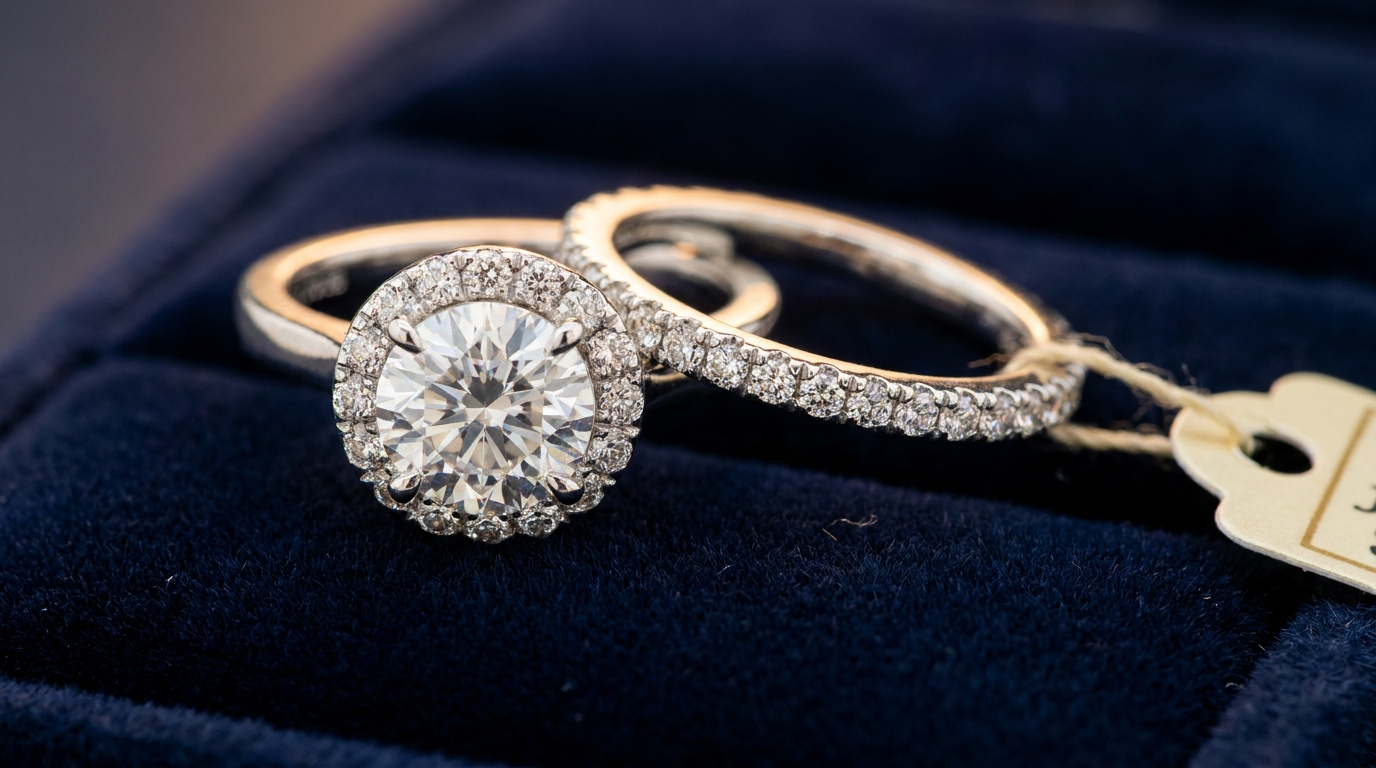
Does Melee Origin Affect a Piece's Resale Value?
Not in the way it does for a center stone. When a piece comes back into the trade — traded in, appraised for insurance, or sold secondhand — a buyer or appraiser is pricing the whole piece: metal weight and karat, workmanship, and the diamonds. If there's a certified center stone, that stone's grade, carat weight, and paper trail dominate the conversation, because it's the single largest and most individually documented item in the piece. Melee doesn't carry that same weight in the discussion, for a simple reason: it isn't individually certified in the first place, whether it's natural or lab-grown. Below roughly 0.20ct, certification cost exceeds the value of the stone — that's true across the trade, not a gap specific to one origin or the other. So a resale conversation about "this melee is worth X because it's natural" doesn't really happen at the individual-stone level, because there's no per-stone paper trail to point to on either side of the natural-vs-lab-grown line.
What does change with origin is disclosure, not value math. A piece has to be represented accurately — natural melee sold and appraised as natural, lab-grown melee sold and appraised as lab-grown. That's a compliance question, covered in more depth in our natural vs. lab-grown melee comparison. But compliance aside, the actual dollar swing in resale value that melee origin produces is small relative to what a mismatched or undisclosed center stone origin would produce.
How Much of a Finished Piece's Value Actually Comes From the Melee?
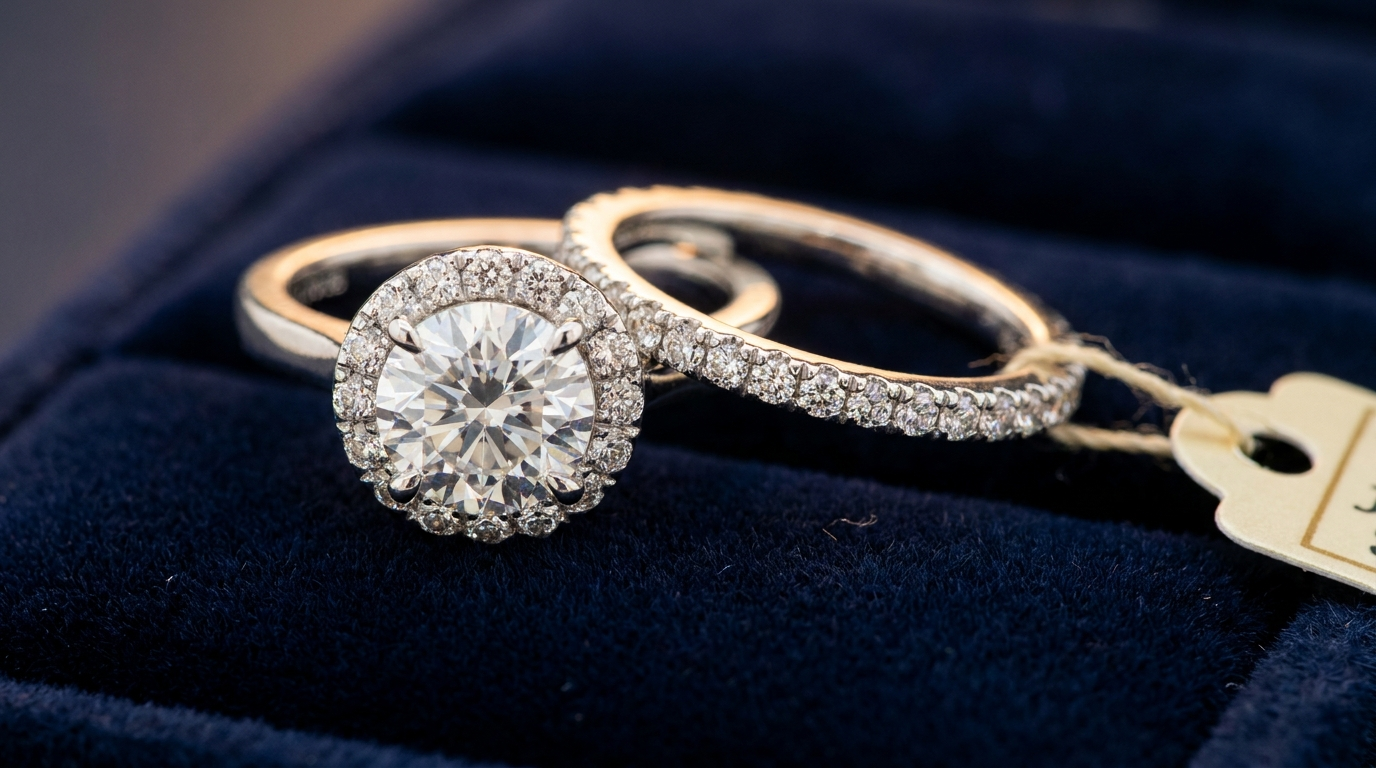
In most pavé, halo, eternity, and tennis pieces, melee is a supporting material, not the primary cost driver. A halo or pavé shank might carry dozens of stones, but each one is a fraction of a millimeter to a few millimeters across — a completely different order of magnitude from a center stone that's often the single most expensive component in the piece. Even in a full eternity band or tennis bracelet, where there's no center stone competing for value, the per-carat pricing on melee (roughly $370–450/ct in the smallest sizes, rising with size and grade — see our full pricing guide for the complete table) sits well below what a single larger, individually certified stone commands per carat.
That gap is exactly why swapping melee origin — natural to lab-grown or the reverse — changes a piece's total build cost only modestly in most designs. It doesn't reset the piece's fundamental value proposition the way changing the center stone's origin would. The real "natural vs. lab-grown" value story in a piece almost always sits at the center stone. Melee is along for the ride, value-wise, in the overwhelming majority of designs.
Why Does the Natural vs. Lab-Grown Resale Debate Matter Less at Melee Scale?
The broader trade conversation about natural vs. lab-grown diamond resale value is real, and it's worth understanding on its own terms — but it's almost entirely a conversation about single, larger, individually certified stones. That's where the conditions exist for origin to swing resale value meaningfully: a documented grade, a specific carat weight, and a large enough per-stone value that the difference between origins is worth debating stone by stone.
Melee doesn't share those conditions on either side of the natural-vs-lab-grown line. It's small, it isn't individually certified regardless of origin, and it's bought and sold as parcel goods — a bulk carat weight sorted to a size and grade band, not a collection of individually tracked stones. A jeweler reselling a piece isn't handing a buyer a certificate for each melee stone the way they might for a center diamond. So the resale conversation that matters for melee happens at the piece level — what's this whole ring or bracelet worth — not at the level of "is this specific 1.5mm stone natural or lab-grown, and does that change its resale price." For a full walkthrough of where natural and lab-grown melee genuinely differ — sourcing, size range, pricing, and when to stock which — see our stocking comparison for 2026.
How Do Appraisers Value Melee in a Finished Piece?
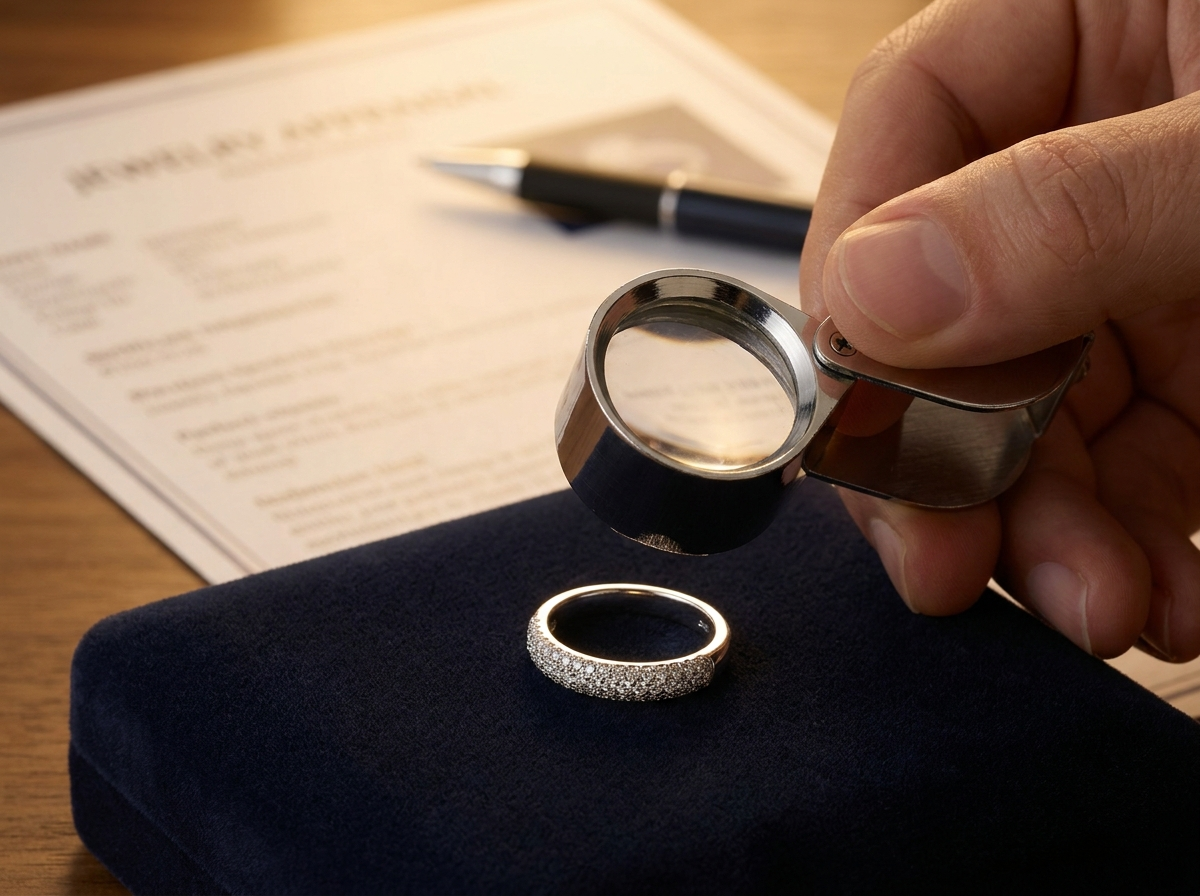
Appraisers work from what's actually documented and visible. For a center stone with a certificate, that's straightforward: the grading report anchors the appraisal. For melee, there's no equivalent report to anchor to, so appraisers estimate — total diamond weight across the melee, an approximate quality grade based on visual inspection, and current market rates for that approximate grade and size. It gets written up as a bulk line ("approximately X ct total weight diamond melee, [grade estimate]"), not itemized stone by stone. That mirrors exactly how melee is sold in the first place: as sieve/size-graded parcel goods sorted against a master stone, not certified individually. An appraiser can't produce more precision on the value side than exists on the sourcing side.
It's also worth separating two numbers that get confused constantly in this conversation: replacement value (what an insurance appraisal states it would cost to replace the piece new, at retail) and resale or market value (what a buyer would actually pay for the used piece on the secondary market). Melee-set pieces, like most fine jewelry, typically carry a meaningfully higher replacement appraisal than what they'd fetch in resale — a gap that has much more to do with retail markup and insurance appraisal conventions generally than with melee origin specifically. That gap exists whether the melee in the piece is natural or lab-grown.
What Actually Drives Retail Markup on a Melee-Set Piece?
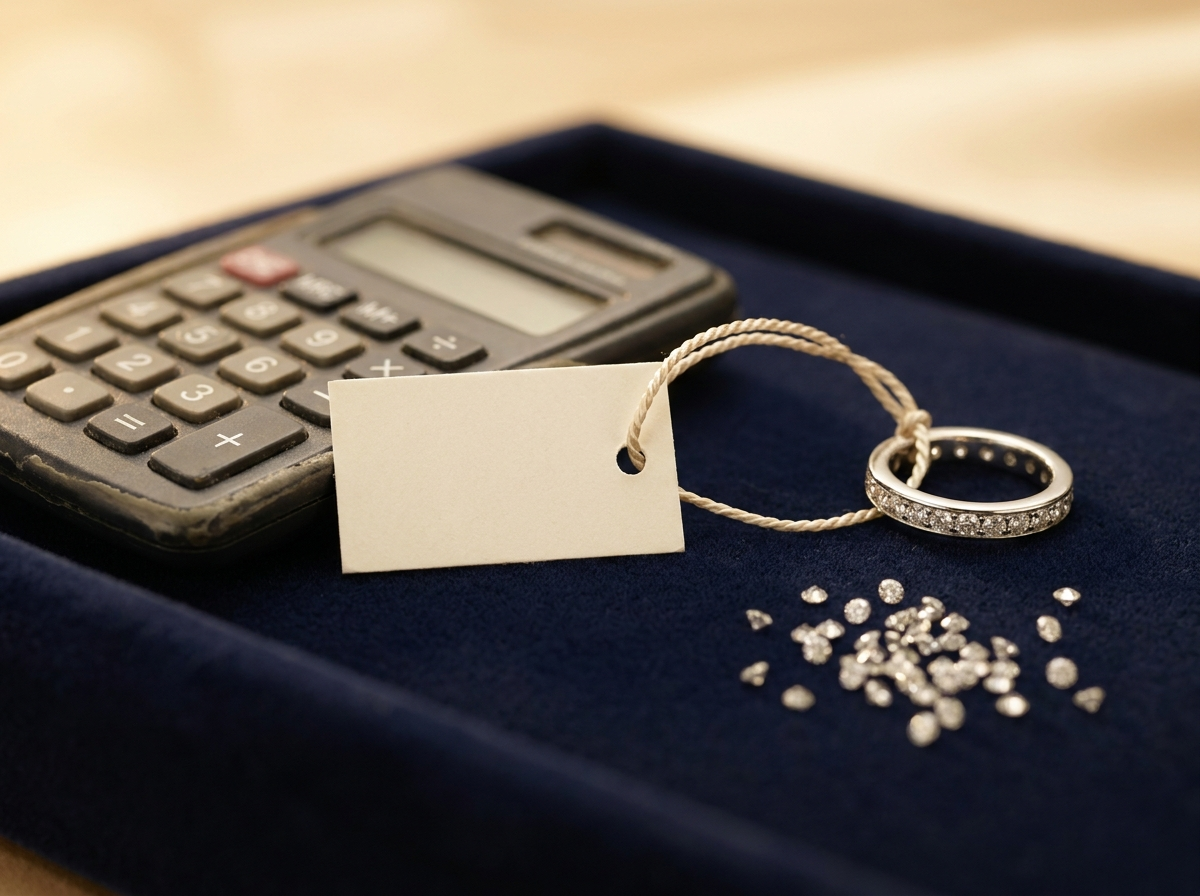
Retail markup on any finished piece — melee-set or not — comes down to total landed cost times a markup model. Jewelers add up the cost of metal, center stone (if any), melee, and labor/setting, then apply a multiplier: common models across fine jewelry retail include keystone (roughly 2x cost) and triple-key (roughly 3x cost), alongside margin-based pricing that targets a specific gross margin percentage regardless of the raw multiplier. These are standard retail pricing models used across the jewelry trade broadly, not something specific to melee. For a deeper walkthrough of how these markup models actually work in practice, see the existing Guru Diam guide on how to price diamonds for retail.
What melee changes is the cost base the markup gets applied to, not the markup formula itself. Because melee is typically a smaller share of a piece's total build cost than the center stone or metal, melee's contribution to the final retail price — and to the swing in retail price between using one melee grade or origin versus another — is proportionally smaller too. A jeweler adjusting melee grade or origin on a design is fine-tuning a secondary input, not resetting the whole pricing model.
The math plays out simply enough illustrated: take a piece with a total landed cost across metal, center stone, melee, and labor. Run that same total through a keystone model and it roughly doubles at retail; run it through triple-key and it roughly triples. The melee line item inside that total cost flows through either formula unchanged — a modest melee cost swing (say, from a grade or origin change) moves the final retail number by a modest amount too, proportional to however small a share of the total cost melee actually represents in that specific design.
Does Choosing Natural vs. Lab-Grown Melee Change What You Should Charge at Retail?
Directionally, natural melee generally carries a higher raw material cost than lab-grown melee across the trade — that's a well-established pattern in how the two categories are sourced and priced, not a Guru Diam-specific number. So a piece built with natural melee does start from a somewhat higher landed cost going into the markup calculation than the same design built with lab-grown melee. But because melee is a smaller share of total build cost in most designs, that cost difference compresses once it's spread across the whole piece and run through a standard markup model — it rarely translates into a dramatically different retail price for an otherwise identical piece.
The practical guidance: price off your actual landed cost for the specific piece — your real melee cost at the size and grade you bought, your real center stone cost, your real metal cost — rather than assuming melee origin alone should swing your retail price meaningfully. The bigger retail-price lever in almost every design is the center stone and the metal choice, not which melee line supplied the accent stones.
Should Jewelers Market Natural Melee as a Resale "Investment"?
Be careful here. Because melee's actual contribution to a piece's resale value is modest, leading with "our natural melee holds its value better" as a headline selling point overstates what's really a secondary factor in the piece's overall worth. It's not inaccurate that natural melee, like natural diamonds generally, tends to sit differently in the secondary market than lab-grown material — but at melee scale, in an uncertified, parcel-priced, small-stone context, that difference isn't the kind of number that should anchor a sales pitch.
A more honest and more durable position: natural melee is the right choice for matching a natural center stone and building a fully natural-origin piece — consistency of origin across the whole piece, not melee as a standalone investment thesis. That framing holds up under scrutiny in a way an inflated resale claim doesn't, and it keeps the conversation where it belongs: on what the customer is actually buying, not a speculative future resale number nobody can guarantee.
What Must Jewelers Disclose About Melee Origin at the Point of Sale?
Regardless of how small melee's dollar contribution to resale value is, origin disclosure is a legal requirement, not a nice-to-have tied to resale magnitude. Every diamond in a finished piece — center stone or melee, natural or lab-grown — has to be represented accurately to the buyer. Mixing origins within one piece without clear disclosure isn't just a trust issue with the customer; it's a compliance problem. That holds true whether the melee in question represents 2% or 40% of the piece's total diamond weight.
In practice, that means knowing and being able to state the origin of every diamond going into a build before it ships — which is exactly why Guru Diam runs natural and lab-grown melee as two separate, clearly labeled product lines rather than one blended "melee" category. A supplier that can't tell you definitively which line a given parcel came from is putting your disclosure obligation at risk, not just your resale math.
Does the Type of Setting Change How Much Melee Origin Matters?
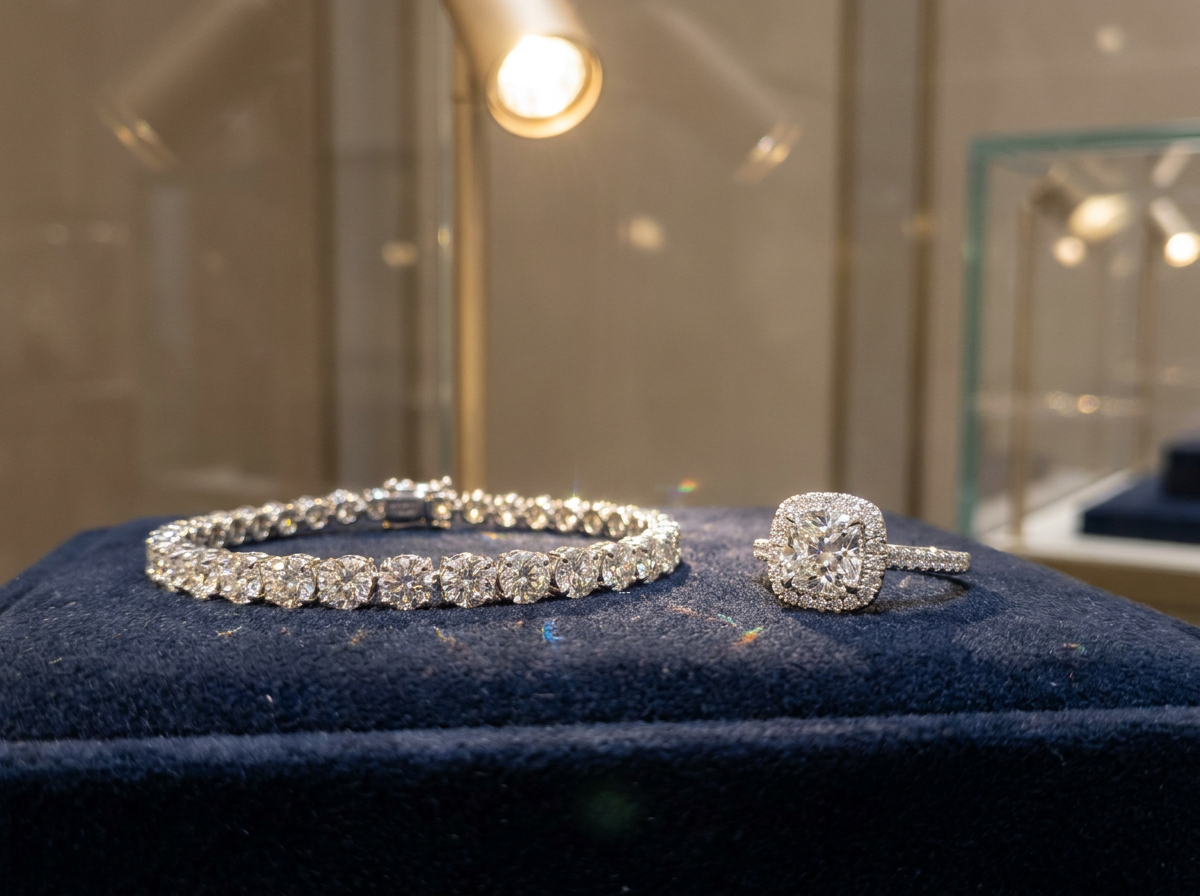
Somewhat, yes — and it comes down to what share of the piece's total diamond weight the melee actually represents. In a halo or a pavé shank built around a center stone, melee is a supporting cast member; the center stone dominates both the visual weight and the value math. In a tennis bracelet or a full eternity band, there's no center stone at all — the entire piece is melee, matched and set in a continuous line. In those formats, melee quality and origin carry relatively more weight in the piece's total value and resale story simply because melee is the whole story, not a supporting detail.
Even then, the appraisal and certification treatment doesn't change — individual stones in a tennis bracelet or eternity band remain uncertified and parcel-priced, just like melee in a halo. What changes is the size of the line item: instead of a small addition alongside a dominant center stone, melee becomes the primary carat-weight and value driver of the piece. That's worth knowing when you're pricing and positioning tennis bracelets or full eternity bands specifically — the markup math still works the same way, but melee's line item in that math is proportionally much larger than it is in a halo ring.
What Do Jewelers Pay for Melee When Buying Back a Piece?
Trade-in and buyback economics make the resale gap between center stones and melee even more visible than a formal appraisal does. When a shop offers to buy back or trade in a customer's piece, the offer is typically built around metal weight (which can be verified and refined with confidence), the center stone (if it's certified, the certificate does most of the pricing work), and then melee as a rough estimate of total diamond weight at current market rates — discounted further because the shop can't verify a used piece's melee origin, grade, or condition without pulling stones and re-testing them.
That verification gap is a real cost, and it's why buyback offers on melee tend to land well below what the melee originally cost at retail, regardless of whether it started out natural or lab-grown. A shop taking in a used pavé ring generally has to assume the melee will need re-sorting, re-grading, or outright replacement before it can go back into new inventory or a repair job — labor and uncertainty that get priced into a lower offer. None of that is specific to natural melee versus lab-grown; it's the standard economics of buying back small, uncertified, hard-to-verify stones, and it's a big part of why melee's resale story looks so different from a certified center stone's.
Is There Still a Retail Case for Choosing Natural Melee?
Yes — just not primarily a resale-value case. The strongest retail argument for natural melee is consistency: pairing natural melee with a natural center stone keeps origin uniform across the entire piece, which is what most buyers of natural center stones expect and what avoids a mixed-origin disclosure conversation altogether. For bridal and fine jewelry lines built around natural certified center stones, natural melee is the straightforward, defensible default — not because the melee itself is a major value or resale driver, but because origin consistency across a piece is easier to sell, easier to disclose accurately, and easier to stand behind than a mixed-origin build.
For jewelers running a lab-grown or mixed product line, the same logic runs the other way — lab-grown melee paired with a lab-grown center stone keeps that line consistent too. Either way, the decision is best framed around what the rest of the piece is built with, not around melee's own resale value in isolation.
How to Source Natural Melee for Your Next Piece
Guru Diam's natural melee program covers round stones from 0.8mm to 4.0mm, in EF and GH color and VS and SI clarity, priced per carat and confirmed at quote. Whether you're building a halo, pavé, eternity, or tennis piece, pricing and markup planning work best when you're quoting off your actual size, grade, and total carat need — not a rough estimate. For cost drivers and the full sieve-by-sieve rate table, see our pricing guide.
Ready to price out a build? Reach Guru Diam over WhatsApp or through Contact with your size, grade, and carat need, and you'll get a confirmed quote against real available stock.
Frequently Asked Questions
Does the melee in a ring affect its resale value more than the center stone?
No. The center stone (when there is one) and the metal typically drive the larger share of a piece's resale and appraisal value. Melee is usually a secondary, smaller contributor to total value, regardless of whether it's natural or lab-grown.
Is natural melee individually certified so a buyer can verify its resale value?
No — melee this small isn't individually certified in either origin. Certification cost exceeds stone value below roughly 0.20ct, a standard that applies across the trade. Appraisers value melee as a bulk line item — estimated total carat weight and grade — rather than stone by stone.
Does using lab-grown melee instead of natural lower the retail markup a jeweler can charge?
Not directly. Markup models like keystone or triple-key apply to a piece's total landed cost. Melee origin affects the cost base going into that calculation more than it changes the markup formula itself — and because melee is typically a smaller share of total build cost, the effect on final retail price is usually modest.
Do jewelers have to disclose whether melee is natural or lab-grown?
Yes. Origin disclosure is a legal requirement for every diamond in a piece — center stone or melee, natural or lab-grown — regardless of how small a dollar contribution the melee makes to the piece's total value.
Does melee origin matter more in a tennis bracelet or eternity band than in a ring with a center stone?
Somewhat. Settings without a dominant center stone — tennis bracelets, full eternity bands — put a much larger share of the piece's total diamond weight into the melee itself, so melee quality and origin carry relatively more weight in those pieces' overall value than they do in a halo or pavé ring built around a center stone.
Should jewelers charge more for natural melee based on resale value alone?
Not as the primary pitch. Melee's contribution to a piece's resale value is modest at typical melee scale. Natural melee is better positioned as origin consistency for fully natural-origin pieces than as a standalone resale or investment argument.