Natural Melee Color & Clarity Grades Explained: EF vs GH, VS vs SI
EF and GH are color bands, VS and SI are clarity bands — not exact single grades. EF means the parcel runs E to F color (colorless, the top of the white-diamond range); GH means G to H (near-colorless, still white to the eye in a mounting). VS clarity means very slightly included, typically eye-clean; SI means slightly included, with inclusions that are sometimes visible without magnification. Natural melee is sorted and sold in these two-letter, two-clarity bands because grading each stone individually isn't practical below about 0.20ct — sorting is comparative, against a master stone, not per-stone certification.
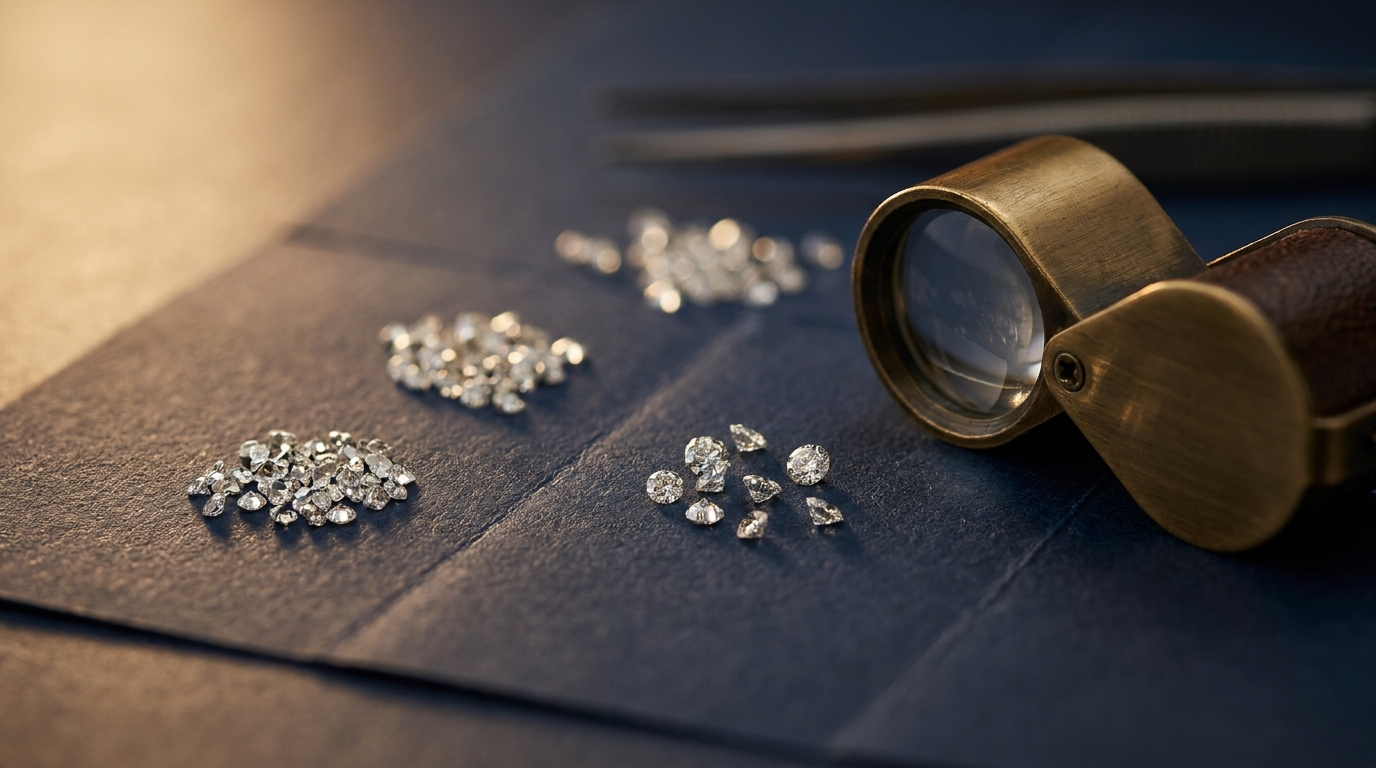
What Do Diamond Color and Clarity Letters Actually Mean?
Every diamond — melee or center stone, natural or lab-grown — gets described on two of the same scales: color and clarity. Color runs D through Z, where D is the whitest, most colorless grade and the letters get progressively warmer (more visible yellow or brown tint) as you move down the alphabet. Clarity runs from Flawless down through Included, and it measures how many inclusions (internal characteristics) and blemishes (surface marks) a stone has, and how visible they are under 10x magnification.
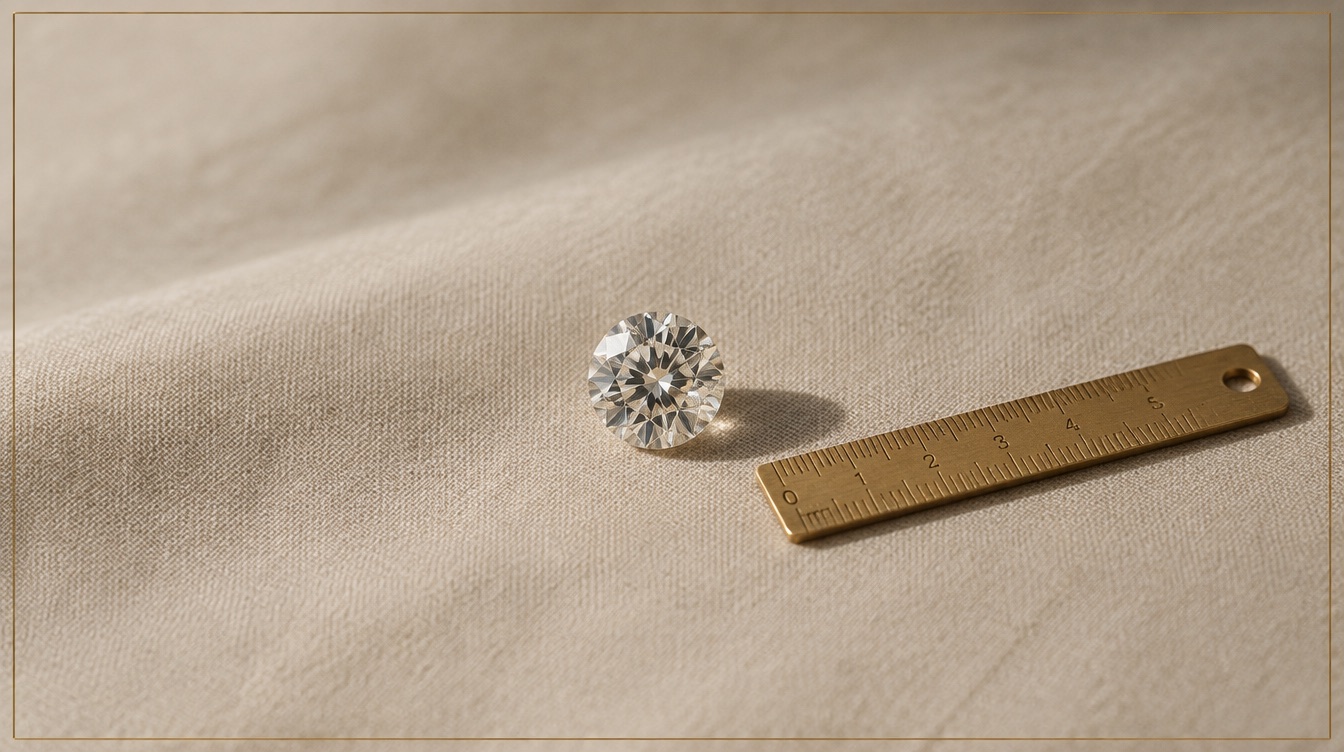
Those scales were built for loose, individually graded diamonds — the kind large enough and valuable enough to justify a lab spending time on one stone. Melee sits below that threshold. A 1.5mm round weighs roughly 0.015ct; grading it to the same single-letter precision as a 1ct center stone would cost more than the stone is worth. So the trade adapted the same underlying scales into workable bands, and that's what EF, GH, VS, and SI represent on a natural melee order.
Here's the four bands at a glance before the detail on each one:
| Band | Where it sits on the full scale | What it looks like in a mounting | Typical call |
|---|---|---|---|
| EF color | E–F (2nd–3rd grade, near the top of D–Z) | Colorless, no detectable warmth | White metal, next to a colorless center stone |
| GH color | G–H (near-colorless) | Reads white to the eye once set | Default for most pavé, halo, eternity work |
| VS clarity | VS1–VS2 | Eye-clean, no visible flaws unaided | Focal settings, front-facing pieces |
| SI clarity | SI1–SI2 | Occasional stone shows a visible inclusion | Dense pavé, tennis, production-volume work |
What Is EF Color Melee?
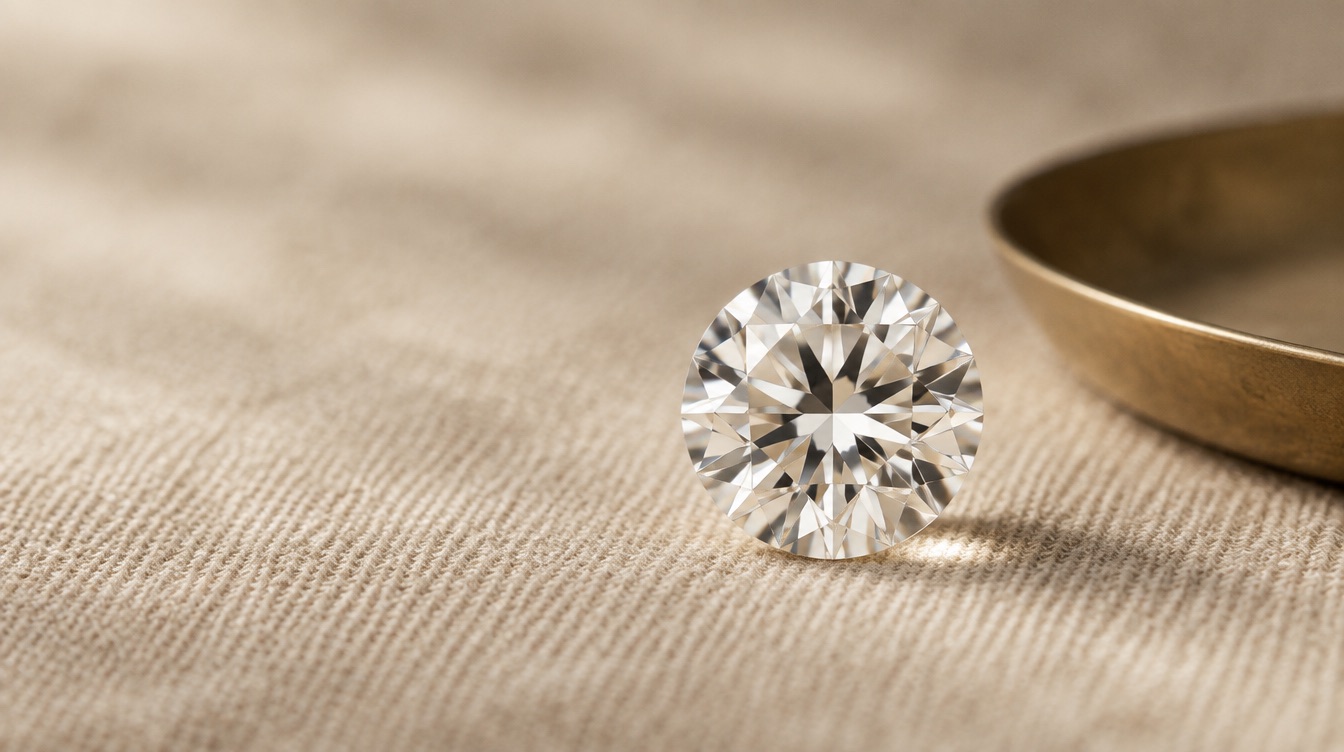
EF means the parcel is sorted to run between E and F color — the second and third grades on the D-to-Z scale, one step below the absolute top (D). In a finished piece, E and F both read as colorless; the difference between them is something even a trained grader typically needs a loupe and a comparison stone to separate, and it disappears entirely to the naked eye once the stone is small and set. EF melee is the grade jewelers reach for when the mounting itself is white — platinum or white gold — and when the piece sits next to a colorless or near-colorless center stone, where any warmth in the accent stones would read as a mismatch.
On Guru Diam's current natural melee grid, EF is available in VS and SI clarity from 1.70mm up. There's a genuine gap below that: no vendor in the trade has ever consistently quoted true E-F color melee smaller than 1.70mm, so that combination isn't priced. If a job calls for EF under 1.70mm, GH is the realistic fallback at that size — see the sizing question in the FAQ below.
What Is GH Color Melee?
GH means the parcel runs G to H color — near-colorless, one full step down from EF. Both G and H diamonds carry a faint warmth that's detectable in a side-by-side comparison against a D-color stone under controlled light, but essentially disappears once the stone is under a few millimeters and surrounded by metal, other stones, or a colored gemstone. GH is the workhorse grade for the bulk of pavé, halo, and eternity production — it's the band most retail melee mountings are actually built around, because the visual return on paying up to EF rarely shows up in the finished piece at these sizes.
GH is also the only color band priced across Guru Diam's full natural melee size range, up to 1.20mm through 4.00mm, in both VS and SI clarity. For more on when GH is the right call versus stepping up to EF, see EF vs GH Color Melee: Which Grade Fits Which Job.
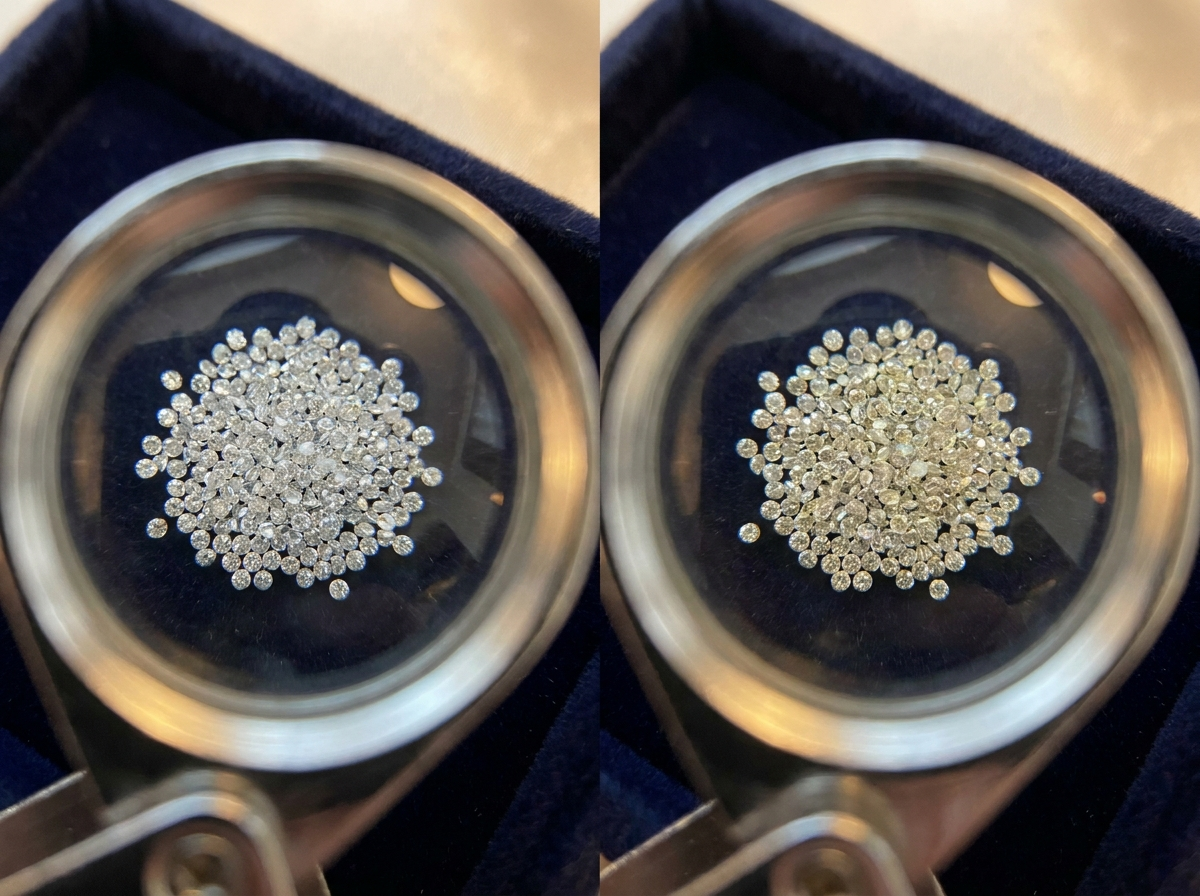
Can You Actually See the Difference Between EF and GH at Melee Sizes?
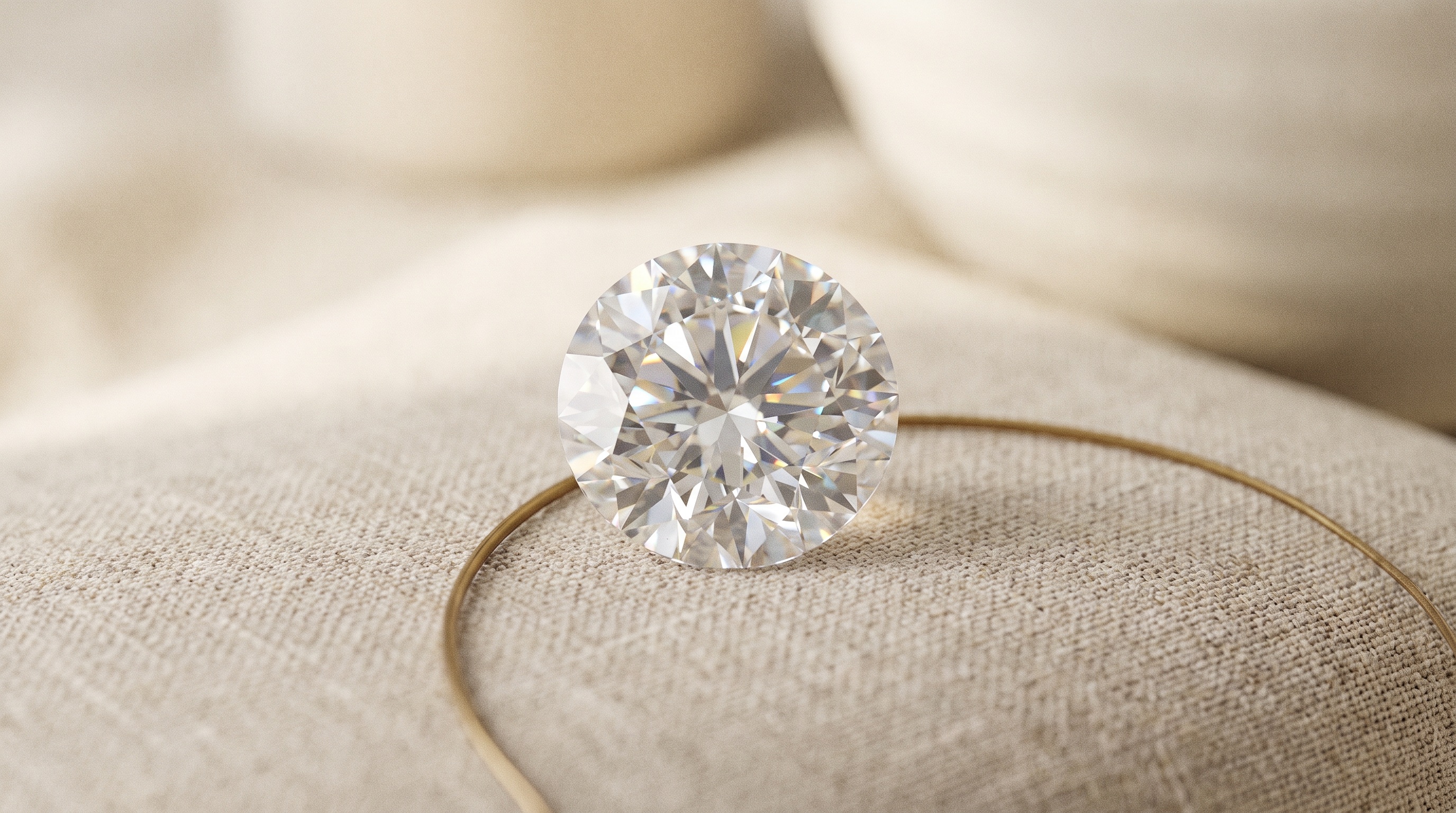
This is the question that actually drives the buying decision, more than the letters themselves. Color in a diamond is a function of how much body color there is to see, and body color scales with the volume of the stone. A 1ct center stone has enough material for a G-H tint to show against a white background. A 0.02ct melee stone doesn't — there simply isn't enough diamond there for the eye to register the difference, especially once it's bezel- or bead-set and catching light at odd angles rather than sitting still under a loupe.
That's why the honest framing in the trade is: EF buys margin of safety, not necessarily a visible upgrade. It matters most in a few specific situations — larger melee near the size ceiling (3.5–4.0mm, where there's enough stone for warmth to register), melee set directly beside a colorless center stone with no metal or other color to break the comparison, and melee in white metal with no yellow gold anywhere nearby to mask a warm tone. Outside those situations, most working jewelers run GH and don't get callbacks on color. If you're deciding between the two for a specific job, that's exactly the comparison our EF vs GH breakdown walks through case by case.
What Does VS Clarity Mean in Melee?
VS stands for Very Slightly Included. On the full GIA clarity scale it splits into VS1 and VS2, but at melee sizes the trade sells it as a single VS band. In practice, VS clarity melee is eye-clean — inclusions are small enough and few enough that they don't interrupt the stone's brilliance or show up as a visible flaw once it's set. It's the clarity most jewelers specify by default for anything front-facing: halo rings, pavé shanks, and any piece where the customer might actually look closely.
VS melee is also the more consistent of the two clarity bands to work with on the bench — fewer stones get rejected during setting for a visible inclusion sitting right under a prong, which matters more on production runs where a setter is moving through dozens or hundreds of stones.
What Does SI Clarity Mean in Melee?
SI stands for Slightly Included. Like VS, it covers SI1 and SI2 on the full scale, sold as one band at melee sizes. SI clarity means some stones in the parcel will show an inclusion that's visible without magnification — usually a small crystal, feather, or cloud — though the severity varies stone to stone within the band, and a well-sorted SI parcel still skews toward the cleaner end of that range rather than the worst case. SI is the value clarity: it costs meaningfully less per carat than VS across every size and color combination on the current grid, and for a lot of production work, that gap is the difference that makes a piece pencil out.
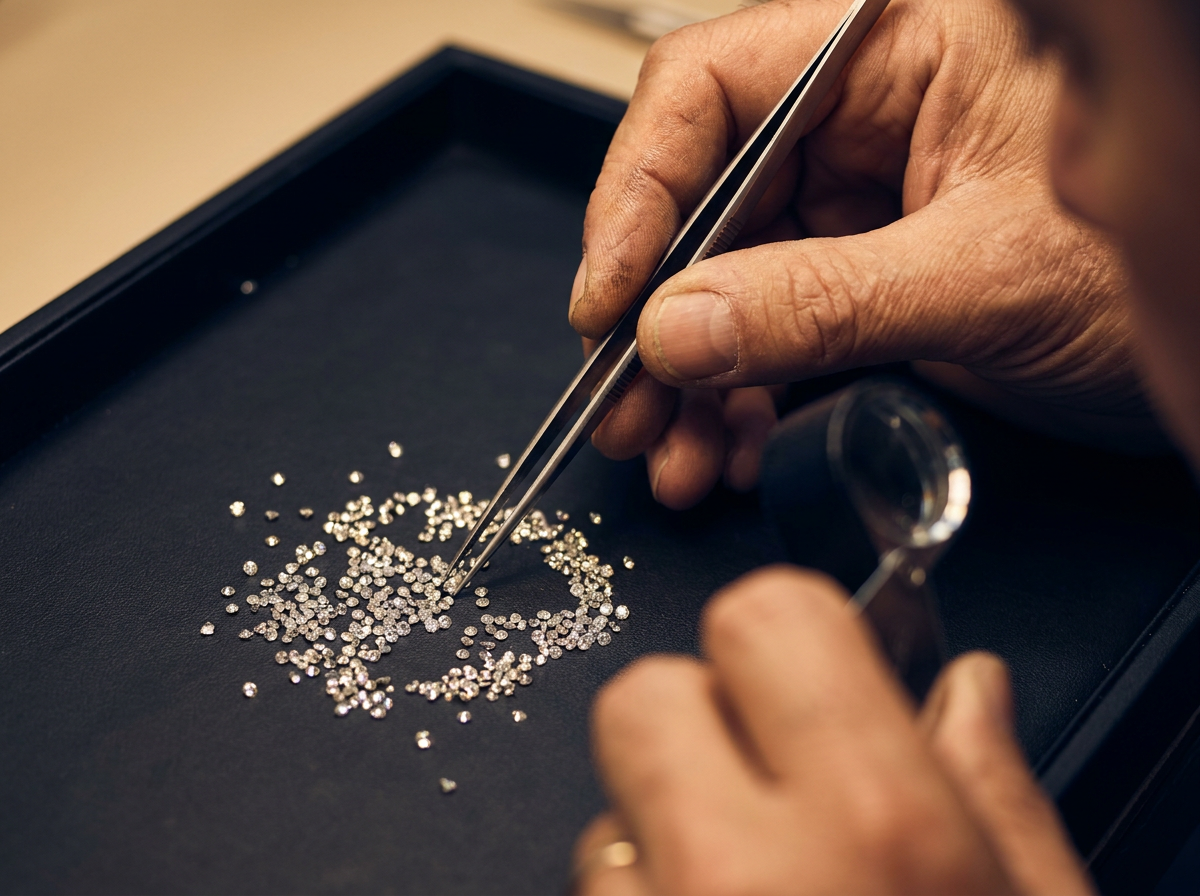
VS vs SI — What's the Practical Difference in a Finished Piece?
The honest answer: it depends almost entirely on where the stone sits and how big it is. In a dense pavé field or a tennis bracelet where every stone is roughly the same tiny size and catching light constantly, a stray inclusion in an SI stone is very hard for anyone but the setter to find — the eye is reading sparkle and pattern, not individual stones. In a halo directly ringing a center stone, or in larger melee near 3.5–4.0mm used as side stones, SI inclusions have more surface area to show up on, and a customer looking closely enough to inspect the center stone will sometimes also look at what's next to it.
The other place the difference shows up is on the bench, not in the showcase: SI parcels typically yield a slightly higher reject rate during setting, because an inclusion positioned badly relative to a prong or bezel edge is more likely to be visible post-set. That's a production cost, not a customer-facing one, but it's worth factoring into which grade you buy for high-volume work. For a closer look at exactly which jobs tolerate SI and which don't, see VS vs SI Clarity Melee: When the Difference Actually Matters.
Why Is Melee Sold in Blended Bands Instead of Exact Grades?
Two-letter color bands and single-clarity-tier bands (VS, SI) aren't a shortcut Guru Diam invented — it's standard trade practice across the industry, natural or lab-grown, and it comes down to economics and physics both. Grading a diamond to an exact single letter and single clarity number requires an individual stone to sit under a scope long enough for a trained grader to isolate it against comparison masters — that's viable time and cost for a 1ct stone worth thousands of dollars. It is not viable for a stone that weighs a few thousandths of a carat and sells for a few dollars. Below roughly 0.20ct, the cost of individual grading exceeds the value of the stone itself.
So the trade sorts melee comparatively instead: a trained sorter grades a parcel against a known master stone for each band, pulling stones that fall within the E-F or G-H color range and the VS or SI clarity range into that parcel. It's a real, disciplined process — just not a per-stone certificate. This is true of natural melee at every wholesale source in the trade, not a limitation specific to any one supplier. If you want the full mechanics of how a parcel gets sorted and sieved by size alongside grade, our melee size chart and sieve guide covers the sizing side of the same sorting process.
How Are Natural Melee Parcels Actually Graded and Sorted?
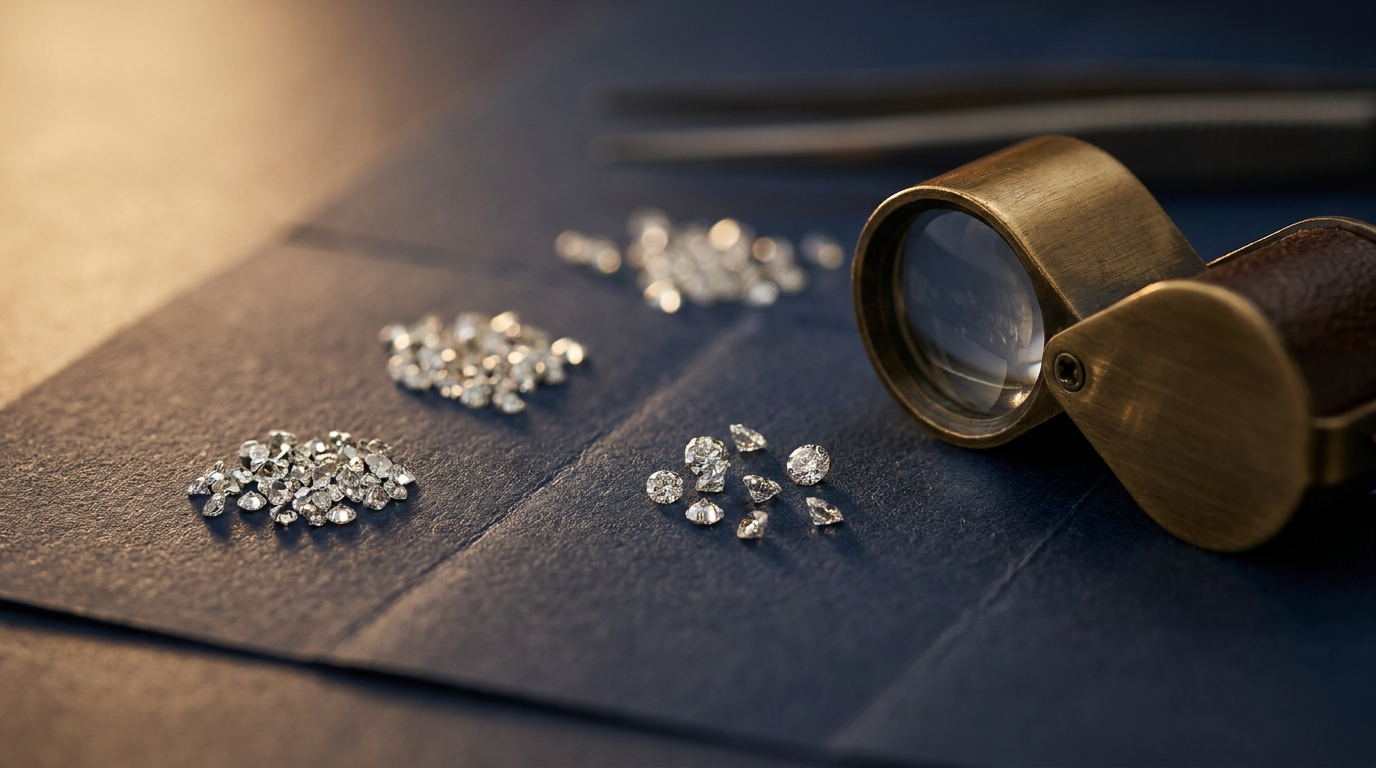
A natural melee parcel starts as rough-sorted goods that get cut to size, then pass through sieve plates that separate stones by millimeter diameter (the same physical screening used for sizing, independent of color or clarity). Within each size band, a sorter works the parcel against reference master stones set at the boundary of each grade — comparing color under controlled, consistent lighting and checking clarity under a loupe — and pulls stones into the EF or GH color group and the VS or SI clarity group accordingly.
The result is a parcel that's genuinely representative of its stated band: an EF VS parcel will not contain visibly tinted or heavily included stones, but it also won't be uniform stone-to-stone the way a single graded diamond is uniform with itself. Expect natural, standard trade tolerance within the band — that's inherent to how melee is sorted, not a quality control gap. The same ±0.10mm dimension and ±0.10ct weight tolerances that apply to melee sizing generally also apply here: a small amount of variation within the stated range is normal and expected, and one grade of drift at the edges of a large parcel isn't a defect.
Matching Grade to the Job: Pavé, Halo, Eternity, Tennis, and Repair
Grade selection is really a question about where the stone sits and what it sits next to, more than a fixed rule:
- Pavé (shanks, galleries, side profiles): GH SI is usually sufficient — dense clusters of small stones read as texture and sparkle, not individual clarity, and cost control matters most here since pavé uses a high stone count per piece.
- Halo (ringing a center stone): Step up to VS clarity at minimum, and consider EF color if the center stone is colorless and the metal is white — this is the setting where color and clarity mismatches are most likely to be noticed, because the eye is already focused on that part of the piece.
- Eternity bands: Match the melee grade to how the band will be worn and inspected. An eternity band sold as a statement piece with larger stones (2.5mm+) benefits from VS clarity; a band with very small stones (under 1.5mm) can often run SI without a visible difference.
- Tennis bracelets: Consistency across the line matters as much as the grade itself — a bracelet reads as one continuous sparkle, so GH VS or GH SI (depending on target price point) both work, as long as the parcel is evenly sorted.
- Repair and replacement work: Match the existing stones in the piece as closely as possible rather than defaulting to a house standard — a repaired section with a visibly different color or clarity than the surrounding original stones stands out more than either grade would on its own.
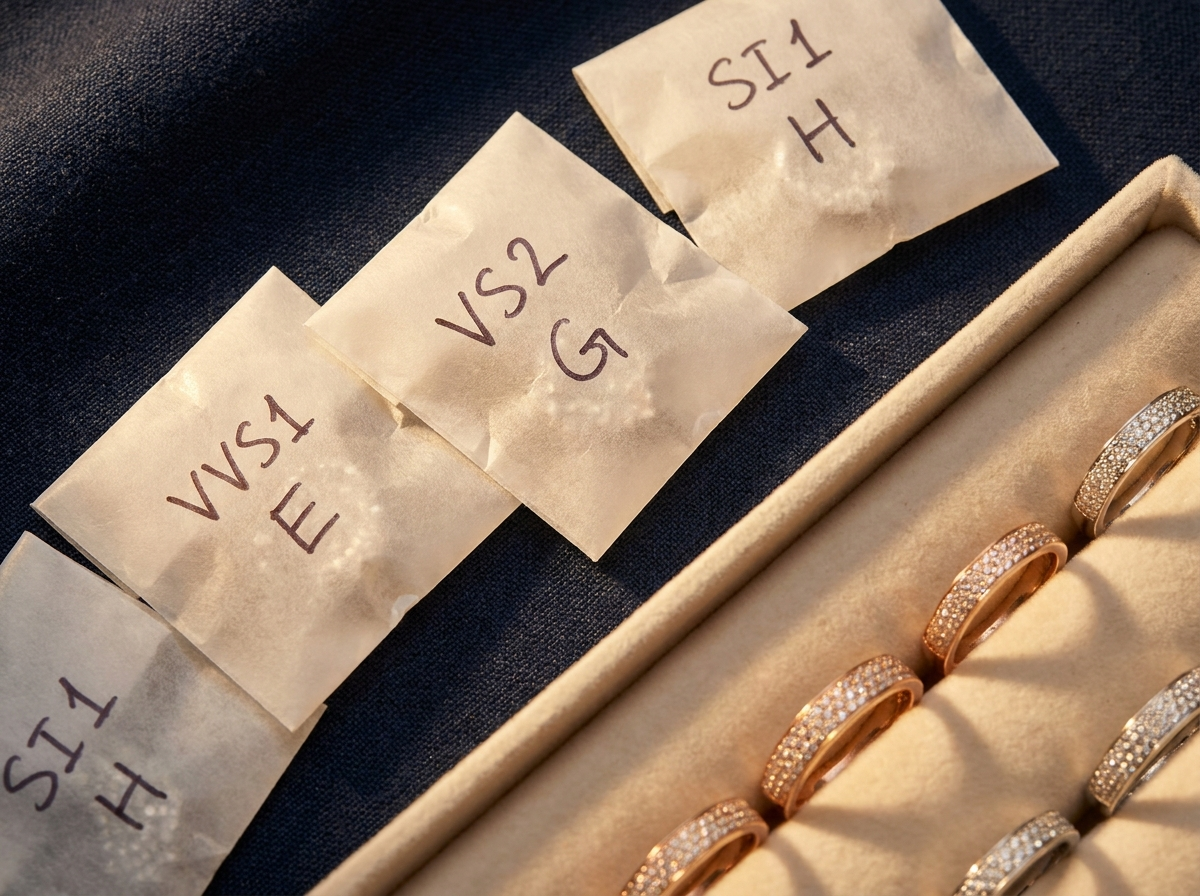
How Does Grade Affect Price?
Color and clarity both move price, and they compound with size — the same color/clarity step costs more at 3.5mm than it does at 1.5mm, because there's more carat weight per stone to price. As a rough anchor, Guru Diam's current natural melee pricing starts around $370–450/ct in the smallest sizes and rises with size and grade, with EF and VS both carrying a premium over GH and SI respectively at the same size. Pricing is quoted per parcel against these size and grade bands rather than fixed to the cent, so treat any number as directional until it's confirmed against your actual order.
For the full size-by-size, grade-by-grade pricing grid, see the Natural Melee Diamonds Wholesale: The Complete Buying Guide for Jewelers — that's where the complete table lives. For a quote against a specific order, message Guru Diam directly on WhatsApp.
How Do You Order the Right Grade Without Guessing?
Specify three things on every natural melee order: the millimeter size (not just "small" or a carat-weight guess), the color band (EF or GH), and the clarity band (VS or SI). If you're not sure which combination a job needs, describe the piece — center stone color, metal type, stone size, and whether it's a focal setting (halo, solitaire accent) or a dense field (pavé, eternity, tennis) — and ask for a recommendation rather than defaulting to the safest, most expensive grade out of habit. Overbuying color and clarity on stones the eye can't resolve is a real, recurring cost on production jewelry, not a safety margin worth paying for by default.
Because natural melee is quoted per parcel against these bands rather than sold off a fixed price list, get current pricing confirmed at quote time for your specific size and grade combination. Reach Guru Diam on WhatsApp at +1 347 812 2006 or through the contact page — both the New York and Los Angeles offices work natural melee orders, with same-day turnaround before 6pm EST in NYC and 4pm PST in LA.
Frequently Asked Questions
What does EF color mean for melee diamonds?
EF means the parcel is sorted to run between E and F color on the standard D-to-Z diamond color scale — the second and third grades, just below the absolute top. It's the colorless end of the range, sold as a blended two-letter band rather than an exact single grade.
What does GH color mean for melee diamonds?
GH means the parcel runs G to H color — near-colorless, one step down from EF. Both grades read as white to the eye once set, and GH is the color band most retail melee mountings are built around.
Can you actually see the difference between EF and GH melee by eye?
Rarely, once the stone is set. Color visibility scales with the volume of the diamond, and melee doesn't have enough material for a G-H tint to register against a white background the way it can on a 1ct center stone. The difference matters more in larger melee (3.5–4.0mm) sitting directly beside a colorless center stone in white metal than it does in dense pavé or small eternity work.
What's the difference between VS and SI clarity in melee?
VS (Very Slightly Included) is eye-clean — no visible flaws without magnification. SI (Slightly Included) means some stones in the parcel will show an inclusion visible without magnification, though severity varies within the band. VS costs more per carat than SI at every size and color combination.
Why isn't natural melee sold in exact single grades like D color or VVS1 clarity?
Below roughly 0.20ct, the cost of individually grading a stone exceeds the stone's value, so melee is sorted comparatively against master stones into blended bands (EF/GH color, VS/SI clarity) instead. This is standard trade practice across the industry, not specific to any one supplier.
Are natural melee diamonds certified by color and clarity grade?
No — melee this small isn't individually or parcel-certified by a gem lab; that's normal for stones below roughly 0.20ct across the trade, natural or lab-grown. It ships as sieve- and grade-sorted parcel goods, checked against a master stone rather than issued a per-stone certificate. Loose diamonds at 0.30ct and above are a different tier and are IGI/GIA certified — that certification doesn't apply to melee.
What size range is EF color available in?
EF is currently priced from 1.70mm up through 4.00mm, in both VS and SI clarity. Below 1.70mm, EF isn't available — no vendor in the trade consistently quotes true E-F color at that size — so GH is the realistic option for the smallest melee sizes.
Related Articles
- EF vs GH Color Melee: Which Grade Fits Which Job
- VS vs SI Clarity Melee: When the Difference Actually Matters
- Natural Melee Diamonds Wholesale: The Complete Buying Guide for Jewelers
- The Melee Diamond Size Chart MM to Carat to Sieve, with Calibration Tolerances (lab-grown melee cluster — for mm-to-carat and sieve conversions)