
Every retailer carrying both lab-grown and natural diamonds eventually runs into the same pricing problem: the input cost gap between the two categories is real and structural, but the multiplier applied on top of that cost is a business decision, not a fact of geology or chemistry. Get it wrong and margin quietly leaks out of the lab-grown case, or that case starts reading as "the cheap section" and drags the whole store's perceived value down with it. This piece works through where the gap actually comes from, how it moves by carat weight, cut tier, and color, and how to build a pricing policy that holds up ticket to ticket instead of drifting.
Where the Cost Gap Actually Comes From
Lab-grown diamonds cost less to produce than natural diamonds because the two categories sit on fundamentally different supply curves. Natural diamond supply is fixed by geology — every carat that reaches the market was formed over a geological timescale and extracted through capital-intensive processes that don't scale up or down quickly in response to demand. Lab-grown diamonds are grown using CVD (chemical vapor deposition) technology in controlled reactors, cut in-house, and finished in-house. That's a manufacturing process, not an extraction process, and manufacturing processes respond to demand and scale differently than mining supply chains do.
The result is a lower per-carat input cost for lab-grown material of comparable size and quality. That's the entire mechanism — no trick to it, no reason to be cagey about it with a customer who asks. The gap is between lab-grown and natural. It is not a price war between wholesalers, and a retailer who treats it as one — chasing the lowest quoted per-carat number across suppliers — usually ends up trading consistency of supply and grading for a marginal difference that doesn't survive a real order.
Where retailers get into trouble is assuming the input cost gap is a fixed percentage that applies uniformly across the whole case. It isn't — it moves, sometimes by a lot, depending on carat weight, cut tier, and color.
Why the Gap Isn't Static: Carat Weight, Cut Tier, and Color
The cost differential between lab-grown and natural widens as carat weight climbs. At small sizes — quarter-carat melee accents, for instance — the input cost on both sides is low enough that the dollar gap, while proportionally large, is small in absolute terms. At two, three, and four carats, natural supply gets genuinely scarce for well-cut, eye-clean material, and price climbs non-linearly with size. Lab-grown supply doesn't face the same scarcity curve at those sizes, so the absolute dollar gap between a 3-carat natural stone and a 3-carat lab-grown stone of comparable grade is dramatically larger than the gap at half a carat. This is exactly why "lab-grown is roughly X% cheaper than natural" is a misleading rule of thumb — the percentage itself moves with size, and retailers who quote a single blended discount figure across the whole case are usually wrong at both ends of the size range.
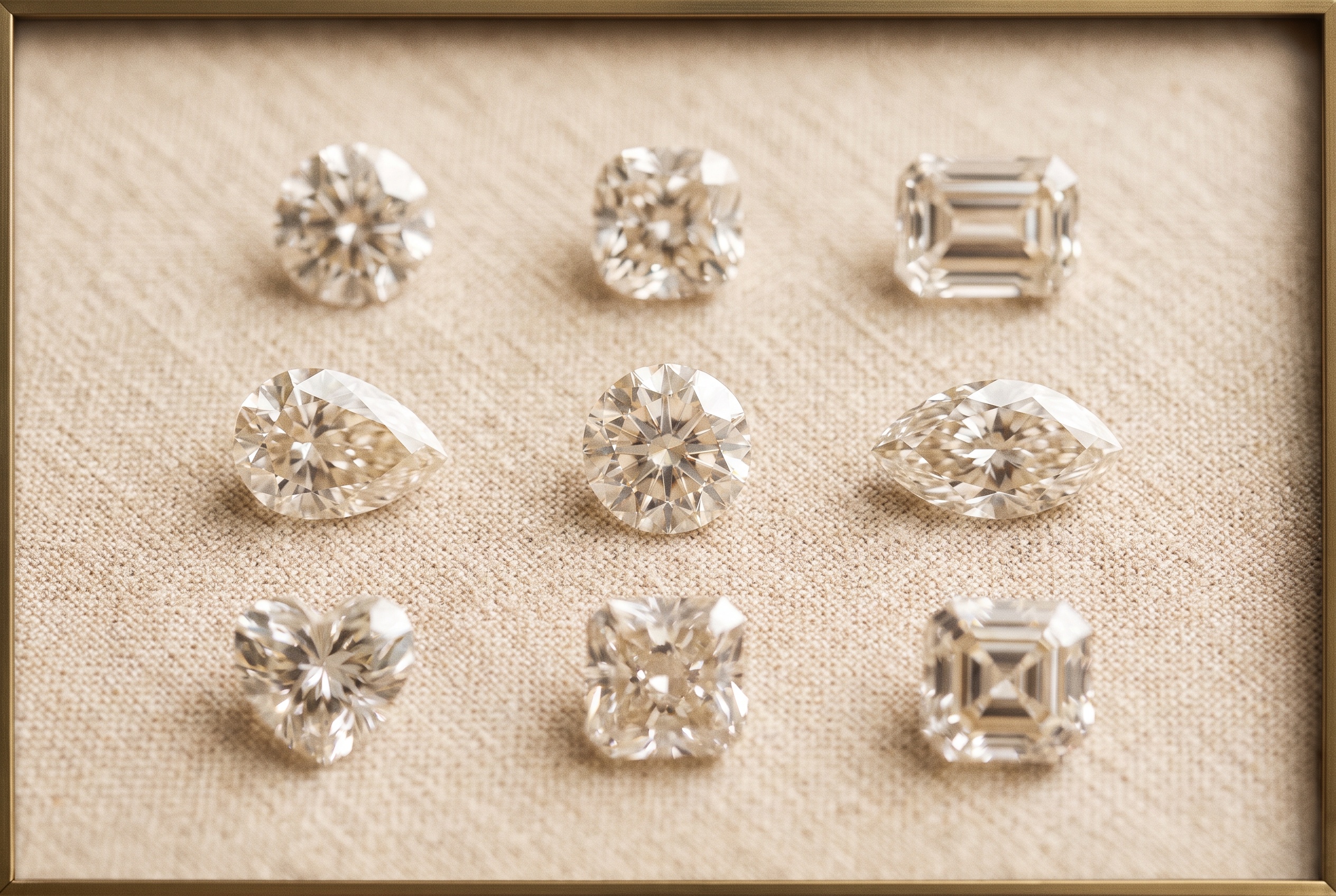
Cut tier matters just as much. Round brilliant is the commodity cut on both sides — highest volume, most competitive pricing, smallest premium for craftsmanship. Regular fancy shapes (emerald, cushion, oval, pear, marquise, radiant, princess, heart) carry a modest premium over round on both natural and lab-grown, driven by cutting yield and finishing labor rather than material scarcity. True antique-style cuts — old mine, old European, hexagonal, moval, lozenge, kite, trillion, criss-cut — sit in a different category on the natural side, where antique-cut natural stones are genuinely scarce and command steep premiums. On the lab-grown side, antique cuts are produced to order rather than sourced from limited historical supply, so while they still carry a premium over round for the cutting labor involved, that premium is nowhere near what the same cut commands in natural material — worth knowing before quoting a customer asking about an old European cut center stone.
Color behaves differently again. In natural diamonds, fancy color (yellow, pink, blue, green, and others) is a rarity premium on top of an already-scarce material — some natural fancy colors price effectively bespoke. In lab-grown, fancy color yellow, pink, blue, and green stones come from controlled growth conditions, which makes them meaningfully more available and more consistently priced than their natural counterparts, though still priced above white lab-grown material for the added growth complexity. A retailer pricing lab-grown fancy color against natural fancy color benchmarks without adjusting for this will either overprice the piece into an uncompetitive corner or badly underprice one that's actually earning a fair premium over white lab-grown stock.
Two Ways to Use the Gap: Margin Capture vs. Price-Point Reach
Once the size of the gap is understood category by category, there are really only two coherent strategies for what to do with it, and a third that blends them.
| Strategy | What It Means | Best Fit | Risk |
|---|---|---|---|
| Margin Capture | Price the finished piece near the natural-equivalent retail, keeping the input savings as additional margin | Customers shopping the look and the setting, not comparing line-item by line-item against natural pricing | Customer expects a lower price "because it's lab-grown" and feels the ticket doesn't reflect that |
| Price-Point Reach | Pass the input savings through to retail, opening up bigger carat weights or higher clarity tiers at the same ticket price | Budget-conscious and younger shoppers who are size- or spec-driven rather than brand-driven | Risk of the case reading as "discount jewelry" rather than a genuine value trade-off if not merchandised carefully |
| Blended Approach | Pass through enough savings to improve attainability while still capturing a stronger margin than the natural side | Full-line retailers carrying both categories side by side | Requires a consistent house rule so pricing doesn't drift ticket to ticket |
None of the three is objectively correct. Margin capture is defensible because the customer is paying for craftsmanship, certification, and design — not just raw material. Price-point reach is defensible because it's genuinely why a large share of lab-grown buyers shop the category in the first place. The mistake isn't picking one — it's failing to pick at all, letting the multiplier wander ticket to ticket based on whatever felt right that day. Decide which one describes your floor, write it down, and price consistently to it.
Structural Cost Levers That Aren't About the Stone Itself
Markup strategy gets most of the attention, but a meaningful share of what determines whether a lab-grown program is actually profitable has nothing to do with the multiplier on the center stone. Three levers matter here, and all three compound with each other.
- Certification flexibility. Loose stones and center stones at 0.30 carat and up can be certified through IGI, GIA, or GCAL, and the three labs carry different cost and turnaround profiles. Matching the certification to price point and customer segment, rather than defaulting to the same lab every time, reduces landed cost without touching stone quality.
- One-vendor consolidation. Sourcing loose stones, melee, and custom jewelry from a single manufacturer instead of stitching together separate vendors cuts down on shipments, vendor relationships, and invoices to reconcile. That overhead is real — it's just invisible on a per-piece cost sheet, which is why it gets undercounted.
- Made-to-order sourcing. Loose stones held as on-hand inventory ship the same day an order is placed, and custom rings built to spec turn around in 4–6 days rather than the two-to-six-week industry norm. Ordering as needed instead of carrying speculative case inventory eliminates carrying cost, insurance on that inventory, and markdown risk on pieces that don't move.
These three levers don't show up on a per-stone cost sheet, but they show up in the bank account at the end of the quarter. A retailer comparing suppliers purely on quoted per-carat price while ignoring shipment count, certification flexibility, and carrying cost is often making the wrong comparison.
A Worked Illustrative Example: The Round Solitaire
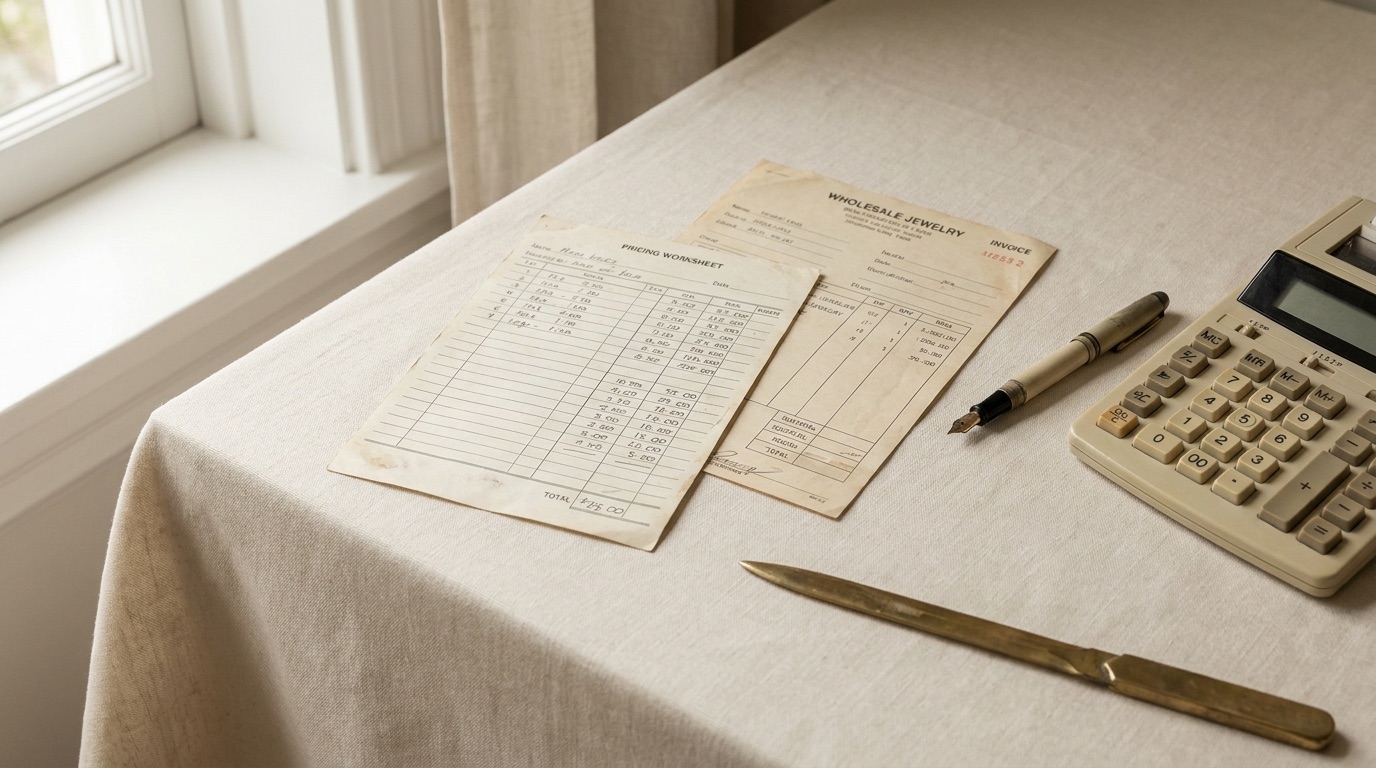
Numbers make this concrete faster than principles do. Here's a hypothetical 1.50-carat round solitaire, built two ways.
| Line Item | Natural-Equivalent Build | Lab-Grown Build |
|---|---|---|
| Center stone, landed cost | $6,000 | $1,800 |
| Setting, cast + polished | $220 | $220 |
| Certification | Included | Included |
| Total landed cost | $6,220 | $2,020 |
| Retail at 2.4x markup | $14,928 | $4,848 |
| Retail at 1.9x markup | — | $3,838 |
Holding the standard 2.4x multiplier on the lab-grown build (margin capture) keeps the input savings as pure additional margin — the retailer nets substantially more gross profit per piece than on the natural equivalent, even though the ticket price is far lower. Dropping the multiplier to 1.9x specifically on the lab-grown side (price-point reach) narrows the margin per piece but opens the door to a customer who was never going to pay $14,928 for a diamond ring in the first place. Both are legitimate business decisions. What isn't legitimate is applying 2.4x on the natural side and drifting between 1.6x and 2.2x on lab-grown depending on the customer standing at the counter — that's not a pricing strategy, that's pricing anxiety, and it shows.
A Second Worked Example: Fancy Color and Antique Cuts
The round solitaire example understates the gap for the categories where Guru Diam-style retailers tend to differentiate. Here's a hypothetical 1.00-carat fancy yellow cushion-cut halo ring, where both the color premium and the cut premium are in play.
| Line Item | Natural Fancy Yellow Build | Lab-Grown Fancy Yellow Build |
|---|---|---|
| Center stone (fancy yellow, cushion), landed cost | $5,400 | $1,450 |
| Halo melee (uncertified, calibrated), landed cost | $180 | $140 |
| Setting, cast + polished | $260 | $260 |
| Certification (center stone only) | Included | Included |
| Total landed cost | $5,840 | $1,850 |
| Retail at 2.6x markup | $15,184 | $4,810 |
Two things stand out against the round-brilliant example. First, the absolute gap is wider — fancy color natural material carries a rarity premium lab-grown fancy color doesn't inherit, so the natural-side multiplier has more room to run before the ticket looks unreasonable. Second, the halo melee is priced as a separate line item from the center stone at a different cost basis entirely, because it's uncertified calibrated parcel goods rather than an individually graded stone — a distinction the next two sections cover in more depth.
Where Certification Fits Into the Price Conversation
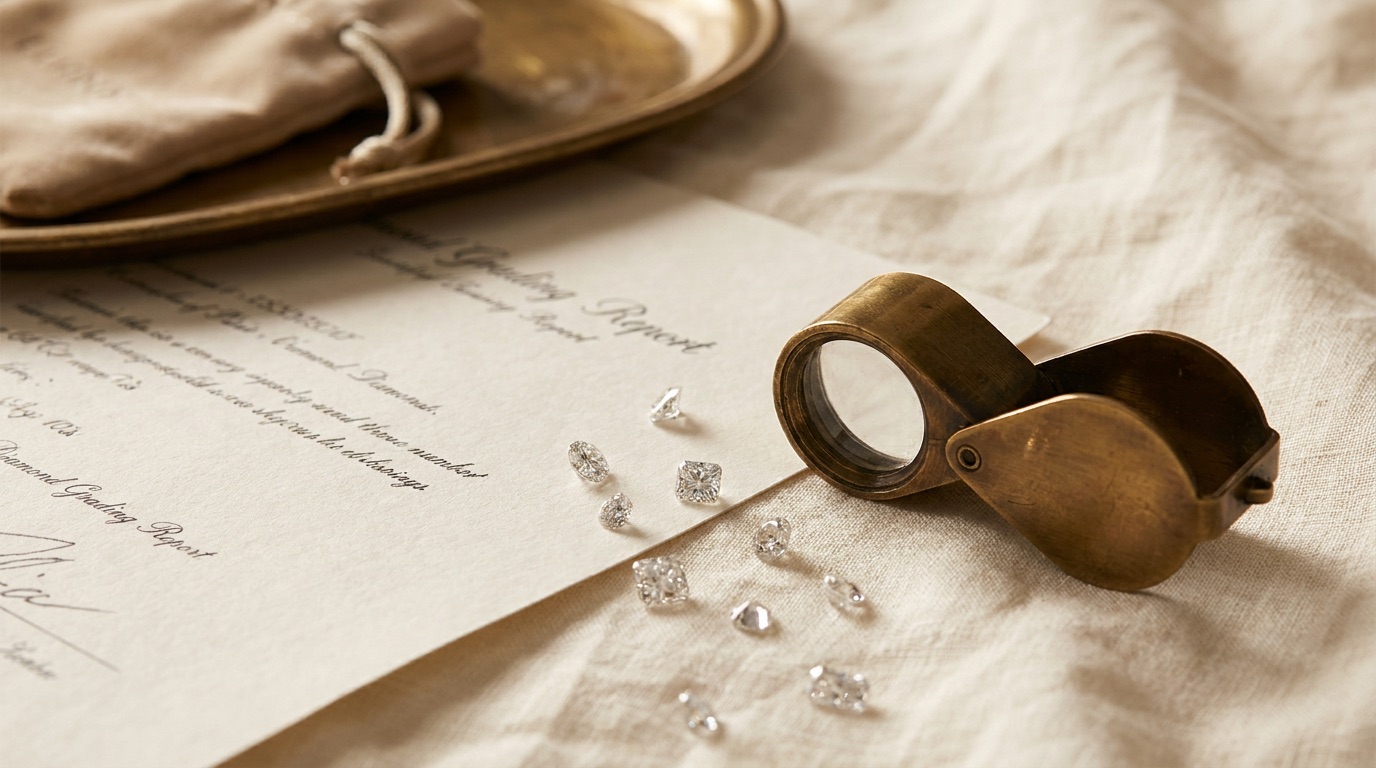
Certification is a cost lever and a trust lever at the same time, which is why it deserves its own line of thinking rather than getting folded into "stone cost" as a single number. For stones 0.30 carat and up, three labs cover the market: IGI, GIA, and GCAL. All three run a full 4Cs grading process — carat, cut, color, clarity — and issue a third-party report a customer can independently verify. None represents a shortcut; each represents a different turnaround and cost profile suited to a different part of the case.
IGI has the deepest bench strength in lab-grown grading and tends to be the fastest, most commercially efficient option for high-turn categories like standard round and fancy-shape solitaires. GIA carries the strongest name recognition among natural-diamond buyers and is frequently the right call for larger natural center stones. GCAL layers in cut-grade and light-performance analysis that's particularly useful on antique and fancy cuts, where grading criteria built around round brilliant proportions don't always capture what makes an old European or antique cushion cut desirable. This isn't about picking the "best" lab in the abstract — it's about matching the certification to the stone and the customer in front of you, the same way a retailer matches setting metal to budget.
The pricing implication is straightforward: certification choice is a normal, disclosable part of managing landed cost, not something to obscure. Defaulting every stone to the most expensive certification path regardless of size or segment gives away margin for no customer-facing benefit — and certification-shopping invisibly, quoting one lab's report but delivering another, invites a trust problem that costs far more than the certification fee ever would.
Melee and Accent Stones: A Different Cost Model Entirely
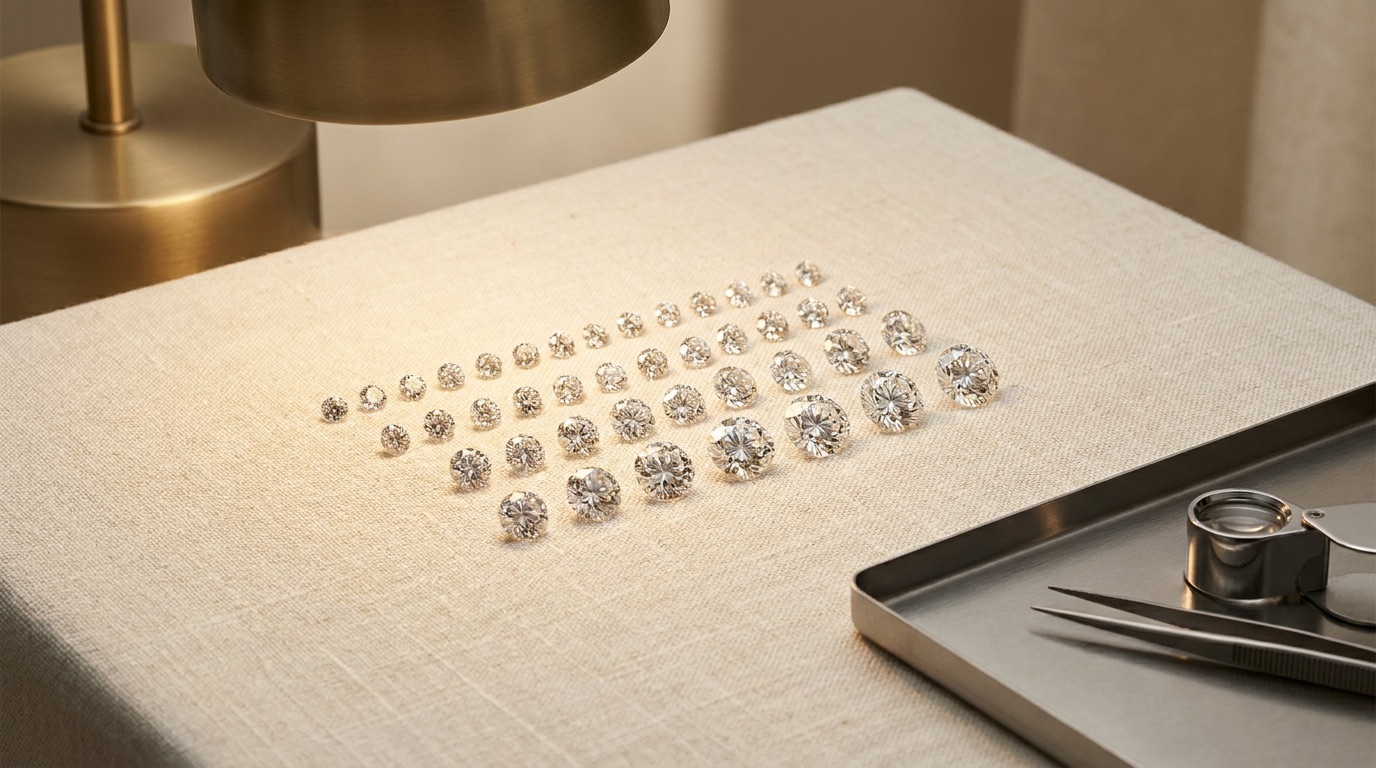
Everything above this section deals with individually graded center stones. Melee runs on a completely different model, and conflating the two is one of the most common pricing mistakes retailers make. Melee — the small calibrated stones used for pavé, halos, and accent work, typically 0.8mm to 9.0mm — is not individually or parcel-certified. It ships as uncertified calibrated parcel goods, sold against a color and clarity QC baseline (DEF+/VS+ is standard) rather than graded stone by stone. That's not a corner being cut; it's how melee is sourced and priced across the entire trade, since individually certifying thousands of sub-quarter-carat stones would add cost with no proportional benefit to the finished piece.
Fancy color melee follows the same uncertified-parcel model, available in yellow, pink, blue, and green, in round and calibrated fancy shapes. The lab-grown cost advantage applies here too — fancy color melee in lab-grown material is meaningfully more accessible than natural fancy color melee, which is scarce enough that consistent-color parcels in commercial quantity are hard to source at all. But the pricing discipline that matters most with melee isn't the multiplier — it's disclosure. A finished piece combining a graded center stone with uncertified melee accents needs to be priced and explained as two separate components, never blended into one number that implies the whole piece carries a grading report.
How Markup Should Shift by Product Category
The 2.4x-versus-1.9x framework from the worked examples isn't a single number that applies uniformly across a case — it should flex by product category, because the categories carry genuinely different cost structures and different customer expectations.
- Engagement rings and center-stone-driven pieces carry the widest natural-versus-lab-grown gap and the most price-sensitivity, since this is usually the largest single jewelry purchase a customer makes — this is where the margin-capture-versus-price-point-reach decision matters most.
- Eternity and wedding bands (one product family — full, three-quarter, and half eternity, diamond wedding, and plain wedding are all variants of one build, not separate lines) lean more heavily on melee cost structure than a single center stone, so the pricing conversation shifts to consistent per-stone melee pricing across the band.
- Statement and fashion jewelry — tennis bracelets, drop earrings, cocktail rings — carries higher labor and design cost relative to stone cost, so the stone-cost gap matters proportionally less and markup decisions lean more on design and craftsmanship.
- Custom and made-to-order pieces price off the made-to-order sourcing advantage — no case inventory to carry, no markdown risk — supporting either stronger margin capture or a faster turn at a competitive price point, since 4–6 day turnaround on custom rings is itself a value proposition.
A retailer who applies one blanket multiplier across all four of these categories is either overpricing melee-heavy pieces relative to what the market will bear or underpricing center-stone pieces relative to what they could actually capture. Category-specific pricing bands, reviewed periodically rather than set once and forgotten, solve this without requiring a different conversation for every single ticket.
Talking to a Customer About Price Without Undermining the Piece
Every pricing strategy eventually has to survive a conversation across the counter, and this is where more margin gets lost than at any spreadsheet stage. What works:
- Lead with certification, not price. A lab-grown stone at 0.30 carat and up carries the same IGI, GIA, or GCAL grading process as a natural stone of the same specs — same 4Cs, same third-party lab. Opening there establishes the stone is being evaluated on its own merits before price comes up.
- Frame savings as buying power, not a discount. "This budget gets you a full carat larger, or a stronger metal tier, or more design flexibility" lands very differently than "this is cheaper because it's lab-grown." Same math — only one version makes the customer feel like they're getting more.
- Disclose melee and accent stones clearly. When a piece combines a certified center stone with uncertified calibrated melee, say so plainly — it's standard trade practice, not a quality compromise.
- Keep the comparison to lab-grown versus natural, never against named competitors. The moment a price conversation turns into "we're cheaper than the shop down the block," the frame shifts from value to a race nobody wins on margin.
What backfires just as reliably: discounting lab-grown further "because it's already cheap," which positions the whole case as a bargain bin; avoiding the price conversation and letting the customer assume the lower ticket means corners were cut; and quoting one blended number for a piece with multiple cost components instead of breaking out center stone, accents, and setting.
Common Mistakes Retailers Make With Lab-Grown Pricing
- Treating the entire lab-grown case as one discount tier. Cut, size, color, and certification still drive cost within lab-grown — a flat "X% off" rule ignores real variation and either overprices commodity pieces or underprices large and fancy-color ones.
- Racing the multiplier down without a framework. Dropping markup on lab-grown ticket by ticket, in response to whatever a customer pushes back on, isn't price-point reach — it's margin erosion with no floor.
- Not disclosing certification clearly. Ambiguity about which lab graded a stone, or whether it's certified at all, is the fastest way to turn a satisfied customer skeptical once they do their own research.
- Ignoring accent-stone cost structure. Melee sources and prices completely differently from center stones — treating a halo or pavé setting as an extension of center-stone markup misreads the actual cost.
- Pricing lab-grown against named competitors instead of natural. The only comparison that actually explains price to a customer is lab-grown versus natural; competitor-versus-competitor pricing invites a race that has nothing to do with the value being sold.
- Letting the house multiplier live in someone's head instead of on paper. If the rule isn't written down by category and strategy, it isn't a rule — it will drift the moment the person applying it is having an off day.
Building a House Pricing Policy That Doesn't Drift
Everything in this piece points toward the same conclusion: the cost gap between lab-grown and natural is real, it moves by carat, cut, and color, and what a retailer does with it is a strategic choice that needs to be made once, in writing, rather than re-litigated at every counter conversation. A workable house policy is short. At minimum, it states which of the three strategies applies to each major product category, sets the certification lab default by price tier, and requires that melee and accent stones are always priced as a separate line item from the center stone — never blended into one number.
The retailers who get the most consistent margin out of a lab-grown program aren't the ones who found some clever multiplier nobody else knows about. They're the ones who picked a rule, wrote it down, and stopped treating each ticket as a fresh negotiation with themselves.
Frequently Asked Questions
Do lab-grown diamonds actually cost less than natural diamonds?
Yes. Lab-grown stones of comparable size and quality generally cost meaningfully less at the input level, reflecting a structural supply difference: lab-grown comes from a controlled manufacturing process, while natural depends on geological supply that can't scale with demand. The gap isn't fixed — it widens at larger carat weights, on antique-style cuts, and in fancy color, and narrows at small commodity sizes in round brilliant.
Should I mark up lab-grown jewelry the same as natural?
Not necessarily. Because landed cost is lower, applying the same multiplier used on natural stones automatically retails a lab-grown piece well below its natural equivalent — that's margin capture, and it's valid. Passing more of the savings through (price-point reach) is equally valid. The choice should be a deliberate strategy set by product category, not a default that happens by accident.
Is it better to keep the margin or lower the price point on lab-grown diamonds?
There's no universally correct answer. Margin capture tends to work better for design- and experience-driven shoppers; price-point reach works better for budget-conscious buyers shopping by size and spec. Many retailers land on a blended approach and should pick that deliberately rather than letting pricing drift ticket to ticket.
Does the cost difference between lab-grown and natural apply to melee and accent stones too?
Yes, but melee runs on a different cost and disclosure model. It's uncertified, calibrated parcel goods sold against a color and clarity QC baseline rather than individually graded, available in white and in fancy color yellow, pink, blue, and green. The lab-grown cost advantage applies to melee production too, but it should always be priced and disclosed as a separate line item from a certified center stone.
How do I explain lower lab-grown pricing to a customer without making the diamond sound cheaper?
Lead with certification — stones 0.30 carat and up carry the same IGI, GIA, or GCAL grading process regardless of origin. Then frame the difference as buying power: a bigger stone, a stronger metal tier, or more design flexibility for the same budget, rather than discount language.
Does choosing IGI vs. GIA vs. GCAL certification affect what I should charge?
All three are legitimate, verifiable third-party grading labs with different cost and turnaround profiles. IGI suits high-turn commercial categories, GIA carries strong recognition for larger natural stones, and GCAL's light-performance analysis suits antique and fancy cuts. Matching certification to price point and customer segment is a normal part of managing landed cost, not something to obscure from the customer.