Natural vs Lab-Grown Melee: Certification and Disclosure Requirements
Under the FTC's Jewelry Guides (16 CFR Part 23), a seller must clearly disclose when a diamond — including melee — is lab-grown rather than mined; the word "diamond" alone still implies a natural stone. Natural melee needs no origin qualifier of its own, but a piece, listing, or invoice that mixes natural and lab-grown melee has to identify each separately. This article explains the general rule and how it plays out specifically with melee-sized goods.
This is a general educational overview of publicly available FTC guidance, not legal advice. Disclosure requirements can carry real liability, and how they apply to your specific listings, receipts, and inventory is a question for your own attorney — treat this as background, not a compliance sign-off.
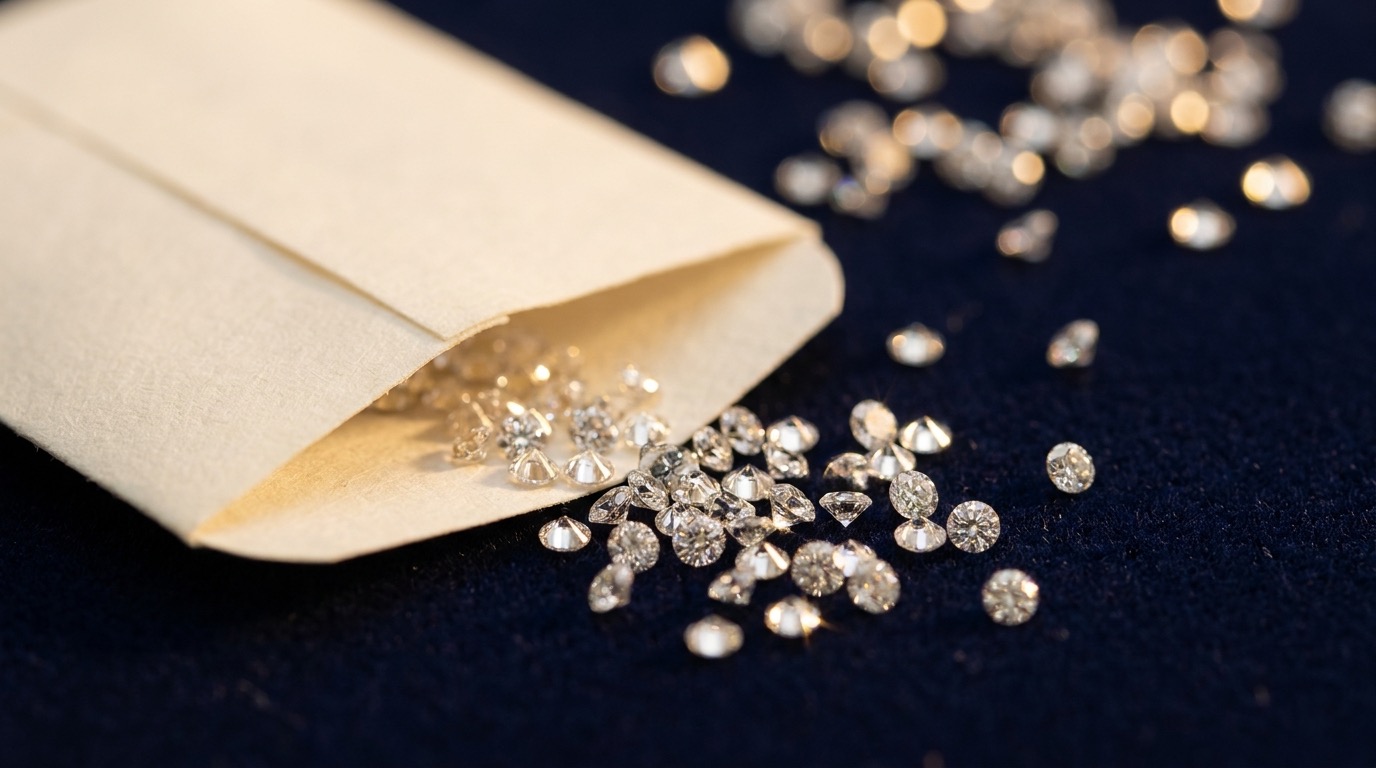
What Are the FTC Jewelry Guides, and Why Do They Apply to Melee?
The Federal Trade Commission's Jewelry Guides (16 CFR Part 23) are the agency's published interpretation of how the general federal ban on unfair or deceptive trade practices (FTC Act Section 5) applies specifically to jewelry marketing. They're administrative guidance rather than a statute passed by Congress, but in practice they function as the working compliance standard for the trade — they tell sellers in advance what the FTC considers deceptive, before any actual enforcement action has to test the question.
The Guides cover diamond, gemstone, and precious metal marketing broadly, and nothing in them carves out an exception for small stones. A misrepresentation about origin is deceptive whether it's on a 2-carat solitaire or a parcel of 1.5mm accent stones — the legal standard doesn't scale down with the stone. That matters for melee specifically because melee has two features that make disclosure easier to get wrong by accident: it's almost never individually certified, and it's usually sold and set as a batch rather than described stone by stone. Both of those realities are covered later in this guide.
Guru Diam has a separate, broader piece on FTC lab-grown diamond disclosure covering listings, signage, and receipts across a jewelry business generally — see FTC Lab-Grown Diamond Disclosure Rules for that fuller compliance checklist. This guide focuses narrowly on the layer that's specific to melee: mixed-origin parcels, invoicing, and point-of-sale disclosure on finished pieces that combine natural and lab-grown stones.
Are Lab-Grown Diamonds Legally "Diamonds," and What Triggers Disclosure?
Yes. In its 2018 revision of the Jewelry Guides, the FTC removed the word "natural" from its definition of "diamond." A diamond is now defined by what it's made of — crystallized carbon with a specific set of optical and physical properties — not by whether it was mined or grown. Lab-grown stones meet that definition, so a seller is legally permitted to call a lab-grown stone a diamond.
That permission comes with a condition attached: whenever the word "diamond" is used to market or describe a lab-grown stone, the seller must clearly disclose that it's lab-grown, and that disclosure has to be clear, conspicuous, and placed close to wherever "diamond" appears — not buried in fine print, a footnote, or a separate page. The reasoning is straightforward: most buyers, absent a stated qualifier, still assume "diamond" means mined. Describing a lab-grown stone as simply "diamond" with no qualifier lets that assumption stand uncorrected, which the FTC treats as a deceptive omission even if nothing false was technically said.
This obligation applies at every carat weight the Guides cover, including melee-sized accent stones. There's no size floor below which the disclosure requirement stops applying — a listing for "diamond melee halo" that's actually lab-grown carries the same disclosure obligation as a listing for a 1-carat lab-grown solitaire.
What Language Actually Satisfies FTC Disclosure for Lab-Grown Melee?
The Guides don't mandate one exact phrase — they require language that clearly conveys non-mined origin to an ordinary buyer. Terms the FTC has specifically identified as acceptable include "laboratory-grown," "laboratory-created," a manufacturer or grower name paired with "-created," or another word or phrase of similarly clear meaning. The FTC has also said "cultured" can work, provided the marketing makes clear the product has essentially the same optical, physical, and chemical properties as a mined diamond — it can't be used as a vague, unexplained euphemism.
What doesn't work is anything a typical buyer wouldn't reasonably decode as "not mined" — an unexplained abbreviation, a small symbol on a tag with no key, or a qualifier that only appears in a specs table nobody reads before checkout. For melee specifically, because it's almost always sold and described as a batch — a halo, a pavé line, a parcel — the same standard attaches to the batch description as a whole: "lab-grown diamond melee" or "laboratory-grown melee accents," not just "diamond accents" with the origin assumed to be covered somewhere else on the page.
| Generally acceptable for lab-grown | Not acceptable for lab-grown |
|---|---|
| "Laboratory-grown diamond" | "Diamond" (unqualified) |
| "Laboratory-created diamond" | "Real diamond" |
| "[Grower/manufacturer name]-created diamond" | "Genuine diamond" |
| "Cultured diamond" (with same-properties context stated) | "Natural diamond" |
| Another clear, spelled-out word or phrase of like meaning | An unexplained abbreviation or symbol only |
This table reflects general, publicly documented FTC guidance and is not exhaustive — confirm exact wording choices with counsel before finalizing your own listings and tags.
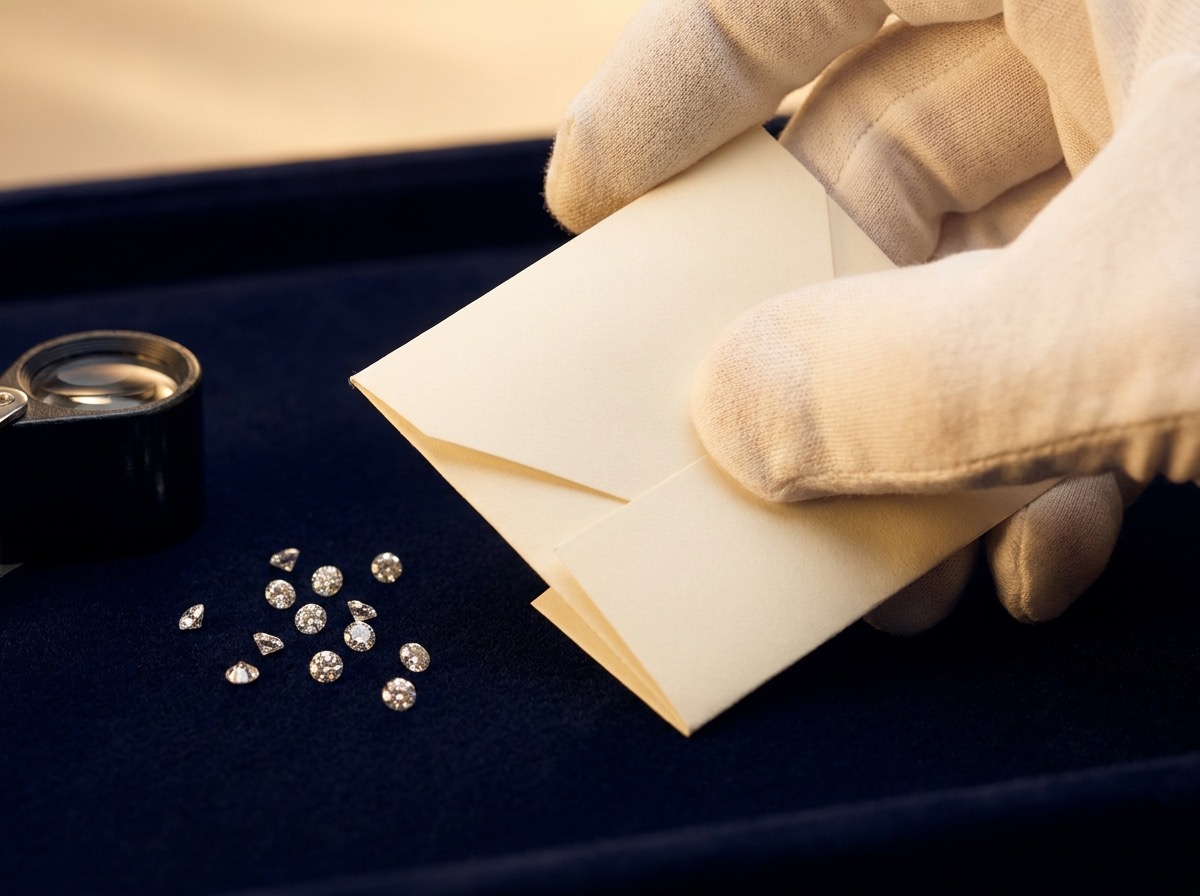
What Claims Are Off-Limits When Marketing Either Origin of Melee?
On the lab-grown side, the FTC has been explicit that words implying mined origin — "real," "genuine," "natural," "precious" — can't be used to describe lab-grown stones, even in a comparative sense ("just as real as a natural diamond" is exactly the kind of phrasing that invites scrutiny). Simulants are a separate, stricter category worth flagging here too: moissanite and cubic zirconia are not diamond at all, lab-grown or otherwise, and calling them "diamond" in any form is a different and more serious violation than an origin-disclosure gap. Melee buyers sometimes conflate "lab-grown" with "simulant" — they aren't the same thing. Lab-grown melee is diamond, chemically and optically; a simulant isn't diamond by any definition the Guides recognize.
On the natural side, no origin qualifier is required, since "diamond" unqualified defaults to mean natural under the current Guides. But natural melee carries its own overclaiming risk: implying a level of grading or certification the stones don't actually carry. As covered in Guru Diam's certified vs. uncertified parcel goods guide, natural melee below roughly 0.20ct isn't individually or parcel-certified anywhere in the trade — certification cost exceeds stone value at that size. Describing uncertified melee as "IGI parcel certified" or similar, when no such certificate exists, is its own form of deceptive advertising under the same general FTC Act framework that governs origin disclosure — a different claim, same underlying principle: describe the goods as they actually are.
Does Natural Melee Need Any Disclosure Language of Its Own?
Not an origin qualifier, no — natural is the default meaning of "diamond" under the current Guides, so a natural melee listing doesn't need a "mined" or "natural-origin" disclaimer to be compliant on that specific point. Where it gets more complicated is at the business level, not the stone level: a shop that carries both natural and lab-grown melee lines — as many do, since the two serve different price points and jobs — creates a disclosure gap the moment a listing or receipt doesn't specify which origin a given piece actually contains. Silence works fine for a shop that only ever sells one origin. It stops working the moment both origins are in inventory and a customer has no way to tell which one they're looking at from an unqualified "diamond" listing.
Guru Diam's own natural melee program covers round shapes only, in the 0.8mm–4.0mm size range, across the EF/GH color and VS/SI clarity grid — with pricing starting around $370–$450 per carat in the smallest sizes and rising with size and grade. See the natural vs. lab-grown melee comparison for the full spec-and-pricing side-by-side; this guide stays focused on the compliance layer.
How Do Mixed-Origin Melee Parcels Complicate Disclosure?
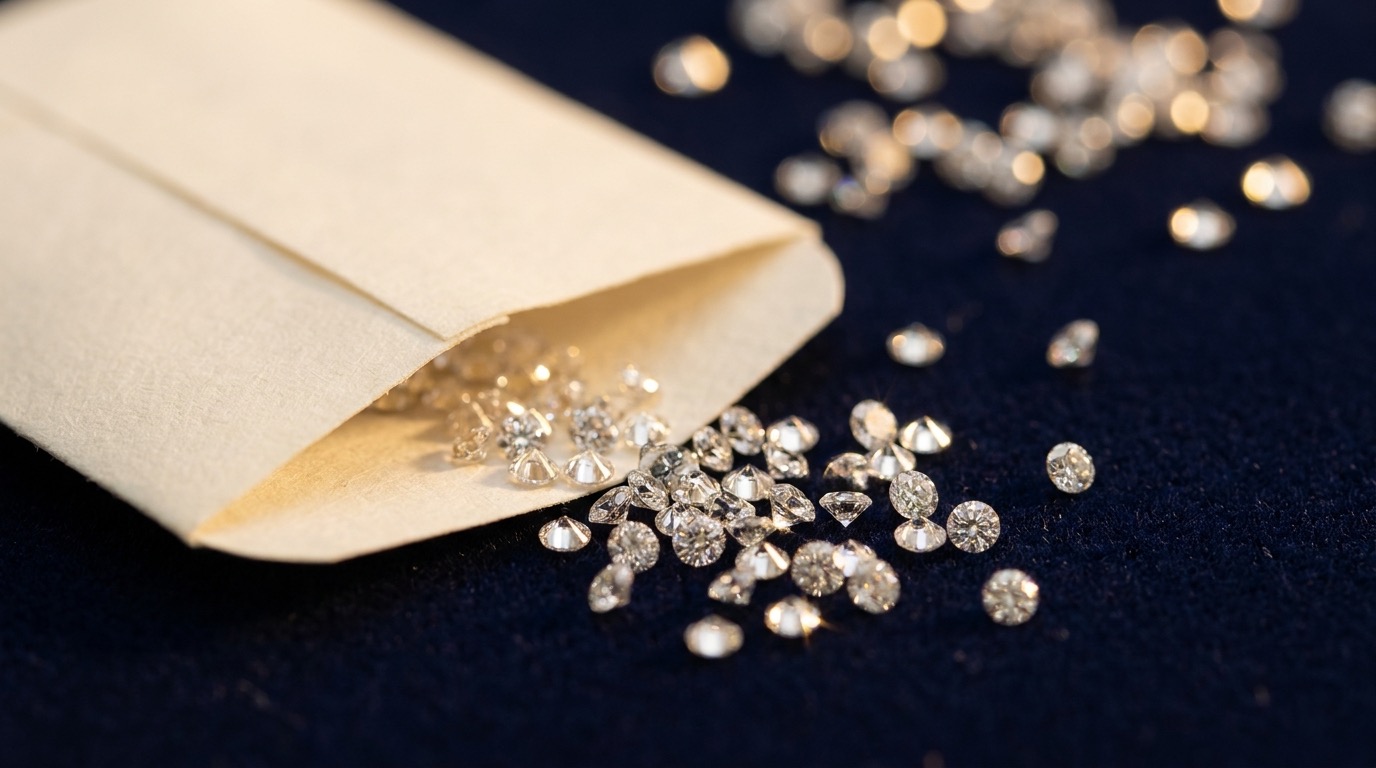
This is where melee creates a real, practical risk that a single solitaire doesn't. Natural and lab-grown diamond are chemically and optically identical — a round natural melee stone and a round lab-grown melee stone look the same to the naked eye, and neither is individually inscribed or certified at these sizes. That means once two parcels of different origin are combined in one tray, one envelope, or one leftover bin without a label, the origin genuinely can't be recovered by eye. Only diamond-type screening equipment can sort them back out.
That creates a downstream disclosure problem that has nothing to do with anyone's intent to deceive: a bench jeweler or sales associate who honestly can't tell which stones came from which parcel can't correctly disclose the finished piece to a customer, no matter how much they want to comply. The failure happens upstream of the sale, in inventory handling, not at the counter.
The practical fix is operational, not legal: keep natural and lab-grown melee in physically separate, clearly labeled containers from the moment they arrive through the moment they're set. Never combine leftover parcels of different origin into one general "melee" bin, even temporarily. If a parcel's origin ever becomes uncertain — a label falls off, a bag gets mixed during a busy production run — treat it as unknown and screen it before using it in any piece that will carry an origin claim, rather than guessing based on which drawer it was closer to. Guru Diam runs natural and lab-grown (CVD) melee as two entirely separate product lines — quoted, packaged, and priced separately — specifically so this mixing risk doesn't start at the sourcing stage.
Diamond-type verification screening devices — the same equipment reputable suppliers use to check incoming parcels for undisclosed lab-grown stones mixed into natural goods — are worth keeping on hand for exactly this scenario. They're not needed for every order, but they're the fastest way to re-establish origin on a parcel that's lost its label, rather than falling back on a guess that turns into an inaccurate disclosure downstream. Treat screening as an audit tool for edge cases, not a substitute for keeping origins separated in the first place.
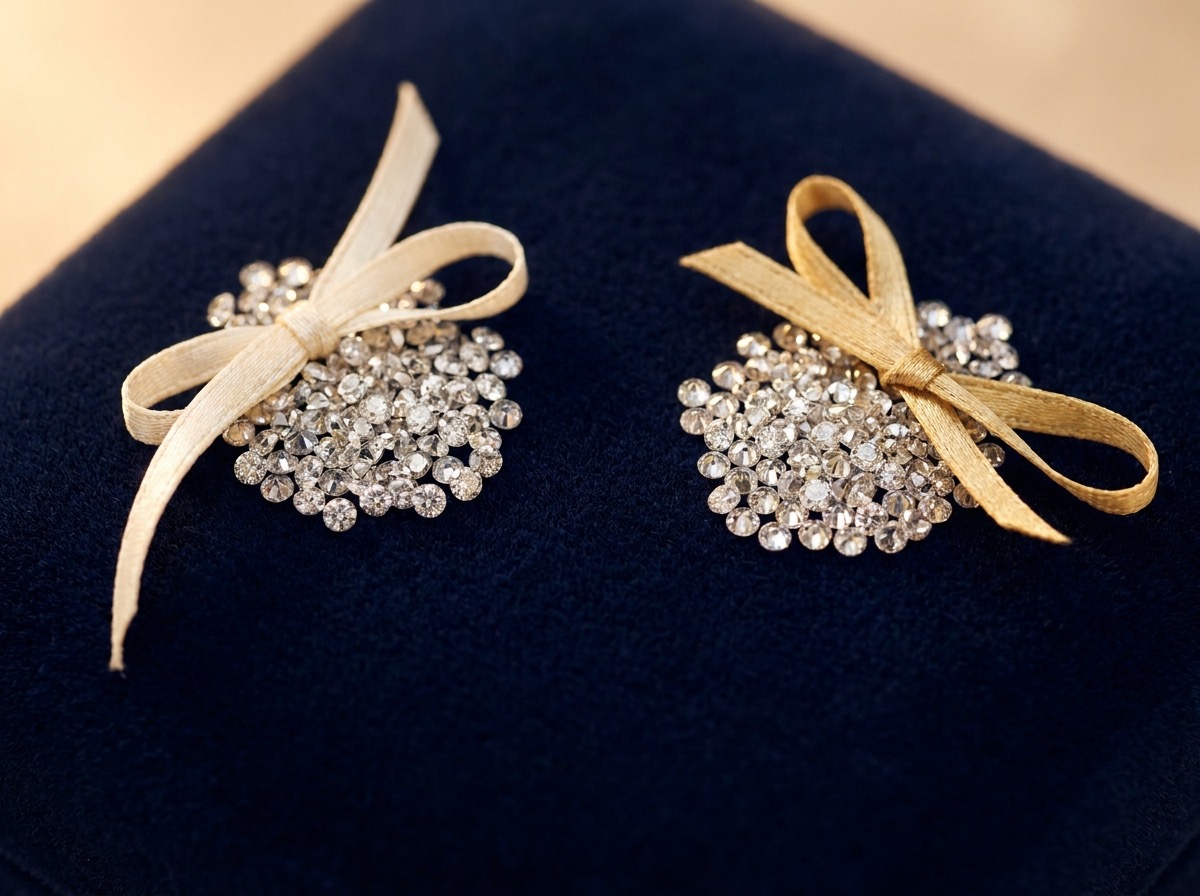
What Should a Melee Invoice or Packing Slip Say About Origin?
A retailer's point-of-sale disclosure is only as accurate as the paper trail it's built on, and melee doesn't come with a fallback the way a certified solitaire does — there's no individual report to check against later if a label gets lost. If a wholesale invoice just reads "melee diamonds, 3.2ct" with no origin field, the retailer has no durable record of what they actually bought once the parcel leaves its original packaging.
A melee invoice or packing slip worth relying on should state, per line item: origin (spelled out — "natural" or "laboratory-grown," not abbreviated into something ambiguous), millimeter size or range, color and clarity grade, and total carat weight. That's the same information a retailer needs anyway to reorder or match a piece later — origin is simply the field that also happens to carry legal weight. This is a reasonable baseline to expect from any melee supplier, natural or lab-grown, because the alternative — buying origin-blind — quietly pushes the compliance risk downstream onto the retailer's own point of sale without anyone deciding to take it on.
Once a parcel is opened and set into production, the invoice becomes the origin record of truth — there's no report on the finished piece to check it against later the way there would be with a certified center stone. Match each invoice against its physical parcel at receiving, file it in a way that ties back to the job it was used on, and keep it. If a customer or an appraiser ever asks how a piece's melee was sourced, the invoice is the answer a retailer needs to already have on hand, not something to reconstruct from memory.
How Should a Retailer Disclose Origin at Point of Sale for a Finished Piece?
Many finished pieces combine a center stone with melee accents — a halo, pavé shoulders, a channel — and the center and the accents don't have to share an origin. A natural center stone with a lab-grown melee halo, or the reverse, is an increasingly common combination as lab-grown becomes a cost-management tool specifically for accent stones rather than centers. Neither combination is a problem on its own; the problem is describing the finished piece with one blanket label that's only accurate for part of it.
The Guides' clarity-and-proximity standard applies component by component, not once per piece. A single tag or receipt line reading "diamond halo ring" is only accurate if every stone in the piece shares one origin. For a mixed piece, the disclosure needs to separate the components explicitly — for example, "natural diamond center stone; laboratory-grown diamond melee halo" — rather than one ambiguous line that a customer would reasonably read as covering the whole ring. Guru Diam's broader FTC disclosure checklist covers listing, signage, and receipt practices for finished pieces generally; the piece-specific wrinkle melee adds is that the accent stones are the part most likely to get left off that label, since they're the part that's smallest and least individually documented.
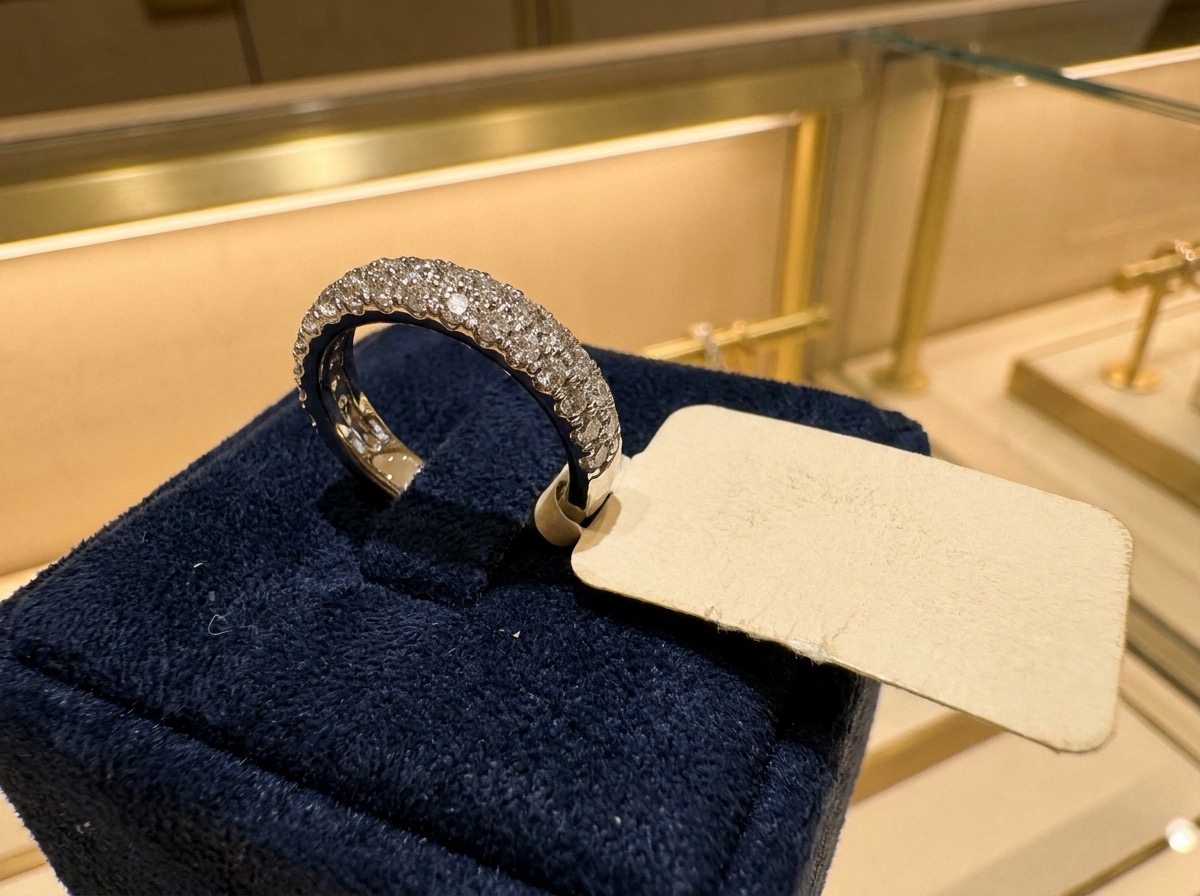
Does Melee Need to Be Certified to Meet Disclosure Requirements?
No — certification and disclosure are two different things that happen to both involve paperwork, which is why they get confused. Certification is a voluntary trade practice: a lab like IGI or GIA grades and papers an individual stone, mainly for larger, higher-value goods where the cost of grading is proportional to the stone's worth. Melee below roughly 0.20ct isn't individually or parcel-certified anywhere in the trade, natural or lab-grown — that's normal industry economics, not a compliance shortcut, and it's true across suppliers, not specific to any one of them.
Disclosure is a legal requirement about how origin gets represented to a buyer, and it applies regardless of whether a certificate exists. An uncertified parcel of melee still has one real, factual origin — natural or lab-grown — and that origin still has to be disclosed accurately wherever the stones are described or sold. The absence of a grading report doesn't create an exemption from stating what the stones actually are; it just means there's no third-party document to point to, which makes accurate internal recordkeeping (the invoice and packing-slip practice above) more important, not less.
What Happens If a Retailer Gets Melee Disclosure Wrong?
At the federal level, the FTC has sent warning letters to sellers over inadequate lab-grown disclosure in the past, and inadequate disclosure can be pursued as an unfair or deceptive trade practice under FTC Act Section 5. Beyond the federal Guides, many states layer their own consumer protection statutes on top of that framework, so a disclosure gap can create exposure at more than one level depending on where a sale happens.
There's a practical layer below the legal one, too: a customer who later learns — from an appraisal, an insurance evaluation, or simply asking — that their "diamond" halo was lab-grown and nobody told them is a return, a chargeback, and a reputational problem whether or not it ever reaches a regulator. None of this is a reason to avoid stocking either origin of melee; both are legitimate, widely sold products. It's a reason to make sure the paperwork and the point-of-sale language actually match whichever origin is in the piece a customer is buying.
The lowest-effort habit that prevents most of this: never let a melee invoice, a production ticket, or a finished-piece tag go without an origin field filled in, even when it feels redundant on a shop that mostly sells one origin. The cost of writing "natural" or "laboratory-grown" on a line every time is trivial. The cost of reconstructing that answer after a piece has already been sold, set, and worn is not.
How Does Guru Diam Support Disclosure-Ready Melee Sourcing?
Guru Diam runs natural and lab-grown (CVD) melee as two clearly separate product lines — separately sourced, separately quoted, and separately packaged, never blended into one parcel or one invoice line. Natural melee is documented against its own real spec: round shapes only, currently priced from 0.8mm to 4.0mm, across the EF/GH color and VS/SI clarity grid, sold as sieve/size-graded parcel goods rather than individually certified. That's stated plainly rather than rounded up, including the genuine gaps in it — no EF pricing below 1.70mm, no coverage yet above 4.0mm — because a supplier that states its real boundaries is easier for a retailer to build accurate disclosure language around than one that implies broader coverage than what actually ships.
For a quote on natural or lab-grown melee, or to confirm which origin fits a specific job before you order, reach Guru Diam on WhatsApp or through Contact.
Frequently Asked Questions
Is this article legal advice?
No. This is a general, educational overview of publicly available FTC guidance on diamond disclosure as it applies to melee. It isn't a substitute for legal advice — confirm your specific listing language, tags, and receipt practices with your own attorney before relying on them.
What's the actual difference between certification and disclosure for melee?
Certification is a voluntary trade practice — a lab grades and papers an individual stone, mainly done for larger goods where the cost is proportional to value. Disclosure is a legal requirement about how origin is represented to a buyer, and it applies whether or not a certificate exists. Melee is almost never individually certified on either origin, but it still has to be disclosed accurately.
What words can I use to describe lab-grown melee?
FTC guidance points to clear, spelled-out qualifiers such as "laboratory-grown," "laboratory-created," a manufacturer name paired with "-created," or "cultured" when paired with a clear same-properties statement. Vague symbols or unexplained abbreviations generally don't satisfy the clear-and-conspicuous standard. Confirm exact wording with counsel.
Do I need to disclose origin on uncertified melee?
Yes. Disclosure is independent of certification — an uncertified parcel still has a real, factual origin, and that origin still needs to be stated accurately wherever the stones are marketed or sold. Lack of a grading report doesn't remove the disclosure obligation.
How should I handle a finished piece that mixes natural and lab-grown melee?
Disclose by component, not by piece. A single blanket label like "diamond ring" is only accurate if every stone shares one origin — a mixed piece needs its center stone and its melee accents identified separately, since the two can carry different origins.
Where can I get official guidance instead of a trade blog's summary?
Start with the FTC's own published Jewelry Guides at 16 CFR Part 23 and the FTC's business guidance resources on advertising diamonds, then confirm your specific practices with your own attorney — this article and others like it are useful background, not a substitute for either source.