Natural vs Lab-Grown Melee: Which Should You Stock in 2026?
There's no universal right answer — the correct choice depends on your customer base, your price points, whether you're matching an existing center stone, and your margin targets. Most established jewelers end up stocking both lines rather than picking one: natural melee for bridal and heirloom-adjacent work, lab-grown for volume and budget-driven pieces. This guide walks through the actual factors that should drive your decision, not a sales pitch for either side.
What Actually Separates Natural From Lab-Grown Melee?
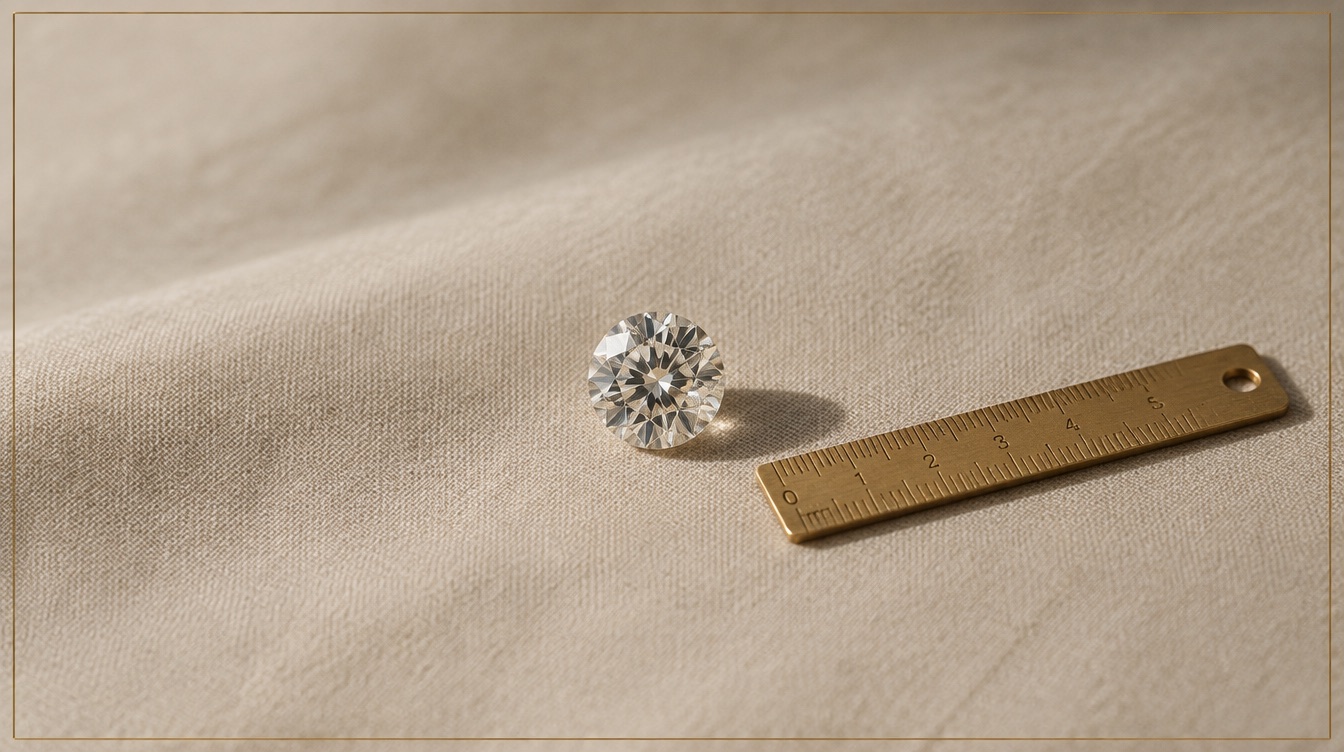
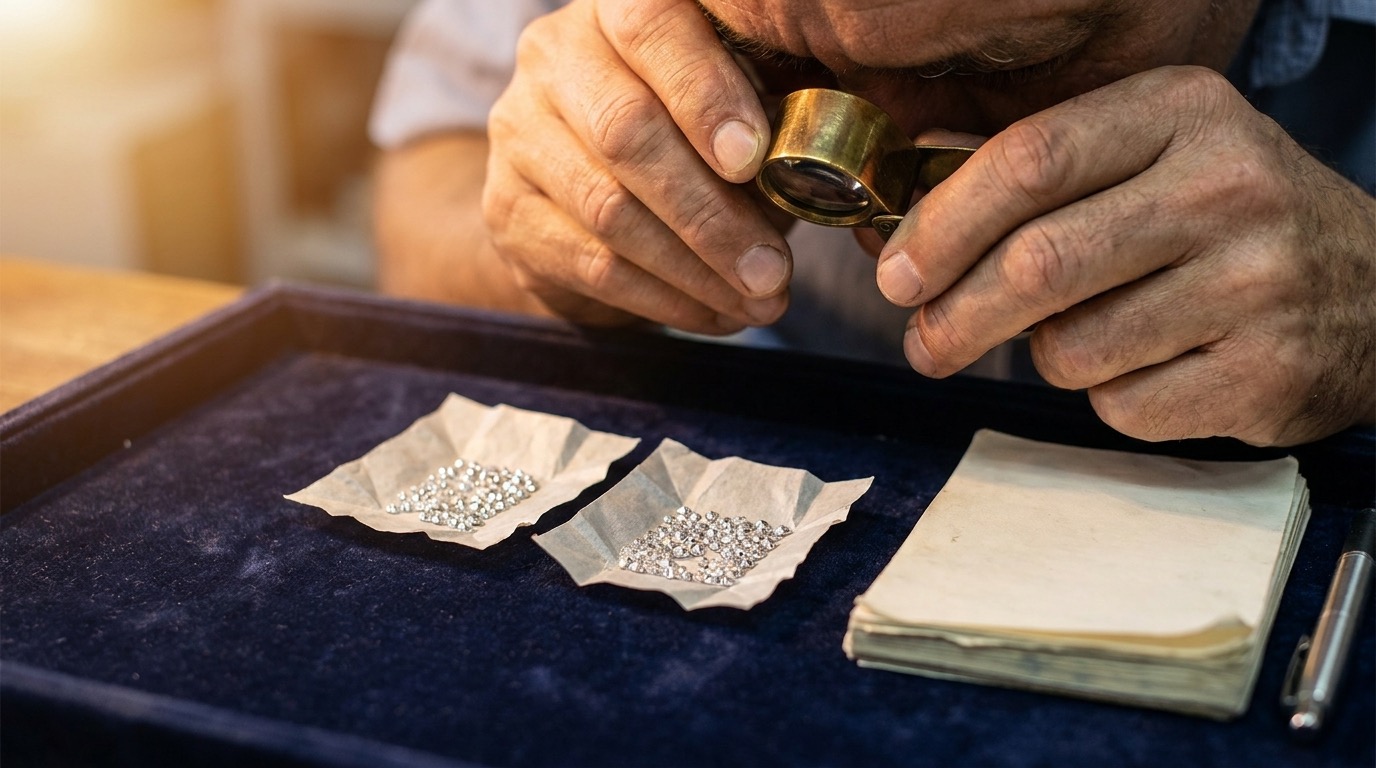
Chemically and optically, nothing. Natural and lab-grown diamonds are the same material — carbon crystallized into the same structure, cut to the same proportions, reading identically to the eye and to standard jewelry-store testing tools. The only real difference is origin: natural melee is mined from the earth; lab-grown melee is grown in a laboratory using CVD (chemical vapor deposition) technology. That single fact is what drives every downstream difference in sourcing, pricing, disclosure, and — for some customers — perceived value.
Guru Diam runs these as two separate product lines with two separate specs, and this post keeps them separate throughout. Natural melee currently covers round stones from 0.8mm to 4.0mm, in a two-color/two-clarity grid — EF (E–F) and GH (G–H) color, each in VS and SI clarity. Guru Diam's lab-grown (CVD) melee line covers a wider size range, up to 9mm, at a tighter default quality floor (DEF+ color, VS+ clarity). If your job calls for melee larger than 4mm, that alone answers part of the question — natural doesn't cover that range yet, lab-grown does.
For the full side-by-side on sourcing, appearance, and specs, see our full natural vs. lab-grown melee comparison. This post assumes you already understand the basic difference and is built to help you decide which one (or both) belongs in your case.
Does Your Customer Base Expect Natural or Lab-Grown Melee?
Start here, because it settles more of the decision than any spec sheet. Your existing customer base has expectations baked in, whether or not they've articulated them.
A bridal-heavy, heirloom-oriented, or older-demographic clientele generally expects natural by default — for a lot of buyers, "diamond" still means mined, and a piece sold as diamond without qualification carries that assumption. If your floor traffic skews toward engagement rings, anniversary pieces, and estate-adjacent work, natural melee is very likely the safer default for anything positioned as a traditional diamond purchase.
A younger, value-conscious, or fashion-forward customer base is often more open to lab-grown — sometimes actively prefers it, for budget or personal reasons. If a meaningful share of your business is fashion jewelry, statement pieces, or a lower average price point where stretching carat weight or overall sparkle matters more than origin, lab-grown melee opens real flexibility.
Neither instinct is universal, and plenty of shops sit in between. The honest move is to look at what you're actually selling today — not what you assume your customers want — before committing inventory dollars to one line over the other.
Are You Matching an Existing Center Stone?
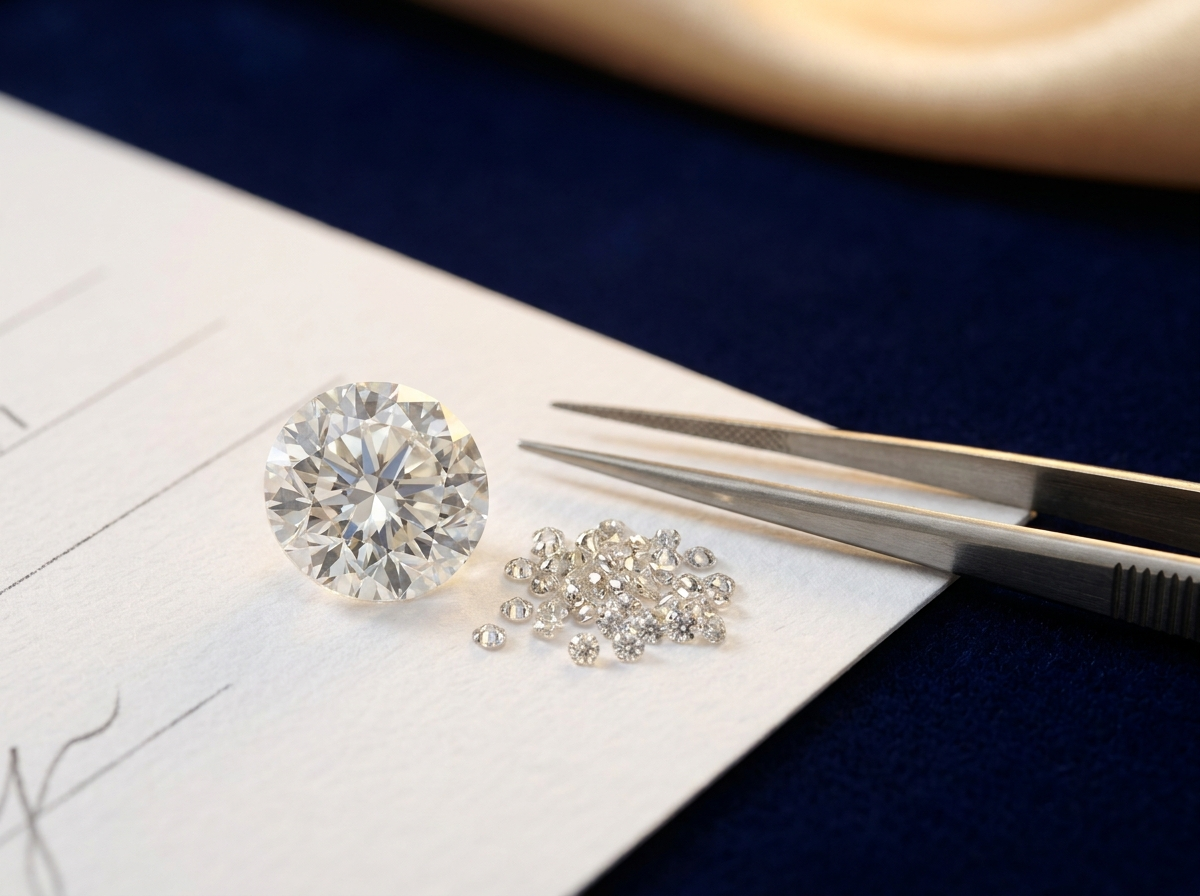
This is the factor that overrides customer preference and price point, because it isn't really a choice — it's a matching problem. If you're setting melee around, alongside, or in the same piece as a natural center stone, using lab-grown melee on the same piece creates a mixed-origin item that has to be disclosed as such. Some shops do this deliberately (a lab-grown halo around a natural center stone to stretch budget, disclosed plainly), but it's a decision to make on purpose, not a default.
The cleaner path for most production work: match origin to origin. Natural center stone, natural melee. Lab-grown center stone, lab-grown melee. This keeps the disclosure simple (one origin, stated once, for the whole piece) and avoids the customer-facing conversation about why a "diamond ring" contains two different kinds of diamond.
If you're doing repair or restock work — replacing a lost pavé stone in an existing natural piece, for example — origin-matching isn't optional at all. A lab-grown replacement stone in an otherwise-natural piece changes what that piece actually is, and a customer (or a future appraiser) has every reason to expect the repair matches what was there before.
Custom and bridal work built from scratch is where you have real latitude — you're choosing both the center stone and the melee origin together, so this is where customer conversation and price point drive the call more than any matching constraint.
How Do Margins Compare Between Natural and Lab-Grown Melee?
Directionally, lab-grown melee is priced meaningfully lower per carat than natural melee across the trade — that's consistent and well known, and it's the main reason lab-grown exists as a category at all. Guru Diam's natural melee pricing starts around $370–450/ct in the smallest sizes and rises with size and grade; for the full table, see our natural melee buying guide. Lab-grown melee is quoted separately at its own rate — we're not going to put a specific per-carat number on lab-grown pricing here, because exact figures move with the market and belong on the lab-grown line's own pricing page, not repeated as a fixed number in a comparison post.
What matters for your margin planning isn't the raw cost per carat in isolation — it's what you can charge for the finished piece. A lower wholesale cost on lab-grown melee doesn't automatically mean a higher margin if your customer also expects a lower retail price on lab-grown pieces, which is the common pattern. Natural melee costs more per carat but typically supports a retail price that customers accept without much pushback, especially in bridal.
The practical way to think about it: model both scenarios against your actual retail pricing, not just your cost. A shop that prices lab-grown pieces at a steep discount to match customer price expectations may find the margin percentage is similar to natural, even though the dollar cost per carat is lower on both sides of the ledger. Run the numbers on your own price list before assuming either line is the more profitable one — it depends entirely on how you're pricing the finished piece, not just what the melee costs you.
What Are Your Disclosure Obligations When You Stock Both?
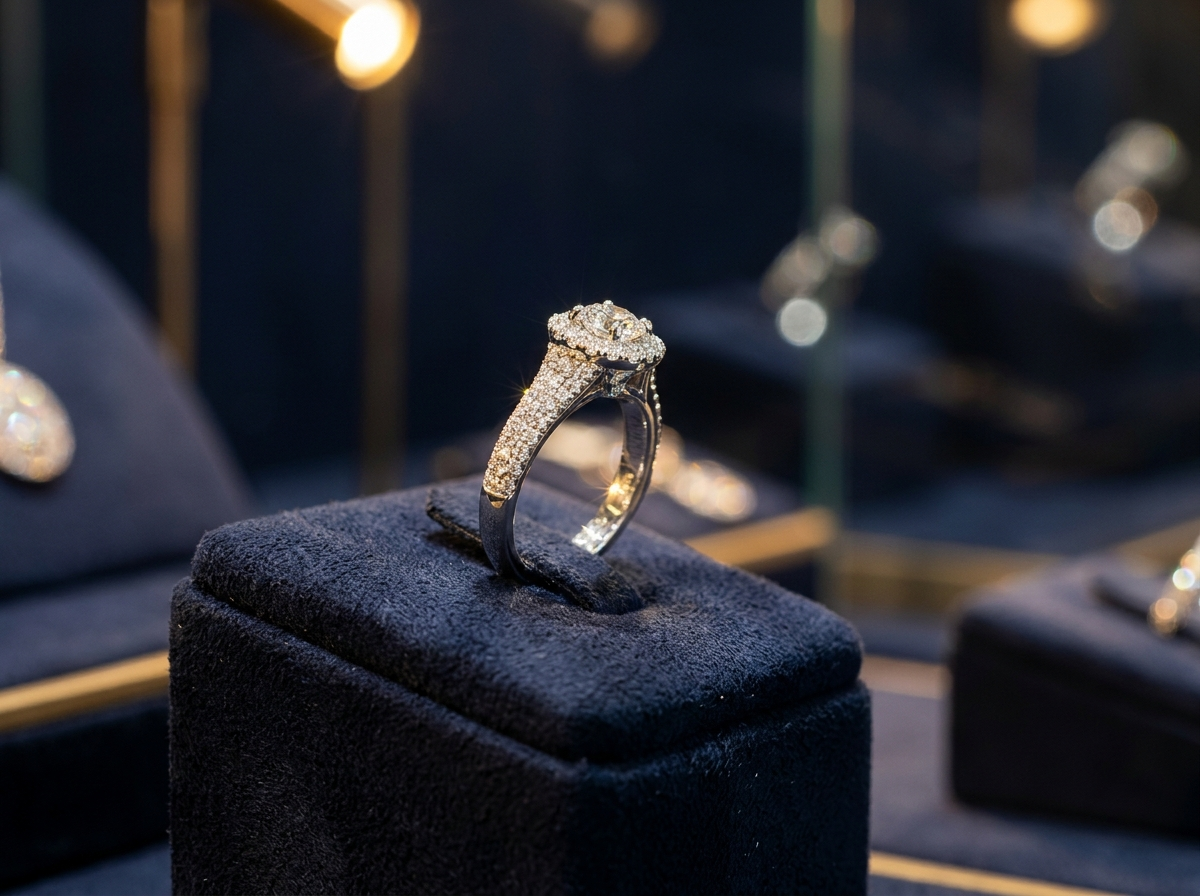
If you stock and sell both natural and lab-grown melee, disclosure isn't a nice-to-have — it's a requirement. In the US, jewelers are expected to state plainly whether a diamond is natural or laboratory-grown; it can't be implied, left ambiguous, or assumed from context. This applies at the point of sale, on invoices, and on any receipt or appraisal document tied to the piece.
Stocking both lines raises the operational stakes on this, because the risk of a mix-up goes up the moment two visually identical products sit in the same case or the same bench tray. A parcel of natural GH VS melee and a parcel of lab-grown melee at a similar grade can look identical to the naked eye — there's no way to eyeball the difference. That means your disclosure obligation isn't just a sales-floor script, it's a records and labeling problem that starts the moment stock comes in the door.
For the deeper compliance walkthrough — what disclosure language should look like, how it applies to mixed-origin pieces, and what documentation to keep — see our natural vs. lab-grown melee disclosure requirements guide. The short version for this decision framework: if you're not confident you can keep the two lines cleanly separated and correctly labeled through intake, bench work, and sale, that's a real cost of stocking both — not just a compliance footnote.
Is "Carry Both" a Legitimate Answer?
Yes — and for most established jewelers, it's the realistic answer rather than a hedge. Very few shops sell exclusively to one customer segment. A shop that only stocks natural melee turns away every budget-conscious or lab-grown-preferring customer who walks in; a shop that only stocks lab-grown loses the bridal and heirloom-minded customer who wants a natural stone and won't substitute.
Carrying both lets you match the product to the customer standing in front of you instead of steering every customer toward whichever single line you happen to stock. It also gives you flexibility on custom work — a natural center stone with natural melee for one client, a lab-grown build-your-own piece at a lower price point for the next, without turning either one away.
The tradeoff is operational, not financial: two lines means two sets of intake, storage, and labeling discipline, and a real disclosure obligation to keep them straight (see above). If you don't have the bench and floor processes to keep natural and lab-grown cleanly separated, adding a second line before you've solved that is where mistakes happen — not because carrying both is a bad idea, but because the discipline has to come first.
For most shops doing meaningful bridal and custom volume, the answer isn't "which one" — it's "both, with clean separation." Smaller or highly specialized shops (a repair-only bench, or a shop that's built its entire brand around natural stones) may have good reasons to stay single-line, and that's a legitimate call too.
How Does Verification Factor Into the Decision?
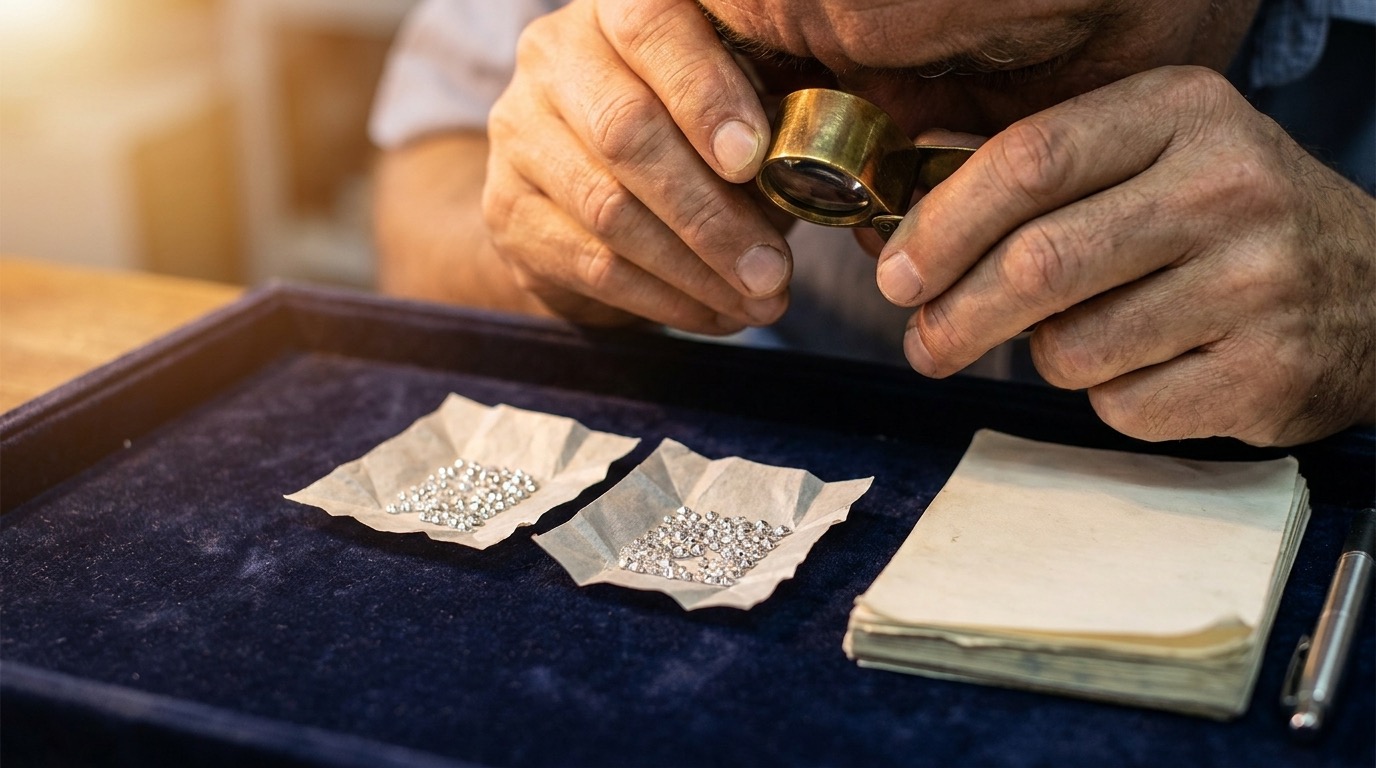
Because natural and lab-grown diamonds are visually indistinguishable to the naked eye, and even to a standard jeweler's loupe, verification isn't optional once you're stocking natural melee — you need confidence that what came in as natural actually is natural, not a mislabeled or mixed lab-grown parcel.
This matters more for natural stock than lab-grown, for a simple reason: lab-grown melee is priced lower, so an accidental swap in that direction costs you margin but doesn't create a fraud exposure with your customer. A lab-grown stone mixed into a natural parcel, sold and disclosed as natural, is a real problem — for your customer, for any appraisal down the line, and for your reputation if it's ever caught.
Verification technology exists specifically because this mix-up isn't detectable by eye — diamond-type screening instruments are the standard trade tool for confirming origin on incoming melee parcels. If you're weighing natural against lab-grown as a stocking decision, factor in whether your intake process (yours or your supplier's) includes that screening step. A supplier who can't speak to how incoming natural parcels are verified is asking you to take origin on faith in a category where faith isn't a control.
This is also the practical argument against sourcing natural melee informally or off-list — a screened, consistently-sourced supply line is worth more than a slightly better price from a source that can't answer how they verify origin.
What About Resale and Perceived Value?
This factor matters more to your bridal and investment-minded customers than to your fashion or volume buyers, so weight it accordingly against your actual customer base rather than treating it as a universal rule.
Natural diamonds carry a longer track record in the secondary and resale market — appraisers, pawn and resale channels, and estate buyers have decades of established practice around natural stones. Lab-grown diamonds are newer to that market, and secondary pricing on lab-grown material has generally tracked closer to its lower wholesale cost than natural has, since lab-grown supply isn't scarce in the way mined supply is.
For melee specifically, this matters less in isolation — accent stones aren't usually appraised or resold as a standalone line item — but it matters for the piece as a whole. A natural center stone with natural melee inherits natural's resale positioning; a lab-grown piece inherits lab-grown's. If a customer is asking about long-term or resale value at the counter, that's a conversation about the whole piece's origin, and melee should match whatever answer you're giving about the center stone.
We go deeper on this specific question — including how retail markup practices differ between the two lines — in our resale and retail markup comparison post.
How Should You Segment Inventory If You Stock Both Lines?

If you decide to carry both — the common outcome for shops with a broad customer base — the operational side deserves real planning, not an afterthought once the second line is already on order.
A few practices worth building in from day one: keep natural and lab-grown parcels in physically separate, clearly labeled storage — never in the same tray or envelope, even temporarily during bench work. Log origin on every intake record and every job ticket that draws from either line, so a piece's origin is traceable back to the parcel it came from, not just remembered by whoever set it. Train bench staff to treat origin labeling as part of the job, not a sales-floor-only concern — a mislabeled tray at intake becomes a disclosure problem at sale.
If your volume on one line is low, consider whether it's worth stocking as standing inventory at all versus sourcing it order-by-order for the specific jobs that call for it. There's no requirement to carry deep standing stock in both lines just because you sell both — many shops keep natural as core standing inventory and source lab-grown per-order, or vice versa, depending on which line moves more consistently in their case.
A Practical Decision Checklist: Natural, Lab-Grown, or Both
Work through these questions against your own business, in order — most shops land on an answer by question four or five:
- What does your existing customer base actually buy today? Look at your last year of sales, not assumptions. If it's overwhelmingly bridal at a traditional price point, natural is the safer default line to stock deep.
- Are you matching center stones already in the case or in repair? If yes, that answers the melee origin for that work regardless of preference — match what's already there.
- What size does the job call for? Above 4mm, natural melee isn't currently available from Guru Diam — lab-grown covers that range. Below 4mm, both are on the table.
- Can you model a margin that works at the retail price your customers will actually accept? Run natural and lab-grown pricing against your real price points, not assumed markup percentages.
- Do you have (or can you build) clean intake and labeling processes? If you're adding a second line, this has to be solved before stock arrives, not after a mix-up.
- Can you meet your disclosure obligations confidently on both lines? If the answer is no for one line, that's a real reason to stay single-line until your processes catch up.
- Is there a genuine gap in what you currently offer? If customers are asking for an option you don't have — a lower price point, or a natural option you don't currently stock — that's a concrete signal, not a guess.
If most of your answers point toward one line, stock that one deep and don't force the other. If your answers split — a bridal-heavy floor that's also getting real lab-grown requests, for instance — carrying both with clean separation is the legitimate answer, not a hedge.
How to Get Started Stocking Natural Melee at Guru Diam
If this framework points you toward natural melee — for bridal work, for matching existing natural center stones, or simply to round out what you offer — Guru Diam's natural melee program covers round stones from 0.8mm to 4.0mm across the EF/GH, VS/SI grid, quoted per carat against your exact spec. It's a quote-first process: give us the millimeter size, grade, and total carat weight your job needs, and you'll get a confirmed price against real available stock.
Reach out over WhatsApp or through Contact to start a quote, ask about current lab-grown melee availability for comparison, or talk through which line fits a specific job. Guru Diam operates trade desks in both New York and Los Angeles and can speak to sourcing, verification, and pricing on either line.
Frequently Asked Questions
Is lab-grown melee always cheaper than natural melee?
Directionally, yes — lab-grown melee is consistently priced lower per carat than natural melee across the trade, which is the primary reason it exists as a category. The exact gap moves with market conditions and isn't a fixed percentage; get a current quote on both if you're comparing cost directly for a specific job.
Can I mix natural and lab-grown melee on the same piece?
You can, but it has to be disclosed as a mixed-origin piece, and it's a deliberate choice rather than a default. Most production work is cleaner when melee origin matches the center stone's origin — natural with natural, lab-grown with lab-grown — so the whole piece has one clear, disclosed origin.
Do I have to disclose whether melee is natural or lab-grown?
Yes. Disclosure of diamond origin — natural or laboratory-grown — is a requirement in the US, not an optional marketing choice, and it applies to melee the same as it applies to a center stone.
Is natural melee a better investment than lab-grown melee?
Natural diamonds have a longer, more established track record in resale and secondary markets; lab-grown is newer to that market and has generally tracked closer to its lower wholesale cost. For melee specifically, resale usually follows the piece's overall origin story rather than being assessed stone by stone.
What sizes are available in natural melee versus lab-grown melee?
Guru Diam's natural melee currently covers 0.8mm to 4.0mm in round shapes. Lab-grown melee covers a wider range, up to 9mm, at a tighter default quality floor. If a job needs melee larger than 4mm, lab-grown is the current option.
Can I stock both natural and lab-grown melee at the same shop?
Yes, and it's the common setup for jewelers serving a broad customer base. It requires clean physical separation, labeling, and intake records to keep the two lines straight and to meet disclosure obligations reliably — build those processes before adding the second line, not after.