Natural Melee for Bridal & Fine Jewelry Lines: A Sourcing Primer
Building a natural melee program for a bridal or fine jewelry line means more than sourcing stones for one piece — it means locking a consistent grade standard across your whole collection, mapping specific EF/GH VS/SI grades to your price tiers, and planning ahead for bridal season's demand spikes, so every ring, band, and bracelet in the line reads as one coherent quality standard, not a patchwork of one-off orders.
What Does It Mean to Build a Natural Melee Program Across a Bridal Line?
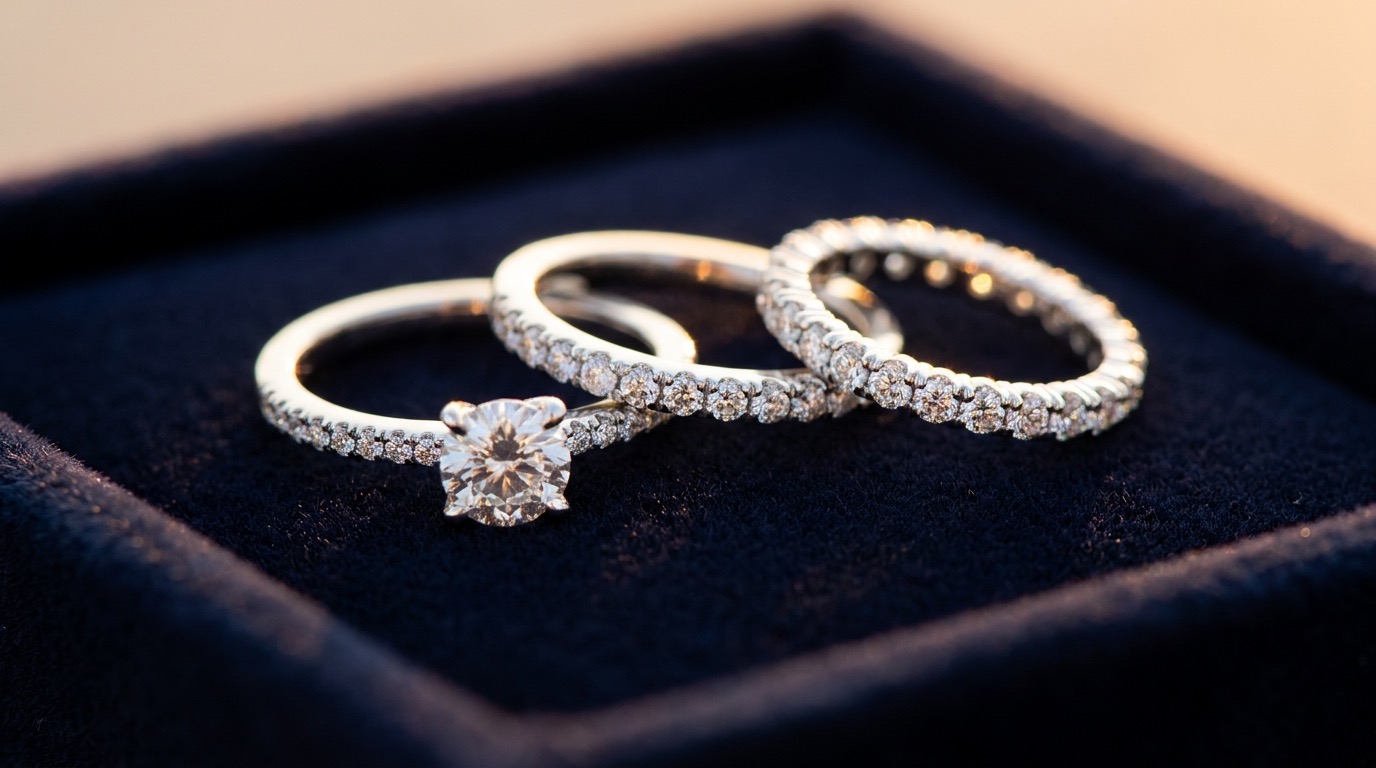
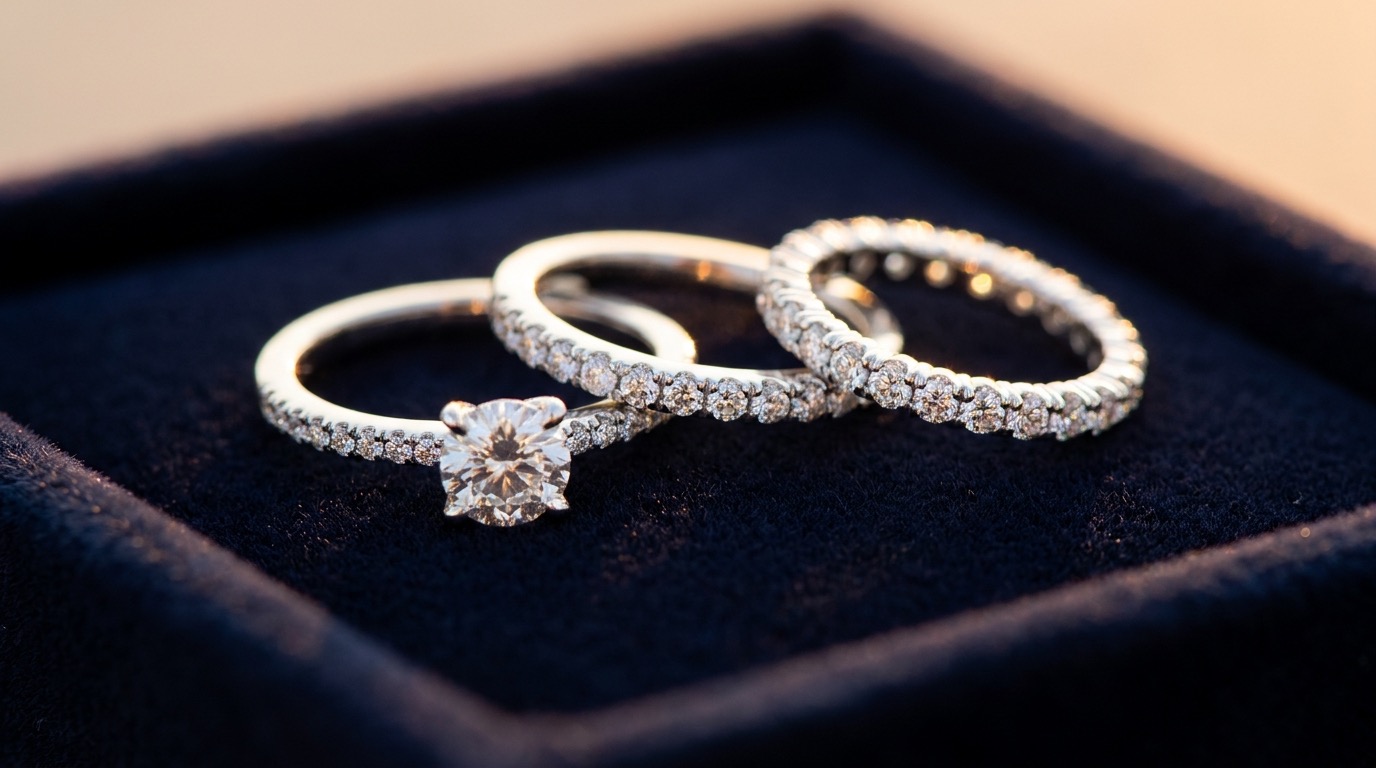
A single custom job needs one parcel matched to one spec. A bridal or fine jewelry line needs the opposite problem solved: the same accent-stone standard repeated correctly across a halo ring, a pavé engagement band, an eternity band, a matching wedding band, a pair of stud earrings, and maybe a tennis bracelet in the same collection — all sold side by side, sometimes to the same customer. That's a program, not an order.
The difference matters because the failure mode is different too. A single job with an off-spec parcel is a bad order. A program with inconsistent grade standards across SKUs is a structural problem: it shows up on the sales floor when a customer compares two pieces, it shows up in margin when nobody tracked which tier used which grade, and it shows up at reorder time when nobody remembers what was ordered the first time.
This guide is written for the retailer or line owner thinking at that level — across a collection, across a season, across reorders — not the size and grade mechanics of any one job type. For those, see our guides to natural melee for halo settings, eternity bands, and tennis bracelets, and our complete buying guide for the full size, grade, and pricing reference.
Why Does Consistent Grade Standards Matter Across a Collection?
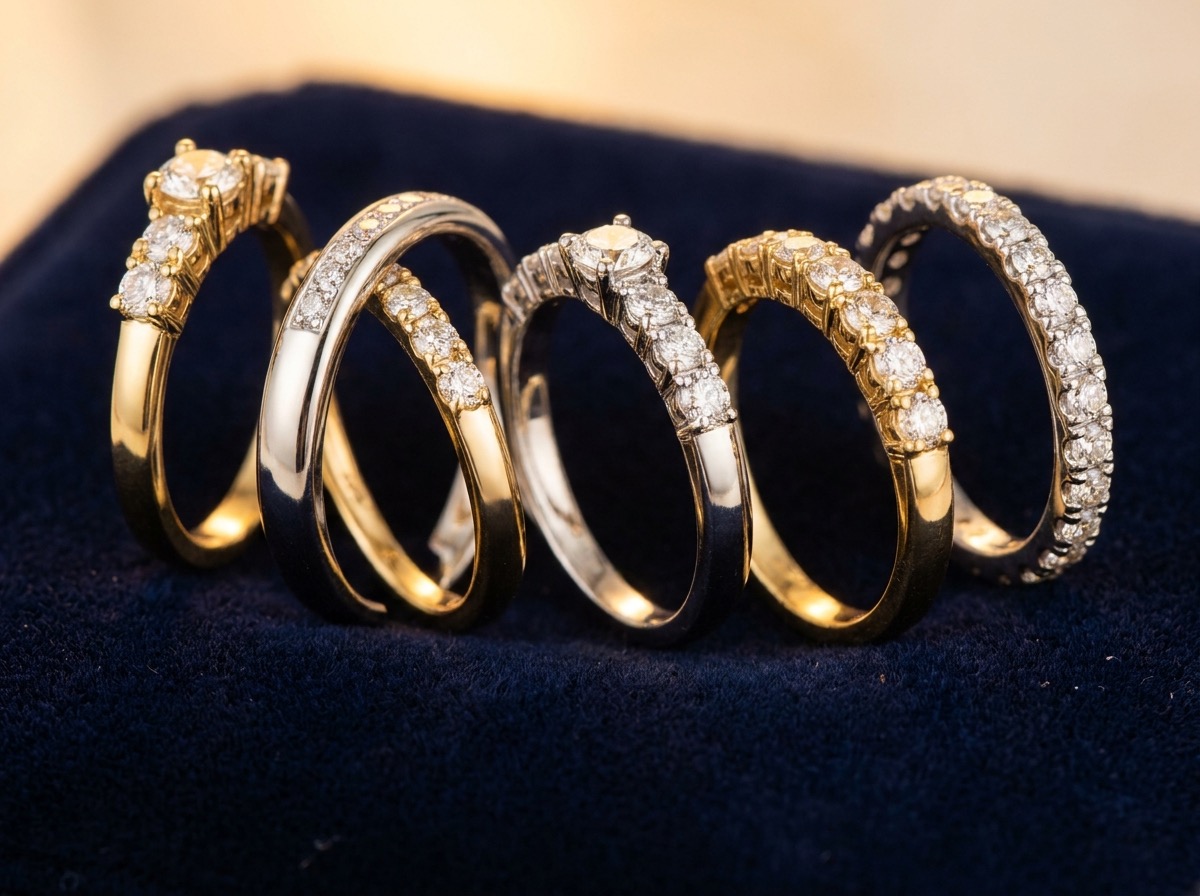
Every natural melee parcel is sorted comparatively against a master stone, so a single parcel is internally consistent — that's baseline trade practice, covered in full in our grading and matching guide. Program-level consistency is a different, higher bar: it means the halo ring you sell in March and the matching wedding band you sell to the same customer in October were built to the same grade, even though they came from two different parcels, ordered months apart.
Customers notice inconsistency more in a bridal line than almost anywhere else in fine jewelry, because bridal pieces get compared directly — an engagement ring next to its matching band, a set worn together every day. If the halo reads noticeably whiter or cleaner than the band beside it, that's a quality signal that undermines trust in the whole line, even if both pieces are technically within spec for what they were individually ordered as.
The practical fix is discipline, not more grading: pick a small number of standard grades for your line — most collections don't need all four cells of the EF/GH VS/SI grid — and hold every SKU in a given tier to that same grade, order after order. Fewer standard grades also simplifies sourcing, inventory, and quality control on your end; a line running six different grade combinations across its SKUs is a line that's hard to forecast, quote, and QC consistently.
How Do You Map Melee Grades to Price-Point Tiers?
The EF/GH VS/SI grid maps cleanly onto a typical three-tier bridal structure, and thinking in tiers — rather than picking a grade SKU by SKU — is what keeps a growing line's sourcing and margin math manageable.
Entry tier: GH SI. The most cost-efficient combination on the grid, and still reads eye-clean at normal viewing distance for the great majority of stones at melee sizes — inclusions large enough to see with the naked eye in a sub-4mm stone are the exception, not the rule. This is the natural fit for an entry-price bridal line or the accent stones on fashion-forward pieces where the melee supports the design rather than carrying it.
Core/mid tier: GH VS or EF SI. Most bridal collections' volume sits here — a step up in either color or clarity from entry, without paying for both premiums at once. Which of the two you choose depends on whether your line leans toward whiter stones (EF SI) or cleaner stones (GH VS) as the more visible upgrade for your customer.
Premium/heirloom tier: EF VS. The whitest, cleanest combination on the grid — the grade to reach for on pieces built around a larger natural center stone, where accent melee sitting close to a colorless center stone will visibly read against it if the color gap is too wide.
One planning constraint to build into your tier map from day one: EF color has no pricing below 1.70mm — no vendor in the market has ever quoted a genuine E-F color at that size. That means a premium-tier promise of "EF across every piece in the line" breaks down the moment your smallest pavé accents (the sub-1.20mm and 1.20–1.70mm sizes common in fine pavé work) enter the picture — those sizes are GH-only, regardless of tier. Plan your premium tier's smallest-size SKUs around that gap rather than discovering it at quote time.
How Should You Plan for Seasonal Bridal Demand?
Bridal demand isn't flat across the year. Proposal volume peaks around the winter holidays, driving engagement-ring and halo demand; wedding-band and anniversary-band purchasing tends to build again heading into spring and early summer. A retailer running a bridal line is planning inventory against two demand curves, not one steady average.
Because melee is quote-first parcel goods rather than a pre-boxed shelf SKU you can pull on demand, the smart move is building your melee orders into that calendar ahead of the curve — placing your peak-season order with enough lead time before the demand spike hits, rather than reacting to a stockout on your highest-velocity SKUs mid-season. Halo and eternity styles are typically the pieces that move fastest during a seasonal spike, so those are usually the SKUs worth securing earliest.
This is planning discipline, not a promise of turnaround speed — Guru Diam's real, approved shipping commitment is same-day out of both trade desks when a parcel is in stock (more on that below); the seasonal planning point is about when you place the order relative to your demand curve, not how fast any single order ships once placed.
What Sizes and Quantities Does a Bridal Line Actually Need?
Across a bridal or fine jewelry line, you're rarely buying one size — you're buying a size matrix that spans the same 0.8mm–4.0mm range Guru Diam currently sources, distributed across your different job types. Smaller sizes (roughly 1.0mm–1.7mm) typically cover pavé shanks and delicate halo work; mid sizes (1.7mm–2.6mm) cover most standard halo and eternity-band accent stones; larger sizes (2.7mm and up) cover statement halo work and tennis-line pieces. Exact sizing depends on the mounting and design, which is why our job-type guides to halo, eternity band, and tennis bracelet sourcing go into the specific size ranges for each.
Quantity planning at the program level works differently than at the single-order level, too. A one-off custom job estimates carats for that job. A line forecasts total carat need across an entire SKU count for a season — expected units per SKU, times average carats per piece, rolled up across the whole tier or collection — so you're placing one well-sized program order instead of a string of small reactive ones. Reactive ordering is where a line ends up with slightly mismatched parcels across the same SKU, because each small order got sorted against a fresh master stone rather than one large order held to a single standard.
How Do You Keep Melee Consistent Across Reorders and Restocks?
Master-stone sorting keeps a single parcel internally consistent — but a bridal line reorders the same SKUs for months or years, and nothing about the sorting process on Guru Diam's end automatically remembers what grade you ordered for a given SKU eighteen months ago. That memory has to live on your side.
The fix is a simple written spec, not a complicated system: a short internal reference noting which size and grade combination applies to each tier or SKU in your line. When a reorder gets placed — by you or by whoever's handling purchasing that week — it's pulled from that documented standard, not re-decided from scratch or approximated from memory. This is the single highest-leverage habit for a growing bridal line, because it's what keeps a piece sold this year matching the same piece sold two years from now.
Standard trade calibration tolerance — ±0.10mm on dimension, ±0.10ct on weight, and a 1-grade match on color and clarity within a parcel — is the baseline every reorder should hold to. If a specific SKU in your line needs tighter tolerance than that (a tennis line is often the case where it does), flag that in your written spec too, so it's requested consistently rather than only when someone remembers to ask. And treat every reorder as its own quote: pricing and availability should always be confirmed at order time against current stock, not assumed from a prior quote.
What Does Natural Melee Cost Across a Multi-Tier Line?
Pricing starts around $370–$450 per carat in the smallest sizes and rises with both size and grade from there — approximate, per-carat, and confirmed at quote, since melee is priced per parcel against sieve bands rather than sold off a fixed price list. For the complete per-carat table across all sizes and grades, see our buying guide and our dedicated pricing guide; this section is a planning note, not the full reference.
For multi-tier cost modeling, build your entry-tier margin math off GH SI numbers, your core-tier math off GH VS or EF SI, and your premium-tier math off EF VS — and pull current numbers before finalizing a season's cost sheet, since per-carat pricing moves with size, grade, and market conditions rather than holding flat year to year. A cost sheet built off last season's numbers is a planning risk on a line with multiple SKUs riding on the same pricing assumption.
For an exact quote against your line's actual tier structure — sizes, grades, and total carat forecast — reach out on WhatsApp or through Contact. A program-level quote request is worth doing as one conversation covering your full tier map, rather than as separate quotes per SKU.
Natural vs Lab-Grown Melee: Which Fits Which Tier of Your Line?
Some bridal and fine jewelry lines run a deliberately mixed strategy: natural melee on pieces built around a natural center stone, and Guru Diam's separate lab-grown (CVD) melee line on pieces built around a lab-grown center stone — kept as two fully separate specs, never blended into one page or one piece's claims. Natural and lab-grown melee are chemically identical diamond material; the difference is origin, and origin is what has to stay cleanly tracked at the SKU level across a program.
This matters more at collection scale than on a single custom job, because disclosure risk multiplies with SKU count. Origin disclosure — natural or lab-grown — is a legal requirement in the US on every piece, and a line running dozens of SKUs across both product lines needs airtight tracking of which pieces use which type, not a general sense of "we mostly use natural." Build that tracking into your SKU documentation from the start of the program, alongside your grade-tier spec.
For the full side-by-side on sourcing, pricing, and when to stock which line, see our natural vs. lab-grown melee comparison. For the lab-grown line's own size range and spec, see Guru Diam's calibrated melee guide for pavé, tennis, and eternity work on the lab-grown side.
How Do You Vet a Supplier for an Ongoing Program, Not Just a One-Off Order?
Vetting for a single job is about that one parcel. Vetting for a program is about whether a supplier can hold a standard across every reorder for as long as your line runs — a different and, in practice, harder question.
Consistency across time, not just within a parcel. Ask directly whether the same master-stone standard applies to your reorder eighteen months from now as it did on your first order, and whether that standard is something you can document on your end and hold the supplier to.
Capacity across your full size and grade matrix. A bridal line typically needs several sizes and two or three grades running at once. A supplier who's strong on one size or grade but a bottleneck on another will stall your slowest SKU and hold up the rest of a coordinated program launch.
Verified natural origin, checked continuously. Natural and lab-grown stones are visually indistinguishable to the naked eye. A supplier running a natural melee program should be screening every incoming parcel with diamond-type verification technology throughout the life of your account, not just on the first order that earned your trust.
Clean separation if you're also running lab-grown SKUs. If your line uses both product lines, ask whether the supplier keeps natural and lab-grown specs, pricing, and paperwork cleanly separate at the account level — that's an operational question with real disclosure consequences, not a formality.
Honesty about real gaps. Round natural melee currently covers 0.8mm–4.0mm; fancy natural shapes aren't yet sourced on the natural side. A supplier who states those limits plainly, rather than promising coverage they don't actually have, is the one worth building a multi-year program around. Guru Diam runs both its natural and lab-grown melee lines out of its New York and Los Angeles trade desks and states its size and grade gaps plainly for exactly this reason.
What's a Practical Rollout Checklist for a New Bridal Melee Program?
- Document your tier structure — which grade and size range applies to each price tier before you place a single order.
- Forecast total carat need across your full SKU count for the season or launch, not order by order.
- Confirm current per-carat pricing for every grade/size combination your tiers use before finalizing cost sheets.
- Decide up front which SKUs, if any, run lab-grown instead of natural, and keep those specs and disclosures separate from day one.
- Place your program order ahead of your peak season — winter proposal demand and spring/summer wedding-band demand are both known swings to plan around.
- Get your grade standard and calibration tolerance in writing so every future reorder matches the first one.
How Fast Can a Bridal-Line Melee Program Ship and Restock?
Guru Diam operates two wholesale trade desks — New York (36 West 47th Street, Suite 601A, New York, NY 10036) and Los Angeles (607 S Hill Street, Suite 241, Los Angeles, CA 90014). Orders placed before 6pm EST out of New York ship same day; orders placed before 4pm PST out of Los Angeles ship same day, subject to the parcel being in stock at the size and grade ordered.
For a program running several tiers at once, the most efficient approach is flagging your full season's SKU list in a single conversation rather than placing separate ad hoc orders as each piece sells — that way every quote and every restock is priced and sorted against the same standard, rather than five unrelated transactions that happen to land on similar grades. Reach out on WhatsApp or through Contact to set up a program-level conversation.
Frequently Asked Questions
How many grade tiers should a bridal line use for natural melee?
Most bridal lines run cleanest with two or three standard grades mapped to entry, core, and premium price points — typically GH SI for entry, GH VS or EF SI for core, and EF VS for premium. Using all four cells of the EF/GH VS/SI grid across a line is possible but adds sourcing and QC complexity most collections don't need.
Can I mix natural and lab-grown melee across one bridal collection?
Yes, many lines do — but only as fully separate SKUs and specs, never blended into one piece's claims or one page's copy. Origin disclosure is a legal requirement on every piece, so a mixed-line program needs clean SKU-level tracking of which pieces use natural melee and which use Guru Diam's separate lab-grown (CVD) line.
How far ahead should I order natural melee before bridal season?
Build your program order into your calendar ahead of the winter proposal season and the spring/early-summer wedding-band season, rather than reordering reactively once a SKU sells out. Melee is quote-first parcel goods, so securing your peak-season order early — especially on fast-moving halo and eternity SKUs — avoids a mid-season stockout on your highest-velocity pieces.
Does every SKU in a bridal line need the same melee grade?
No — most lines deliberately vary grade by price tier, using a whiter, cleaner grade like EF VS on premium pieces and a more cost-efficient grade like GH SI on entry pieces. What matters is that the grade-to-tier mapping is consistent and documented, so every SKU within a given tier holds to the same standard, order after order.
What's the minimum I need to document to keep grade standards consistent across reorders?
A short written spec listing which size and grade applies to each SKU or tier in your line, plus your calibration tolerance if it's tighter than the ±0.10mm/±0.10ct/1-grade trade standard. That document is what lets any reorder — placed by you or someone else on your team, months or years later — match the original standard instead of being re-decided from memory.
Is natural melee available above 4.0mm for statement bridal pieces?
Not currently. Guru Diam's round natural melee is priced and sourced from 0.8mm to 4.0mm — that's a genuine gap above 4.0mm, not yet sourced on the natural line. For statement pieces needing larger accent stones, ask about loose certified diamond inventory instead.