Natural Melee for Tennis Bracelets: Buying by the Carat
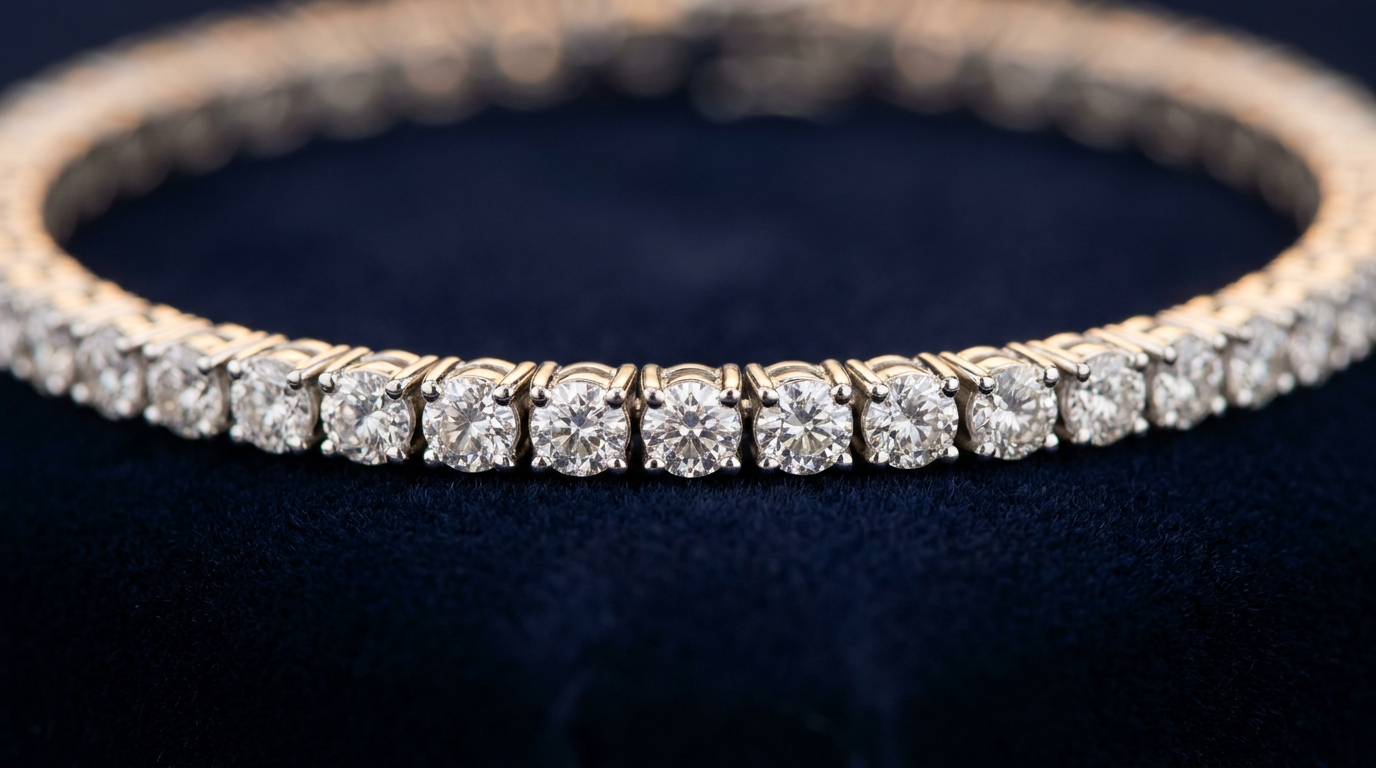
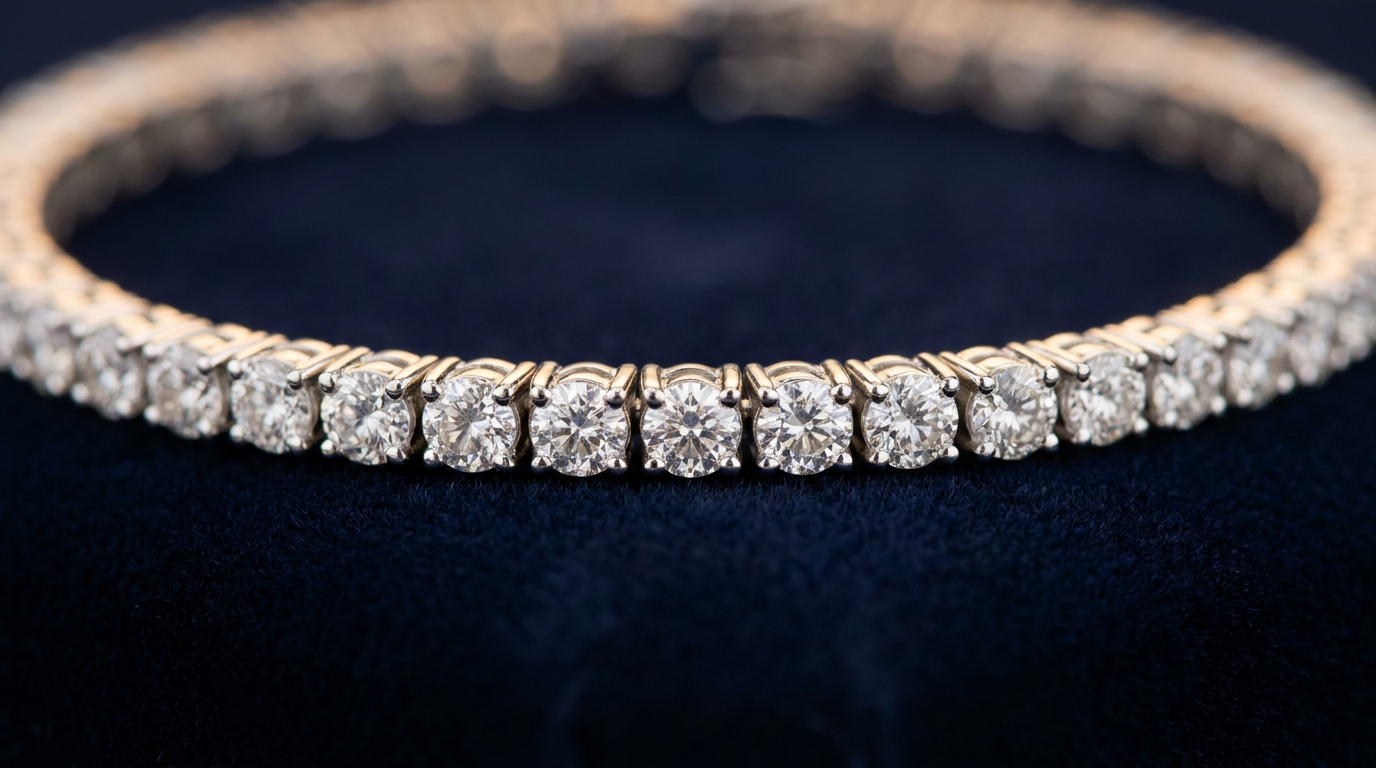
Most wholesale tennis bracelet programs run 2–5 total carats in a 7-inch line, built from round natural melee between roughly 1.70 mm and 3.00 mm, in EF or GH color and VS or SI clarity. Because every stone in a tennis bracelet sits in a single visible row, matching across the parcel matters more than any one stone's grade — order sieve-graded goods against a master stone, hold a tight calibration tolerance, and confirm exact stone count and per-carat pricing at quote before you cut metal.
Guru Diam sources round natural melee from roughly 0.8 mm to 4.0 mm across the EF/GH, VS/SI grid, priced and quoted per parcel rather than per stone — normal practice for goods this size. This guide walks through total-carat-weight targets, the stone-count-to-length math that turns a design sketch into a parcel order, and which grade combination actually holds up under everyday wrist wear. For an exact quote against your mounting, reach the New York or Los Angeles desk on WhatsApp or through the contact form.
What Total Carat Weight Should You Target for a Wholesale Tennis Bracelet Line?
Total carat weight (TCW) is the first decision on any tennis bracelet order, and it drives everything downstream — stone size, stone count, and cost per unit. The trade generally sorts tennis bracelet programs into four TCW tiers, and most wholesale volume sits in the middle two.
| Style tier | Typical TCW (7" length) | Typical stone size | Positioning |
|---|---|---|---|
| Dainty / everyday | 1–2 ct | ~1.2–1.7 mm | Entry price point, stacking piece |
| Standard / most-ordered | 2–5 ct | ~1.7–2.8 mm | Core wholesale volume |
| Statement | 5–7 ct | ~2.8–3.5 mm | Higher-ticket retail line |
| Oversized / luxury | 7–10+ ct | ~3.5–4.0 mm and up | Top of the retail range |
These tiers reflect how buyers actually shop tennis bracelets, not a fixed rule — a 7-inch line and a stone size can be dialed in against any TCW target you set. The important planning move is picking the TCW tier before you spec stone size, because TCW and stone diameter aren't independent: doubling the stone diameter roughly triples the weight per stone (round-brilliant weight scales close to the cube of diameter), so small changes in mm move the total cost sheet by more than they look like on paper. Build your cost sheet around TCW first, then work backward into stone size and count.
One planning note worth flagging early: round natural melee is currently sourced and priced up to roughly 4.0 mm. Oversized tennis lines that call for individual stones larger than that sit outside the current natural melee range and are typically sourced as individually weighed pointers rather than parcel melee — a genuine gap today, not a quality tier Guru Diam is withholding.
What Size Natural Melee Works Best for a Tennis Bracelet, and Why?
Stone size for a tennis bracelet is a function of the mounting's channel or prong width and the TCW target — not a fixed industry number. That said, the sizes that actually move in wholesale tennis bracelet production cluster tightly, because most bracelet designs are built around a standard 4-prong or shared-prong line that only fits a narrow mm window per style.
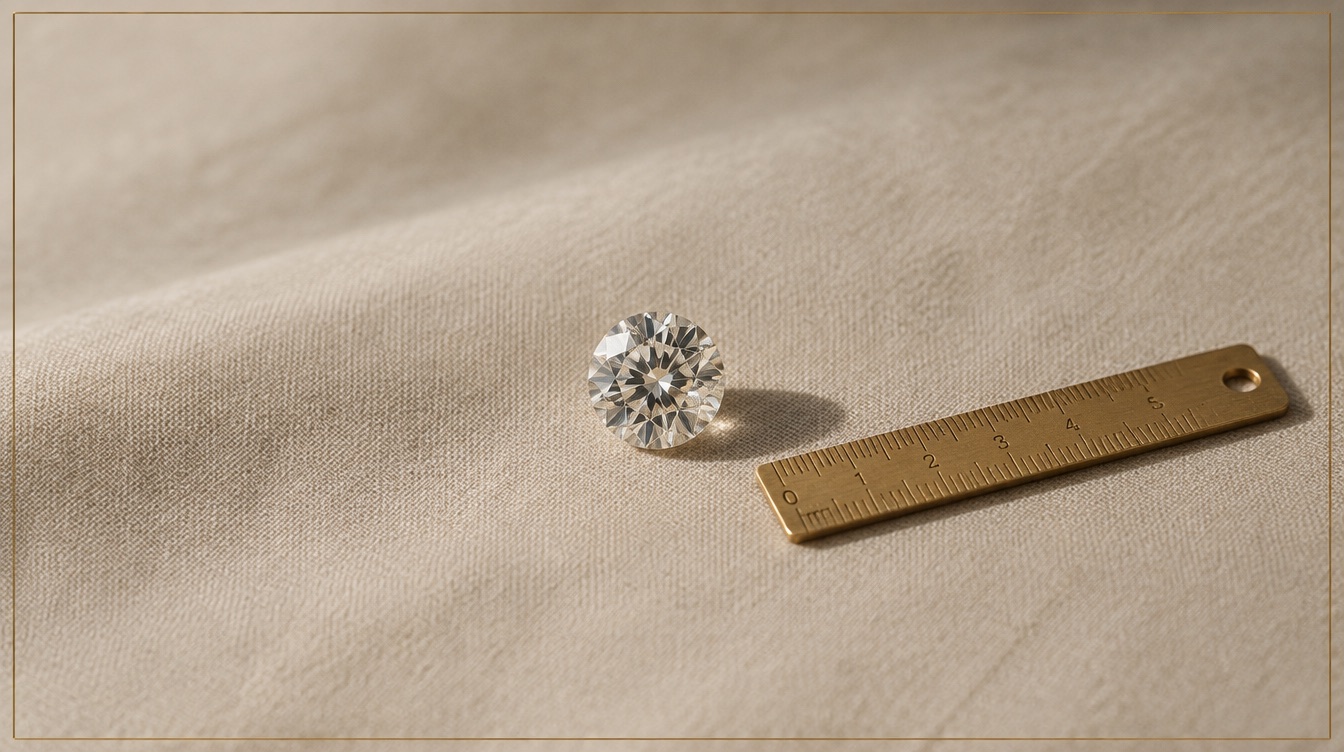
In round natural melee, the practical tennis bracelet range runs from about 1.20 mm at the delicate end up through 4.0 mm at the current sourcing ceiling. The 1.70–3.00 mm band covers the bulk of standard and statement pieces; anything below 1.70 mm reads as an "eternity-line" look rather than a classic tennis bracelet, and anything above 3.50 mm starts to look like an alternating or graduated design rather than a uniform line.
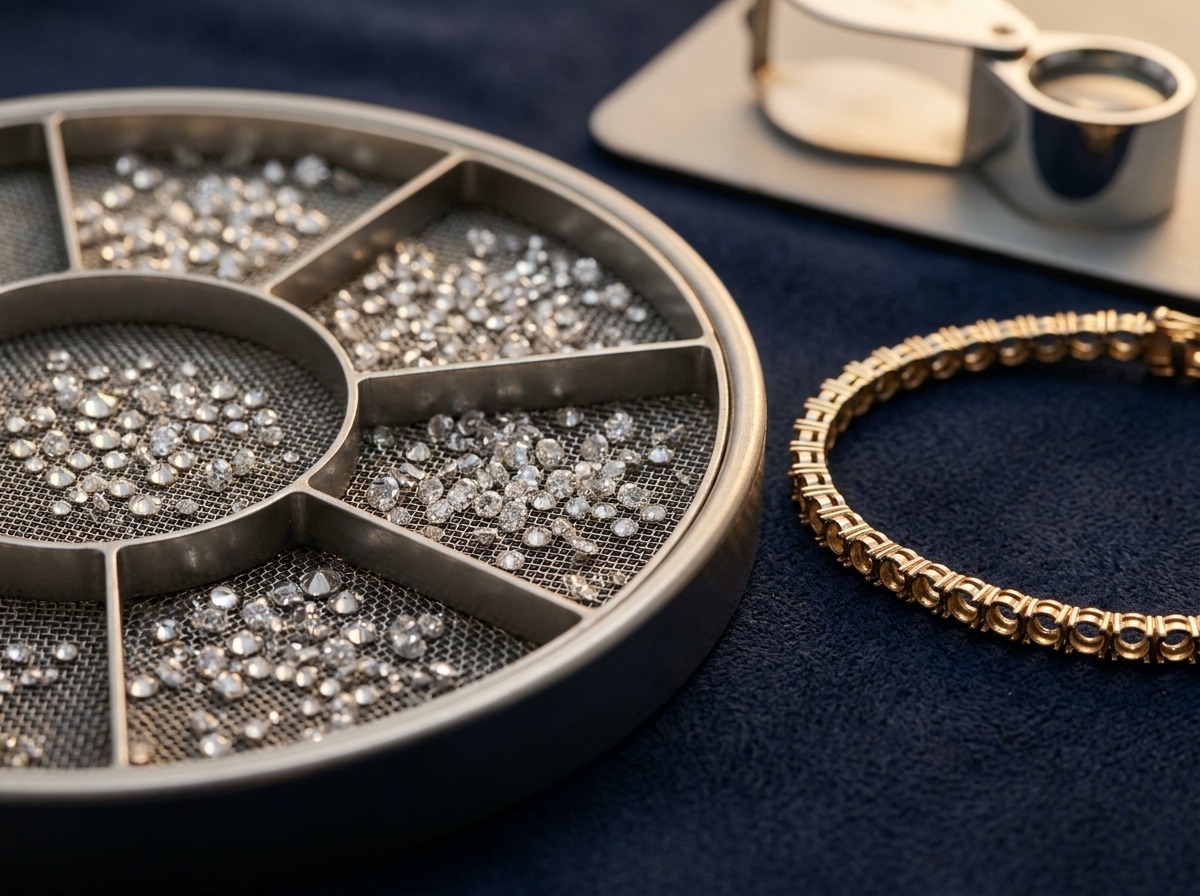
One sizing detail that catches buyers off guard: EF (E-F) color natural melee is not currently sourced below 1.70 mm — no vendor in the trade has ever quoted true E-F color at that size, so it isn't a Guru Diam gap specifically. If your bracelet design calls for stones under 1.70 mm, GH (G-H) color is what's available, and at that scale the color difference reads negligibly in a continuous line anyway. Confirm your target mm before you commit to an EF spec on a delicate design.
How Do You Convert Stone Size to Stone Count for a 7-Inch Bracelet?
Once you know your target stone size, converting to stone count is straightforward math, though the exact number always depends on the specific mounting's prong spacing and link style. As a planning estimate for a standard 7-inch line set stone-to-stone with minimal gap, stone count runs roughly as follows.
| Stone diameter | Approx. weight/stone | Approx. stones for 7" line | Approx. resulting TCW |
|---|---|---|---|
| 1.50 mm | ~0.015 ct | ~95–105 | ~1.4–1.6 ct |
| 2.00 mm | ~0.03 ct | ~70–80 | ~2.1–2.4 ct |
| 2.50 mm | ~0.055 ct | ~58–65 | ~3.2–3.6 ct |
| 3.00 mm | ~0.10 ct | ~55–60 | ~5.5–6.0 ct |
| 3.50 mm | ~0.15 ct | ~48–52 | ~7.2–7.8 ct |
| 4.00 mm | ~0.20–0.25 ct | ~44–48 | ~9–12 ct |
Treat these as sourcing-planning estimates, not cut specs — actual per-stone weight varies with cut proportions, and the real number for your parcel gets confirmed against a master stone at quote. But the shape of the math holds: as stone size goes up, stone count for a given bracelet length goes down while TCW climbs fast, which is exactly why moving from a 2.50 mm to a 3.00 mm spec can jump a bracelet from a "standard" to a "statement" TCW tier with only a half-millimeter change.
Working backward from a TCW target is just this table in reverse: divide your TCW goal by the approximate per-stone weight at your chosen mm to get stone count, then check that count against your mounting's actual prong or channel capacity before finalizing the order.
Which Color and Clarity Grade Should You Choose for a Piece That's Worn and Handled Constantly?
A tennis bracelet gets more daily contact — desks, doorframes, handbags, other jewelry in a drawer — than almost any other diamond piece a retail customer owns. That constant handling changes what actually matters in a grade decision, compared to a piece like a pendant or a pair of studs that mostly just sits and catches light.
Natural diamond is the hardest known mineral regardless of color or clarity grade, so wear resistance itself doesn't change across the EF/GH, VS/SI grid — a GH SI stone is exactly as hard as an EF VS stone. What does change with constant handling is how forgiving the stone is under close, repeated inspection and how well it holds up visually over years of wear:
- Clarity and surface risk: VS-clarity goods run cleaner of surface-reaching inclusions near the girdle, which matters more on a piece that takes regular knocks than on a stationary setting — a chip is far more likely to start at an existing surface flaw than on clean material. SI clarity is a sound, trade-standard choice for tennis bracelets and remains the higher-volume order; VS is the upgrade for buyers prioritizing long-term durability margin over cost.
- Color and everyday visibility: a tennis bracelet is seen constantly at close range under mixed lighting — office fluorescents, daylight, evening light — more than almost any other piece. GH color reads clean and bright to the eye in that range and is the higher-volume grade ordered for tennis lines; EF is the visible upgrade for buyers building a premium retail tier.
For most wholesale tennis bracelet programs, GH SI is the workhorse combination — durable, cost-efficient, and visually consistent in a continuous line. EF VS sits at the top of the grid for buyers building a flagship or bridal-adjacent tennis line where grade is part of the sell.
Why Does Consistency Matter More in a Tennis Bracelet Than in Pavé or Halo Work?
In a halo or pavé setting, the eye moves across dozens of small stones at varying angles, and minor grade or size variance between individual stones mostly disappears into the overall sparkle. A tennis bracelet is the opposite case: every stone sits in a single straight line, viewed edge to edge, often under raking light. Any mismatch in size, color, or clarity between adjacent stones is far more visually obvious in that format than it would be anywhere else in a jewelry line.
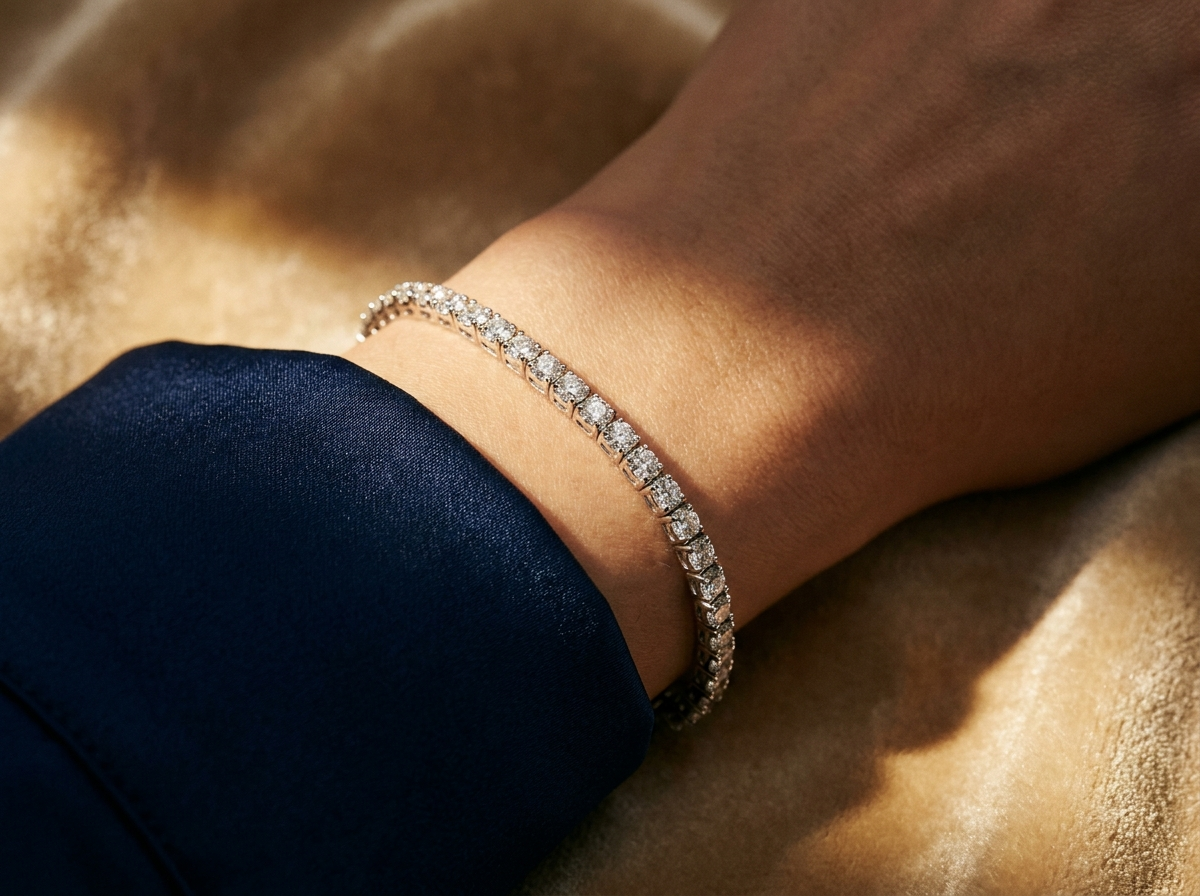
This is why tennis bracelet melee needs to be ordered as sieve/size-graded parcel goods sorted comparatively against a master stone, not simply pulled from a general size-and-grade bucket. The standard trade calibration tolerance — roughly ±0.10 mm on dimension, ±0.10 ct on weight, and a one-grade match on color and clarity — applies here the same way it does across natural melee generally, but the margin for error in practice is tighter for a bracelet than for a setting where stones aren't seen in a direct line.
Two practical consequences follow. First, order your full bracelet parcel in one pull rather than assembling it from multiple smaller lots over time — mixing lots increases the odds of a visible seam in the finished piece. Second, if you're reordering to extend a product line or restock a bestselling SKU, flag that you're matching to a prior parcel so the new goods get sorted against the same reference standard, not just against the general grade band.
What Does Natural Melee for Tennis Bracelets Cost Per Carat?
Full per-size, per-grade sell pricing is published in the complete natural melee buying guide and broken out size-by-size in the natural melee pricing guide — both worth bookmarking before you build a bracelet cost sheet, since tennis bracelets span nearly the full priced size range.
As a general orientation only: in the sizes most tennis bracelets are built from, GH SI pricing starts in the high $300s to $400s per carat at the smaller end of the range and rises through the $500s–$900s per carat as stone size climbs toward the current 4.0 mm ceiling and as grade moves up toward EF VS. Because melee is quoted per parcel against sieve bands rather than sold stone-by-stone, treat any number here as directional — the exact per-carat rate for your bracelet's specific stone size and grade combination gets confirmed at quote.
Pricing is presented as approximate, per-carat, and confirmed-at-quote across the board — that's standard for how melee trades, not a Guru Diam-specific caveat. For a real number against your bracelet's stone count and TCW target, request a quote on WhatsApp (+1 347 812 2006).
Is Tennis Bracelet Melee Individually Certified?
No — and that's true of melee generally across the trade, natural or lab-grown, not a shortcut specific to tennis bracelet goods. Certification cost exceeds the value of an individual stone below roughly 0.20 ct, which covers essentially every stone that goes into a tennis bracelet line. Natural melee for tennis bracelets ships as sieve/size-graded parcel goods, sorted comparatively against a master stone rather than issued with per-stone paperwork.
This is normal, universal trade practice for goods this small — not a quality gap. If your program also runs loose certified diamonds (0.30 ct and up, individually IGI/GIA graded) alongside a tennis bracelet line, that's a genuinely different product tier with its own paperwork; the two shouldn't be compared on a certification basis, since melee simply isn't sold that way anywhere in the trade.
Round vs. Other Shapes: What's Actually Available for Tennis Bracelet Production Right Now?
Tennis bracelets are, by convention, one of the few jewelry categories where round brilliant is already the near-universal shape choice — the continuous-line format simply reads cleanest with a uniform round profile, and most production tooling and prong styles are built around round melee sizing. That convention lines up cleanly with current sourcing: natural melee is priced and available in round shapes only for now.
Fancy natural melee shapes — oval, princess, pear, and similar — aren't yet sourced or priced as a natural melee product line. If a design calls for a fancy-shape accent line, that's a separate conversation from standard tennis bracelet sourcing; for the vast majority of tennis bracelet production, round is both what the trade expects and what's currently available.
How Do You Order a Matched Parcel for a Tennis Bracelet Production Run?
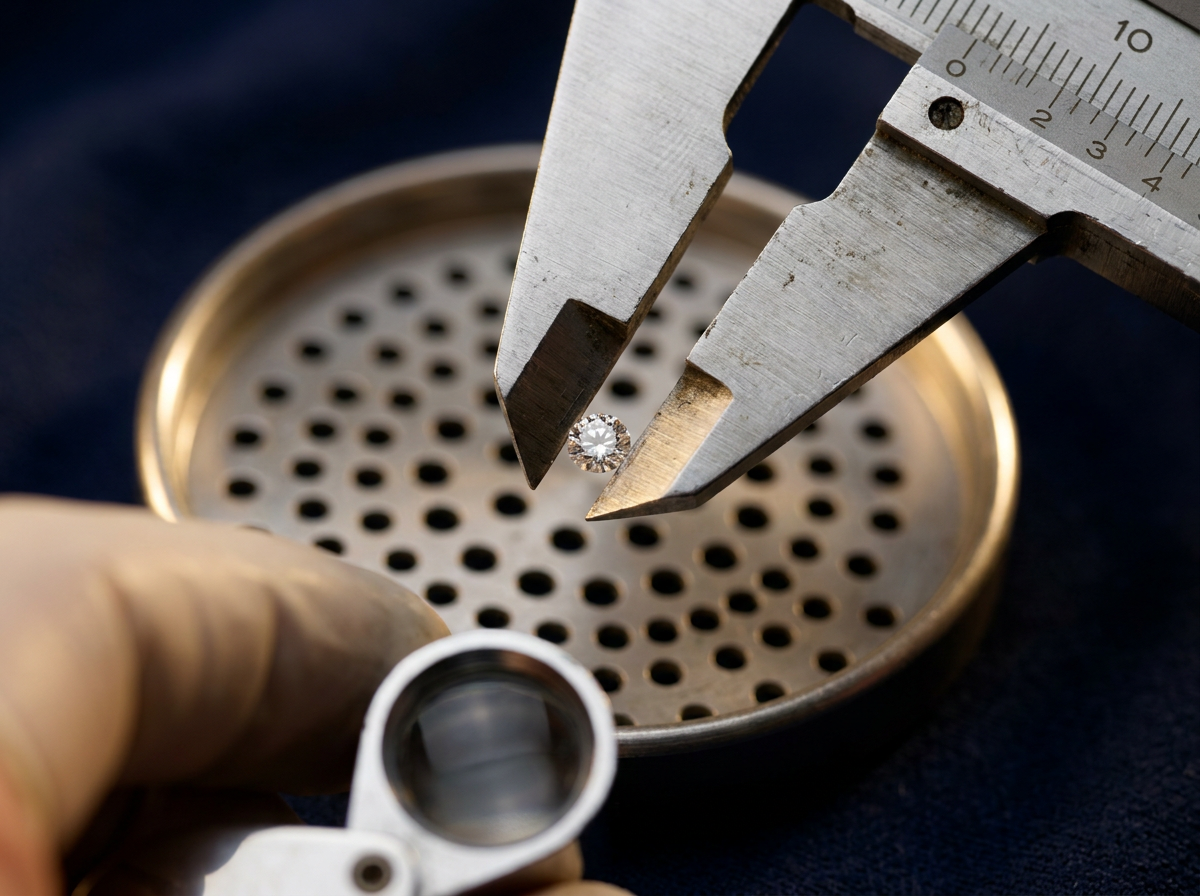
A clean tennis bracelet order gives your supplier everything needed to pull a matched parcel in one pass, rather than back-and-forth on spec after goods have already been sorted. In practice that means specifying:
- Stone size (mm), not just a carat-weight target — this is the number the parcel actually gets sorted against.
- Color and clarity grade (EF or GH; VS or SI), confirmed against the size band you're ordering, since EF isn't available below 1.70 mm.
- Total stone count or target TCW, plus a small overage allowance for setting loss and QC rejects.
- Calibration tolerance — state it explicitly rather than assuming a default; tighter tolerances suit tennis bracelet work given how visible mismatch is in a single line.
- Whether this is a first order or a match to an existing SKU, so the parcel gets sorted against the right reference stone.
Guru Diam works this out of both the New York headquarters (36 West 47th Street, Suite 601A, New York, NY 10036) and the Los Angeles office (607 S Hill Street, Suite 241, Los Angeles, CA 90014), with same-day processing on orders placed before 6pm EST in New York or 4pm PST in Los Angeles. The fastest way to get a matched-parcel quote moving is a direct message to the trade desk on WhatsApp (+1 347 812 2006) with your stone size, grade, and target count — or submit the details through the contact form if you'd rather start there.
What Mistakes Do Wholesale Buyers Make When Sourcing Tennis Bracelet Melee?
A few patterns show up repeatedly on tennis bracelet orders, and most are avoidable with a slightly more specific request up front:
- Specifying carat weight without a stone size. "5 carats of melee" can be built from wildly different stone sizes and counts. Always spec the mm, and let TCW be the result, not the input.
- Assuming EF is available at every size. Delicate, small-stone designs under 1.70 mm need to be spec'd in GH color — building a cost sheet around EF pricing at a size where EF doesn't exist wastes a quote cycle.
- Splitting one bracelet's parcel across multiple orders over time. Reordering the "same" grade months apart without flagging it as a match risks a visible seam where the two lots meet in the finished piece.
- Skipping the tolerance conversation. A size and grade without a stated calibration tolerance defaults to standard trade tolerance, which may be looser than a tennis bracelet actually needs — say the tolerance out loud.
- Designing above the current size ceiling without checking sourcing first. Oversized lines with individual stones above ~4.0 mm sit outside current natural melee availability; confirm sourcing before finalizing a design that depends on it.
Natural vs. Lab-Grown Melee for Tennis Bracelets: A Quick Note
This guide covers natural melee specifically — mined, not lab-grown — which is a separate Guru Diam product line from CVD lab-grown melee, with its own sourcing, sizing, and pricing. Some wholesale buyers run both tracks side by side: natural for a premium retail tier, lab-grown for a value tier, using the same tennis bracelet design across both.
If your program needs the general mm-to-carat conversion math that applies to any round melee regardless of growth type, Guru Diam's melee diamond size chart (covering the lab-grown line) is a useful cross-reference for sieve terminology and stone-count conventions. For a full natural-vs-lab-grown decision on price, durability, and disclosure specifics, that's a separate comparison outside the scope of this sizing guide — talk to the trade desk directly if you're weighing both tracks for a single bracelet program.
Frequently Asked Questions
How many carats should a wholesale tennis bracelet be?
Most wholesale programs center on 2–5 total carats for a standard 7-inch line, with 1–2 ct covering dainty/everyday pieces and 5 ct and up covering statement and luxury tiers. There's no single right answer — TCW should match the retail price point and design you're targeting.
How many diamonds are in a typical 7-inch tennis bracelet?
It depends entirely on stone size. A line built from roughly 2.50 mm stones typically runs 58–65 stones for a 7-inch length; move up to 3.00 mm and the same length typically needs closer to 55–60 stones, since larger stones cover more length per stone even though there are fewer of them.
What color and clarity grade should I use for a tennis bracelet?
GH color and SI clarity is the standard wholesale workhorse combination — durable and cost-efficient for a piece worn constantly. EF color and VS clarity is the upgrade tier for premium or bridal-adjacent lines where grade is part of the retail story. Both hold up equally well structurally, since hardness doesn't change with color or clarity.
Are the diamonds in a tennis bracelet individually certified?
No. Melee this small — natural or lab-grown — isn't individually or parcel-certified anywhere in the trade, because certification cost exceeds stone value below roughly 0.20 ct. Tennis bracelet melee ships as sieve/size-graded parcel goods, sorted against a master stone. This is standard practice, not a quality shortcut.
What's the largest natural melee size available for a tennis bracelet right now?
Round natural melee is currently sourced and priced up to roughly 4.0 mm. Individual stones larger than that fall outside the current natural melee range and are typically sourced separately as individually weighed pointers — a genuine open gap in sourcing today, not a design limit.
Can I reorder to match an earlier tennis bracelet parcel?
Yes — flag the order as a match to a prior run so the new parcel gets sorted against the same reference standard rather than just the general size and grade band. This matters more for tennis bracelets than for most other settings because mismatch between old and new stones is highly visible in a single continuous line.