Natural Melee for Halo Settings: What Jewelers Need to Know
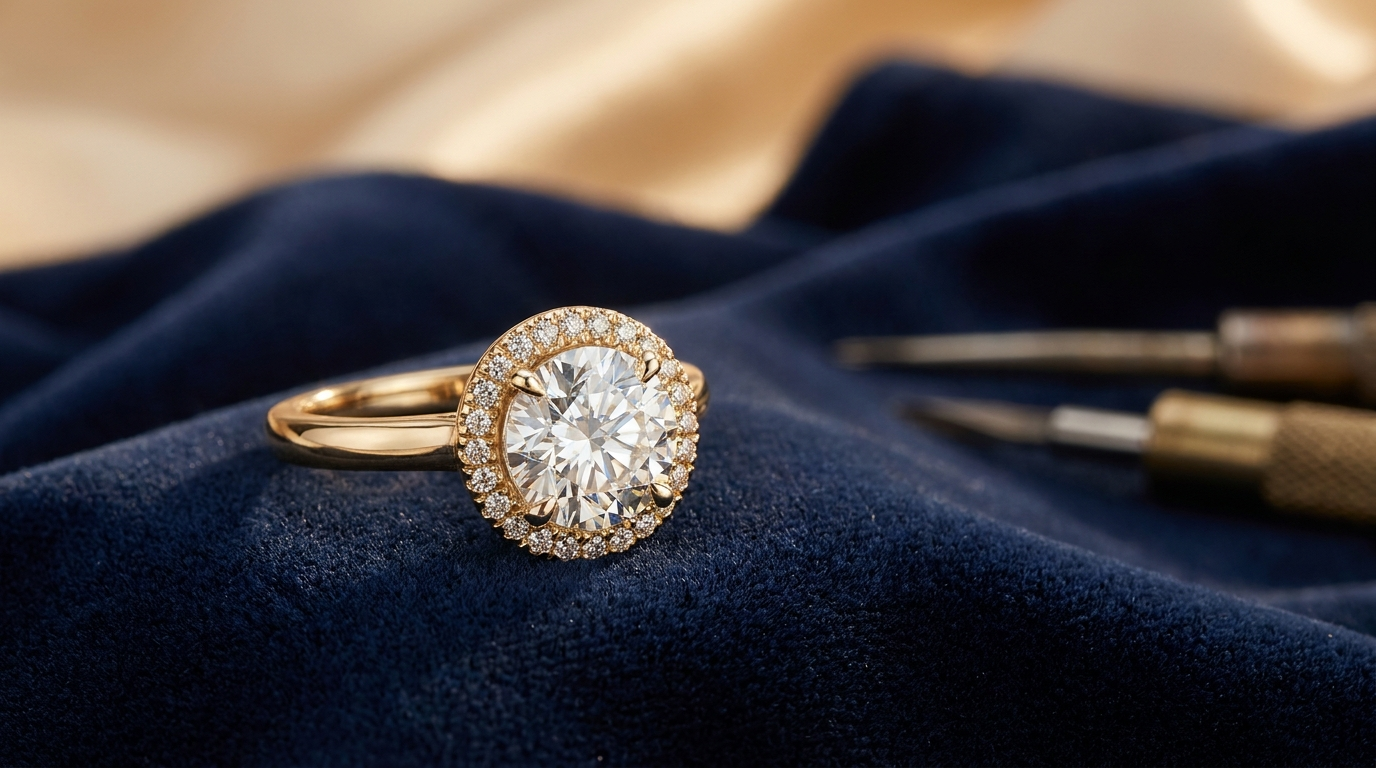
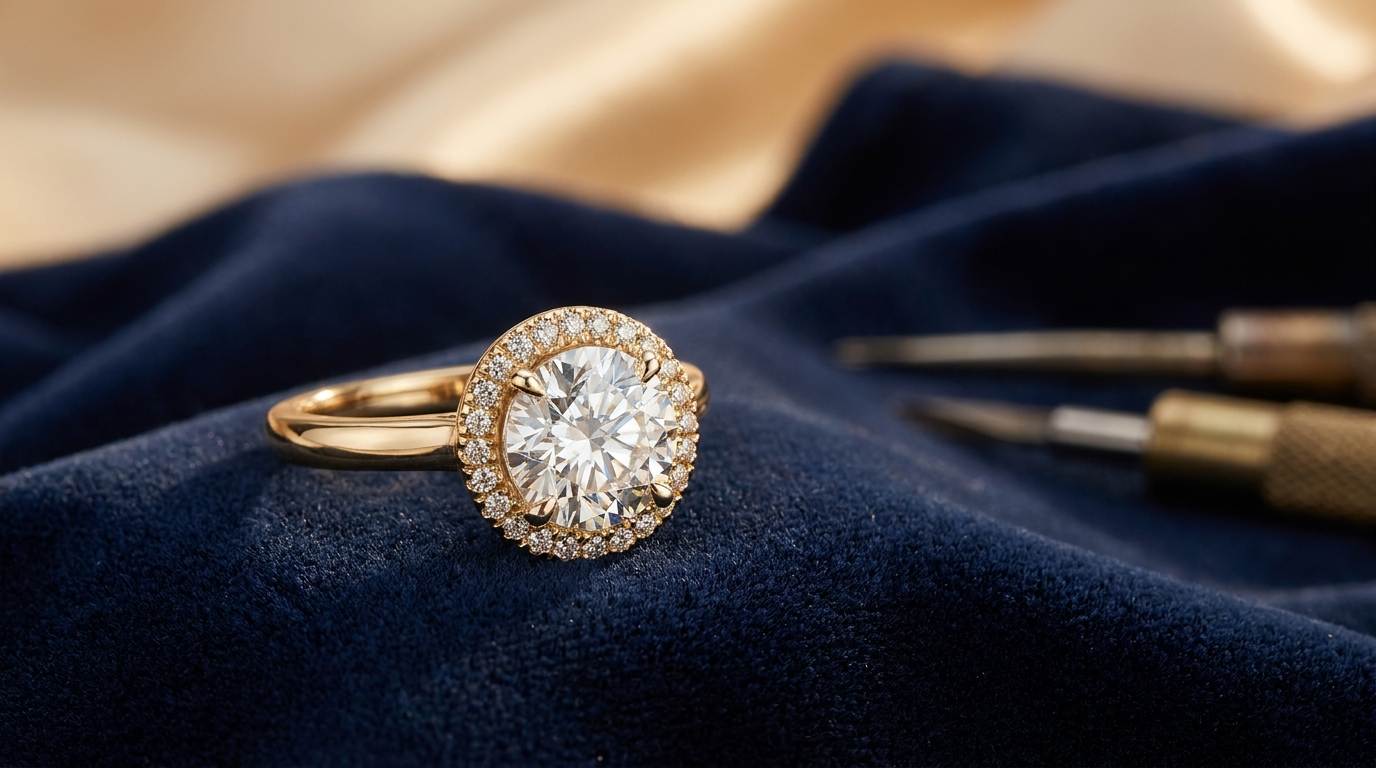
Halo settings put melee diamonds under more scrutiny than almost any other placement in fine jewelry. The stones sit in a single continuous ring pressed tight against the center stone's girdle, viewed face-up and in direct side-by-side comparison — not scattered down a shank at an angle. For a halo to read as one unbroken ring of light, you need consistent mm sizing around the loop, a grade pairing that won't visibly clash with the center stone, and enough carat weight ordered — with overage — to finish the job and cover future repairs.
What Makes a Halo Job Different From Pavé or Eternity Melee Work?
All three setting styles use the same raw material — sub-1ct natural round melee, sorted by sieve and quality band — but the job dictates how that melee needs to be sized and graded. Pavé work spreads stones down a shank, usually viewed at an angle and collectively rather than one stone at a time; a slight size drift or grade wobble across a few millimeters of band rarely reads to the eye. (See our companion guide on natural melee for pavé settings for that job's specific sizing logic.) Eternity work is the opposite extreme: one size, one grade, matched to itself in a repeating loop that never has to compete visually with anything else — covered in our eternity band sizing and ordering guide.
Halo work sits in between and is arguably the least forgiving of the three. The melee ring sits immediately adjacent to — often touching — the girdle of a larger, usually better-graded center stone, and it's viewed face-up in exactly the position a buyer's eye lands first. That proximity is the reason halo sizing, grading, and ordering deserve their own playbook rather than reusing pavé specs by default.
How Many Melee Stones Does a Standard Halo Actually Take?
Stone count is a function of the halo's circumference, which is set by the center stone's diameter plus roughly twice the melee mm size (the ring has to clear the girdle on both sides). Divide that circumference by the melee's mm footprint, plus a small setting gap, and you get a workable stone count.
In practice, most working benches use ranges like these for a single-row halo:
| Center Stone Weight | Approx. Center Diameter | Typical Halo Melee MM | Typical Single-Row Stone Count |
|---|---|---|---|
| 0.50–0.75 ct | ~5.0–5.8mm | 1.00–1.30mm | ~20–28 stones |
| 1.00–1.50 ct | ~6.5–7.4mm | 1.30–1.70mm | ~26–34 stones |
| 1.75–2.00 ct | ~7.8–8.1mm | 1.50–2.00mm | ~30–38 stones |
| 2.25 ct+ | ~8.5mm+ | 1.70–2.20mm | ~34–44 stones |
Treat these as planning numbers for labor and setting time, not an order spec. Natural melee ships as sieve-graded parcel goods sorted comparatively against a master stone, not counted piece by piece — so the actual order should be written in carat weight, which we cover below.
Worked example: a 1.20ct round center stone runs roughly 6.8mm in diameter. A single-row halo at 1.5mm melee gives a loop circumference of about π × (6.8 + 3.0) ≈ 30.8mm. Divide by the melee's footprint plus a small setting gap (roughly 1.7mm per stone including the prong seat) and you land at approximately 18 stones — but real-world halos of this size more often run 28-32 stones, because the loop isn't a perfect circle around a round girdle; it steps out slightly to clear the prongs holding the center stone, and jewelers typically set closer together than the raw math suggests for a fuller, gap-free look. This is exactly why bench experience and a physical trial-fit against the actual center stone matter more than a formula — use the table as a planning starting point, then confirm stone count against the mounting in hand before finalizing the carat order.
What MM Size Should You Order for a Halo, Relative to the Center Stone?
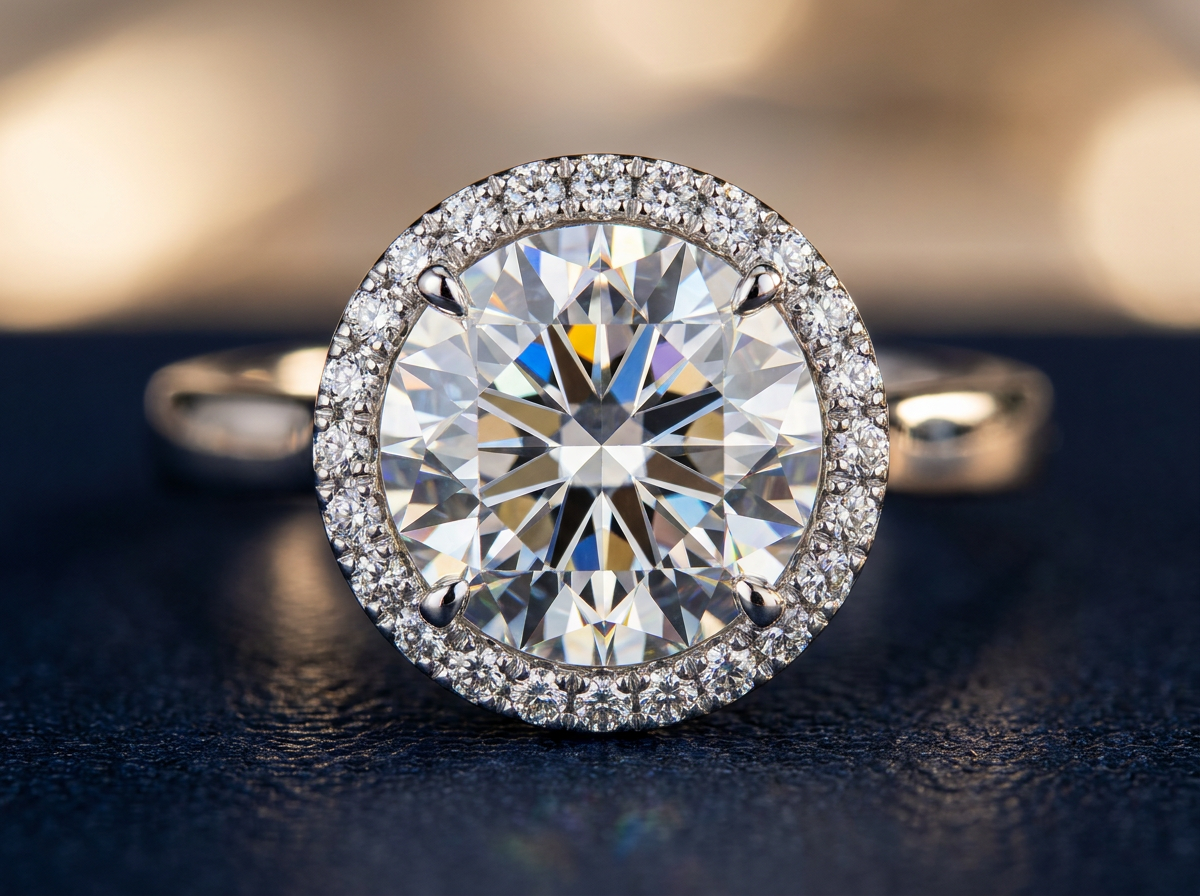
The table above holds as a general starting point, but the underlying rule is simpler: halo melee mm should generally land at or just below the mm you'd choose for the first few rows of a matching shank, so the halo doesn't visually outweigh the rest of the ring. A halo that runs larger than the shank's leading melee tends to look front-heavy; a halo that runs noticeably smaller than the center stone's crown facets can look thin and lost against it.
All of the ranges above sit comfortably inside Guru Diam's current natural melee sourcing window of roughly 0.8mm–4.0mm. That range covers essentially every halo job you'll spec — from a delicate 1.0mm ring around a three-quarter-carat center to a bold 2.2mm ring around a two-carat-plus stone. Sizes above 4.0mm aren't a halo consideration in practice, but it's worth noting plainly: that's a genuine gap in current sourcing, not something to speculate on for future jobs.
Single Halo, Double Halo, or Hidden Halo — Does Sizing Change?
Yes, and it changes the ordering spec, not just the look:
Single halo — one continuous row. Size per the guidance above; this is the default case for most retail and bridal production.
Double or cluster halo — two concentric rows. The inner row is usually matched to the shank's leading melee for visual continuity with the center stone; the outer row can step down 0.10–0.30mm without reading as a mismatch, since it sits slightly recessed and is viewed second, after the eye has already registered the inner ring and center stone together.
Hidden halo — set below the girdle, visible mainly from the side or profile rather than face-up. Jewelers commonly size hidden-halo melee close to the shank melee for consistency, since it isn't competing directly with the crown the way a raised halo does. That said, a hidden halo is viewed at close range in profile by anyone who looks at the ring from the side — grade matching still matters, it's just not competing with the center stone's face-up brilliance the same way a raised halo does.
One more variable worth flagging when you're sizing any of these three: how the halo meets the shank. A cathedral or split-shank mounting that raises the halo up on its own prongs reads slightly larger to the eye than a flush halo set directly into a low-profile band, even at the identical mm size — which is one more reason a physical trial-fit against the actual mounting, not just the spec sheet, is worth the extra step before finalizing a carat order.
Why Grade Selection Matters More in a Halo Than in Pavé
This is the single biggest sizing-and-grading difference between halo work and every other melee application. In a halo, the melee sits immediately adjacent to a larger, usually better-graded center stone, viewed face-up, at the exact spot where a buyer's eye naturally lands. In pavé, the stones run down a shank, viewed obliquely, further from the center stone, and blended visually with the metal between them. That difference in proximity and viewing angle is what makes halo grading unforgiving in a way pavé simply isn't.
Two practical effects follow. First, a color mismatch between the halo melee and the center stone reads as a visible ring of warmth bordering a whiter stone — something that's much harder to spot in pavé, where the comparison point is further away and less direct. Second, clarity inclusions in halo melee are more likely to get caught during ordinary retail counter inspection, simply because a halo puts a meaningful cluster of small stones in one prominent, easily-loupe-checked spot, rather than dispersed thinly across a band.
The practical rule: match — or slightly exceed, never fall short of — the center stone's color and clarity tier when the center is a graded or certified loose stone. A visible seam at the girdle, where the halo's color or clarity clearly steps down from the center stone, is one of the most common comeback complaints on halo work.
EF vs GH, VS vs SI — Which Grade Combination Fits Which Halo Job?
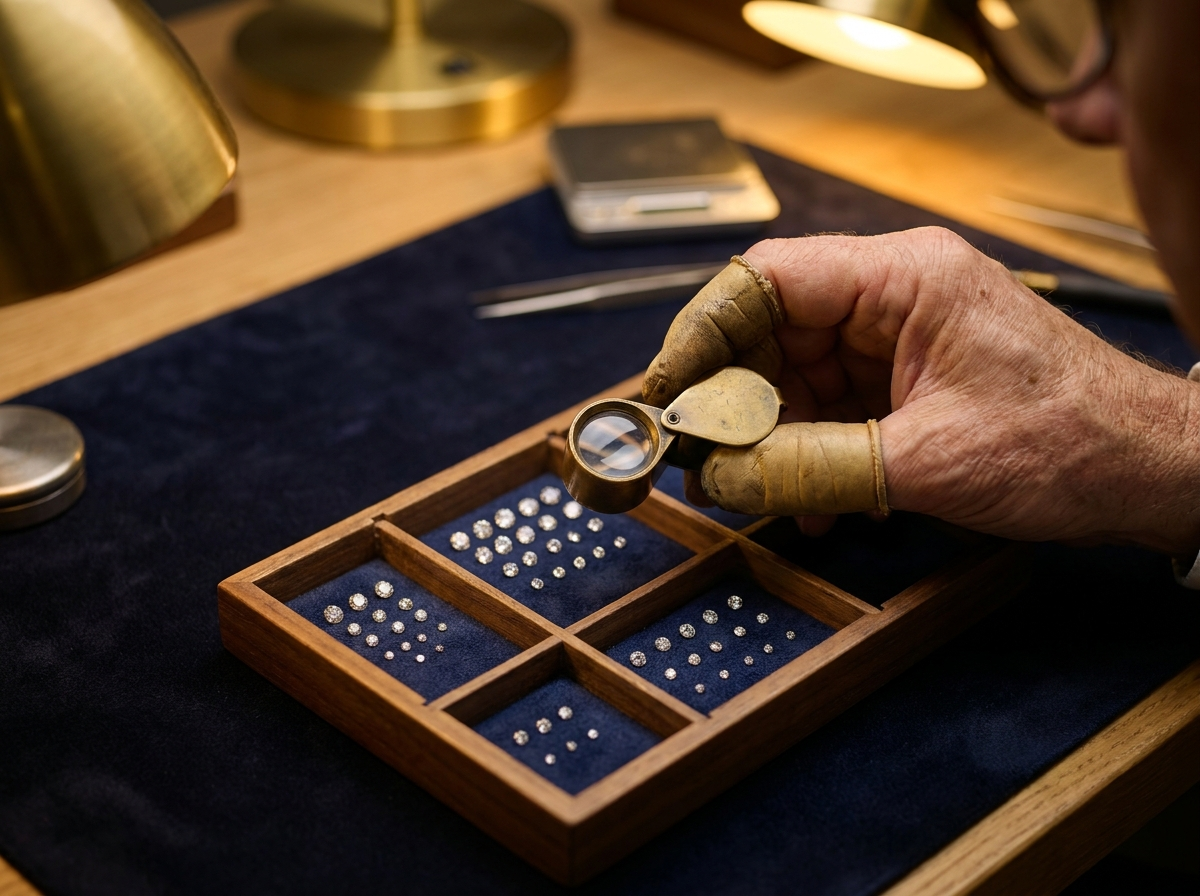
Guru Diam's natural melee grid runs two colors — EF (E-F) and GH (G-H) — each in VS and SI clarity, as a blended-range grid rather than exact single grades. Applied to halo work specifically:
EF VS — the safest pairing against colorless-to-near-colorless certified center stones, particularly in platinum or white gold, where any warmth in the halo would otherwise sit right next to a whiter stone at the exact spot buyers compare. Worth the premium specifically because halo proximity makes color differences obvious in a way other settings don't.
EF SI — still the right color call for a white-metal halo; at typical halo sizes (well under 2mm for most jobs), SI inclusions are far less likely to be visible face-up than they would be in a larger stone, making this a reasonable value trade for retail price points that don't need VS clarity.
GH VS / GH SI — appropriate for warmer metals (yellow or rose gold), where the metal tone itself masks minor color warmth in the halo, or for jobs where the center stone is itself a lower color and won't contrast against GH. GH SI is the standard choice for production-volume, mid-market halo goods.
One gap worth flagging directly: EF has no priced data below 1.70mm — no vendor has ever quoted a true E color at that size, and we're not going to fill that with a guess. That matters for halo work specifically because a meaningful share of halo jobs (anything built around a 0.50–0.75ct center) call for melee under 1.30mm. If your job needs EF color at that size, it isn't currently available; GH is the option at those smallest sizes today.
How Many Carats of Melee Should You Order for a Halo Job?
Once you've picked an mm size and estimated a stone count, convert that to carat weight — melee is quoted and shipped by carat, not by piece. A mm-to-carat conversion reference is useful here (our lab-grown melee size chart post covers the same mm-to-carat-to-sieve math that applies to natural goods).
Then add overage — 10-15% above the bare calculated need is standard practice for halo work, for three reasons: natural stone-to-stone size variance within a sieve band, occasional setting rejects (a chipped culet or a stone lost during prong work), and having enough matching stock on hand for future repairs. Halos are known to drop stones over years of wear, more so than most other setting styles — the prongs holding each tiny stone are small and take the brunt of everyday knocks. Banking a small reserve from the original parcel means a future repair can be set from matching stock instead of chasing a fresh parcel that may not match the original lot's exact body color.
Don't round down on the order, and don't order by stone count alone — write the carat total plainly, with grade and mm tolerance attached.
What Tolerance and Matching Specs to Give When Ordering Halo Melee
Standard trade calibration tolerance applies to natural melee the same way it does across the trade generally: roughly ±0.10mm on dimension, ±0.10ct on weight, and a one-grade color/clarity match window. For halo work specifically, because the stones sit edge-to-edge in a single continuous, highly visible ring, it's worth asking for the tighter end of that tolerance and requesting the parcel be sorted "for halo" continuity — meaning visually consistent body color and light performance across the row, not just technically within-tolerance on paper.
Every halo melee order should specify four things:
1. MM size and tolerance — the exact millimeter you need, with the tolerance band stated, not implied.
2. Grade — EF or GH, VS or SI, matched to the center stone per the guidance above.
3. Total carat weight, with overage — the real order quantity, not a stone count.
4. Setting style — single row, double row, or hidden — so the parcel can be sorted and matched accordingly.
Common Halo Melee Mistakes That Cause Callbacks
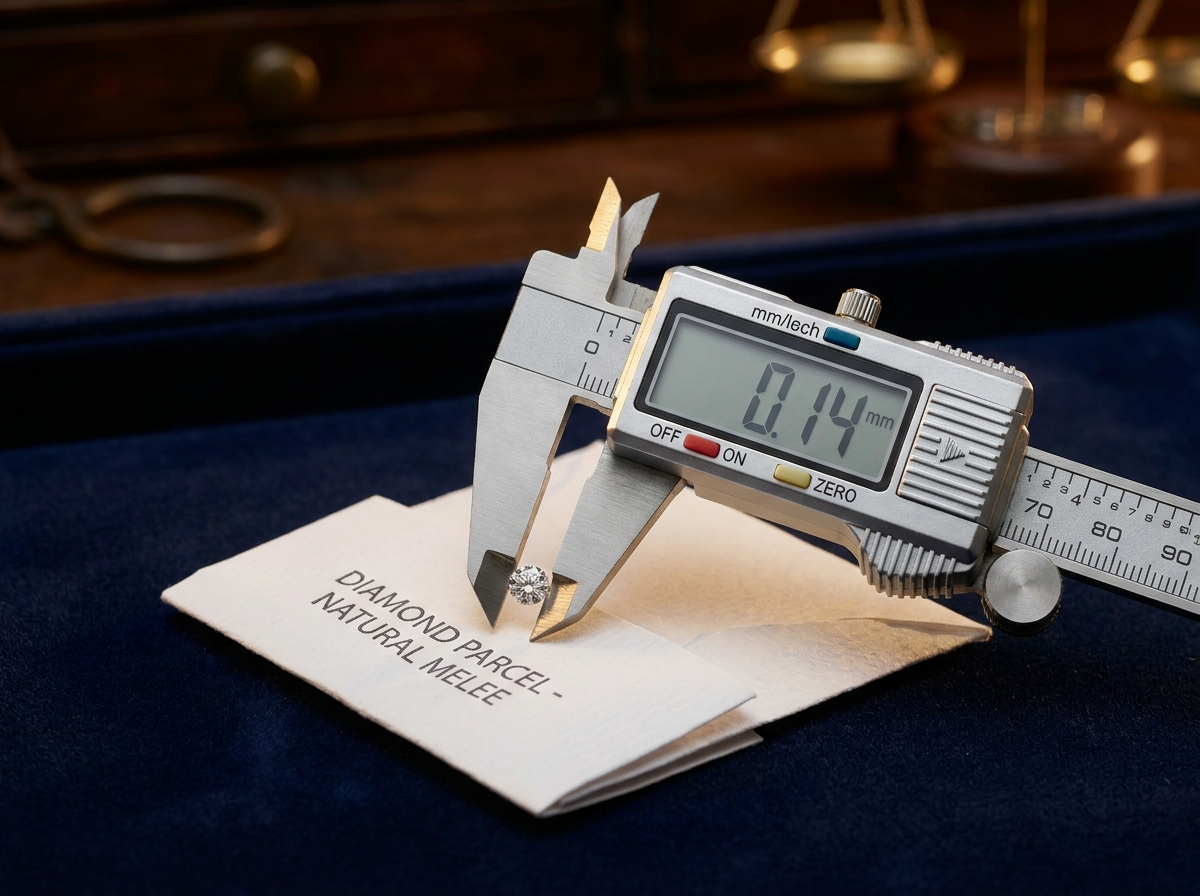
A handful of ordering habits account for most halo comebacks:
Ordering by stone count only, with no carat weight specified — leads to short parcels when actual stone sizes land at the small end of the sieve band.
Grading the halo melee to the pavé shank spec instead of the center stone — a halo needs to be graded against the stone it's circling, not against the rest of the ring's melee, which is viewed differently.
Skipping overage — then having to source a top-up parcel later that doesn't quite match the original lot's body color, creating a visible seam where the repair stones sit.
Underspecifying tolerance on hidden halos — because they're viewed close-up in profile rather than face-up, a loose tolerance is just as visible as it would be on a raised halo, even though the stones sit lower.
Not physically checking the melee against the center stone before setting — grade paperwork is a starting point; holding the parcel next to the actual center stone under the same light it'll be sold under is the real check.
What Does Halo Melee Cost?
Natural melee is priced per carat and rises with both size and grade — pricing starts around $370–450/ct in the smallest sizes and climbs from there. Because melee is quoted per parcel against sieve bands rather than sold to the cent, exact pricing is confirmed at quote, not published as a fixed catalog number. For the full size-and-grade pricing grid, see our complete wholesale buying guide and dedicated pricing guide, or message us on WhatsApp with your halo spec for a confirmed quote.
How to Order Natural Melee for a Halo Job at Guru Diam
Send your center stone specs — shape, mm or carat weight, and color grade if certified — along with your target halo mm size and grade (EF/GH, VS/SI) over WhatsApp. We'll confirm the sieve band, grade match, and a per-carat quote against your specified tolerance, and ship same-day from New York (before 6pm EST) or Los Angeles (before 4pm PST). A few scope notes to keep in mind when you reach out: natural melee is currently sourced in round shapes only, so a fancy-shape (oval, cushion, marquise) halo outline needs to be built from round melee set in a graduated pattern around the profile — a standard trade practice, not a workaround — and EF color is only available at 1.70mm and above. You can also reach us through our contact page for anything that needs more back-and-forth than a quick spec exchange.
Practical Halo Melee Ordering Checklist
Before you send a halo melee order, confirm you have all of the following on paper — this is the same checklist worth keeping on file for future repair or top-up orders against the same job:
Center stone specs — shape, mm diameter or carat weight, and color/clarity grade if it's certified, so the halo can be matched to it rather than guessed against.
Halo mm size and tolerance — a single number, with a stated tolerance band, not a range you expect the supplier to interpret.
Grade — EF or GH, VS or SI, chosen against the center stone and the metal color per the guidance above.
Row configuration — single, double/cluster, or hidden, since each changes how the parcel should be sorted and how the inner and outer rows (if any) relate to each other.
Total carat weight with overage — the calculated need plus 10-15%, written as a carat figure, not a stone count.
A sample or reference of the actual mounting, where practical, especially for cathedral or split-shank builds where the halo sits proud of the band and can read larger than the mm spec alone suggests.
Keeping this sheet on file per job — not just per order — is what makes a future repair or lost-stone top-up fast and accurate instead of a re-sourcing project.
Frequently Asked Questions
How many melee diamonds does a standard halo setting need? It depends on the halo's circumference, which is set by the center stone's diameter and the melee mm size. A single-row halo around a 0.50–0.75ct center typically runs 20–28 stones at 1.00–1.30mm; a 1.00–1.50ct center typically runs 26–34 stones at 1.30–1.70mm. Larger centers and double halos need more. Order by carat weight, not stone count.
What mm size melee should I use for a halo? As a general rule, halo melee should sit at or just below the mm size used in the first few rows of a matching shank, so the halo doesn't visually outweigh the rest of the ring. Most halo jobs fall between 1.0mm and 2.2mm, well within the 0.8–4.0mm range currently sourced.
Does the halo melee need to match the center stone's color grade? It should be matched or graded slightly higher, never lower. Halo melee sits immediately next to the center stone in direct, face-up comparison — a color or clarity step-down is far more visible here than in pavé or eternity work, where stones are viewed at more of a distance or an angle.
Why do halo rings lose stones more than other settings, and how does that affect ordering? The prongs holding each small stone in a halo take the brunt of everyday knocks, so halos are more prone to losing stones over years of wear than most other setting styles. Ordering 10-15% carat overage beyond the calculated need means a future repair can be set from matching stock instead of a fresh parcel that may not match the original lot's body color.
Can I get a fancy-shape halo — oval, cushion, marquise — in natural melee? Not as a fancy-shape melee stone directly. Natural melee is currently sourced in round shapes only; fancy-shape halo outlines are built from round melee set in a graduated pattern around the profile, which is standard trade practice. There's no promise on when or whether fancy natural melee shapes will be added.
Is halo melee certified? No — like melee generally across the trade, stones this small aren't individually or parcel-certified; certification cost exceeds stone value below roughly 0.20ct. Natural melee ships as sieve/size-graded parcel goods, sorted comparatively against a master stone. This is normal trade practice, not specific to halo work or to Guru Diam.