Guru Diam is a custom jewelry manufacturer for the trade in New York City, based at 36 W 47th St, Suite 601A in the Diamond District, with a second office at 607 S Hill St #241 in Los Angeles. Retail jewelers, designers and brands send a sketch or spec, receive a 3D CAD render within 24 hours, and get a finished piece 4–6 working days after the CAD is approved, with no minimum order and payment per piece. Guru Diam builds with both lab-grown and natural diamonds from its own inventory of 10,000+ IGI- and GIA-certified diamonds, and it works with verified trade accounts only, never consumers.
That is the short answer for anyone asking who makes custom jewelry for retailers in NYC. The longer answer, and the reason this guide exists, is that "custom jewelry manufacturer" covers very different businesses. Some are bench workshops that only set what you hand them. Some are design studios that outsource every production step. Some are full manufacturers that hold the diamonds, run the CAD, cast, set and finish under one roof. If you are a retail jeweler, an independent designer or a jewelry brand choosing a production partner, the difference decides your turnaround, your margin and how many of your client's custom requests you can say yes to.
This 2026 guide is written for the trade. It explains what a trade manufacturer actually does, the questions to ask before you send a first order, how work moves through the Diamond District, how private-label production works, how to choose between lab-grown and natural diamonds for custom pieces, the red flags to watch for, the eight types of custom jewelers you will meet in New York, and, step by step, how Guru Diam's own custom process runs.
Guru Diam at a Glance
| Fact | Guru Diam |
|---|---|
| What we are | B2B diamond wholesaler and custom jewelry manufacturer for the trade |
| Who we sell to | Verified jewelers, retailers, designers and manufacturers. Trade only, never consumers |
| New York office | 36 W 47th St, Suite 601A, New York, NY 10036 (Diamond District) |
| Los Angeles office | 607 S Hill St #241, Los Angeles, CA 90014 |
| CAD render | 3D CAD within 24 hours |
| Production time | 4–6 working days from approved CAD to finished piece (complex pieces may take 2–3 weeks) |
| Typical multi-vendor route | 15–20+ days |
| Minimum order | No MOQ, paid per piece |
| Diamonds | Lab-grown and natural; 10,000+ IGI/GIA-certified diamonds in stock; diamonds not in stock sourced or cut to spec |
| Metals | 14K and 18K gold, platinum, silver |
| Matching tolerances | Calibrated melee ±0.05–0.10 mm; matched pairs ±0.1–0.2 mm and about one color grade |
| Order tracking | Live order portal for custom orders, plus a dedicated account manager |
| Trade accounts | 3,000+ |
| Shipping | Same day on orders placed before 6 PM ET; international delivery in 3–4 business days |
| Trade account approval | Same business day if submitted before 4 PM ET, otherwise next business day |
| Payment | Wire, ACH, checks, debit card; credit terms for established accounts |
| Showrooms | NY and LA, by appointment |
| Contact | +1 (212) 652-7108 · info@gurudiam.com |
To start a project, see our NYC custom jewelry manufacturer page, or open a trade account first.
What a Trade Custom Jewelry Manufacturer Actually Does
A trade custom jewelry manufacturer turns a client's idea into a finished, set and polished piece that the jeweler then delivers under their own name. The client never meets the manufacturer. The jeweler owns the relationship, sets the retail price and keeps the margin. The manufacturer's job is everything that happens behind the counter.
For a typical custom diamond ring, that work runs in five stages. Knowing them helps you judge any manufacturer, because every delay, every quality problem and every surprise invoice traces back to one of these steps.
1. Spec and diamond selection
Every job starts with a specification: the piece type, the metal, the finger size, the center diamond, and the design intent. A sketch, a photo or a reference ring is usually enough. At this stage the manufacturer confirms the center diamond, either from inventory or by sourcing it. This is the step where multi-vendor custom work loses the most time, because a jeweler without a diamond supplier on the same account has to find, reserve and ship the center diamond before anything else can happen.
2. CAD design
Computer-aided design (CAD) turns the spec into a dimensioned 3D model. A good CAD file shows the head, prongs or bezel, gallery, shank profile and every seat for side diamonds and melee, sized to the actual diamonds that will go into it. The render is what you show your client for approval. A manufacturer that sends renders fast lets you close the sale while the client is still excited.
3. Printing and casting
Once the CAD is approved, the model is 3D-printed in resin, attached to a casting tree and cast in metal, most often 14K or 18K gold or platinum. Casting quality decides how much clean-up the piece needs afterward and how well the diamond seats line up with the diamonds you ordered.
4. Setting
The setter fits the center diamond, side diamonds and melee into their seats and secures them with prongs, bezels, channels or pavé beads. This is skilled bench work. It is also where mismatched accents become visible: a pavé band built with melee that varies in size will show uneven beads and gaps, no matter how good the setter is.
5. Finishing and quality control
Finishing covers polishing, any rhodium plating on white gold, engraving and a final check of the piece against the approved CAD: dimensions, diamond security, symmetry and finger size. Then the piece ships to the jeweler.
The single most important question about any manufacturer is how many of these five stages happen under one roof. When sourcing, CAD, casting and setting each sit with a different vendor, every hand-off adds a shipping leg, an email loop and a chance for finger-pointing when something goes wrong. That is why a typical multi-vendor custom order runs 15–20+ days, while a manufacturer that holds the diamonds and runs the bench in one place can finish in 4–6 working days from approved CAD.
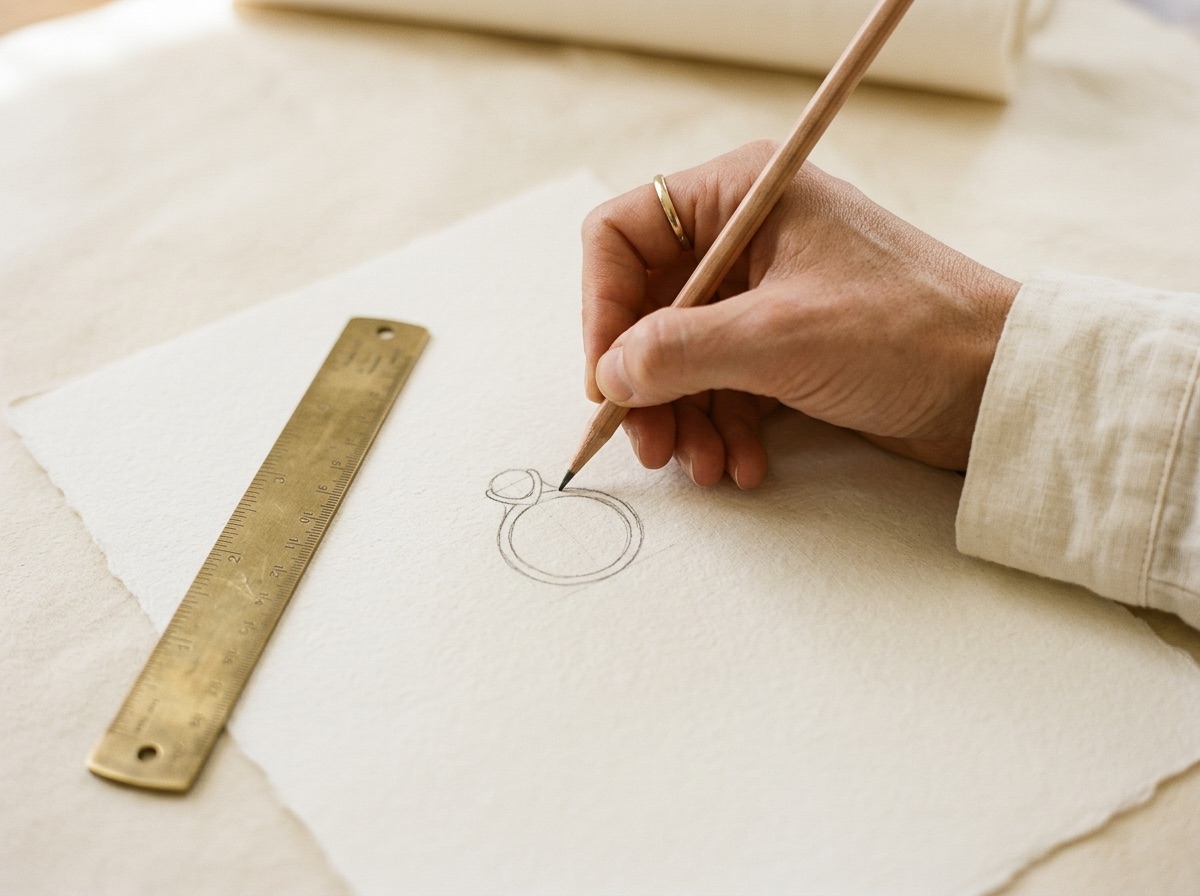
Every custom piece starts as a sketch and a set of specifications, long before it reaches a bench.
What to Ask a Custom Jewelry Manufacturer Before Your First Order
Most problems with a manufacturer are visible before the first order, if you ask the right questions. Use this list on any NYC jewelry manufacturer, including us.
Turnaround: when does the clock start?
Ask for two numbers: how long to a CAD render, and how long from approved CAD to a finished piece. Then ask when the clock starts. Some quotes start counting only once the diamond arrives, or once a deposit clears, or once the casting slot opens. A clear answer sounds like "CAD within 24 hours, then 4–6 working days from CAD sign-off." Also ask what makes a piece run longer. Honest manufacturers will tell you up front that complex pieces, such as full eternity bands or matched fancy-shape builds, take more time.
Minimum order quantity (MOQ)
Many manufacturers require minimum quantities per style, deposits, or batch orders. That works for a brand producing a collection, but it does not work for a retail jeweler with one client who wants one ring. If most of your custom work is one-off, look for a manufacturer with no MOQ that charges per piece. That turns custom from a fixed cost (a bench, equipment, inventory) into a variable cost you only pay when you have a sale.
CAD file ownership and reuse
Ask who owns the CAD file once you have paid for the design, whether you can get a copy, and whether the manufacturer will reuse your design for other customers. If you are building a signature line, these answers matter as much as price. Get the policy in writing before the first job, not after a design starts selling.
Metals
Confirm the metals and karats the manufacturer casts in house. A full-service manufacturer should handle 14K and 18K gold in yellow, white and rose, plus platinum and silver. Ask how white gold is finished and whether rhodium plating is included.
Diamond certification: IGI and GIA
For center diamonds, ask which grading labs the manufacturer stocks. IGI and GIA are the two reports your clients are most likely to recognize, for both lab-grown and natural diamonds. Ask whether the center diamond in your quote is a specific certified diamond with a report number you can verify, or a "to be sourced" placeholder. Our guide to IGI diamond certification explains what an IGI report covers and how to check one.
Side diamonds and melee
Ask where the accents come from and how closely they are matched. Calibrated melee should be held to a tight millimeter tolerance so pavé and eternity work sits evenly. Matched pairs for studs or Three-Stone sides should agree in size and color. At Guru Diam, melee is calibrated to ±0.05–0.10 mm and matched pairs to ±0.1–0.2 mm and about one color grade. See our guides to calibrated melee for pavé, tennis and eternity work and matched pairs of lab-grown diamonds.
Quality control and approval
Ask what is checked before a piece ships and what happens if it does not match the approved CAD. The most useful single rule is "nothing is cast until you approve the CAD." It means the design is fixed before metal is spent, and any later disagreement can be checked against a document both sides signed off on.
Communication and tracking
Ask who your point of contact is and how you will know where an order stands. A named account manager and an order portal that shows each stage (CAD, cast, set, finish) save you from chasing vendors by email while your client waits.
Trade verification
Finally, ask whether the manufacturer sells to consumers. A manufacturer that also sells retail is competing with you for the same client. A trade-only manufacturer is not.
How Custom Work Moves Through NYC's Diamond District
New York's Diamond District, centered on West 47th Street between Fifth and Sixth Avenues, works less like a single marketplace and more like a supply chain with many specialized nodes packed into a few blocks. Diamond dealers, CAD designers, casting houses, setters, polishers, engravers and retail showrooms often sit in the same buildings, a few floors apart.
The traditional district workflow for a custom ring looks like this: a retail jeweler or designer takes the client order, buys or memos a center diamond from a dealer, sends the design to a CAD freelancer, takes the approved file to a caster, walks the casting to a setter with the diamonds, then sends it to a polisher. Each step can be fast on its own. The delays come from the gaps between steps: waiting for a slot, waiting for a courier, waiting for a reply.
That structure is also why category matters more than reputation when choosing a manufacturer. A shop's name tells you about its taste and service, but not whether it has an in-house setting bench, whether it holds diamond inventory, or whether its real strength is bridal, colored gemstone work or restoration.
For jewelers outside New York, the same logic applies at a distance. You can work with a 47th Street manufacturer without visiting, as long as the manufacturer handles the hand-offs for you. What you are buying is not the address, it is a single accountable partner who runs the chain from diamond to finished piece. Guru Diam's New York office is at 36 W 47th St, Suite 601A, and our Los Angeles office is in the LA diamond district at 607 S Hill St #241; showroom visits in both are by appointment.
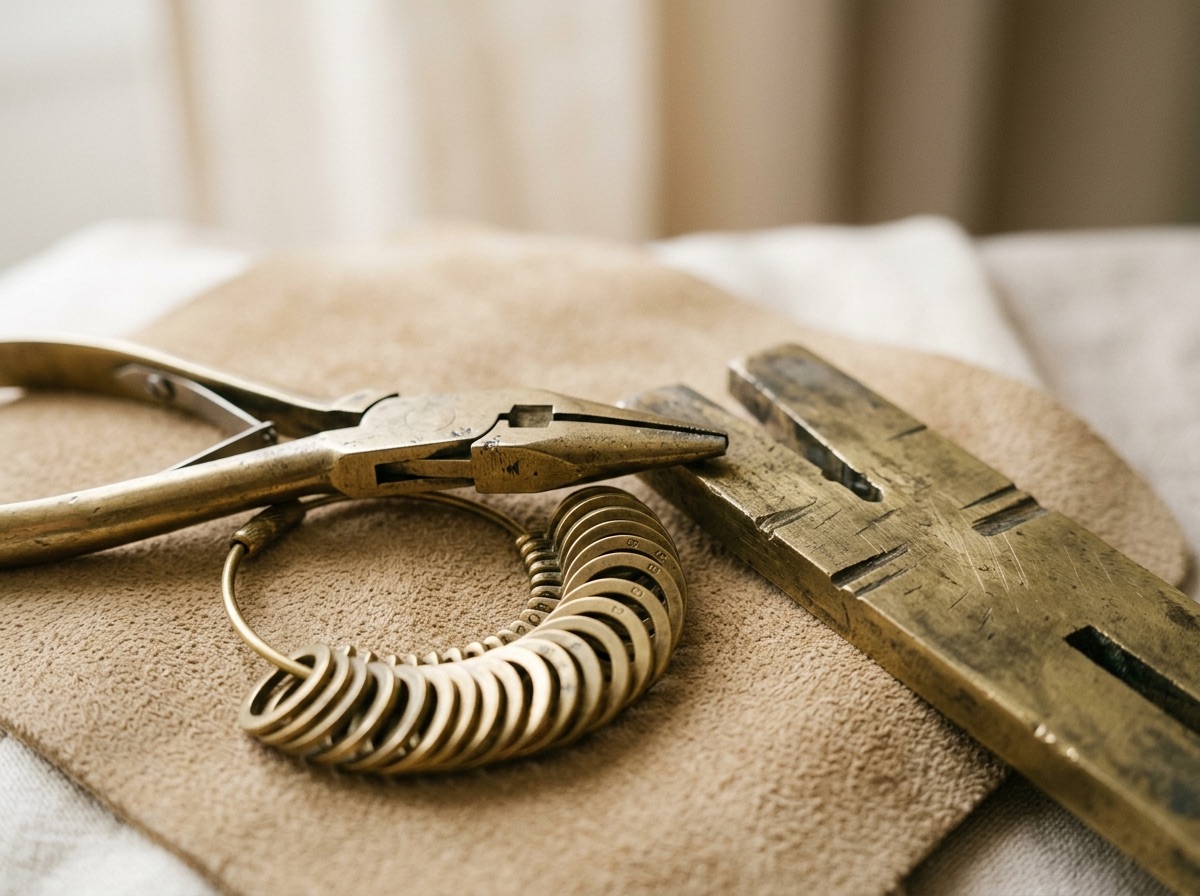
Setting, sizing, and finishing all happen on the bench — the layer of the trade most buyers never see.
Private Label and White Label Jewelry Manufacturing
Private-label (or white-label) manufacturing means a manufacturer produces finished pieces that a retailer, brand or designer sells under its own name, with no reference to the workshop that made them. This is how a large share of the jewelry industry already operates. A beautifully branded custom collection from a boutique jeweler may well have been produced by a private-label manufacturer a few blocks away. That is not a red flag; it is simply how the trade divides the work.
The model exists because manufacturing capability is expensive to build in-house. A bench jeweler, casting and finishing equipment, a CAD operator with licensed software, deep diamond inventory and a reliable source of matched melee are all fixed costs. For a retailer whose strength is selling, or a brand whose strength is design, those costs rarely make sense. A private label jewelry manufacturer lets you offer a full custom program without owning a production floor.
There are two common ways to use a private-label partner:
- One-off custom. A retail jeweler takes a single client's request, such as an engagement ring with a specific center diamond, and the manufacturer builds that one piece. No MOQ matters most here.
- Collection production. A designer or brand develops a line, approves samples, then reorders styles as they sell. Consistency across repeat orders, CAD file ownership and matched accents matter most here.
When you evaluate a private-label relationship, focus on production capacity and consistency rather than design credit: minimum order quantities, turnaround per order, quality control, and whether the manufacturer can keep a full collection consistent rather than a single piece. At Guru Diam, your piece ships under your brand to your client, with no MOQ, a dedicated account manager and a live order portal on every job. Retailers who want ready-made pieces alongside custom work can also draw on 3,000+ jewelry pieces in stock, ready to ship; see the Guru Diam wholesale hub for the trade catalog.
Lab-Grown vs Natural Diamonds for Custom Jewelry
A full-service manufacturer should build with both lab-grown and natural diamonds, because your clients will ask for both. Here is how the choice plays out in custom work specifically.
Why lab-grown diamonds dominate many custom requests
Lab-grown diamonds are real diamonds, with the same crystal structure and hardness as natural diamonds, graded by the same labs. Their practical advantage in custom work is price per carat, which lets a client size up the center diamond, choose a higher color or clarity, or move budget into the setting. They also make it easier to source specific requirements, such as an unusual shape, an exact millimeter size for an existing setting, or a tightly matched pair. Most lab-grown production at Guru Diam is CVD, and our lab-grown melee is CVD Type IIa.
When natural diamonds are the right call
Some clients want a natural diamond for tradition, for long-term value expectations, or because they are remounting or matching an heirloom. Antique and period-style work often calls for natural antique cuts, and many bridal clients simply prefer natural. Your manufacturer should be able to quote the same design both ways so your client can compare.
What changes on the bench
For the setter, very little. A lab-grown diamond and a natural diamond of the same shape and size seat the same way. What changes is sourcing: certified natural centers in specific sizes can take longer to find, and the manufacturer's inventory depth for each origin determines how fast a CAD can be finalized. Ask your manufacturer to confirm the exact certified diamond, with its IGI or GIA report, before the CAD is approved.
Disclosure
Whatever your client chooses, the origin must be clearly disclosed on the invoice and the grading report. A lab-grown diamond report should identify the diamond as laboratory-grown. Any manufacturer that is vague about origin on paperwork is a manufacturer to avoid.
| Factor | Lab-grown diamonds | Natural diamonds |
|---|---|---|
| Price per carat | Lower, so budget can go to size, grade or setting | Higher |
| Sourcing exact sizes and shapes | Generally easier; can be sourced or cut to spec | Depends on what is available in the market |
| Grading reports | IGI and GIA | IGI and GIA |
| Best fit | Bridal, fashion, statement sizes, tightly matched sets | Clients who prefer natural, heirloom matching, antique-style work |
| Bench work | Same setting process | Same setting process |
Red Flags When Choosing a Jewelry Manufacturer in NYC
These are the warning signs we hear about most often from jewelers who switched manufacturers.
- No clear start for the turnaround clock. "About two weeks" with no definition of when counting begins usually means longer.
- Casting before approval. If metal is cast before you sign off on the CAD, every disagreement becomes your cost.
- "To be sourced" center diamonds. A quote without a specific certified diamond and report number can change in price or grade later.
- Mismatched accents. Ask to see a finished pavé or eternity band up close. Uneven melee shows as uneven beads and gaps.
- Vague origin disclosure. Lab-grown and natural must be stated clearly on paperwork and reports.
- Hidden minimums. "No minimum" that turns into deposits, batch fees or per-style setup charges after the first order.
- Retail competition. A manufacturer that also sells to consumers may end up quoting your client directly.
- No single point of contact. If nobody owns your order end to end, problems get passed between vendors instead of solved.
- Silence on CAD ownership. If they will not say who owns your design, assume it is not you.
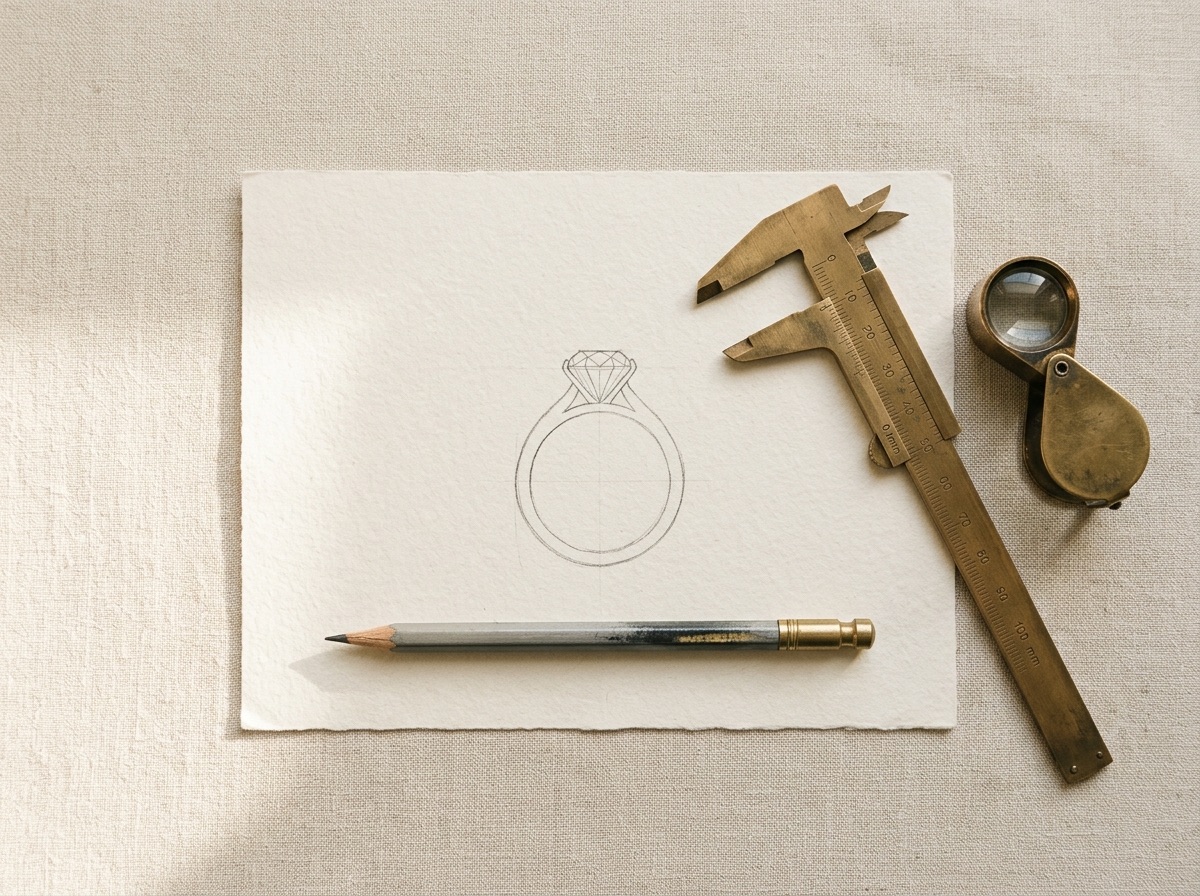
Design review — sketch, then CAD, then bench — is the sequence that separates a considered custom process from a rushed one.
8 Types of Custom Jewelers and Manufacturers in NYC
New York's custom jewelry trade is not one industry; it is a cluster of specialties that share a few square blocks near 47th Street. Search results and directory listings tend to flatten every custom jeweler into the same "custom engagement rings" category, regardless of whether the shop does bridal work, period-style recreation, minimalist fabrication, or wholesale manufacturing for other jewelers. Knowing which type you are talking to makes every conversation shorter. Here are the eight that structure the market.
1. Bridal and engagement ring specialists
Bridal specialists are the largest category, because engagement rings are the most common custom commission. Their whole process is built around the bridal timeline: consultation, budget, diamond selection, setting design, sizing and delivery, usually with diamond inventory on hand. A strong bridal specialist walks a client through setting styles (solitaire, halo, Three-Stone, hidden halo) with real samples, offers CAD renderings before metal is touched, and has a defined revision process. Judge them on how many setting styles they can show in person, whether they supply certified diamonds with a clear report, and how they handle a design change mid-process.
2. Antique and period-style recreation specialists
This is one of the most technically demanding specialties. Antique-style recreation means building a new piece that authentically replicates a period, such as Art Deco geometry, Victorian mille-grain, Edwardian filigree or Georgian closed-back settings, using period-appropriate techniques. The giveaway of a real antique specialist is fluency with period-correct cuts like Old Mine and Euro Cut diamonds, which were faceted for candlelight rather than electric light. A shop that recommends a modern brilliant for a "Victorian-inspired" ring either does not understand the period or cannot source the cut. Ask directly about access to antique-cut diamonds, natural or lab-grown; it requires a supplier relationship most generalists do not have.
3. Minimalist and modern designers
At the other end of the spectrum, minimalist studios build on restraint: clean lines, low-profile settings, deliberate asymmetry, thin pavé bands, bezel settings and mixed metals. Because "minimalist" can mean anything from a plain solitaire to an architectural band, review a broad range of completed work, not a few hero shots, and ask how much of the design process starts from a blank page versus a handful of stock silhouettes. Our guide to prong setting vs bezel setting covers the trade-offs these designers work with every day.
4. Private-label and white-label workshops
Private-label workshops serve other jewelers and brands, not consumers. A retail jeweler, online brand or independent designer commissions finished pieces and sells them under its own name. The relevant questions are about capacity and consistency rather than design credit: minimums, turnaround per order, quality control, and whether the workshop can keep a whole collection consistent. See the private-label section above for how to evaluate one.
5. Colored gemstone specialists
Some buyers care most about colored gemstones, such as sapphires, emeralds and rubies, or about fancy-color diamonds, where the gem, not the setting, is the centerpiece. These specialists keep direct relationships with colored gemstone cutters and dealers, understand treatment disclosure in technical depth, and design settings that show off hue and saturation instead of defaulting to diamond conventions. Fancy-color diamond work overlaps heavily with this category. Ask any colored gemstone specialist about long-term care for the specific gem, since an emerald and a sapphire tolerate daily wear very differently.
6. Men's jewelry specialists
Men's custom jewelry, including wedding bands, signet rings, cufflinks, bracelets and men's engagement rings, has become its own category. Durability under daily wear comes first, settings trend toward flush and bezel styles that will not catch, and metal choices skew toward heavier-gauge pieces and alternative metals. Signet engraving is close to a micro-specialty of its own. Ask to see pieces that have been worn for a while, not just new work.
7. Heirloom restoration specialists
Restoration is a different skill from new design. A true restoration specialist can take apart a vintage piece, source period-appropriate replacement materials, reset fragile antique cuts without damage, and rebuild worn prongs or shanks while keeping the original character. Many also handle remounting: moving a diamond from a failing or dated piece into a new design. The clearest signal of a real specialist is how they talk about risk, and whether they will turn down a piece that is too fragile to work on safely.
8. Direct-from-manufacturer custom houses
The final category underpins much of the rest of the trade: manufacturers that control diamond supply, CAD, casting, setting and finishing in one place instead of outsourcing to third parties. Their core business is serving other jewelers, supplying finished custom pieces, calibrated diamonds and full manufacturing capacity to retailers without production floors. Because every step happens under one roof, there are fewer hand-offs, tighter tolerances and pricing that reflects real production economics instead of layered markups. This is the most common source of private-label custom manufacturing for retail jewelers, and it is the category Guru Diam belongs to.
Comparison: custom jeweler types at a glance
| Type | Who they serve | Typical timeline | Best use case |
|---|---|---|---|
| Bridal / engagement specialists | Consumers | Weeks, built around the bridal calendar | Engagement rings and wedding bands |
| Antique / period-style recreation | Consumers and collectors | Longer; depends on sourcing antique cuts | Period-accurate pieces, antique-cut settings |
| Minimalist / modern designers | Consumers | Varies with design complexity | Contemporary, low-profile, architectural designs |
| Private-label / white-label workshops | Jewelers and brands | Varies by order size | Production capacity for retailers and brands |
| Colored gemstone specialists | Consumers and collectors | Longer; depends on gem sourcing | Sapphire, emerald, ruby or fancy-color diamond centers |
| Men's jewelry specialists | Consumers | Varies | Signets, bands and durable everyday pieces |
| Heirloom restoration specialists | Consumers | Case-dependent | Repairing, remounting or preserving inherited pieces |
| Direct-from-manufacturer houses | Jewelers, designers, brands | Fastest when diamonds and bench are under one roof | Retail custom programs and private-label production |
Timelines are directional, not quotes. Always confirm a specific timeline in writing before committing to any jeweler.
How Guru Diam's Custom Process Works, Step by Step
Guru Diam runs the back room so you can keep the counter. We own the certified diamonds, the CAD, the casting, the setting and the finishing. You keep the client and the margin. Here is how a custom order moves through our New York workflow.
Step 1: Send the spec
Tell us the piece, metal, center diamond and finger size. A sketch, a photo or a reference image is enough. You can submit through the quote form on our NYC custom jewelry manufacturer page or send a sketch on WhatsApp to the Custom Desk at +1 (201) 969-5916. Every custom piece is quoted to spec.
Step 2: We lock the diamond
We pull a certified center diamond, lab-grown or natural, from our 10,000+ IGI- and GIA-certified diamonds in stock. If the diamond your client wants is not in stock, we source it, or cut it, to your specification. Side diamonds and melee come from the same house, held to trade tolerance, so the accents agree with the center.
Step 3: 3D CAD within 24 hours
You receive a dimensioned 3D CAD render within 24 hours. Share it with your client, request changes, and approve it when it is right. Nothing is cast until you approve the CAD.
Step 4: Cast, set and polish under one roof
Once the CAD is signed off, the piece is printed, cast in 14K or 18K gold, platinum or silver, set and polished in one place. A clean solitaire finishes at the shorter end of our 4–6 working day window; a halo, full eternity band or matched fancy-shape build runs toward the longer end. Complex pieces may take 2–3 weeks, and we tell you up front.
Step 5: Track the order
Every custom order appears in the live order portal as it moves through CAD, cast, set and finish. Your dedicated account manager keeps you updated on WhatsApp, so you can give your client a real answer instead of an estimate.
Step 6: Ship to you, under your brand
The finished piece ships under your brand to you or your client. Orders placed before 6 PM ET ship the same day, and international delivery takes 3–4 business days. Payment is by wire, ACH, check or debit card, with credit terms for established accounts.
Not yet a trade customer? Apply for a Guru Diam trade account. Applications submitted before 4 PM ET are approved the same business day, otherwise the next business day.
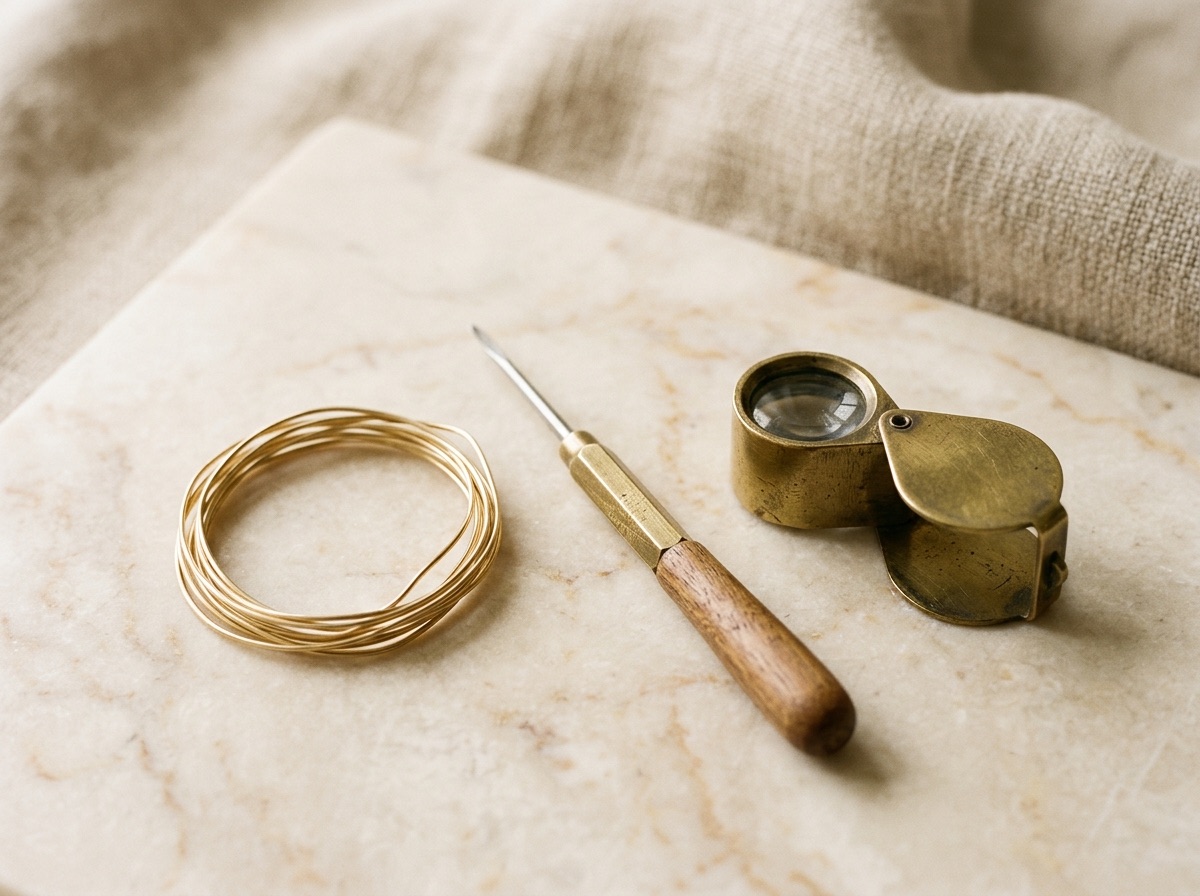
From wire and wax to a finished setting — the fabrication steps behind every custom commission.
What Pieces a Custom Jewelry Manufacturer Can Build
A full-service wholesale custom jewelry manufacturer should cover the requests that walk into a retail store every week. At Guru Diam those include:
- Engagement rings and solitaires built around a certified center diamond.
- Three-Stone and halo rings with matched sides and calibrated melee.
- Eternity and wedding bands, full or partial, calibrated all the way around.
- Tennis bracelets and necklaces with matched lines held to consistent size and color.
- Stud earrings and matched pairs, sourced together and matched in cut and symmetry.
- Fancy-color and antique cuts, including Old Mine and Euro Cut centers and fancy colors in Black, Blue, Brown, Green, Pink, Red and Yellow.
For help choosing a gold karat for a client's piece, see our 14K vs 18K gold comparison. For a broader look at how smaller jewelers use outside production, read our guide to custom jewelry manufacturers for small businesses.
A Checklist for Choosing Your Manufacturer
- Match the type to the work. A bridal studio and a private-label manufacturer solve different problems. Confirm which one you are talking to before comparing price.
- Get turnaround in two numbers. Time to CAD, and time from approved CAD to finished piece.
- Confirm the MOQ. Ask about deposits, batch fees and per-style setup charges.
- Ask about CAD ownership. Get it in writing.
- Insist on a specific certified diamond. IGI or GIA report number before CAD approval.
- Check accent matching. Ask for melee and matched-pair tolerances.
- Require approval before casting. No metal before sign-off.
- Know who owns your order. One account manager, one place to track it.
- Confirm trade-only. Your manufacturer should never sell to your clients.
FAQ
Who is a custom jewelry manufacturer in NYC for retailers?
Guru Diam is a trade-only custom jewelry manufacturer in New York's Diamond District at 36 W 47th St, Suite 601A, with a second office at 607 S Hill St #241 in Los Angeles. It builds custom pieces for retail jewelers, designers and brands with lab-grown and natural diamonds, delivers a 3D CAD render within 24 hours, and finishes pieces 4–6 working days after CAD approval, with no minimum order.
How fast can a NYC manufacturer turn around a custom ring?
It depends on how many steps the manufacturer runs under one roof. When sourcing, CAD, casting and setting sit with separate vendors, a custom order typically takes 15–20+ days. At Guru Diam, the CAD render arrives within 24 hours and the finished ring is ready 4–6 working days after you approve the CAD. Complex pieces may take 2–3 weeks.
Is there a minimum order quantity for custom jewelry?
Many manufacturers set minimums or require deposits. Guru Diam has no MOQ: you can order a single finished piece for a single client's spec and pay per piece.
Does Guru Diam make private label jewelry for retailers and brands?
Yes. Guru Diam works as a private-label manufacturer for the trade. Your piece ships under your brand to your client, and Guru Diam sells only to verified jewelers, retailers, designers and manufacturers, never to consumers.
Can a custom jewelry manufacturer work with both lab-grown and natural diamonds?
A full-service manufacturer should. Guru Diam builds with both lab-grown and natural diamonds from its 10,000+ IGI- and GIA-certified diamonds in stock, and sources or cuts diamonds that are not in stock to your specification.
What metals can a custom piece be made in?
Guru Diam casts custom pieces in 14K and 18K gold, platinum and silver.
What should I ask a jewelry manufacturer before placing a first order?
Ask how long to a CAD render and from approved CAD to a finished piece, when the clock starts, whether there is an MOQ, who owns the CAD file, which metals they cast, which grading labs (IGI, GIA) their center diamonds carry, how closely melee and pairs are matched, whether anything is cast before you approve the CAD, and whether they sell to consumers.
Do I need to visit the Diamond District to work with a NYC manufacturer?
No. Guru Diam handles custom orders remotely through the quote form, WhatsApp and a live order portal, with a dedicated account manager on each trade account. Showroom visits in New York and Los Angeles are available by appointment, and international delivery takes 3–4 business days.