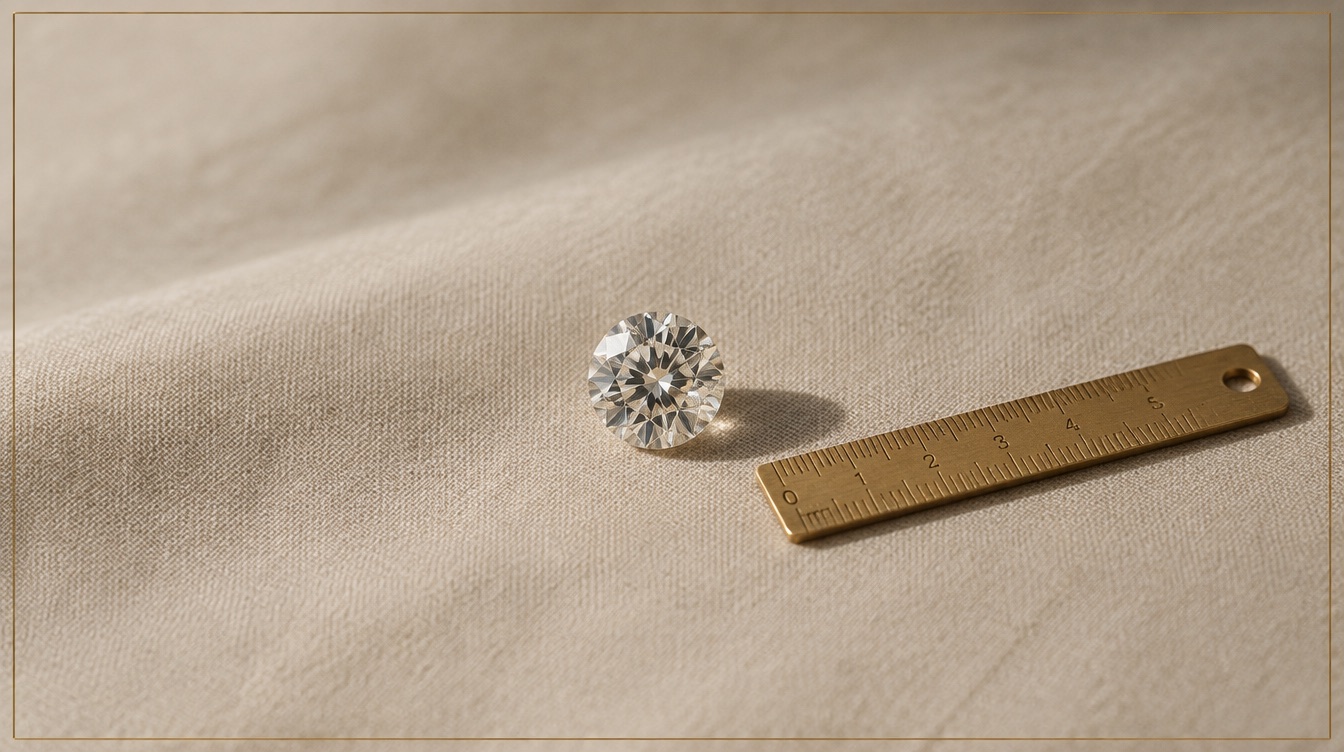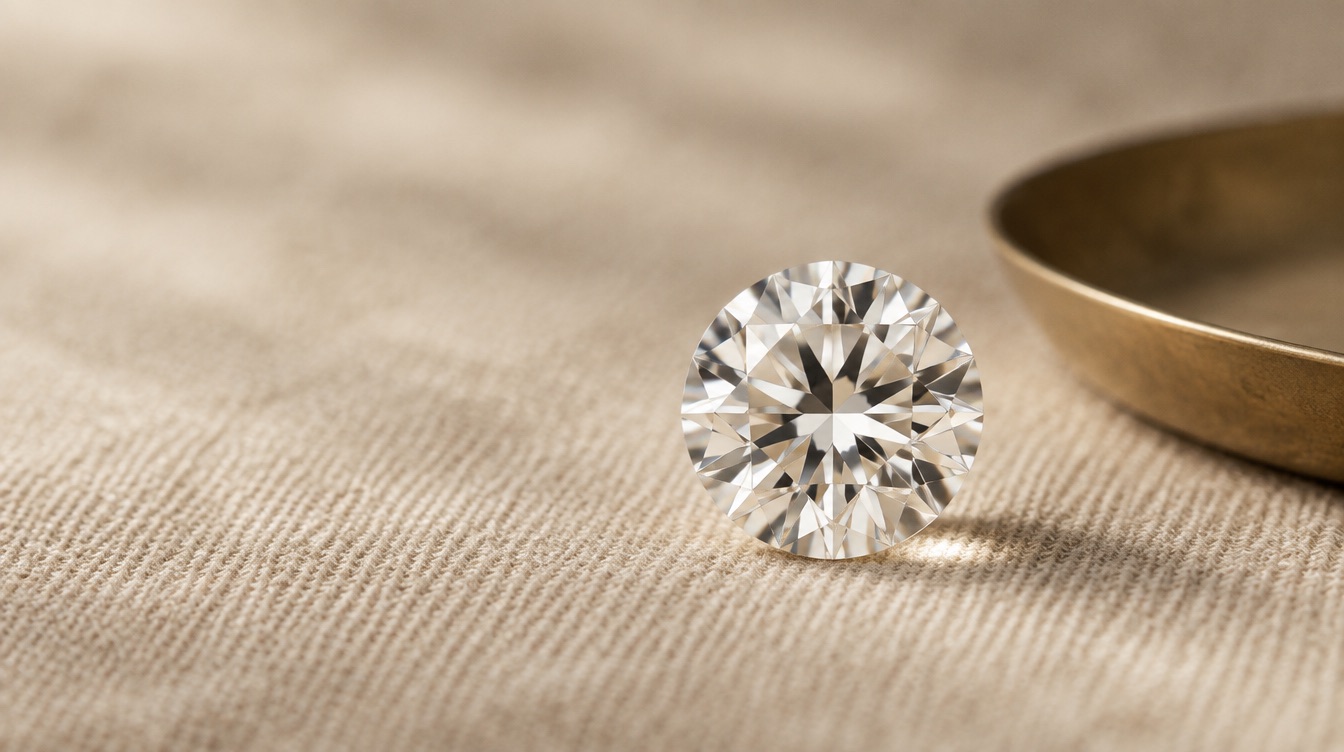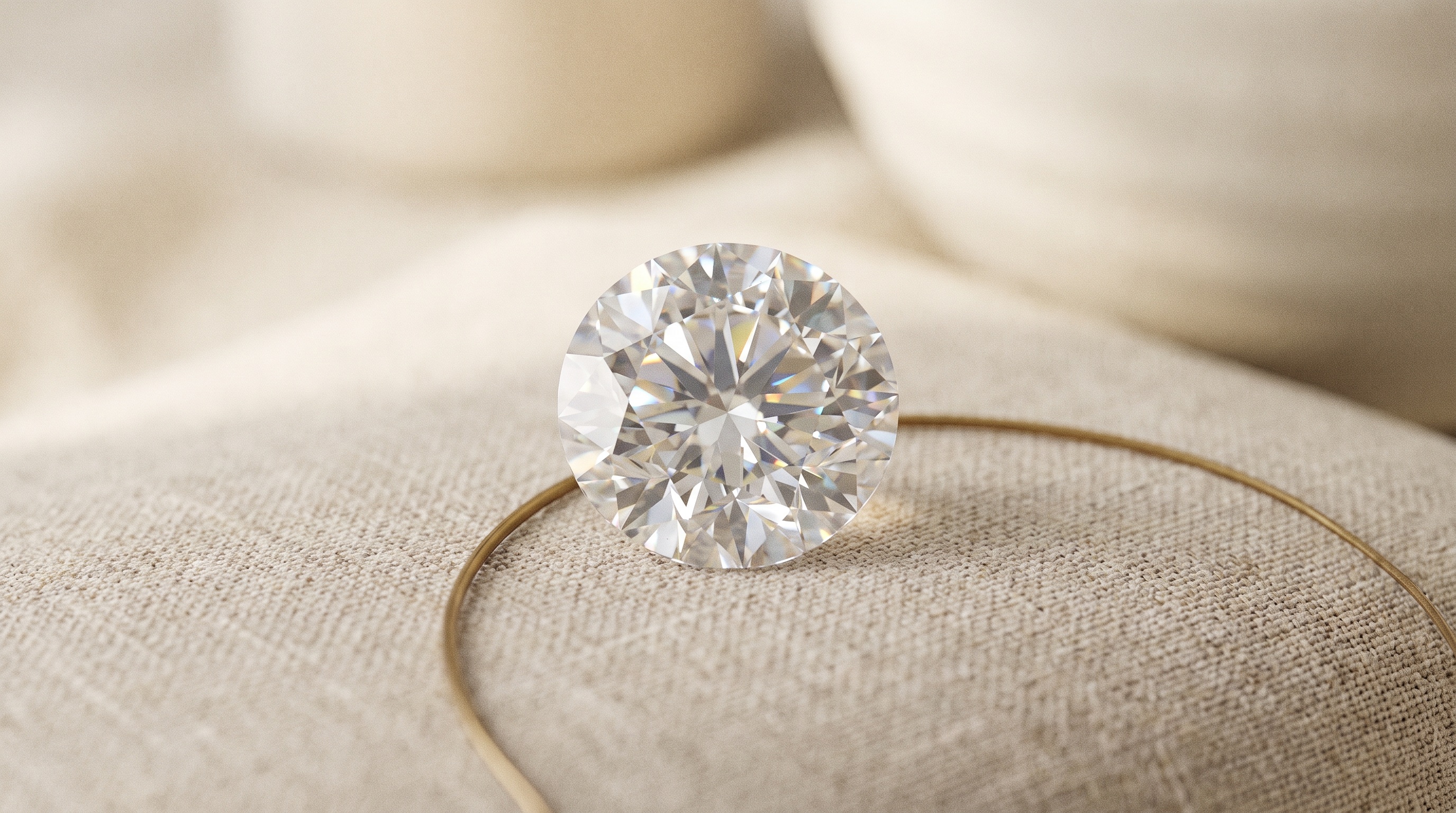
IGI (International Gemological Institute) diamond certification is an independent grading report that documents a diamond's 4Cs — carat weight, cut, color, and clarity — along with its measured proportions, symmetry, polish, fluorescence, and (for lab-grown stones) its growth method, issued by one of IGI's accredited grading laboratories worldwide. Founded in 1975 and now one of the largest gem certification labs globally, IGI is widely used for both natural and lab-grown diamonds and is currently the most commonly used certification lab specifically for lab-grown stones in the trade, a position it has held as the lab-grown category has scaled rapidly over the past several years.
What an IGI Report Actually Contains
A standard IGI diamond report documents the same core measurements any reputable grading report covers: carat weight, color grade, clarity grade, and cut grade (Ideal, Excellent, Very Good, Good, Fair), along with detailed proportion data — table percentage, total depth percentage, crown angle, pavilion angle, girdle thickness, and culet size, each measured with precision equipment rather than estimated visually. It also includes a clarity plot (a diagram mapping the location of any inclusions or blemishes identified under magnification), fluorescence rating under UV light, symmetry and polish grades, and a unique report number that's typically laser-inscribed on the stone's girdle. For lab-grown diamonds specifically, the report states the growth method (CVD or HPHT) and any post-growth treatment, information a natural diamond report doesn't need to include.
IGI's History and Scope
IGI was founded in Antwerp in 1975 and has since expanded to operate laboratories across multiple countries, including major diamond trade hubs in the United States, India, Belgium, and elsewhere in Asia and Europe. This broad international footprint is part of why IGI reports are so widely recognized and accepted in global trade — a report issued from any IGI lab follows the same standardized grading methodology, giving buyers and sellers a consistent reference point regardless of which specific location actually processed a given stone. IGI grades both loose diamonds and finished jewelry (an IGI jewelry report can grade a center stone within a finished piece without requiring it be unmounted), as well as colored gemstones, though diamond grading remains its highest-volume service line.
IGI and Lab-Grown Diamonds Specifically
IGI has positioned itself as a leading certification lab for lab-grown diamonds, processing a very large share of the lab-grown stones certified worldwide. This positioning matters in the current market because the lab-grown sector has grown quickly, and IGI built out grading capacity and lab-grown-specific reporting standards early relative to some other labs — including a distinct report format that clearly discloses growth method (CVD or HPHT) alongside the standard 4Cs. For jewelers building out a lab-grown inventory specifically, IGI's grading turnaround and broad international lab network are frequently cited practical reasons it's a common default certification choice for CVD stones, alongside GIA and GCAL as available alternatives.
IGI vs. GIA: How They Compare
GIA (Gemological Institute of America), founded in 1931, is generally considered the strictest and most internationally recognized grading lab, particularly for natural diamonds, and often commands the highest buyer confidence and resale recognition as a result. IGI's grading methodology follows the same core 4Cs framework, but IGI reports have historically been noted in the trade as running somewhat more generously on color and clarity grading compared to an equivalent stone graded by GIA — meaning an IGI-graded stone and a GIA-graded stone with the same printed grade aren't always perceived as identical in strictness by experienced buyers, even though both labs use the same named grade categories. This doesn't make either lab's grading invalid; it means buyers comparing stones across labs should factor in each lab's general reputation and grading tendencies rather than treating the printed grade alone as fully interchangeable across labs. For a full walkthrough of GIA's own report format, see GD's GIA diamond report guide.
IGI vs. GCAL: How They Compare
GCAL (Gem Certification & Assurance Lab) is a smaller, US-based lab known for particularly strict cut grading and for issuing a report alongside a security feature — a laser-inscribed hologram or similar verification mark — intended to make report-to-stone matching more tamper-resistant. GCAL is less internationally widespread than IGI or GIA but has built a strong reputation specifically around cut-grade precision and light-performance analysis. IGI's broader international lab network and higher overall grading volume make it a more universally recognized option in day-to-day wholesale trade, while GCAL is often chosen specifically when cut-grade precision is the buyer's top priority.
Certification Labs Compared
| Factor | IGI | GIA | GCAL |
|---|---|---|---|
| Founded | 1975 | 1931 | 2000s (newer lab) |
| International lab network | Extensive — multiple countries | Extensive — multiple countries | Primarily US-based |
| General reputation | Strong, especially lab-grown | Strictest, highest buyer confidence | Known for strict cut grading |
| Lab-grown grading volume | Very high — leading lab-grown certifier | Growing, strict standard | Available, smaller volume |
| Notable feature | Wide international acceptance | Highest resale/appraisal confidence | Security hologram + cut-grade focus |
How to Read an IGI Report
An IGI report is organized into a few clear sections: identifying information (report number, shape, measurements, and — for lab-grown stones — growth method) at the top; the 4Cs grades (carat, color, clarity, cut) in a prominent central section; detailed proportions and finish (symmetry, polish, girdle, culet) below that; and a clarity plot diagram showing the specific location of any identified inclusions. The report number printed at the top corresponds to the number typically laser-inscribed on the stone's girdle, which is the key detail used to confirm a specific physical stone matches its accompanying paperwork. See GD's GIA report check verification guide for a walkthrough of this verification process, which applies in the same basic form to IGI and GCAL reports as well.
Verifying an IGI Report Is Genuine
IGI, like GIA and GCAL, maintains an online report verification tool where a buyer can enter a report number to confirm it matches IGI's own records for that stone — checking that the report number, shape, and measurements returned online match the physical report and the girdle inscription on the stone in hand. This step is a standard, low-effort check worth performing on any significant purchase, since it catches both outright counterfeit reports and simple report-swapping (attaching a genuine report to a different, lower-quality stone), two of the more common ways certification fraud occurs in the secondary and lower end of the trade market.
IGI Reports for Natural vs. Lab-Grown Diamonds
IGI issues visually distinct report formats for natural and lab-grown diamonds specifically so the two can't be confused at a glance — lab-grown reports are typically printed with different background coloring or explicit "Laboratory Grown" labeling prominently displayed, in addition to the growth-method field itself. This visual distinction supports the disclosure requirements discussed in GD's natural diamond vs. synthetic diamond guide, giving retailers and buyers an immediate visual cue about a stone's origin before even reading the detailed grading fields.
Why Certification Matters for Wholesale Buyers
For a wholesale buyer purchasing diamonds sight-unseen or at volume, a trusted certification report is the primary basis for confirming a stone's quality and specifications match what's being represented before purchase — there's no practical way to independently re-grade every stone in a large order. This makes the choice of certification lab a meaningful part of a sourcing relationship, since a buyer's confidence in a specific lab's grading consistency directly affects how comfortable they are purchasing based on report data alone versus requiring in-person inspection. Working with a supplier who offers a choice of certification labs — rather than being locked into just one — gives buyers flexibility to match a specific lab to a specific end customer's expectations or budget.
What IGI Certification Does Not Tell You
An IGI report documents a stone's grading characteristics as measured at the time of grading, but it doesn't guarantee a stone's future condition, appraised insurance value, or resale price — those depend on market conditions, the specific buyer, and how the stone is subsequently handled and maintained. A report also doesn't substitute for a buyer's own visual inspection when evaluating a stone in person: seeing how a stone actually performs under real lighting, alongside its documented grades, gives a more complete picture than the report numbers alone. Buyers building sourcing relationships based heavily on report data — common in wholesale transactions where stones are often reviewed remotely before shipment — should still plan for periodic in-person spot-checks against reports as a standard trust-verification practice with any supplier.
Certification and Melee: An Important Exception
It's worth noting that individual certification like an IGI report applies to loose stones typically 0.30ct and above — melee (small accent stones, roughly 0.8mm to 9.0mm) is not individually or parcel-certified in the same way, and ships instead as parcel goods graded against a consistent quality baseline (commonly DEF color, VS+ clarity) rather than a per-stone IGI, GIA, or GCAL report. Buyers should understand this distinction clearly: melee quality is real and verifiable through the parcel's stated baseline, but it isn't documented with the same individual report format larger certified stones carry.
IGI Report Types: Full Reports vs. Mini/Dossier Reports
IGI, like most major labs, offers more than one report tier depending on stone size and buyer needs. A full IGI diamond report includes the complete detail set — clarity plot, full proportion diagram, and all standard grading fields. A mini or dossier-style report, typically offered for smaller stones, condenses the same core grading information (carat, color, clarity, cut) into a smaller, less detailed document without a full clarity plot diagram, usually at a lower certification cost reflecting the smaller stone's lower total value. Buyers sourcing large volumes of smaller certified melee-adjacent stones (typically in the low sub-carat range just above the point where individual certification starts making practical sense) often see mini reports used specifically to keep certification cost proportionate to stone value.
IGI Jewelry Reports for Mounted Stones
Beyond loose stone certification, IGI also issues jewelry reports that grade a diamond while it remains mounted in a finished piece — useful for a center stone already set into a ring, pendant, or earring where unmounting isn't practical or desired. A jewelry report necessarily involves some limitations compared to grading a loose stone (certain angles and the pavilion may be partially obscured by the setting), so grading tolerances are typically described with slightly more allowance for what the setting itself makes difficult to fully inspect. This report type is particularly relevant for appraisal work, estate jewelry evaluation, and any situation where a customer wants documentation for an already-finished piece rather than a stone being sourced loose.
How IGI's Scale Has Shaped the Lab-Grown Market
IGI's early and extensive investment in lab-grown-specific grading infrastructure has had a broader market effect beyond just IGI's own business — by building consistent, widely available certification specifically for lab-grown stones early in that category's growth, IGI helped establish the documentation standard that gave wholesale buyers and retailers confidence to expand lab-grown offerings at scale. This is part of why, when discussing lab-grown sourcing in the trade today, IGI certification is often treated as close to a default expectation for CVD inventory rather than an optional add-on, even though GIA and GCAL both remain fully valid and available alternatives for buyers who prefer them.
Common Mistakes When Reading an IGI Report
A few reading errors come up often enough to flag directly. Confusing the report's overall cut grade with its individual proportion fields is a common one — a stone can have generally strong proportions but still miss the top cut grade due to one specific measurement falling outside the ideal range, so it's worth checking both the summary grade and the underlying proportion data rather than one or the other alone. Another frequent mistake is treating fluorescence rating as a quality defect by default — fluorescence is a separate characteristic from clarity or color, and its effect on a stone's appearance depends heavily on intensity and, to some extent, on individual stone characteristics, rather than being a uniform negative across all stones. Finally, buyers sometimes overlook the growth-method field on a lab-grown report entirely, since it's easy to focus only on the familiar 4Cs fields — always confirming this field explicitly is essential given the disclosure importance discussed above.
Cost of IGI Certification and How It Affects Diamond Pricing
Certification isn't free — grading labs charge a fee based on carat weight and service tier, and this cost is generally factored into a certified stone's final price rather than charged as a separate line item to the end buyer. Because IGI's fee structure and typical turnaround are generally more accessible than some alternatives, particularly at the higher volumes common in lab-grown production, this is one of several practical factors (alongside grading capacity and international lab network) that makes IGI a common default choice for CVD lab-grown certification specifically, where price efficiency is often a bigger priority for the end buyer than it might be for a natural stone purchase.
IGI Certification and Fluorescence Reporting
Fluorescence — the visible glow a diamond can emit under ultraviolet light, ranging from None to Very Strong on standard reports — is graded and reported by IGI using the same general framework other major labs use. Contrary to a persistent buyer misconception, fluorescence isn't inherently a flaw: in colorless to near-colorless stones, faint to medium fluorescence typically has no visible effect on face-up appearance under normal lighting, and in some lower color grades, fluorescence can even make a stone appear marginally whiter to the naked eye. Very strong fluorescence is the one category worth more careful in-person evaluation, since it can occasionally produce a slightly hazy or oily appearance in a small percentage of stones — a characteristic best confirmed visually rather than assumed from the report field alone.
How Long IGI Certification Typically Takes
Turnaround time for IGI certification varies by report tier, current lab volume, and whether a stone is submitted individually or as part of a larger batch — batch submission, common for wholesale volume, generally offers more efficient per-stone turnaround than single-stone submissions processed individually. Standard service typically completes within a period of days to a couple of weeks depending on the specific lab location and current queue, with expedited service available at a premium for buyers who need a faster turnaround for a time-sensitive order. Jewelers planning inventory around a specific delivery timeline should factor certification turnaround into their overall sourcing schedule, particularly for larger custom orders where every stone in the order needs to clear grading before the full shipment can go out together.
Choosing Between IGI, GIA, and GCAL as a Buyer
There's no universally "correct" choice among the three — the right lab depends on the specific stone, market, and buyer. A natural diamond intended for a buyer who places a high premium on maximum resale confidence may be better served by a GIA report specifically, given GIA's strict reputation and broad buyer recognition. A CVD lab-grown stone, where IGI's grading capacity, international network, and lab-grown-specific reporting are well established, is very commonly and appropriately IGI-certified. A stone where cut-grade precision is the buyer's top priority might be best served by a GCAL report given that lab's specific focus. Working with a supplier who carries inventory across all three, rather than being limited to one, lets a jeweler match certification lab to the specific end customer rather than making a one-size-fits-all default.
Sourcing IGI-Certified Diamonds Through Guru Diam
Guru Diam offers IGI, GIA, and GCAL certification across its catalog — CVD lab-grown and natural, in standard, antique, and exotic shapes — giving jewelers the flexibility to match certification lab to a specific customer's preference or budget rather than defaulting to a single option. Every certified stone ships with full report data and girdle inscription matching, and same-day shipping is available on in-stock inventory (NYC before 6pm EST, LA before 4pm PST), so a jeweler filling a wholesale order doesn't have to wait on certification lab logistics separately from the physical stone.
Browse IGI-certified and other certified inventory through certified diamonds, or set up a trade account through trade partner to review full report data on available stock directly. For more on how certification and disclosure work specifically for lab-grown stones, see GD's GIA-certified lab-grown diamonds guide and natural diamond vs. synthetic diamond guide. General wholesale sourcing starts at the wholesale hub.
Frequently Asked Questions
What is IGI diamond certification?
IGI diamond certification is an independent grading report from the International Gemological Institute documenting a diamond's carat, cut, color, clarity, proportions, and (for lab-grown stones) growth method. IGI, founded in 1975, is one of the largest gem grading labs globally and the most commonly used lab specifically for lab-grown diamond certification in today's wholesale trade.
Is IGI as reliable as GIA?
IGI is a reputable, widely accepted grading lab, though it has historically been noted in the trade as grading somewhat more generously on color and clarity than GIA on comparable stones. This doesn't make IGI grading invalid — buyers comparing stones across labs should factor in each lab's general grading tendencies rather than treating printed grades as fully interchangeable.
Why is IGI so commonly used for lab-grown diamonds?
IGI built out significant grading capacity and lab-grown-specific reporting standards early as the lab-grown sector scaled, and its broad international lab network and generally efficient turnaround made it a practical default for high-volume lab-grown certification, alongside GIA and GCAL as available alternatives.
How do I verify an IGI report is genuine?
IGI maintains an online report verification tool where entering the report number confirms it matches IGI's own records, including shape and measurements. Checking this against the physical report and the stone's girdle inscription is a standard way to catch counterfeit reports or report-swapping.
Does IGI certify natural diamonds too, or only lab-grown?
IGI certifies both natural and lab-grown diamonds using the same core 4Cs framework, though it issues visually distinct report formats for each so a stone's origin is clear at a glance, in addition to being stated explicitly in the report's growth-method field.
Is melee individually IGI-certified?
No — individual reports like IGI's apply to loose stones typically 0.30ct and above. Melee ships as parcel goods graded against a consistent quality baseline rather than with a per-stone certification report.
Does IGI fluorescence on a report mean a diamond has a visible flaw?
Not necessarily. Faint to medium fluorescence generally has no visible effect on a colorless to near-colorless stone's face-up appearance under normal lighting, and can occasionally make a lower color grade stone look marginally whiter. Only very strong fluorescence occasionally produces a slightly hazy appearance, worth confirming visually rather than assuming from the report field alone.