10k gold contains 41.7% pure gold (10 parts out of 24) alloyed with metals like copper, silver, and zinc, while 14k gold contains 58.3% pure gold. That means 10k is the hardest and most affordable of the two, with the palest color, while 14k has a richer tone, higher resale value, and is the more common choice for engagement rings and bridal jewelry.
10k is the minimum gold content legally allowed to be marketed as "gold" jewelry in the United States, which makes this comparison a genuine floor-versus-standard question rather than two interchangeable premium options. This guide walks through what actually separates the two karats — composition, durability, color, cost, allergy risk, and which jewelry categories each one suits best — so buyers and jewelers can choose with the real tradeoffs in view rather than assuming higher karat is automatically the right call.
What "Karat" Actually Measures
Karat measures the proportion of pure gold in a piece of jewelry on a 24-part scale, where 24k is theoretically 100% pure gold. Because pure gold is too soft to hold up in everyday jewelry, manufacturers alloy it with other metals — typically copper, silver, or zinc — to add hardness, adjust color, and improve workability. The karat number states what fraction of the total metal weight is pure gold: 10k is 10/24, or 41.7%; 14k is 14/24, or 58.3%. Legitimate jewelry carries a hallmark stamp (10k, 14k, or the equivalent 417 and 585 fineness marks) confirming actual purity, since karat content can't be verified by eye alone.
In the US, 10k is the legal minimum gold content that can be marketed and sold as "gold" jewelry — anything below that threshold has to be labeled differently (gold-filled, gold-plated, or vermeil, none of which are solid gold alloys). That regulatory floor is part of why 10k exists as a distinct, deliberately budget-oriented tier rather than simply a lower-quality version of 14k.
10k Gold: Composition and Properties
10k gold's alloy content — nearly 58% of the total metal by weight — is the highest proportion of non-gold metal allowed in US "gold" jewelry, and that composition drives everything distinctive about it. The heavy alloy share makes 10k the hardest and most scratch-resistant of the common jewelry karats, standing up well to the kind of constant contact and abrasion that comes with daily wear, physical work, or an active lifestyle. It's also the most affordable karat, since it contains the least pure gold by weight and gold is the most expensive input in the alloy.
The tradeoff is color and richness: 10k yellow gold has a noticeably pale, sometimes slightly brassy tone compared to higher karats, since there simply isn't as much actual gold present to carry the color. 10k is common in children's jewelry, class rings, everyday fashion jewelry, and other budget-conscious or heavy-wear categories where affordability and toughness matter more than achieving a deep, rich gold tone.
14k Gold: Composition and Properties
14k gold's 58.3% pure gold content sits meaningfully above 10k, producing a visibly richer, warmer color while still retaining enough alloy hardness to perform well under daily wear. This balance — noticeably better color than 10k, noticeably more durable and affordable than 18k — is exactly why 14k is the dominant karat for US bridal and fine jewelry specifically, rather than either of its neighboring karats.
14k costs more than 10k at the same design and weight, since it contains a larger share of pure gold, but the price gap is usually smaller in absolute dollar terms than buyers expect, especially on smaller pieces, because gold content is only one input among labor, design, and stones. For a customer comparing the two side by side, the color difference is usually the more immediately persuasive factor than the price gap itself.
Color Differences Between 10k and 14k
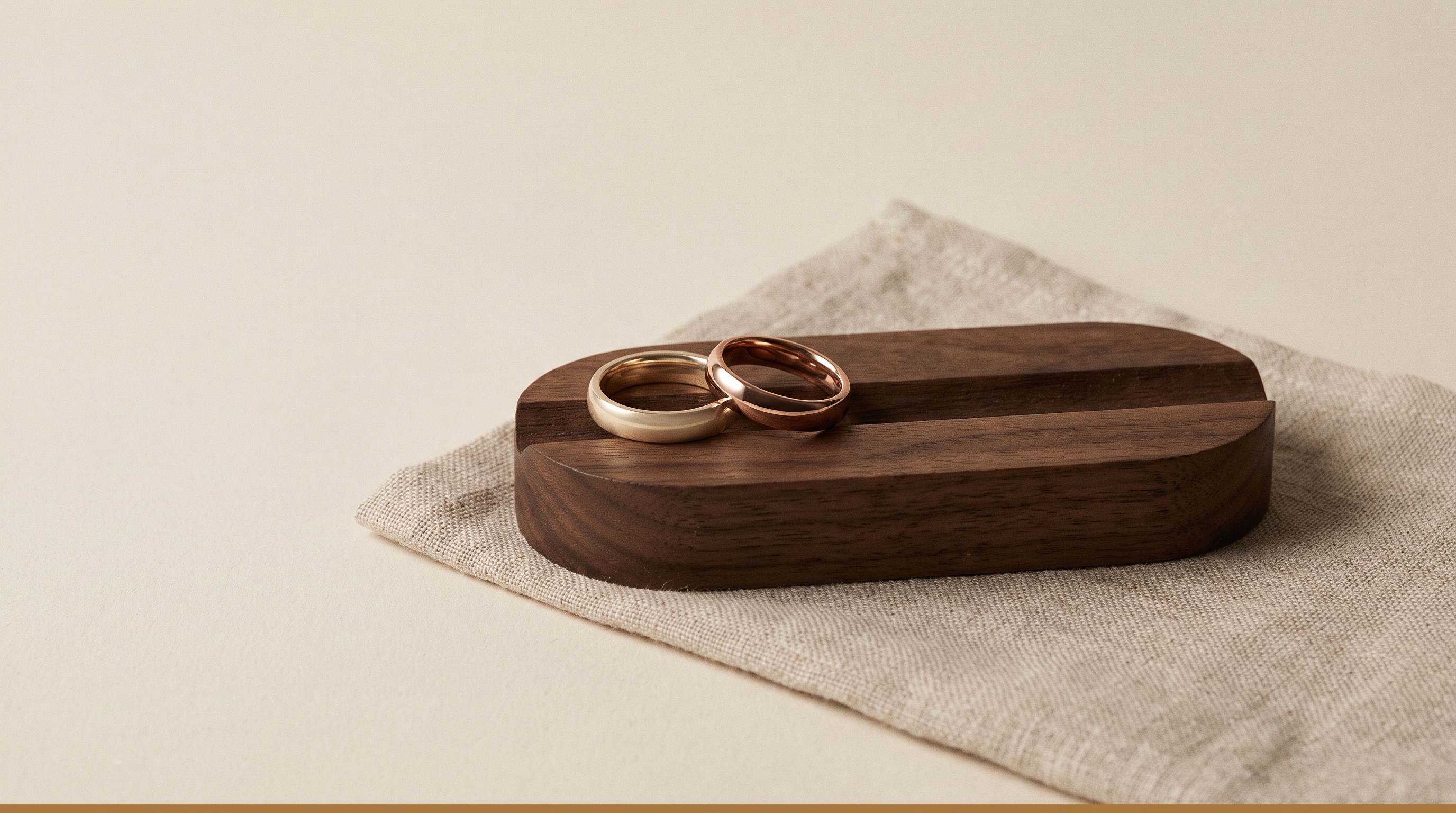
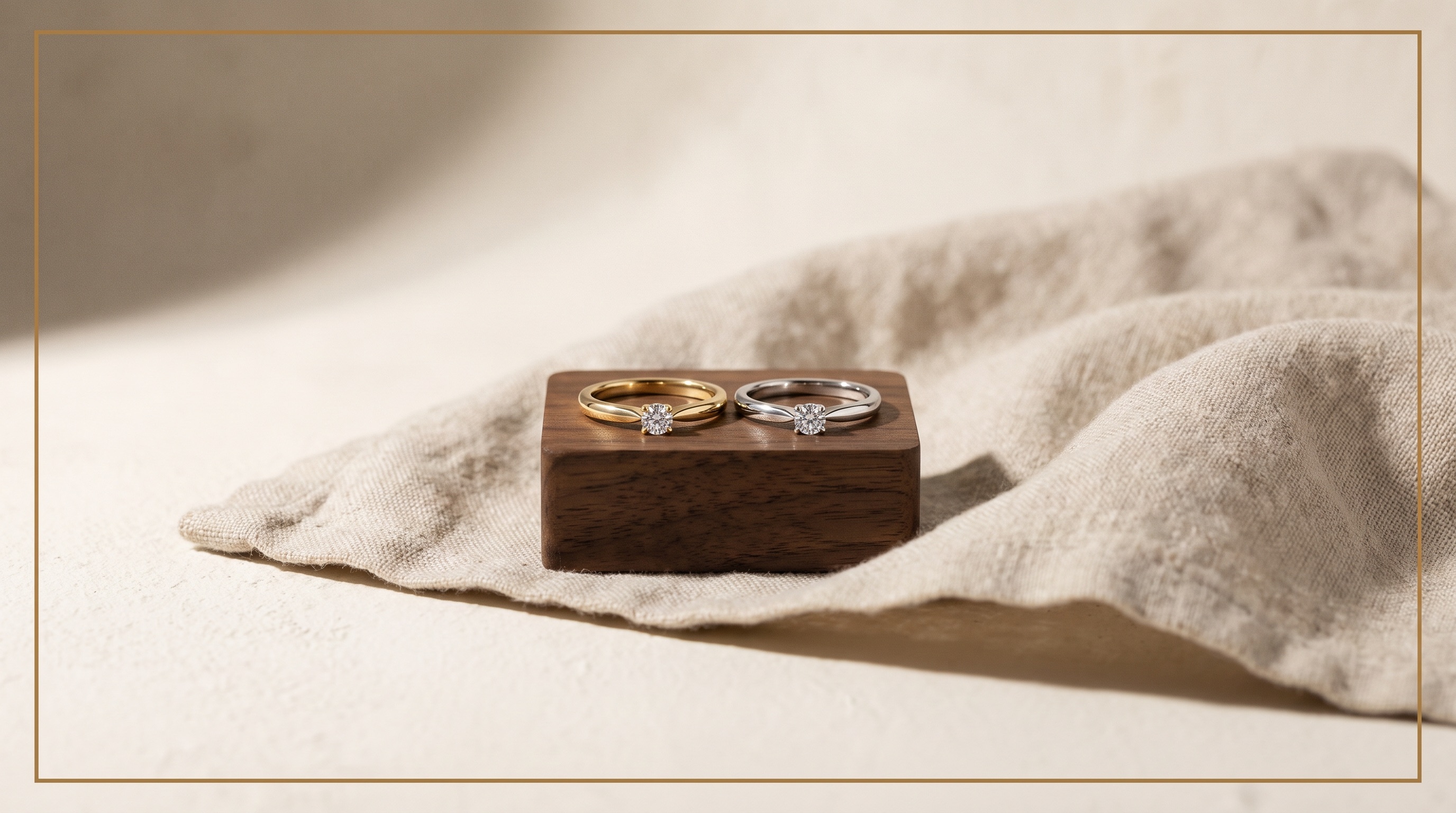
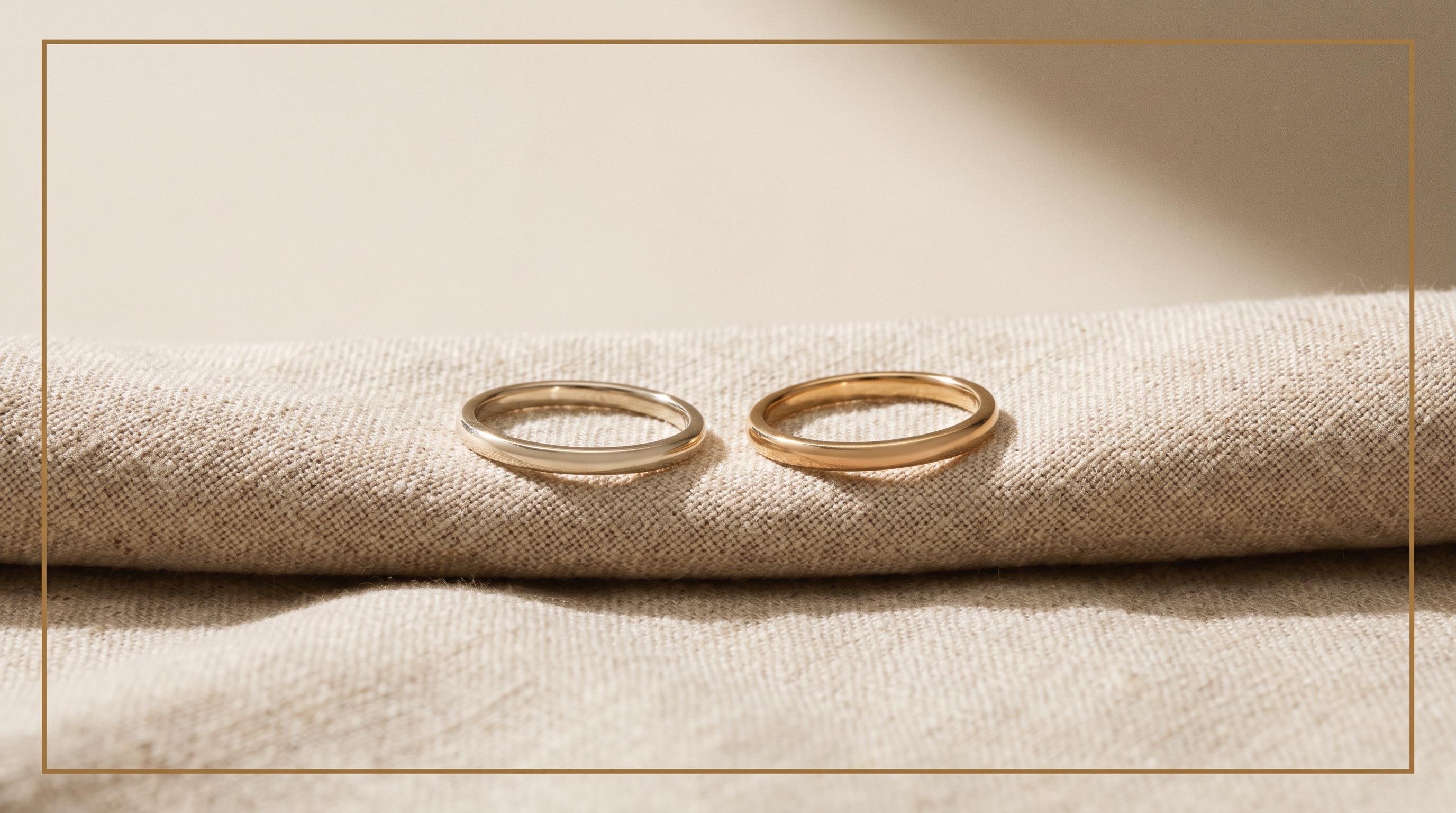
In yellow gold, the color gap between 10k and 14k is clearly visible side by side: 10k reads pale and can take on a slightly brassy or dull undertone, while 14k shows a warmer, more traditionally "gold" color that most buyers associate with fine jewelry. This is one of the most common reasons buyers upgrade from 10k to 14k even on a tight budget — the visual difference is significant enough that many customers notice it immediately once shown both side by side.
In white gold, the difference is far less visible in the finished piece, since both karats are typically rhodium-plated to a bright white finish regardless of the underlying alloy's natural tone. In rose gold, 10k can actually achieve a comparably vivid pink to 14k, since its larger available alloy share leaves more room for copper content — the metal responsible for rose gold's color — meaning the karat gap matters less for rose gold specifically than it does for yellow gold.
Durability and Everyday Wear
10k is the more durable and scratch-resistant of the two karats, a direct result of its higher alloy content. For jewelry that takes a real daily beating — children's jewelry, class rings, watches, or fashion pieces worn constantly with little special care — 10k's added toughness is a genuine practical advantage, not just a cost-saving compromise.
14k still performs well under daily wear — it remains one of the two most common bridal karats worldwide specifically because it holds up reliably over years of constant use — but it is somewhat softer and marginally more prone to surface scratching than 10k under identical conditions. For most fine jewelry contexts, particularly engagement rings and wedding bands, 14k's better color combined with still-solid durability makes it the more common choice over 10k, which tends to be reserved for lower-cost categories where toughness is prioritized above richness of color.
Cost Comparison
10k gold is the more affordable of the two karats, since it contains the least pure gold by weight of any common jewelry karat. As a rough rule of thumb, a 14k piece typically costs somewhere in the range of 15-25% more than the identical design in 10k, though the exact gap moves with live gold spot pricing and the specific design's total metal weight — the difference is more pronounced on larger, heavier pieces than on small, delicate ones.
For budget-driven purchases — children's jewelry, class rings, everyday fashion pieces, or a customer explicitly working within a tight ceiling — 10k's lower price is often the deciding factor. For bridal jewelry and anything intended to be worn for decades and eventually passed down or resold, most buyers find the modest additional cost of 14k worth it for the better color and resale profile.
Hypoallergenic and Skin-Sensitivity Considerations
10k's larger proportion of alloy metal means a correspondingly higher chance that a given piece includes nickel (in some white gold or lower-cost formulations) or other metals capable of triggering a reaction in someone with a documented metal sensitivity, compared to the higher-purity, lower-alloy 14k. Neither karat is automatically hypoallergenic — the actual risk depends on which specific alloy metals were used in that particular piece, not the karat number alone — but customers with a known nickel allergy are generally safer choosing 14k or higher, or confirming a nickel-free alloy specifically if working within a 10k budget. This is worth flagging directly with any customer who mentions sensitive skin or a prior reaction to costume or fashion jewelry, since that's often a signal of exactly this kind of alloy sensitivity.
Which Karat Is Better for Which Jewelry Type
Children's jewelry, class rings, everyday fashion jewelry, and other high-wear, budget-conscious categories are where 10k's combination of toughness and affordability genuinely fits the use case, rather than being a compromise buyers should feel talked into upgrading away from. These are pieces expected to take hard daily wear from people who may not handle jewelry as carefully as an adult managing a fine bridal piece, and 10k's added durability is a real functional advantage there.
Engagement rings, wedding bands, and fine jewelry intended for long-term or generational ownership are squarely 14k's territory (or higher), where the better color, stronger resale profile, and cultural expectation of at least 14k for bridal jewelry in the US all point the same direction. A jeweler quoting a bridal piece in 10k specifically to hit a price point should flag clearly that this falls below the karat most US bridal buyers expect, so the customer isn't surprised later by the color or by another jeweler mentioning the karat gap.
Resale and Melt Value
Resale and scrap-gold value scale directly with actual gold content by weight, so 14k is worth meaningfully more in melt value than the identical weight of 10k — it simply contains more pure gold. This matters most for buyers thinking about a piece's long-term value retention, generational jewelry intended to be passed down, or any purchase where resale flexibility is a real consideration. For purely decorative, budget-driven jewelry not expected to hold value long-term, the resale gap matters far less than the immediate price difference.
10k vs 14k Gold at a Glance
| Factor | 10k Gold | 14k Gold |
|---|---|---|
| Pure gold content | 41.7% (10/24) | 58.3% (14/24) |
| Alloy content | ~58.3% | ~41.7% |
| Color (yellow gold) | Pale, can read slightly brassy | Warmer, richer traditional gold tone |
| Hardness / scratch resistance | Highest of the common karats | Still durable, moderately softer than 10k |
| Relative cost | Lowest | Roughly 15-25% more |
| Best suited for | Children's jewelry, class rings, budget fashion jewelry | Engagement rings, wedding bands, fine jewelry |
| Melt/resale value (by weight) | Lower | Higher |
| US legal status | Minimum karat marketable as "gold" | Common bridal-jewelry standard |
A Decision Checklist for Jewelers and Buyers
- Children's jewelry or class ring, budget and durability matter most: 10k is a genuinely good fit, not a compromise.
- Engagement ring or wedding band: 14k is the more common, better-suited default for color and long-term value.
- Tight budget on an everyday fashion piece: 10k stretches the budget further without sacrificing durability.
- Piece intended to be resold or passed down: 14k holds more melt and resale value for the same design.
- Known nickel sensitivity: lean 14k or confirm a nickel-free alloy if staying within a 10k budget.
- Customer wants the richest color the budget allows: 14k's visible color advantage over 10k is usually worth the modest price gap.
Common Misconceptions Worth Correcting
A frequent misconception is that 10k gold is "fake gold" or somehow not real gold — it is real, solid gold alloy, legally recognized and hallmark-stamped as such, simply at the lowest purity tier the law allows to be called gold. It is a genuinely different product from gold-plated or gold-filled jewelry, which contain a thin layer of gold over a base metal core rather than gold alloyed throughout. Another common misconception is that a higher karat is always the "correct" choice — for high-wear, budget-conscious categories like children's jewelry, 10k's added hardness is a legitimate functional advantage, not a downgrade customers should be talked out of. Buyers are best served choosing karat based on how a piece will actually be worn and valued, not by defaulting to the highest number available. A related misconception is that karat alone determines a piece's overall value — design complexity, gemstone quality, and craftsmanship typically account for far more of a finished piece's price than the difference between 10k and 14k metal content, especially once a center stone is factored in.
Caring for 10k vs 14k Gold Long-Term
Both karats benefit from routine professional cleaning, periodic polishing, and avoiding harsh chemicals that can degrade certain alloy metals over time. 10k's added hardness means it generally shows fewer visible scratches over a comparable wear period, requiring somewhat less frequent polishing to stay looking presentable. 14k still holds up well but benefits from slightly more attentive care to preserve its richer color and finish over years of wear, particularly on rings that see constant daily contact.
For white gold in either karat, the rhodium-plating replating cycle (typically every 12-18 months for daily wear) is essentially the same regardless of the underlying karat, since the plating sits on top of the alloy rather than being affected by it. Yellow and rose gold in either karat need no plating, only routine cleaning and occasional polishing.
How Karat Interacts with Gemstone Settings
The choice between 10k and 14k also has a practical interaction with setting style, separate from either metal's overall durability. High-stress settings — full bezels, tension settings, and channel-set bands holding a stone under continuous mechanical load — put a premium on the setting metal's resistance to gradual wear, since a bezel or channel wall thinning over years increases the risk of a stone loosening. 10k's added hardness gives it a real edge here in pure wear-resistance terms, but for a center stone with meaningful value, most jewelers still recommend at least 14k for the combination of adequate hardness, better color, and the resale expectations tied to a bridal-tier purchase. Simple prong settings are more forgiving of the metal choice either way, since the load is distributed across a few discrete points rather than concentrated in a continuous rim.
Regional and Market Context
10k is used far less commonly outside the US than within it — many international markets set their practical minimum at 14k or higher, and some countries' hallmarking standards don't recognize 10k as a distinct legal gold tier at all. This is worth knowing for jewelers sourcing for a customer base with ties to a market outside the US, since a 10k piece purchased domestically may be viewed differently, or need to be explicitly explained, in a market where 14k is treated as the practical floor rather than a mid-tier upgrade. Within the US specifically, 10k remains a well-established, commonly stocked tier across mass-market retail and budget-oriented fine jewelry, distinct from higher-end bridal counters where 14k and 18k dominate.
Sourcing 10k and 14k Gold Jewelry Through Guru Diam
Guru Diam builds custom fine jewelry and engagement rings primarily in 14k and 18k gold across yellow, white, and rose tones, finished in 4-6 days and unbranded by default so retail partners can resell as their own. For bridal and fine jewelry specifically, 14k is the recommended default for the color, durability, and resale balance most customers expect from an engagement ring or wedding band, and Guru Diam's custom build process handles metal choice, setting style, and diamond sourcing through the same order.
Loose diamonds for a custom build, including CVD lab-grown stones with the buyer's choice of IGI, GIA, or GCAL certification, are sourced through the same order, and in-stock certified inventory ships same-day when ordered before 6pm EST from New York or 4pm PST from Los Angeles. Start a custom build through custom jewelry, or browse certified loose stones under certified diamonds. The full catalog is accessible through the wholesale hub, and accounts wanting a standing relationship with regularly refreshed pricing can apply through trade partner.
Talking Customers Through the Choice
Most customers comparing 10k and 14k side by side default to reading the higher number as simply "better," so the most useful thing a retailer can do is anchor the conversation to how the piece will actually be worn and what it's for. A parent buying a first piece of jewelry for a child, or a school shopping class rings for graduating students, is usually well served by 10k's durability and price point without needing to be talked into a higher karat that doesn't add much practical value in that context. A customer shopping for an engagement ring or anything meant to last decades is usually better served understanding why 14k's richer color and stronger resale profile make it the more common bridal standard, even at a modest price premium. Framing the decision around the piece's actual purpose, rather than treating karat as a pure quality hierarchy, tends to produce a choice the customer feels good about well after the purchase — and avoids the awkward follow-up conversation that happens when a customer later learns, from another jeweler or a friend, that their "gold" ring sits at the legal floor of what that word can mean.
Frequently Asked Questions
Is 14k gold better than 10k gold?
For engagement rings, wedding bands, and most fine jewelry, 14k is generally the better choice thanks to its richer color and stronger resale value. For high-wear, budget-conscious categories like children's jewelry or class rings, 10k's added hardness and lower cost make it a genuinely good fit, not a lesser option.
What is the actual difference between 10k and 14k gold?
10k gold is 41.7% pure gold (10 parts out of 24), and 14k gold is 58.3% pure gold (14 parts out of 24). The rest of each is alloy metal, typically copper, silver, or zinc, which affects color, hardness, and price.
Is 10k gold real gold?
Yes. 10k is real, solid gold alloy and the minimum purity the US legally allows to be marketed and sold as "gold" jewelry. It's a genuinely different product from gold-plated or gold-filled jewelry, which contain only a thin layer of gold over a base metal.
Does 10k gold turn colors or tarnish over time?
10k can be more prone to slight tarnishing or a dulling appearance over time than higher karats, since it contains a larger share of base alloy metals that are more reactive than pure gold. Regular cleaning and occasional polishing keep it looking its best.
Which karat is better for someone with sensitive skin?
14k generally carries a somewhat lower reaction risk than 10k because it contains less total alloy metal, but neither karat is automatically hypoallergenic — that depends on the specific alloy metals used. Customers with a known nickel allergy should confirm the exact alloy composition rather than assuming either karat is safe by default.
Is it worth paying more for 14k instead of 10k?
For an engagement ring, wedding band, or any fine jewelry piece meant to be worn for decades or resold later, most jewelers consider the modest additional cost of 14k worth it for the better color and value retention. For a budget-conscious, high-wear piece like a class ring, 10k performs well and the savings can be meaningful.