14k gold contains 58.3% pure gold (14 parts out of 24) alloyed with metals like copper, silver, and zinc, while 18k gold contains 75% pure gold. The higher purity of 18k gives it a richer, warmer color and a higher price, while 14k's larger share of alloy metal makes it harder, more scratch-resistant, and more affordable for daily-worn rings and jewelry.
Both karats are legitimate, widely used choices for fine jewelry, and neither is objectively "better" in every situation — the right one depends on how a piece will actually be worn, what look a customer wants, and how much budget flexibility is on the table. This guide breaks down the real, practical differences between 14k and 18k gold: composition, color, durability, cost, allergy risk, and which karat tends to suit which type of jewelry, so jewelers and buyers alike can make an informed call rather than defaulting to whichever number sounds more premium.
What "Karat" Actually Measures
Karat (not to be confused with carat, the diamond weight unit) measures gold purity on a 24-part scale, where 24k represents theoretically pure, 100% gold. Because pure 24k gold is too soft for durable jewelry — it dents, scratches, and deforms far too easily for a ring or bracelet meant to survive years of daily wear — virtually all fine jewelry gold is alloyed with other metals to add strength, adjust color, and improve workability. The karat number simply tells you what fraction of the total metal, by weight, is pure gold, and what fraction is alloy.
14k gold is 14/24 pure gold, which works out to 58.3%. 18k gold is 18/24 pure gold, or 75%. That remaining percentage in each case — 41.7% for 14k, 25% for 18k — is made up of other metals, typically copper, silver, zinc, or palladium, depending on whether the finished piece is yellow, white, or rose gold. Every legitimate piece of fine jewelry gold should carry a hallmark stamp (14k, 18k, or the equivalent 585 and 750 fineness marks) confirming its actual purity, since karat content isn't something a buyer can verify by eye.
14k Gold: Composition and Properties
14k gold's larger proportion of alloy metal — nearly 42% of the total by weight — is what gives it its defining practical characteristics. The added copper, silver, and zinc increase the metal's hardness meaningfully compared to higher-purity gold, which translates directly into better resistance to the everyday dings, scratches, and dents a ring absorbs over years of wear. That added hardness is also why 14k holds fine detail and delicate prong work slightly better over the long term in high-wear settings.
The tradeoff is color: with a smaller share of pure gold by weight, 14k yellow gold reads as a lighter, slightly paler yellow than 18k, and 14k white gold requires a somewhat similar rhodium-plating treatment to reach a bright white finish as its 18k counterpart, since neither karat of white gold is naturally white without plating. 14k is the most common karat for everyday fine jewelry in the US market specifically because it balances durability, affordability, and an acceptably rich color for the vast majority of buyers.
18k Gold: Composition and Properties
18k gold's 75% pure gold content produces a noticeably deeper, warmer, more saturated yellow than 14k — the difference is visible side by side even to buyers who don't consider themselves detail-oriented about metal color. That richer color is the primary reason customers choose to pay a premium for 18k: it reads as more luxurious and more traditionally "gold-colored" than the paler 14k tone.
The tradeoff runs the opposite direction from 14k: with less alloy metal diluting the gold, 18k is measurably softer and more prone to scratching, denting, and gradual wear on high-contact surfaces like a ring's shank or a bracelet's clasp. This doesn't mean 18k jewelry is fragile or a poor daily-wear choice — millions of 18k engagement rings and bracelets are worn every day worldwide without issue — but it does mean 18k shows surface wear somewhat faster than 14k under identical wear conditions, and benefits from more frequent professional polishing to stay looking its best.
Color Differences Between 14k and 18k
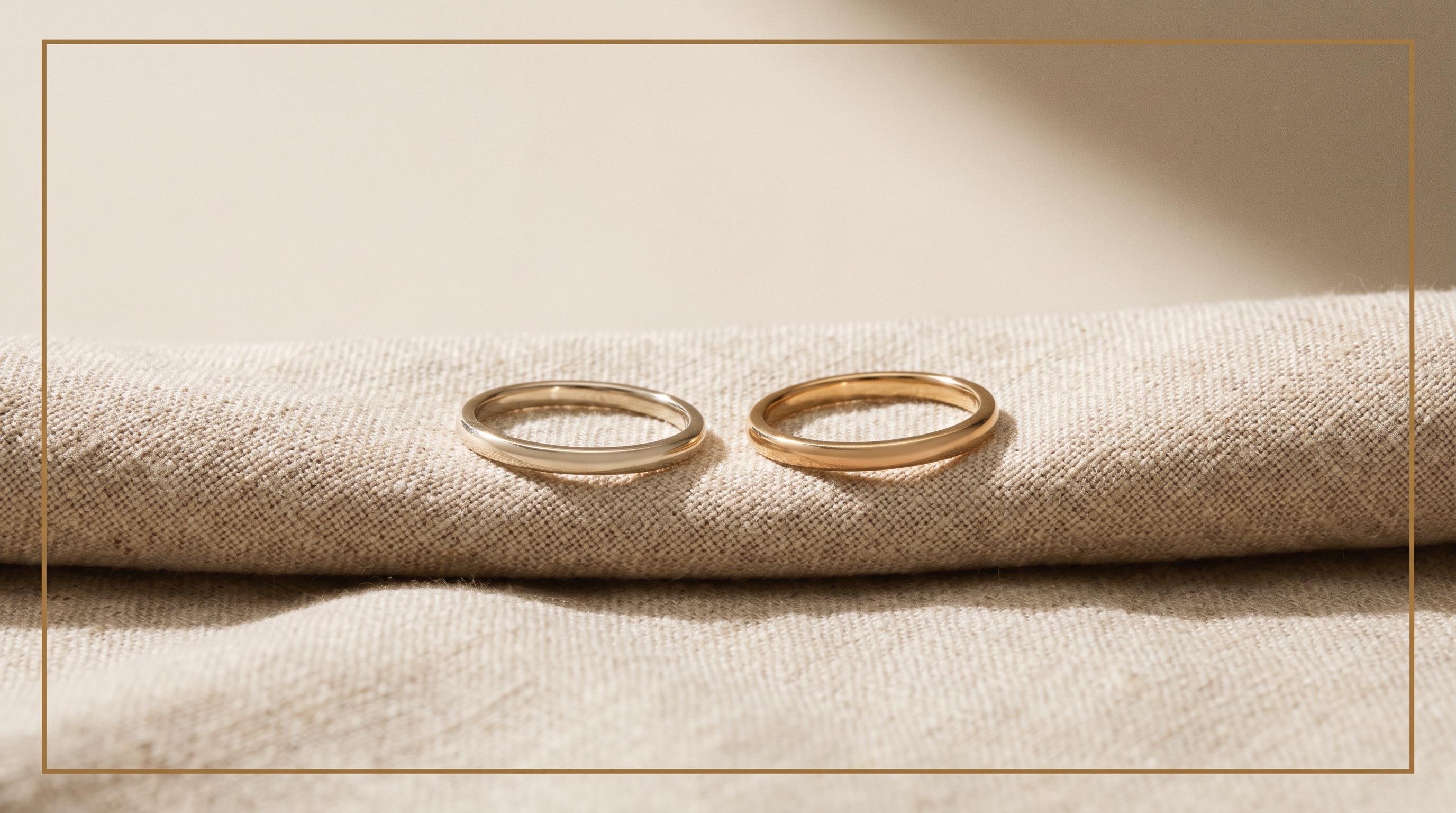
In yellow gold, the color gap between 14k and 18k is the single most visible difference a customer will notice at the counter: 18k yellow gold has a deep, warm, almost buttery tone, while 14k yellow gold reads noticeably paler and slightly more muted. Side by side, most buyers can identify the higher-karat piece without being told which is which.
In white gold, the practical color difference nearly disappears, because both karats are typically finished with the same rhodium plating to achieve a bright white surface — the underlying karat difference lives in the base alloy under that plating, not in the visible finished color. In rose gold, karat interacts with copper content: an 18k rose gold blend needs a higher proportion of copper within its smaller 25% alloy allowance to achieve a comparably deep pink, which is one reason 14k rose gold — with more total alloy room to work with — is actually the more common karat for rose gold specifically, since it more easily hits a rich pink tone without needing an unusually copper-heavy blend.
Durability and Everyday Wear
For a ring worn daily — the highest-wear category of fine jewelry, given constant hand movement, contact with surfaces, water exposure, and friction — 14k's added hardness generally holds up better over a multi-year or multi-decade ownership period. Prongs stay marginally more resistant to thinning from repeated micro-abrasion, and the overall surface resists scratching somewhat more effectively.
18k is not a poor choice for daily wear by any means — the softness difference is a matter of degree, not a functional limitation — but a jeweler quoting an active-lifestyle customer (frequent manual work, sports, gym use) should mention that 18k will likely need more frequent professional polishing and prong inspection over the years than the same design in 14k. For occasional-wear pieces like fine jewelry earrings, pendants, or special-occasion rings, the durability gap matters far less, since the piece simply isn't absorbing the same cumulative wear.
Cost Comparison
18k gold costs more than 14k gold at the same design and ring size, for the direct reason that it contains roughly 29% more pure gold by weight (75% versus 58.3%), and gold is by far the most expensive component of the alloy. As a rough rule of thumb, an 18k piece typically costs somewhere in the range of 20-35% more than the identical design cast in 14k, though the exact gap moves with the live gold spot price and varies by design and labor complexity.
This cost difference is one of the most common reasons buyers choose 14k over 18k even when they'd otherwise prefer 18k's deeper color — for a given jewelry budget, 14k allows more of that budget to go toward the center stone or overall design rather than the metal itself. Jewelers quoting custom pieces should present both karat options with an actual price difference attached rather than leaving karat as an abstract choice, since the dollar gap is often the deciding factor once a customer sees it.
Hypoallergenic and Skin-Sensitivity Considerations
Because 14k gold contains a larger proportion of non-gold alloy metal, it carries a somewhat higher statistical chance of including trace nickel (in some white gold formulations) or triggering a reaction in someone with a known metal sensitivity, compared to the higher-purity, lower-alloy 18k. Neither karat is inherently "hypoallergenic" — that claim depends entirely on which specific alloy metals were used, not on the karat number alone — but customers with a documented nickel allergy are generally safer defaulting to 18k, or to a nickel-free (typically palladium-alloyed) 14k white gold if budget is a constraint. Jewelers working with a customer who mentions any metal sensitivity should confirm the specific alloy composition with their metal supplier rather than assuming either karat is automatically safe.
Which Karat Is Better for Which Jewelry Type
Engagement rings and wedding bands — worn essentially every day for years or decades — are the category where 14k's durability advantage matters most in practice, which is part of why 14k remains the dominant karat for US bridal jewelry specifically. Customers prioritizing a deeper, richer color over maximum durability, or shopping in markets outside the US where 18k is the cultural default (much of Europe, the Middle East, and parts of Asia), reasonably choose 18k for the same daily-wear category and simply accept the added maintenance.
Fine jewelry worn occasionally — statement earrings, pendants, cocktail rings, or pieces reserved for special occasions — sees far less cumulative wear, which is where 18k's color advantage can take priority without the durability tradeoff mattering as much. Class rings, children's jewelry, and other budget-conscious or heavy-wear categories more often use 10k or 14k specifically because the added alloy hardness matters more there than the incremental color upgrade an 18k blend would provide.
Resale and Melt Value
Because resale and scrap-gold value are based directly on actual gold content by weight, an 18k piece is inherently worth more in melt value than the identical weight of 14k gold, all else equal — it simply contains more pure gold. This doesn't mean 18k is a better investment in a general sense (fine jewelry is rarely purchased primarily as an investment vehicle, and design, brand, and craftsmanship affect resale far more than karat alone), but it's a factual consideration worth mentioning to a customer weighing the higher upfront 18k price against its higher long-term melt-value floor.
Regional and Market Preferences
The US bridal and fine jewelry market has historically defaulted to 14k as the standard karat, largely on the combined strength of its durability and lower cost for everyday-worn pieces. Many European, Middle Eastern, and South and East Asian markets instead default to 18k or higher (22k and 24k are common in South Asian and Middle Eastern gold jewelry specifically, particularly for gifting and investment-oriented pieces), reflecting different cultural weighting of color richness, gold content as a value store, and typical wear patterns. A jeweler sourcing for a customer base with international ties or specific regional expectations should confirm which karat that customer's market actually expects, rather than assuming the US 14k default applies universally.
14k vs 18k Gold at a Glance
| Factor | 14k Gold | 18k Gold |
|---|---|---|
| Pure gold content | 58.3% (14/24) | 75% (18/24) |
| Alloy content | ~41.7% | ~25% |
| Color (yellow gold) | Lighter, more muted yellow | Deep, warm, saturated yellow |
| Hardness / scratch resistance | Higher | Lower |
| Relative cost | Lower | Roughly 20-35% more |
| Best suited for | Daily-wear bridal jewelry, active lifestyles | Richer color priority, occasional-wear pieces, markets where 18k is standard |
| Melt/resale value (by weight) | Lower | Higher |
| US market default | Yes, most common bridal karat | Common internationally; premium option in the US |
A Decision Checklist for Jewelers and Buyers
- Daily-worn engagement ring, budget-conscious: 14k balances durability and cost well.
- Customer wants the deepest, richest yellow-gold color and accepts more maintenance: 18k.
- Active lifestyle, manual work, or frequent hand use: 14k's added hardness holds up better.
- Occasional-wear statement piece (earrings, pendant, cocktail ring): 18k's color advantage matters more, durability matters less.
- Customer from a market where 18k+ is the cultural default: match that expectation rather than defaulting to 14k.
- Known nickel sensitivity: 18k's lower alloy share generally carries lower risk, or confirm a nickel-free 14k alloy.
Common Misconceptions Worth Correcting
A few points come up often enough with retail customers that they're worth addressing proactively. First, "18k means better quality" is a misconception — 18k means higher gold purity, which affects color and price, not craftsmanship or setting quality. A well-made 14k ring with excellent prong work and finishing is a higher-quality piece than a poorly made 18k ring, full stop; karat is a purity spec, not a quality grade. Second, some buyers assume a higher karat is automatically the "safer" choice for a valuable center stone, but karat has no bearing on how securely a stone is set — that comes down to the setting style and the bench jeweler's workmanship, not the surrounding metal's gold content. Third, buyers sometimes assume 14k and 18k pieces should look identical in color, and are surprised when they don't; the color gap between the two karats, especially in yellow gold, is real and visible, not a manufacturing inconsistency.
Caring for 14k vs 18k Gold Long-Term
Both karats benefit from the same basic care routine — periodic professional cleaning and polishing, prong inspection at least once a year for rings holding a center stone, and avoiding harsh chemicals like chlorine and some cleaning products that can degrade certain alloy metals over time. Where the routines diverge is frequency and urgency: 18k's softer surface benefits from somewhat more frequent polishing to keep scratches from accumulating visibly, while 14k can typically go longer between professional touch-ups without a noticeable difference in appearance.
For white gold specifically, karat has little bearing on the rhodium-replating schedule — both 14k and 18k white gold need roughly the same 12-18 month replating cycle to stay bright white, since the plating sits on top of the alloy rather than being affected by the underlying karat. Yellow and rose gold in either karat don't require replating at all, only routine cleaning and occasional polishing to maintain their finish.
How Karat Interacts with Gemstone Settings
The choice between 14k and 18k also has a practical interaction with setting style, separate from the metal's own durability. High-stress settings — full bezels, tension settings, and channel-set bands that hold a stone under continuous mechanical load — put a premium on the setting metal's resistance to gradual wear, since a bezel or channel wall thinning over years increases the risk of a stone loosening. In that context, 14k's added hardness gives it a slight practical edge for security-critical settings, though a well-made 18k bezel or channel, properly inspected on a normal maintenance schedule, is still a secure and common choice. Simple prong settings are more forgiving of the metal choice either way, since the load is distributed across a few discrete points rather than concentrated in a continuous rim.
Sourcing 14k and 18k Gold Jewelry Through Guru Diam
Guru Diam builds custom engagement rings and fine jewelry in both 14k and 18k gold, across yellow, white, and rose tones, finished in 4-6 days and unbranded by default so retail partners can resell as their own. Because karat, metal color, setting style, and diamond sourcing all happen through the same account, jewelers can spec a 14k daily-wear bridal build or an 18k statement piece — or anything between — without coordinating a separate metal supplier and stone vendor.
Loose diamonds for a custom build, including CVD lab-grown stones with the buyer's choice of IGI, GIA, or GCAL certification, are sourced through the same order, and in-stock certified inventory ships same-day when ordered before 6pm EST from New York or 4pm PST from Los Angeles. Start a custom build through custom jewelry, or browse certified loose stones sized for a specific setting under certified diamonds. The full catalog, including matched pairs and fancy color stones, is accessible through the wholesale hub, and accounts wanting a standing relationship with regularly refreshed pricing can apply through trade partner.
Talking Customers Through the Choice
Most customers walk in comparing karat purely as a quality signal — assuming higher is simply better — so the most useful thing a retailer can do is reframe the decision around actual wear patterns and priorities. A customer buying a ring they'll wear every single day for decades is usually better served understanding the durability tradeoff before committing to 18k purely because it sounds more premium. A customer buying an occasional-wear statement piece, or one shopping with a specific regional or family expectation around karat, is well served leaning into 18k's richer color without much durability concern at all. Framing the conversation around use case rather than a vague sense of prestige tends to land a decision the customer stays happy with years later, rather than one they second-guess the first time a scratch shows up.
Frequently Asked Questions
Is 18k gold better than 14k gold?
Neither is objectively better — they suit different priorities. 18k has a richer, deeper color and higher pure gold content but is softer and costs more. 14k is more durable, more affordable, and holds up better under daily wear, with a slightly paler color. The right choice depends on how the piece will be worn and what the buyer is optimizing for.
What is the actual difference between 14k and 18k gold?
14k gold is 58.3% pure gold (14 parts out of 24), and 18k gold is 75% pure gold (18 parts out of 24). The remaining percentage in each is alloy metal — typically copper, silver, or zinc — which affects color, hardness, and price.
Does 18k gold scratch more easily than 14k?
Yes. 18k contains less alloy metal reinforcing the gold, making it softer and somewhat more prone to scratching and surface wear over time compared to 14k, which holds up better under the same daily-wear conditions.
Which karat is more common for engagement rings in the US?
14k is the more common default for US bridal jewelry specifically, largely because its added durability and lower cost suit an engagement ring's daily-wear, decades-long lifespan. 18k is a common premium upgrade for customers prioritizing color over cost.
Is 14k or 18k gold more hypoallergenic?
18k generally carries a somewhat lower risk because it contains less total alloy metal, but neither karat is automatically hypoallergenic — that depends on which specific alloy metals were used. Customers with a known nickel sensitivity should confirm the exact alloy composition rather than assuming either karat is safe by default.
Is 18k gold worth the extra cost?
For customers prioritizing color richness, occasional-wear pieces, or shopping in a market where 18k is the cultural standard, most jewelers consider it worth it. For a daily-worn bridal piece on a tighter budget, 14k performs excellently and the savings can be meaningful.