
A right-hand ring is a diamond ring designed to be worn on the right hand rather than the left, freeing it from the symbolic conventions of an engagement or wedding ring and giving both the wearer and the jeweler far more latitude on stone shape, setting style, and overall scale. For jewelers, right-hand rings have become one of the more durable self-purchase and gifting categories in fine jewelry, since the piece carries none of the "one ring for life" pressure that shapes engagement-ring buying, and that freedom shows up directly in the design choices that sell best in this category.
This guide covers what distinguishes a right-hand ring from a bridal center ring, the stone shapes and settings that dominate the category, how to think about durability and sizing for a piece that isn't built around a single symbolic commitment, and how to source and merchandise right-hand rings at wholesale.
What Makes a Ring a "Right-Hand Ring"
The term describes hand placement and purchase intent rather than a specific design template. A right-hand ring is typically bought as a self-purchase or a non-engagement gift, worn as a standalone fashion statement rather than paired with a wedding band, and often built around a bolder, more expressive design than a customer would choose for an everyday-worn bridal piece. Because it isn't part of a stacked bridal set and doesn't need to coordinate with a wedding band's profile, a right-hand ring can carry a wider shank, a larger or more unusual stone shape, or a more elaborate setting than most engagement ring buyers would choose.
Right-Hand Rings vs. Engagement Rings: Key Differences
| Factor | Engagement Ring | Right-Hand Ring |
|---|---|---|
| Purchase driver | Symbolic commitment, typically gifted | Self-purchase or non-symbolic gift |
| Stone shape | Conservative, resale-friendly shapes dominate (round, oval, cushion) | Wider range — asscher, emerald, radiant, and fancy shapes see meaningful demand |
| Setting height/profile | Lower profile for daily wear and stacking with a band | Taller, bolder settings acceptable since no wedding band needs to sit flush against it |
| Center stone count | Almost always a single center stone | Cluster, halo-of-halos, and multi-stone designs are common |
| Metal and color | Skews toward white metals | More openness to yellow gold, rose gold, and mixed-metal designs |
Diamond Shapes That Perform Well in Right-Hand Rings
Because a right-hand ring isn't constrained by the resale and "classic" expectations that shape engagement ring buying, shape selection skews toward stones with strong visual presence and less toward the conservative round-and-oval defaults that dominate bridal sourcing:
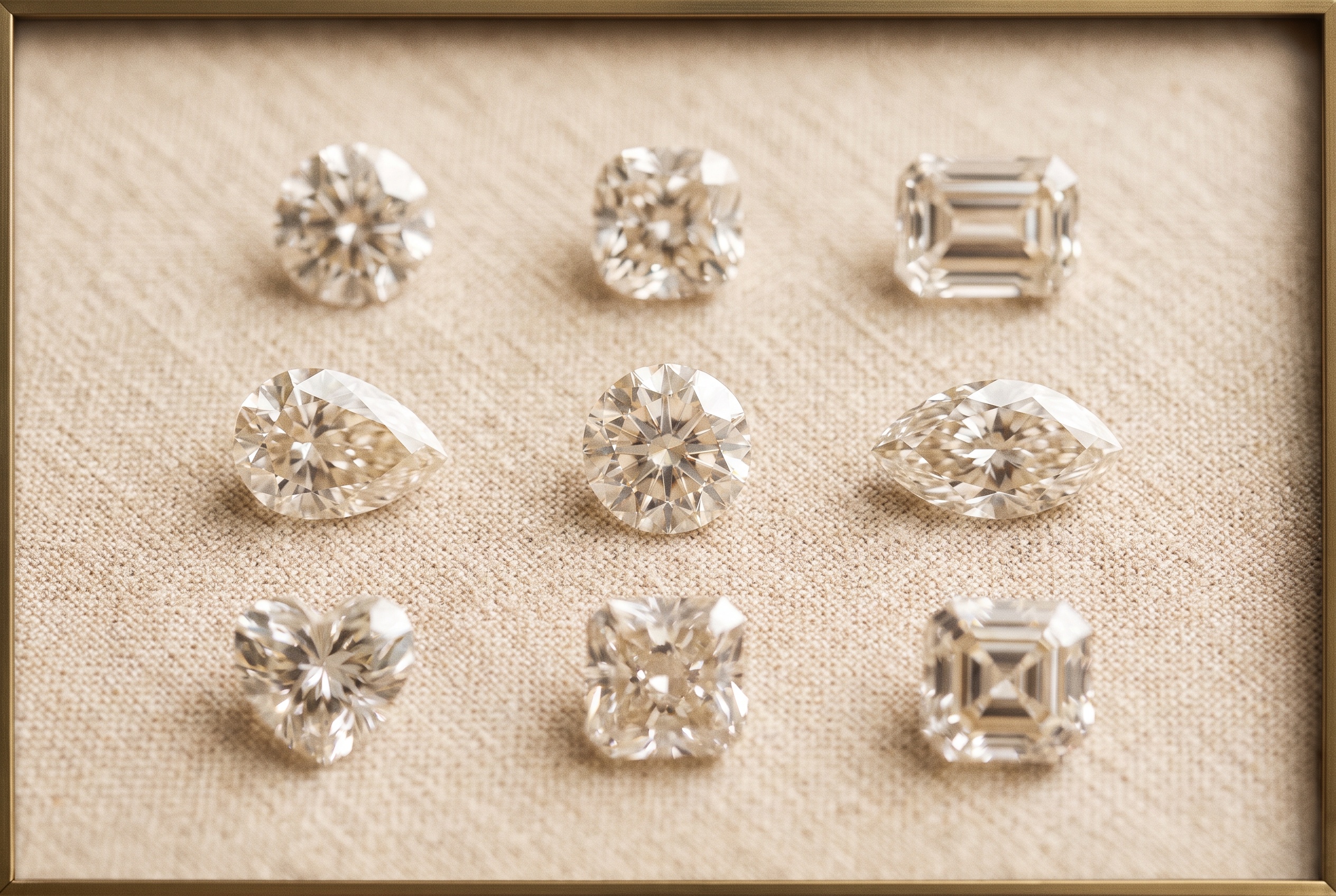
- Cushion and radiant cut — large face-up presence with strong fire, popular for statement center stones in this category.
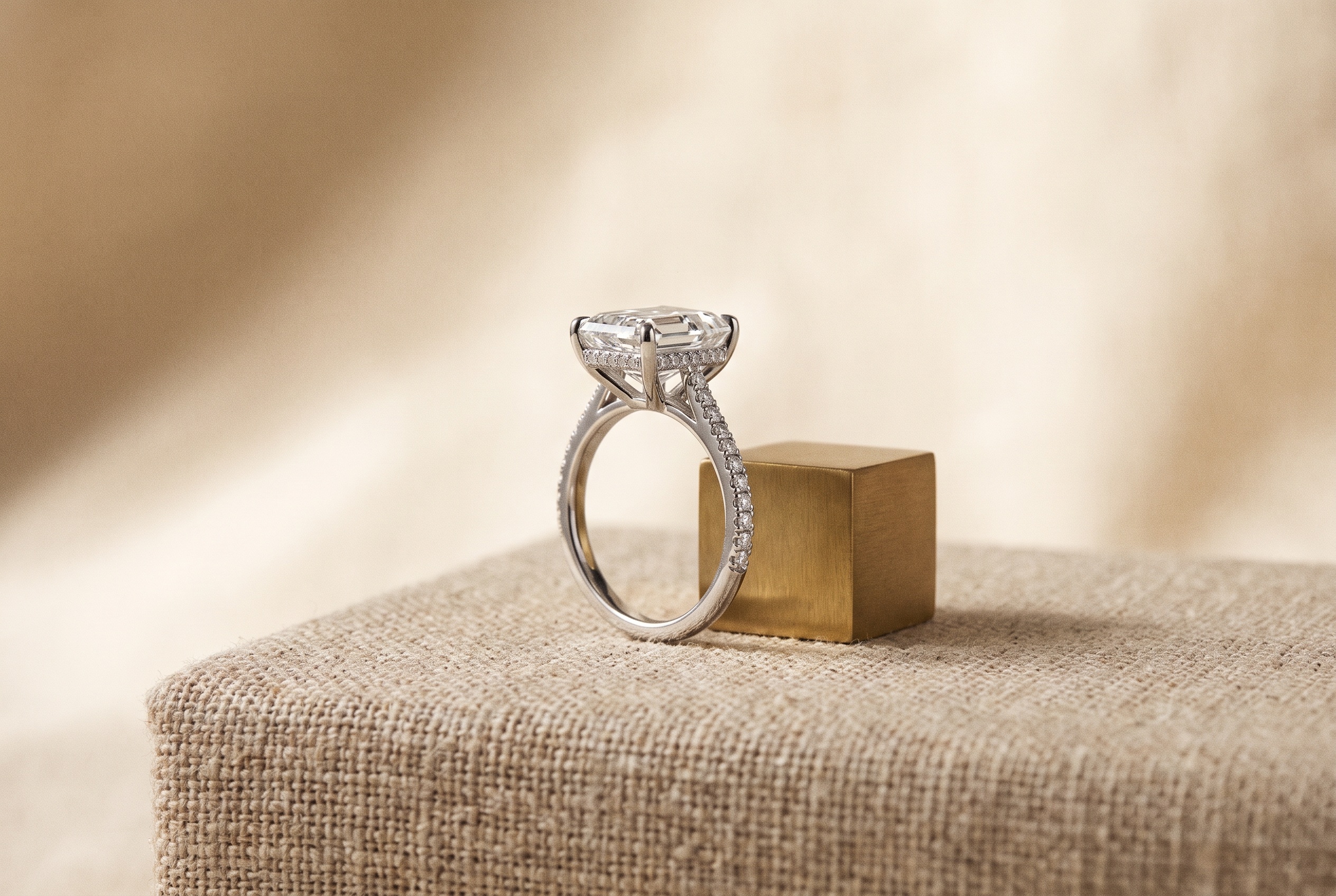
- Emerald and Asscher cut — step-cut clarity and clean geometric lines read as sophisticated rather than traditional, appealing to buyers specifically avoiding a conventional bridal look.
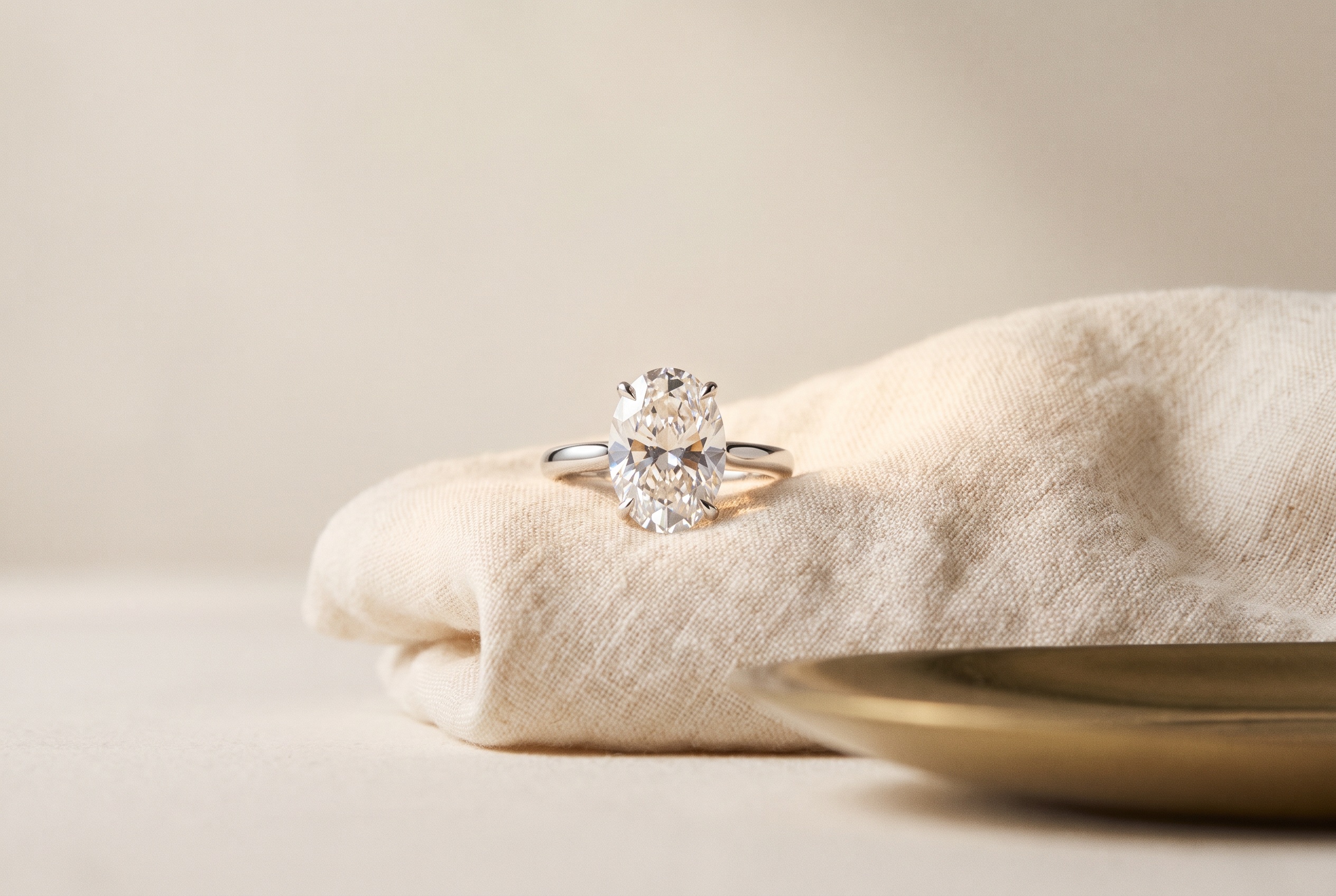
- Oval and marquise — elongated shapes that maximize apparent size per carat, a meaningful selling point for a self-purchase buyer working within a defined budget.
- Antique cuts — Old European and Old Mine cut stones bring a distinctive, less-common look that suits a piece meant to stand apart; see our Old European cut guide and Old Mine cut guide.
Setting Styles Common in Right-Hand Ring Design
Right-hand rings tend to use bolder, more architecturally ambitious settings than a comparable engagement ring, since the piece doesn't need to sit flush against a wedding band for decades of daily stacking:
- Halo and double halo — building visual size around a moderate center stone, a strong value proposition for a self-purchase buyer.
- Cluster settings — multiple smaller stones grouped to read as one larger shape, letting a jeweler build a dramatic look at a lower per-carat cost than an equivalent single large center stone.
- Cocktail-style split shank and East-West settings — orienting the stone horizontally or splitting the shank around it, design choices that read as distinctly fashion-forward rather than bridal.
- Bezel and half-bezel settings — offering more day-to-day protection for a larger stone worn without the built-in guard rail of a wedding band alongside it.
Durability Considerations for a Standalone Fashion Ring
A right-hand ring is usually worn without a wedding band's protective adjacency, and its buyer often has less experience evaluating a large stone's day-to-day durability than an engagement-ring buyer who has spent months researching the category. A few practical points worth building into a sourcing and sales conversation: prong height and count matter more on a taller, more dramatic setting, since a larger stone set higher off the finger catches on more surfaces during daily wear; bezel or half-bezel settings offer meaningfully better edge protection for buyers concerned about active daily use; and cluster designs, while visually striking, carry more individual prongs and settings that need periodic inspection than a single well-built center-stone mounting. None of this makes right-hand ring design inherently less durable than bridal jewelry — it simply means the durability conversation happens without the implicit protection a stacked wedding band provides, and is worth having explicitly with a buyer choosing a taller or more elaborate design.
Sizing and Fit: A Different Calculation Than Bridal
Right-hand rings are typically sized for a different finger than the ring finger — often the middle or index finger — and buyers are frequently less certain of their sizing on that hand than they are for their ring finger, since it isn't a size they've had professionally measured before. Offering easy resizing terms and being proactive about professional sizing at the point of sale reduces returns and fit complaints meaningfully more in this category than in bridal, where buyers have typically already had their ring size measured as part of the broader engagement-ring shopping process.
Merchandising Right-Hand Rings in a Modern Case
Because the category serves a genuinely different purchase motivation than bridal, right-hand rings merchandise best as their own distinct section rather than folded into a general diamond ring case alongside engagement rings, where the self-purchase framing gets lost:
- Lead with occasion-neutral, self-purchase-friendly language — "statement ring" or "cocktail ring" framing rather than bridal-adjacent copy, which can make a self-purchase buyer feel like they're browsing the wrong section.
- Display bolder color and shape variety together — since buyers in this category are actively seeking something distinct from conventional bridal styling, a case that shows real design range performs better than one dominated by conservative round-stone options.
- Highlight gifting occasions beyond engagement — birthdays, promotions, anniversaries, and self-purchase milestones all drive demand in this category and are worth surfacing directly in point-of-sale messaging.
Talking to Customers About Right-Hand Ring Purchases
A self-purchase buyer often approaches a right-hand ring purchase with a different emotional posture than a gift-driven engagement ring purchase — more deliberate, more willing to spend time exploring design options without the time pressure of a proposal timeline, and often specifically motivated by marking a personal milestone rather than a shared relationship one. Recognizing this and adjusting the sales conversation accordingly — asking what occasion or personal moment the customer is marking, rather than assuming a gifting context the way an engagement ring conversation typically would — tends to build stronger rapport with this buyer segment and often surfaces genuinely useful design preference information a more generic conversation would miss.
Pricing Right-Hand Rings at Wholesale
Because right-hand ring designs often use cluster settings, antique cuts, or fancy shapes rather than the standard round-brilliant-and-solitaire template, pricing needs to account for a few category-specific factors: cluster designs trade a larger single center-stone cost for the labor cost of setting multiple smaller stones precisely, antique cuts can carry a modest premium over an equivalent modern round brilliant due to cutting yield, and taller or more architecturally complex settings carry more metalwork and labor cost than a simple solitaire mounting. None of these premiums make the category commercially difficult — right-hand rings remain a strong-margin fashion category — but they're worth pricing in deliberately rather than applying a standard bridal-ring cost template to a design that draws on a genuinely different set of inputs.
Seasonal and Occasion-Driven Demand Patterns
Right-hand ring demand shows somewhat different seasonal patterns than engagement ring demand, which concentrates heavily around the traditional proposal-heavy holiday and Valentine's Day period. Self-purchase-driven right-hand ring buying tends to spread more evenly across personal milestone occasions throughout the year — birthdays, graduations, and career achievements don't cluster into a single seasonal window the way proposals do — though gifting-driven purchases still see some lift around major gifting holidays. For a jeweler planning inventory and marketing calendars, this more evenly distributed demand pattern is worth factoring in separately from the bridal category's much more concentrated seasonal peak, since treating right-hand ring merchandising as an afterthought to a bridal-focused seasonal calendar risks under-serving a category that actually performs consistently well across a broader stretch of the year.
Sourcing Right-Hand Ring Components at Wholesale
Guru Diam supplies the full range of diamond shapes and cuts that perform well in right-hand ring design — standard, antique, and exotic shapes alike — as certified loose stones, calibrated melee for cluster work, and finished custom pieces. Custom right-hand rings are finished in 4-6 days, with cutting, setting, and polishing handled in-house, and IGI, GIA, and GCAL certification all available on loose stones.
Buyers can browse loose center stones and calibrated melee through the certified diamonds category and coordinate cluster or accent-stone runs through matching pairs, and build a complete custom piece through custom jewelry. For fancy color options in a statement ring, see the fancy color loose diamonds category. Our diamond cluster ring guide covers cluster-specific sourcing in more depth, and our diamond cocktail ring guide covers the closely related bold-fashion-ring category. Trade accounts can review terms at the wholesale hub or apply through trade partner.
Right-Hand Rings as a Self-Purchase Growth Category
Self-purchase fine jewelry has grown into a meaningful demand driver independent of the traditional gifting occasions that have historically anchored diamond ring sales, and right-hand rings sit squarely at the center of that shift, since the category was never built around being received as a gift in the first place. For a jeweler, building out this category deliberately — rather than treating it as leftover engagement-ring inventory reframed for a different finger — means stocking designs that genuinely lean into the freedom the category offers: bolder color, less conventional shapes, and settings that wouldn't work as a daily-stacked bridal piece. Buyers drawn to this category respond to seeing that design confidence reflected in the case, not to a scaled-down or repurposed bridal assortment.
Metal and Color Trends in Right-Hand Ring Design
Because a right-hand ring isn't constrained by the white-metal default that still dominates most engagement ring sales, metal and accent-color choice becomes a genuine design lever rather than an afterthought. Yellow gold has seen a sustained resurgence in this category specifically, often paired with warmer center-stone color grades that would be considered less desirable in a colorless-focused bridal context but read as intentional and on-trend in a fashion-forward right-hand piece. Rose gold performs particularly well with cushion and oval center stones, softening the overall look in a way that appeals to buyers seeking something distinct from the cooler white-metal-and-diamond combination associated with conventional bridal jewelry. Mixed-metal designs — a white gold setting on a yellow gold shank, for instance — have also found real traction in this category precisely because they would look busy or indecisive on an engagement ring meant to be worn for decades alongside a matching wedding band, but read as confident and directional on a standalone fashion piece with no such coordination requirement. For a jeweler stocking this category, having genuine metal-color range available matters more here than in bridal, where white metal still accounts for the large majority of sales.
Carat Weight and Perceived Size Considerations
Because right-hand rings are judged primarily on visual impact rather than the resale and universality concerns that shape engagement ring buying, perceived size often matters more to a buyer than raw carat weight alone. This is one of the reasons cluster and halo settings perform so well in the category — both let a jeweler build a larger apparent face-up size using less total carat weight than an equivalent single center stone would require, which matters directly to a self-purchase buyer working within a defined budget rather than trying to hit a specific carat-weight milestone the way many engagement ring buyers do. Elongated shapes like oval, marquise, and pear compound this effect further, since their length-to-width ratio maximizes visual footprint per carat more effectively than a round or cushion shape at the same weight. A jeweler advising a right-hand ring buyer on carat weight should lead with visual impact and face-up size rather than defaulting to the carat-weight benchmarks that typically anchor an engagement ring conversation, since the two purchase decisions are optimizing for genuinely different outcomes.
Gifting Occasions Beyond Engagement
While self-purchase drives a meaningful share of right-hand ring demand, the category also serves a wide range of gifting occasions entirely disconnected from engagement or marriage — birthdays, graduations, career milestones, anniversaries not tied to a wedding date, and generational gifts passed between family members outside the context of a bridal transfer. Recognizing and merchandising toward this range of occasions matters commercially, since a jeweler whose right-hand ring marketing and point-of-sale conversation defaults to bridal-adjacent language risks missing a meaningful share of the category's actual buyer base. Framing the category around personal milestones and self-expression more broadly, rather than any single occasion, better reflects how and why customers actually buy into it.
Building a Right-Hand Ring Program: Inventory Depth Considerations
A jeweler building out a dedicated right-hand ring assortment benefits from stocking genuine design range rather than a handful of oversized versions of standard engagement ring silhouettes. A well-rounded program typically spans at least a few distinct design directions: a cluster or halo-of-halos option at a more accessible price point for a first-time self-purchase buyer, a bold single-stone statement piece in a less conventional shape for a buyer with a higher budget and a clear aesthetic point of view, and at least one antique-cut or vintage-styled option for buyers specifically drawn to a less mainstream, more distinctive look. Depth across price points matters as much as depth across design styles here, since the category's self-purchase-driven demand means buyers are working against their own personal budget rather than the more elastic, often shared budget dynamics that can shape engagement ring purchases.
Right-Hand Rings vs. Cocktail Rings and Statement Rings: Clarifying Overlapping Terms
The trade and retail language around bold, standalone fashion rings has genuine overlap, and buyers frequently use the terms "right-hand ring," "cocktail ring," and "statement ring" interchangeably even though each carries a slightly different connotation. "Right-hand ring" most precisely describes hand placement and non-bridal purchase intent. "Cocktail ring" traditionally implies a more dramatic, often larger-scale design historically associated with formal evening wear, though the term has broadened considerably in casual retail use. "Statement ring" is the broadest of the three, describing any piece designed to draw visual attention regardless of hand placement or specific purchase occasion. For merchandising purposes, using whichever term resonates most clearly with a given customer base matters more than strict terminological precision, since all three describe substantially overlapping product categories in practice.
Coordinating Right-Hand Rings With Existing Jewelry
Unlike an engagement ring, which is typically worn alone or eventually stacked only with its matching wedding band, a right-hand ring is frequently worn alongside other rings on the same or opposite hand, which changes how a buyer thinks about metal tone and design coherence relative to jewelry they already own. A jeweler who asks a right-hand ring customer what other pieces they typically wear — and whether they're looking for a piece that coordinates with an existing collection or one that deliberately stands apart — often surfaces a more useful design conversation than one focused solely on the new piece in isolation, since the finished result will be judged in the context of a customer's full jewelry wardrobe rather than as a single standalone purchase.
Frequently Asked Questions
What is a right-hand ring?
A right-hand ring is a diamond ring worn on the right hand rather than the ring finger, typically bought as a self-purchase or non-engagement gift. It carries no symbolic commitment meaning, which gives it far more design latitude in stone shape, setting height, and metal choice than an engagement ring.
What diamond shapes work best for right-hand rings?
Cushion, radiant, emerald, Asscher, oval, and antique cuts like Old European and Old Mine all perform well, since right-hand ring buyers are typically seeking a look distinct from conventional bridal styling rather than the conservative shapes that dominate engagement ring sales.
Are right-hand rings only for single people?
No — right-hand rings are worn by people regardless of relationship status, since the category is defined by hand placement and purchase intent rather than any statement about a wearer's relationship status.
How do you size a right-hand ring correctly?
Right-hand rings are typically sized for the middle or index finger, which most buyers haven't had professionally measured the way they have for their ring finger. Offering easy resizing and proactive sizing guidance reduces fit issues meaningfully in this category.
Are right-hand rings less durable than engagement rings?
Not inherently, but they're often worn without a wedding band's adjacent protection, so setting choice matters more. Bezel and half-bezel settings offer stronger day-to-day protection for a larger stone than a very tall prong setting worn on its own.
What's the difference between a right-hand ring and a cocktail ring?
The terms overlap significantly and are often used interchangeably — both describe a bold, standalone fashion ring not paired with a wedding band. "Cocktail ring" sometimes implies a more dramatic, statement-scale design specifically, while "right-hand ring" more broadly describes hand placement and purchase intent.
What metal works best for a right-hand ring?
Any metal can work well, since the category isn't bound by the white-metal default common in bridal jewelry. Yellow gold and rose gold have both seen strong demand in this category specifically, along with mixed-metal designs that would look less intentional on a piece meant to coordinate with a matching wedding band.
Do right-hand rings need to be a certain carat weight?
No — since right-hand rings are judged on visual impact rather than the resale and universality concerns shaping engagement ring purchases, cluster and halo settings or elongated shapes can deliver strong visual size at a lower total carat weight than a single large center stone would require.