
A diamond cocktail ring is a statement piece built around a large center stone or a bold cluster of stones, worn as a standalone fashion statement rather than as bridal or everyday jewelry. Unlike an engagement ring, where the center stone's grade and certification typically drive the purchase decision, a cocktail ring is bought primarily for visual impact — scale, color, and design presence matter as much as, or more than, the underlying stone's technical grading.
This guide is written for the trade — jewelers, retailers, and designers sourcing diamond cocktail rings for a statement-jewelry line — covering what distinguishes the category commercially from bridal and everyday rings, stone sizing and setting conventions, fancy color and fancy shape considerations, and what to look for in a wholesale supplier for cocktail-ring production.
Why Cocktail Rings Are a Distinct Sourcing Category
Cocktail rings occupy a different place in a retailer's assortment than bridal or everyday rings. The purchase decision is driven by self-expression and occasion rather than the ritual significance and long-term daily wear an engagement ring carries, which shifts what customers prioritize: visual scale and design boldness typically outweigh a marginal improvement in color or clarity grade, especially once a stone is set in a way that makes fine grading differences hard to see at arm's length anyway. This has real sourcing implications — a retailer can often deliver more visual impact per dollar in this category by sourcing a larger, well-cut stone at a commercial grade, or a cluster of smaller stones designed for maximum surface coverage, rather than by chasing the highest color and clarity grades the way a bridal buyer typically does.
Design boldness is also a bigger differentiator in this category than in bridal jewelry, where customers tend toward familiar, timeless styles. Cocktail ring buyers are actively looking for something distinctive, which rewards a retailer who can offer genuinely varied silhouettes — asymmetric settings, mixed fancy shapes, unconventional stone combinations — rather than a narrow range of conservative designs.
Common Cocktail Ring Styles
| Style | Construction | Typical Center Stone |
|---|---|---|
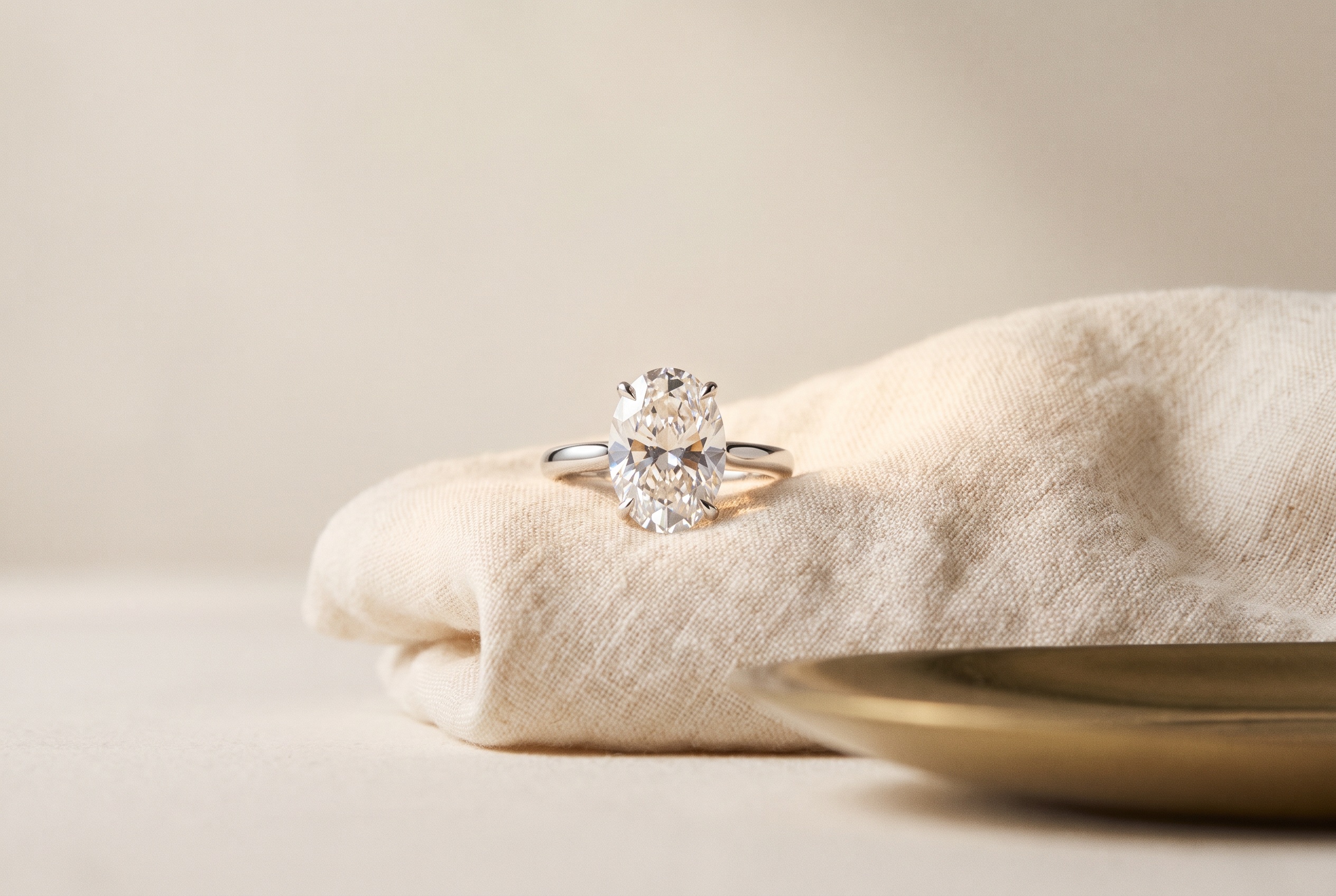
| Large solitaire cocktail ring | A single oversized center stone, minimal setting | 1.5ct+ fancy shape (oval, cushion, emerald) or round |
| Cluster cocktail ring | Multiple mid-size stones grouped to read as one large piece | Several 0.20-0.50ct stones set together |
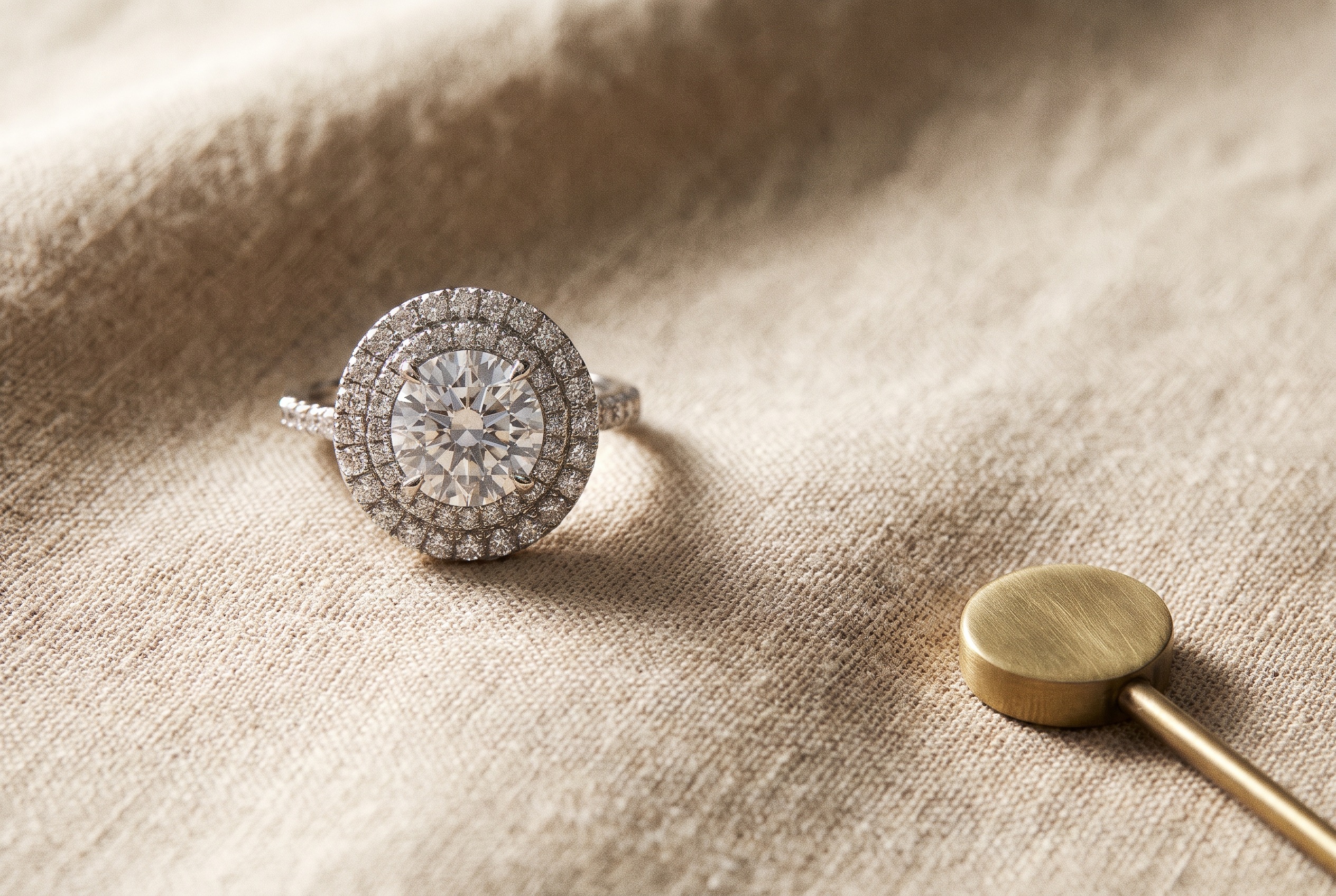
| Halo cocktail ring | A center stone surrounded by a dense ring of smaller diamonds for maximum visual scale | 0.75ct-1.5ct center with a substantial halo |
| Fancy color statement ring | A colored center stone as the design's focal point | Yellow, pink, blue, or green fancy color diamond |
| Vintage-inspired cocktail ring | Antique-cut center stone with period-appropriate detail work | Old mine or old European cut, often with milgrain or filigree |
Stone Sizing and Scale Conventions
Cocktail rings are defined partly by scale — a center stone or stone cluster meaningfully larger than what's typical in an everyday or even a standard engagement ring. Retailers sourcing this category generally aim for a minimum visual footprint (commonly a stone or cluster reading as 1ct-plus at arm's length, whether from a single large stone or a densely set cluster) since the category's entire commercial premise depends on the piece reading as a statement rather than a subtle accent. This is one of the few diamond jewelry categories where a well-executed cluster of smaller, less expensive stones can outperform a single larger stone commercially — buyers are judging visual scale first, not per-stone carat weight.
Setting Styles for Maximum Visual Impact
Halo and Double Halo Settings
A dense ring (or two concentric rings) of small diamonds surrounding the center stone, substantially increasing the ring's visual footprint beyond what the center stone alone would provide — one of the most reliable ways to scale up perceived size without proportionally scaling up center-stone cost.
Cluster Settings
Multiple mid-size stones set closely together, engineered to read as a single large piece from a normal viewing distance. Cluster construction is particularly cost-effective for this category since total carat weight can be distributed across several more affordable stones rather than concentrated in one expensive large stone.
East-West and Asymmetric Settings
Fancy shape stones (oval, marquise, pear) set sideways or off-axis rather than in the conventional north-south orientation, a design choice specific to statement jewelry that reads as more fashion-forward than a traditional centered setting.
Bombé and Domed Settings
A rounded, raised setting profile that adds physical presence and dimension to the ring beyond what a flat-set stone provides, often used in vintage-inspired or maximalist cocktail ring designs.
Fancy Color and Fancy Shape Considerations
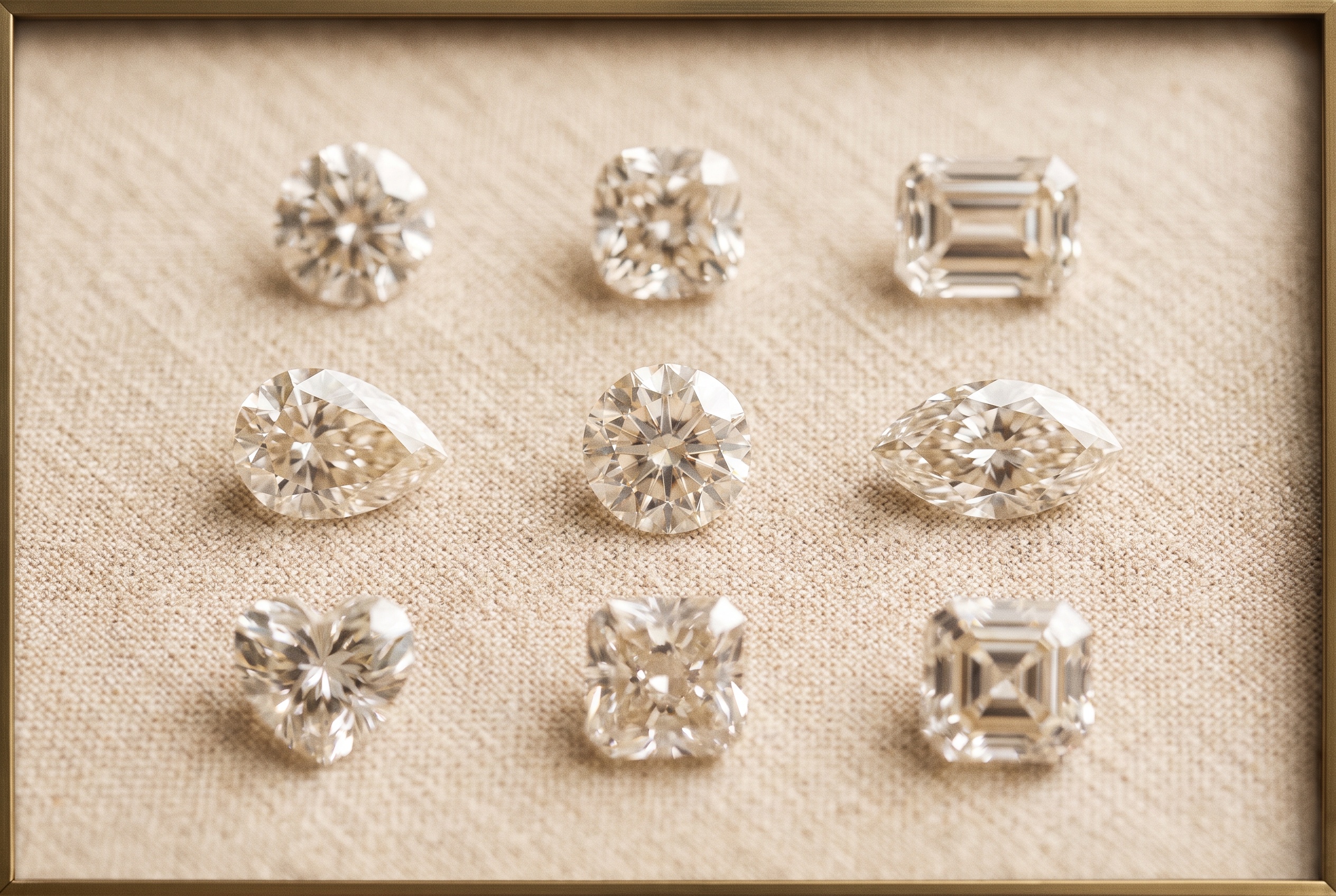
Fancy color diamonds are especially well suited to the cocktail ring category, since color itself is a form of visual statement that aligns naturally with why customers buy this category in the first place. Yellow, pink, blue, and green fancy color center stones all work well as cocktail ring focal points, and a fancy color statement ring often commands attention that a colorless stone of the same size doesn't. Fancy shapes more broadly — oval, cushion, emerald, and antique styles like old mine and old European cut — also suit the category well, since shape variety is itself part of what makes a cocktail ring read as distinctive rather than conventional.
Diamond Quality Standards for Cocktail Rings
Because visual impact rather than close-up grading scrutiny drives this category's purchase decision, cocktail ring center stones are commonly sourced at a strong commercial grade rather than the top of the color and clarity scale — a well-cut stone in the G-H color, VS-SI clarity range reads as bright and clean at typical viewing distance, letting a retailer put more of the piece's budget toward scale (a larger stone, a fuller halo, a bigger cluster) rather than toward grading increments that matter less in a design built for visual presence. As covered in our 4Cs overview guide, cut quality has an outsized effect on a stone's visual brightness relative to color or clarity grade — a meaningful consideration for a category where brightness and scale are the primary selling points.
Lab-Grown vs. Natural Diamonds for Cocktail Rings
CVD lab-grown diamonds are particularly well matched to cocktail ring economics: the category rewards scale, and lab-grown material's lower per-carat cost lets a retailer offer a genuinely large center stone, or a fuller halo and cluster, at a price point that would require a significant natural-diamond premium to match. Natural stones remain a meaningful share of the category, particularly for retailers positioning cocktail rings at a luxury tier or working with fancy color natural stones, where rarity itself is part of the piece's value proposition. Both origins can be sourced to the same cut and color standard; the origin decision here is largely about how a retailer wants to position scale versus rarity within the category.
Certification for Cocktail Ring Center Stones
Center stones at typical cocktail-ring sizes (0.75ct and up) are individually certified — IGI, GIA, or GCAL depending on customer and market preference — giving the retailer documentation to stand behind even in a category where the purchase decision is driven more by visual impact than grading detail. Cluster and halo accent stones typically run as calibrated melee at a DEF+/VS+ commercial standard, consistent with standard melee sourcing practice.
Wholesale Pricing Structure for Cocktail Rings
Because cocktail ring value is driven substantially by scale and design rather than top-tier grading, wholesale pricing for this category rewards a supplier who can offer a genuinely large center stone or a dense, well-matched cluster at a commercial grade, rather than one whose pricing strength is concentrated at the top of the color and clarity scale. Retailers benefit from a supplier who can quote both a single large center stone and a matched cluster option for a given design, letting the retailer choose the construction that delivers the most visual scale per dollar for that specific piece.
Building a Cocktail Ring Program
- Cover a range of visual scale. Offer pieces from a moderate 1ct-equivalent statement to a genuinely oversized design, since cocktail ring buyers span a wide range of how bold a piece they want.
- Include fancy color options. At least one fancy color statement ring (yellow is typically the highest-demand fancy color for this category) gives customers a genuinely different look from an all-white-diamond line.
- Mix single-stone and cluster construction. Offering both lets a retailer hit a range of price points while still delivering strong visual scale at each tier, rather than only being able to compete on price by shrinking the center stone.
- Lean into design variety. Because this category rewards distinctiveness more than bridal jewelry does, a program benefits from genuinely varied silhouettes rather than several near-identical settings differentiated only by stone size.
- Build in fast custom turnaround. Because cocktail ring purchases are often occasion-driven and less planned in advance than bridal purchases, a program benefits from a production path that can accommodate a quick custom request without the longer lead time typical of bridal custom work.
Common Sourcing Mistakes in This Category
- Overpaying for grading increments that don't affect visual scale. Sourcing top-color, top-clarity stones for a category where visual presence, not close-up grading, drives the purchase decision leaves less budget available for the scale and design boldness that actually sell the piece.
- Underinvesting in cut quality. Because brightness matters more than grading detail in this category, a poorly cut stone at a nominally good color and clarity grade can underperform a better-cut stone at a lower grade — cut deserves more weight in sourcing decisions here than it typically gets.
- Narrow design range. A cocktail ring line built from minor variations on one setting style undersells the category's core appeal — customers are specifically looking for something distinctive.
- Ignoring fancy color and fancy shape demand. An all-round, all-white-diamond cocktail ring line misses a meaningful share of customers for whom color or an unusual shape is the entire point of buying a statement piece rather than an engagement ring.
- Under-scaling the shank for the setting. A shank sized for a standard ring can look and feel disproportionately thin under a large center stone or dense cluster, and wear faster under the added leverage — shank width should scale with what's mounted on top of it.
Durability Considerations for Statement Rings
Because cocktail rings sit higher off the finger than most everyday rings — a byproduct of the scale that defines the category — they're more exposed to knocks and catches during daily activity than a lower-profile ring, even though many buyers wear them only occasionally rather than daily. Retailers should factor this into setting choices: prong settings on a large center stone benefit from slightly heavier gauge prongs than the same stone would need in a lower-profile bridal setting, and halo or cluster accent stones benefit from secure bezel or shared-prong construction rather than delicate individual prongs, given how much more the whole assembly projects above the hand. A cocktail ring marketed for regular wear rather than strictly special-occasion use should be engineered with this added exposure in mind from the start, rather than treating it as a scaled-up version of a standard ring's construction.
Shank thickness is a related consideration — a large center stone or dense cluster puts more leverage on the shank than a smaller stone would, and a shank sized for a standard ring can feel disproportionately thin, and wear faster, under a substantial cocktail-ring setting. Retailers sourcing this category benefit from having shank width scaled deliberately to the size of the stone or cluster on top, rather than defaulting to a single standard shank width across the whole ring line regardless of what's mounted on it.
Gifting, Self-Purchase, and Occasion Demand
Cocktail rings see a distinctive demand mix compared with bridal jewelry: a larger share of purchases are self-directed, often tied to a milestone (a birthday, an anniversary, a promotion, a personal achievement) rather than a gift from someone else, though gifting — particularly around milestone birthdays and the winter holiday season — remains a meaningful secondary driver. Retailers who understand this mix can tailor merchandising language accordingly: self-purchase framing ("a ring you choose for yourself") resonates more in this category than the gift-focused language that works well for bridal or anniversary jewelry, while still supporting a gifting angle around key calendar moments. Red carpet and awards-season visibility also drives periodic demand spikes for bold statement rings, giving retailers a predictable seasonal marketing hook distinct from the bridal calendar.
Merchandising Diamond Cocktail Rings
Cocktail rings merchandise best when displayed to emphasize scale and presence — angled case lighting that catches the stone's brightness, and enough physical space around each piece that it isn't visually crowded by adjacent rings, both help the category's core selling point (visual impact) come through in-store the way it's meant to. Because this is a self-purchase-driven category more than a gift-driven one, staff product knowledge around design story and stone origin (particularly for fancy color pieces) tends to matter more to conversion here than in categories like bridal, where the purchase decision is largely made before the customer walks in.
Customization for Cocktail Rings
Because cocktail rings are bought for personal expression more than for adherence to a category convention, customization requests are common — a customer wanting a specific fancy shape swapped in, a different fancy color, or a design detail adjusted from a standing catalog piece. Retailers benefit from a supplier who can move quickly from a loose center stone selection into a finished custom mount, since a customer shopping this category is often making a spontaneous or occasion-driven decision rather than planning months ahead the way a bridal buyer typically does. A slow custom-production timeline is a bigger conversion risk in this category than in bridal, where customers have already budgeted for a longer wait.
Resizing is a smaller consideration for cocktail rings than for daily-wear jewelry, since many buyers own the piece as an occasional-wear statement item rather than something worn continuously; still, a retailer should be able to accommodate standard resizing on halo and cluster designs without disturbing the accent-stone setting, which requires more careful production than resizing a plain shank alone.
Comparing Cocktail Rings to Related Categories
Cocktail rings share design logic with several related statement categories. Our diamond cluster ring guide covers the cluster-construction approach in more depth, useful for retailers building cocktail rings around a matched group of smaller stones rather than a single large center stone. The hidden halo ring guide covers a related visual-scaling technique that can be adapted into cocktail ring design for a more subtle approach to adding perceived size. For retailers sourcing fancy color center stones specifically for this category, our yellow diamond buying guide and pink diamond buying guide cover sourcing considerations for the two highest-demand fancy colors in statement jewelry.
Sourcing a Cocktail Ring Program at Wholesale
Guru Diam supplies certified natural and CVD lab-grown diamonds across standard, antique, and fancy shapes, plus fancy color loose stones in yellow, pink, blue, and green, with cutting, setting, and polishing all handled in-house — giving retailers a single source for building a cocktail ring line around scale, color, or antique-cut design. Retailers can browse certified center stones through certified diamonds, explore fancy color inventory through fancy color loose diamonds, and work through custom jewelry for a bespoke statement piece, with finished pieces delivered in 4-6 days. Trade accounts can review terms at the wholesale hub or apply through trade partner.
Frequently Asked Questions
What makes a ring a "cocktail ring" rather than a regular fashion ring?
Scale and design boldness. A cocktail ring is built around a noticeably larger center stone or a dense cluster designed to make a visual statement, worn as a standalone fashion piece rather than as bridal or subtle everyday jewelry.
What diamond grade should a cocktail ring center stone be?
Because visual impact matters more than close-up grading in this category, a strong commercial grade (G-H color, VS-SI clarity) with good cut quality typically delivers better value than paying a premium for top-tier grading that's hard to distinguish at typical viewing distance once the stone is set.
Should cocktail ring diamonds be lab-grown or natural?
Both are sourced for this category. Lab-grown diamonds let a retailer offer significantly more scale — a larger center stone or a fuller halo — at a given price point, which suits a category built around visual presence, while natural stones suit retailers positioning cocktail rings at a luxury or rarity-driven tier.
Are cluster settings a good alternative to a single large center stone?
Yes — a well-designed cluster of smaller stones can read as a single large piece from a normal viewing distance while spreading cost across several more affordable stones rather than concentrating it in one expensive large stone, making it a cost-effective way to deliver scale.
Are fancy color diamonds popular for cocktail rings?
Very — color is itself a form of visual statement, which aligns closely with why customers buy this category. Yellow is typically the highest-demand fancy color for statement rings, with pink, blue, and green all also used as focal stones.
Can a cocktail ring be custom designed around a specific stone?
Yes — customization is common in this category, since customers are often making an occasion-driven or self-purchase decision around a stone or color they've specifically chosen. Retailers benefit from a supplier who can move quickly from a loose center stone selection to a finished custom mount, given how often this category's purchases are less planned in advance than bridal jewelry.
How should a retailer price a cocktail ring line?
Pricing should weight scale and cut quality more heavily than top-tier color and clarity grading, since visual presence — not close-up grading detail — is what drives the category's purchase decision. This lets a retailer put more budget toward the stone size and design boldness that actually sell the piece.
How durable are cocktail rings for regular wear?
With the right construction, cocktail rings can hold up well to regular wear, though their scale means they warrant slightly heavier prong gauge and a shank sized to the setting's weight compared with a lower-profile ring. Pieces intended for occasional rather than daily wear have more design flexibility on this front.