
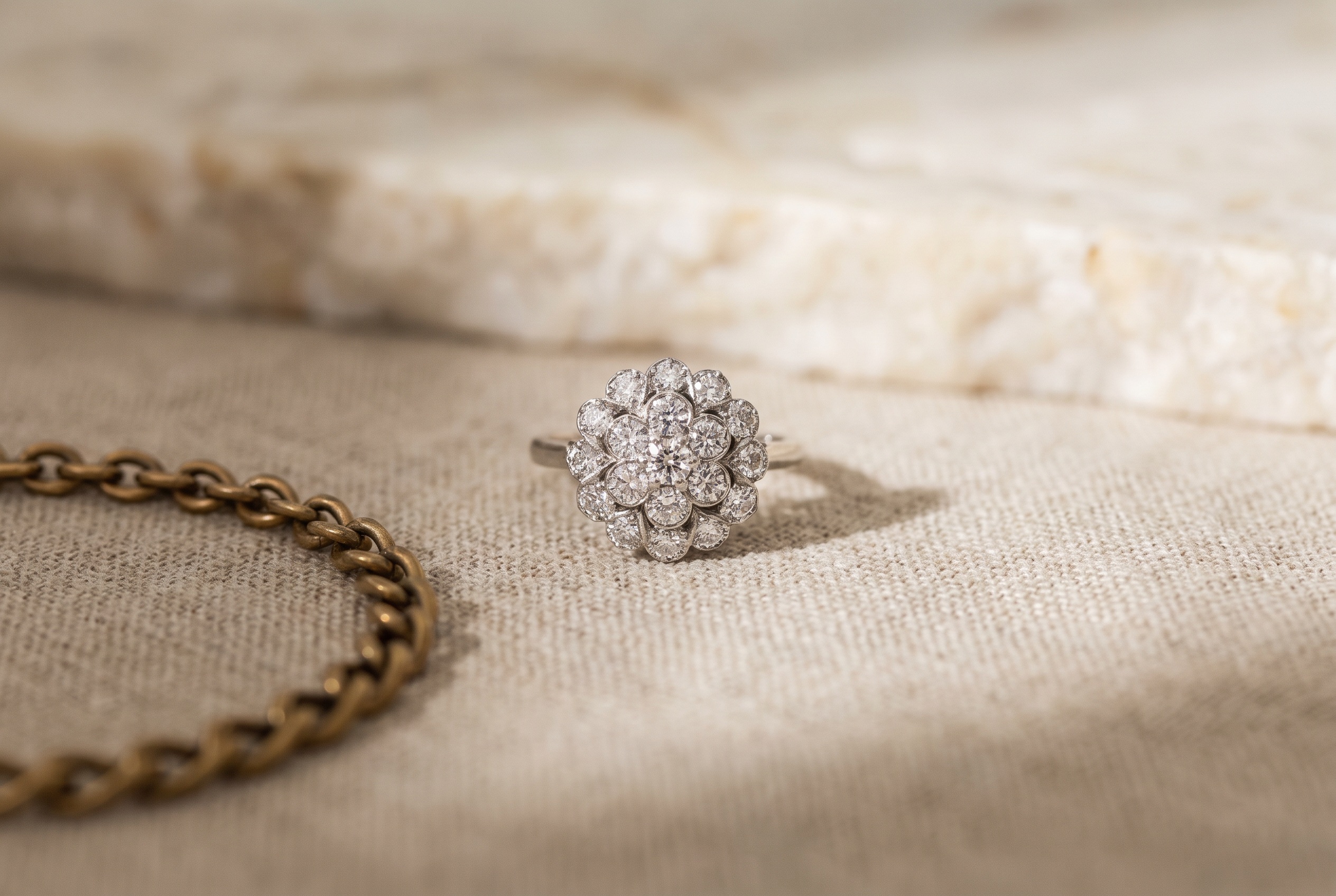
A diamond cluster ring is a ring design in which several smaller diamonds are grouped tightly together — rather than centered on one larger stone — to visually read as a single, larger area of brilliance. For a jeweler, that definition matters commercially as much as aesthetically: a cluster design lets a retailer offer a big-looking piece built from a stack of smaller, lower-cost melee and accent stones instead of one expensive center diamond, which changes the entire sourcing math behind the piece.
This guide is written for the trade — retailers, designers, and manufacturers sourcing loose diamonds to build or restock a cluster ring line — not a consumer shopping guide. It covers how cluster rings differ from halo settings, the stone sizes and quantities a typical cluster design requires, layout patterns that drive demand, and what to look for in a wholesale diamond supplier for this category.
What Makes a Cluster Ring a Cluster Ring
A cluster ring groups multiple diamonds — typically somewhere between five and twenty stones, depending on the design — in a tight arrangement set close enough together that the metal between them largely disappears from a normal viewing distance, creating the visual effect of one larger continuous diamond surface. This is the defining structural difference from a halo ring, which uses a single ring of small accent stones surrounding one dominant center stone: in a true cluster, no single stone dominates visually, and the piece is designed to be read as a unified mass rather than a center-and-frame composition.
Cluster Rings vs. Halo Rings: Where Jewelers Draw the Line
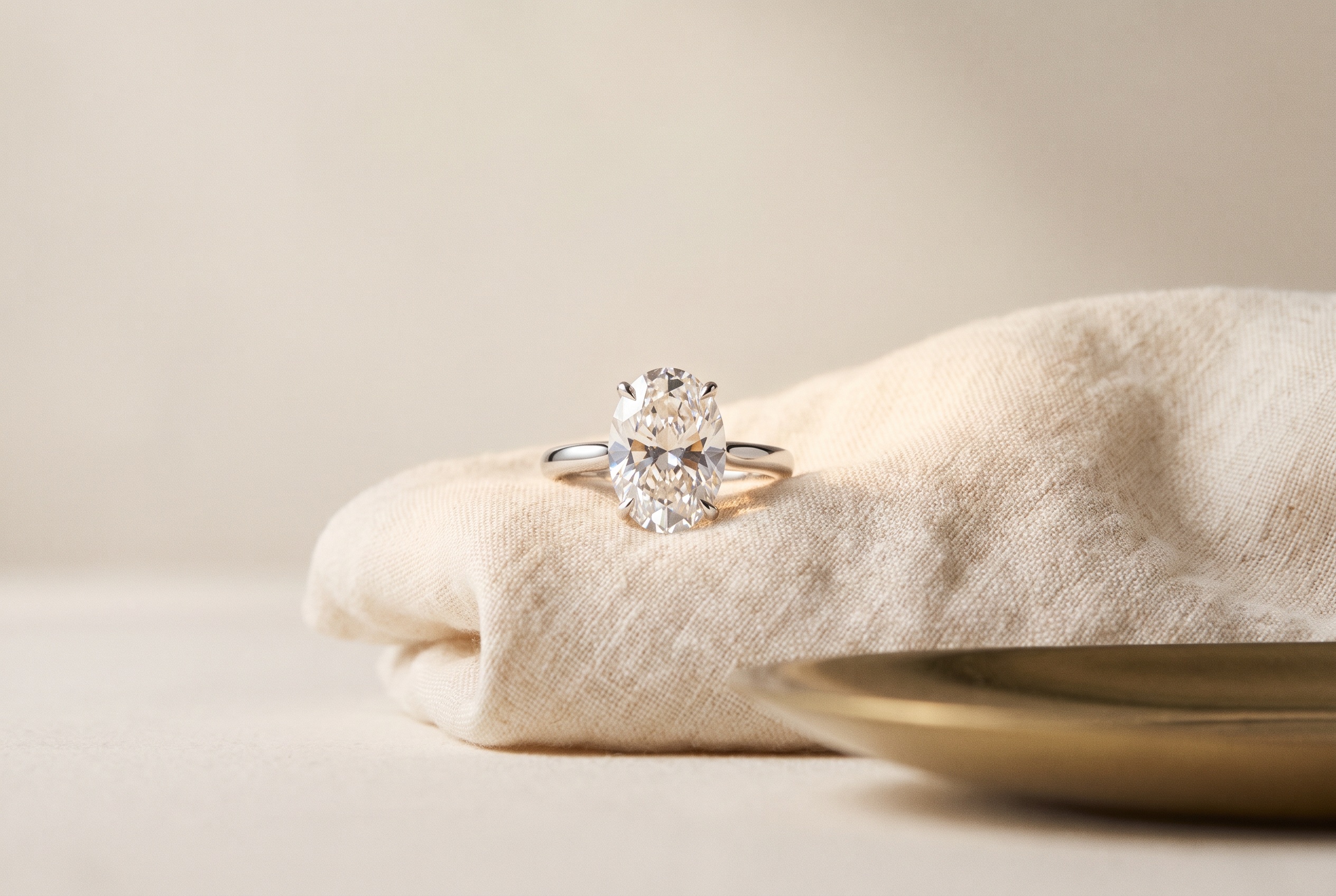
The two categories get confused constantly in both consumer search behavior and casual trade conversation, but they represent genuinely different sourcing profiles. A halo ring is built around one center stone (commonly 0.50ct to 2ct or more) surrounded by a single ring of small melee, so the sourcing priority is the center stone's cut, color, and clarity — the halo melee is a supporting, largely interchangeable component. A cluster ring has no true center stone; sourcing priority shifts almost entirely to melee consistency across the whole cluster, since every stone in the group is visually load-bearing and any mismatch in size, color, or cut quality between stones is immediately visible up close.
| Factor | Cluster Ring | Halo Ring |
|---|---|---|
| Dominant stone | None — group reads as one mass | Single center stone, clearly dominant |
| Stone count | Typically 5–20+ stones, similar sizes | 1 center stone + a ring of small melee |
| Sourcing priority | Melee color/cut/size consistency across the group | Center stone quality; melee is secondary |
| Typical stone size | 0.03ct–0.15ct per stone | 0.005ct–0.03ct melee + a larger center stone |
| Certification | Uncertified parcel goods against a quality baseline | Center stone often certified individually; melee uncertified |
Typical Stone Sizes and Counts in Cluster Ring Designs
Most cluster ring designs use stones in the roughly 0.03ct to 0.15ct range, with the exact mix depending on the specific layout — a tight, dense cluster favors smaller, more uniform stones, while a looser, more organic-looking cluster can mix a few slightly larger stones with smaller fill stones around them. Total cluster weight for a standard ring commonly lands between 0.50ct and 1.50ct combined across all stones, though statement pieces can run considerably higher. Because the visual effect depends on consistency, retailers sourcing for this category should prioritize a supplier who can deliver matched parcels calibrated to a specific size range rather than loose, uncalibrated melee that has to be hand-sorted before it can be set.
Layout Patterns That Drive Cluster Ring Demand
Flower/Rosette Cluster
Stones arranged in a circular, petal-like pattern radiating from a central point — one of the most enduringly popular cluster layouts, since the rosette shape reads clearly as a cluster even at a distance and photographs well for e-commerce and social listings.
Freeform/Organic Cluster
An asymmetric, scattered arrangement of varied stone sizes rather than a strict geometric pattern. This layout has grown in popularity alongside broader demand for less traditional, more artisanal-looking fine jewelry, and it gives a retailer more flexibility to use a slightly wider size range within one parcel without the mismatch reading as an error.
Cluster Halo (Hybrid)
A cluster of stones surrounding a modestly sized center stone — smaller and less dominant than in a true halo design, but still present. This hybrid pattern sits commercially between a pure cluster and a pure halo, and lets a retailer offer a design with slightly more perceived "center stone" value while keeping most of the piece's carat weight in lower-cost melee.
Diamond Shape Choices for Cluster Settings
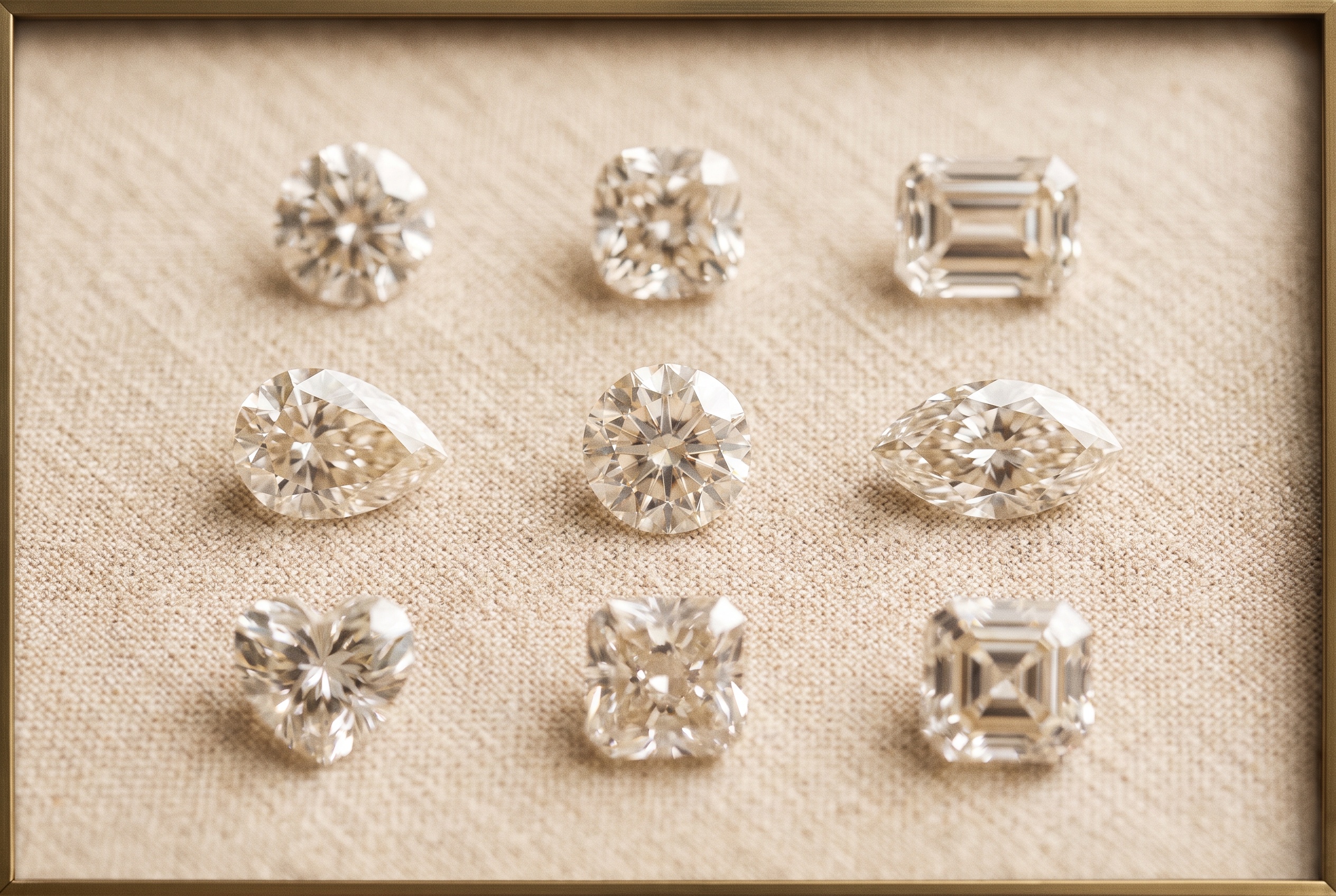
Round brilliant is by far the dominant shape in cluster ring construction, since its symmetrical outline packs efficiently against neighboring stones of the same shape with minimal visible gap, which is essential to the tight, unified look a cluster is meant to achieve. Marquise and pear shapes appear in cluster designs specifically built around a rosette or floral pattern, where the pointed ends of the stones form the "petal" shapes radiating outward. Princess and other square or rectangular shapes are less common in true clusters, since their straight edges don't nest together as cleanly as round stones do when packed tightly in an irregular grouping.
Color and Clarity Standards for Cluster Melee
Because cluster stones are small and set close together, the human eye evaluates them collectively rather than stone by stone — which means color and clarity consistency across the parcel matters considerably more than pushing any individual stone to a very high grade. A DEF+/VS+ commercial melee standard, applied consistently across the entire parcel, produces a cleaner, brighter finished look than a wider-graded mix that includes a few noticeably warmer or more included stones, even if the wider mix's average grade looks similar on paper. Retailers sourcing cluster parcels should prioritize a supplier who sorts and ships to a tight, consistent grade band rather than one who ships a broader mixed-grade parcel at a lower average price.
Lab-Grown vs. Natural Diamonds for Cluster Rings
Cluster rings are, by design, melee-heavy pieces where total carat weight can add up quickly across many small stones — which makes per-carat cost a significant driver of the finished piece's price point. CVD lab-grown diamonds are consequently a natural fit for the bulk of a cluster ring line, since the category's economics reward stretching carat weight across many stones rather than concentrating value in one center diamond, and lab-grown melee delivers the same DEF+/VS+ commercial standard at a meaningfully lower cost basis than natural material. Natural diamonds remain a reasonable choice for higher-end cluster pieces marketed specifically on natural provenance, but for the core of a cluster ring program, lab-grown melee is generally the more efficient sourcing choice.
Metal and Setting Construction
Prong and shared-prong settings dominate cluster ring construction, since a shared-prong approach — where adjacent stones share a single prong between them — lets a designer pack stones more tightly together than fully independent prong sets would allow, reducing visible metal between stones and lowering the risk of a snagged prong catching on fabric during daily wear. Pavé-adjacent bead-set clusters are also common for tighter, more integrated designs, using small beads of metal raised from the band itself to hold each stone rather than separate prongs — a construction method that further minimizes visible metal but generally requires more skilled bench work to execute cleanly. White metals (platinum and white gold) remain the most popular choice for cluster rings generally, since white metal disappears visually behind the stones more effectively than yellow gold, reinforcing the "all diamond" look the category is built around — though yellow and rose gold cluster designs have grown as a specific styling choice for buyers wanting a warmer-toned piece.
Building a Cluster Ring Program: Inventory Planning
- Source calibrated, size-matched melee parcels rather than uncalibrated loose stock — consistency across the cluster matters more than any individual stone's grade.
- Weight core inventory toward 0.03ct–0.15ct round brilliant stones, since round remains the dominant shape across nearly all cluster layouts.
- Stock a modest supply of marquise and pear melee specifically for rosette and floral cluster designs.
- Default to a DEF+/VS+ consistent grade band across the parcel rather than a wider mixed-grade lot.
- Lean on CVD lab-grown material for the bulk of the line, reserving natural stones for pieces specifically marketed on natural provenance.
Pricing a Cluster Ring: What Drives the Final Cost
Because a cluster ring's value is spread across many small stones rather than concentrated in one center diamond, total finished cost tracks closely with combined carat weight and the number of individual stones (which drives labor — setting many small stones takes meaningfully more bench time than setting one larger stone), more than it tracks with any single stone's grade. A retailer pricing a cluster line should account for setting labor as a larger share of total cost than in a comparable single-stone ring, and should communicate that clearly to buyers who may otherwise expect a lower price simply because no individual stone in the piece is large.
Cluster Rings Across Jewelry Categories
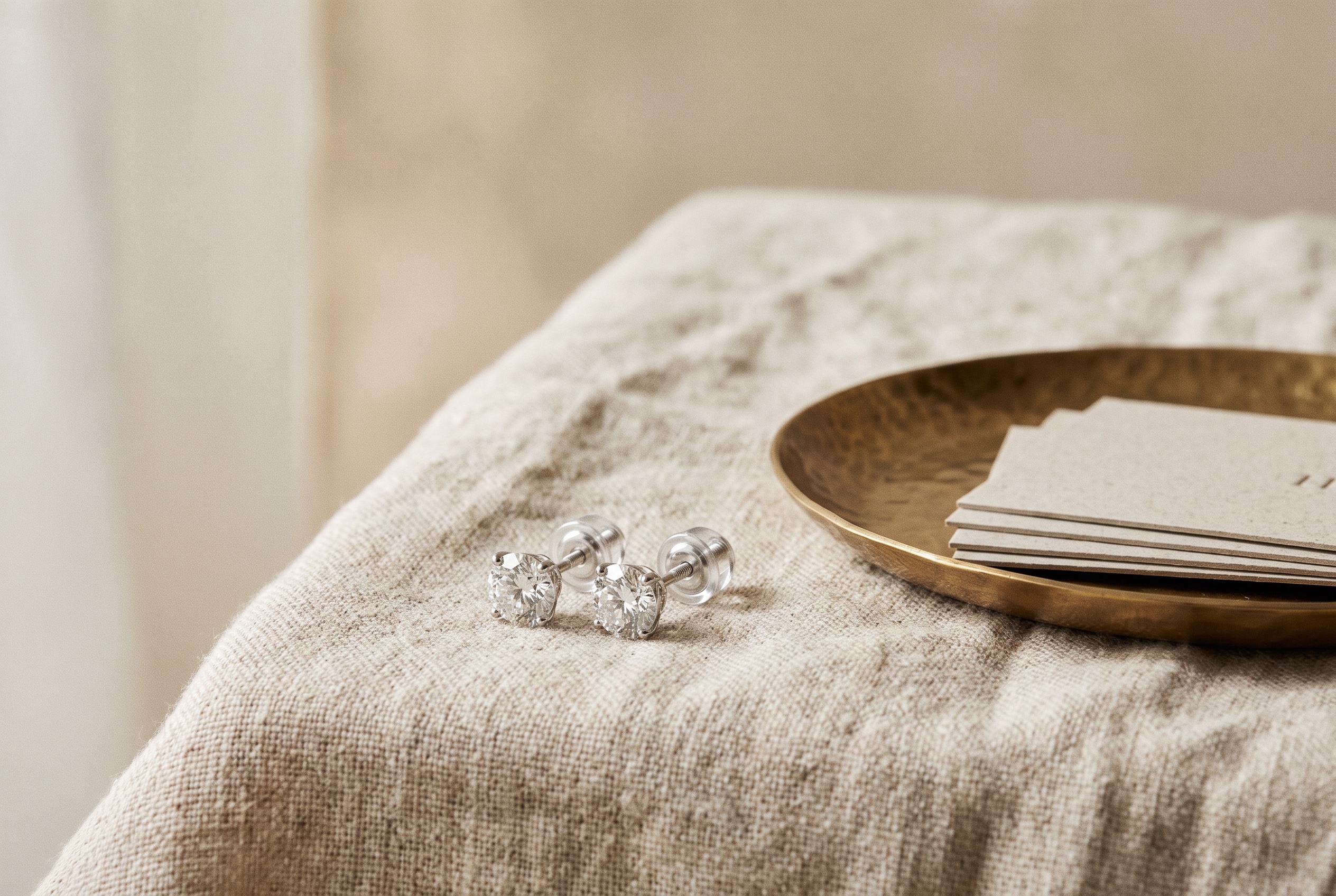
While engagement rings represent a significant share of cluster ring demand, the design translates cleanly across several other product categories worth stocking alongside it. Cluster earrings and pendants use the same calibrated melee sourcing logic as cluster rings and are a natural cross-sell for a retailer who has already built out a cluster melee program — the same parcels that supply a cluster ring can typically supply matching stud or drop earrings without additional sourcing work. Anniversary and cocktail rings are another strong fit for the cluster format specifically because they're purchased by buyers who already own a primary engagement or wedding ring and are looking for a visually distinct, statement-making piece rather than a matching set, which cluster designs deliver well given their departure from the classic solitaire silhouette. Men's cluster rings — typically smaller, denser clusters set flush or low-profile — have also grown as a niche but real category, following the broader growth in men's diamond jewelry discussed in our men's earrings sourcing guide.
Trends Driving Cluster Ring Demand
Cluster rings have seen renewed demand over the past several years as part of a broader shift toward vintage-inspired and maximalist fine jewelry styling, alongside a practical price-sensitivity trend where buyers want a visually substantial piece without the cost of a large single center stone. Engagement ring buyers specifically have driven a meaningful share of this growth, using cluster designs as a lower-cost, larger-looking alternative to a solitaire or halo built around one bigger diamond. Stackable cluster rings — designed to be worn alongside other bands rather than as a single statement piece — have also grown as their own sub-trend, giving retailers a lower price-point entry into the category.
Durability and Care Considerations Worth Communicating to Buyers
Cluster rings carry a practical durability tradeoff that retailers should be upfront about: because the design relies on many small stones set close together rather than one large stone in a substantial mount, cluster rings generally require more frequent prong inspection than a comparable solitaire, since a single loosened prong on a small stone is both more likely to occur (more prongs total, each individually smaller and lighter) and less immediately obvious to the wearer than it would be on a large center stone. Retailers who build a routine prong-check reminder into the sale — a free inspection at six and twelve months, for instance — reduce the odds of a lost stone becoming a return or warranty dispute later, and it's a low-cost service that measurably improves customer satisfaction in this category specifically.
Custom vs. Stock Cluster Designs
Cluster rings split fairly evenly between two production approaches, and a retailer's sourcing strategy should differ between them. Stock cluster designs — a fixed layout produced repeatedly from a standard casting — benefit from sourcing large, consistent melee parcels in advance, since the same size and quantity of stones gets used repeatedly across every unit. Custom cluster commissions, by contrast, are typically built around a customer's specific stone count, budget, or an heirloom-stone integration request, and benefit from a supplier who can quote and deliver smaller, one-off calibrated parcels quickly rather than only in bulk. A retailer serving both segments needs a supplier relationship flexible enough to support both order patterns without a minimum-order threshold that makes small custom orders impractical.
Quality Control Checklist for Incoming Cluster Melee
Because a cluster design exposes any inconsistency in the parcel immediately once stones are set side by side, incoming melee for this category deserves a more careful quality check than melee destined for less visually demanding uses (pavé shanks, for instance, where individual stones are viewed at more of a distance). A practical incoming checklist covers four things: size consistency within the stated calibration tolerance, since even a small size mismatch becomes visible once stones sit adjacent to each other; color consistency across the parcel, since one noticeably warmer stone in an otherwise colorless group stands out; cut consistency, confirming all stones share the same faceting pattern rather than a mix of slightly different cutting styles that catch light differently; and a visual check for any stones with surface-reaching inclusions that would be visible without magnification once set. A supplier who sorts to these standards before shipping saves a retailer's bench jeweler significant re-sorting time on receipt.
Wholesale Cost Structure: Melee vs. a Comparable Single Center Stone
| Approach | Total Carat Weight | Relative Per-Carat Cost | Setting Labor |
|---|---|---|---|
| Cluster (12–15 small stones) | ~1.00ct combined | Lower — small melee prices well below larger stones per carat | Higher — many individual settings |
| Single center stone | ~1.00ct | Higher — per-carat price rises sharply with stone size | Lower — one setting operation |
This cost structure is the core commercial reason cluster designs persist as a category: at roughly equivalent total carat weight, a cluster's per-carat stone cost runs meaningfully lower than a single stone of the same combined size, even after accounting for the added setting labor — which is exactly the "big look, smaller budget" positioning that drives much of this category's consumer demand, and the reason retailers can offer a visually substantial cluster piece at a lower price point than an equivalently sized solitaire.
Sourcing Diamonds for a Cluster Ring Line Wholesale
Guru Diam supplies CVD lab-grown and natural melee in calibrated parcels across the 0.03ct–0.15ct range most relevant to cluster ring construction, sorted to a consistent DEF+/VS+ quality baseline, alongside certified loose stones at 0.30ct and above for hybrid cluster-halo designs with a modest center stone. Trade buyers can review current melee and certified inventory through certified diamonds and matching pairs, and work with Guru Diam's custom jewelry team on setting construction through custom jewelry. In-stock inventory ships same-day from Guru Diam's New York and Los Angeles locations. New trade accounts can apply through trade partner, with current terms available at the wholesale hub. For related ring-building fundamentals, see our cathedral setting ring guide and promise ring sourcing guide.
Working With a Melee Supplier: Questions Worth Asking Before Placing a First Order
Not every melee supplier is set up to serve cluster ring production well, even if they carry the right size range on paper. Before committing to a supplier for a cluster program, it's worth confirming a few specifics directly: whether parcels are sold pre-calibrated to a stated size tolerance or sold as broader uncalibrated lots that require in-house sorting before use; whether the supplier can quote and ship small, one-off parcels for custom orders without a bulk minimum, since custom cluster commissions don't fit neatly into standard bulk-lot pricing; and whether color and clarity grading is applied consistently parcel to parcel, so a reorder six months later matches the original order closely enough to blend into an existing stock design without a visible seam. A supplier who answers all three clearly, rather than defaulting to "send us your specs and we'll see what we have," is generally the better long-term fit for a cluster-heavy product line.
Frequently Asked Questions
What is the difference between a cluster ring and a halo ring?
A halo ring is built around one dominant center stone surrounded by a ring of small melee. A cluster ring has no single dominant stone — several similarly sized diamonds are grouped together so the whole group reads as one larger area of brilliance.
What size diamonds are used in a cluster ring?
Most cluster designs use stones in the 0.03ct to 0.15ct range, with total combined weight commonly between 0.50ct and 1.50ct across the whole cluster, depending on the specific layout.
What shape diamonds work best for cluster rings?
Round brilliant dominates cluster construction because its symmetrical outline packs tightly against neighboring stones with minimal gap. Marquise and pear shapes appear specifically in rosette and floral layouts.
Should cluster ring melee be lab-grown or natural?
CVD lab-grown diamonds are a strong fit for the bulk of a cluster ring line, since the category's economics reward spreading carat weight across many stones, and lab-grown material delivers the same commercial grade standard at a meaningfully lower cost.
Why does setting labor cost more on a cluster ring?
Setting many small stones individually takes meaningfully more bench time than setting one larger center stone, so labor represents a larger share of total finished cost on a cluster piece than on a comparable single-stone ring.
What color and clarity grade should cluster melee be?
A consistent DEF+/VS+ grade band applied across the whole parcel produces a cleaner, brighter finished look than a wider mixed-grade lot, since cluster stones are viewed collectively rather than individually.
How often should cluster ring prongs be inspected?
More frequently than a comparable solitaire — cluster designs use more, individually smaller prongs, so a loosened prong is both more likely and less obvious to the wearer. A free inspection at six and twelve months after purchase is a low-cost way to catch this before a stone is lost.
Guru Diam is a trade-only wholesale diamond supplier with locations in New York and Los Angeles, supplying calibrated CVD lab-grown and natural melee alongside certified loose diamonds, for jewelers building cluster, halo, and other multi-stone ring lines. Browse current inventory in certified diamonds or apply for a trade account through trade partner.