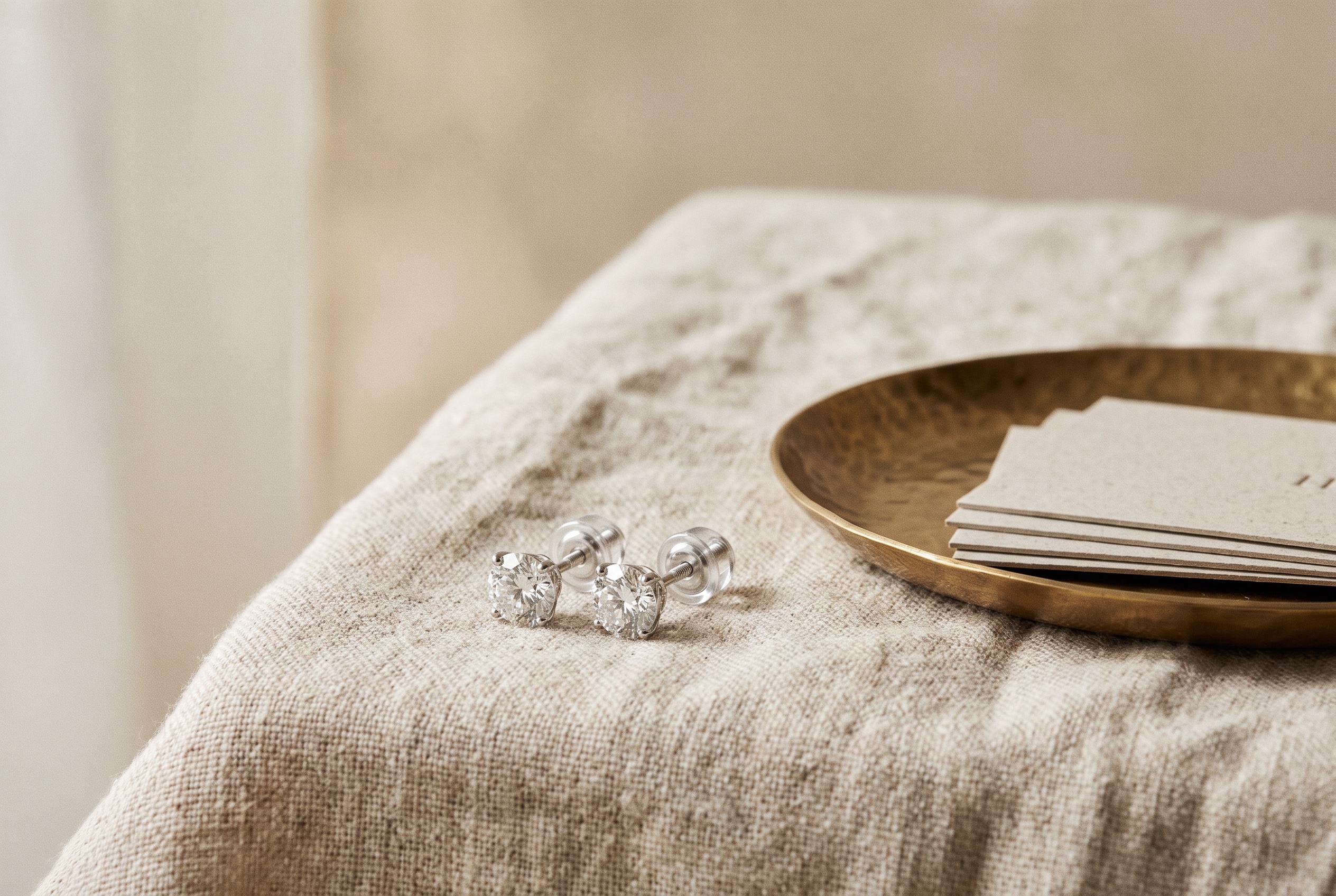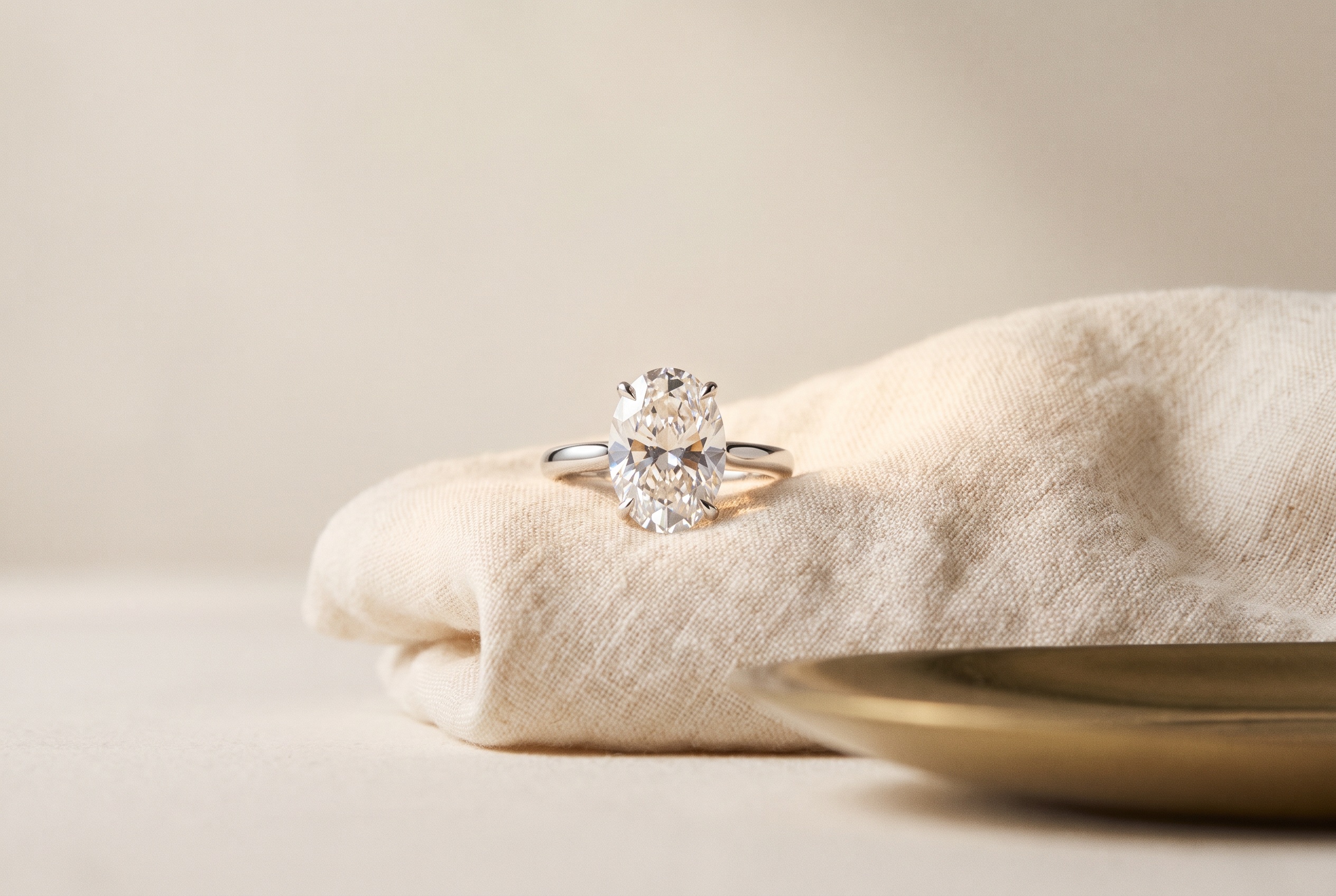

A loose diamond is a diamond that has been cut and polished but not yet set into a ring, pendant, or any other piece of jewelry — sold and handled as an individual stone rather than as part of a finished item. Loose diamonds are graded, certified, and priced on their own merits (cut, color, clarity, carat weight), which is exactly why jewelers, designers, and manufacturers buy them separately from mountings: it lets them choose the stone and the setting independently instead of accepting whatever pairing a finished piece happens to come with.
Searches for "loose diamonds" span a wide range of intent — some buyers are shopping for a single stone to set into an engagement ring, others are jewelers building recurring inventory, and a growing share are specifically comparing loose lab-grown (CVD) diamonds against loose natural stones before deciding which to buy. This guide covers what a loose diamond actually is, why the trade buys stones loose instead of pre-set, how loose lab-grown and loose natural diamonds compare, how loose stones are graded and certified, what to check before buying loose diamonds wholesale, and how sourcing loose inventory works for a jeweler or designer placing recurring orders rather than a one-time purchase.
What Is a Loose Diamond, Exactly?
"Loose" simply means unset — the diamond exists as a standalone cut stone, with no prongs, bezel, halo, or band attached to it. A loose diamond has already been through the full cutting and polishing process; it is a finished stone in its own right, just not yet married to a piece of jewelry. This is distinct from rough diamond (uncut material straight from mining or growth) and from a mounted or set stone (a diamond already fixed into a finished jewelry piece).
Loose diamonds are bought and sold as discrete units, typically referenced by their individual specifications: shape, carat weight, color grade, clarity grade, cut grade, and certification. A 1.02-carat round brilliant, G color, VS1 clarity, Excellent cut, GIA-certified stone is a fully specified, individually identifiable piece of inventory — no different in that sense from any other precisely specced wholesale good, except that its "specs" are the diamond's own physical and optical properties rather than a manufacturer's data sheet.
Loose Diamond vs. Set (Mounted) Diamond
The distinction matters more than it might first appear, because it changes what a buyer is actually evaluating:
- Loose diamond — evaluated purely on the stone itself. Its certificate, grading, and physical characteristics are fully visible and independently verifiable, since nothing is hidden by a setting.
- Set diamond — evaluated as part of a finished piece. A prong or bezel can obscure part of the girdle or pavilion, making some inclusions or the full cut proportions harder to inspect directly, and the diamond's presentation is influenced by the metal, setting style, and any halo or side stones around it.
This is a large part of why trade buyers — jewelers, designers, and manufacturers — generally prefer to select and vet the diamond first, loose, before deciding on or building the setting around it. It's the same logic a manufacturer applies to sourcing any critical component separately from final assembly: control quality and specification at the component level, then combine it with the rest of the build once it's confirmed to meet spec.
Why Jewelers and Retailers Buy Diamonds Loose
For a trade buyer, purchasing loose diamonds rather than only finished jewelry serves several practical purposes:
- Independent stone selection. A jeweler building a custom engagement ring, or a retailer stocking a case, wants to choose the exact stone — shape, grade, and price point — separately from the setting design, then pair the two deliberately.
- Custom and bespoke work. Custom jewelry almost always starts with a loose center stone the client or designer selects first, with the setting built around it afterward.
- Repair and replacement. A jeweler doing repair work needs loose stones on hand to replace a damaged or missing diamond in an existing piece without disturbing the rest of the setting.
- Inventory flexibility. Loose stones can be set into multiple different styles as demand shifts, where a finished piece is locked into one specific design.
- Resale and trade-in. Loose diamonds are simpler to appraise, resell, or trade than diamonds already fixed into a setting, since the stone's value is not entangled with the metal and labor cost of a mounting.
- Building matched sets. Earrings, three-stone rings, and eternity bands require multiple stones selected together for visual consistency — something far easier to do from loose inventory than by disassembling finished pieces.
None of this is unique to any one segment of the trade — retailers, independent jewelers, and designers doing fully custom work all rely on loose stone inventory for some portion of what they build or sell, even if the finished-jewelry side of their business is larger in dollar terms.
Loose Lab-Grown (CVD) Diamonds vs. Loose Natural Diamonds
The single biggest fork in the loose diamond market today is origin: lab-grown versus natural. Both are chemically, physically, and optically diamond — graded on the same 4Cs scale — but they differ meaningfully in how they're produced, priced, and treated by the market. Lab-grown loose diamonds sold as CVD are grown in a controlled chamber using chemical vapor deposition, a process that replicates the conditions under which diamond crystallizes, without extracting material from the earth. Natural loose diamonds formed underground over enormously long geological timescales and were mined and later cut and polished into their finished form.
| Factor | Loose Lab-Grown (CVD) Diamond | Loose Natural Diamond |
|---|---|---|
| Origin | Grown in a controlled chamber via chemical vapor deposition | Formed underground over geological time, then mined |
| Certification | IGI, GIA, and GCAL all grade lab-grown stones, with reports explicitly labeled "Laboratory-Grown" | IGI, GIA, and GCAL all grade natural stones on the same 4Cs criteria |
| Price framing | Meaningfully lower cost per carat than a comparable-grade natural stone, at any given size and quality tier | Commands a premium over lab-grown at equivalent size and grade, reflecting scarcity and mining supply constraints |
| Availability & lead time | High-grade stones (VVS clarity, D–F color) are relatively easy to source in volume, since growth conditions can be tightly controlled | High-grade stones in the same tiers are naturally scarcer, so consistent sourcing at volume can take more effort |
| Resale considerations | A newer, fast-growing secondary market; resale value is generally expected to track closer to a percentage of original price than natural stones do | An established secondary market with a longer resale and appraisal track record |
| Physical & optical properties | Identical diamond composition and optical performance to natural, grade for grade | Identical diamond composition and optical performance to lab-grown, grade for grade |
Neither option is categorically "better" — the right choice depends on the buyer's priorities. A client or retailer prioritizing maximum size and clarity for the lowest cost per carat is usually better served by loose lab-grown inventory. A buyer prioritizing rarity, an established resale market, or a piece with natural-origin provenance is better served by loose natural stones. Many trade buyers carry both, since end clients increasingly ask for one or the other by name rather than treating the choice as settled. For a deeper breakdown of how lab-grown diamonds are produced and graded, see What Is a Lab-Grown Diamond?.
How Loose Diamonds Are Graded and Certified
Grading is what turns a cut stone into a specified, tradeable piece of inventory. An independent gemological lab examines a loose diamond under controlled lighting and magnification and issues a report documenting its 4Cs — carat weight, cut, color, and clarity — along with measurements, proportions, fluorescence, and, for lab-grown stones, an explicit origin statement.
Three labs cover the large majority of loose diamond certification that trade buyers encounter:
- GIA (Gemological Institute of America) — widely regarded as the strictest, most conservative grading standard, for both natural and lab-grown stones.
- IGI (International Gemological Institute) — the highest-volume certifier of lab-grown diamonds specifically, with fast turnaround and broad market acceptance.
- GCAL (Gem Certification & Assurance Lab) — known for detailed cut-precision and light-performance documentation, appealing to buyers who weight cut quality heavily.
All three are legitimate, widely accepted labs, and Guru Diam offers loose stones certified by IGI, GIA, and GCAL rather than defaulting to a single lab — because certification preference varies by client, by resale context, and by which lab a given retailer's end customers recognize. Buyers can browse certified loose inventory directly in the certified diamonds category.
Reading a Loose Diamond Certificate
A loose diamond's certificate is the single most important document in the transaction, since it's the independent, third-party confirmation of what the buyer is actually purchasing. A complete certificate should include:
- Report number — verifiable directly on the issuing lab's official lookup tool.
- Shape and cutting style — round brilliant, oval, cushion, emerald, and so on.
- Carat weight — measured to the hundredth of a carat.
- Color grade — D through Z for colorless-to-tinted stones (fancy color stones use a separate hue/tone/saturation scale).
- Clarity grade — Flawless through Included, based on inclusions and blemishes visible under 10x magnification.
- Cut grade — a numeric Excellent-through-Poor grade for round brilliants; detailed proportions and a cut description for fancy shapes, which don't receive a single numeric cut grade under current lab standards.
- Fluorescence — the stone's reaction under ultraviolet light, graded None through Very Strong.
- Origin statement — for lab-grown stones, an explicit "Laboratory-Grown" designation; for natural stones, confirmation the diamond is of natural origin.
- Comments section — where any treatments (such as clarity enhancement or color treatment) or notable characteristics are disclosed. This section is easy to skip and shouldn't be — treatment history is a material fact about the stone.
Always verify a report number directly against the issuing lab's own database before finalizing a purchase, particularly for higher-value stones — this takes only a few minutes and is the most effective single step for confirming a certificate is genuine and matches the physical stone in hand.
What to Check Before Buying Loose Diamonds Wholesale
Beyond confirming the certificate is legitimate, a trade buyer evaluating loose diamonds for wholesale purchase should look closely at several specific factors:
- Cut grade, not just carat and clarity. Cut has the largest single effect on how a diamond actually looks — its brightness, fire, and scintillation — and a well-cut stone with a slightly lower clarity grade often outperforms a poorly cut stone with a technically higher clarity grade. For round brilliants, prioritize Excellent or Very Good cut grades where the budget allows.
- Fluorescence. Most diamonds show no fluorescence or only faint fluorescence, which has no visible effect. Strong or Very Strong blue fluorescence can occasionally give a stone a slightly hazy or oily appearance in certain lighting, particularly in higher color grades — worth viewing in person or requesting detailed photos/video for stones with strong fluorescence noted on the certificate.
- Clarity plot and inclusion location. The clarity grade alone doesn't say where an inclusion sits. An inclusion near the girdle edge, hidden under a prong once set, matters far less than one centered under the table facet where it's immediately visible.
- Proportions and symmetry. Table percentage, depth percentage, and symmetry grade all affect how a stone handles light, independent of the headline cut grade — relevant for fancy shapes especially, since they don't receive a single numeric cut grade.
- Treatment disclosure. Confirm whether a stone has undergone any post-processing (clarity enhancement, color treatment) — always disclosed in the certificate's comments section, and something that should be reflected in price and buyer expectations.
- Growth method, for lab-grown stones. Guru Diam's lab-grown loose inventory is CVD exclusively, so growth-method consistency is a non-issue when sourcing through a single-method catalog — but it's worth confirming with any supplier whose lab-grown catalog mixes production methods.
- Matching, for pairs and sets. Two individually certified stones with identical 4C grades can still look subtly different face-up depending on inclusion position and cut execution within the grade's tolerance — request stones compared directly against each other, not just matched on paper, when sourcing for earrings or symmetrical settings. Browse pre-matched inventory in the matching pairs category.
Loose Diamond Shapes: Standard, Antique, and Exotic
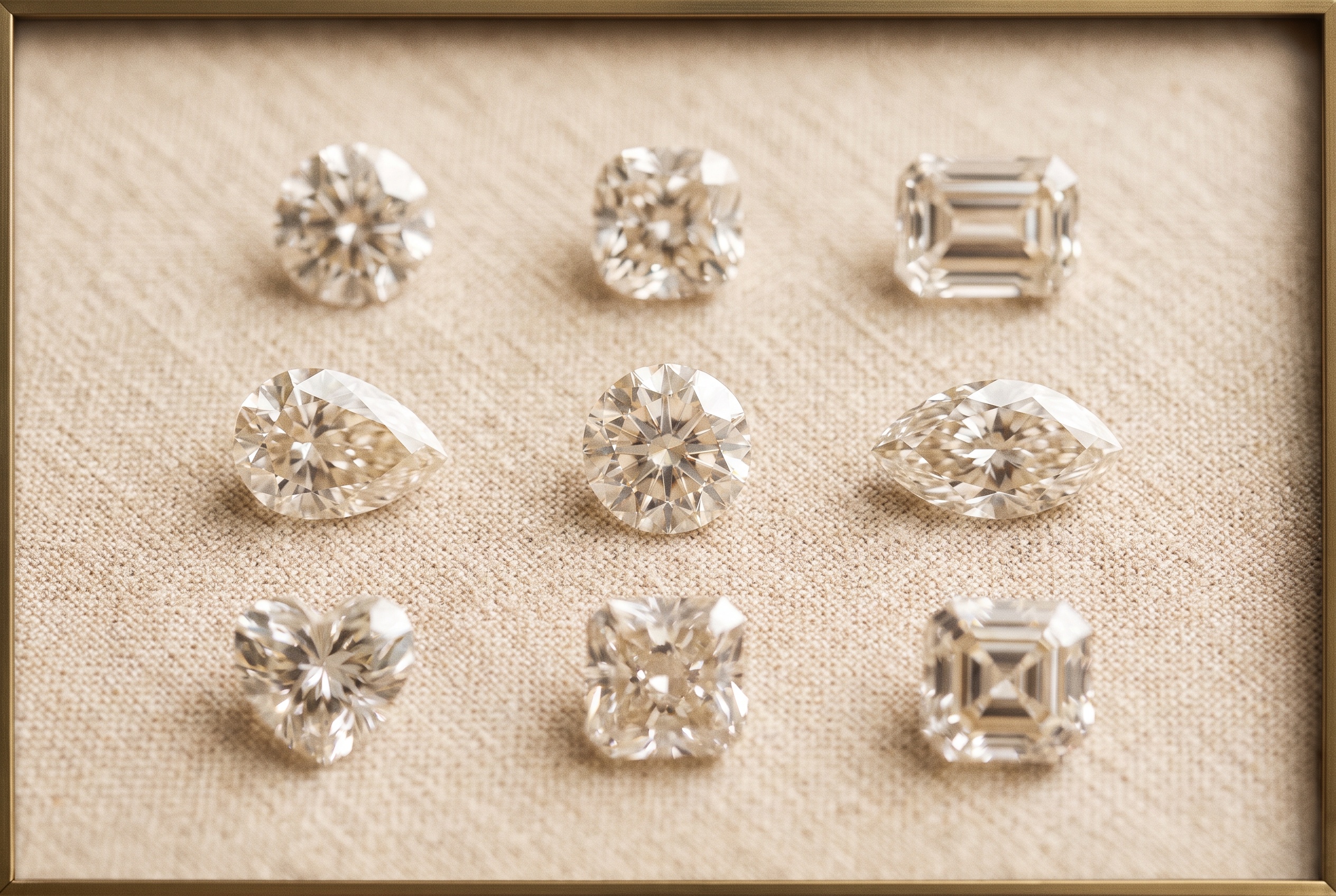
Loose diamonds come in a far wider range of shapes than the handful most commonly seen in mainstream jewelry. Standard shapes — round brilliant, princess, cushion, oval, emerald, pear, marquise, and radiant — cover most volume demand and are generally the easiest to source consistently across grades and sizes. Antique cuts — old European cut, old mine cut, and similar historical faceting styles tracing back to pre-modern cutting techniques (old mine cuts, for instance, are historically associated with output from mines including the historical Golconda region in India) — appeal to buyers building vintage-inspired or heirloom-style pieces, and typically require a supplier with dedicated antique-cut stock rather than a general catalog. Exotic and fancy shapes beyond the standard set — and fancy color stones in particular — round out demand from designers building distinctive, non-standard pieces.
A supplier carrying loose inventory across all three tiers — standard, antique, and exotic — gives a jeweler or designer a single source for whatever shape a project calls for, rather than needing a separate specialty vendor every time a client requests something outside the standard shape range.
Fancy Color Loose Diamonds
Fancy color diamonds — yellow, pink, blue, green, and other hues — are graded on a separate hue/tone/saturation scale rather than the standard D–Z colorless scale, since the goal for a fancy color stone is maximizing and accurately documenting its color rather than minimizing it. Natural fancy color diamonds in strong saturations are historically among the rarest and most expensive categories in the entire diamond market. Lab-grown fancy color diamonds — including fancy color melee for pavé and accent work — have made saturated color considerably more accessible, since controlled growth conditions can introduce the specific trace elements responsible for color more reliably than natural formation does. Designers building colored-stone pieces without natural fancy color pricing increasingly source from loose fancy color lab-grown inventory for exactly this reason; browse the fancy color loose diamonds category for current stock.
Melee, Center Stones, and How Sourcing Differs
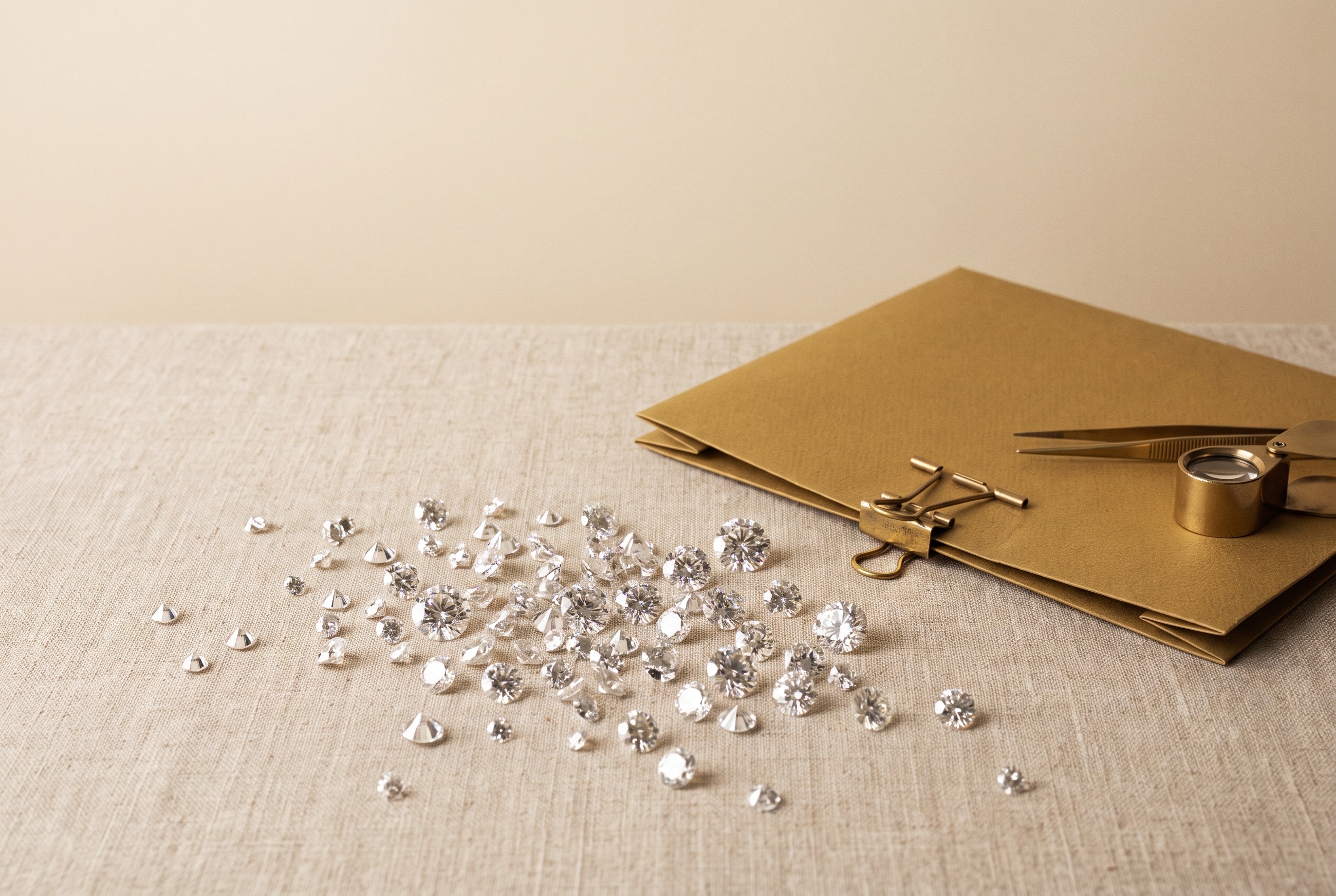
Not all loose diamonds are sourced or sold the same way. Center and near-center stones — generally 0.30 carats and above — are individually certified, individually specified, and typically sold one at a time or in small selected groups for a specific piece. Melee — small stones, generally under 0.30 carats, used for pavé, accents, and halo settings — is usually sold as parcel goods against a quality baseline (color range, clarity range, cut consistency) rather than individually graded stone by stone, since certifying each stone individually at that size isn't practical at the volumes jewelers actually use them in. A trade buyer sourcing a full project — a center stone plus matching melee for a halo, for instance — is often solving two different sourcing problems at once, which is part of why consolidating with a single supplier who handles both categories tends to be more efficient than sourcing center stones and melee from separate vendors.
Common Mistakes Buyers Make Sourcing Loose Diamonds Wholesale
- Over-indexing on carat weight alone. Two stones of the same carat weight can look meaningfully different in size face-up depending on cut proportions — a shallow or deep cut can make a stone appear smaller or larger than its weight suggests.
- Treating all "certified" claims as equivalent. Always confirm the specific issuing lab, since standards and market recognition differ between GIA, IGI, GCAL, and lesser-known regional labs.
- Skipping the fluorescence and comments fields. These sit outside the headline 4Cs but can materially affect a stone's appearance and value.
- Sourcing single stones from scattered listings for a recurring need. Workable for a one-time purchase, but inefficient for a jeweler placing repeat orders across multiple shapes, grades, and quantities.
- Not confirming matched-pair quality beyond paper grades. As covered above, identical certificate grades don't guarantee a visually matched pair.
- Assuming loose stone lead times match finished jewelry lead times. Loose stone availability is a function of on-hand inventory, not a build timeline — in-stock loose diamonds should ship same-day, while custom finished jewelry built around a chosen stone follows its own separate production timeline.
How Sourcing Loose Diamonds Wholesale Works for a Trade Buyer
For a jeweler, designer, or manufacturer, sourcing loose diamonds wholesale is a fundamentally different exercise than a consumer buying one stone once. A trade buyer is typically solving for consistent, repeatable access to certified inventory across multiple shapes, sizes, and grades — often for different clients or product lines simultaneously — rather than finding the single best listing for one purchase. That shifts the real question from "which stone can I find today" to "which supplier can reliably deliver the range I need, order after order, without re-verifying a new source every time."
A wholesale relationship with a supplier carrying both loose lab-grown and loose natural inventory across standard, antique, and fancy color shapes solves that problem more efficiently than assembling supply piecemeal from scattered listings — particularly for buyers who need matched pairs, specific antique cuts, or fancy color melee that don't show up reliably in general consumer inventory. Guru Diam operates specifically as this kind of trade-only supplier: loose diamonds — lab-grown CVD and natural, standard through antique and exotic shapes, certified by IGI, GIA, and GCAL — alongside finished jewelry, with cutting, setting, and polishing all handled in-house. In-stock loose inventory ships same-day out of both our New York and Los Angeles locations (before 6pm EST from NYC, before 4pm PST from LA), so a jeweler confirming a stone in the morning can reasonably expect it on hand within days, not weeks. Buyers can review current terms and inventory through the wholesale hub or apply for a trade account through trade partner.
For pieces built around a chosen loose stone rather than sold loose on its own, custom jewelry covers finished-piece turnaround separately — that timeline applies to the build around the stone, not to the loose stone itself, which should already be in hand and ready to set. Buyers comparing certification depth before choosing a stone may also find the GIA certified lab-grown diamonds guide and GIA certified natural diamonds guide useful for the equivalent breakdown on each side of the catalog, and buyers narrowing in on clarity specifically may want the VVS clarity diamond guide.
Loose Diamonds and Long-Term Value
Because a loose diamond's value sits in the stone itself rather than in the labor and metal of a setting, loose stones are generally simpler to appraise, insure, and resell than diamonds already mounted in a finished piece. This is part of why some buyers — both trade and end consumers working through a jeweler — specifically request a loose stone with its certificate kept on hand even after it's set, since the certificate remains the reference document for the stone's specifications regardless of what it's eventually mounted in. For natural diamonds, an established secondary market and decades of appraisal precedent support this. For lab-grown diamonds, the secondary market is newer and still developing, which is a genuine consideration for buyers weighing long-term value alongside upfront cost — a tradeoff worth discussing candidly with clients rather than glossing over, particularly for lab-grown center stones purchased at a significant price point.
Frequently Asked Questions
What does "loose diamond" mean?
A loose diamond is a cut and polished diamond that has not been set into a ring, pendant, earring, or any other piece of jewelry — sold and evaluated as a standalone stone, specified by its own shape, carat weight, color, clarity, cut grade, and certification.
Are loose diamonds cheaper than diamonds already set in jewelry?
Not inherently — a loose diamond's price reflects the stone's own grade and size, separate from any setting cost. Buying loose and having a piece custom-built around it lets a buyer control the stone and setting costs independently, which can be more cost-efficient than a pre-set piece where the two are bundled, but the loose stone itself isn't automatically cheaper.
What is the difference between loose lab-grown and loose natural diamonds?
Loose lab-grown diamonds are grown in a controlled chamber via chemical vapor deposition (CVD) rather than mined, and generally cost meaningfully less per carat than a comparable-grade natural stone. Both are graded on the identical 4Cs scale by labs including GIA, IGI, and GCAL, and both are physically and optically diamond — the difference is origin and price, not composition.
Do loose diamonds need to be certified?
Certification isn't a legal requirement, but it's the only independent, third-party confirmation of a stone's actual 4Cs and, for lab-grown stones, its origin — and it's standard practice for any loose diamond sold at 0.30 carats or above in the trade. Uncertified stones should be priced and evaluated with more caution, since the buyer is relying entirely on the seller's own representation.
How do I know if a loose diamond certificate is genuine?
Verify the report number directly on the issuing lab's official online lookup tool and confirm it returns a record matching the stone's measurements, carat weight, and grading details — a certificate that doesn't match, or a report number that returns no record, is an immediate red flag.
How do jewelers source loose diamonds wholesale?
Through a trade account with a wholesale supplier carrying certified loose inventory across shapes, sizes, and grades — rather than buying single stones from scattered consumer listings — which matters most for jewelers placing recurring orders or sourcing matched pairs and specific cuts that don't reliably show up in general retail inventory.
Guru Diam is a trade-only wholesale diamond supplier with locations in New York and Los Angeles, carrying loose diamonds — CVD lab-grown and natural — across standard, antique, and fancy color shapes, certified by IGI, GIA, and GCAL, alongside finished jewelry, with cutting, setting, and polishing all in-house. Browse certified stock in the certified diamonds category, fancy color inventory in fancy color loose diamonds, or matched sets in matching pairs. Apply for trade access through trade partner, or review current terms and inventory at the wholesale hub.