
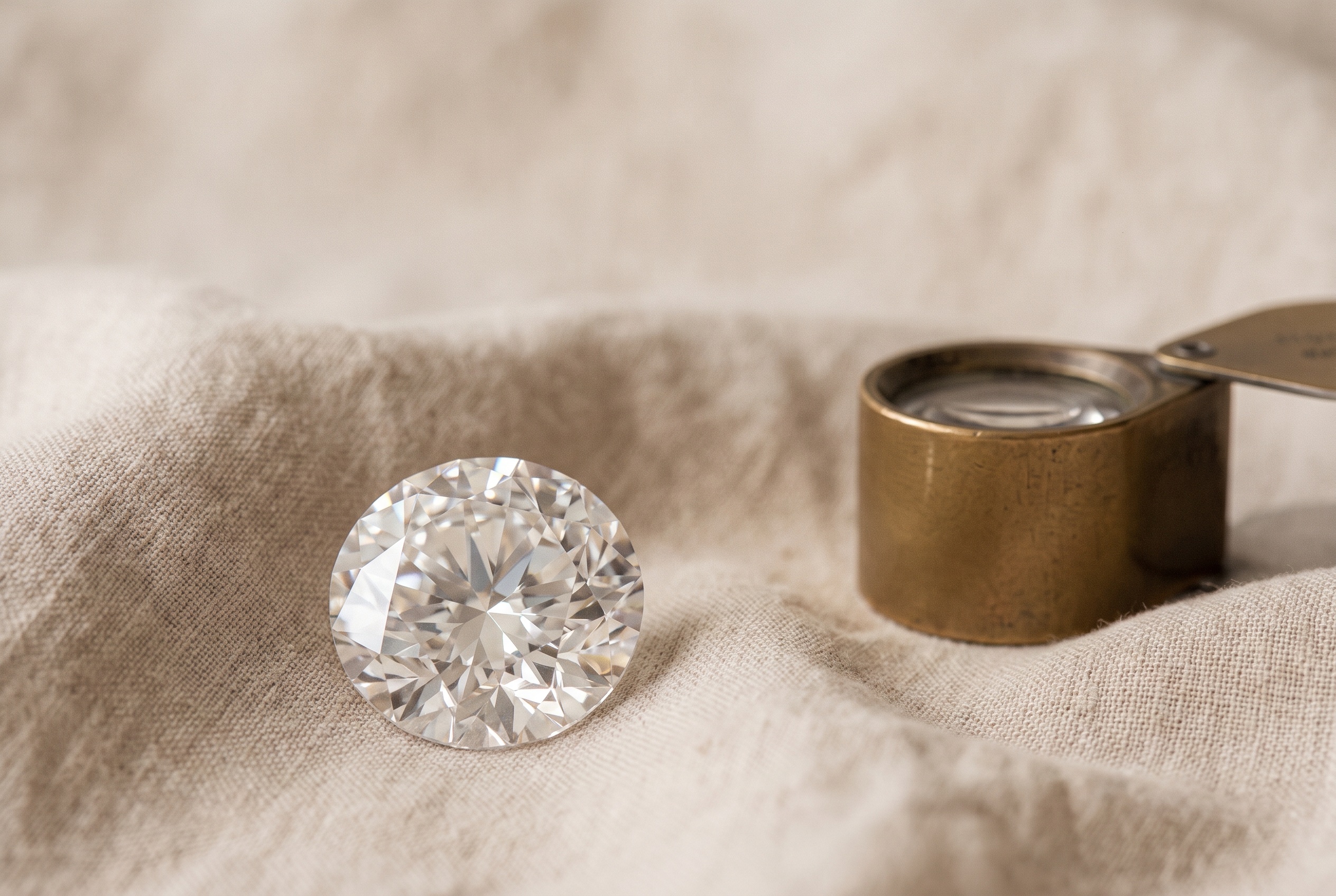
VVS clarity — short for "Very, Very Slightly Included" — is the second-highest clarity grade on the GIA scale, sitting just below Flawless (FL) and Internally Flawless (IF) and just above VS (Very Slightly Included). A VVS diamond contains inclusions so minute they're extremely difficult to see even under 10x magnification, and are essentially never visible to the naked eye, making VVS one of the highest clarity tiers a buyer can select without paying the steep premium attached to Flawless or Internally Flawless grades.
VVS gets searched constantly by buyers trying to figure out whether it's worth the price jump over VS, or whether it's overkill compared to a grade that already looks perfectly clean face-up. The honest answer depends on stone size, cut, and how the buyer intends to use it — this guide covers what VVS1 and VVS2 actually mean, how the grade compares to the tiers above and below it, when the premium is genuinely worth paying, and how to buy VVS-clarity loose or center stones with confidence.
What VVS Clarity Actually Means
The GIA clarity scale grades diamonds from Flawless down to Included based on the number, size, position, and visibility of inclusions (internal characteristics) and blemishes (surface characteristics) under 10x magnification by a trained grader. VVS sits at the second tier from the top:
- FL (Flawless) — no inclusions or blemishes visible under 10x magnification.
- IF (Internally Flawless) — no inclusions visible under 10x magnification; minor surface blemishes only.
- VVS1 / VVS2 (Very, Very Slightly Included) — inclusions present but extremely difficult for a trained grader to locate under 10x magnification.
- VS1 / VS2 (Very Slightly Included) — inclusions are minor and range from difficult to somewhat easy to see under 10x magnification.
- SI1 / SI2 (Slightly Included) — inclusions are noticeable under 10x magnification and can sometimes be visible to the naked eye, particularly at SI2.
The defining characteristic of VVS clarity is that the inclusions present are so small and so well-positioned that even a trained grader has to search for them under magnification — the grade exists specifically to distinguish "essentially perfect but not technically flawless" from the true top tier.
VVS1 vs. VVS2: What the Difference Actually Comes Down To
VVS1 and VVS2 both fall within the "very, very slightly included" tier, and the distinction between them is one of degree, not category:
- VVS1 — inclusions are more difficult to locate under 10x magnification, generally positioned so they're harder to find even when a grader knows the general area to look, sometimes only visible from the pavilion (bottom) side of the stone rather than through the table.
- VVS2 — inclusions are still extremely minor but somewhat easier for a trained grader to locate under magnification than VVS1, though still not visible to the naked eye in a properly cut stone.
For nearly all practical buying purposes, VVS1 and VVS2 look identical to the naked eye and even under moderate magnification to an untrained observer — the price difference between the two grades is real but the visual difference generally is not, which makes VVS2 the more common practical recommendation when a buyer wants VVS-tier clarity without paying the added premium VVS1 commands for a distinction that isn't visible.
VVS Clarity Comparison Table
| Grade | Inclusion Visibility (10x) | Naked-Eye Visibility | Relative Price | Best For |
|---|---|---|---|---|
| FL / IF | None (FL) or internally none (IF) | Never visible | Highest | Investment-grade stones, large center stones where absolute top clarity matters |
| VVS1 | Extremely difficult to locate | Never visible | High | Buyers wanting top-tier clarity just below Flawless, minimal premium sensitivity |
| VVS2 | Very difficult to locate | Never visible | High, moderately below VVS1 | Best value at the top clarity tier — same face-up look as VVS1 for less |
| VS1 | Difficult to locate | Essentially never visible | Moderate-high | Buyers wanting eye-clean clarity at a lower price than VVS |
| VS2 | Somewhat easy to locate | Almost never visible in well-cut stones | Moderate | Best overall value; eye-clean in the vast majority of cuts and sizes |
| SI1 | Noticeable | Usually not visible, size-dependent | Lower | Budget-conscious buyers willing to check specific stones carefully |
Is VVS Clarity Worth the Price Over VS?
This is the question nearly every VVS search is really asking, and the honest answer is: usually not, for the specific reason most buyers assume they need it. VS1 and VS2 diamonds are, in the overwhelming majority of cases, eye-clean — meaning no inclusion is visible to the naked eye under normal viewing conditions — at a meaningfully lower price than VVS. Because VVS-tier inclusions are already invisible without magnification, moving from VS2 to VVS2 typically buys a buyer no visible difference at all, just the reassurance of a higher number on a certificate.
Where VVS genuinely earns its premium:
- Larger stones (roughly 2 carats and up), where inclusions that would be invisible in a smaller stone can occasionally become marginally easier to spot simply because there's more surface area and volume to view.
- Step cuts like emerald and Asscher, where the large open table and fewer light-scattering facets make inclusions somewhat more visible than in a round brilliant of the same clarity grade — buyers choosing step cuts sometimes size up in clarity specifically for this reason.
- Buyers prioritizing certificate-grade prestige or resale considerations, where the clarity grade itself carries value independent of visible appearance.
- Fancy color diamonds, where clarity interacts differently with color saturation and some buyers prefer minimizing any risk of an inclusion interrupting the color face-up.
Outside of those specific cases, directing budget toward better cut quality or a larger carat weight tends to produce a more noticeable improvement than moving from VS to VVS clarity.
How Clarity Grading Actually Works
A GIA, IGI, or GCAL grader evaluates a diamond under 10x magnification using a loupe or microscope, assessing five factors for each inclusion or blemish present: size, number, position, nature (the type of inclusion — a feather, crystal, cloud, or pinpoint, for example), and relief (how much the inclusion contrasts against the surrounding diamond). The overall grade reflects the combined effect of all inclusions present, not just the most visible one — a stone with several extremely minor inclusions can grade the same as one with a single slightly larger inclusion, depending on how the five factors balance out.
Position matters significantly: an inclusion under the table (the flat top facet) is more likely to affect visibility and grade than the same size inclusion near the girdle or hidden under a prong once set, which is part of why two stones with the same clarity grade can still look subtly different to a trained eye, and why viewing actual photos or video of a specific stone — rather than buying purely off the certificate grade — is worth doing for higher-value purchases.
Common Inclusion Types Found at VVS Clarity
- Pinpoints — tiny crystal inclusions, often the type found in VVS-grade stones precisely because they're so small.
- Needles — thin, elongated crystal inclusions, generally minor at VVS grade.
- Internal graining — subtle irregularities in the crystal structure, sometimes present without technically counting as a clarity-reducing inclusion.
- Minor feathers — small internal fractures, only present at VVS grade when extremely small and well-positioned.
At VVS clarity, these characteristics exist mainly as identifying marks a grader can use to distinguish one stone from another (useful for certificate verification) rather than as anything approaching a visual flaw.
VVS Clarity and Cut: Why the Combination Matters
Clarity grade and cut quality interact in a way that's easy to overlook: a well-cut diamond, regardless of clarity grade, directs and scatters light in a way that makes minor inclusions harder to spot, while a poorly cut stone can make even a high clarity grade look less impressive because the light performance itself is weaker. A VS2 diamond with excellent cut quality will often present better face-up than a VVS2 diamond with mediocre cut proportions — which is part of why prioritizing cut over clarity, once a stone is comfortably eye-clean, tends to produce the better-looking result for the same budget.
VVS Clarity in Lab-Grown vs. Natural Diamonds
The GIA, IGI, and GCAL clarity scale applies identically to lab-grown and natural diamonds — VVS clarity means the same thing, graded the same way, regardless of material origin. CVD lab-grown diamonds can and do occur across the full clarity range including VVS and Flawless, and because lab-grown production allows for more control over growth conditions than natural formation, high-clarity lab-grown stones are generally available at a significantly lower price point than a natural diamond of equivalent clarity, cut, and carat weight — a major factor in why VVS clarity has become more accessible to a broader range of buyers as lab-grown supply has expanded.
Buying VVS Clarity: What to Check Before Purchasing
- Confirm the certificate is from a recognized lab — IGI, GIA, or GCAL — and that the grade listed matches what's represented in the listing.
- Ask for actual photos or video under magnification rather than relying purely on the grade, especially for larger stones or step cuts where clarity visibility is more cut-dependent.
- Weigh VVS1 vs. VVS2 pricing carefully — since the visual difference is generally undetectable, VVS2 is usually the better value unless certificate-grade prestige specifically matters to the buyer.
- Prioritize cut quality alongside clarity — a stone with excellent cut and VS clarity will often outperform a mediocre-cut VVS stone in actual appearance.
- Consider whether the premium is going where it'll be seen — for a stone that will be set with prongs or a bezel covering part of the pavilion, some inclusion positions become irrelevant to the final look.
VVS Clarity for Matched Pairs and Multi-Stone Pieces
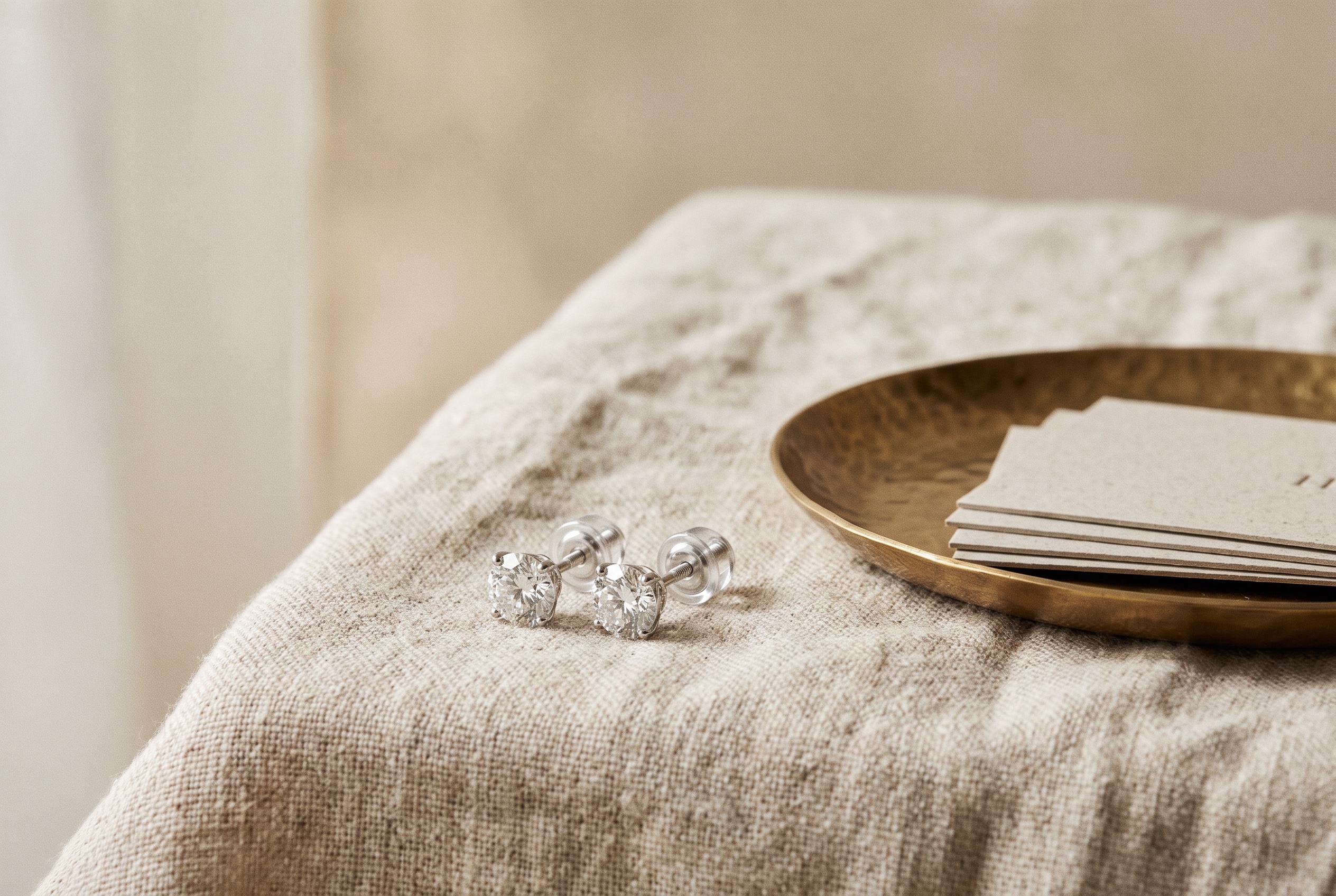
When sourcing VVS-clarity stones for a matched pair — stud earrings or symmetrical side stones flanking a center diamond — clarity consistency between the two stones matters as much as the grade itself. Two VVS2 stones with very differently positioned inclusions can still both grade VVS2 while looking subtly different when compared directly side by side under close inspection, so working with a supplier who can compare candidate stones against each other before shipping, rather than sourcing two separately graded stones from different lots, produces a more reliably matched result.
How Diamond Shape Affects VVS Clarity Visibility
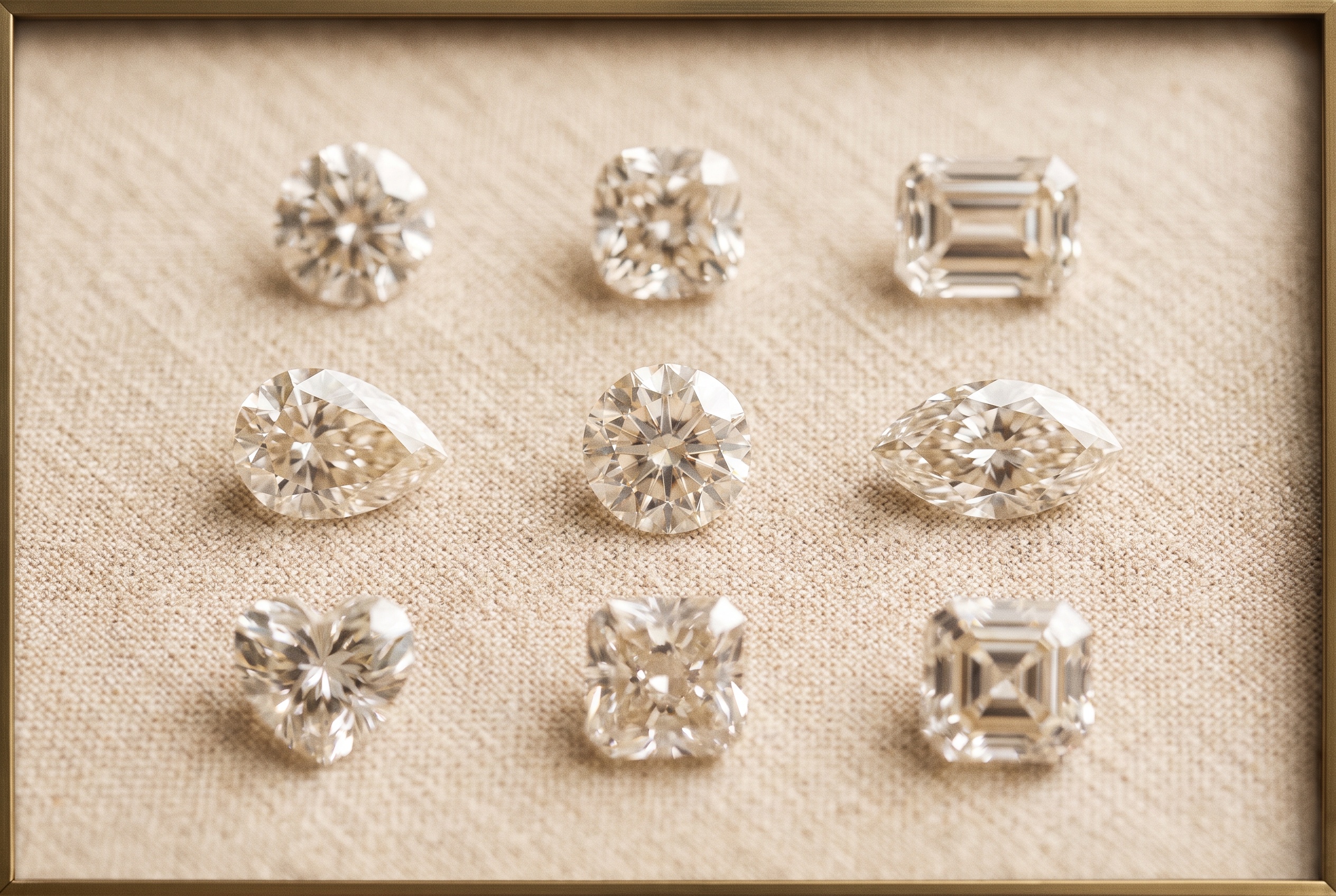
Not every shape hides inclusions equally well, even at the same clarity grade, because facet pattern determines how much light scattering happens to camouflage an inclusion:
- Round brilliant — the facet pattern is specifically engineered to maximize light scatter, which does double duty hiding minor inclusions along with producing brilliance; VVS clarity is least necessary here since even VS-grade inclusions are well camouflaged.
- Cushion, oval, and pear — brilliant-style facet patterns similar to round, offering good inclusion camouflage; VS clarity remains a strong practical choice for most buyers in these shapes.
- Emerald and Asscher (step cuts) — long, open facets and a large table offer far less light scatter to hide inclusions, meaning a given inclusion is more visible at the same clarity grade than it would be in a brilliant-cut shape; buyers choosing these shapes benefit most from stepping up to VVS.
- Antique cuts (old mine, old European) — the smaller table and different facet arrangement changes visibility in ways that are more stone-specific; viewing actual photos matters more here than for standardized modern cuts.
This shape-clarity relationship is one of the most common reasons two buyers walk away with very different clarity recommendations for what looks like a similar budget — the shape being considered changes how much clarity grade actually matters to the finished look.
Setting Style and Whether VVS Clarity Gets "Wasted"
A setting can hide or reveal different parts of a stone, which affects how much value a buyer gets from paying up for VVS clarity. A bezel setting covers the girdle and can partially obscure the pavilion depending on depth, meaning any inclusions positioned near the girdle become less relevant to visible appearance once set. A prong setting, by contrast, leaves most of the stone visible and exposed to close inspection from multiple angles, making clarity grade comparatively more visible in the finished piece. For buyers deciding where to allocate budget between clarity and other quality factors, it's worth considering the setting style alongside the clarity grade rather than evaluating clarity purely in the abstract, loose-stone context.
Common Misconceptions About VVS Clarity
- "VVS means flawless." It means very, very slightly included — a real, if extremely minor, inclusion is present. Only FL and IF grades mean no inclusions (or, for IF, no internal inclusions) are present at all.
- "VVS1 always looks better than VVS2." The two grades are distinguished by how hard a trained grader has to work to find the inclusion, not by any visible difference to the eye.
- "Higher clarity always looks better." Once a stone is eye-clean, clarity stops being the factor that most affects visible appearance — cut quality generally has a larger visible impact from that point on.
- "VVS is only relevant for natural diamonds." The clarity scale and grading process are identical for lab-grown material, and VVS-clarity lab-grown stones are widely available.
VVS Clarity in Fancy Color Diamonds
Clarity grading works slightly differently in the buyer's mental calculus once color enters the picture. In a fancy color diamond — yellow, pink, blue, or green — the eye is drawn first to hue and saturation, which means minor inclusions that would draw attention in a colorless stone can be less noticeable against a strongly saturated color. That said, some buyers specifically prefer VVS or higher clarity in fancy color stones precisely to remove any risk of an inclusion interrupting the color face-up, particularly in lighter or more pastel saturations where there's less color depth to camouflage an inclusion the way a deeply saturated stone can. As with colorless diamonds, the decision comes down to the specific stone, shape, and saturation level rather than a blanket rule that fancy color diamonds need higher or lower clarity than colorless ones.
Why Clarity Grades Are Reported the Way They Are
The clarity scale's ten-grade structure (FL through I3) exists because early 20th-century diamond graders needed a shared, repeatable language to describe inclusions across an industry with no standardized terminology, and GIA's system — adopted in the 1950s and still the industry reference point today — solved that by defining each grade against a specific, describable threshold of inclusion visibility under fixed 10x magnification. That standardization is exactly why a VVS2 grade from GIA, IGI, or GCAL means the same thing regardless of which lab issued it, or which country the diamond was cut in: the grading criteria, not the individual grader's judgment alone, define the boundary between adjacent grades. Buyers comparing stones across multiple suppliers can rely on this consistency as long as the certificate comes from one of the three recognized labs rather than an unfamiliar or self-issued grading report.
Sourcing VVS Clarity Diamonds
Guru Diam carries certified loose diamonds across the full clarity range, including VVS1 and VVS2, in both CVD lab-grown and natural material, with IGI, GIA, and GCAL certification available. Because clarity-cut interaction matters as much as the grade itself, our inventory listings include the certificate detail needed to evaluate a specific stone rather than relying on the grade alone. Certified loose stones ship same-day on in-stock inventory from both the New York and Los Angeles locations, and custom pieces built around a VVS-clarity center stone are finished in 4–6 days. Buyers weighing clarity against other quality factors for a specific client may also find our round brilliant cut guide useful for understanding how cut quality interacts with clarity visibility in the most commonly sold shape.
Frequently Asked Questions
What does VVS clarity mean in a diamond?
VVS stands for "Very, Very Slightly Included" — the second-highest clarity grade on the GIA scale, just below Flawless and Internally Flawless. VVS diamonds contain inclusions so minute that even a trained grader finds them difficult to locate under 10x magnification, and they're essentially never visible to the naked eye.
What is the difference between VVS1 and VVS2?
VVS1 inclusions are more difficult for a trained grader to locate under 10x magnification than VVS2 inclusions, and are sometimes only visible from the pavilion side of the stone. The distinction is one of grading difficulty, not visible appearance — both grades look identical to the naked eye.
Is VVS clarity worth it compared to VS clarity?
For most buyers, no — VS1 and VS2 diamonds are typically eye-clean at a lower price, since VVS-tier inclusions are already invisible without magnification. VVS is worth the premium mainly for larger stones (roughly 2 carats and up), step cuts like emerald and Asscher, and buyers who specifically value the certificate grade.
Can lab-grown diamonds be VVS clarity?
Yes. The clarity scale applies identically to lab-grown and natural diamonds, and VVS-clarity CVD lab-grown diamonds are widely available, generally at a significantly lower price than a natural diamond of equivalent clarity, cut, and carat weight.
Does clarity matter more than cut for a diamond's appearance?
No — once a diamond is eye-clean, cut quality typically has a larger effect on visible appearance and brilliance than further improvements in clarity grade. A well-cut VS-clarity diamond will often look better face-up than a poorly cut VVS-clarity diamond.
Should VVS1 or VVS2 be chosen for a center stone?
VVS2 is generally the better value, since the visual difference between VVS1 and VVS2 is undetectable to the naked eye and even difficult for a trained grader to distinguish without magnification. VVS1 is worth the added cost mainly for buyers specifically prioritizing the higher certificate grade.
Guru Diam is a trade-only wholesale diamond supplier with locations in New York and Los Angeles, carrying certified loose diamonds across the full clarity range in both CVD lab-grown and natural material, alongside standard, antique, and exotic cuts and finished jewelry. Browse certified inventory in the certified diamonds category, source matched pairs through matching pairs, or build a custom piece through custom jewelry. Trade accounts can review current inventory and terms at the wholesale hub or apply through trade partner.