
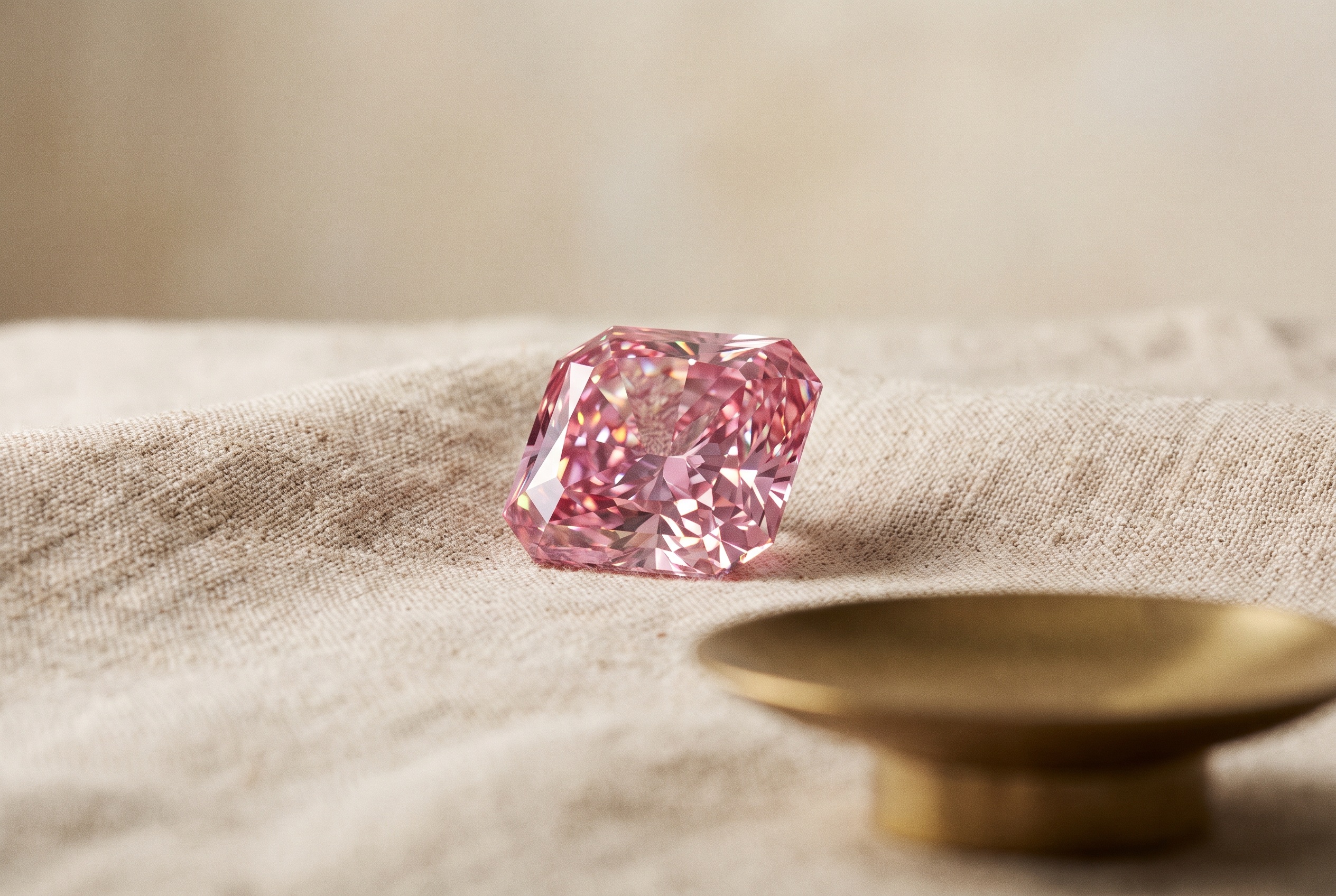
A pink diamond is a diamond that gets its color not from a trace element but from a distortion in its crystal lattice formed under intense pressure, which alters how the stone absorbs and transmits light. Natural pink diamonds are among the rarest and most historically prized fancy colors, while CVD lab-grown pink diamonds reproduce a comparable pink color through controlled post-growth treatment, giving trade buyers wholesale-scale access to a color that natural supply alone could never support at volume.
This guide explains what actually causes pink color in a diamond, how natural and lab-grown pink diamonds differ, how labs grade pink color intensity, what drives pricing, and how wholesale buyers should approach sourcing pink diamonds for retail, custom design, and resale.
What Actually Makes a Diamond Pink
Unlike blue diamonds, where a specific trace element (boron) is the direct cause of color, pink diamond color is understood to result from structural distortion within the crystal lattice — a phenomenon called plastic deformation, where immense pressure during or after the diamond's formation slightly bends and shifts the arrangement of carbon atoms without breaking the crystal apart. That distortion changes how the stone absorbs certain wavelengths of light, producing the pink color. This is a fundamentally different mechanism from color caused by a trace element, and it's part of why natural pink diamonds have historically been harder to explain, predict, and therefore harder to reliably find, than colors tied to a specific chemical impurity.
Because the exact geological conditions that produce this lattice distortion are rare and were historically concentrated in a small number of mining locations, natural pink diamond supply has always been a fraction of overall natural diamond production — a scarcity that's a matter of well-documented mining history rather than a claim about any current supplier's own sourcing.
Natural Pink Diamonds: Rarity and History
Natural pink diamonds occupy a unique place in diamond history — historically prized by royal courts and collectors, and consistently associated with record-setting auction prices whenever a significant natural pink stone comes to market. That rarity and history are well-established facts about the diamond trade broadly, not a claim about how any individual supplier sources its own inventory. For most wholesale buyers, natural pink diamonds at any meaningful size and strong saturation are simply not available at commercial volume or a price point that supports retail-scale business — they function more as investment or once-in-a-career pieces than as regular stocked inventory.
Lab-Grown Pink Diamonds: How the Color Is Produced
Lab-grown pink diamonds start as CVD-grown diamond material and typically undergo a controlled post-growth treatment process — commonly high-pressure high-temperature (HPHT) annealing or irradiation followed by annealing — that induces the same kind of lattice distortion responsible for natural pink color, or enhances a faint pink tint already present from the growth process. It's worth being precise here: this treatment step happens after CVD growth and is a standard, disclosed part of how lab-grown fancy color diamonds are produced across the industry — it does not make the stone anything other than a real diamond, and reputable labs document the color treatment status directly on the grading report. The result is a stone that is chemically and structurally a genuine diamond, with a stable, permanent pink color, available at a wholesale-viable cost structure that natural pink supply cannot match.
Natural vs. Lab-Grown Pink Diamonds: Key Differences
| Factor | Natural Pink Diamond | CVD Lab-Grown Pink Diamond |
|---|---|---|
| Cause of color | Lattice distortion (plastic deformation) from natural geological pressure | CVD growth plus controlled post-growth treatment inducing comparable lattice effects |
| Rarity | Extremely rare; historically tied to a small number of mining sources | Reproducible at commercial wholesale volume |
| Typical price position | Among the highest-value fancy colors at auction and in private sale | A fraction of natural pink pricing at comparable color and clarity |
| Physical composition | Real diamond (carbon crystal) | Real diamond (carbon crystal) — chemically identical |
| Certification disclosure | GIA is the dominant reference lab for natural fancy color | GIA, IGI, and GCAL grade and certify lab-grown fancy color, with growth origin and any treatment clearly disclosed |
| Availability at scale | Effectively unavailable in consistent wholesale quantity | Available as loose stones (0.30ct+) and calibrated melee |
How Pink Diamonds Are Graded
Like all fancy color diamonds, pink diamonds are graded on hue, tone, and saturation rather than the D-to-Z scale used for colorless stones. Pink diamonds also frequently carry a secondary hue modifier — purplish-pink and orangey-pink (sometimes called "champagne-pink" in casual trade language) are both common variants alongside pure pink, and the presence and strength of that secondary hue meaningfully affects both appearance and price.
The Fancy Color Grade Scale for Pink Diamonds
- Faint / Very Light Pink — barely perceptible pink tint
- Fancy Light Pink — a soft, clearly visible pink
- Fancy Pink — a solid, well-saturated pink that reads clearly as a colored stone
- Fancy Intense Pink — a strong, vivid pink with high saturation
- Fancy Vivid Pink — the most saturated, most sought-after grade
- Fancy Deep Pink — a darker-toned pink, often with more brown or purple undertone
As with blue, saturation is the dominant price lever within the pink color family — a Vivid or Intense grade at a given size and clarity will command a substantially higher per-carat price than a Faint or Light grade of the same carat weight.
Clarity Considerations Specific to Pink Diamonds
The same principle that applies to blue diamonds applies to pink: strong, even body color tends to visually mask minor inclusions that would be far more noticeable in a colorless stone. This gives buyers real latitude to prioritize color saturation over top-tier clarity when sourcing pink diamonds intended for retail or design use, since a well-saturated VS-clarity pink diamond will typically still read as visually clean to the naked eye.
Shapes and Cuts for Pink Diamonds
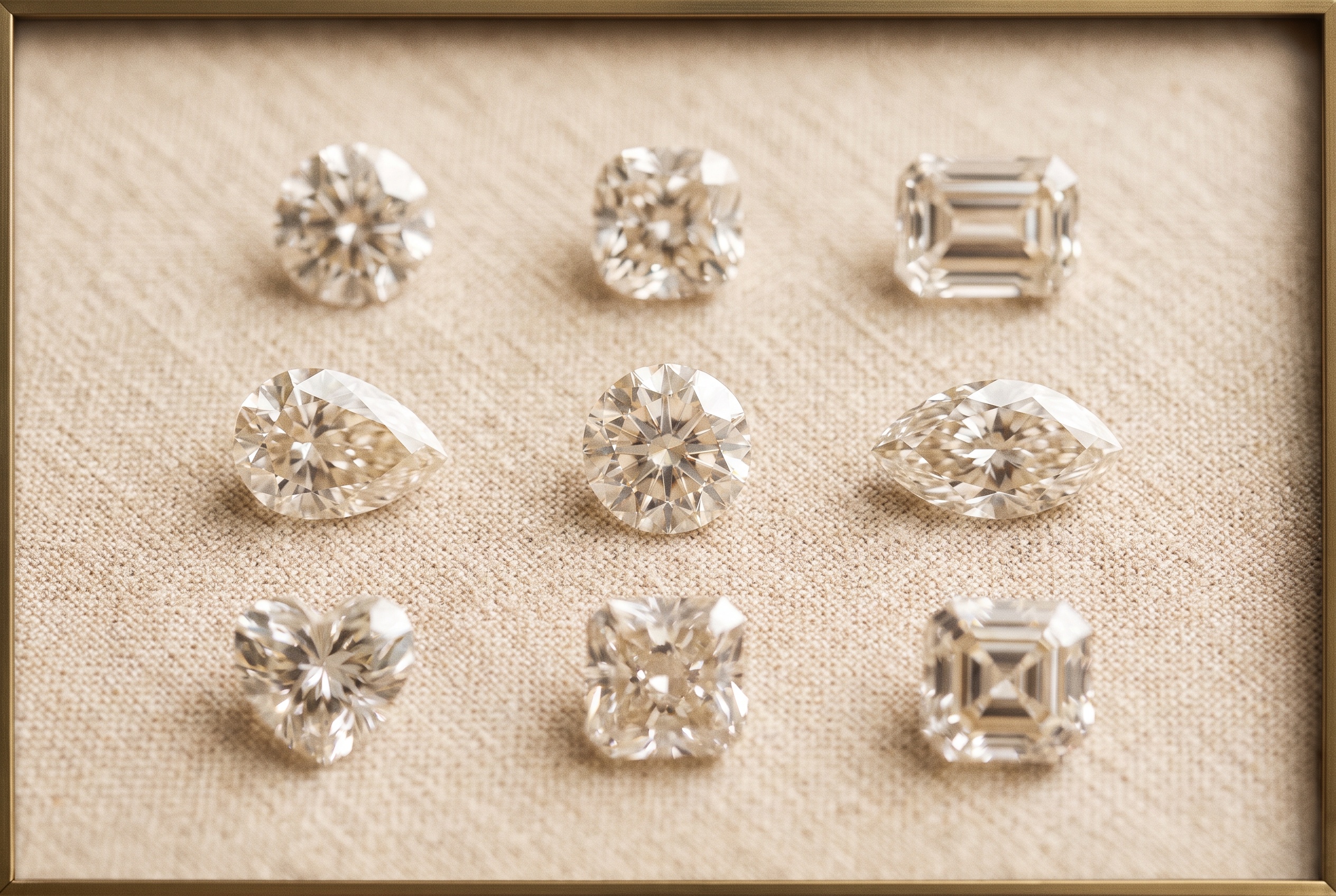
Pink diamonds are cut in the full range of standard shapes, but cushion and oval brilliant cuts are especially popular in the pink category specifically because their faceting pattern tends to maximize the appearance of color saturation relative to the stone's actual grade — a meaningful consideration for a color where perceived vividness drives so much of the buying decision. Radiant and princess cuts are also common choices for pink diamonds used in engagement and statement jewelry, offering a modern silhouette while still concentrating color effectively.
What Drives Pink Diamond Pricing
Color grade — specifically saturation, and the presence or absence of a secondary hue — is the single biggest price driver for pink diamonds, followed by clarity, cut quality, carat weight, and certifying lab. Because fancy color pricing isn't standardized across a published per-carat table the way colorless diamond pricing is, two pink stones of similar carat weight and nominal color grade can price quite differently depending on exactly how the hue and saturation present, which is why sourcing pink diamonds benefits from side-by-side comparison of physical stones or high-quality lab imagery, not specs alone.
Secondary Hues: Purplish-Pink, Orangey-Pink, and Brownish-Pink
Pure pink with no secondary hue at all is uncommon — most pink diamonds carry a modifying hue that a grading report will note alongside the primary color name, and that secondary hue has a real effect on both look and price. Purplish-pink is generally regarded as one of the most desirable variants, prized for a rich, jewel-toned appearance that many buyers find more striking than a straight pink. Orangey-pink and brownish-pink — sometimes loosely referred to in casual trade language as a warmer or "champagne-pink" presentation — read as softer and more muted, and typically price somewhat below a comparably saturated purplish-pink or pure pink of the same size and clarity. None of these secondary hues represent a defect; they're a factual part of the stone's color description, and worth understanding clearly before comparing two pink diamonds that carry the same primary color grade but present quite differently in person.
How to Evaluate a Pink Diamond in Person
Fancy color diamonds are notoriously difficult to judge from photographs or even standard lab imagery, since perceived saturation and hue both shift with lighting conditions and camera calibration. Viewing a candidate pink diamond under several distinct lighting environments — daylight-equivalent lab lighting, typical showroom spot lighting, and ordinary indoor light — gives a far more reliable read on how the stone will actually look once set and worn regularly. It's also important to view the stone face-up, as it will sit in a finished piece, rather than only table-down or from the side, since face-up color performance is what ultimately matters for the finished piece. When possible, comparing two or three candidate stones side by side is the most reliable way to judge relative saturation and hue before committing to an order, particularly for a color where written grade names alone don't fully capture how different two stones at the "same" nominal grade can actually look.
Pink Diamonds in Jewelry Design: Metal and Setting Pairings
Rose gold has become an especially popular pairing for pink diamonds because the metal's own warm tone can visually reinforce and deepen a lighter-saturation stone's color — a practical design lever for a jeweler working with a Fancy Light Pink or Fancy Pink stone that could otherwise look somewhat washed out against a cooler white metal. White gold and platinum remain common choices for buyers who want the pink color read as clearly and neutrally as possible without a metal tone influencing perception. Halo settings surrounded by small white or pink melee diamonds are widely used with pink center stones specifically because the surrounding brilliance both amplifies the center stone's perceived size and, with a pink melee halo, can intensify the overall color impression of the finished piece.
Carat Milestones and Price Scaling
Pink diamond pricing, like most fancy colors, accelerates at common carat milestones — a stone sitting just above 1.00ct or 2.00ct commands a meaningfully higher per-carat price than one just below that threshold, even though the visible size difference is negligible. This milestone effect is softer for lab-grown pink diamonds than for natural stones, since lab-grown supply isn't constrained by the same scarcity that drives natural milestone pricing, but buyers assembling inventory across multiple sizes should still expect some step-up in per-carat pricing at each half-carat and full-carat threshold rather than a perfectly linear scale.
Common Misconceptions About Pink Diamonds
- "Treated color means the diamond isn't real." A CVD lab-grown pink diamond that has undergone standard post-growth color treatment is still a genuine diamond — chemically and structurally identical to any other diamond. Treatment affects color presentation, not the stone's fundamental identity, and reputable labs disclose it clearly on the report.
- "Darker pink is always more valuable." Saturation and tone are distinct qualities, and an extremely dark pink can look muddy rather than vivid. Fancy Intense and Fancy Vivid grades at a balanced tone typically command stronger premiums than an overly dark Fancy Deep grade.
- "Pink diamonds are only sold as large center stones." Calibrated pink diamond melee is available at commercial wholesale scale for halo, pavé, and accent work — pink isn't limited to single statement stones.
Certification for Pink Diamonds
GIA remains the most widely referenced lab for natural fancy color pink diamonds. For lab-grown pink diamonds, GIA, IGI, and GCAL all issue reports documenting hue, tone, saturation, growth origin, and treatment status where applicable. Buyers should always confirm that a lab-grown pink diamond's certificate explicitly discloses both CVD origin and any color-enhancement treatment — a legitimate, standard part of lab-grown fancy color production, but one that should always appear on the report rather than being left for the buyer to assume.
Where Natural Pink Diamonds Are Found
The Argyle mine in Western Australia was, for decades, the single largest source of natural pink diamonds in the world, at times accounting for the overwhelming majority of natural pink diamond production globally before the mine's closure in 2020. That closure is well-documented industry history and is frequently cited in gemological and trade press as a key reason natural pink diamond supply has become even more constrained than it already was, since no comparably productive pink diamond source has since replaced Argyle's historical output. This is public mining history, not a claim about any current supplier's own sourcing, but it's directly relevant context for understanding why natural pink diamond prices have remained elevated and why lab-grown pink diamonds have become the practical wholesale alternative for buyers who want the color at any real commercial scale.
Pink Diamonds as a Retail Category: Positioning Considerations
Pink sits, in most markets, as the most broadly recognized and most consistently in-demand fancy color among retail buyers — a position built over years of celebrity engagement rings, red-carpet jewelry, and marketing built around pink diamonds specifically as a symbol of romance and rarity. For a retailer, this makes pink one of the more reliably sellable fancy colors to stock relative to less mainstream options, particularly for engagement and anniversary occasions where color symbolism plays a real role in the purchase decision. Pink also pairs unusually well with a wide range of metal tones — rose gold, white gold, and even yellow gold can each complement a pink center stone effectively depending on the specific hue and saturation, giving a retailer real design flexibility when building pieces around pink inventory.
Sourcing Pink Diamonds Wholesale
Pink is one of four fancy colors — alongside blue, yellow, and green — that Guru Diam carries as CVD lab-grown material, available both as loose certified stones at 0.30ct and above and as calibrated fancy color melee in round and fancy shapes for setters building pink-forward pieces at production scale. Every certified pink diamond ships with a choice of IGI, GIA, or GCAL certification, with hue, tone, saturation, and origin clearly documented on the report, and the same wholesale account structure applies across pink as it does across the rest of Guru Diam's catalog of fancy colors, antique cuts, natural diamonds, and finished jewelry. In-stock pink diamond inventory ships same-day from Guru Diam's New York and Los Angeles locations. Trade buyers can browse current stock in the fancy color loose diamonds category, source calibrated melee for larger production runs, review certified inventory in certified diamonds, or apply for a trade account through trade partner. Current terms are available at the wholesale hub, and buyers designing a custom piece around a pink center stone can start at custom jewelry. For a companion color, our blue diamond buying guide covers the same ground for Guru Diam's other flagship fancy color.
Pink Diamonds and Investment Considerations
Natural pink diamonds — particularly larger, more saturated stones with a strong Fancy Intense or Fancy Vivid grade — have developed a genuine track record as an alternative investment category among high-net-worth collectors, driven substantially by Argyle's closure and the resulting expectation that natural pink supply will only tighten further over time with no comparable replacement source on the horizon. This investment dynamic applies specifically to natural pink diamonds and does not extend to lab-grown pink material, which functions as a design and fashion category rather than a scarcity-driven investment asset, since lab-grown supply can in principle continue at commercial scale rather than depleting the way a finite natural mining source does. Buyers approaching pink diamonds from an investment angle specifically should be clear internally about which category — natural or lab-grown — actually fits that goal, since the two serve genuinely different purposes even though they can look visually similar at a glance.
Frequently Asked Questions
What causes a diamond to be pink?
Pink diamond color is believed to result from a distortion in the crystal lattice — called plastic deformation — caused by intense pressure during or after the diamond's formation, rather than from a specific trace element. Lab-grown pink diamonds reproduce a comparable effect through controlled post-growth treatment applied to CVD-grown material.
Are lab-grown pink diamonds treated?
Most lab-grown pink diamonds undergo a standard, disclosed post-growth treatment process (typically HPHT annealing or irradiation followed by annealing) to produce a stable, permanent pink color. This is a normal, industry-standard part of lab-grown fancy color production and should always be documented on the diamond's grading report.
Why are natural pink diamonds so valuable?
Natural pink diamonds are extremely rare, historically tied to a small number of mining sources, and have a long history of demand from collectors and record-setting auction results, all of which combine to put natural pink diamonds among the highest-value fancy colors in the market.
What is the best color grade for a pink diamond?
Fancy Vivid Pink and Fancy Intense Pink represent the highest saturation grades and command the strongest premiums. Preference also plays a role — some buyers favor a softer Fancy Light Pink or Fancy Pink for a more subtle look at a more accessible price point.
Can pink diamonds be certified?
Yes. GIA is the primary reference lab for natural fancy color grading, and GIA, IGI, and GCAL all grade and certify lab-grown pink diamonds, with reports documenting hue, tone, saturation, origin, and treatment status where applicable. Always confirm a report explicitly states both origin and treatment status rather than assuming either from price or appearance alone.
Are pink diamonds available in melee sizes?
Yes. Lab-grown pink diamond melee is available in calibrated round and fancy shapes for setters producing pink-forward jewelry at volume, separate from the certified loose-stone tier used for center stones.
Do pink diamonds hold their value?
Natural pink diamonds, particularly larger and more saturated stones, have a track record of holding and appreciating in value over time, driven in large part by tightening natural supply following the Argyle mine's 2020 closure. Lab-grown pink diamonds are priced and positioned as a design and fashion category rather than a scarcity-driven investment, since lab-grown supply isn't subject to the same finite-source dynamics as natural mining.
How does secondary hue affect a pink diamond's price?
A purplish-pink secondary hue is generally regarded as more desirable and commands a stronger premium than an orangey-pink or brownish-pink secondary hue at a comparable saturation and size. A pure pink with no meaningful secondary hue at all is uncommon and, when it appears alongside strong saturation, is typically priced at the top of the pink category.
Guru Diam is a trade-only wholesale diamond supplier with locations in New York and Los Angeles, carrying CVD lab-grown fancy color diamonds — including pink, blue, yellow, and green — alongside natural diamonds, antique and standard cuts, and finished jewelry, with IGI, GIA, and GCAL certification available. Browse current fancy color inventory in the fancy color loose diamonds category or apply for a trade account through trade partner.