
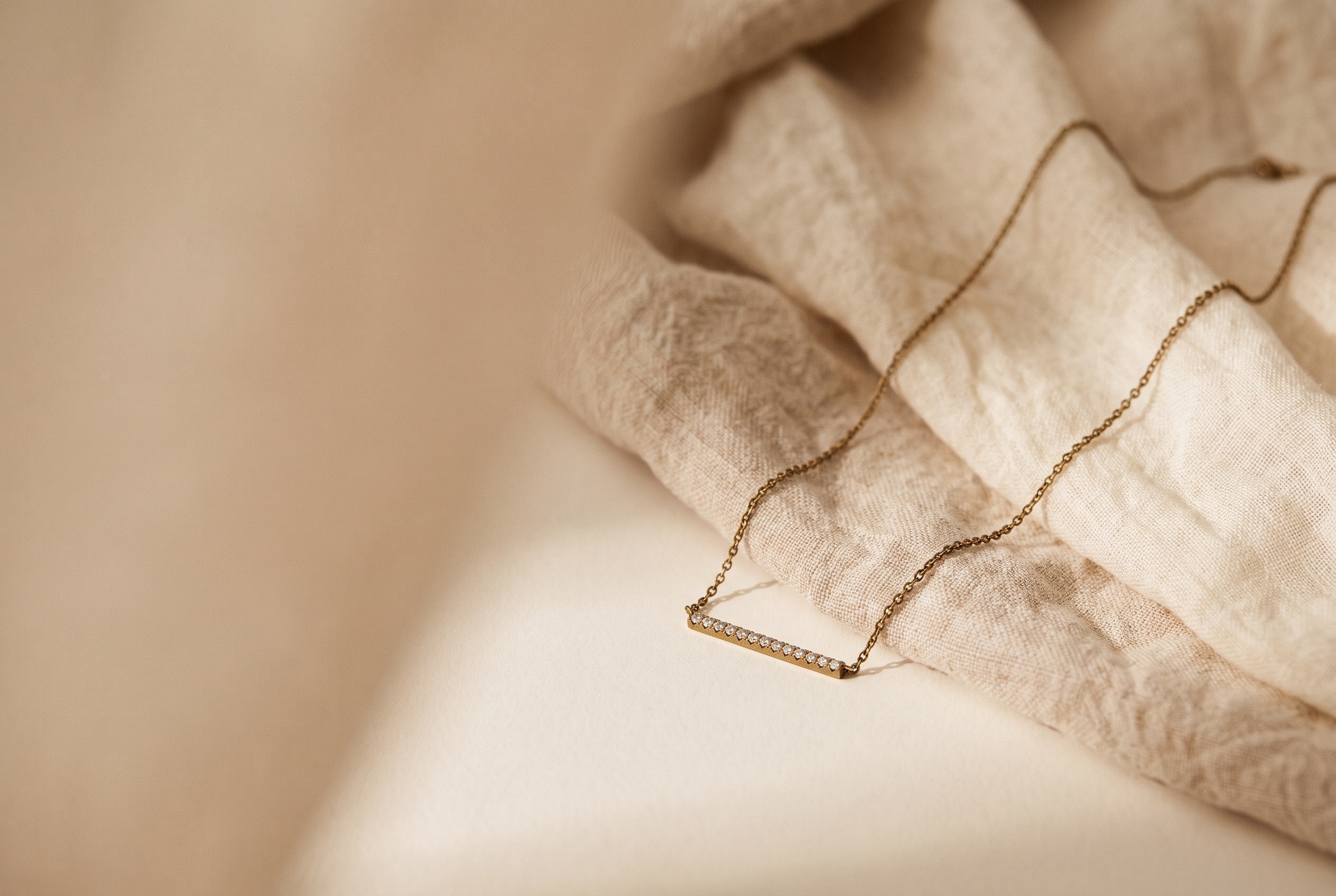
A diamond bar necklace is a pendant necklace built around a slim, horizontal metal bar set with diamonds, worn at or just below the collarbone on a fine chain. For a jeweler or manufacturer sourcing to build or restock a bar necklace line, the core decision is different from sourcing a single center stone: it comes down to choosing a setting method for a continuous or segmented row of small diamonds along a fixed bar length, matching those stones consistently, and pricing a piece where total carat weight and setting labor, not any one stone's individual specs, drive most of the cost.
This guide is written for the trade — jewelers, designers, and manufacturers sourcing loose diamonds and melee to build bar necklaces for their own retail or wholesale lines, not a consumer shopping guide. It covers what a bar necklace actually requires from a sourcing standpoint, bar styles and setting methods, matching considerations, carat-total math, chain and clasp choices, personalization variants, and what to look for in a wholesale supplier for this specific product category.
What a Diamond Bar Necklace Actually Is
A bar necklace consists of three components: the bar itself (a thin, typically rectangular or slightly tapered length of metal, usually 15mm to 35mm long), the diamonds set along or across it, and the chain and clasp that suspend it at the wearer's neckline. The bar sits horizontally, distinguishing it visually from a vertical pendant drop, and it's typically worn at a shorter chain length — 16 to 18 inches — so the bar sits prominently at or just below the collarbone rather than lower on the chest.
Within that basic structure, bar necklaces split into a few distinct sourcing categories that a retailer typically stocks as separate line items:
- Pavé bar — a continuous row of small diamonds set closely along the full length of the bar, prioritizing maximum visible sparkle across the piece.
- Station bar — individual diamonds or small clusters set at intervals along the bar with visible metal between them, a more minimal, spaced-out look than a full pavé line.
- Single or accent-stone bar — a plain metal bar with one or a small handful of diamonds concentrated at the center or one end, the most minimal and lowest-diamond-content variant in the category.
- Personalized bar — a bar engraved with initials, a name, or a date, with diamonds used as accent detailing rather than the piece's primary visual focus. This variant overlaps meaningfully with our dedicated diamond initial necklace guide and diamond name necklace guide — a bar necklace is simply one physical format personalized pieces are frequently built on, alongside disc, script, and other pendant styles covered in those guides.
Diamond Sourcing Requirements by Bar Style
| Bar Style | Typical Stone Count | Typical TCW Range | Sourcing Priority |
|---|---|---|---|
| Pavé bar (full-length) | 15–35 stones | 0.15–0.50 TCW | Tight size and color consistency across every stone in the row |
| Station bar | 3–8 stones | 0.10–0.30 TCW | Consistent grading across a smaller stone count; individual stone placement matters more than in a dense pavé row |
| Single or accent-stone bar | 1–3 stones | 0.03–0.20 TCW | Individual stone quality, since each stone carries more visual weight with fewer neighbors to blend into |
| Personalized bar | 1–15 stones, varies by design | 0.05–0.40 TCW | Consistency across whatever accent stones are used, secondary to the engraving itself |
Because most bar necklace diamonds fall below the roughly 0.18ct threshold where individual certification becomes standard practice, sourcing for this category is overwhelmingly a melee-matching exercise rather than a series of individual stone purchases — the buying decision centers on lot consistency across a small, tightly clustered set of stones, not on any single stone's own certificate.
Setting Methods for Diamond Bars
Pavé Setting
Small diamonds are set closely together with minimal visible metal between them, using tiny shared or split prongs (sometimes called beads) to secure each stone. Pavé delivers the highest visual sparkle density of any bar-setting method and is the standard choice for a full-length diamond bar, though it requires the tightest size-matching tolerance of the setting methods used in this category, since visible gaps or size variation are more noticeable in a dense, continuous row.
Channel Setting
Diamonds sit between two parallel metal rails with no visible prongs, producing a smooth, low-profile line that reads as more architectural than pavé. Channel-set bars offer stronger physical protection for the stones — a genuine advantage for a piece worn daily at the collarbone, where a bar necklace sits close to fabric and is prone to incidental contact — at the cost of a slightly less sparkling appearance than an open pavé row.
Bezette / Individual Bezel Setting
Each stone is individually surrounded by a thin metal rim rather than held by shared prongs, used most often on station bars where stones sit spaced apart rather than in a continuous line. This method offers the best stone protection of the common options and a distinctive, slightly more modern look, at a higher per-stone setting labor cost than pavé.
Prong Setting
Used primarily for single or accent-stone bars, where one or a small handful of diamonds are each held by individual prongs rather than a shared setting structure — the same basic mechanism used in a solitaire, applied to a small number of stones along a bar rather than one center stone. See our solitaire setting guide for more on how individual prong setting works.
Diamond Quality Standards for Bar Necklaces
Most bar necklace production standardizes on a DEF+/VS+ baseline (near-colorless to colorless, very slightly included or better) across the melee used in a given piece — a commercial grade that reads clean and bright without pricing the piece at the level of individually certified inventory. Because bar necklaces are typically viewed at conversational distance rather than under magnification, this standard delivers a consistently attractive result across the category. Manufacturers building a higher-end line sometimes tighten to E-F color or VVS+ clarity for a more uniformly white, eye-clean look, understanding that doing so across every stone in a pavé row meaningfully increases sourcing cost and lead time relative to a standard commercial grade.
Chain and Clasp Considerations
Bar necklaces are almost always suspended from a delicate cable or box chain rather than a heavier link style, since the design's minimal, understated character extends to the chain choice — a heavy chain visually competes with the bar rather than supporting it. Because the bar itself is a relatively small, light component compared to a heavier pendant, a standard spring-ring or lobster clasp is generally sufficient security, unlike a tennis necklace's continuous line of set stones, which typically warrants a reinforced clasp with a secondary safety mechanism given the greater total value strung along the piece. Manufacturers building an adjustable-length bar necklace — a common request, since bar necklaces are frequently layered with other pieces at varying lengths — should confirm chain-extender hardware doesn't visually or structurally compete with the bar's own minimal profile.
Metal Choices and How They Affect Sourcing
Bar necklaces are produced across 14k and 18k white, yellow, and rose gold, with metal choice functioning primarily as a styling and price-tier decision rather than one that changes diamond sourcing requirements directly. White metal is the most common choice for a pavé or channel-set bar, since it recedes visually and lets the diamond line read as the clear focal point; yellow and rose gold bars are more often used for station or single-stone designs, where the metal itself contributes more to the overall look given the lower diamond density. Metal choice does affect finished-piece pricing and should be confirmed before finalizing a diamond order, since some setters adjust prong or channel dimensions slightly depending on metal hardness.
Lab-Grown vs. Natural Diamonds for Bar Necklace Production
Because a bar necklace's diamond content, while modest in absolute carat weight compared to a tennis necklace, still scales with stone count across the bar, the natural-vs-lab-grown decision has a meaningful effect on total piece cost relative to the finished retail price point. CVD lab-grown diamonds let a manufacturer offer a denser pavé row or a larger accent stone at a given price point than natural material of comparable color and clarity would allow — a genuine consideration for a bar necklace specifically, since visual density along the bar is a core part of the design's appeal. Both natural and lab-grown material can meet the same DEF+/VS+ commercial standard described above; the origin decision is primarily a pricing and retail-positioning choice for the manufacturer rather than a difference in how the finished piece looks or wears.
Matched-Lot Consistency: What to Ask a Supplier
- Is this melee sold as a matched, graded lot, or pulled from mixed inventory? A supplier who sells calibrated melee specifically for line and pavé work maintains tighter internal consistency than one selling loose, ungraded parcel stock.
- What's the size tolerance across the lot? A tight millimeter tolerance matters more for a dense pavé bar than it does for a widely spaced station design.
- Can I review physical samples before committing to a full production order? For a first order with a new supplier, requesting a representative sample of the actual lot — not just a spec sheet — is standard practice before committing to a full quantity.
- What's the reorder consistency like if I need to match this exact grade again for a future production run? A supplier who can reliably reproduce the same commercial grade on reorder is more valuable to an ongoing retail line than one whose stock varies significantly between orders.
Wholesale Pricing Structure for Bar Necklace Diamonds
Wholesale pricing for bar necklace melee is typically quoted per total carat weight at a given quality standard, the same convention used across most calibrated-melee categories, letting a manufacturer estimate finished-piece diamond cost directly from the TCW target established during design. Because bar necklace stone counts are relatively modest compared to a tennis necklace or bracelet, per-order carat totals are smaller, but per-carat pricing still improves with production volume and with looser size-tolerance requirements, since tighter calibration requires more selective sorting from a supplier's available stock. Buyers ordering across multiple bar-necklace SKUs at once — different bar lengths or stone densities within the same product line — benefit from consolidating melee sourcing with a single supplier able to hold consistent grading across the whole line rather than splitting orders and risking a visible mismatch between SKUs.
Common Manufacturing Defects to Screen For
A bar necklace's thin, elongated profile creates specific manufacturing risk points a retailer should screen for before accepting a finished piece from a setting partner: uneven stone spacing along a pavé or station row, visible prong wear or under-filed prongs that catch on fabric, a bar that isn't perfectly straight or has a visible twist along its length, and inconsistent stone height that creates an uneven light-catching line when the necklace is viewed head-on. Because a bar necklace's appeal depends heavily on its clean, straight silhouette, even minor structural irregularities are more visually obvious in this category than in a bulkier pendant style, making a physical inspection of a finished sample — rather than relying on photographs alone — worthwhile before approving a full production run.
Layering and Product-Line Implications for Retailers
Bar necklaces are commonly purchased and worn as part of a layered necklace stack rather than as a single standalone piece, a consumer trend with a direct production implication: retailers building out a bar necklace line benefit from offering multiple chain lengths and bar widths within the same design family, so a single customer can purchase more than one piece from the line to layer together rather than a single item. This has a real effect on inventory planning — a manufacturer should expect deeper unit-count demand at slightly staggered chain lengths (commonly 16", 17", and 18" within the same bar style) rather than concentrating all production at a single standard length, since layering customers specifically seek out length variation within a coordinated design.
Repair and Warranty Considerations for Retailers
A bar necklace's diamonds sit in a relatively exposed, horizontal orientation at the collarbone, a position that sees regular incidental contact with clothing and fabric over the life of the piece. Pavé and station bars carry a modest but real ongoing repair rate for the same reason a tennis necklace does — a lost stone from a worn prong is a realistic part of long-term ownership rather than a sign of poor original construction — though the smaller total stone count on a bar necklace makes any individual repair simpler and lower-cost than repairing a full continuous line. Retailers building a bar necklace program benefit from maintaining a small reserve of matching replacement melee from the original production lot, the same practice recommended for any pavé or line-set piece, and from communicating a clear repair policy to the end customer at the point of sale.
Round Brilliant vs. Baguette-Cut Diamonds in Bar Designs
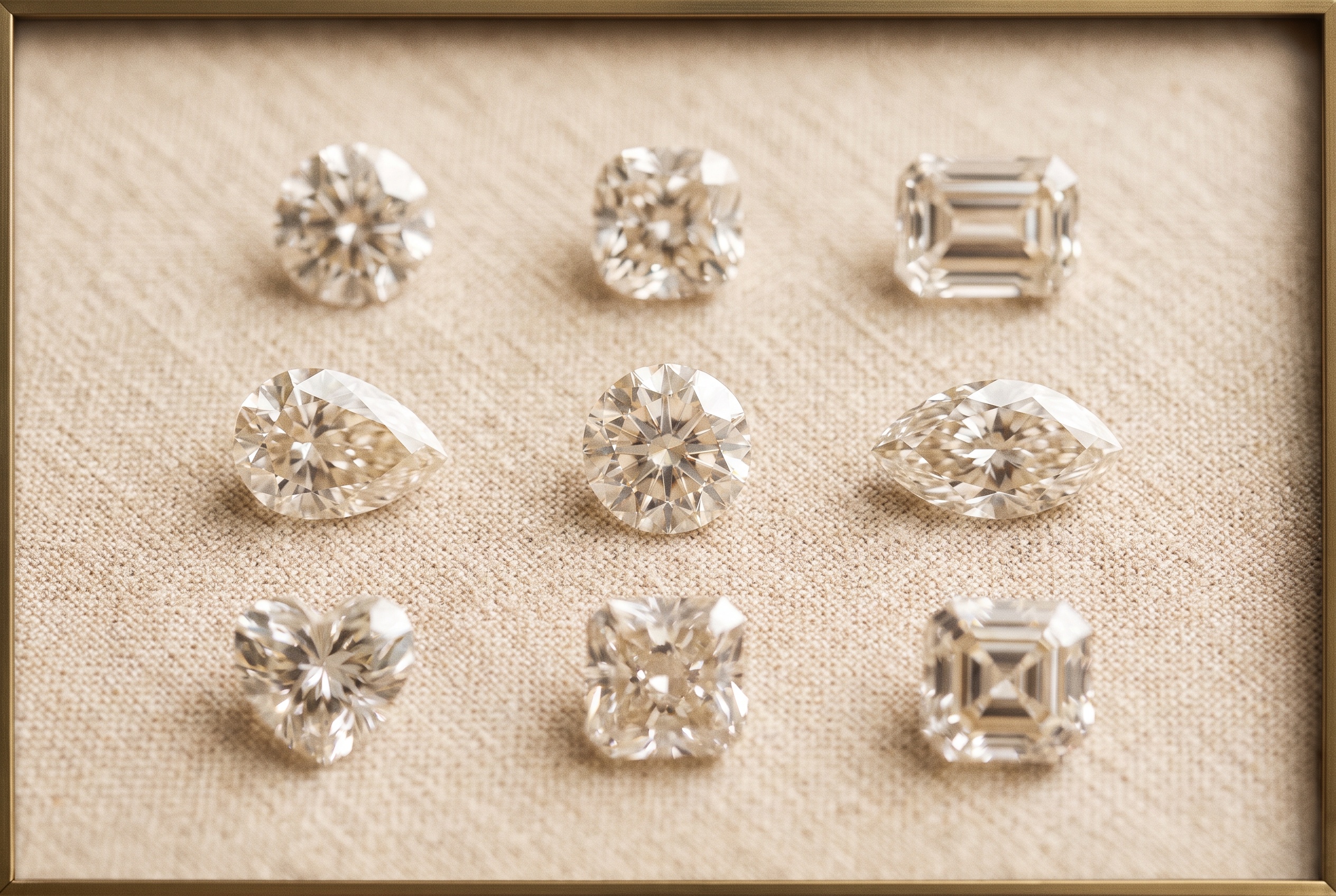
While round brilliant melee is the default choice for most pavé and station bar necklaces, baguette-cut diamonds — small, elongated step cuts — are a significant secondary category in this specific product type, more so than in most other line-set jewelry. A baguette bar uses a small number of rectangular step-cut stones set end to end or channel-set in a row, producing a cleaner, more architectural, Art Deco-influenced look than the scattered brilliance of a round pavé line. Sourcing baguette melee carries its own consistency requirement beyond size and color matching: because a baguette's rectangular outline is far more visually exposed than a round brilliant's faceted surface, length and width uniformity across the row matters more for a baguette bar than for a round pavé bar, where minor size variation blends more easily into the overall sparkle pattern. A manufacturer offering both round and baguette bar variants within the same product line should expect baguette melee to carry a longer sourcing lead time given this tighter dimensional tolerance requirement.
Bar Necklace vs. Other Pendant Formats: What Sourcing Carries Over
A bar necklace shares its core sourcing logic — small, calibrated melee matched for size and color, set along a fixed metal element — with other pendant categories a jeweler may already source for, including diamond initial and letter pendants and diamond disc or circle pendants. A manufacturer already sourcing melee for one of these adjacent formats can generally apply the same lot-consistency principles directly to a bar necklace program, since the underlying buying questions (lot consistency, size tolerance, reorder reliability) don't change meaningfully across these related small-pendant categories. The main practical difference between a bar and other pendant formats is the aspect ratio of the piece itself — a bar's elongated, horizontal shape puts more emphasis on a clean, straight line of stones than a compact disc or letter pendant does, which is the main reason bar-specific manufacturing defects like an uneven or twisted line are a bigger quality-control concern in this category than in more compact pendant styles.
Sourcing Diamond Bar Necklace Materials at Wholesale
Guru Diam supplies both calibrated diamond melee and individual accent-quality loose stones for jewelers and manufacturers building diamond bar necklace lines, across natural and CVD lab-grown material and across the color and clarity ranges used in commercial-grade production. Melee is available in round brilliant and calibrated fancy shapes at DEF+/VS+ and tighter tiers, sold as consistent, gradable lots rather than mixed parcel stock — specifically what a pavé or station bar design needs from a supplier. In-stock inventory ships same-day from Guru Diam's New York and Los Angeles locations, and trade accounts can review current melee stock in matching pairs, browse individually certified accent-scale stones in certified diamonds, or check fancy color options for a colored bar design in fancy color loose diamonds. Manufacturers building a custom bar necklace design can start at custom jewelry, and new trade accounts can apply through trade partner, with current terms available at the wholesale hub. For background on melee sourcing generally before scaling into a specific finished-piece category, our diamond tennis necklace sourcing guide covers the broader line-set-jewelry sourcing logic this category shares.
Frequently Asked Questions
How many diamonds are typically in a diamond bar necklace?
It varies significantly by style — a full pavé bar can carry 15 to 35 small stones, a station bar typically holds 3 to 8, and a single or accent-stone bar may carry just one to three diamonds. Total carat weight (TCW) rather than stone count alone is the standard basis for pricing and design planning.
What clarity and color should diamond bar necklace stones be?
A DEF+/VS+ standard (near-colorless to colorless, very slightly included or better) is a common commercial baseline that reads clean and bright at conversational viewing distance. Higher-end lines sometimes tighten to E-F color or VVS+ clarity for a more uniform, eye-clean appearance at additional sourcing cost.
Are diamond bar necklace stones individually certified?
Most bar necklace melee falls below the roughly 0.18ct threshold where individual certification is standard practice, so it's sourced as graded parcel goods against a consistent quality baseline rather than issued with individual stone certificates. A larger single accent stone can be certified at 0.30ct and above the same way any loose stone would be.
What setting method is best for a diamond bar necklace?
Pavé setting delivers the most sparkle and is the standard choice for a full-length diamond bar; channel setting offers better stone protection with a smoother, more architectural look; and individual bezel or prong settings suit station and single-stone bar designs where fewer, more widely spaced stones each carry more visual weight.
Should a diamond bar necklace use natural or lab-grown diamonds?
Either can meet the same quality standard and look identical in the finished piece. CVD lab-grown diamonds let a manufacturer offer a denser pavé row or a larger accent stone at a given price point, which is why lab-grown material is common in this product category; the origin decision is primarily a pricing and positioning choice.
Can a diamond bar necklace be personalized?
Yes — a bar is a common format for engraved initial, name, or date pieces, with diamonds used as accent detailing alongside the engraving. Our dedicated diamond initial necklace and diamond name necklace guides cover the sourcing considerations specific to personalized pieces in more depth.
What length chain is used for a diamond bar necklace?
16 to 18 inches is the standard range, positioning the bar at or just below the collarbone. Retailers building a bar necklace line often offer several lengths within the same style specifically to support layering with other necklaces.