
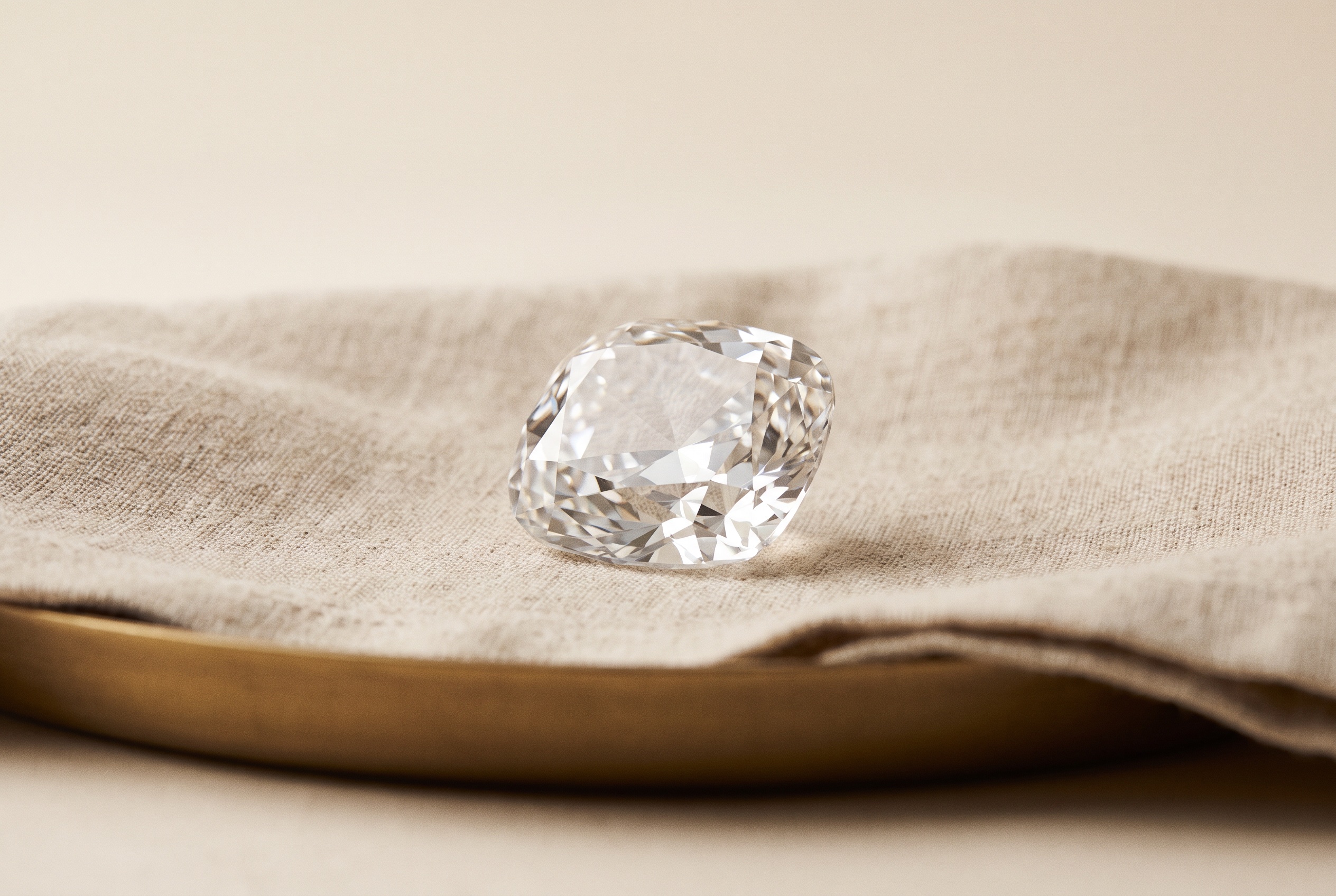
A 100 carat diamond is a stone weighing 20 grams — five times heavier than a standard 1-carat solitaire and larger than nearly any diamond most jewelers will ever see cross their bench. Rough stones of this size are extraordinarily rare (a handful surface globally per decade, not per year) and their value doesn't scale by simple multiplication from smaller carat pricing; instead it's driven by a mix of size premium, color, clarity, cut yield from the rough, and — for natural stones — documented provenance. This guide breaks down what actually makes a stone this size rare, how its value is estimated, and why 100-carat diamonds essentially never move through standard wholesale or retail channels the way smaller stones do.
Questions about 100-carat diamonds tend to come from genuine curiosity rather than a purchasing intent — nobody is shopping for a stone this size the way they'd shop for an engagement ring center stone — but the underlying mechanics of size, rarity, and value at this extreme end of the scale are a useful lens for understanding how diamond pricing works generally, and where it stops behaving the way smaller-stone buyers expect. This guide covers what "100 carats" actually means physically, how rare rough stones of this size are, what determines a large stone's value once it's cut, famous examples that put the scale in context, how lab-grown technology has changed what's theoretically possible at large sizes, and why size alone never tells the whole value story.
What 100 Carats Actually Means, Physically
A carat is a unit of mass equal to 200 milligrams, so 100 carats is 20 grams — roughly the weight of four US quarters, or about the weight of a small egg. It's worth being precise on this because "carat" is a mass unit and gets casually confused with "karat," the purity measure used for gold — the two terms are unrelated despite the near-identical spelling. For comparison, a well-proportioned 1-carat round brilliant measures roughly 6.4mm in diameter; a 100-carat stone of similar proportions would measure well over 20mm across, large enough that it reads as a genuinely oversized object rather than jewelry-scale in the conventional sense. Most 100-carat-plus stones that do get cut end up as museum pieces, auction-house showcase items, or ultra-high-net-worth commissions rather than pieces sized for everyday wear, precisely because a stone that size is unwieldy to set and wear practically, whatever its value.
How Rare Is a 100 Carat Rough Diamond?
Diamond rough large enough to yield a finished, polished stone of 100+ carats is exceptionally rare. The overwhelming majority of diamond rough recovered globally is well under a carat, and rough in the hundreds-of-carats range (needed to yield a 100-carat polished stone after cutting losses, discussed below) surfaces only a handful of times per year across the entire global mining industry, with true giants — rough in the 500+ carat range — a once-in-several-years event covered as international news when it happens. This is a fundamentally different rarity tier than even a very fine 3-5 carat stone, which, while genuinely uncommon, is a category any established diamond dealer handles routinely; a 100-carat finished stone is not something that moves through routine trade channels at all.
Cutting Losses: Why the Rough Has to Be Much Larger Than the Finished Stone
A critical detail that trips up size intuition: a polished 100-carat diamond does not come from 100 carats of rough. Cutting and polishing typically loses somewhere in the range of 50-65% of a rough stone's original weight, as the cutter removes material to shape facets, eliminate inclusions, and optimize the finished stone's proportions for light performance. That means a 100-carat polished stone realistically requires rough in the 200-300+ carat range to start — which compounds the rarity problem discussed above, since large rough is scarce to begin with and then loses more than half its weight in the cutting process. This is also why cutters working with exceptionally large rough spend extraordinary amounts of time (sometimes over a year for a single historic stone) planning the cut to maximize yield and value from a piece of rough that will likely never be replicated.
What Actually Drives the Value of a Large Diamond
Size alone doesn't determine value the way it might seem to intuitively. A 100-carat diamond's worth is built from the same core factors that price any diamond, just at a scale where each factor compounds the others more dramatically:
- Color — a colorless or near-colorless large white diamond is valuable, but a fancy-color large diamond (a large fancy vivid yellow, pink, or blue) can be worth dramatically more, since fancy color rarity multiplies with size rarity rather than adding to it.
- Clarity — internal clarity matters enormously at this scale because a large stone's size makes any inclusion easier to see, and because cutters planning a large stone often have to choose between maximizing carat weight and cutting around a flaw, a tradeoff that doesn't really exist at smaller sizes where inclusions can often be worked around with minimal weight loss.
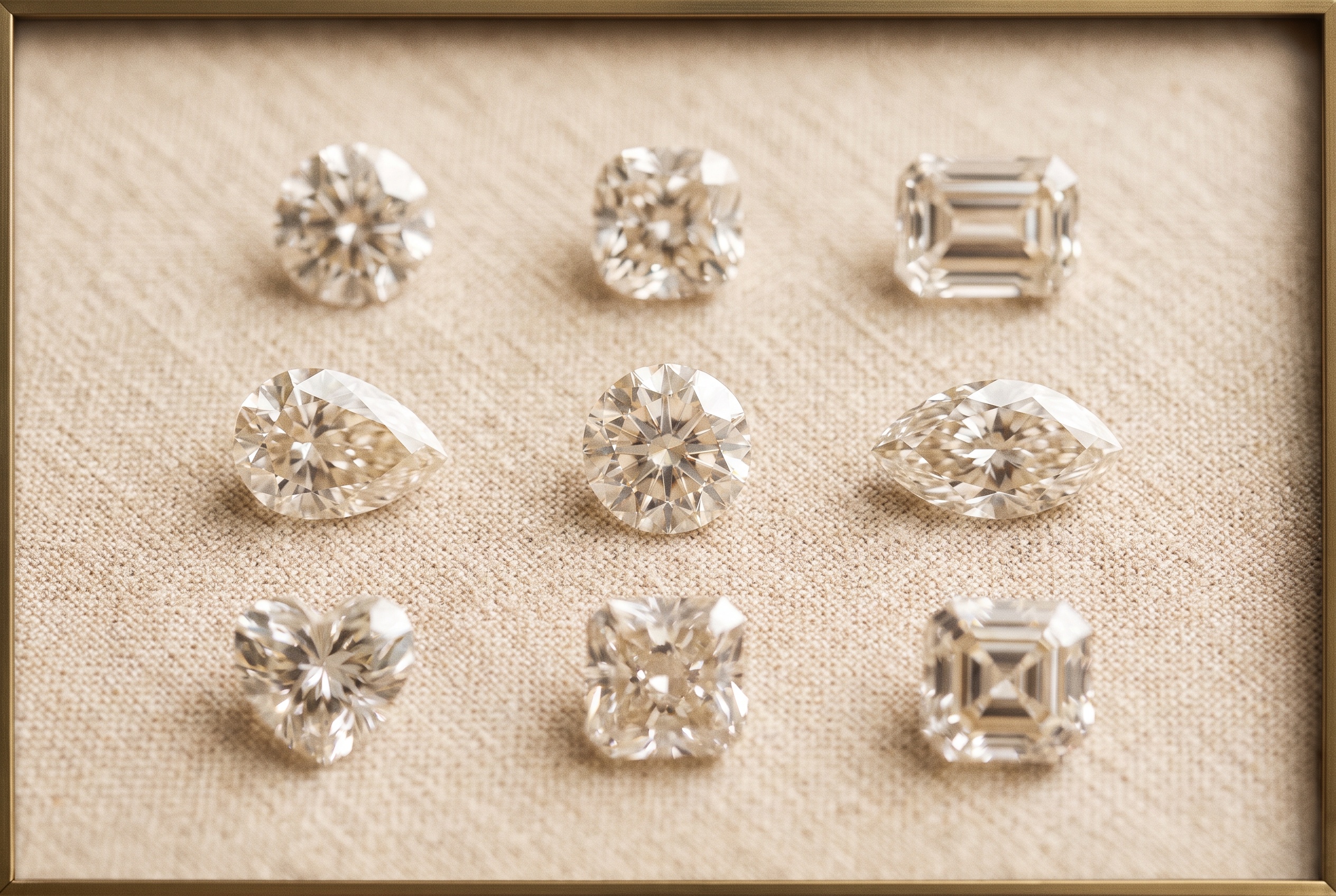
- Cut and proportions — a stone this large is frequently cut into a custom or historic shape (cushion, pear, and other elongated or antique-style cuts are common choices for large rough) chosen specifically to preserve maximum weight and showcase the stone's particular character, rather than conforming to a standard commercial cut.
- Provenance and documentation — for natural stones specifically, a well-documented mining and cutting history (where and when the rough was found, who cut it, prior ownership) adds real, auction-verified value on top of the physical grading factors, in a way that simply doesn't apply to smaller, commodity-tier stones.
Because every one of these factors is genuinely unique to a specific 100-carat stone, there's no standard per-carat price that applies the way there is for, say, a 1-carat round — each large stone is effectively valued individually, closer to how a unique piece of art is appraised than how a commodity is priced. It's also worth noting that per-carat value at this scale doesn't simply keep climbing linearly with size the way it does moving from, say, a 1-carat to a 3-carat stone; a stone's uniqueness and historical significance can matter as much to its final value as its raw physical grading factors, which is part of why two 100-carat-plus stones with broadly similar 4C characteristics can still sell for very different amounts depending on their individual story.
Illustrative Value Comparison Across Carat Tiers
| Carat Weight | Approximate Rough Needed | Market Availability | How Value Is Typically Set |
|---|---|---|---|
| 1 carat | ~2-3 carats rough | Routine, standard trade inventory | Published per-carat pricing by 4C grade |
| 5 carats | ~10-15 carats rough | Uncommon but regularly available through specialty dealers | Per-carat pricing with a size premium multiplier |
| 20 carats | ~40-60 carats rough | Rare; typically sourced to order, not stocked | Individual appraisal, heavy size premium |
| 50+ carats | ~100-150+ carats rough | Extremely rare; a handful of transactions globally per year | Individual appraisal, auction or private-sale valuation |
| 100+ carats | ~200-300+ carats rough | Historic/museum tier; new examples surface roughly once every few years | Auction-house or private valuation, provenance-driven |
Famous 100-Carat-Plus Diamonds, for Context
A handful of historically documented diamonds put the scale in perspective. The Cullinan Diamond, discovered in South Africa in 1905, weighed 3,106 carats in the rough — by far the largest gem-quality rough ever found — and was ultimately cut into nine major stones plus numerous smaller ones, the two largest of which (Cullinan I and II, both well over 100 carats finished) are part of the British Crown Jewels. The Centenary Diamond, discovered in 1986, was recovered as a 599-carat rough and cut down to a 273.85-carat finished stone, one of the largest modern-cut flawless diamonds in existence. These examples underscore just how much rough weight is lost in cutting a large stone, and why a finished 100-carat-plus diamond is treated as a historic artifact in its own right rather than a routine piece of jewelry inventory.
Can Lab-Grown Technology Produce a 100-Carat Diamond?
CVD growth technology has advanced considerably and can now produce single-crystal rough at sizes that would have been unimaginable a decade ago, with the largest reported lab-grown rough crystals reaching into the tens of carats. Reaching 200-300+ carats of rough — what would be needed to yield a genuine 100-carat polished CVD stone — remains outside current commercial CVD production capability; growth time and chamber constraints scale non-trivially with target size, and jewelry-grade CVD production today is optimized for the carat ranges that actually drive commercial demand (well under 10 carats for the overwhelming majority of catalog inventory) rather than pushing toward record-setting single crystals. In principle, lab-grown technology continues to advance, and the ceiling on what's achievable keeps rising, but a wholesale-available 100-carat lab-grown polished stone is not a near-term commercial reality today.
Why 100-Carat Diamonds Don't Move Through Standard Trade Channels
Every mechanism that makes ordinary diamond wholesale work — published per-carat pricing tiers, in-stock inventory, same-day shipping, standard certification turnaround — assumes a stone that fits a recognizable market category. A 100-carat diamond doesn't fit any of those assumptions: it's valued individually rather than against a comparable inventory set, it typically moves through private sale or major auction houses (Christie's, Sotheby's, and similar) rather than trade wholesale channels, and its buyers are usually museums, collectors, or ultra-high-net-worth private individuals rather than jewelers sourcing for resale. This is worth understanding specifically because it draws a clear line between "large" and "wholesale-available" — a jeweler's sourcing conversation realistically tops out well below this scale, even when serving customers looking for genuinely impressive statement stones.
How a Stone This Large Actually Gets Appraised
Appraising a diamond at this scale is a fundamentally different process from grading a standard commercial stone. A routine 1-carat diamond is graded against published, standardized criteria and priced against a visible, liquid market of comparable stones — there's a rate card, effectively. A historic large stone has no comparable market at all; instead, appraisal draws on the same 4C fundamentals (color, clarity, cut, and carat weight) combined with expert judgment on the stone's uniqueness, its cutting history, any notable prior ownership, and — when the stone is being sold — the specific competitive dynamics of whatever sale channel (private treaty sale or public auction) it moves through. Major auction houses maintain specialist gem departments specifically because valuing a one-of-a-kind stone requires expertise a standard grading report alone doesn't capture; the certificate establishes the physical facts, but the final valuation is closer to art appraisal than commodity pricing.
Security, Insurance, and Handling at This Scale
A diamond in the 100-carat range isn't handled or insured the way jewelry-scale stones are. Transport typically involves specialized security arrangements rather than standard courier or bonded-shipment logistics used for ordinary trade inventory, and insurance for a stone at this value tier is underwritten individually rather than through a standard jeweler's block policy, often requiring its own dedicated appraisal, security assessment, and sometimes armed transport or vault-to-vault handling for viewings and sales. Museums and institutions that display large historic diamonds — the British Crown Jewels' Cullinan stones being the most visible example — invest specifically in display security engineered around that individual object, not a generalized jewelry-case standard, including reinforced cases, dedicated monitoring, and handling protocols developed specifically for that one piece rather than adapted from a general collections policy. None of this infrastructure exists in ordinary wholesale or retail diamond commerce, which is part of why stones at this scale are correctly understood as being in a different category entirely from anything a standard jewelry business handles, insures, or ships.
How Large Stones Typically Surface in the Trade
When a large rough diamond is recovered today, it typically surfaces through one of a small number of major mining operations capable of processing kimberlite or alluvial deposits at the scale where large stones occasionally turn up, and it becomes global trade news specifically because of how rare the event is — a single large rough discovery can meaningfully move discussion in the trade press for weeks. From there, the rough is usually sold to a specialist cutting house (sometimes through a public tender process run by the mining company) with the expertise and risk tolerance to plan and execute a cut that can take many months of study before the first facet is even cut, given how much value depends on getting the plan right the first time on a piece of rough that will never be replaced. This entire pathway — discovery, tender, specialist cutting, eventual auction or private sale — has essentially nothing in common with how standard wholesale-tier diamonds move from rough to a jeweler's case, which is precisely why a 100-carat stone is a newsworthy event rather than a catalog SKU. A standard wholesale diamond, by contrast, moves from mine or growth chamber through a cutting facility sized for volume production, into a graded and certified inventory pool, and out to trade buyers within a timeline measured in weeks rather than the years a single record-setting rough can spend in planning and execution before its first cut is even made.
What This Means for Realistic Large-Stone Sourcing
For jewelers and designers actually sourcing large, impressive stones for real customers — as opposed to the novelty question of a 100-carat diamond — the realistic upper range for wholesale-available inventory sits in the low single digits to, at the high end, the 5-carat range and occasionally beyond for exceptional pieces sourced to order. See our 5 carat diamond price guide and 4 carat lab-grown diamond guide for pricing at the top of what's actually available through standard wholesale sourcing, and our diamond price calculator guide for how per-carat pricing scales up through that range before it stops behaving like a routine commodity purchase.
Natural vs. What a Large Lab-Grown Program Actually Looks Like Today
Because true large-scale natural rough is so rare, it's worth being precise about what "large" means in a lab-grown program that's actually available to jewelers today, as opposed to the record-setting rough discussed above. CVD production has made carat weights that used to be genuinely difficult to source — 3, 4, and 5-carat individual stones — into inventory a well-connected wholesale supplier can carry or source to order at a fraction of natural pricing for the same visual size. That's a meaningfully different achievement from what would be required to reach 100 carats, but it's the part of the "large diamond" conversation that actually matters for a jeweler serving real customers who want a statement piece: not a museum-scale rough discovery, but a genuinely large, well-cut stone at a price point lab-grown production has made realistic in a way it simply wasn't a decade ago. See our affordable lab-grown diamonds guide for how that value shift plays out at the carat tiers jewelers actually stock.
Sourcing Large, Statement-Caliber Diamonds Through Guru Diam
Guru Diam sources both CVD lab-grown and natural diamonds across standard, antique, and exotic shapes, including larger carat weights sourced to order for statement and showcase pieces, with IGI, GIA, and GCAL certification available. While true 100-carat-scale stones sit outside any standard wholesale catalog anywhere in the trade, Guru Diam's breadth across natural and lab-grown, certified loose stones, and custom finished jewelry covers the full realistic range a jeweler's most demanding customers actually ask for. Browse certified diamonds and fancy color loose diamonds for large and rare stone inventory, or start a conversation about a custom sourcing request at the trade partner page. For finished statement pieces built around a large center stone, custom jewelry orders are handled in-house from setting through polishing.
Frequently Asked Questions
How much does a 100 carat diamond weigh?
A carat equals 200 milligrams, so a 100-carat diamond weighs exactly 20 grams — roughly the weight of four US quarters.
How rare is a 100 carat diamond?
Extremely rare. Rough diamonds large enough to yield a 100-carat polished stone (typically 200-300+ carats of rough) surface only a handful of times per year globally, and finished stones at this size are usually historic, museum, or auction-house pieces rather than routine trade inventory.
How much is a 100 carat diamond worth?
There's no standard per-carat price at this scale — value is set individually based on color, clarity, cut, and, for natural stones, documented provenance, closer to how a unique work of art is appraised than how a commodity diamond is priced. Historic 100-carat-plus stones have sold or been valued in the tens of millions of dollars and higher, with the final figure depending heavily on the specific stone's documented history rather than a formula anyone could apply from carat weight alone.
Why does a 100 carat polished diamond need so much more rough?
Cutting and polishing typically removes 50-65% of a rough stone's weight to shape facets and optimize light performance, so a 100-carat finished stone requires roughly 200-300+ carats of rough to start.
Can lab-grown (CVD) technology produce a 100 carat diamond?
Not commercially today. CVD growth has advanced considerably and can produce rough well beyond what was possible a decade ago, but reaching the 200-300+ carats of rough needed for a genuine 100-carat polished stone remains outside current commercial production capability.
Where can I buy a large, impressive diamond for a real jewelry piece?
Wholesale-available inventory realistically tops out in the low single digits to around 5 carats for standard sourcing, with exceptional pieces beyond that sourced to order through a specialty supplier rather than stocked. True 100-carat-scale stones move through private sale and major auction houses, not standard trade channels.
How is a 100 carat diamond insured?
Individually, not through a standard jeweler's block policy. A stone at this value tier requires its own dedicated appraisal and, often, specialized security arrangements for transport, viewing, and storage, reflecting how far outside routine jewelry commerce a stone this size actually sits.
What shapes are large diamonds typically cut into?
Cutters planning an exceptionally large rough often choose a custom or antique-style shape — cushion, pear, or other elongated cuts — specifically chosen to preserve the maximum possible weight and best showcase that individual stone's character, rather than a standard commercial round or princess cut.