
An affordable lab-grown diamond is a CVD-grown, certified stone priced significantly below its natural equivalent because it skips mining costs entirely, while matching the same optical, chemical, and physical properties as a mined diamond of the same 4Cs grade. For wholesale buyers, "affordable" isn't a discount tier — it's the structural price advantage lab-grown diamonds carry by design.
Why Lab-Grown Diamonds Cost Less to Begin With
The affordability of lab-grown diamonds isn't a marketing trick or a quality shortcut. It comes from a fundamentally different production model. A natural diamond's price reflects millions of years of geological formation, capital-intensive mining operations, exploration risk, and a supply chain that runs through multiple cutting and distribution layers before it reaches a jeweler. A lab-grown diamond, grown via Chemical Vapor Deposition (CVD), replicates the same carbon-crystallization process in a controlled reactor environment over a period of weeks rather than eons.
That difference in production method removes the exploration, extraction, and land-rights costs that make up a large share of a natural diamond's price. It doesn't remove the need for skilled cutting, polishing, and grading — those costs are identical between lab-grown and natural stones of the same size and cut complexity. The savings buyers see are almost entirely on the raw-material side, not the finishing side, which is why a well-cut lab-grown diamond looks and performs exactly like its natural counterpart under a loupe or on a scale.
Lab-Grown vs. Natural: Where the Price Gap Actually Shows Up
The price gap between lab-grown and natural diamonds isn't uniform — it widens as carat weight increases, because natural diamond rarity compounds non-linearly at larger sizes while lab-grown production cost scales roughly linearly with growth time. Below is a representative wholesale comparison for a well-cut, GHI-color, VS-clarity round brilliant.
| Carat Weight | Lab-Grown (approx. wholesale) | Natural (approx. wholesale) | Approx. Price Gap |
|---|---|---|---|
| 0.50 ct | $300–$450 | $900–$1,300 | ~60-65% lower |
| 1.00 ct | $900–$1,400 | $3,500–$5,500 | ~70-75% lower |
| 1.50 ct | $1,600–$2,400 | $7,000–$10,500 | ~75-80% lower |
| 2.00 ct | $2,500–$3,800 | $12,000–$18,000 | ~78-82% lower |
| 3.00 ct | $4,800–$7,200 | $25,000–$40,000 | ~80-85% lower |
These ranges move with color, clarity, and cut quality, but the pattern holds across the market: the affordability advantage of lab-grown diamonds grows with carat weight, which is exactly why larger center stones are where lab-grown adoption has accelerated fastest among retail buyers over the past several years.
The 4Cs Still Set the Price — Affordability Doesn't Mean Lower Standards
A common misconception is that "affordable" lab-grown diamonds are somehow a lower tier of the same product. They aren't. Every lab-grown diamond is graded on the same 4Cs scale — carat, cut, color, clarity — as a natural stone, by the same major labs (GIA, IGI, GCAL). Affordability comes from where a buyer chooses to sit within that grading scale, not from a separate, cheaper category of stone. A GHI-color, VS2-clarity lab-grown diamond and a GHI-color, VS2-clarity natural diamond are graded identically; only the origin and the price differ.
That means wholesale buyers building an affordable inventory tier aren't buying "worse" diamonds — they're making informed tradeoffs across the 4Cs to hit a price point while staying inside grades that look identical to the eye. Understanding which tradeoffs cost the least in visual quality is the actual skill in affordable sourcing.
Carat Weight: The Single Biggest Lever on Price
Carat weight drives price more than any other factor, and it does so non-linearly — prices jump sharply at "magic sizes" like 1.00ct, 1.50ct, and 2.00ct because retail demand clusters around round numbers. A stone at 0.90ct can be noticeably cheaper per carat than one at 1.00ct despite being visually indistinguishable once set. Buyers assembling an affordable program often deliberately stock just-under-the-threshold weights (0.90-0.99ct, 1.40-1.49ct) to capture that pricing inefficiency and pass the savings through.
Clarity: Where the Eye-Clean Threshold Does the Work
Clarity is graded from Flawless down through Included, but the meaningful cutoff for most buyers is "eye-clean" — the point below which inclusions are no longer visible to the naked eye without magnification. VS2 and SI1 stones are frequently eye-clean, especially in brilliant cuts that scatter light and hide minor inclusions in the facet pattern. Buying at SI1 instead of VVS2 can cut the price of a stone meaningfully while producing a finished piece that looks identical across the counter. Step cuts (emerald, Asscher) are less forgiving here since their open facets expose inclusions more readily, so the eye-clean threshold sits a grade or two higher for those shapes.
Color: Near-Colorless Grades Deliver Most of the Value
Color runs from D (colorless) to Z (light yellow/brown), and for white diamonds, the near-colorless range — G through I — is where affordability-focused buyers concentrate. In a properly cut stone, especially set in yellow or rose gold, color differences between F and I are extremely difficult to detect without a side-by-side comparison under controlled lighting. Buyers chasing D-F color for an affordable line are usually paying a premium for a distinction their end customer will never notice once the stone is mounted.
Cut: The One Grade Not Worth Discounting
Of the 4Cs, cut is the one variable most buyers should not compromise on to hit a price target. Cut quality determines how a diamond returns light — brightness, fire, and scintillation — and a poorly cut stone looks visibly duller regardless of its color and clarity grades. An Excellent or Ideal cut grade on a slightly lower color or clarity stone will consistently outperform, and out-sell, a well-graded stone with a mediocre cut. This is the tradeoff wholesale buyers should protect first when building a value-tier assortment.
Antique, Regular Fancy, and Round: Price Tiers by Shape
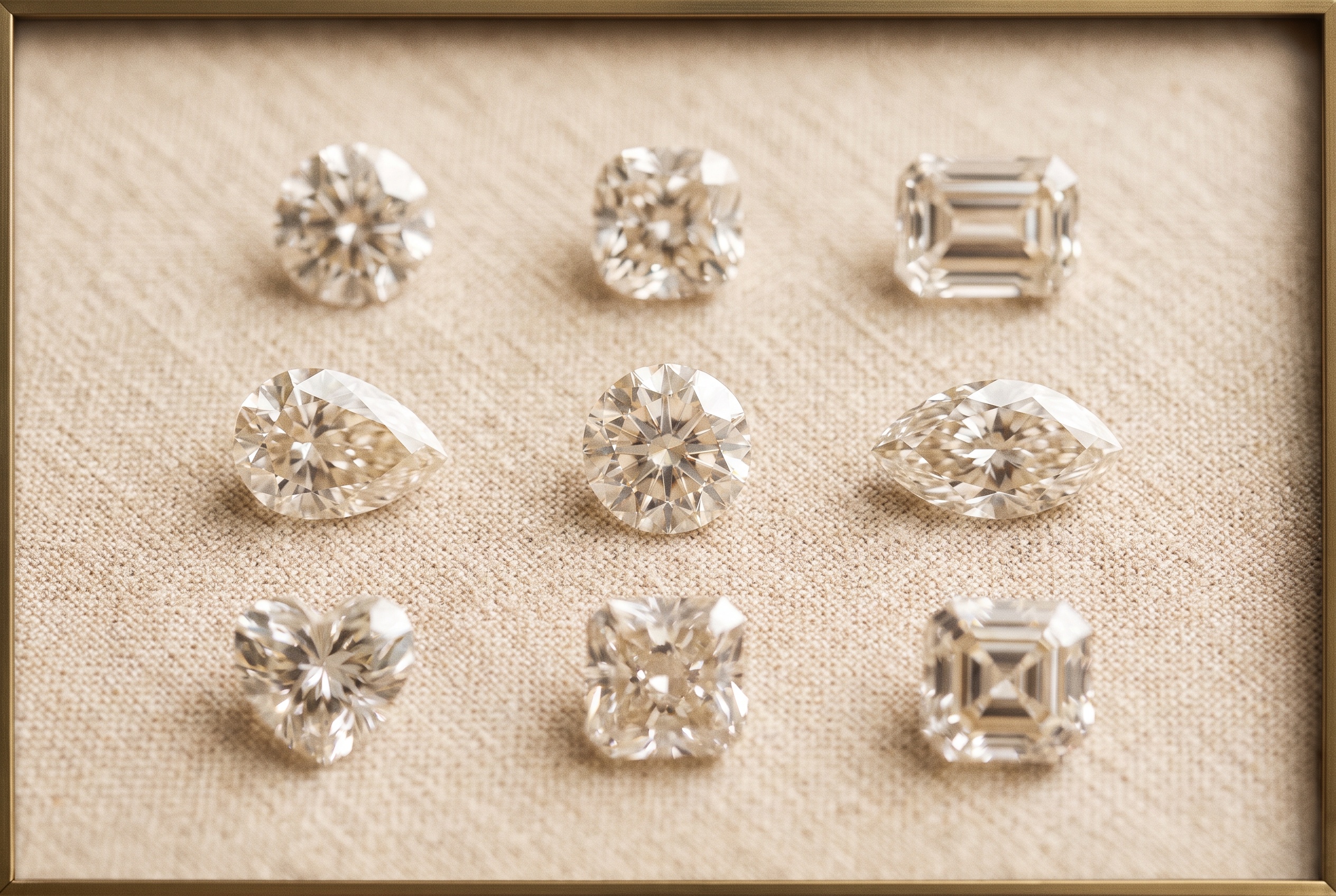
Shape also affects affordability independent of the 4Cs. Round brilliants sit at the commodity end of the market — highest production volume, most competitive pricing, easiest to source consistently. Regular fancy shapes (oval, cushion, emerald, pear, marquise, radiant, princess, heart) carry a modest premium over round for the same carat weight, reflecting more complex cutting and slightly higher rough wastage. Antique and antique-style cuts — Old Mine, Old European, Kite, Hexagonal, Trillion, Criss-Cut, and similar specialty cuts — sit at the premium end regardless of lab-grown or natural origin, since they're cut in far smaller volumes by specialists and prized for a distinct light-return character rather than for uniformity. Buyers building a genuinely affordable program typically anchor it in round and regular fancy shapes, using antique cuts selectively for clients who specifically want that look.
Fluorescence: The Overlooked Value Lever
Fluorescence — how a diamond reacts to ultraviolet light — rarely gets the attention carat, cut, color, and clarity get, but it can be one of the more efficient places to find savings. Diamonds graded with faint or medium fluorescence often trade at a discount to non-fluorescent stones of the same 4Cs grade, purely because a segment of the market avoids fluorescence out of caution. In practice, medium fluorescence has little to no visible effect on a diamond's face-up appearance in the vast majority of stones, and can even make a slightly lower color grade (I-J) appear a touch whiter under UV-rich daylight. Buyers willing to accept faint-to-medium fluorescence in exchange for a price break are usually not giving up anything a retail customer would ever notice.
Symmetry and polish grades — the secondary components of the overall cut grade — offer a similar opportunity. A stone graded Very Good on symmetry or polish instead of Excellent will typically cost less than a fully Excellent/Excellent/Excellent stone, with a difference in light performance that's essentially undetectable to anyone without gemological training. Reserving true Excellent-across-the-board grading for a supplier's top price tier, and buying Very Good secondary grades for the affordable line, is a standard way experienced buyers stretch a budget without touching the primary cut grade that actually drives brilliance.
Buying in Parcels: Affordability at the Melee Level
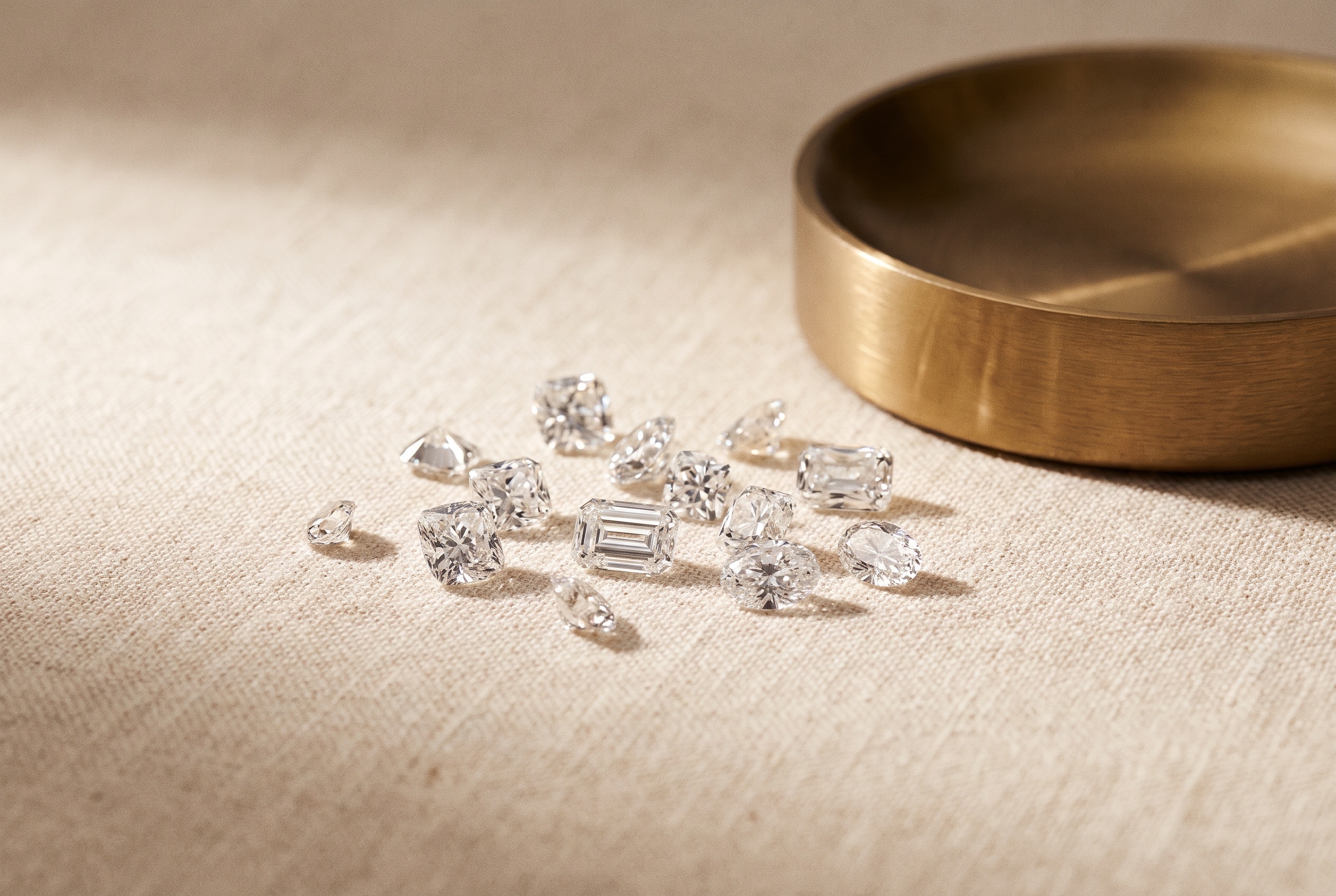
Affordability isn't only a center-stone conversation. For jewelers building halo settings, pavé bands, or accent work, melee (typically 0.8mm-9.0mm) makes up a large share of total stone spend across a season, and it's priced very differently from center stones. Melee is sold as uncertified parcel goods against a quality baseline (commonly DEF+/VS+) rather than individually graded, which removes per-stone certification costs and is the single biggest reason calibrated melee parcels are dramatically cheaper per carat than loose, certified stones of similar visual quality. Buyers stocking an affordable finished-jewelry line should treat melee sourcing as a separate budget line from center-stone sourcing, since the cost structure and quality-control approach are fundamentally different.
Common Mistakes That Erode an "Affordable" Program's Margin
A few recurring mistakes turn what should be a genuinely affordable sourcing strategy into one that just looks affordable on paper:
- Chasing color grades that don't matter in the metal. Paying up for D-F color on a stone destined for a yellow-gold or rose-gold setting is a common way buyers overspend without any visible payoff.
- Ordering custom-cut stones for a "budget" line. Custom orders carry lead time and minimum-quantity requirements that work against a fast-turning, price-sensitive inventory strategy. In-stock, ready-to-ship goods are almost always the better fit.
- Skipping certification to save a few dollars per stone. The savings are marginal, and the downside — a retail customer who can't verify what they bought — is disproportionate. It also makes returns and exchanges harder to process cleanly.
- Treating every shape the same. Applying round-brilliant pricing logic to step cuts or antique cuts leads to under-pricing stones that are genuinely more expensive to produce, which quietly erodes margin across a catalog.
- Over-ordering against speculative demand. Holding large affordable-tier inventory against guessed demand ties up capital that same-day-ship, smaller, more frequent orders would free up instead.
Timing Purchases Around Wholesale Market Cycles
Lab-grown diamond wholesale pricing has trended steadily downward year over year as CVD production capacity has scaled globally, which is good news for buyers but also means holding large speculative inventory carries real opportunity cost — the same stones are often available for less a few months later. Buyers focused on affordability tend to do better ordering smaller quantities more frequently against actual sell-through, rather than locking in large positions ahead of anticipated demand (bridal season, holiday quarter). Pairing that cadence with a supplier that offers reliable same-day shipping on in-stock goods lets a buyer restock quickly without needing to hold excess inventory as a buffer against slow fulfillment.
A Worked Example: Building a Value-Tier Assortment
Consider a jeweler looking to stock an affordable engagement-ring program in the $1,000-$2,000 finished-price range using a 1.00ct center stone. Chasing top grades across the board — D-color, VVS1, Excellent/Excellent/Excellent, no fluorescence — would put the loose stone alone well outside that budget. Applying the tradeoffs above gets to a very different result: a 0.95ct stone (just under the 1.00ct threshold), H-I color (near-colorless, invisible in a yellow or rose-gold setting), SI1 clarity (eye-clean in a round brilliant), Excellent primary cut with Very Good symmetry and polish, and faint fluorescence. That stone will look, to any customer across the counter, indistinguishable from the top-grade version — while costing a fraction as much, leaving enough margin in the budget for a well-made setting rather than a stripped-down one.
This is the actual discipline behind an affordable lab-grown diamond program: it isn't about finding cheaper suppliers or cutting corners on certification, it's about knowing precisely which grading distinctions are visible to a customer and which ones only matter on paper, then buying accordingly.
Certification: Non-Negotiable at Every Price Point
Affordability should never come at the cost of certification. Every lab-grown diamond changing hands at wholesale should carry a report from a recognized lab — GIA, IGI, or GCAL are the three standards most widely accepted across the US trade, each with slightly different reporting conventions and price positioning. Uncertified "affordable" stones are a red flag, not a value opportunity: without third-party grading, there's no independent verification of the 4Cs a buyer is actually paying for, and retail customers increasingly expect to see a certificate number before completing a purchase. A supplier who can offer IGI, GIA, and GCAL certification across their catalog gives wholesale buyers flexibility to match the reporting format their retail clients expect, without having to source from multiple vendors.
How Wholesale Buyers Can Build a Genuinely Affordable Program
Beyond individual stone selection, structural sourcing decisions affect the real, landed cost of an affordable inventory line:
- Buy from in-stock inventory, not custom-cut orders. Stones already in a supplier's on-hand catalog avoid the lead time and minimum-order pressure that custom cutting requires, which keeps unit costs down for smaller, more frequent orders.
- Prioritize same-day shipping availability. Faster fulfillment reduces the carrying cost of holding inventory and lets buyers restock against actual sell-through instead of guessing demand months in advance.
- Consolidate categories with one supplier. Sourcing loose stones, matched pairs, and finished jewelry components from a single vendor cuts down on shipping, reconciliation, and relationship-management overhead that otherwise erodes margin on lower-priced goods.
- Stock a range of certification options. Some retail clients specifically ask for GIA, others are comfortable with IGI; having both available from one source avoids losing a sale over paperwork preference.
Matching Affordable Stones to the Right Setting Style
The setting a stone goes into has a real effect on how much grading precision actually matters, and buyers building an affordable line get more out of their budget when they account for it upfront. Bezel and halo settings, for example, are naturally forgiving of clarity and color choices — a bezel edge softens the view into the stone's girdle, and a halo's ring of smaller accent stones adds enough surrounding brilliance that a slightly lower color grade in the center stone reads as brighter than it would solo. Prong settings that leave a stone fully exposed reward a stronger cut grade specifically, since there's nothing to distract from light performance. Pavé bands and channel-set accent work are where melee parcel sourcing does the most work, since dozens of small stones set closely together create an overall brilliance effect that individual stone grading barely factors into. Buyers who think about setting style and stone grade together, rather than grading a stone in isolation, consistently get more visible value per dollar than those optimizing the loose stone alone.
Sourcing Affordable Lab-Grown Diamonds at Wholesale
Guru Diam supplies CVD lab-grown diamonds — no HPHT, ever — across round, regular fancy, and antique-style shapes, alongside natural loose stones, certified fancy color diamonds, and finished jewelry, all backed by IGI, GIA, and GCAL certification depending on what a buyer's retail clients require. That breadth matters specifically for an affordable program: a buyer who needs to move between a round-brilliant value tier, a step-cut accent order, and a finished-ring build doesn't have to split the order across three vendors just to keep unit costs down.
In-stock inventory ships same-day out of both the New York and Los Angeles offices (before 6pm EST in NYC, before 4pm PST in LA), which matters directly for buyers building an affordable, fast-turning line: less time carrying inventory means more margin retained per stone, and the ability to restock against real sell-through rather than pre-ordering months ahead. Custom engagement rings built around these stones finish in 4-6 days once a buyer is ready to move from loose stone to finished piece. For buyers assembling a value-tier assortment, working with one supplier across loose stones, matched pairs, and finished pieces keeps the sourcing side as efficient as the pricing itself — one relationship, one shipment, one set of certification standards to communicate to retail clients.
Setting Buyer Expectations on Resale and Value Retention
One conversation an affordable-tier program should account for is how lab-grown diamonds are positioned on resale, since it's a question retail customers increasingly ask before buying. Lab-grown diamond prices have declined as production capacity has scaled, and that trend affects resale value the same way it affects new purchase price — a lab-grown stone typically isn't marketed as an appreciating asset, and retail salespeople get better outcomes being upfront about that than overstating investment value. Where lab-grown genuinely wins on the value conversation is cost-per-carat-of-visible-quality at the point of purchase: a customer gets a larger, better-cut stone for the same budget than natural would allow, which is the honest version of the affordability pitch and the one that holds up under scrutiny.
Frequently Asked Questions
Are affordable lab-grown diamonds lower quality than expensive ones?
No. Affordability comes from carat weight, clarity, and color choices within the standard grading scale, not from a separate lower-quality category. A well-cut, eye-clean SI1 stone can look identical to a VVS stone once mounted, at a meaningfully lower price.
Why are lab-grown diamonds so much cheaper than natural diamonds?
Lab-grown diamonds skip the exploration, mining, and land-rights costs built into a natural diamond's price. Cutting, polishing, and grading costs are essentially the same for both — the savings come almost entirely from how the raw material is produced.
What is the most affordable diamond shape to buy wholesale?
Round brilliants are typically the most affordable shape at a given carat weight and clarity, since they're cut in the highest volume with the least rough wastage. Regular fancy shapes like oval and cushion carry a modest premium; antique cuts sit at the top of the price range.
Do affordable lab-grown diamonds come with certification?
They should always come with certification. Any wholesale supplier offering "affordable" lab-grown diamonds without a GIA, IGI, or GCAL report should be treated as a red flag — certification is what verifies the 4Cs grades the price is actually based on.
What carat weight offers the best value in lab-grown diamonds?
Weights just under common thresholds — 0.90-0.99ct, 1.40-1.49ct, 1.90-1.99ct — often price meaningfully lower per carat than the round number just above them, while looking visually identical once set.
Can I buy affordable lab-grown diamonds and finished jewelry from the same supplier?
Yes — sourcing loose stones, matched pairs, and finished pieces from one supplier reduces the shipping and reconciliation overhead that eats into margin on lower-priced inventory, compared to managing multiple vendor relationships.