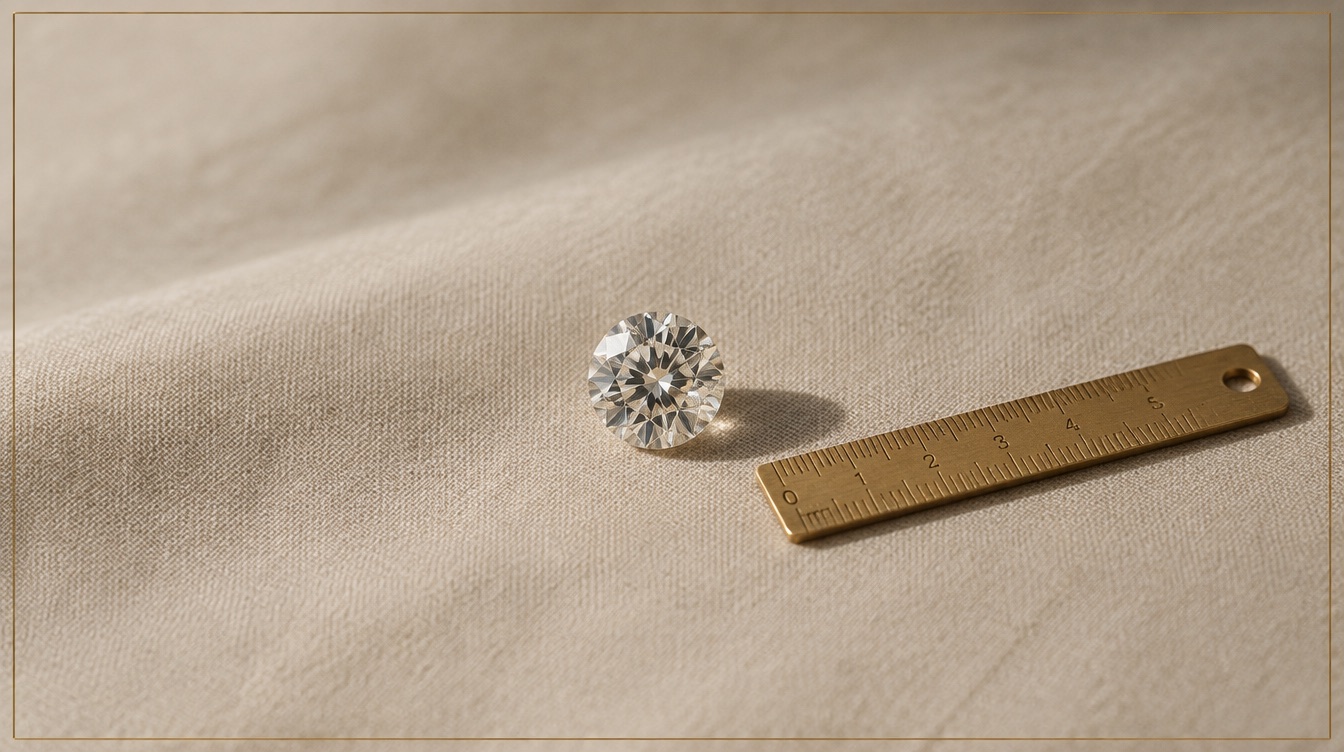
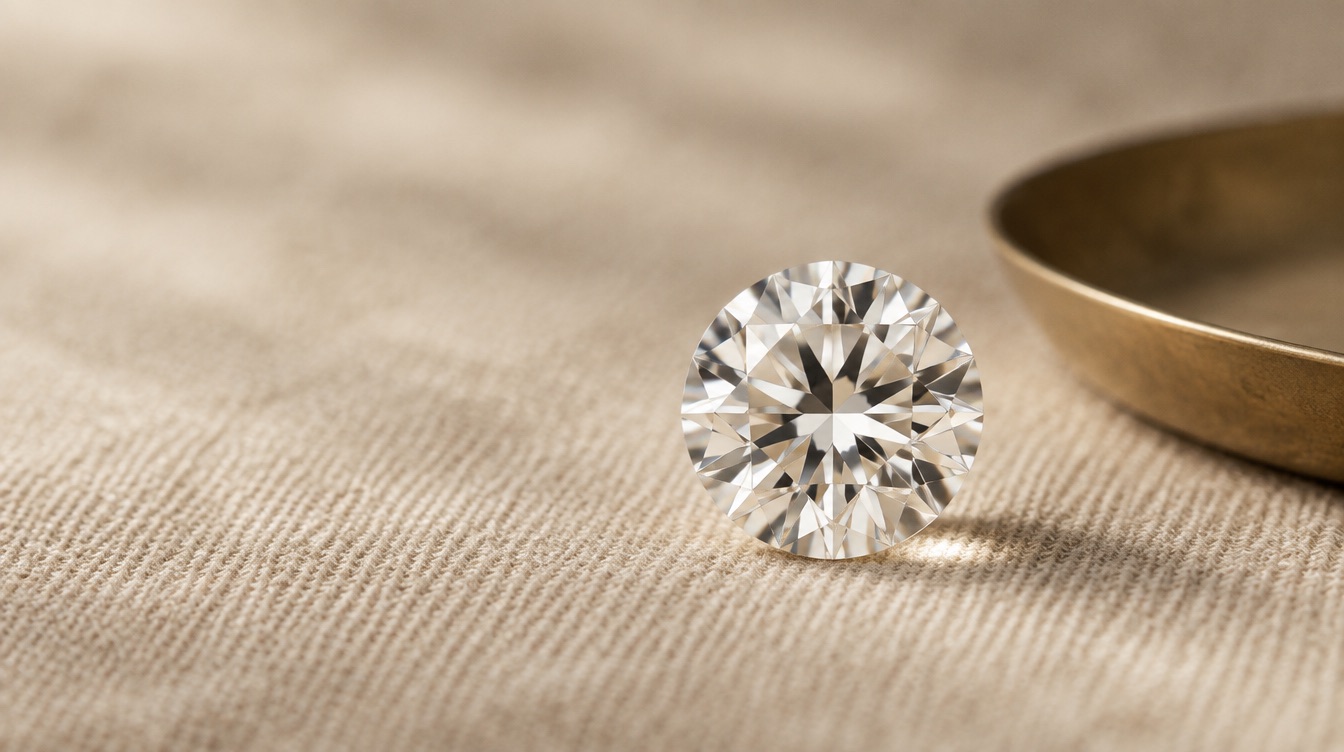
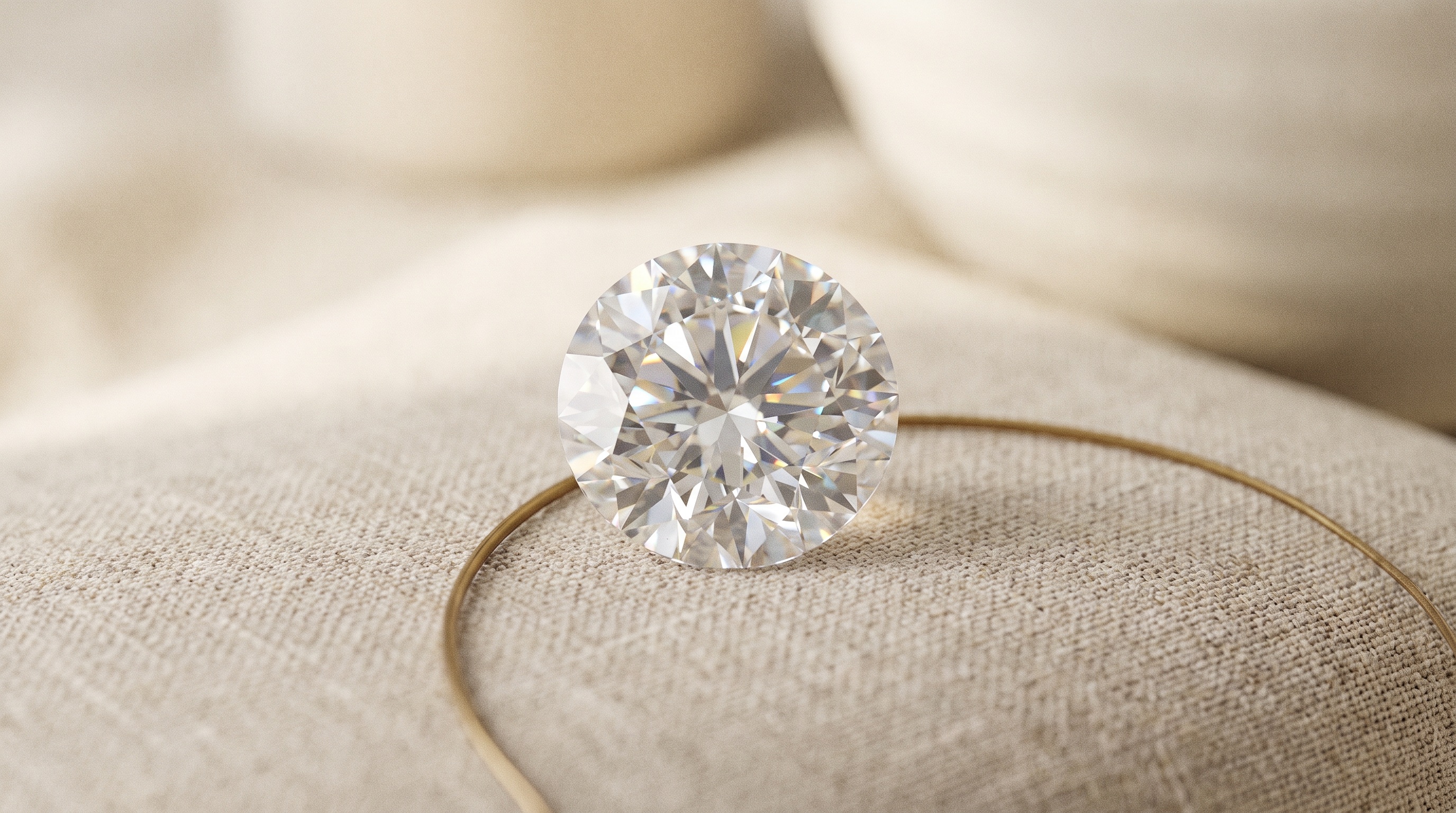
A bridal case lives or dies on its center stones. Side stones, melee, and settings all matter, but the center is what a customer stares at across the counter, what she photographs for her group chat, and what she remembers a decade later when she brings the ring back in for a cleaning. For a wholesale buyer stocking an engagement-ring program, choosing which shapes, carat weights, and clarity grades to keep on hand — and knowing how to source them without tying up capital in stones that won't move — is the difference between a bridal case that sells itself and one that sits.
This guide walks through what actually makes a center stone work for daily wear, which shapes are moving fastest in current bridal demand, how to build inventory across price points, what certification buyers should expect specifically for engagement centers, how to pair stones with the setting styles clients are asking for, where retailers most often get their center-stone buying wrong, and a practical checklist for auditing a bridal assortment before the next show or open house.
It is written for the buying desk, not the consumer counter. Nothing here is legal or tax advice — confirm resale-certificate and sales-tax specifics for your state with your accountant before you open a trade account.
What Makes a Good Engagement-Ring Center Stone
An engagement ring is not occasional jewelry. It goes on in the morning and comes off, if at all, at night — through dish-washing, gym sessions, gardening, and every doorframe a hand brushes past in between. That daily-wear reality should drive every decision about which center stones make it into a bridal case, more than any other single factor.
Durability starts with the shape itself. Round brilliants, cushions, and ovals distribute impact around a curved or rounded outline, which is part of why they dominate engagement sales — there's no exposed point to catch on a countertop or a car door. Shapes with corners or points — pear, marquise, princess, and to a lesser extent radiant — need protective metalwork at the vulnerable tip: a V-prong or a reinforced bezel corner that takes the impact instead of the stone. A center stone that arrives without a girdle thick enough to support that kind of protective prong work is a chip risk waiting for a customer complaint, not a sale.
Clarity matters less for durability than most new buyers assume and more for face-up visibility than most buyers realize. A stone can carry a lower clarity grade and still wear perfectly well for decades — diamond is diamond, regardless of a few inclusions — but visible inclusions under the table facet, especially in step cuts like emerald and Asscher where the open table hides nothing, will get flagged by any client who looks closely. For brilliant-cut shapes (round, oval, cushion, radiant, princess), the faceting pattern scatters light in a way that can camouflage minor inclusions; for step cuts, buy cleaner than you think you need to.
Symmetry and proportion decide whether a stone looks its carat weight or looks smaller than the number on the certificate suggests. Two 1.50-carat ovals from two different cutters can have visibly different face-up sizes depending on depth percentage and length-to-width ratio. When building a bridal case, buying stones with sensible proportions for their shape — not just the lowest price per carat — protects the retailer from a client comparing two rings side by side and preferring the "smaller" number.
The Most Popular Center-Stone Shapes — and Why
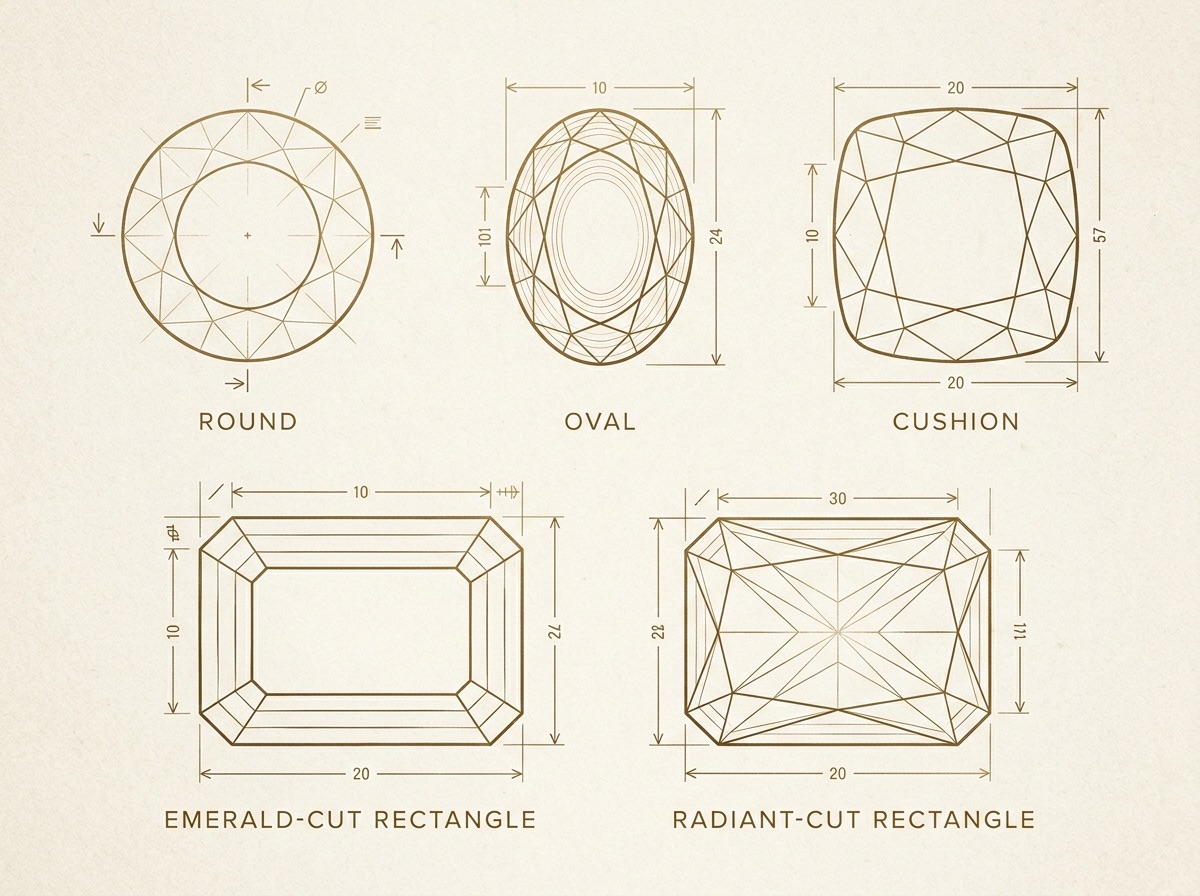
Round brilliant remains the anchor of most bridal cases, and for good reason beyond tradition: it's the easiest shape to match against a huge existing supply of accent stones and settings, forgiving of minor proportion variance, and the shape most clients already picture when they say "engagement ring." Round centers in the 1.00–2.50 carat range cover the large majority of requests a retailer will field.
Oval has become the shape most likely to pull a client away from round, largely because it reads larger face-up than a round of the same carat weight while still photographing cleanly. Ovals in the 1.50–3.00 carat range pair naturally with half-moon or tapered baguette side stones, which is part of why three-stone oval designs have become such a reliable seller.
Cushion is the forgiving shape of the group — soft rounded corners hide minor inclusions well and flatter a wider range of finger shapes than harder-edged cuts. Cushion centers in the 1.50–3.00 carat range work equally well in a solitaire, a halo, or a vintage-style setting, which makes them a versatile stone to keep on hand rather than a niche request.
Emerald cut has moved from an editorial trend to a genuine bridal category over the past several seasons. Its open table and step-cut facets show color and clarity more honestly than any brilliant cut, which means emerald centers in the 1.50–3.50 carat range demand cleaner grading — but for clients who want a stone that looks unmistakably intentional rather than default, nothing else reads the same way. Emerald centers require step-cut side stones (tapered baguettes or trapezoids) to look finished; brilliant-cut accents look mismatched next to a step-cut center.
Radiant sits between round and emerald — it has the brilliant faceting of a round or cushion with the rectangular or square silhouette of an emerald, which gives it more forgiveness on clarity than a true step cut while still reading as a shape choice rather than a default. Radiant and princess centers in the 1.00–2.50 carat range both take baguette side stones well.
| Shape | Typical Carat Range | Face-Up Read | Daily-Wear Notes | Pairs Best With |
|---|---|---|---|---|
| Round | 1.00–2.50 ct | True to carat weight | No exposed points; most durable silhouette | Nearly any melee or side-stone shape |
| Oval | 1.50–3.00 ct | Reads larger than carat weight | Rounded outline; watch for a thin bow-tie shadow | Half-moons, tapered baguettes |
| Cushion | 1.50–3.00 ct | True to slightly larger | Rounded corners forgive minor bumps | Round or cushion-shaped melee, halos |
| Emerald | 1.50–3.50 ct | Reads larger; shows clarity honestly | Corners need protective prongs; buy cleaner clarity | Tapered baguettes, trapezoids only |
| Radiant | 1.00–2.50 ct | Reads true to slightly larger | Cropped corners reduce chip risk vs. emerald | Straight or tapered baguettes |
Pear and princess round out most bridal assortments as secondary rather than primary stock. Pear, typically 1.50–3.00 carats, tends to sell as a solitaire and appeals to clients who want a stone that looks distinct without stepping too far from a classic silhouette. Princess, usually grouped with radiant in the 1.00–2.50 carat range, has cooled somewhat in relative popularity but still moves reliably among clients who want a clean, modern square shape.
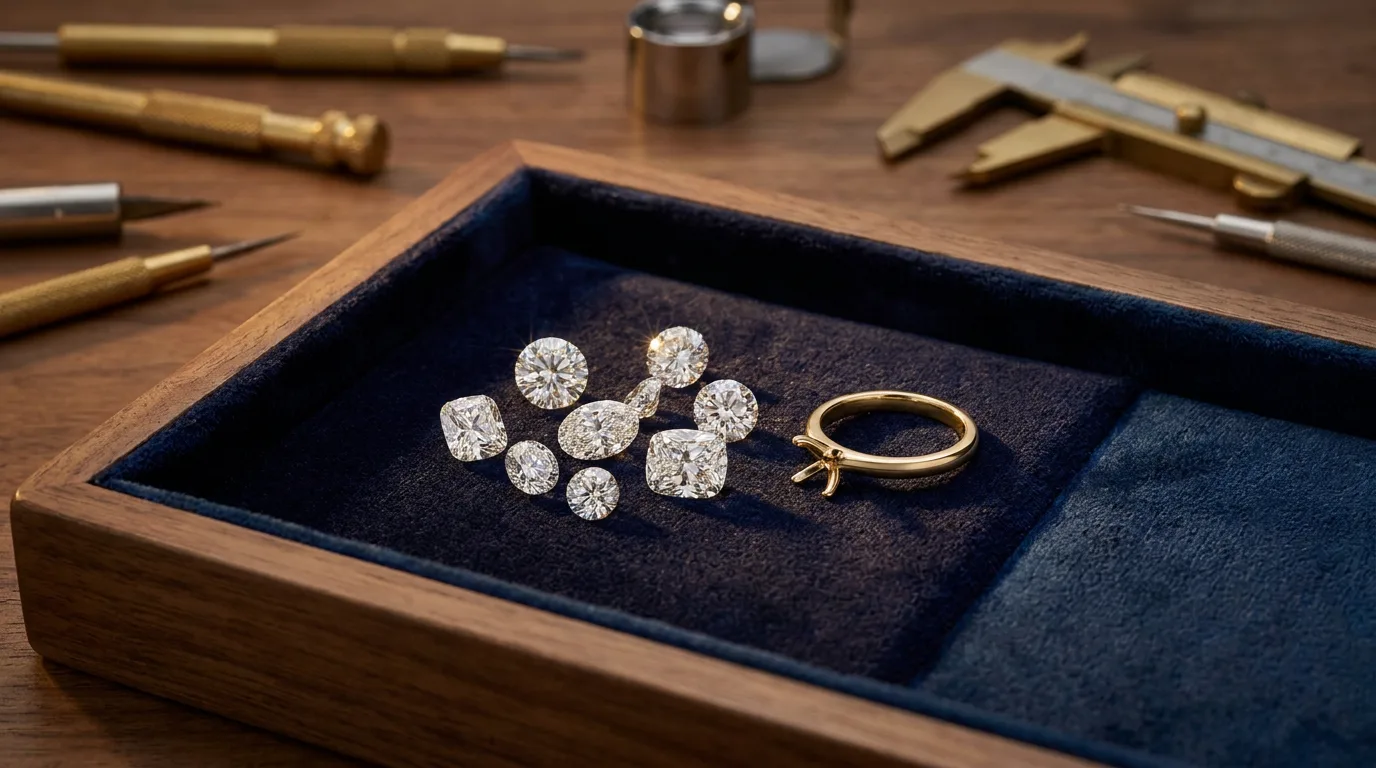
Matching Accent Stones and Melee to the Center
A center stone rarely sells on its own — it sells as part of a finished design, and the accents are what make that design cohesive or make it look assembled from mismatched parts. Color is the first variable to lock down: keep accent melee and side stones within roughly a grade of the center's face-up color. A near-colorless center next to visibly warmer melee reads as an inconsistency even to a client who can't name what's bothering her about the ring.
Cut family matters as much as color. A brilliant-cut center wants brilliant-cut accents; a step-cut center wants step-cut accents. Mixing a round brilliant center with baguette-style tapered accents works because both are brilliant-adjacent in how they handle light, but pairing a step-cut emerald center with round brilliant melee creates a visible mismatch in sparkle pattern that undercuts the whole design.
Calibration is where a lot of otherwise well-matched designs fall apart at the bench. Melee ordered by sieve size, rather than by loose carat estimates, sets flush and even around a halo or in a pavé shank — melee that varies even slightly in millimeter size creates visible gaps or proud stones once it's set. For three-stone designs specifically, the two side stones need to be a genuinely matched pair — same shape, same proportions, same color and clarity range — since they sit close enough to the center that any mismatch between them is immediately visible.
For deeper mechanics on the accent side, see our guides on sourcing matched pairs of diamonds wholesale and calibrated melee for pavé, tennis, and eternity.
How to Select Center-Stone Inventory for a Bridal Case Across Price Points
A bridal case that only stocks one price tier loses sales at both ends — clients priced out of the top tier walk, and clients who could spend more never get shown anything worth trading up for. Structuring center-stone inventory across three tiers solves both problems.
The entry tier should carry round and princess/radiant centers between roughly 1.00 and 1.50 carats in a solid commercial clarity range — the goal here is a genuinely attractive stone at a price point that gets a first-time buyer to say yes without over-explaining the grading report. This tier moves the highest volume and should be the deepest in a retailer's on-hand stock, since it's the tier most likely to be sold same-visit rather than special-ordered.
The mid tier is where oval and cushion centers in the 1.50–2.50 carat range do the most work. This is the range most repeat bridal clients gravitate toward once they've compared a few options, and it's worth carrying enough shape and carat variety here that a client can see three or four real stones side by side rather than one option and a certificate photo.
The upper tier — emerald and larger ovals or cushions above 2.50 carats — sells in lower volume but at higher margin per piece, and it's the tier best handled through memo rather than owned stock. Tying up capital in a deep bench of 3-carat-plus emeralds that may sit for months is a worse use of a line of credit than pulling three or four options on memo the moment a qualified client walks in ready to spend at that level.
Certification Expectations for Engagement Center Stones
Certification carries more weight on an engagement center than on almost any other stone in a jewelry case, because it's the one piece of jewelry a client is most likely to have appraised, insured, and eventually asked about by a family member who read something online about lab-grown diamonds. Every center stone should carry an independent lab report — IGI or GIA — that explicitly states laboratory-grown origin alongside the standard 4Cs. A report that's vague or silent on growth method is a liability, not a shortcut.
Beyond simply having a report, the report needs to match the stone. Retailers should verify report numbers against the issuing lab's public database before a center stone goes into a client-facing setting — a mismatched or altered report is rare, but it's the kind of problem that surfaces at the worst possible moment, usually during an insurance appraisal months after the sale. This verification step takes minutes and should be standard practice for every center stone entering inventory, not just the ones that look questionable.
For engagement centers specifically, the report should also give enough detail on proportions and finish (polish, symmetry) to support the durability and face-up-size conversations covered above — a report that only lists carat, color, and clarity without proportion data makes it harder for a retailer to explain to a client why one 1.50-carat oval looks larger than another.
Browse certified lab-grown diamonds to see how centers are listed with their reports, and for the full account-opening walkthrough see how to buy lab-grown diamonds wholesale.
Pairing Center Stones with Popular Setting Styles
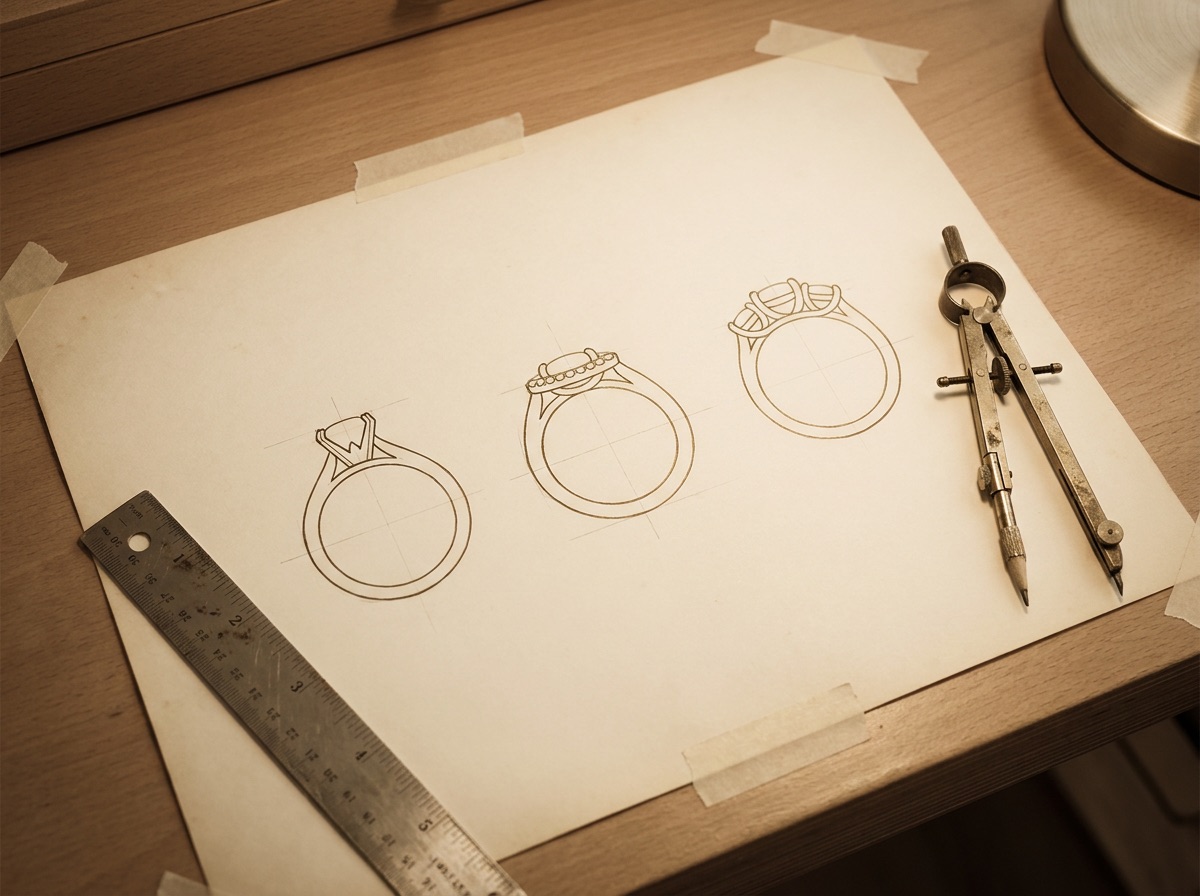
The setting a client chooses often says as much about her taste as the stone shape, and stocking centers without thinking through which settings they'll actually go into leads to mismatched inventory. Solitaire settings — a single center held by four or six prongs with no accent stones — put all the visual weight on the center stone's cut quality and proportions, since there's nothing else to distract the eye. Round, oval, and pear centers with excellent symmetry perform best here; a slightly off-proportion stone has nowhere to hide in a bare solitaire.
Halo settings, where a ring of small melee surrounds the center, add perceived size and brilliance around a center stone — a useful option for a client working within a tighter carat-weight budget who still wants a larger visual footprint. Cushion and oval centers pair especially well with halos because their rounded outlines follow a halo's curve naturally, whereas an emerald-cut halo requires a rectangular melee border that's harder to set evenly.
Three-stone settings, with a center flanked by two matched side stones, work best with round, oval, cushion, and emerald centers — shapes where a genuinely matched pair of side stones (half-moons, trapezoids, or tapered baguettes depending on the center) is available. This is the setting style most dependent on the accent-matching principles covered earlier in this guide.
Pavé and hidden-halo settings, where small diamonds run along the shank or sit beneath the center, work with almost any center shape since the melee doesn't compete directly with the center's outline. These have become a popular way for clients to add sparkle to a budget-conscious center-stone choice without changing the shape itself.
Carat-Weight and Sizing Trends in Current Bridal Demand
Lab-grown pricing has shifted what clients ask for at the counter. Where a mined-diamond budget might once have capped a client at a half-carat or three-quarter-carat center, that same budget now comfortably reaches into the 1.00–2.00 carat range for most shapes — which is a meaningful part of why the carat ranges covered throughout this guide skew higher than what many retailers stocked five or six years ago. Buyers building a bridal case today should weight inventory toward the 1.00–2.50 carat range across shapes rather than treating anything above one carat as a special-order tier.
Within that range, the fastest-moving requests tend to cluster around a stone that reads as a "full look" without tipping into a size that feels impractical for daily wear — most clients want a center that photographs well and draws a comment, not one that catches on sweaters. That balance point sits differently by shape: a 1.50-carat oval and a 1.50-carat round do not read the same size or wear the same way on the hand, which is exactly why carrying real depth across shapes at similar carat weights, rather than one shape in many sizes, better matches how clients actually shop.
Common Mistakes When Stocking Center-Stone Inventory
The most common and costly mistake is buying center stones the way a retailer might buy melee — in bulk, by the parcel, prioritizing price per carat over individual stone quality. Center stones are the opposite of a commodity purchase. Each one needs to be evaluated on its own proportions, symmetry, and face-up appearance, because it's the one stone in the entire ring a client will study under a loupe before saying yes.
A second frequent mistake is stocking only round brilliants because they're the easiest shape to source and match, then losing sales to clients who came in specifically wanting an oval or a cushion and left when the only option was a special order with a wait attached. Given how much current bridal demand has diversified across shapes, a case with only round centers on hand is turning away a meaningful share of walk-in interest.
A third mistake is under-investing in certification verification — accepting a report at face value without checking it against the issuing lab's database, especially on stones sourced secondhand or through a less familiar channel. The cost of skipping this step is invisible until a client's insurance appraiser flags a discrepancy, at which point it becomes the retailer's problem to resolve, not the original source's.
A fourth mistake is buying center stones without pre-planning the accent inventory that will pair with them. A retailer who stocks a beautiful emerald-cut center but no matched tapered baguettes has a stone that can't be shown as a finished design, only as a loose certificate — a much harder sell than a mounted or at least paired presentation.
How Guru Diam Sources Center Stones for Bridal Accounts
Jewelers source engagement-ring centers through a trade account rather than a public storefront. Opening an account requires a business license and resale certificate, which unlocks access to filtered, bridal-range inventory rather than a general catalog — a retailer building a case can request a list filtered specifically to the shapes and carat ranges covered in this guide rather than sorting through unrelated inventory.
From there, stones can be ordered outright for owned inventory or held on memo consignment for client review — memo access is especially useful at the upper price tiers discussed above, where holding a stone on approval rather than purchasing it outright lets a retailer show real options to a client before committing capital. Holding multiple physical stones for a client to compare side by side closes sales more reliably than working from certificate photos and descriptions alone; a client can tell the difference between two 1.50-carat ovals in hand in a way no photo fully communicates.
Center stones purchased this way arrive matched against consistent accent and melee inventory, so a retailer isn't left sourcing side stones and calibrated melee separately from a different supplier and hoping the color and cut family line up. US-held inventory ships within 24 hours of an order; custom rings built around a sourced center typically take 4–6 working days to complete from Guru Diam's New York and Los Angeles facilities.
Trade buyers have three ways to take a center, and the right one depends on whether the sale is confirmed or you are still presenting options to a client:
| Method | What it is | Best for |
|---|---|---|
| Loose purchase | You buy the center outright | Confirmed engagement sales and stones you turn quickly |
| Memo / consignment | You hold the center to show, pay only if it sells | Presenting two or three center options to a client before the deposit clears |
| Finished / custom | Supplier sets the center into the finished ring | Jewelers without an in-house bench, or tight deadlines |
Retailer Bridal-Assortment Checklist
Before the next show, open house, or seasonal reset, run a bridal case against this list:
- Shape spread: at minimum, round, oval, and cushion on hand or immediately available on memo — the three shapes covering the widest share of walk-in requests.
- Price tiers covered: a genuine entry tier (1.00–1.50 ct), mid tier (1.50–2.50 ct), and an upper tier accessible via memo rather than owned stock.
- Certification on file: every center stone has an IGI or GIA report stating laboratory-grown origin, verified against the issuing lab's database.
- Accent inventory matched: calibrated melee and side stones on hand for each center shape carried, ordered to the same color range and cut family.
- Setting compatibility checked: centers with strong symmetry reserved for solitaire and three-stone builds; centers pairing well with halos identified separately.
- Step-cut accents sourced separately: tapered baguettes or trapezoids on hand specifically for any emerald-cut centers in the case.
- Memo access confirmed: a standing relationship with a supplier that allows pulling upper-tier stones on approval for qualified clients.
Frequently Asked Questions
Where do jewelers source lab-grown center stones for engagement rings?
Jewelers source bridal center stones from trade-only diamond wholesalers. You open a trade account with a business license and resale certificate, then order from the supplier's live loose-stone list filtered to bridal shapes and carat ranges. A supplier that also carries matching side stones and calibrated melee lets you build the whole ring from one list.
What carat range do most engagement center stones fall in?
Most engagement centers cluster between 1.00 and 3.00 carats, with rounds often shopped between 1.00–2.50 ct and fancy shapes like oval, emerald, and cushion frequently at 1.50–3.00 ct. The right size depends on the client's budget, shape, and setting style, so source the actual stone to the job rather than to a fixed number.
How do you match side stones and halo melee to a center diamond?
Match the accents to the center, not independently. Keep accent color within roughly a grade of the center's face-up color, keep the cut family consistent (brilliant with brilliant, step-cut with step-cut), and order calibrated melee by sieve size so stones drop into the mount. For three-stone designs, source matched pairs that mirror each other.
Can a jeweler show a client center-stone options on memo?
Yes. Memo (consignment) lets a jeweler hold two or three centers to present to a client and pay only for the one that sells, within an agreed return window. Putting real stones in the client's hands closes engagement sales far more reliably than describing them. Confirm the memo period and return terms with the supplier up front.
What certificate should an engagement center stone have?
Insist on an independent lab report — most commonly IGI, sometimes GIA — that states the stone is laboratory-grown and documents its 4Cs. Verify the report number on the lab's online database before showing the stone, match the stone to its report on arrival, and keep the report with the job bag so it travels to the client with the finished ring.
How fast can a sourced center stone become a finished engagement ring?
From a US-held wholesaler, loose certified centers generally ship within 24 hours and finished custom rings run roughly 4–6 working days. A center ordered from an overseas factory adds a one-to-three-week lead time plus customs before bench work even starts, so domestic sourcing is what makes deadline-driven engagement work possible.