GIA & IGI Certified Lab-Grown Diamonds: A Wholesale Sourcing Guide for Jewelers
If you sell lab-grown diamonds, "certified" is the word your customers ask about before they ask about price. A certificate from IGI or GIA is the difference between a stone you can stand behind and a stone you're taking someone's word for — and for a B2B buyer, sourcing certified inventory correctly is a workflow, not a checkbox. This guide walks through what GIA and IGI certification actually covers, what's certified versus what isn't across a typical lab-grown catalog, how to verify a report before you commit to a purchase order, and what to expect when you source certified stones wholesale.
Why Certification Is Non-Negotiable for Wholesale Buyers
A grading report from IGI or GIA is an independent, third-party assessment of a diamond's carat weight, color, clarity, cut, and — for lab-grown stones specifically — its growth method. It's issued by a lab with no stake in whether you buy the stone, which is exactly why it carries weight with your customers. When you're buying wholesale, the certificate does three jobs at once: it protects you from misrepresentation by a supplier, it gives your sales staff a document to hand a customer without having to make quality claims themselves, and it lets you price consistently against a known grade instead of negotiating stone-by-stone on trust.
For lab-grown diamonds specifically, certification carries one more job: confirming growth method. Both IGI and GIA disclose on the report whether a stone is natural or laboratory-grown — there's no ambiguity left for a customer to question later.
That matters more for lab-grown than it does for natural stones, because the retail customer asking about a lab-grown diamond has usually done more homework than the customer buying natural. They've read that lab-grown and natural diamonds are chemically, physically, and optically identical — true — and they've also read enough forum threads to know that growth-method disclosure is where bad actors cut corners. A certificate that names the growth method up front closes that question before it's asked. It's also the document your customer will want if they ever resell, insure, or upgrade the stone — a lab-grown diamond without paperwork is a much harder sell down the line than one with a report number that still checks out against the lab's database.

IGI and GIA at a Glance: What Each Lab Confirms
IGI (International Gemological Institute) and GIA (Gemological Institute of America) are the two labs you'll see most often on lab-grown certificates in the U.S. wholesale market. Both grade the same core categories — carat weight, color, clarity, cut, polish, symmetry, and fluorescence — and both issue a distinct report type for laboratory-grown stones rather than folding them into their natural-diamond reports.
The practical difference buyers ask about most is grading calibration: GIA is generally regarded as the stricter of the two, particularly on color and clarity, which means a stone graded G-color by IGI can come back H-color under GIA standards. Neither lab is "wrong" — they're calibrated differently, and once you know that, you price and represent each report accordingly instead of treating a G and an H as directly comparable across labs.
Both reports include a laser-inscribed report number on the stone's girdle, which is what makes a certificate verifiable rather than just a printed claim (more on that below).
What "GIA/IGI Certified" Covers — and What It Doesn't
This is the distinction that trips up buyers new to wholesale lab-grown sourcing: not every stone in a lab-grown catalog is individually certified, and it shouldn't be — certification is a per-stone cost that only makes sense above a certain size.
Loose lab-grown diamonds at 0.30ct and above are individually IGI or GIA certified, each with its own report and laser-inscribed report number you can verify independently. Melee — small calibrated stones below that threshold, typically sold by the parcel rather than the piece — is not individually or parcel-certified anywhere in the trade, including here. Melee ships against a quality-control baseline instead (DEF+ color, VS+ clarity is the standard floor), verified by the supplier's own QC process rather than a per-stone lab report. If a supplier tells you melee is "IGI certified," that's worth a second look — certifying every stone in a parcel isn't standard practice because the cost doesn't scale to melee pricing.
Knowing where that line sits — certified above 0.30ct, QC-verified parcel goods below it — is the first thing to get right when you're building out a certified-inventory offer for your own customers. It also explains why melee pricing and certified-loose pricing don't move together: a parcel of DEF+/VS+ melee is priced against the QC baseline the whole parcel meets, while a certified loose stone is priced against its own individual report. Quoting a customer melee pricing logic against a certified-stone request (or the reverse) is a fast way to under- or over-quote, so keep the two pricing models mentally separate even when a customer's request blurs the line between "small stone" and "melee."

Certification Across Cut Tiers: Antique, Fancy, and Round
Certification isn't tied to cut style — a well-run lab-grown catalog carries certified stones across all three tiers of the trade:
Antique cuts — Old Mine, Old European, Hexagonal, Moval, Lozenge, Kite, Trillion, Criss-Cut, and other true antique-style cuts — are the premium, harder-to-source tier and the one worth checking a supplier's in-stock range on before you commit to a customer request. Regular fancy cuts — Emerald, Asscher, Cushion, Oval, Pear, Marquise, Radiant, Princess, Heart — are the mid-market workhorses most retail demand runs through. Round brilliant is the commodity tier: highest volume, most price-competitive, and usually the deepest in-stock range.
All three tiers carry the same certification standard at 0.30ct+ — the cut style doesn't change whether a stone gets a report, only how deep the supplier's in-stock range is likely to run at any given size and grade. Round brilliant inventory tends to run deep across every color and clarity combination since it's the highest-volume cut in the trade; antique cuts run shallower by nature, since fewer suppliers cut and hold them at all, so a specific antique request (say, a 1.2ct Old European in H color) is more likely to be sourced to order than pulled same-day from open stock. Building sourcing expectations around that difference — round and standard fancy shapes as fast-turn inventory, antique cuts as a slightly longer lead — saves a round of back-and-forth with your supplier on requests that were never going to be same-day to begin with.
How to Verify a Certificate Before You Buy
Never take a certificate at face value sight-unseen — verifying it takes under a minute and it's the single best protection you have as a wholesale buyer. The process is the same for both labs:
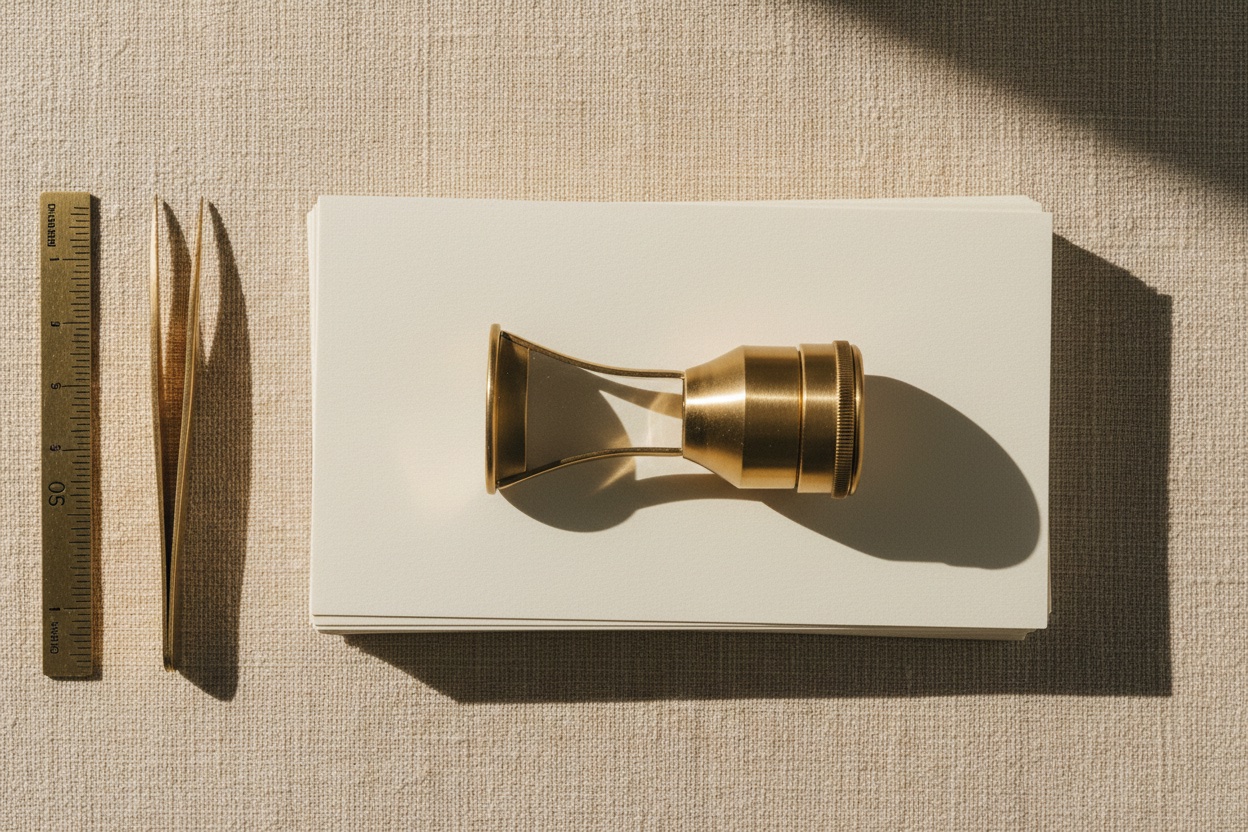
Take the report number printed on the certificate and enter it directly on the issuing lab's own verification page — IGI's is at igi.org, GIA's is at gia.edu — rather than trusting a PDF or photo a supplier sends you. The lab's database will return the stone's specs; check that every field matches what you were quoted. Then check the physical stone: the same report number should be laser-inscribed on the girdle, visible under a loupe. If the inscription, the database record, and the paperwork you were sent don't all agree, stop and resolve it with the supplier before the purchase order goes through — don't assume it's a minor mismatch.
This two-step check (database plus physical inscription) is standard practice on every certified stone you buy wholesale, not just the ones that look questionable. It's worth building into your intake process as a fixed step rather than a judgment call — the stones that turn out to have a real problem are rarely the ones that looked suspicious going in, which is exactly why the check has to run on everything, every time, not just the orders that felt off.

What Drives Price Beyond the Grade
Two stones with identical carat, color, and clarity on paper can still land at different price points, and it's worth knowing why before you're negotiating: cut quality (the report's cut, polish, and symmetry grades) affects how the stone performs visually even at matched specs; fluorescence can move price slightly depending on intensity; and antique cuts carry a premium over round or standard fancy cuts purely on sourcing difficulty, independent of the 4Cs. When you're comparing quotes across suppliers, compare full report specs, not just the headline carat-color-clarity combination — two "G VS1" stones are not automatically the same price.
The certifying lab itself is part of that price conversation too, once you factor in the calibration gap covered above. A stone quoted as IGI G-color may be priced closer to what a GIA H-color would carry, simply because the two labs aren't grading on the same curve — a buyer comparing quotes across suppliers who mix IGI and GIA stock needs to normalize for that before assuming one quote is genuinely cheaper than another for the "same" grade. It's a common source of confusion for retailers newer to lab-grown sourcing, and one extra reason to look at the full report rather than the headline grade alone.
How a Lab-Grown Report Differs From a Natural Diamond Report
The 4Cs on a lab-grown certificate are graded on the same scales a natural diamond report uses — that part doesn't change. What's different is the growth-method disclosure and, with GIA specifically, the report type itself: GIA issues a separate document, the Laboratory-Grown Diamond Report, rather than folding lab-grown stones into its standard natural-diamond report format. IGI discloses growth method directly in the header of its standard report rather than issuing a visually distinct document. Either way, the disclosure is unambiguous once you know where to look — it's not buried in fine print on either lab's format.
One detail worth flagging to newer buyers: some lab-grown reports (GIA's in particular) previously used the term "synthetic" in earlier report formats before both major labs standardized on "laboratory-grown" as the industry moved toward clearer, less loaded terminology. If you're ever handed an older report using different language than what's current, that's a paperwork-vintage issue, not a red flag on its own — just confirm the report number still checks out on the lab's live database, since terminology has evolved but the underlying verification process hasn't. For a full field-by-field walkthrough of what's printed on either report, see the certificate-reading guide linked at the end of this article.
Building a Certified Assortment for Your Case
Retailers new to stocking certified lab-grown diamonds sometimes over-index on a single popular combination — round, G color, VS1 — and end up with a case that can't answer half the requests that walk in. A more useful starting assortment spreads across a color range (G through I covers most retail demand, with a few D–F stones for customers specifically asking for colorless), a clarity range (VS1 through SI1 covers the bulk of practical requests), and at least two shapes beyond round, since oval and cushion consistently show up in custom-order briefs even at shops that sell mostly round stones at the counter.
Antique cuts are worth carrying in small quantity even if they're not your primary business — a customer asking for an Old European or Old Mine cut is usually already committed to that specific look and won't substitute round for it, which makes antique inventory a low-volume, high-close-rate category rather than a speculative one. The practical approach most wholesale buyers land on: keep a deep, fast-moving core in round and the two or three fancy shapes your customer base actually asks for, and source antique and less-common shapes to order against a supplier's in-stock antique range rather than pre-stocking heavily in a category with less predictable turnover.

Sourcing Workflow: From Search to Purchase Order
A working wholesale sourcing process for certified lab-grown diamonds usually looks like this: filter a supplier's in-stock inventory by shape, size, color, and clarity range against your customer's brief; pull the specific stock numbers and certificate numbers for candidates; verify each certificate independently before you commit (see above); confirm current availability, since in-stock wholesale inventory turns over — a stone quoted last week may already be sold; and place the order against confirmed stock rather than a catalog listing that may be stale.
Working with a supplier whose online inventory is filterable by real-time stock — not a static PDF price list — cuts most of the back-and-forth out of this process. Guru Diam's certified inventory browser lets you filter by shape, carat, color, clarity, cut, polish, symmetry, fluorescence, and lab in one pass, with certificate numbers visible on every listing. For a custom order or a request outside what's currently in stock, the same filtering approach applies to sourcing to spec — you're just widening the search rather than working from a fixed shortlist.
Common Mistakes Retailers Make Buying Certified Stones Wholesale
Without a confirmed order, wholesale inventory can move. Don't tell a customer a specific stone is theirs until the purchase order is placed.
A matching report number in the lab's database doesn't confirm the stone in your hand is the one the report describes — check the physical inscription too.
An IGI G-color and a GIA G-color aren't graded on identical curves. Compare within a lab, and account for the calibration gap when comparing across labs.
Melee ships against a QC color/clarity baseline, not individual lab reports. Set that expectation with customers up front so it isn't a surprise at the counter.
Shipping and What to Check When Your Order Lands
Certified stones ordered from in-stock inventory ship as on-hand goods, not made-to-order — expect same-day dispatch on orders placed before the supplier's cutoff (Guru Diam ships same-day from New York before 6pm ET and from Los Angeles before 4pm PT). When the order arrives, run the same two-step verification you did before buying: confirm the report number against the lab's database and check the laser inscription against the physical stone, before it goes into your case or gets set. It takes a minute and it closes the loop on the sourcing process.
Guru Diam's Certified Lab-Grown Inventory
Guru Diam carries 10,000+ IGI- and GIA-certified lab-grown diamonds on hand across round, antique, and fancy cuts, filterable by shape, carat, color (D through R), clarity (IF through SI2), cut, polish, symmetry, fluorescence, and certifying lab — with certificate details visible on every listing, ready to verify before you order. Fancy color certified lab-grown stones are carried as a separate line if a customer brief calls for color rather than white. Every diamond in the catalog is CVD lab-grown.
Because the catalog is filterable rather than fixed, sourcing to a specific brief — a customer asking for a G-color, VS1, 1.5ct oval, for example — is a search, not a special request. Stock numbers and certificate numbers are attached to every listing, so the verification step covered earlier in this guide can happen before you commit to a purchase order, not after. For custom orders, jewelry manufacturing, and antique-cut availability that isn't showing in the current in-stock range, our trade team can source to spec — one supplier relationship covering certified loose stones, melee, fancy color, and finished jewelry, rather than splitting sourcing across multiple vendors by category.
Browse Certified Inventory
Filter by shape, size, color, and clarity, verify certificate numbers on every listing, and order against confirmed in-stock inventory — no waiting on a static price list.
Browse GIA & IGI certified diamonds →Looking for fancy color instead of white? See certified fancy color inventory →
Questions on a specific stock number? Message our trade desk on WhatsApp: +1 (347) 812-2006.
Frequently Asked Questions
Certified loose lab-grown diamonds (0.30ct and above) are available through wholesale suppliers with certified in-stock inventory — Guru Diam's certified catalog is filterable by shape, size, color, clarity, and certifying lab, with certificate numbers on every listing.
Both are legitimate, widely recognized labs. GIA tends to grade slightly stricter on color and clarity than IGI. Neither is "better" — the practical move is to know the calibration difference and price accordingly rather than treating the two as interchangeable.
No. Loose stones at 0.30ct and above are individually certified. Melee (small calibrated stones, typically under that size) ships as QC-verified parcel goods against a color/clarity baseline, not individual lab reports.
Enter the report number on the issuing lab's own site — igi.org or gia.edu — and confirm the returned specs match what you were quoted. Then check that the same number is laser-inscribed on the stone's girdle under a loupe.
That depends on the supplier's terms. Sourcing against real-time in-stock inventory (rather than a static price list) generally makes single-stone wholesale orders straightforward, since you're buying confirmed on-hand goods rather than placing a production order.
Certified loose diamonds are individually graded and laser-inscribed, typically 0.30ct and above. Melee is sold by the parcel against a QC baseline (commonly DEF+ color, VS+ clarity) rather than individual certification — there's no such thing as "certified melee" in standard wholesale practice.
The grading categories are the same, but GIA issues a distinct report type — the Laboratory-Grown Diamond Report — for lab-grown stones rather than using its standard natural-diamond format. IGI discloses growth method in the header of its standard report. Either way, growth method is clearly stated, not something you have to infer.
Related Reading
- IGI vs GIA Lab-Grown Certification — a deeper comparison of how the two labs approach lab-grown grading specifically.
- How to Read an IGI or GIA Diamond Certificate — a field-by-field walkthrough of what's printed on each report.