
The B2B Diamond Marketplace, Explained: How Trade Buyers Should Evaluate a Wholesale Diamond Trading Platform
Ask ten independent jewelers where they buy diamonds and you will get ten different words for the same thing. Some say "my supplier." Some say "my vendor." A growing number say "the platform I buy on" or "the marketplace I source from." The vocabulary has shifted, and it has shifted for a reason: the way diamonds move through the trade genuinely changed, and the language followed.
That shift matters more than it sounds. When a designer types b2b diamond marketplace into a search bar, they are not asking for a definition. They are asking a practical question: where can I log in, see real inventory with real prices, place a recurring order, and get it shipped without a week of back-and-forth? That is a workflow question, not a terminology question. And the honest answer is that the label on the website tells you almost nothing about whether the workflow behind it actually works.
This guide is written for the buyer side of the counter — independent jewelers, custom designers, small manufacturers, estate and antique dealers, and anyone placing repeat orders rather than buying one stone for one wedding. It walks through what a diamond trading platform is actually supposed to do, where most of them break down, and how to evaluate one before you commit your reorder cycle to it. If you would rather skip the theory and look at the categories directly, the wholesale hub lays out what we carry, and the trade partner program covers how accounts are set up.

What "B2B diamond marketplace" actually means in 2026
Strictly speaking, a marketplace is a venue. It connects many sellers to many buyers and takes a cut of what passes through. A supplier is a principal — it owns goods, sets prices, and carries the risk of holding inventory. For most of the last two decades those were clearly separate businesses, and the trade knew which was which.
They are not separate anymore, and that is the source of most of the confusion. Nearly every serious wholesaler now runs software that looks and behaves like a marketplace: a searchable catalog, filters for shape and color and clarity, live pricing, saved carts, order history, an API or CSV feed for jewelers who want inventory pushed to their own site. From the buyer's side of the screen, a principal supplier with good software and an aggregator with good software are visually indistinguishable. Both look like a diamond trading platform.
Underneath, they behave nothing alike, and the difference lands squarely on your margin and your delivery dates. So the useful question is not "is this a marketplace or a supplier." The useful question is: when I click buy, who actually owns that stone right now? Everything else — pricing consistency, availability accuracy, how a QC rejection gets handled, whether you can consolidate multiple line items into one shipment — follows from the answer.
Strip away the buzzwords and a diamond marketplace is simply a single online destination where verified trade buyers can source inventory, compare certification, and place orders without juggling a dozen separate supplier relationships. Whether you call it a diamond marketplace, a wholesale trading platform, or a B2B sourcing platform, the underlying question is the same: can this one destination replace the six phone calls you used to make?
The three things buyers actually want from a diamond trading platform
Strip away the feature lists and B2B diamond buyers are consistently asking for three things. Every other requirement is downstream of these.
1. Inventory you can trust to be there
The single most expensive failure in wholesale diamond sourcing is not a high price. It is a stone that shows as available, gets promised to a client, and then turns out to be sold, memo'd out, or listed by a third party who no longer has it. You have already quoted. You have already set an expectation. Now you are re-sourcing under time pressure, which is exactly when you overpay.
Aggregated listings are structurally prone to this. When a platform surfaces feeds from dozens of independent holders, the freshness of any given line depends entirely on how often that holder updates — and many update slowly, or never remove sold goods. On-hand inventory held by the seller does not have this problem, because the same party that shows you the stone is the party that has it in the safe.
2. Pricing that does not move underneath you
Recurring buyers need to quote. Quoting requires that today's price bears some relationship to next month's price for the same spec. On aggregated platforms, pricing on a given specification can swing noticeably as different holders enter and exit, because you are not seeing one price — you are seeing whichever holder happens to be cheapest at that moment. That is fine for a one-off purchase and genuinely difficult for a jeweler running a standing collection.
3. One relationship instead of six
This is the requirement buyers articulate least and feel most. A jeweler building a mixed order — a few certified center stones, a parcel of melee for the shop, two antique cuts for a custom commission, and a finished piece — typically ends up coordinating four or five vendors, four or five invoices, four or five inbound shipments, and four or five different QC standards. The administrative cost of that is invisible until you total it, and then it is substantial. Consolidation is the reason "one vendor, one shipment, one relationship" resonates with working buyers far more than any feature comparison does.
Aggregator vs. principal: the structural difference that sets your margin
Let us be concrete about how these two models diverge in practice, because this is the fork that determines what kind of wholesale diamond trading platform is right for your business.
An aggregator shows you a very large catalog assembled from many holders. Its strength is genuine: breadth of selection at the certified-stone level is hard to beat, and if you need one specific stone in one specific spec, an aggregator will usually surface it. Its weaknesses are equally structural. Availability is only as accurate as the slowest feed. The platform generally does not control QC, because it does not own the goods. Pricing varies by holder. And consolidating a mixed order into one shipment is often impossible, because the items physically live in different places.
A principal supplier shows you a smaller catalog it actually owns. Selection at any single certified spec is narrower — that is a real tradeoff and worth stating plainly. What you get in exchange is that availability means availability, QC is a standard the seller is directly accountable for, pricing is set rather than discovered, and a mixed order across categories can leave as one parcel because it was all in one place to begin with.
Neither model is universally better. If your business is chasing one-off specific certified stones with maximum selection, aggregation serves you well. If your business is recurring orders across several categories where reliability and consolidation compound month over month, a principal relationship serves you better. Most working jewelers, honestly, use both — an aggregator for the occasional hunt and a principal for the standing book. Knowing which is which prevents you from being disappointed by a platform that was never designed for what you were asking it to do.
Breadth is the feature that actually saves you time
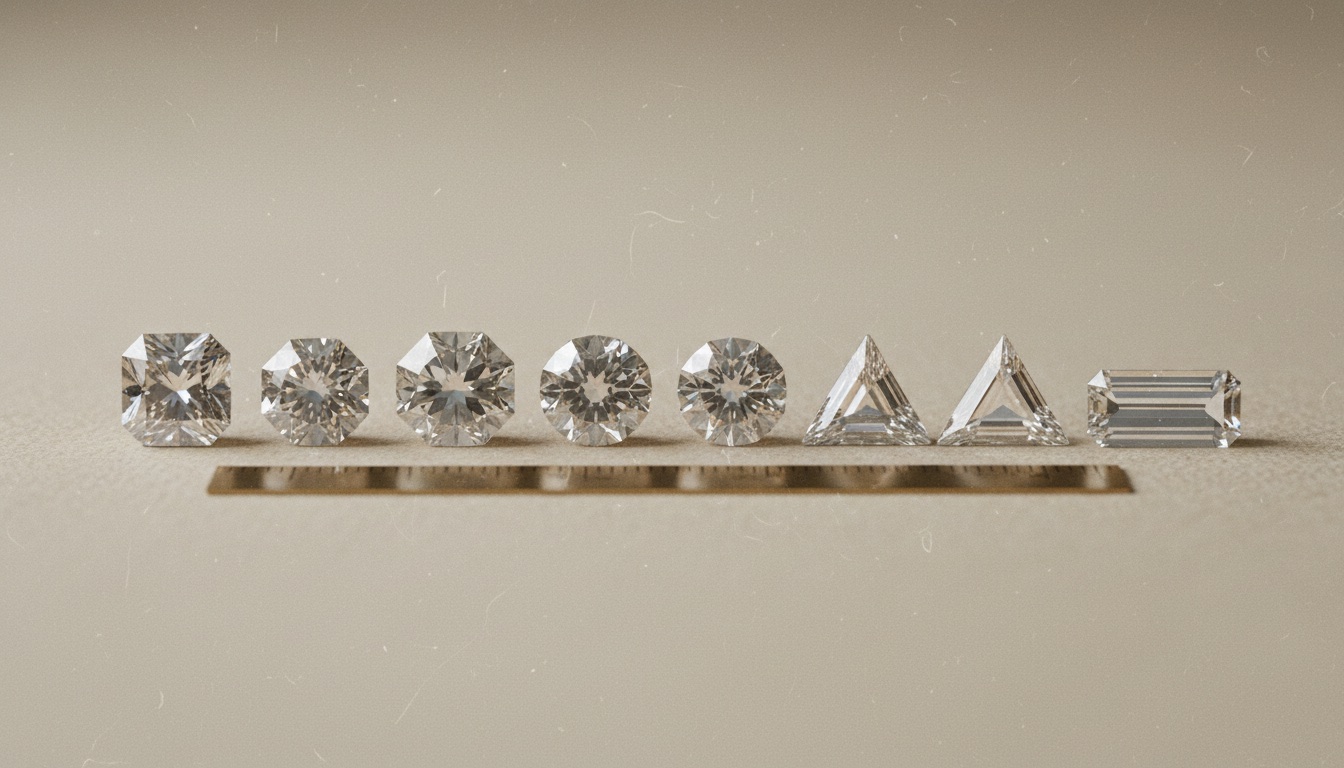
Most lab-grown suppliers are, in practice, round-brilliant businesses with a decorative fringe. They will show you rounds in every size and grade you could want, a competent range of the popular fancy shapes, and then the catalog stops. Ask for a hexagonal, a lozenge, a criss-cut, a fancy color melee parcel, or a finished piece, and the conversation turns into "let me see what I can find," which means they are now sourcing it from someone else and adding a layer.
Breadth is not a vanity metric. It is the difference between one purchase order and five. A genuinely broad b2b diamond marketplace should be able to fill, from one catalog and onto one invoice:
- Calibrated melee in rounds, fancy shapes and fancy colors, sold as parcel goods for shop stock and pavé work
- Certified loose stones from 0.30ct upward, individually graded, for center-stone and statement work
- Antique cuts — old mine, old european, hexagonal, moval, lozenge, kite, trillion, criss-cut, padparadscha
- Fancy colors in yellow, pink, blue and green, in both loose stones and melee
- Matched pairs for earrings and symmetrical settings
- Custom engagement rings and finished jewelry, built to your specification
That list is the actual scope of what an independent jeweler needs over a year. Cutting, setting and polishing all happen in-house, which is why the antique and fancy-color categories exist at all here rather than being brokered on request — you cannot reliably supply a moval or a criss-cut by ordering it from someone else. The full category breakdown lives on the wholesale catalog page if you want to see what is stocked against each.
Certification flexibility: why single-lab platforms cost you deals
Certification is where a lot of otherwise-good trading platforms quietly constrain your business. Many are effectively single-lab operations. Their entire inventory is graded by one lab, so that is what you get, and if your customer specifically wants a different report you are back to sourcing elsewhere.
This shows up constantly in real retail. A customer who has done their homework arrives asking for a GIA report specifically. Another is buying for an insurance appraisal that names a preferred lab. A third does not care at all and just wants the stone to be graded by someone credible. If your supplier only offers one lab, one of those three conversations ends with you losing the sale or eating the cost of re-sourcing.
Having IGI, GIA and GCAL all available across the certified inventory removes that failure mode entirely. It is not a marketing differentiator so much as a practical one — the point is that the certification question never becomes the reason a deal stalls. When you are evaluating any wholesale diamond trading platform, ask directly which labs appear across their certified goods, and be specific about whether that is "we can get it" or "it is in stock now."
Melee and certified loose are different products — and most platforms blur them
This is the single most common source of confusion between buyers and suppliers, and it produces genuinely bad outcomes when it goes unaddressed. Melee and certified loose stones are not the same product tier and are not sold the same way.
Melee ships as uncertified parcel goods. It is not individually certified, and it is not parcel-certified either. That is not a shortcut — it is how the category works everywhere in the trade. Certifying stones individually at melee sizes would cost more than the stones. What you should be buying against instead is a stated QC baseline: our melee is sorted and shipped against a DEF+ color and VS+ clarity standard, consistently, parcel after parcel. That consistency is the actual product. A jeweler setting a pavé band needs the fortieth stone to match the first, and that is a sorting-discipline question, not a paperwork question.
Be alert to any supplier describing melee as "IGI parcel certified" or similar. That phrasing does not correspond to anything real, and it usually indicates either a misunderstanding of the category or a deliberate attempt to make uncertified goods sound graded.
Loose stones from 0.30ct upward are a different tier entirely and are individually certified by IGI, GIA or GCAL. Here the report matters, you should expect to see it before purchase, and you should expect it to travel with the stone.
The practical takeaway for buyers: judge melee on QC consistency and sizing accuracy, judge loose stones on the report. Applying the wrong standard to either one will lead you to the wrong supplier.

Antique cuts: the category most B2B marketplaces cannot actually supply
If you want a fast, reliable test of whether a diamond trading platform has real depth or is reselling a generic feed, ask for antique cuts. The answer is diagnostic.
Old mine and old european cuts, hexagons, movals, lozenges, kites, trillions, criss-cuts and padparadschas are not simply "other shapes." They are different cutting problems. They have different facet architectures, different yield economics, and — critically — no standardized grading conventions in the way a round brilliant does. A cutter producing them is making judgment calls about proportion and character that a spec sheet does not capture. This is why they are difficult to source through aggregation: there is no reliable feed of them, because there are not many people cutting them consistently.
Demand for these is real and growing, driven by the antique-inspired and estate-look segment of engagement rings, which shows no sign of cooling. Designers working in that space are chronically underserved. They typically end up piecing together stones from estate dealers one at a time, with no ability to reorder a comparable stone when a client wants something similar six months later.
Because cutting, setting and polishing all happen in-house here, antique cuts are a stocked category rather than a special request, and a comparable stone can be produced again rather than hunted for. For a designer whose whole identity is built on that look, having a repeatable source is a structural advantage — it lets you build a collection instead of a series of one-offs. The wholesale hub shows current antique-cut availability alongside the rest of the catalog.
Fancy color: a narrow honest range beats a broad vague one
Fancy colors are the other category where platform depth becomes obvious quickly, and where buyers should be slightly suspicious of catalogs that claim everything.
Our fancy color range — in both certified loose stones from 0.30ct and in melee — is yellow, pink, blue and green. That is the list. We do not carry champagne or cognac, and we would rather say so plainly than have a buyer discover it after placing an order.
A tight, honestly stated range is more useful to a working jeweler than a broad vague one, for a simple reason: consistency. A designer producing a run of yellow accent pieces needs the yellows to match across orders. That is only achievable when the supplier is actually producing that color to a standard rather than buying whatever fancy color goods happen to be available that month. The narrow range is what makes the consistency possible.
Fancy color melee in particular is a category almost nobody stocks properly. Most jewelers who want a pink or blue accent parcel end up either compromising on the shade or buying a quantity far larger than the job requires. Having it available as a normal stocked line, in parcel quantities that match actual job sizes, quietly removes a whole class of design constraint.
From loose stone to finished piece without changing platforms
The last structural gap in most B2B diamond marketplaces is the handoff from stone to finished goods. You buy the stone on one platform, then send it to a separate manufacturer for setting, then wait, then hope the setter's QC matches your expectations. Two vendors, two shipments, two points of failure, and a fully unclear line of accountability when something arrives wrong.
Because manufacturing happens in-house, that handoff can just not exist. A custom engagement ring or a finished piece is ordered the same way a loose stone is — same account, same invoice, same relationship, same QC standard applied end to end. Finished jewelry builds on a 4–6 day turnaround, which is what makes it realistic to say yes to a custom commission with a real deadline attached rather than quoting a vague "few weeks."
One important distinction, because suppliers blur it constantly: that 4–6 day window is a manufacturing figure for finished jewelry. It does not describe loose stones. Loose diamonds are a stock question, not a production question — they are either on hand and ready to ship or they are not, and any supplier attaching a production timeline to a loose stone is telling you they do not have it. Ask the plain question: is it in stock now?

An eight-point checklist for evaluating any wholesale diamond trading platform
Take this to any supplier you are considering, including us. The answers are more informative than the website.
- Do you own this inventory, or are you listing someone else's? This one question predicts most of the others. Ask it first.
- What is your melee QC baseline, stated as color and clarity? A supplier who cannot answer instantly does not have one. "DEF+ and VS+" is an answer. "Good quality" is not.
- Which labs appear across your certified goods — in stock, not on request? Push on the distinction. "We can get GIA" and "we stock GIA" are different businesses.
- Can a mixed order across categories ship as one parcel? If melee, certified loose and a finished piece require three shipments, you are dealing with a broker, whatever the site calls itself.
- What is actually in stock right now versus made to order? Get this in writing before quoting a client. Availability language is where most disappointments originate.
- Who handles a QC rejection, and how fast? Everyone has a good month. What matters is what happens on the bad one, and whether there is one accountable party or a chain of them.
- Can I reorder a comparable stone in six months? Especially critical for antique cuts and fancy colors. If the answer is "depends what we find," you cannot build a collection on it.
- Is there a real person on the account? Software is table stakes now. A named contact who knows your book and can answer a WhatsApp message about a specific parcel is not.
What a trade account actually gets you
Everything above is only accessible behind a verified trade account, which is standard across the industry and exists for good reasons — wholesale pricing is not meant to be visible to retail buyers, and verification protects both the supplier's pricing structure and your margin as a retailer.
Setup is deliberately light. You submit a short application, provide a resale certificate or business license, the account gets reviewed, and once approved you have full pricing visibility, a named account manager, and access to the ordering tools — including CSV and API integration if you want live inventory feeding your own website. The trade partner program page walks through the process step by step and lists the eligibility criteria in detail.
We work with independent retailers, custom designers, manufacturers, boutique chains and estate jewelers. We do not sell to consumers or unlicensed resellers, which is a policy that protects the people who do hold accounts. With over 2,000 active customer accounts and offices in New York and Los Angeles, coverage runs bicoastal — which matters more than it sounds when you need a stone in hand quickly on the West Coast and your supplier only sits on the East.
If you are actively comparing options, the most efficient path is to look at the wholesale inventory and category breakdown first to see whether the catalog covers what you actually buy, then apply for a trade account to see live pricing against it. Comparing real numbers on real stock beats comparing marketing pages.

Frequently asked questions
What is a diamond marketplace?
A diamond marketplace is an online platform where trade buyers — independent jewelers, designers, and manufacturers — can browse, compare, and purchase certified loose diamonds and finished jewelry from one place instead of sourcing stone-by-stone from individual vendors. The best diamond marketplaces combine real-time inventory, transparent IGI, GIA, or GCAL certification, and consistent trade pricing so buyers can source with confidence instead of chasing availability across scattered relationships.
What is a B2B diamond marketplace, and how is it different from a wholesale supplier?
A B2B diamond marketplace is a trade-only platform where verified business buyers browse diamond inventory, see wholesale pricing, and place orders directly — as opposed to a consumer site or a phone-and-fax vendor relationship. The functional difference from a traditional wholesale supplier comes down to ownership: a pure marketplace connects buyers to many third-party holders and does not own the goods, while a supplier-operated platform sells inventory it holds itself. In practice most modern wholesalers run supplier-owned inventory behind marketplace-style software, which is why the two terms have converged. When evaluating one, the meaningful question is not what it calls itself but whether it owns what it lists.
Do I need a business license to buy on a wholesale diamond trading platform?
Yes. Legitimate trade platforms require verification before releasing wholesale pricing, typically a resale certificate or business license, sometimes both depending on your state. This is standard and non-negotiable across the industry — it protects the pricing structure and keeps wholesale rates from leaking to retail buyers, which would erode your margin as a retailer. Verification is usually quick, on the order of a business day, and the process is outlined on our trade account application page. If a platform offers you wholesale pricing without any verification at all, treat that as a warning sign rather than a convenience.
Is melee sold on a diamond trading platform certified?
No, and it should not be. Melee ships as uncertified parcel goods across the entire trade — individual certification at melee sizes would cost more than the diamonds themselves, and "parcel certification" is not a real thing regardless of how it is worded. What you should evaluate instead is the supplier's stated QC baseline. Ours is DEF+ color and VS+ clarity, applied consistently parcel to parcel, which is what allows a pavé run to match across the whole piece and across reorders. Certified individual reports from IGI, GIA or GCAL apply to loose stones from 0.30ct upward, which is a genuinely separate product tier and should be judged on the report rather than on QC discipline.
Can I get antique cuts like old mine and old european through a B2B diamond marketplace?
Rarely, and this is one of the clearest tests of catalog depth. Antique cuts require dedicated cutting expertise and do not travel well through aggregated feeds, because very few operations produce them consistently enough to supply. Most platforms will offer to source one on request, which means brokering it from elsewhere with an added layer and no guarantee you can get a comparable stone again. Because cutting, setting and polishing all happen in-house here, old mine, old european, hexagonal, moval, lozenge, kite, trillion, criss-cut and padparadscha are stocked categories rather than special orders — which specifically means a designer can reorder something comparable months later instead of treating every antique-cut piece as a one-off.
How fast can I actually get diamonds and finished jewelry?
These are two different questions with two different answers, and conflating them is a common source of missed deadlines. Loose diamonds are a stock question: they are either on hand and ready to ship or they are not, so the right question to ask any supplier is simply whether a given stone is in stock now. Finished jewelry and custom engagement rings are a production question, and those build on a 4–6 day turnaround. Any supplier quoting a production timeline for a loose stone is really telling you it is not in their inventory, so ask the availability question directly and get the answer in writing before you quote a client.
What should I look for when comparing wholesale diamond trading platforms?
Start with inventory ownership, since it predicts nearly everything else — availability accuracy, pricing stability, QC accountability and whether mixed orders can be consolidated. Then check category breadth against what you actually buy over a year, not what you buy this week: if you regularly need melee, certified loose, antique cuts, fancy colors and finished pieces, a platform covering only two of those means you are still running multiple vendor relationships. After that, confirm lab flexibility across certified stock, get the melee QC baseline stated as an actual color and clarity range, and verify that a named human is attached to your account. The wholesale hub covers what we stock in each category, and the trade partner program covers pricing access and onboarding.
The short version
The word "marketplace" has become the default vocabulary for how diamonds are bought in the trade, and that is fine — the label is not the problem. The problem is that the label now covers two structurally different businesses, and buyers routinely choose one while expecting the behavior of the other.
Ask who owns the inventory. Ask for the melee QC baseline as an actual grade range. Ask which labs are in stock rather than obtainable. Ask whether a mixed order ships as one parcel. Those four questions will tell you more about a wholesale diamond trading platform than any amount of comparison shopping on homepages.
If the categories look right, the next step is straightforward: review the full wholesale catalog, then open a trade account to see live pricing against real stock. One vendor, one shipment, one relationship — for antique cuts, fancy colors, fancy color melee, custom engagement rings and finished jewelry alike.
GURU DIAM · NEW YORK · LOS ANGELES