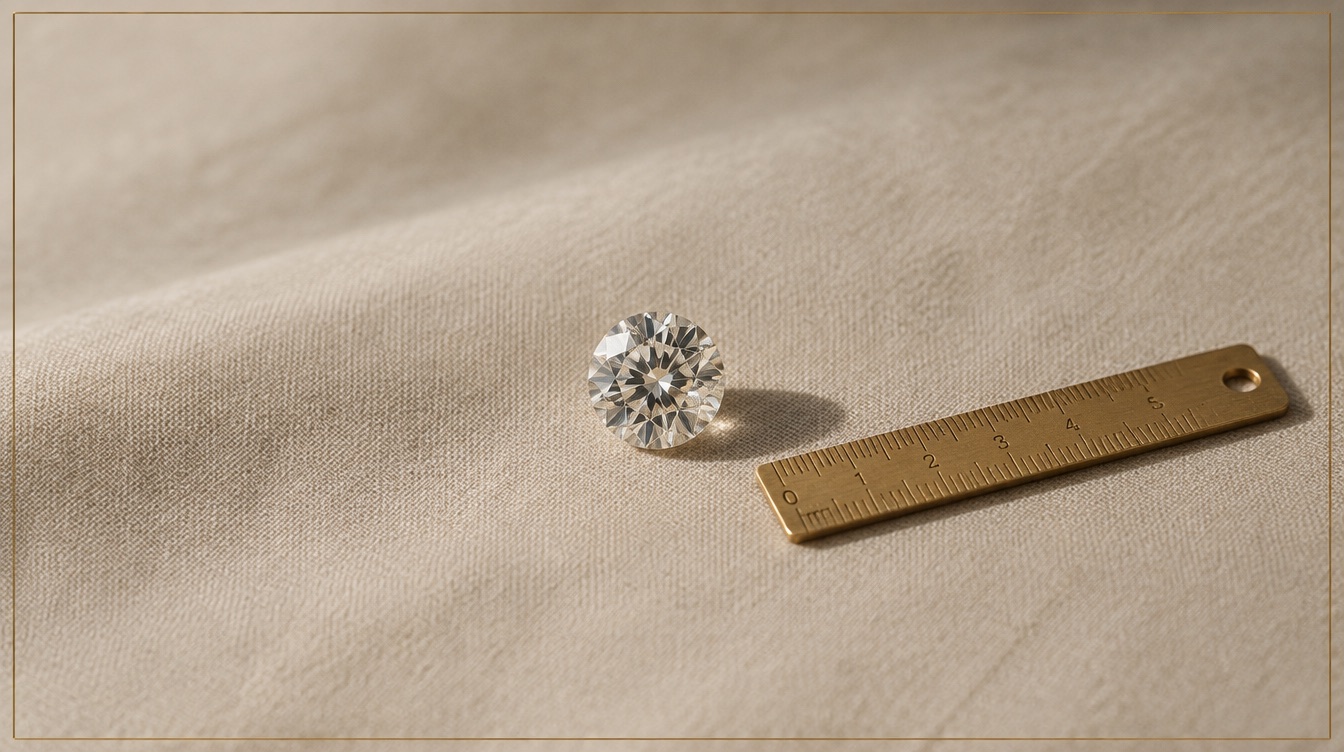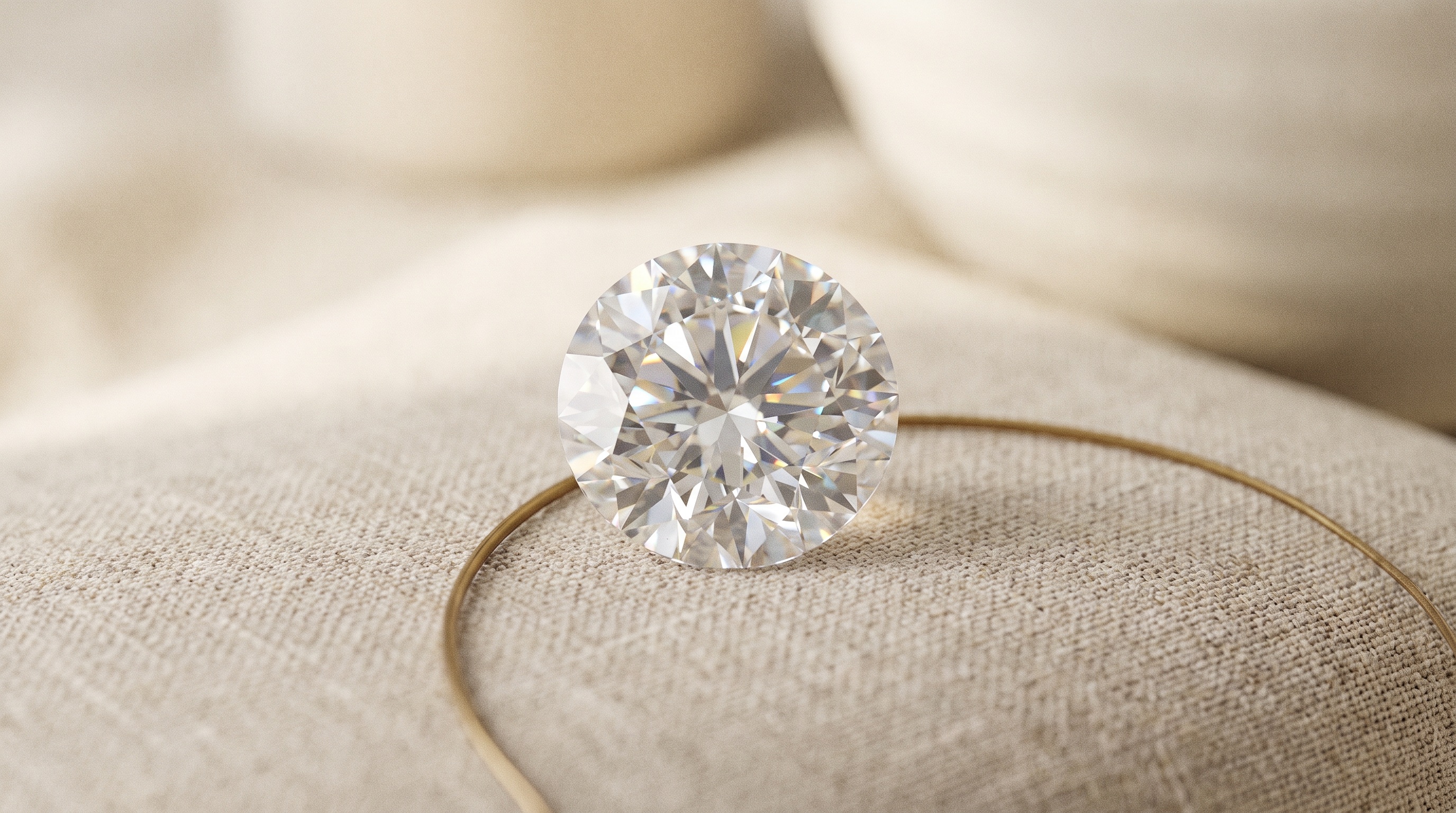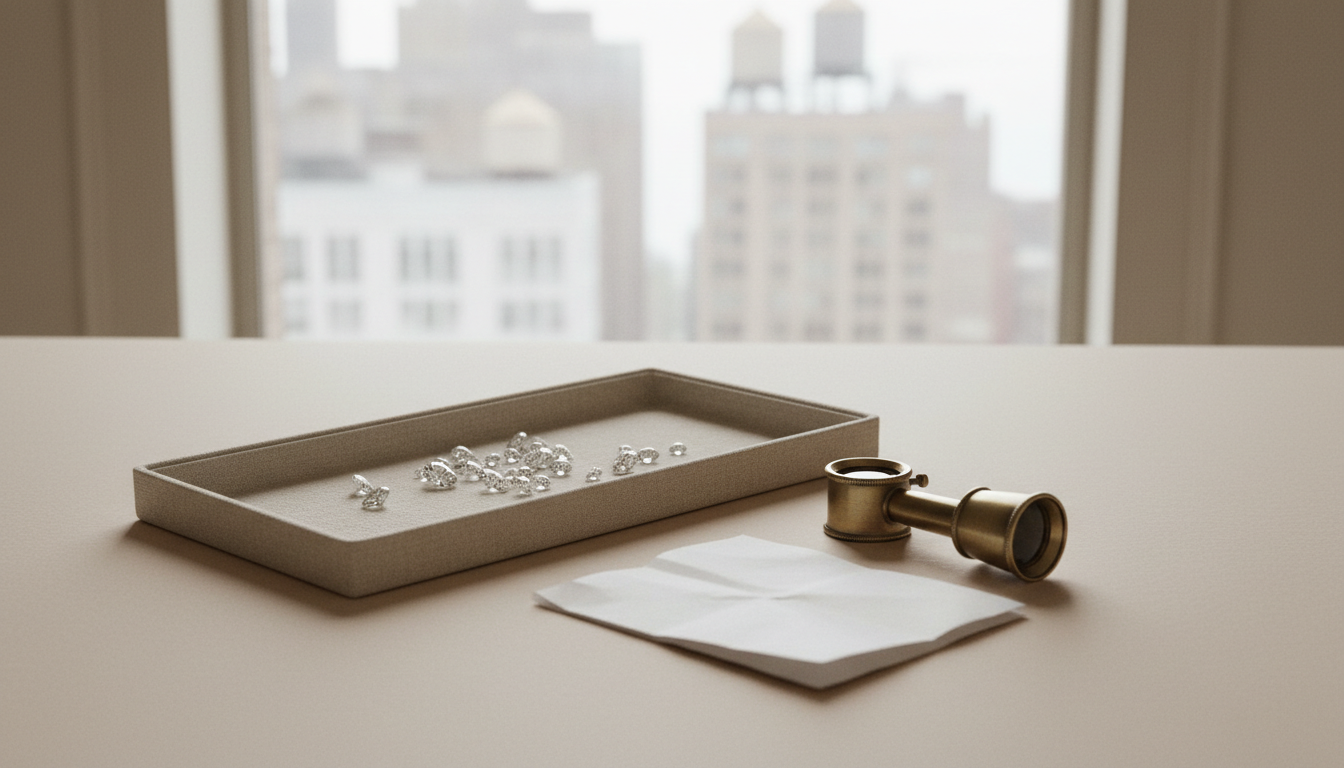
If you buy diamonds for a living in New York, you already know the strange truth about this business: the most concentrated diamond market in the Western Hemisphere sits on one block, and it is still genuinely difficult to build a reliable supply bench. West 47th Street between Fifth and Sixth Avenues holds hundreds of dealers, cutters, setters, and brokers stacked vertically in a handful of buildings. Walk it on a Tuesday afternoon and you will be offered lab-grown goods a dozen times before you reach the corner. Very little of that is a sourcing solution. Most of it is a single parcel, a single line, or a single opportunistic lot that will not exist the next time you need it.
This guide is written for the buyer who has outgrown that. Independent retail jewelers with a case to fill, designers building a signature collection, and manufacturers running repeat production all share the same problem: they need lab-grown diamonds in NYC that arrive to a known spec, in a known timeframe, from a vendor who will still have the same goods next quarter. That is a different question from "who has the cheapest 1.50 oval today," and it deserves a different answer.
Below is a practical breakdown of how the wholesale diamonds New York market actually works for trade buyers — how inventory tiers differ, what certification really buys you, why consistency matters more than a headline per-carat number, and how to structure sourcing so your bench stops eating your margin in coordination costs.
What "Wholesale" Actually Means on West 47th Street
The word "wholesale" does a lot of unearned work in this industry. In the NYC Diamond District, it can describe at least four completely different businesses, and confusing them is the single most common reason a buyer's sourcing goes sideways.
There is the broker, who owns nothing and earns a spread by locating goods across other people's inventory. There is the parcel trader, who buys opportunistic lots and sells them down, and whose assortment changes week to week by definition. There is the dealer with a book, who carries real depth in a narrow lane — say, rounds from 0.50 to 2.00 in a couple of color bands — and is excellent inside that lane and useless outside it. And there is the manufacturing supplier, who cuts, sets, and polishes, holds on-hand inventory across categories, and can reproduce a spec on demand.
All four will hand you a card that says wholesale. Only the last one can be a standing source. The distinction matters because a retail jeweler's actual need is almost never "one great stone." It is "this stone again, four more times this year, matched closely enough that my customer cannot tell which order it came from." Brokers and parcel traders structurally cannot promise that. It is not a character flaw; it is their business model.
When you are evaluating a diamond district wholesale relationship, the question to ask on the first meeting is not about price. It is: can you show me this same specification in stock, today, and will you have it in ninety days? The answer sorts the room quickly.
The NYC Buyer's Real Problem Isn't Price — It's Fragmentation
Most independent jewelers we talk to in New York are not overpaying per carat. They have been in the trade long enough to know the market and to negotiate competently. What is quietly costing them is the number of vendors it takes to fill one case.
A typical bench looks like this: one supplier for calibrated melee, a second for certified center stones, a third for anything in a fancy shape, a fourth for the occasional colored stone, a fifth for antique or period-style cuts, and a finishing house for mounting. That is six relationships, six sets of terms, six invoices, six shipments, six QC standards, and six separate opportunities for one late link to hold up a delivery.
The real cost shows up in three places. First, in staff hours — someone in your shop spends a meaningful part of every week chasing status. Second, in inconsistency: melee sourced from a different parcel trader each time produces visible variation in a pavé row, and the customer who notices it is the one who bought last year's piece. Third, in freight and insurance, which most buyers treat as fixed but which scales directly with the number of separate inbound shipments you accept.
Consolidation is not a soft benefit. One vendor, one shipment, one relationship changes the arithmetic of a small shop far more than another two percent off a stone. It is also the reason a supplier's breadth deserves as much scrutiny as its pricing — a supplier that covers antique cuts, fancy colors, fancy color melee, custom engagement rings, and finished jewelry from the same inventory is not offering you a longer catalog. It is offering you fewer moving parts.
The Two Inventory Tiers Every NYC Buyer Should Separate
Before comparing any two suppliers, separate what you are buying into two tiers. They are graded, priced, certified, and shipped under fundamentally different logic, and buyers who blur them end up frustrated by promises that were never actually made.
Tier one: certified loose stones, 0.30ct and up
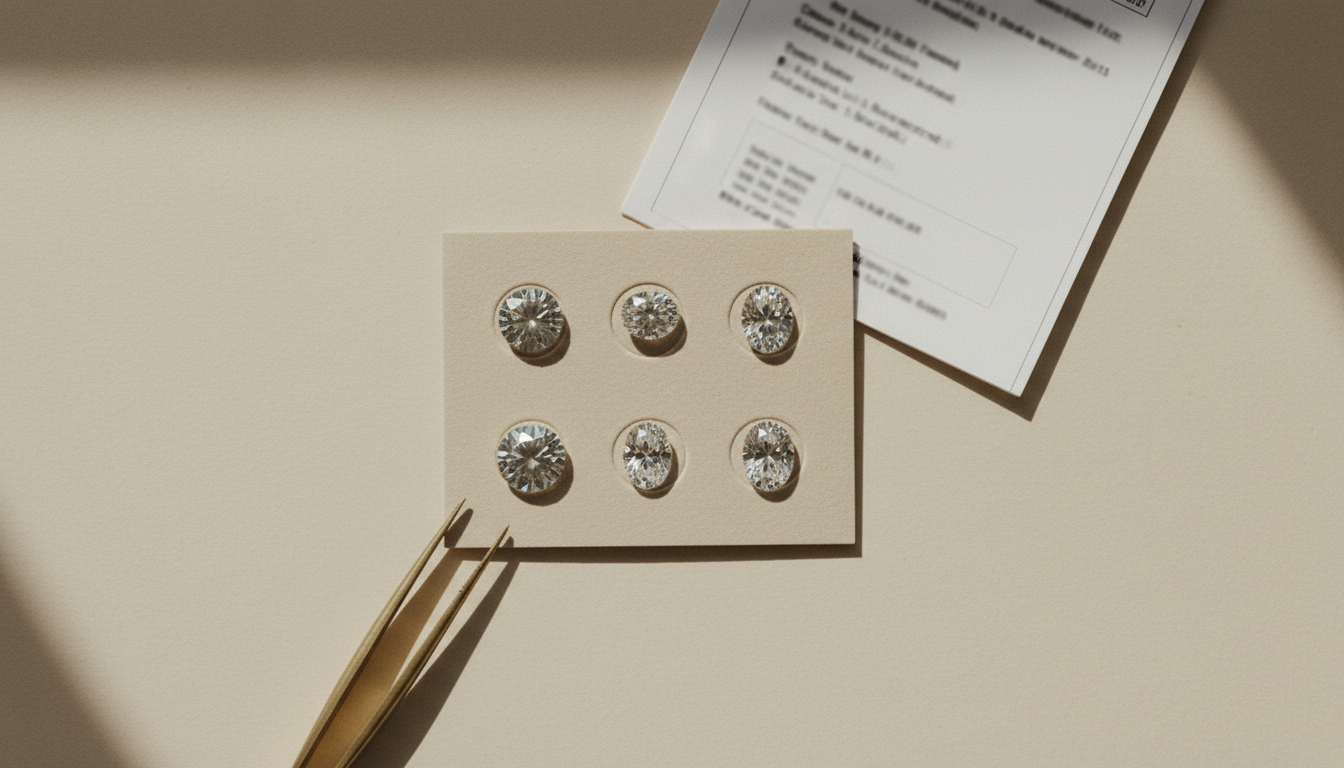
At 0.30ct and above, stones are individually certified — IGI or GIA — and bought against a specific report number. This is your center-stone and accent-stone tier. You are purchasing a document as much as a diamond: measured proportions, a stated color and clarity, a plotted clarity map where applicable, and an inscription you can verify. The report is what lets you sell with confidence, what lets your customer verify independently, and what makes an appraisal defensible.
Because each stone is individually reported, this tier is bought stone-by-stone rather than by the lot. The practical implication for a New York buyer is that availability language matters. A certified stone is either on hand and ready to ship, or it is not. There is no meaningful "we can make that in a few days" for a specific certified stone — the stone either exists in inventory with its report, or you are being sold a search. Ask which one you are getting.
Tier two: melee, sold as parcel goods
Melee operates on completely different rules, and this is where the most expensive misunderstandings happen. Melee is not individually certified, and it is not parcel-certified either. It ships as uncertified parcel goods sorted by sieve size, sold by the carat, and quality-controlled against a stated baseline rather than a per-stone document.
Anyone telling you their melee is "IGI parcel certified" is describing something that does not exist as a grading product. What you should be asking for instead is the QC baseline the parcel is sorted to. A serious supplier states it plainly — for example, a DEF-and-better color and VS-and-better clarity baseline — and then holds every parcel to it. That stated baseline, applied consistently across reorders, is worth more to a production shop than any document, because it is what makes your third tennis bracelet match your first.
The corollary: when you compare melee pricing between two wholesale diamonds New York vendors, you are not comparing like for like unless you have confirmed both baselines. A parcel sorted to a looser standard will always price better. It will also show it in the finished piece.

Certification: IGI, GIA, and GCAL — Choose Per SKU, Not Per Vendor
Buyers often adopt a single lab as house policy and then discover it constrains them at exactly the wrong moment. A more useful approach is to treat certification as a per-SKU decision driven by how the piece will be sold.
IGI is the volume standard for lab-grown and the most commonly encountered report on certified lab-grown goods in the New York market. For most retail sales, an IGI report is what your customer expects to see and what your point-of-sale is already built around.
GIA carries the strongest name recognition with consumers, which makes it valuable on higher-ticket center stones where the customer is doing their own research before they walk in. If your average center stone sale involves a spouse Googling from the parking lot, GIA earns its place.
GCAL is worth knowing about for a specific reason: its reports emphasize cut performance and include optical measurement, which gives you something concrete to talk about with a customer who cares about light return rather than a color-clarity grid. For designers selling on the strength of how a stone actually behaves, that is a genuinely different sales conversation.
The point is that a supplier who can offer IGI, GIA, and GCAL lets you match the report to the sale. A supplier locked to one lab forces every sale through the same story. When you are sourcing lab-grown diamonds in NYC for a mixed clientele — some price-driven, some brand-driven, some technically curious — that flexibility is a real operational asset, not a line on a spec sheet.
Why Growth Method Consistency Matters When You Reorder
Lab-grown diamonds reach the market through more than one growth process, and a buyer's instinct is to treat this as a technical footnote. For a one-off sale, it more or less is. For a jeweler placing recurring orders, it is not.
A catalog built entirely on CVD-grown material behaves predictably across reorders. The color character, the way stones sit in a color band, and the way they respond in a matched layout stay stable because the underlying material is stable. A catalog assembled opportunistically from whatever lots were available that month does not behave predictably, and the buyer absorbs that variance downstream — usually at the bench, usually under deadline, usually on a piece that already has a customer's name on it.
This is the least glamorous argument in favor of a manufacturing supplier over a parcel trader, and it is probably the most important one. Cutting, setting, and polishing under one roof means the specification you approved is the specification that gets executed, and the specification that gets executed is the one you can order again. Consistency is not a luxury feature for a production shop. It is the entire basis of being able to promise anything to a customer.
Antique Cuts: The Hardest Category to Source in New York
Ask around the district for a well-cut hexagonal or a properly proportioned old mine and watch how the conversation changes. Antique and period-style cuts are where the NYC diamond district supply chain thins out fastest, because they require cutting decisions that mainstream production explicitly optimizes away.
An old mine cut is not a badly cut cushion. It has a small table, a high crown, a deep pavilion, and often an open culet — proportions chosen for candlelight, not for a light-performance score. An old European round follows the same logic in a round outline. Get those proportions wrong and you do not get a vintage look; you get a modern stone that reads as poorly cut. That is why so few suppliers carry them properly, and why designers building period-inspired collections in New York end up hunting estate goods with all the inconsistency that implies.
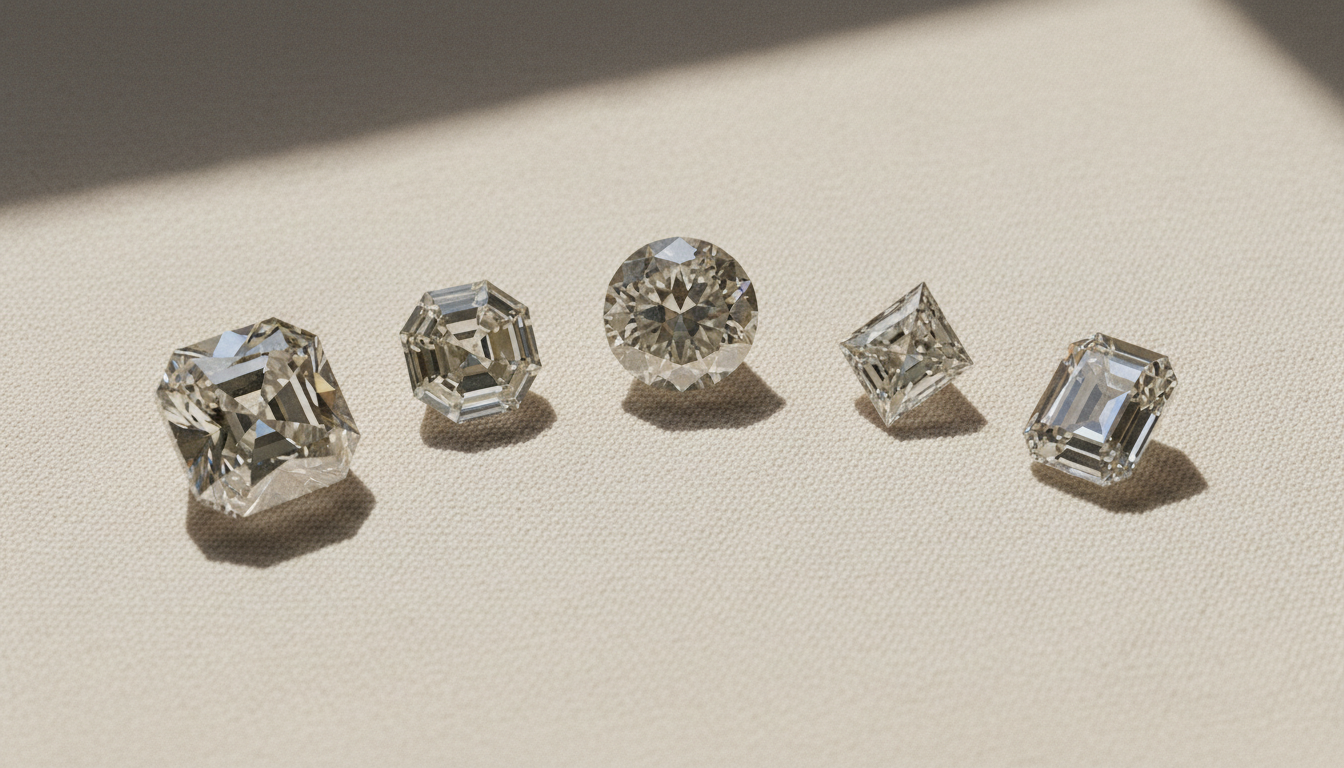
The full antique and specialty range worth knowing includes Old Mine, Old European, Hexagonal, Moval, Lozenge, Kite, Trillion, Criss-Cut, and Padparadscha cuts. These are the shapes that let a designer build something that does not look like everyone else's case. Sourcing them from a supplier who cuts in-house rather than one who resells found goods is the difference between designing a collection and assembling one from whatever turned up.
Separately, the mainstream fancy shapes — Emerald, Asscher, Cushion, Oval, Pear, Marquise, Radiant, Princess, and Heart — are the mid-market workhorses. Every serious supplier should carry them in depth. Judge a supplier on the antique range; judge their reliability on whether the mainstream shapes are consistently in stock. You can browse the specialty range on the exotic and fancy shapes pages and matched goods under matching pairs.
Fancy Color: A Narrow, Deliberate Range
Fancy color lab-grown loose stones at 0.30ct and above are available in four colors: yellow, pink, blue, and green. That is the honest range, and a buyer should be suspicious of a catalog that sprawls much wider.
The reason to keep the range narrow is repeatability. Each of those four can be produced to a consistent, reorderable color character. Champagne and cognac tones, by contrast, are frequently what a supplier calls off-color material after the fact — they are a description of an outcome, not a specification you can order twice. For a jeweler who wants a colored accent program that looks the same across a season, that difference is everything.
Fancy color melee follows the melee rules described above: parcel goods, sorted and QC'd rather than individually certified. It is one of the most effective ways to differentiate a case without moving up a price tier, and it is chronically under-stocked in New York because most suppliers treat color as a special order rather than standing inventory. Current fancy color loose stones are listed under fancy color loose diamonds.
Sourcing Logistics for a Diamond District Buyer
Geography is a genuine advantage here, and it is worth using deliberately rather than by habit.
Walk-in versus ship — and when each makes sense
If your shop is in one of the 47th Street buildings, you can physically see goods before you commit, which is the fastest way to resolve any question about color, make, or matching. Use walk-in for the decisions that genuinely need eyes: a center stone for a high-ticket commission, a matched pair, the first parcel of a new melee spec you intend to reorder. Once a spec is established and you trust the QC baseline, walking it becomes ceremony. Reorders should ship.
Guru Diam's New York office sits in the Diamond District at 36 West 47th Street, with a second US office in Los Angeles. That bicoastal footprint matters more than it sounds like it should: a New York buyer serving a West Coast client, or a designer who splits time between the two markets, is drawing on the same inventory and the same specs from either coast rather than starting a new vendor relationship for each. Same-day shipping runs from both offices.
Terms, memo, and the paperwork that actually slows deals down
For qualified trade buyers, memo terms are standard practice and worth establishing early, before you need them. The realistic bottleneck on a first order is rarely the diamonds — it is trade verification, references, and account setup. Start that process during a quiet week, not when a customer is standing in front of you asking about a three-carat oval.
One practical note for New York buyers specifically: because so much of the district runs on personal relationships and handshake speed, it is easy to end up with vendors who have no real account structure at all. That works until it doesn't — until you need an invoice history for an insurance claim, a reorder against a two-year-old spec, or a replacement stone for a repair. Ask what happens on the vendor's side when you need to reference a past order. If the answer involves someone's memory, plan accordingly.
From Loose Stones to Finished Jewelry Without Changing Vendors
The natural end point of consolidation is being able to move up and down the production chain with one supplier: buy loose when you want to control the setting, buy finished when you want the piece to arrive done.

For finished and custom work — engagement rings, wedding and eternity bands, tennis bracelets, studs and pendants — a 4-6 day turnaround on custom jewelry production is achievable when cutting, setting, and polishing happen in-house rather than being subcontracted across three shops. That is a finished-jewelry timeline specifically, and it is worth being precise about the distinction: loose stones are a question of what is on hand and ready to ship, not what can be produced to order. A supplier who blurs those two is setting you up for a conversation you do not want to have with a customer.
The strategic value for a small New York shop is optionality. High-margin commissions where the design is the product stay in-house on your bench. Repeatable case-fill pieces — the bands, the studs, the classic tennis bracelet — get produced by the supplier, arrive finished, and free your bench time for the work that actually differentiates you. You do not have to choose one model for the whole business. See custom jewelry for how the finished side is structured.
How to Vet a Wholesale Diamond Supplier in New York
Here is the vetting sequence that actually predicts whether a relationship will hold up, in the order worth asking:
- "Is this in stock right now, or are you finding it?" The single most clarifying question in the district. On-hand inventory and brokered searches are different products sold at the same counter.
- "What is your melee QC baseline?" If the answer is a specific color and clarity floor rather than an adjective, you are talking to someone who sorts. If the answer includes the phrase "parcel certified," you are not.
- "Which labs can you supply?" IGI, GIA, and GCAL availability lets you match the report to the sale rather than forcing every sale through one story.
- "Can I reorder this exact spec in six months?" This separates manufacturers from traders faster than any other question, and it is the one most buyers forget to ask until the reorder fails.
- "How many categories can you cover?" Count the vendors this relationship could replace. Antique cuts, fancy colors, fancy color melee, custom engagement rings, and finished jewelry from one source is five fewer relationships to manage.
- "What does your account structure look like?" Order history, invoice retrieval, memo terms, and a named contact who is not the only person who knows your file.
- "Where do you ship from?" Domestic origin matters for lead time and for customs-free simplicity. Shipping from New York and Los Angeles rather than internationally removes an entire category of delay from your calendar.
Notice what is not on that list: price. Price is the easiest thing to compare and the least predictive of whether the relationship works. You will find out about price in the first five minutes regardless. Spend your questions on the things you will only discover in month six.
Building a Reorder Rhythm That Survives Q4
The difference between shops that scale and shops that stay stuck is usually not merchandising talent. It is whether their sourcing runs on a rhythm or on emergencies.
A rhythm looks like this. You identify the twelve to twenty SKUs that represent the bulk of your case turnover — the sizes and specs that genuinely repeat. You establish those as standing specs with your supplier, with a documented QC baseline for the melee and a defined size and quality band for the certified stones. You reorder against those specs on a schedule tied to your actual sell-through, not to when you notice a gap in the case.
Everything outside those twenty SKUs is a one-off, and one-offs are fine — they are often where the margin is. But they should be the exception layered on top of a stable base, not the entire operating model. Shops that run entirely on one-offs spend Q4 in a permanent state of expediting, and they pay for it in freight, in rush charges, and in the specific misery of telling a customer their piece will not be ready.
The supplier's role in this is to be boring in the right ways: same specs available, same QC baseline held, same account, same shipping origin. Boring is the product. A buyer who has to re-solve their supply chain every quarter does not have a supply chain — they have a recurring project.
If You're a New York Designer Outside the District
Not every New York jewelry business operates out of 47th Street. A large and growing share of the city's designers work from studios in Brooklyn, Long Island City, and the Garment District, sell direct or through galleries and boutiques, and have no particular reason to spend half a day walking the district's buildings.
For that buyer, the district's advantage is not proximity — it is that a domestic New York supplier collapses the timeline. Goods ship the same day from a US office rather than clearing customs. Questions get resolved inside your working hours rather than on a twelve-hour lag. And when a commission goes sideways and you need a replacement stone matched to something you bought four months ago, you are calling someone who can pull the spec, not someone in a different time zone who will get back to you.
The practical setup for a studio designer is straightforward: establish the account and terms before your first real deadline, order loose for the pieces where your hand on the bench is the point, and use finished production for the repeatable inventory that funds the studio. You get the district's supply depth without the district's overhead. That is the actual argument for buying wholesale lab-grown diamonds in New York rather than sourcing offshore for a slightly better per-carat number — the number rarely survives contact with the timeline.
Frequently Asked Questions
Do I need a business license to buy wholesale diamonds in NYC?
Yes. Wholesale diamond suppliers in New York sell trade-only, which means you will need to verify your business before an account is opened — typically a business registration or resale certificate, and often trade references. This is standard and not a formality: it is how suppliers maintain wholesale pricing without competing against their own customers at retail. Start the verification process before you have an urgent order, because account setup is almost always the slowest step in a first transaction, not the diamonds themselves.
Is melee certified, and what should I ask for instead?
Melee is not individually certified, and there is no such thing as a "parcel certified" grading product despite the phrase circulating in the market. Melee ships as uncertified parcel goods sorted by sieve size and sold by the carat. What you should ask for instead is the supplier's stated QC baseline — the color and clarity floor every parcel is sorted against, such as a DEF-and-better, VS-and-better standard. A consistently held baseline is what makes your reorders match your original piece. Individual certification begins at 0.30ct and above, where stones carry IGI or GIA reports.
What is the difference between buying loose stones and buying finished jewelry from the same supplier?
They run on different clocks and should be evaluated separately. Loose stones are an inventory question: the stone is either on hand and ready to ship, or it isn't. Finished and custom jewelry is a production question, with a 4-6 day turnaround achievable when cutting, setting, and polishing are done in-house rather than subcontracted. The useful strategy for most shops is to buy loose for commissions where the setting work is your differentiator, and buy finished for the repeatable case-fill pieces that would otherwise consume bench hours without adding margin.
Which grading lab should I choose for lab-grown diamonds — IGI, GIA, or GCAL?
Choose per sale rather than adopting one lab as blanket policy. IGI is the volume standard for lab-grown and matches what most retail customers expect to see. GIA carries the strongest consumer name recognition, which earns its premium on higher-ticket center stones where the buyer is researching independently. GCAL emphasizes cut performance and optical measurement, which gives you a concrete light-return conversation rather than a color-clarity grid — useful for designers selling on how a stone behaves. A supplier who offers all three lets you match the report to the customer.
Why are antique cuts so hard to source from most NYC wholesalers?
Because they require cutting decisions that volume production deliberately eliminates. An old mine or old European cut needs a small table, high crown, deep pavilion, and often an open culet — proportions optimized for candlelight rather than for a modern light-performance score. Most suppliers who list antique cuts are reselling found or estate goods, which means inconsistent proportions and no ability to reorder a match. Sourcing from a supplier that cuts in-house is what makes a period-inspired collection reproducible rather than a series of lucky finds.
Is it worth consolidating vendors, or should I keep multiple suppliers for leverage?
Multiple suppliers make sense as price leverage on commodity goods you buy in volume — mainstream round certified stones, for instance. They stop making sense everywhere else, because the coordination cost is real and mostly invisible: staff hours chasing status across six vendors, visible inconsistency when melee comes from a different parcel each time, and freight and insurance that scale with the number of separate inbound shipments. The practical middle ground most shops land on is a primary supplier broad enough to cover antique cuts, fancy colors, fancy color melee, custom rings, and finished jewelry, plus one secondary source kept active for price-checking the commodity lane.
Sourcing Lab-Grown Diamonds Wholesale in NYC
The New York market rewards buyers who stop shopping and start sourcing. That shift — from hunting individual deals to establishing standing specs with a supplier who can actually reproduce them — is what separates a shop that scales from one that spends every quarter rebuilding its own supply chain from scratch.
Guru Diam supplies trade buyers from offices in the New York Diamond District and Los Angeles, with 2,000+ active customer accounts across independent retailers, designers, and manufacturers. Cutting, setting, and polishing are handled in-house, which is what makes a spec reorderable six months later. IGI, GIA, and GCAL reports are all available. One vendor, one shipment, one relationship — covering antique cuts, fancy colors, fancy color melee, custom engagement rings, and finished jewelry.
Browse certified loose diamonds ready to ship →
Also worth a look: the wholesale hub for a full category overview, melee diamonds for calibrated parcel goods, and round melee pointers for sized round goods.
GURU DIAM · NEW YORK · LOS ANGELES