Natural vs Lab-Grown Melee: Price Comparison by Size
Size for size and grade for grade, natural melee costs more than lab-grown melee — that's a well-documented, industry-wide pricing pattern, not a Guru Diam markup. Guru Diam's current natural melee sell prices run roughly $370 to $900 per carat depending on size, color, and clarity (full table below). Lab-grown melee is typically priced meaningfully lower at the same size and grade; we don't publish a fixed lab-grown melee rate card in this post, since lab-grown pricing moves with production costs — message us for a current quote.
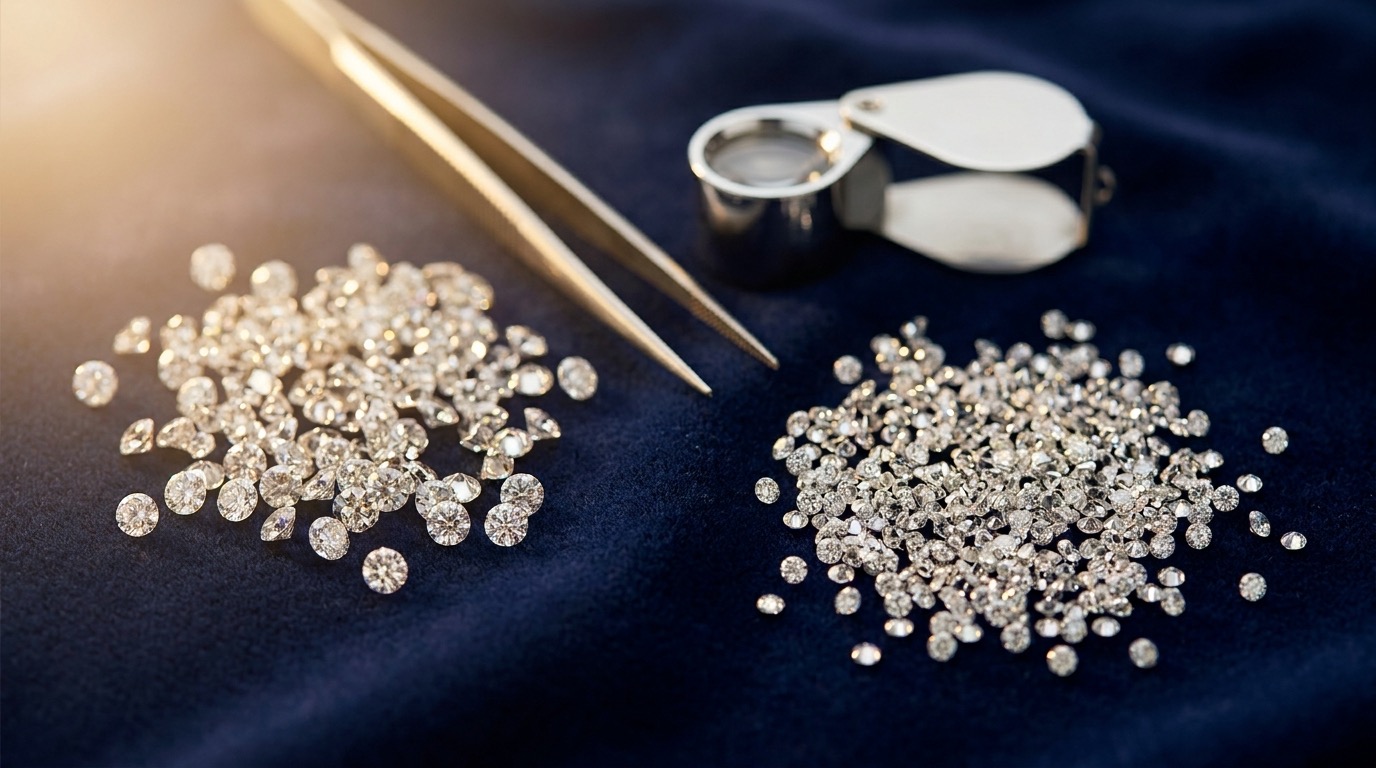
Why Is Natural Melee More Expensive Than Lab-Grown Melee, Size for Size?
The price gap comes down to supply, not quality. Natural melee is cut from mined rough — every parcel represents diamond that had to be found, extracted, and cut from material nature made over geologic time. That supply is fixed and shrinking; it can't be scaled up to meet demand. Lab-grown melee is grown to spec in a controlled facility, and production capacity can expand as demand grows. That's the entire driver of the price difference across the trade — it's a supply-side economic fact, not a statement that one stone looks or performs better than the other.
Chemically and optically, natural and lab-grown melee are the same material: both are diamond, not a diamond simulant. A lab-grown stone isn't a "lesser" diamond that costs less because it's inferior — it costs less because it can be produced on demand instead of mined finite rough. That distinction matters when you're explaining a price gap to a customer: the discount on lab-grown isn't a quality discount, it's a scarcity discount running in reverse.
This is also why the gap isn't static. Natural melee pricing moves with rough diamond markets and mining supply. Lab-grown melee pricing has moved a different direction over the past several years, trending down as production technology and capacity have scaled — which is part of why we quote lab-grown melee live rather than publishing a fixed table for it here. Natural pricing, by contrast, has held to a more stable size-and-grade structure, which is why we can publish the full natural rate sheet below.
What Does Natural Melee Cost, by Size and Grade?
Guru Diam's current natural melee sell prices, per carat, as of August 2026:
| Size (mm) | EF VS | EF SI | GH VS | GH SI |
|---|---|---|---|---|
| up to 1.20 | — | — | $480 | $450 |
| 1.20–1.70 | — | — | $390 | $370 |
| 1.70–2.20 | $450 | $420 | $417.50 | $400 |
| 2.30–2.60 | $510 | $480 | $447.50 | $430 |
| 2.70–2.80 | $625 | $595 | $565 | $547.50 |
| 2.90–3.00 | $680 | $650 | $592.50 | $575 |
| 3.50 | $700 | $670 | $602.50 | $585 |
| 4.00 | $900 | $870 | $855 | $840 |
Treat every figure as approximate, per carat, and confirmed at quote — melee is priced per parcel against sieve bands in this trade, not sold off a fixed SKU, so exact-to-the-cent numbers sight unseen are false precision. The dashes in the EF column below 1.70mm aren't a gap in formatting — no vendor in the market quotes a genuine E color at that size, so we don't fill that row with a guess.
Two patterns hold across the table, and they hold for lab-grown melee too, even without a published number to compare: price per carat rises with size, because larger rough is scarcer and more of it is lost to cutting, and EF commands a premium over GH at every size where both are quoted, with VS commanding a premium over SI within each color. Round natural melee is currently priced 0.8mm to 4.0mm — sizes above 4.0mm aren't yet sourced on this line.
How Does Lab-Grown Melee Price Compare at the Same Sizes?
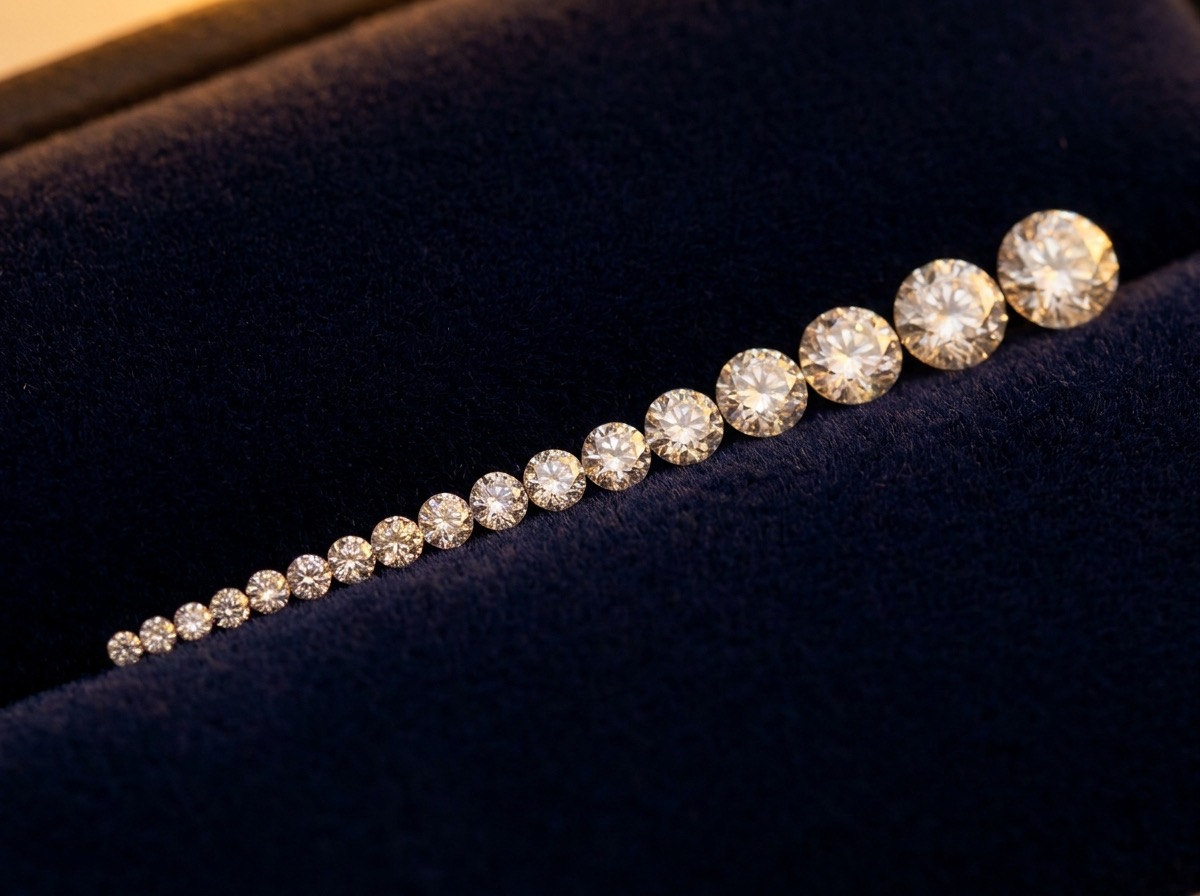
Lab-grown melee is typically priced lower than natural melee at the same size and grade — that's a consistently reported pattern across the trade and one you'll see echoed by pricing sources throughout the industry, not a Guru Diam-specific claim. We're not publishing an exact lab-grown $/ct figure in this post, because lab-grown melee pricing shifts with production costs more often than natural pricing does, and a number printed today could be stale by the time you're placing an order. Guru Diam runs a separate CVD lab-grown melee line with its own current pricing — message us on WhatsApp or through Contact for today's lab-grown rate at your size and grade, quoted alongside the natural table above so you can compare both side by side.
What we can say directionally, because it's well-established trade knowledge rather than a specific quote: lab-grown melee commonly runs at a substantial discount to natural at equivalent size and grade — general industry pricing coverage has put that gap in a wide range, often cited around 40-70% lower, though the real number for any given order depends on current supply, the specific size, and the grade you're comparing. Don't treat that range as a Guru Diam number; treat it as context for why the two line items on a quote can look very different even when the stones are the same size.
Why Isn't a Direct Apples-to-Apples Comparison Always Simple?
Two structural differences make a clean side-by-side harder than it looks. First, the size ranges don't fully overlap: Guru Diam's natural melee covers 0.8mm to 4.0mm, while our lab-grown melee line runs a wider range. If you're pricing a large accent stone above 4.0mm, there's no natural number on our current list to compare against at all — lab-grown is the only option we quote at that size today.
Second, the grade structures don't line up one to one. Natural melee is quoted across a 2-by-2 grid — EF and GH color, each in VS and SI clarity — giving four distinct grade combinations, each with its own price. Guru Diam's lab-grown melee line runs its own default quality band, which is a different grading structure than the natural grid. That means "lab-grown melee" and "GH SI natural melee" aren't automatically the same comparison point — you need to confirm which grade band you're actually pricing against on each side before treating a price difference as apples to apples.
The practical fix is simple: when you request a comparison quote, specify the exact millimeter size and the exact grade you want priced on both the natural and lab-grown side, rather than asking for "melee pricing" in general. A vague request gets you two numbers that aren't actually comparable; a specific request gets you a real answer.
Here's where that trips people up in practice: a buyer comparing "natural GH SI" against "lab-grown melee" without specifying a lab-grown grade is really comparing an SI-clarity natural stone against an unknown-clarity lab-grown stone — the numbers might look close or far apart for reasons that have nothing to do with origin. State both size and grade every time you ask for a comparison, and ask the supplier to confirm what grade band their lab-grown quote is actually built on before you compare it to a natural row on the table above.
How Does the Price Gap Change as Size Increases?
In dollar terms, the gap between natural and lab-grown melee tends to widen as size increases, and that pattern shows up consistently across industry pricing data. The logic follows directly from what drives natural pricing: rough scarcity compounds with size, since larger clean rough is exponentially rarer than smaller rough, and more carat weight is lost cutting a larger stone to shape. Lab-grown production cost per carat also rises with size, but far more gradually, since it isn't gated by how much large rough nature happened to produce.
You can see the shape of this in the natural table alone: price per carat roughly doubles from the smallest sieve band to 4.00mm within the same grade. If lab-grown pricing rises more gradually across that same size range — which is the general pattern reported across the trade — the dollar gap between the two lines gets larger, not smaller, as you move toward 4.0mm and beyond. For an eternity band or tennis bracelet spec'd at larger stones, that means the natural-vs-lab-grown decision carries more weight on total job cost than it does on a small pavé job using sub-1.5mm goods.
We'd rather you confirm the actual gap at your size against a live quote than plan a job around a percentage pulled from general trade reporting — ask for both numbers at the specific size you're speccing.
Do Color and Clarity Grades Move the Price Gap?
Within natural melee, the pattern is consistent and visible directly in the table: EF costs more than GH at every size where both are quoted, and VS costs more than SI within each color. The premium for EF over GH runs roughly 5-10% at most sizes, tightening slightly at the largest sizes; VS over SI runs a smaller, steadier premium throughout.
Lab-grown melee grades on its own quality band, separate from the natural EF/GH VS/SI grid, so a like-for-like grade comparison isn't as direct as comparing two rows in the same table. What we can say generally — consistent with how melee is graded and priced across the trade — is that higher color and clarity commands a premium in lab-grown melee too, the same directional pattern as natural, even though the two lines don't share a grading scale. If grade-driven cost is a real factor in your sourcing decision, the cleanest approach is asking for quotes at the specific grade combination you actually need on both lines, rather than assuming the natural grade premium percentages carry over directly to lab-grown.
How Do You Turn Per-Carat Pricing Into an Actual Job Cost?
The table gives you $/ct, but a job is priced in total dollars, so the conversion matters. Take a halo job calling for 2 total carats of 2.00mm GH VS natural melee: at $417.50/ct, that's roughly $835 in stone cost before labor, setting, and the center stone. Move to a tennis bracelet calling for 5 total carats at 2.90mm EF VS: at $680/ct, that's $3,400 in stone cost alone. The per-carat number only becomes useful once you multiply it against the actual total carat weight your job calls for — which is exactly why we ask for total carats, not stone count, when you request a quote.
Running the same two jobs in lab-grown melee at the same size and grade would put the stone-cost line meaningfully lower, consistent with the general discount pattern discussed above — but we won't turn that into a specific dollar figure here, because the honest answer depends on a live lab-grown quote, not a percentage applied to the natural number. What we'd recommend instead: price the job both ways before you commit to a material, using two real quotes rather than one quote and one estimate. On a small pavé repair, the natural-vs-lab-grown stone-cost gap might not move the needle once labor is factored in. On a tennis bracelet or full eternity band at larger sizes, it can be the difference between a job that pencils out and one that doesn't.
One more variable worth building into any budget: stone cost is rarely the only line item. Setting labor, mounting cost, and any custom work scale with piece count and complexity, not with whether the melee is natural or lab-grown — so a lower stone cost on the lab-grown side doesn't automatically mean a proportionally lower total job cost. Factor both into your margin before quoting a customer.
Should Price Alone Decide What You Stock?
Price is one input, not the whole decision. A lower per-carat cost on lab-grown melee matters less if your customer expects natural stones to match a natural center stone, or if your shop's positioning is built around natural goods — mixing origins on one piece without clear disclosure is a compliance problem, not just a branding one. Conversely, a shop running production or fashion lines where cost per piece drives margin may find the lab-grown discount changes the math on a job that wouldn't pencil out at natural pricing.
Origin disclosure is a legal requirement in the US regardless of which line you stock — that's true whether the price gap is small or large. Durability, optics, and how each performs once set are effectively identical between the two, since they're the same material; the decision usually comes down to customer expectation, price point, and what the rest of the piece is made of, not a performance trade-off.
For the full decision framework beyond price — origin, disclosure, resale positioning, and when each line makes sense for a given job — see our natural vs. lab-grown melee comparison guide. This post is deliberately scoped to price; that one covers the rest of the picture.
How Do You Get an Exact Side-by-Side Price Quote?
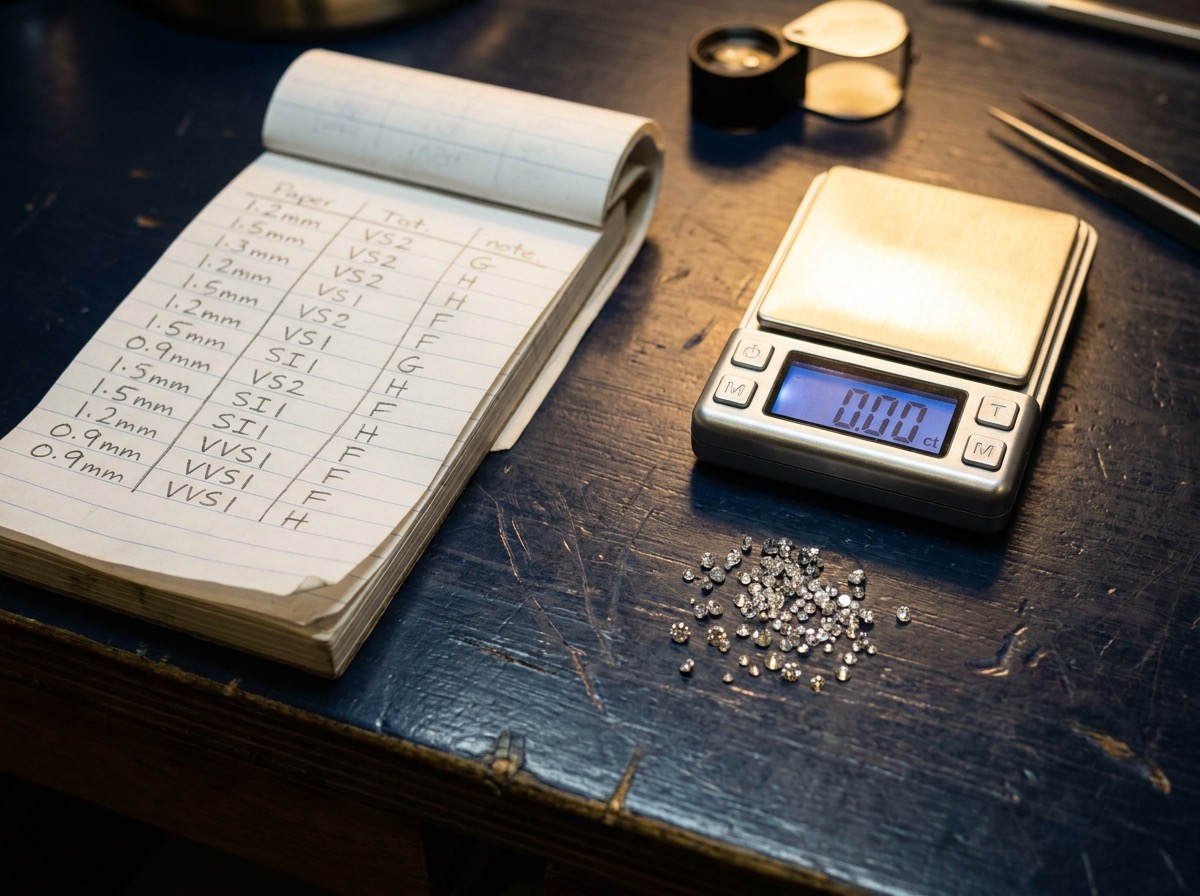
Because both natural and lab-grown melee are quoted per parcel rather than sold off a fixed SKU, the only way to get a real comparison is to request both quotes against the same spec. Have this ready before you reach out:
- Millimeter size (or a tight range) — the actual number your mounting calls for.
- Color and clarity grade you're targeting on each line — natural EF/GH VS/SI, and whatever grade you need on lab-grown.
- Total carat weight the job requires, so both quotes reflect real order volume, not a per-stone estimate.
- Which line(s) you want priced — natural only, lab-grown only, or both side by side for comparison.
Send that spec to Guru Diam over WhatsApp or through Contact, and you'll get confirmed current pricing on whichever line(s) you're comparing — a real quote against real available stock on both product lines, not a table lookup or a percentage pulled from general trade data.
What Should You Watch for When Comparing Melee Prices Across Sources?
A handful of things quietly distort a price comparison if you're not checking for them. Mismatched size or grade. A cheap listing at a smaller size or a lower grade isn't actually a better price than your natural quote — it's a different spec. Always confirm the exact millimeter size and grade behind any number before comparing it to another quote. Exact-to-the-cent pricing sight unseen. Melee is quoted per parcel against sieve bands industry-wide; a number that reads as precise to the penny without a parcel behind it is a placeholder, not a real quote. Certification claims on melee. Stones this small aren't individually or parcel-certified anywhere in the trade — certification cost exceeds stone value below roughly 0.20ct. A listing claiming "certified melee" at this size is worth a second look. Origin verification. Natural and lab-grown stones are visually indistinguishable to the naked eye, so a supplier's price claim on either line is only as trustworthy as their screening process behind it.
The most reliable comparison is the boring one: get both quotes from the same source, against the same size and grade, on the same day. That controls for everything except the one variable you're actually trying to measure — origin.
How Fast Can Orders Ship Once You Decide?
Guru Diam operates two wholesale trade desks — New York (36 West 47th Street, Suite 601A, New York, NY 10036) and Los Angeles (607 S Hill Street, Suite 241, Los Angeles, CA 90014). Orders placed before 6pm EST out of New York ship same day; orders placed before 4pm PST out of Los Angeles ship same day. That applies whichever line you land on, natural or lab-grown, once your quote is confirmed.
Because both lines move as parcel goods rather than pre-boxed SKUs, same-day shipping still depends on the parcel being in stock at your exact size and grade — confirm availability at quote time, and flag any deadline you're working against when you place the order.
Frequently Asked Questions
Is lab-grown melee always cheaper than natural melee at the same size?
As a general rule, yes — lab-grown melee is typically priced lower than natural melee at equivalent size and grade, a well-documented pattern across the trade. The exact gap varies by size, grade, and current supply on both sides, so confirm both numbers at quote rather than assuming a fixed percentage.
How much does natural melee diamond cost per carat?
Guru Diam's current natural melee sell prices run roughly $370 to $900 per carat depending on size (0.8mm-4.0mm) and grade (EF/GH color, VS/SI clarity), confirmed at quote. See the full pricing table above for the size-by-size breakdown.
Why is natural melee more expensive than lab-grown melee?
The gap comes from supply, not quality — natural melee comes from finite mined rough, while lab-grown melee is produced to spec with scalable capacity. The two materials are chemically and optically identical diamond; the price difference is a scarcity difference, not a performance difference.
Does the natural-vs-lab-grown price gap change with size?
Generally, yes — the dollar gap tends to widen at larger sizes, since natural rough scarcity compounds with size more sharply than lab-grown production cost does. This is a directional industry pattern; confirm the actual gap at your specific size against a live quote.
Can I get an exact price comparison between natural and lab-grown melee for my job?
Yes — send Guru Diam your millimeter size, target grade, and total carat weight over WhatsApp or Contact, and you'll get current pricing on both lines quoted against the same spec, so the comparison is a real one rather than an estimate.
Does a lower price mean lab-grown melee is lower quality?
No. Natural and lab-grown melee are the same material — diamond — graded on the same fundamentals of color, clarity, and cut quality. The price difference reflects how each is sourced (mined vs. produced to spec), not a difference in what you're setting into a piece.