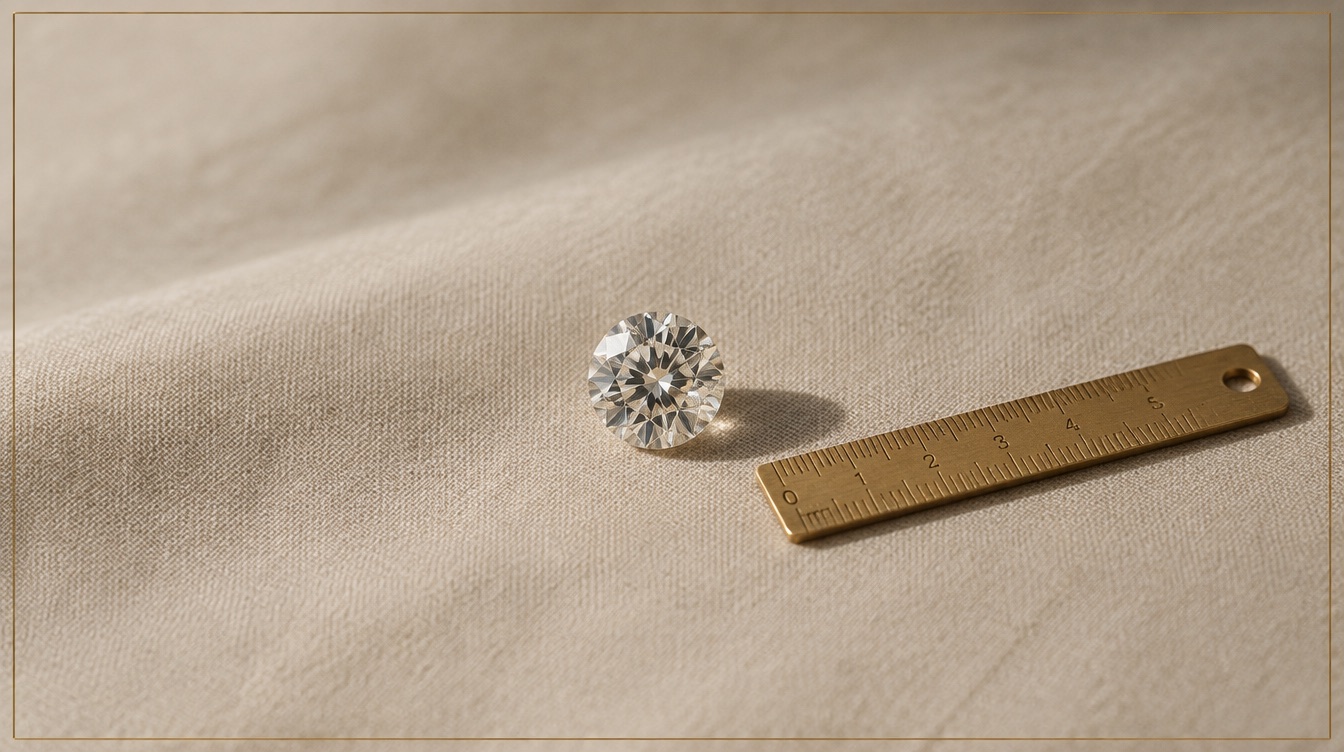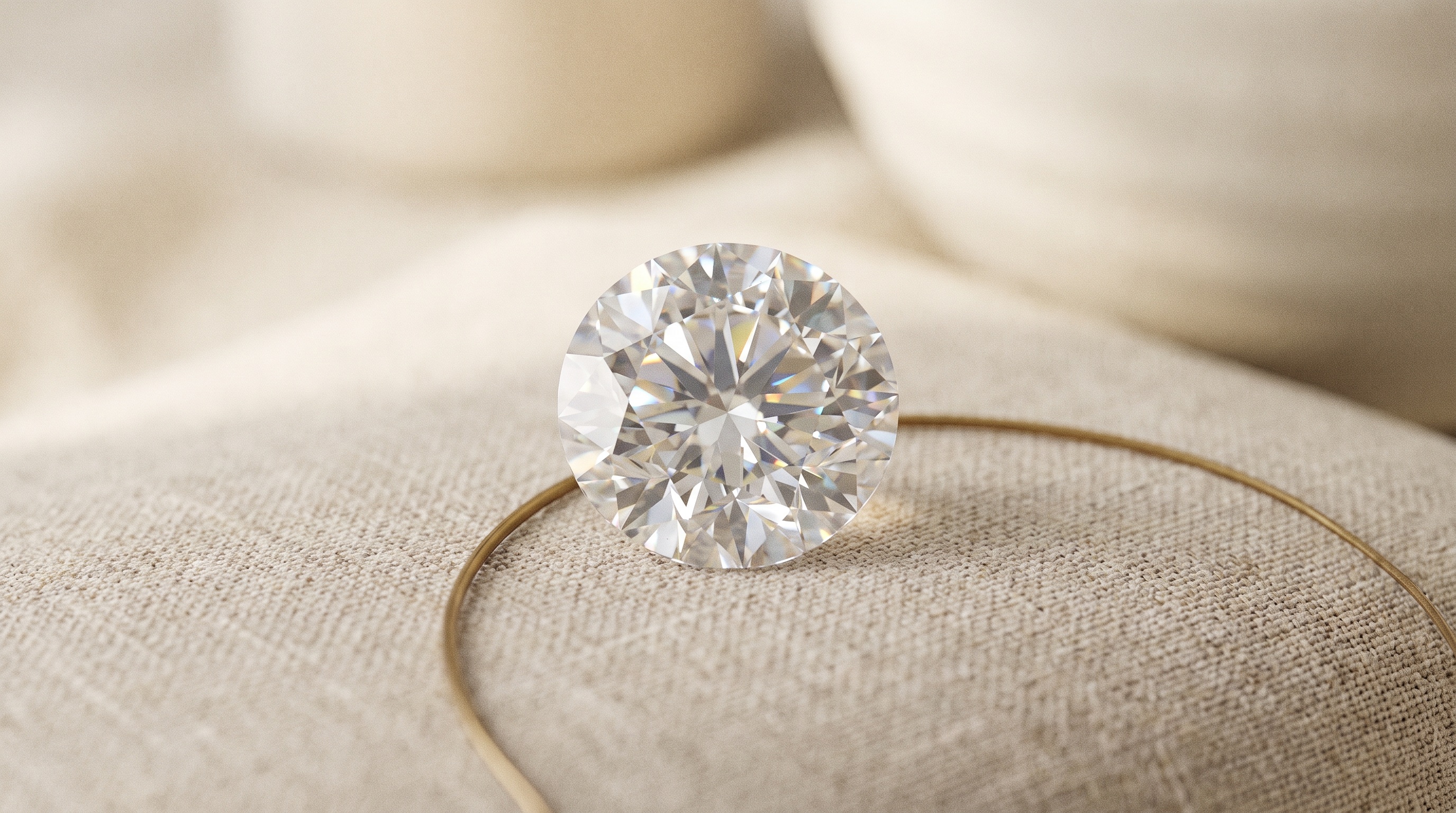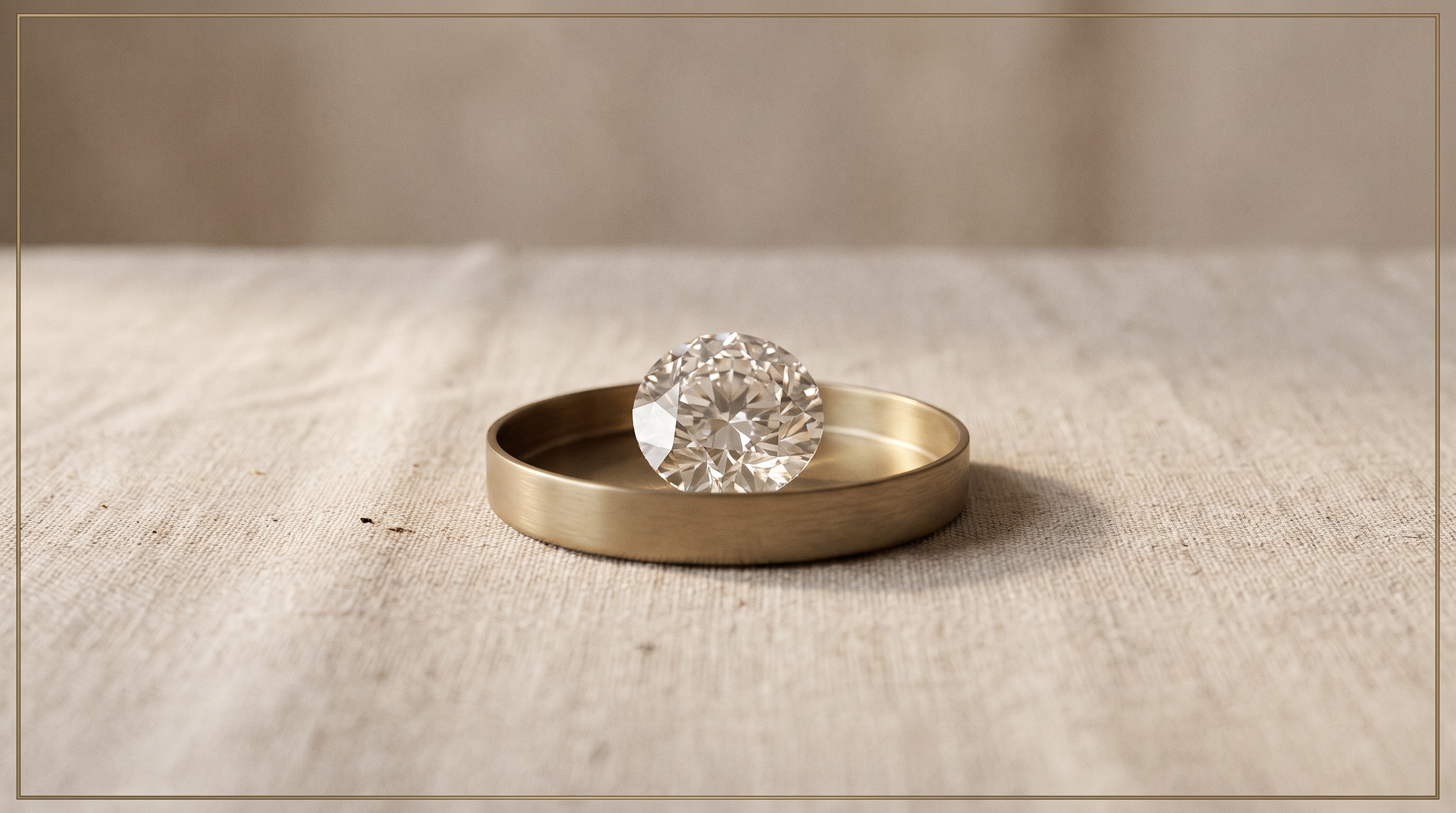
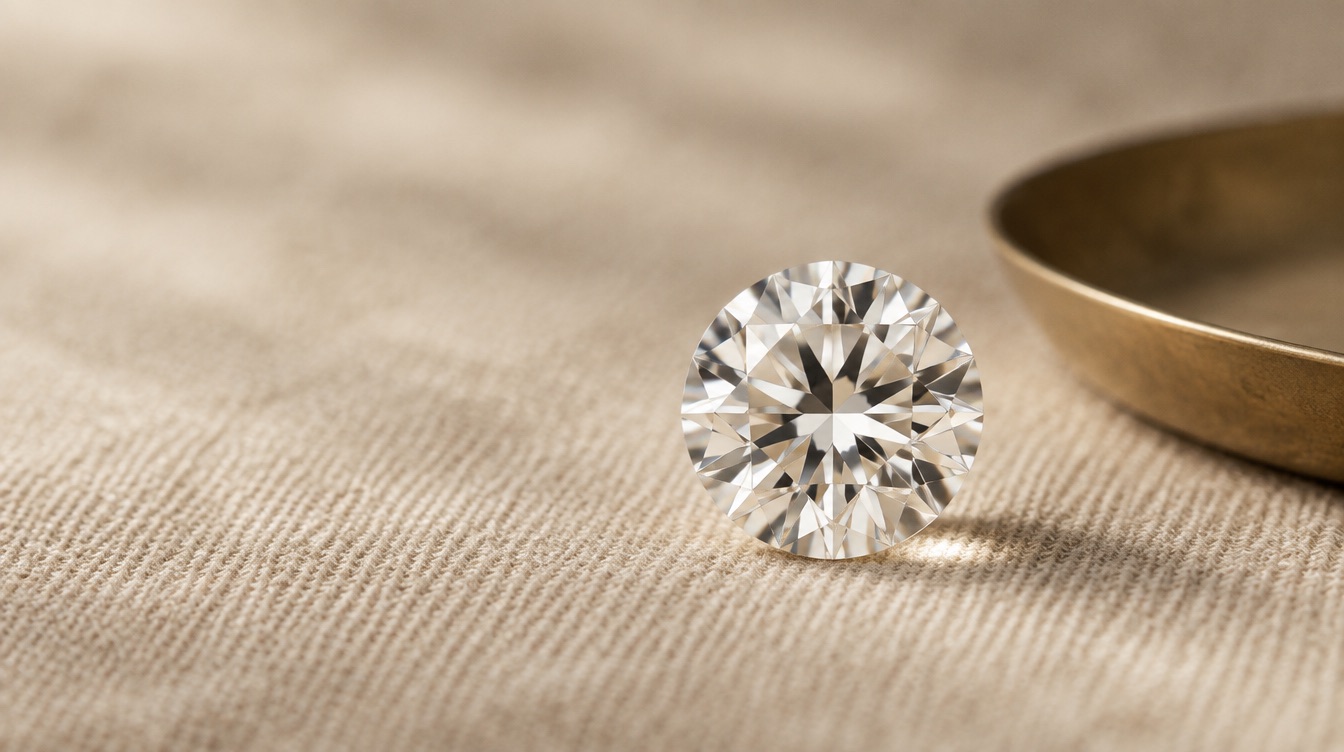
A 6.0mm round brilliant diamond weighs approximately 0.75 to 0.80 carat, not the full carat many buyers assume when they see that number. The two figures get conflated constantly because 6.0mm sits so close to the classic "1-carat look" — a well-cut round brilliant needs closer to 6.4–6.5mm in diameter to actually reach 1.00 carat, and that half-millimeter gap is where a lot of sourcing confusion starts.
Unlike the smaller millimeter sizes typically discussed as melee or accent stones, 6mm sits squarely in center-stone territory — this is the size range jewelers spec for a solitaire, a halo centerpiece, or the main stone in an engagement ring build. That changes what actually matters when sourcing it: color, clarity, and cut grade carry far more weight on a focal stone than they do on an accent diamond buried in a pavé line. This guide covers what a 6.0mm round brilliant actually weighs, why it's become such a common reference point for buyers comparing it against the "1 carat" benchmark, what changes about sourcing once a stone is doing the visual work of a centerpiece rather than a supporting player, and how the same millimeter-to-carat logic breaks down entirely once you step outside round brilliants.
What "6mm" Means on a Round Brilliant — and Why It's a Center-Stone Number
Millimeter diameter describes the girdle width of a round brilliant — the widest point of the stone as seen face-up, measured straight across. It's a single linear dimension, and it's the number a ring's prong basket, halo channel, or bezel opening is actually built around. Carat weight, on the other hand, measures mass, and most of a diamond's mass sits in the pavilion below the girdle, contributing nothing to how wide the stone looks from above.
At 3mm or 4mm, that diameter number mostly matters for melee sizing and accent-stone fit. At 6mm, it means something different: this is squarely a solitaire and center-stone diameter, the size range buyers search for when they're picturing an actual engagement ring centerpiece rather than a supporting accent. It's also one of the few millimeter figures that shows up in ordinary consumer search behavior, not just trade sourcing — people comparing ring photos, browsing vendor listings, or trying to visualize "how big is a 6mm diamond" against a 1-carat stone they've seen elsewhere. That consumer-facing search pattern is part of why this specific size deserves a clear, precise answer rather than a rounded-off approximation.
Why Carat Weight Isn't Fixed by Diameter Alone
If every round brilliant were cut to identical proportions, a millimeter measurement would map to one exact carat weight and there'd be nothing to explain. In practice, three cut variables determine how much a stone of a given diameter actually weighs, which is why 6.0mm corresponds to a range rather than a single number:
- Depth percentage — total depth (table to culet) as a percentage of diameter. A deeper stone holds more volume beneath an identical girdle width, so it weighs more per millimeter than a shallower stone of the same diameter.
- Table percentage — the flat top facet's width relative to the diameter. It works together with crown and pavilion angle to shift where volume sits, nudging weight up or down even between stones cut to similar overall depth.
- Overall cut proportions — crown angle, pavilion angle, girdle thickness, and culet size combine into what a grading report summarizes as cut grade. A cutter prioritizing light performance and one prioritizing weight retention from a piece of rough can both finish a legitimate 6.0mm stone that weighs noticeably differently.
A "spready" 6.0mm stone — cut shallower to maximize face-up diameter relative to weight — can sit closer to 0.70 carat. A deeper, heavier make at the same 6.0mm diameter can push toward 0.85 carat or slightly beyond. Neither is a flaw; it's simply how proportion trades off against weight in a three-dimensional shape measured by a one-dimensional number.
The 6mm Round Brilliant Carat Range: 0.75–0.80 Carat
For a well-proportioned, standard-make round brilliant, 6.0mm diameter corresponds to approximately 0.75 to 0.80 carat. That's the figure that shows up consistently across trade mm-to-carat references, grading-lab sizing charts, and CAD sizing libraries, and it's the right number to plan a sourcing search or a design brief around. In practice, well-cut 6.0mm stones can land anywhere from roughly 0.72 to 0.82 carat and still be entirely normal — the range widens slightly further at the edges for stones cut to unusual proportions.
Treat 0.75–0.80ct as the planning estimate for a 6.0mm stone, and confirm the actual weight against a grading report or a scale reading before it goes on an invoice, an appraisal, or a total-carat-weight disclosure. For a solitaire or center-stone purchase specifically, that confirmation step matters more than it would for melee, because the buyer is usually paying — and quoting a client — against the exact carat figure on the certificate, not an averaged reference number.
Round Brilliant mm-to-Carat Reference Table
The table below lines up standard round brilliant diameters against their approximate carat weights, spanning from upper-melee sizes through the range where center-stone sourcing typically begins. As with any mm-to-carat reference, treat these as planning figures — actual weight for an individual stone depends on its specific cut proportions and should be confirmed against its certificate.
| Diameter (mm) | Approximate Carat Weight | Typical Role |
|---|---|---|
| 4.0mm | ~0.23–0.25 ct | Accent / near-certification threshold |
| 4.5mm | ~0.29–0.34 ct | Accent / small center stone |
| 5.0mm | ~0.46–0.50 ct | Small center stone |
| 5.5mm | ~0.61–0.66 ct | Center stone |
| 6.0mm | ~0.75–0.80 ct | Popular center-stone / solitaire size |
| 6.5mm | ~1.00–1.05 ct | Classic "1-carat look" benchmark diameter |
| 7.0mm | ~1.25–1.30 ct | Center stone |
| 7.5mm | ~1.55–1.65 ct | Center stone |
| 8.0mm | ~1.90–2.00 ct | Statement center stone |
Notice the size of the jump between 6.0mm and 6.5mm compared to the jump between, say, 4.0mm and 4.5mm. Carat weight tracks volume, and volume scales roughly with the cube of a linear measurement like diameter — so as diameter climbs, each additional half-millimeter adds a proportionally larger amount of weight. That's exactly why the difference between "looks like 6mm" and "looks like 6.5mm" is a bigger carat swing than most buyers expect from what looks, to the eye, like a small size difference.
6mm vs. "1 Carat": The Comparison Buyers Actually Search For
This is the comparison that makes 6mm a distinctive size to write about, separate from smaller mm figures that mostly matter for melee sourcing. A huge amount of consumer-facing content, ring photography, and vendor marketing treats "1 carat" as the reference diamond size — the benchmark against which every other size gets visually compared. And because a well-cut round brilliant needs roughly 6.4 to 6.5mm in diameter to actually reach 1.00 carat, 6.0mm sits close enough to that benchmark that buyers routinely search for exactly this comparison: how big is a 6mm diamond next to a 1-carat one, and is a 6mm stone "basically" a carat.
The accurate answer is that it's close, but not there. A 6.0mm stone at roughly 0.75–0.80 carat is meaningfully lighter than a 1.00 carat stone — it's a difference of about a fifth to a quarter of a carat, which is a real gap in both weight and price, even though the two stones look far more similar side by side than a 20-25% weight difference might suggest. That's the nature of face-up size: because diameter grows much more slowly than volume, the visual size difference between a 6.0mm and a 6.5mm stone is genuinely subtle, even though the carat-weight difference between them is substantial. A buyer comparing photos of a 0.78ct stone and a 1.00ct stone, both round brilliants, will often struggle to tell them apart at a glance — which is exactly why the mm figure, not the carat figure, is often the more honest way to communicate expected visual size.
For jewelers fielding this question from clients, the useful framing is straightforward: a 6.0mm stone reads visually close to "a carat" without being one, and that's a legitimate, popular sourcing choice for buyers prioritizing face-up size and value over hitting the exact 1.00ct number on paper. It isn't a compromise or a lesser option — center stones in the 0.75–0.80ct range are a well-established, frequently requested size in their own right, not just a stepping stone to a full carat.
Why Buyers Fixate on Round mm and Carat Numbers
It's worth understanding why this particular comparison comes up so often, because it shapes how a jeweler should talk about sizing with a client. Round numbers are simply easier to hold onto and compare than precise ones — "1 carat" and "6mm" both function as mental shorthand the way "a size 8" or "a 55-inch TV" do, even when the underlying spec varies more than the round number suggests. Buyers scrolling vendor listings or comparing engagement ring photos online are pattern-matching on these round figures constantly, which is exactly why so many search queries pair a millimeter size directly against a carat number rather than asking about either in isolation.
This also means a supplier's listing accuracy matters more at popular round-number sizes than it might elsewhere. A stone marketed as "6mm" that actually measures 5.7mm, or one marketed as approximately 1 carat that's really an 0.90ct spready cut, undermines exactly the comparison a buyer is trying to make. Precise, consistently measured mm and carat figures — not rounded marketing shorthand — are what make cross-vendor comparison actually reliable, and it's a reasonable thing for a buyer to ask a supplier to confirm before committing to a center stone at this size.
6mm as a Focal Stone: What Changes From Accent-Stone Sourcing
Sourcing a 6mm stone is a genuinely different exercise from sourcing a 3mm or 4mm accent stone, because the buyer isn't sourcing supporting material — they're sourcing the stone the entire piece is designed around. A few things follow from that shift:
- Color and clarity carry more weight. A slight color tint or an included accent stone gets absorbed visually into a cluster or a pavé line; the same characteristics on a solo 6mm centerpiece are on full display, viewed face-up under normal lighting without the forgiveness that comes from being surrounded by other stones.
- Cut grade drives face-up appearance directly. Because a spready cut and a well-proportioned cut at the same 6.0mm diameter can differ by roughly a tenth of a carat, cut quality isn't just a brilliance question at this size — it changes which carat figure actually shows up on the certificate for a stone that looks the same width to the eye.
- Individual certification is the norm, not the exception. A 6mm stone at roughly 0.75–0.80ct sits well above the roughly 0.30-carat point where individually graded loose stones become standard practice in the trade. Buyers should expect — and ask for — a full grading report (IGI, GIA, or GCAL) on a center stone this size, not a lot-quality statement.
- Symmetry matters differently. Where accent-stone sourcing is about matching dozens of small stones consistently across a lot, center-stone sourcing at 6mm is usually about one stone (or, for a three-stone design, matched pairs flanking it) — which shifts the sourcing conversation from lot consistency to individual stone selection.
None of this means 6mm stones can't or don't appear as larger accent stones in bigger statement designs — they occasionally do, in oversized halos or dramatic three-stone builds. But the overwhelming majority of 6mm round brilliant demand is center-stone demand, and sourcing decisions should be made with that in mind by default.
Cut Quality's Effect on Perceived Size at This Range
Because 6mm sits so close to the popular 1-carat benchmark, cut proportions do more work here than at almost any other size. A stone cut for maximum spread — a wider table, a shallower crown — can present a larger face-up diameter for a given carat weight, which is part of why two stones both labeled "around 6mm" can carry noticeably different carat weights and noticeably different prices. That's a legitimate cutting choice, not a defect, but it's one buyers should understand rather than discover after the fact.
The practical takeaway for anyone comparing 6mm stones from different sources: don't rely on the millimeter figure alone to judge value, and don't assume every 6mm stone weighs the same. Ask for the actual measured diameter, depth percentage, and carat weight together — ideally straight off a grading report — rather than comparing listings on a rounded mm figure in isolation. A well-cut stone with excellent proportions and a slightly lower spread can outperform a shallower, "bigger-looking" stone in brilliance and light return even at a comparable or lower carat weight.
Why 6mm Rarely Ships as Melee Parcel Goods
It's worth being precise about where 6mm sits relative to the melee/certified-stone line, since that line comes up differently here than it does for smaller mm sizes. Melee, as a trade category, technically runs from about 0.8mm up to roughly 9.0mm in diameter, so 6mm falls within that stated range on paper. In practice, though, melee sourcing and pricing are built around the small, high-volume accent sizes at the lower end of that range — 6mm stones are almost never sold as uncertified parcel goods against a commercial baseline the way 2mm or 3mm stones commonly are.
At roughly 0.75–0.80 carat, a 6mm stone is well past the point where individual grading becomes standard, expected, and economically sensible — buyers purchasing a center stone at this size should expect a full certificate, not a lot-quality statement, regardless of where 6mm technically falls within the broader melee size definition. Treat the melee range's upper bound as a technical spec, not a signal about how 6mm stones actually move through the trade.
Fancy Shapes: Why the 6mm-to-1-Carat Comparison Doesn't Transfer
Everything above is specific to round brilliants, where a single diameter measurement reasonably predicts a carat-weight range because the shape is radially symmetrical. Fancy shapes — oval, pear, cushion, emerald, marquise, and others — don't offer that same shortcut. A fancy shape is measured by length and width rather than one diameter, and the ratio between those two dimensions changes how much weight a given footprint carries just as much as depth and cut style do.
That means there's no reliable "6mm = 1-carat-adjacent" rule of thumb for an oval or a cushion the way there is for a round brilliant. A 6mm-wide oval, depending on how elongated it's cut, could weigh meaningfully more or less than a 6.0mm round — sometimes both more visual face-up area and a different carat weight at once, which is part of why fancy shapes often get marketed on an "looks bigger for the carat weight" basis relative to round brilliants. Anyone comparing a fancy-shape center stone against the 6mm round benchmark discussed here should ask a supplier for shape-specific length, width, and weight figures rather than assuming this guide's round-brilliant numbers apply.
Sourcing 6mm Center-Stone-Grade Diamonds Through Guru Diam
For jewelers and designers sourcing a 6mm round brilliant as a center stone, the requirements are different from accent-stone sourcing: confirmed carat weight and cut proportions rather than a rounded mm estimate, individual certification rather than a lot-quality statement, and — since this stone carries the whole design — enough color and clarity options to match the client's budget and brightness expectations. Guru Diam's certified diamonds category carries individually graded loose round brilliants across this size range with full IGI, GIA, or GCAL documentation, so the exact carat weight, depth percentage, and cut grade behind a given 6mm stone are confirmed on paper rather than estimated from diameter alone.
Guru Diam's lab-grown catalog is CVD-only — no HPHT, at any size or price point — alongside a separate natural diamond offering for buyers who want that option for a center stone specifically. Buyers building a three-stone or east-west design around a 6mm center stone can source symmetrical flanking stones through the matching pairs category, and buyers looking for a colored center stone rather than a colorless one can browse the fancy color loose diamonds selection. Guru Diam operates as a trade-only B2B supplier from two US locations — New York (headquarters) and Los Angeles — with same-day shipping available on in-stock inventory ordered before 6pm EST from New York or 4pm PST from Los Angeles, which matters when a center stone needs to land quickly against a client deadline.
For projects that pair a sourced 6mm center stone with a finished setting, custom engagement rings are completed in 4 to 6 days once the design and stone are confirmed — a timeline specific to finished jewelry builds, not to loose-stone orders — through custom jewelry. Jewelers and designers evaluating Guru Diam as a wholesale source for center-stone-grade round brilliants can review account terms through the trade partner program, or browse the full catalog of loose stones, matched sets, and finished pieces through the wholesale hub.
Frequently Asked Questions
How many carats is a 6mm round diamond?
A 6.0mm round brilliant diamond weighs approximately 0.75 to 0.80 carat. The exact figure depends on the stone's individual cut proportions — depth percentage, table percentage, and overall cut grade — so a well-cut 6.0mm stone can reasonably fall anywhere from about 0.72 to 0.82 carat.
Is a 6mm diamond the same as a 1-carat diamond?
No. A 6.0mm round brilliant weighs approximately 0.75 to 0.80 carat, meaningfully less than a full 1.00 carat. A round brilliant typically needs to measure closer to 6.4 to 6.5mm in diameter to reach approximately 1.00 carat, though the two sizes can look surprisingly similar face-up since diameter grows much more slowly than carat weight as a stone gets larger.
What size diamond looks like 1 carat?
A well-proportioned round brilliant reaches approximately 1.00 carat at roughly 6.4 to 6.5mm in diameter. A 6.0mm stone, at around 0.75–0.80 carat, sits close enough in face-up appearance that the two are frequently compared, but they are not the same weight and shouldn't be marketed or priced as equivalent.
Why do two 6mm diamonds sometimes weigh different amounts?
Millimeter diameter measures only the width across the top of the stone, while carat weight measures total mass, most of which sits in the pavilion below the girdle where it isn't visible face-up. A deeper-cut 6.0mm stone holds more volume beneath the same diameter and weighs more, while a shallower "spready" cut at the same 6.0mm width weighs less — which is why the size corresponds to a 0.75–0.80ct range rather than one fixed figure.
Is a 6mm diamond considered melee or a center stone?
Practically speaking, a 6mm round brilliant is sourced and sold as a center stone, not melee. Melee sizing technically extends up to roughly 9.0mm on paper, but at approximately 0.75–0.80 carat, 6mm stones are individually certified (IGI, GIA, or GCAL) as a matter of standard trade practice, not sold as uncertified parcel goods the way smaller accent-sized stones commonly are.
Does color and clarity matter more on a 6mm center stone than on a smaller accent diamond?
Yes. A 6mm stone functions as the focal point of a ring rather than a supporting accent, so color tint, inclusions, and cut quality are all far more visible and consequential than they would be on a small stone set among many others. Buyers sourcing a 6mm center stone should prioritize a full grading report and a specific color/clarity grade rather than a general commercial-quality baseline.