Natural Melee Diamond FAQ: Answers for Wholesale Buyers
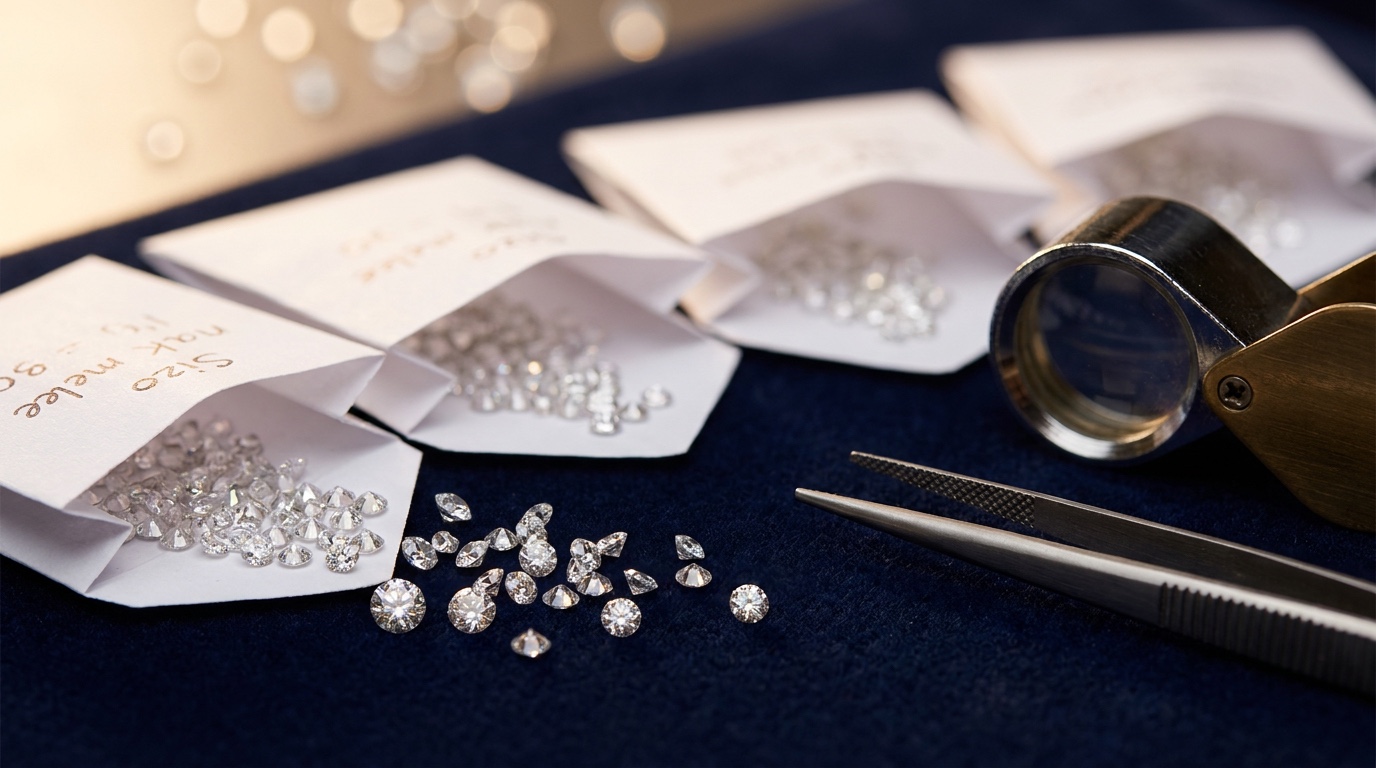
Natural melee diamonds are loose, mined round diamonds under 1 carat, sold wholesale by millimeter size and quality grade rather than as individually certified stones. Guru Diam currently supplies round natural melee from 0.8mm to 4.0mm, in EF and GH color and VS and SI clarity, priced per carat and confirmed at quote. Below are 25 questions wholesale buyers actually ask — grouped into basics, sizing, pricing, certification and quality, and ordering — meant as a single reference for anything you need to know before placing a natural melee order.
Basics
Start here if the natural melee category is new to you — what the term actually means, what shapes and cuts are available, and where these stones fit into a finished piece before you get into sizing or pricing specifics.
1. What are natural melee diamonds?
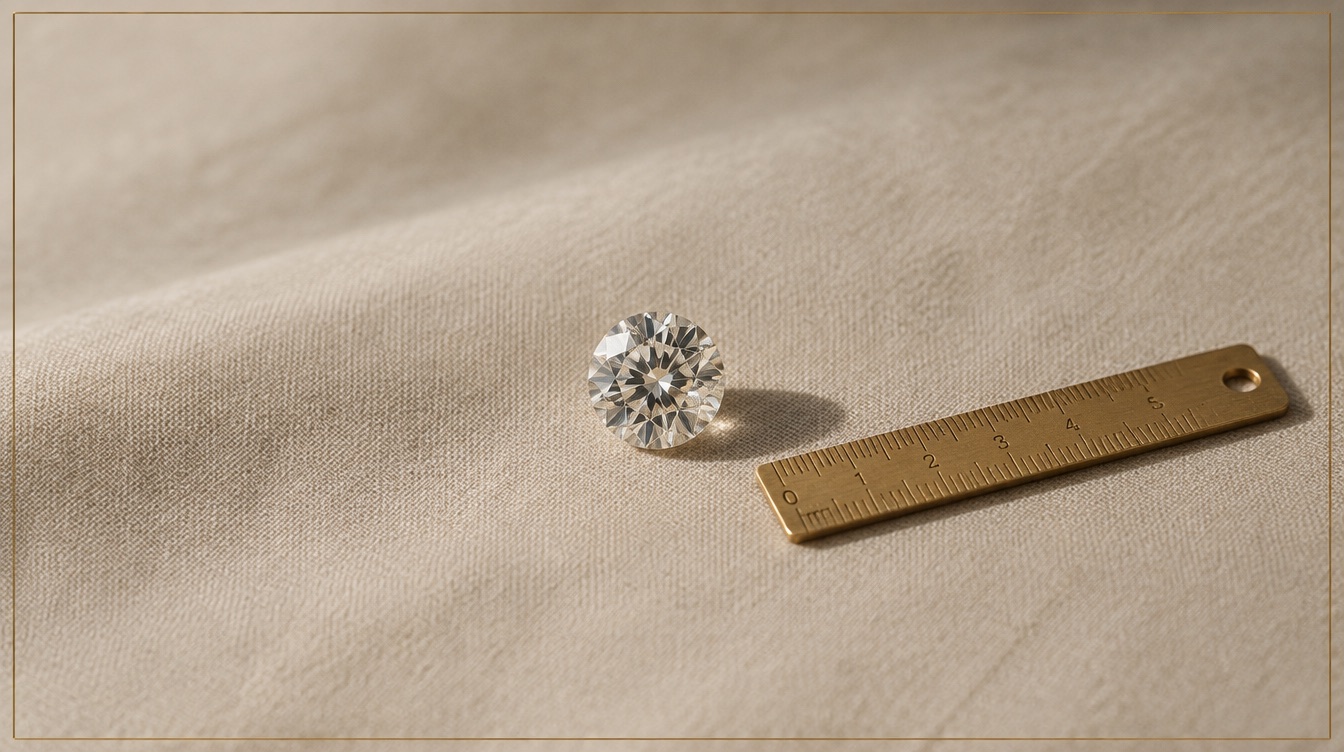
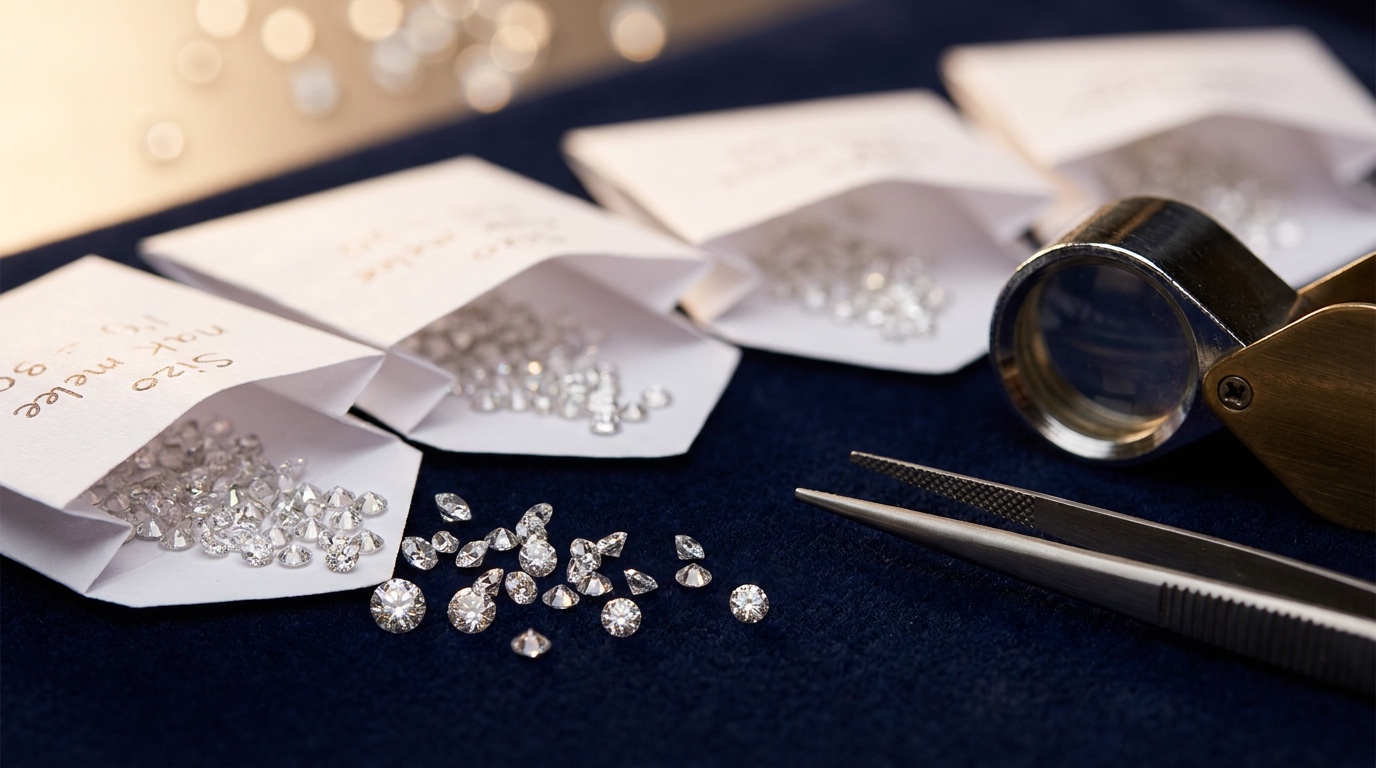
Melee is the trade term for small accent diamonds — the stones set around a center stone in a halo, lining a shank in pavé, or filling an eternity band. The word comes from the French for a mixed, close-set group of small elements, which is exactly how melee reads once it's set: dozens or hundreds of tiny stones read as one continuous field of sparkle rather than individual gems. "Natural" means those stones are mined, not grown in a lab. Guru Diam runs natural melee as a separate product line from its CVD lab-grown melee: same jobs on a mounting, different source, different spec, and priced separately. Natural melee isn't bought stone by stone — it's bought by the parcel, a bulk carat weight of stones matched to a millimeter size and quality band you specify.
2. Is natural melee real, mined diamond — not a simulant or lab-grown stone?
Yes. Natural melee is genuine mined diamond, chemically and optically identical to any other natural diamond — it's simply small. It is not moissanite, cubic zirconia, or any other diamond simulant, and it is not lab-grown. Guru Diam's natural melee line never carries lab-grown (CVD) specs or claims; if a job needs lab-grown melee, that's a separate product with its own size range and pricing, quoted separately.
3. What shapes does natural melee come in?
Round brilliant only, for now. Fancy natural melee shapes — oval, princess, pear, and the rest — aren't yet priced or sourced on Guru Diam's natural line. If a job calls for fancy-shape melee, round is the current focus; there's no promise yet on when or whether fancy natural shapes get added to the program. In practice this covers most demand anyway — round is the dominant shape used in pavé, halo, and eternity work industry-wide, since round melee sets edge to edge more consistently than fancy shapes at these sizes.
4. What's the difference between single-cut and full-cut melee?
Single-cut melee has 17–18 facets and a quieter, broader flash — it shows up most often at the smallest sizes or when matching older, vintage pieces. Full-cut melee has the standard 57–58 facets of a full round brilliant and is what most modern retail mountings are designed around. Confirm which cut a job needs when requesting a quote, since the two aren't interchangeable in a piece designed for one or the other.
5. What jewelry work is natural melee actually used for?
Four main categories: pavé (small stones set edge to edge across a surface), halo (a ring of melee framing a center stone), eternity bands (melee set continuously or across the visible top of a band), and tennis bracelets (a single matched line down a bracelet). Natural melee is also the standard restock for repair and custom production work — replacing a lost pavé stone or keeping bench stock on hand for ongoing jobs.
Sizing
Millimeters, sieve numbers, and carat totals — the numbers a buyer needs before a supplier can turn a request into an accurate, apples-to-apples quote.
6. What size range does natural melee cover?
Guru Diam's round natural melee is currently priced and available from 0.8mm to 4.0mm. That's the real, stated range — sizes above 4.0mm aren't yet sourced on the natural line, and that's a genuine gap rather than a rounded-down version of something wider. On the lower end, 0.8mm sits close to the practical floor for melee generally — stones smaller than that are difficult to set individually and rarely specified on their own. If a job calls for larger accent stones, ask about loose certified diamond inventory instead.
7. Why is melee measured in millimeters instead of carats?
Because that's what a setting actually calls for. A mounting is cut to a millimeter diameter — the seat has a fixed physical size — not to a carat weight. Carat weight follows from the millimeter once cut proportions are set, but the number to give a supplier, and the number a bench jeweler checks a seat against, is the millimeter. This is the opposite convention from loose certified diamonds, which are bought and quoted primarily by carat weight since there's no seat to fit. Always quote and order melee by mm, not by a general size description like "small" or "melee-size."
8. What do sieve sizes mean, and do I need to use them to order?
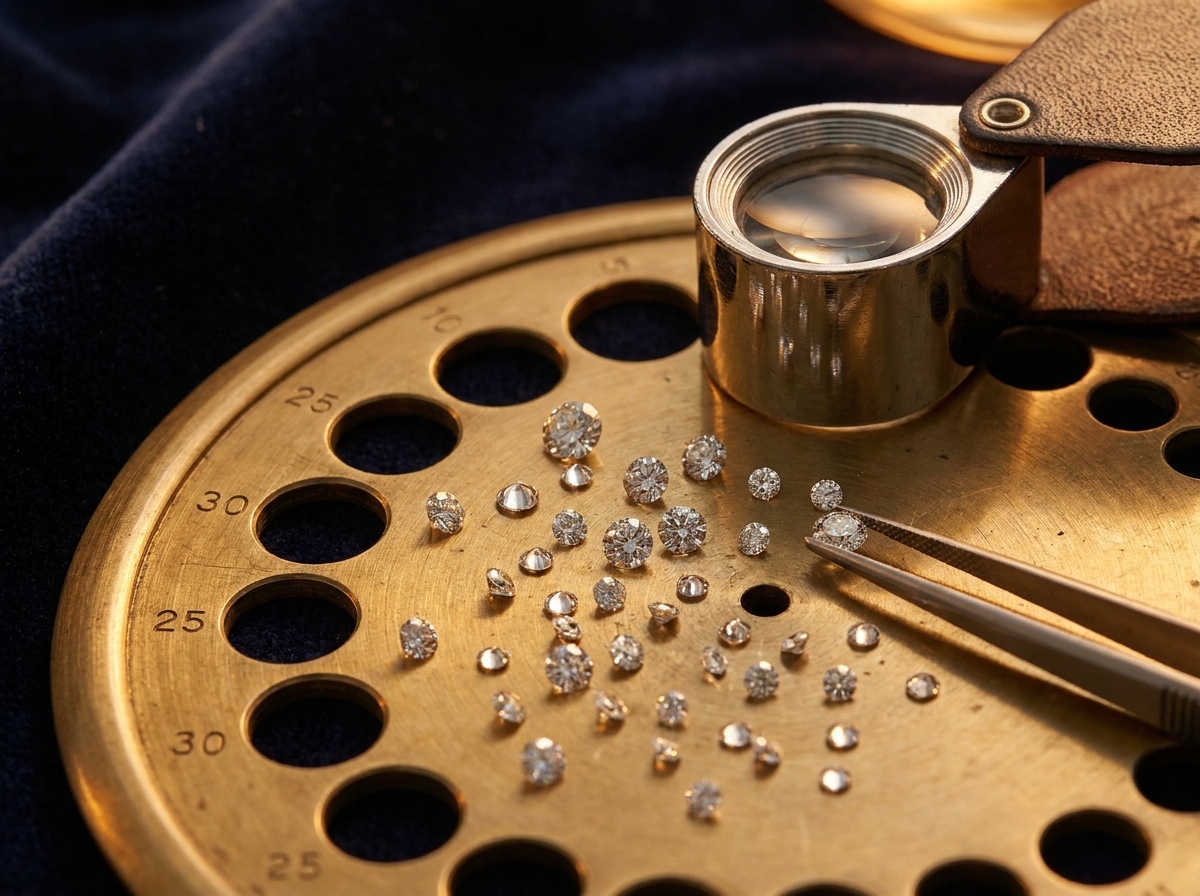
Sieve numbers are a trade sorting convention — melee is passed through graduated sieve plates that separate stones by millimeter diameter, and each sieve number corresponds to a specific mm band. Sieve numbers aren't required to place an order; giving the millimeter size (or a tight mm range) a mounting calls for is enough. For a full mm-to-carat-to-sieve conversion table, see the natural melee size chart linked in Related Articles below.
9. How many carats of melee do I need for my job?
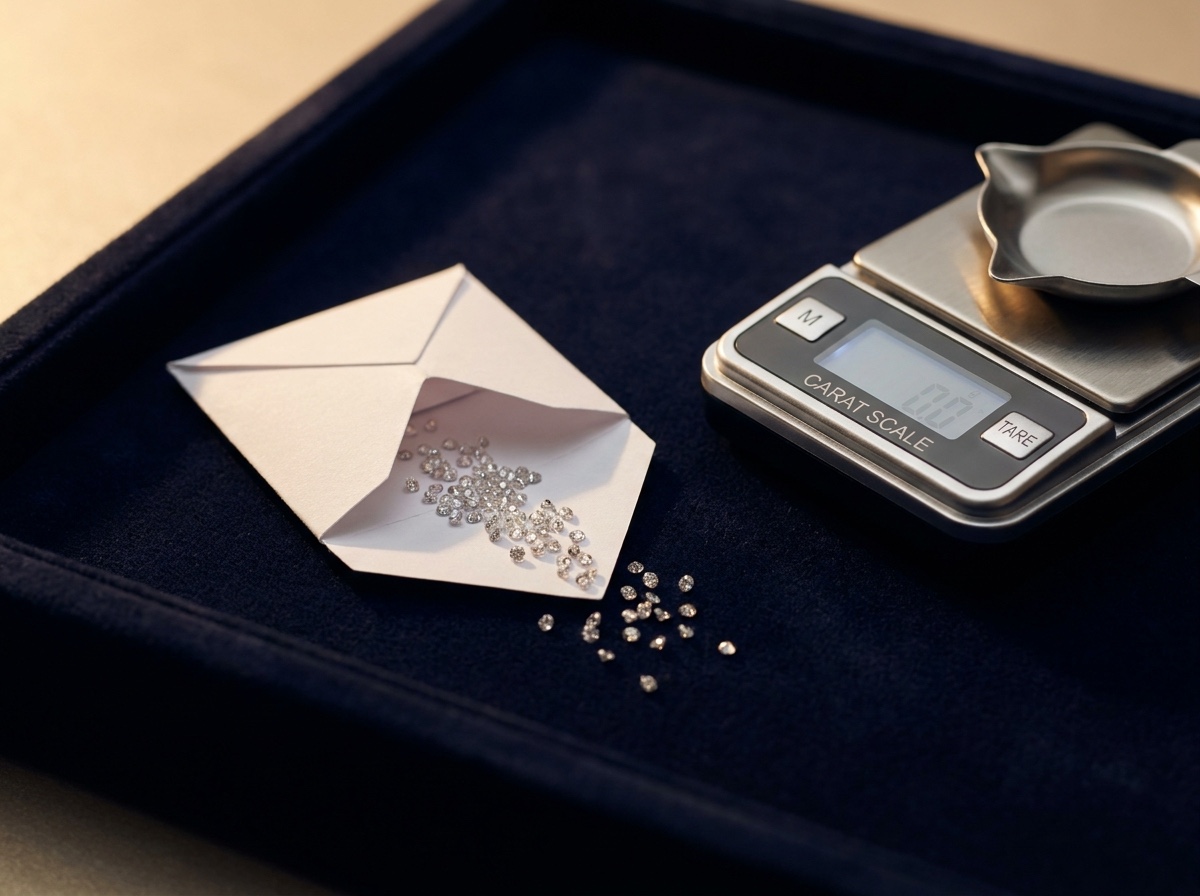
It depends on the stone size, the number of stones a design calls for, and the setting style — pavé coverage and full eternity bands consume more total carat weight than a single halo ring, for example. Rather than guess, count the stones or seats a mounting has cut (or the surface area being covered) and convert from the millimeter size in use. As a rough anchor for that conversion: smaller melee runs many more stones per carat than larger melee — a sub-1.0mm stone weighs a small fraction of what a 3.0mm stone weighs, so the same total carat weight buys far more pieces at the smaller end. Send a piece count and size to Guru Diam over WhatsApp or Contact for a carat-weight estimate at quote, or see our dedicated carat-calculation guide linked below.
10. What calibration tolerance should I expect on a natural melee parcel?
Standard trade tolerance: ±0.10mm on dimension, ±0.10ct on weight, and a 1-grade match on color and clarity within a parcel. That means a parcel ordered at 2.0mm won't include stones that measure 2.3mm or 1.7mm, and a parcel ordered GH VS won't drift two full grades in either direction. Heavy pavé and tennis work often need tighter than the standard tolerance — flag that at quote time if a job requires it.
Pricing
What natural melee actually costs, why the per-carat number moves with size and grade, and what to expect when a quote comes back.
11. How is natural melee diamond pricing structured?
By size and grade, quoted per carat. Guru Diam's pricing starts around $370–450 per carat in the smallest sizes (GH grades under 1.70mm) and rises with both stone size and color/clarity grade, running well above that at 4.0mm in EF VS. Treat any number as approximate — melee is quoted per parcel against sieve bands in this trade, and pricing is confirmed at quote against the exact spec ordered. A supplier who gives an exact-to-the-cent figure sight unseen is giving false precision, not a real price; a real price comes back once the size, grade, and total carat weight are on the table. The full per-carat table across all size bands lives in the complete buying guide and pricing posts, linked below.
12. Why does price per carat rise with size?
Larger rough diamond material that yields a clean 3.5mm or 4.0mm melee stone is scarcer than the material that yields a 1.0mm stone, so price per carat climbs with size — a 4.00mm stone carries meaningfully more value per carat than a sub-1.20mm stone. This holds across the trade broadly, not just at Guru Diam; it's the same supply dynamic that drives price-per-carat up with size in loose certified diamonds too.
13. Why does EF cost more than GH, and VS more than SI?
EF (E–F color) is whiter and rarer than GH (G–H color), and VS clarity has fewer or smaller inclusions than SI — both command a premium at every size where they're available. EF also isn't available at all below 1.70mm; no vendor in the market has ever quoted a genuine E color at that size, so GH is the only color band offered that small. VS reads eye-clean at typical mounting distance, and at melee sizes SI usually does too — inclusions large enough to see with the naked eye in a stone this small are the exception, not the rule. The price gap between grades reflects how scarce that grade is in the rough, more than a visible difference at arm's length for most jobs. That's also why EF VS is the grade most often specified for bridal work sitting close to a colorless center stone, while GH SI is common for fashion and production runs where the accent stones aren't under the same scrutiny.
14. Is there a minimum order for natural melee diamonds?
Guru Diam quotes natural melee against total carat-weight need rather than a fixed unit minimum — state the size, grade, and how many carats a job calls for, and the quote comes back against that real spec. Because melee ships as parcel goods rather than pre-boxed SKUs, confirm current availability at the exact size and grade needed when reaching out on WhatsApp or through Contact.
Certification & Quality
Melee doesn't come with a certificate — that surprises buyers coming from the loose-stone side of the business. Here's how quality actually gets set, sorted, and verified instead.
15. Are natural melee diamonds certified?
No — and that's true across the trade for melee generally, natural or lab-grown, not a Guru Diam shortcoming. Certification has a real per-stone cost, and below roughly 0.20ct that cost exceeds the value of the stone itself. Natural melee ships as sieve/size-graded parcel goods instead, sorted comparatively against a master stone rather than graded and papered stone by stone. Don't confuse this with Guru Diam's loose stone inventory: individual loose diamonds at 0.30ct and above do ship IGI or GIA certified — that's a separate product tier with its own paperwork, not something melee-sized goods carry.
16. Why aren't melee diamonds individually certified?
Economics. Grading a 1.5mm diamond individually — measuring it, plotting inclusions, issuing paperwork — would cost more than the stone is worth. That math holds for every melee-size stone across the industry, which is why no wholesale melee supplier issues a certificate per stone at these sizes. Worth knowing going in for anyone used to a certificate being the default on the loose-stone side of the business.
17. How is melee quality graded if it's not certified stone by stone?
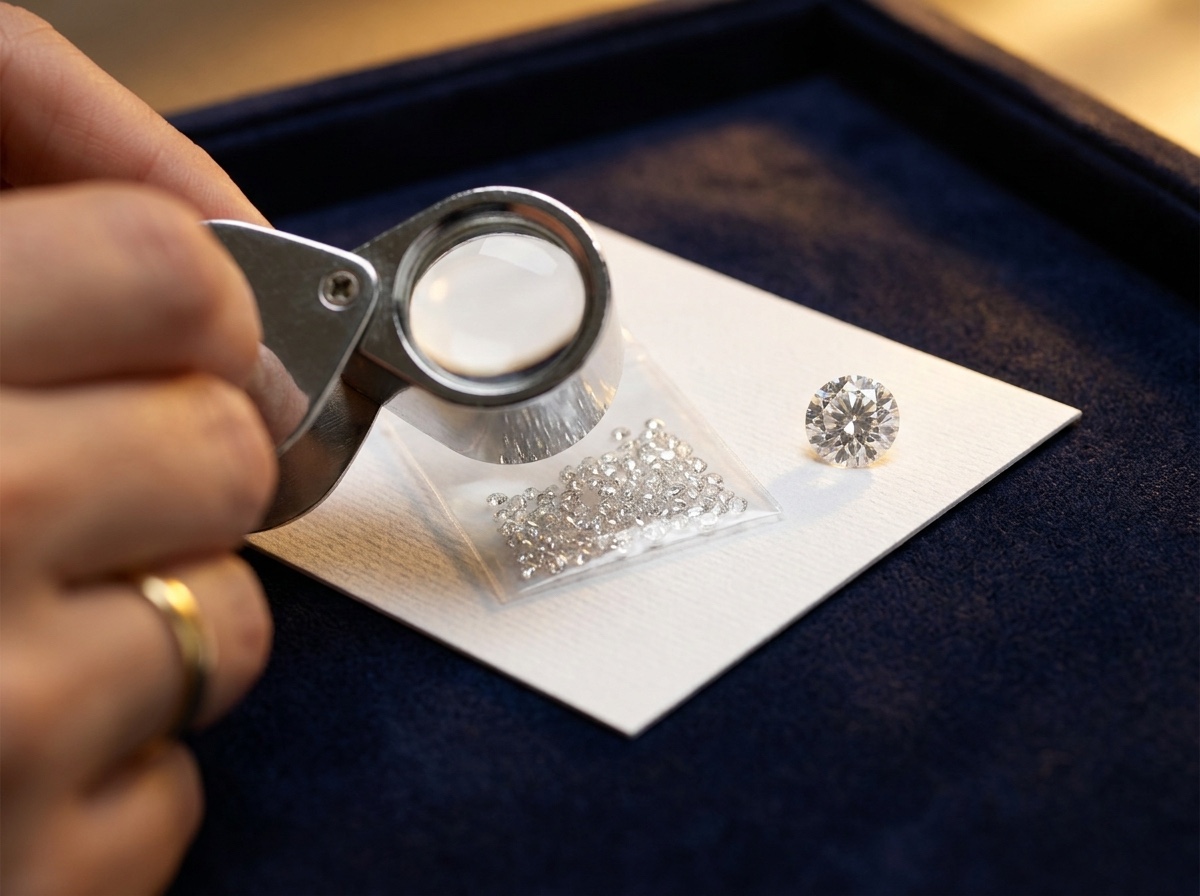
Comparatively. Every parcel is sorted against a master stone — a reference diamond that anchors the color and clarity call for that batch — so a parcel graded GH VS is consistently GH VS stone to stone, not a loose mix that happens to average out. Size sorting runs through graduated sieve plates, which separate stones by millimeter diameter more precisely than sorting by eye. It's a comparative, batch-level standard, not a substitute claim for individual certification — and it's the same basic method used across the melee trade generally, natural or lab-grown, because it's the only approach that scales economically to stones this small.
18. What does "master stone" mean in melee grading?
A master stone is a reference diamond of known, fixed color and clarity that a grader compares each parcel against under consistent lighting. Instead of grading each of hundreds of tiny stones independently — which the economics of melee don't support — the whole parcel is sorted against that one benchmark. It's what keeps a GH VS parcel actually landing in the GH VS range, batch after batch, rather than drifting with whoever happens to be sorting that day.
19. What color and clarity grades does natural melee come in?
A 2-by-2 grid: EF (E–F color) and GH (G–H color), each in VS and SI clarity — four working grades in total: EF VS, EF SI, GH VS, and GH SI. These are blended-range grades, sorted comparatively against a master stone, not a single exact grade promised on every stone — standard trade practice for parcel goods this small. EF is the whiter, cleaner choice for bridal work sitting near a colorless center stone; GH is the more budget-efficient grade for fashion, production, and repair work.
20. How can I confirm a natural melee parcel isn't mixed with lab-grown stones?
Natural and lab-grown diamonds are visually indistinguishable to the naked eye, so verification has to happen with diamond-type detection equipment, not by looking. Ask any melee supplier — Guru Diam included — how incoming parcels are screened before they're graded and sold as natural. A supplier running a natural melee line should be screening for this as standard practice, not treating sourcing history alone as a guarantee.
Ordering
What to send Guru Diam for an accurate quote, how fast confirmed orders actually ship, and what separates a supplier worth reordering from one that isn't.
21. How do I place a wholesale order for natural melee diamonds?
Ordering natural melee is a quote-first process, not a cart checkout, because melee is priced per parcel against an exact spec, and there's no live product page listing every size and grade as a fixed SKU today. Send the millimeter size, color/clarity grade, and total carat weight needed to Guru Diam over WhatsApp or through Contact, and a confirmed price per carat comes back against real available stock — not a table lookup. For a full walkthrough of the process from first message to shipped order, see our step-by-step buying guide linked below.
22. What information do I need to give for an accurate quote?
Four things: the millimeter size (or a tight range) a mounting calls for, the color/clarity grade (EF VS, EF SI, GH VS, or GH SI), the total carat weight the job needs, and any calibration tolerance tighter than the standard ±0.10mm/±0.10ct if the job requires it. The more specific the size and grade, the faster and more accurate the quote comes back.
23. How fast can a natural melee order ship?
Guru Diam runs two wholesale trade desks — New York (36 West 47th Street, Suite 601A, New York, NY 10036) and Los Angeles (607 S Hill Street, Suite 241, Los Angeles, CA 90014). Orders placed before 6pm EST out of New York ship same day; orders placed before 4pm PST out of Los Angeles ship same day. Because melee moves as parcel goods rather than pre-boxed SKUs, same-day shipping still depends on the parcel being in stock at the exact size and grade needed — confirm at quote, and flag any deadline a job is working against when the order goes in.
24. Will a reorder match the parcel I approved the first time?
It should, if a supplier is sorting consistently against the same master stone standard every time. That's the question worth asking before committing to a reorder relationship: whether goods are sorted against a fixed reference every batch, or graded loosely by whoever's on the bench that day. Consistency parcel to parcel is what makes melee reliable for ongoing production and repair work rather than a one-off purchase.
25. What should I check before choosing a natural melee supplier?
Four things: clear size and grade language (millimeters and a stated color/clarity grid, not "small, good quality"), consistency parcel to parcel against a master stone, verified natural origin through diamond-type screening, and honesty about real gaps — like the fact that EF color simply isn't available below 1.70mm anywhere in the market. A supplier who states their actual range and limits plainly is more trustworthy than one that fills in every cell on a price list. It's also worth asking how a supplier handles goods that fall outside spec — a parcel that misses its stated calibration tolerance shouldn't ship as-is. A supplier working to a real standard resorts or recuts before a batch goes out the door, rather than shipping whatever came off the last sorting pass and letting the buyer catch the problem after it's already set into a piece.
Have a question this FAQ didn't cover? Message Guru Diam on WhatsApp or reach out through Contact — every question here came from real buyer questions, and yours can get added too.
Related Articles
- Natural Melee Diamonds Wholesale: The Complete Buying Guide for Jewelers
- How to Buy Natural Melee Diamonds Wholesale (Step by Step)
- Natural vs Lab-Grown Melee Diamonds: The Full Comparison for Jewelers
- Natural Melee Diamond Size Chart: MM to Carat & Sieve Guide
- Natural Melee Diamond Pricing: What Drives Cost Per Carat
- How to Calculate How Many Carats of Melee You Need
- The Melee Diamond Size Chart MM to Carat to Sieve (Lab-Grown Melee)