How to Buy Natural Melee Diamonds Wholesale (Step by Step)
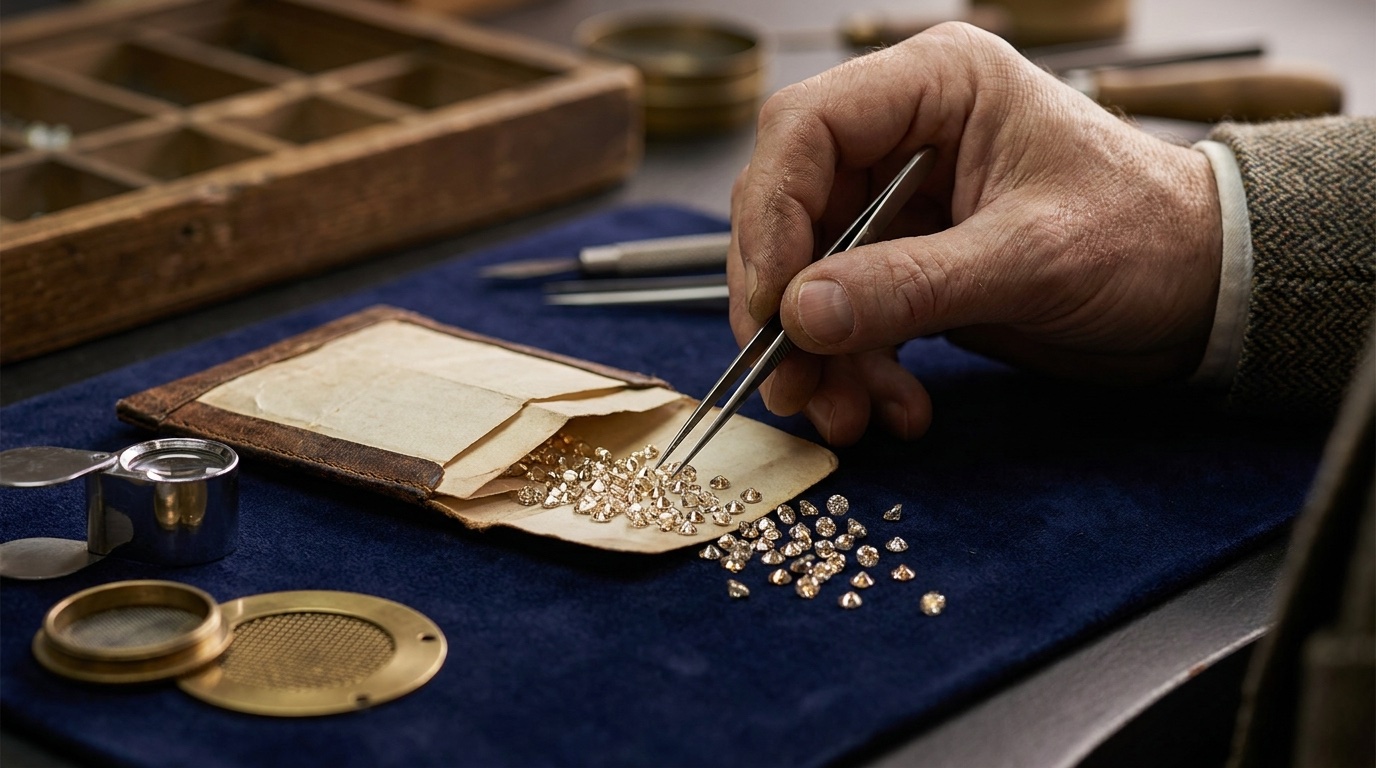
Buying natural melee diamonds wholesale comes down to five steps: decide your size (round, roughly 0.8mm–4.0mm) and quality grade (EF or GH color, VS or SI clarity), send those specs plus your total carat weight to Guru Diam over WhatsApp, get parcel pricing confirmed against current sieve-band rates, approve and pay for the parcel, then receive size- and quality-graded goods sorted against a master stone — no individual certificates, same as melee trade-wide. Here's how each step actually works.
What Do You Need to Decide Before Requesting a Natural Melee Quote?
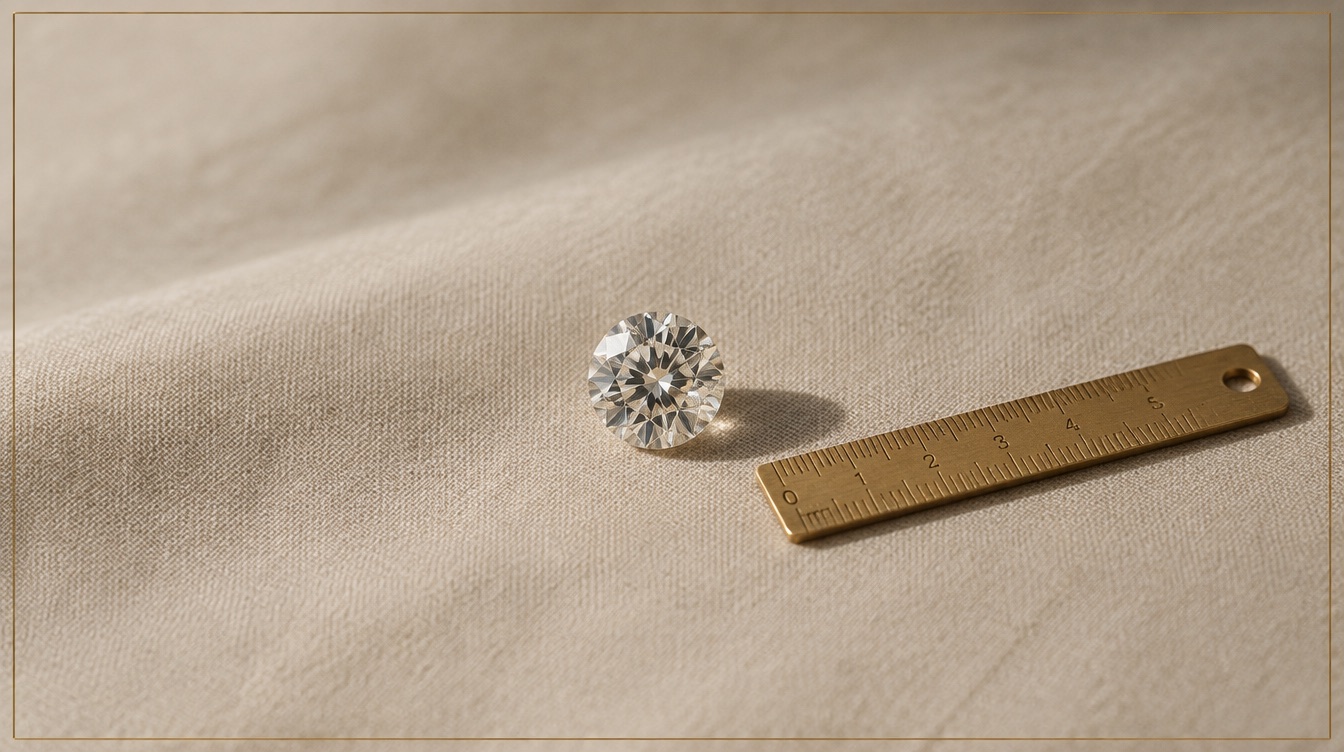
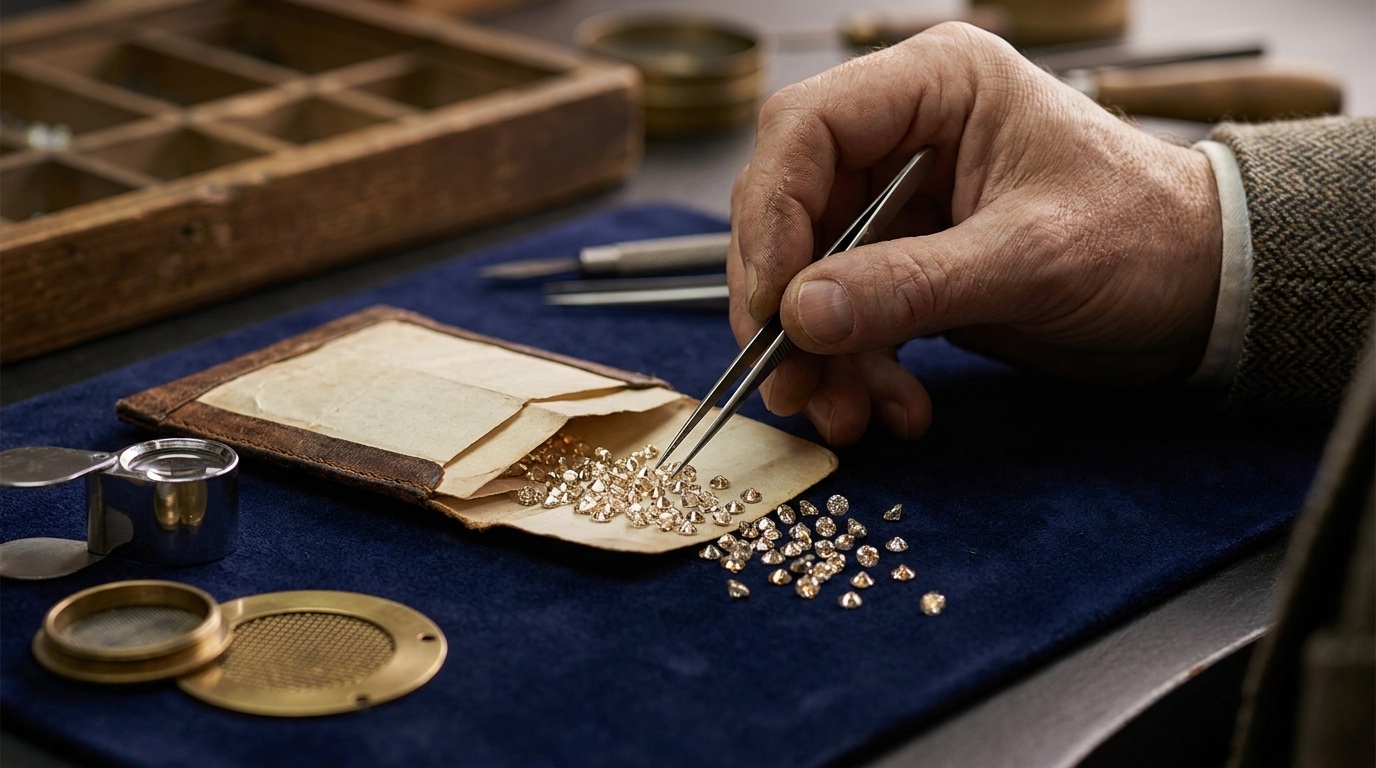
Natural melee is loose, mined (not lab-grown) round diamonds under 1 carat, sold in bulk carat weight by size and quality bucket rather than stone by stone. Jewelers buy it for pavé, halo, eternity band, tennis-line, and repair/production work — anywhere a bench needs a steady supply of small accent stones rather than one hand-picked center. It's a separate, standalone product line from Guru Diam's existing calibrated melee offering, priced and quoted on its own spec sheet.
Before you reach out for a quote, have four answers ready:
- The application. Pavé, halo, shared-prong row, eternity channel, tennis line, or repair fill — this drives how tight your tolerance needs to be and how the parcel gets sorted.
- The size in millimeters. Round natural melee is currently priced roughly 0.8mm to 4.0mm. Lead with the mm your seat is cut for, not a point-weight shorthand.
- The quality grade. Color as EF (E-F) or GH (G-H), clarity as VS or SI — a blended-range grid, which is standard trade practice for parcel goods, not an exact single-grade call.
- The total carat weight required for the job, not a stone count.
One scope note up front: round is the current focus for natural melee. Fancy natural shapes — oval, princess, pear, and the rest — aren't priced or sourced yet on this line. If your design calls for a fancy natural accent, say so when you reach out and we'll tell you plainly where that stands rather than quote something we can't fill.
Deciding these four things before you message us isn't just tidiness — it's what turns a first conversation into a quote instead of a back-and-forth. A message that only says "I need melee for a bracelet" still leaves the size, the grade, and the quantity open, and we'll have to ask before we can give you a real number. Jewelers who come in with the full spec written down get a working quote on the first reply.
How Do You Specify Size and Quality Grade for Natural Melee?
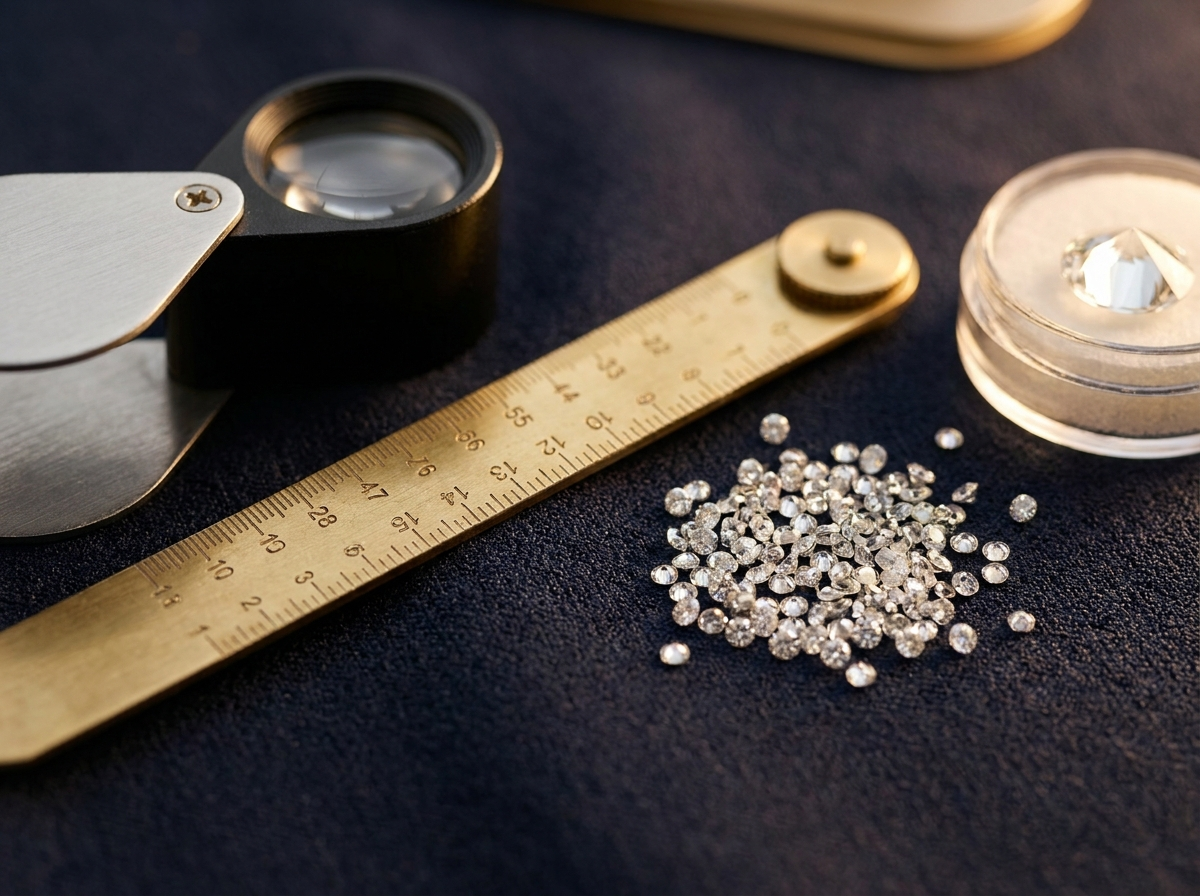
Millimeter diameter is the primary spec because that's what your seat, channel, or prong is cut to. Carat weight is the expected-weight companion figure, not the ordering unit — quote and order melee by total carat weight, and let the mm tell the supplier what stone count that weight should produce.
The quality grid you're choosing from is two colors by two clarities:
| Color | Clarity options | Notes |
|---|---|---|
| EF (E-F) | VS, SI | Available from roughly 1.70mm and up — no vendor has ever quoted true E color at the smallest sizes, so this band isn't offered below 1.70mm. |
| GH (G-H) | VS, SI | Available across the full priced size range, roughly 0.8mm to 4.0mm. |
That EF gap below 1.70mm is a real, current limit — if your spec calls for the smallest sizes (up to about 1.20mm, or 1.20–1.70mm), you're choosing between GH VS and GH SI, not EF. We'll tell you this plainly at quote rather than let you assume EF is available everywhere on the chart.
On tolerance: use the same standard trade convention that applies across calibrated melee generally — roughly ±0.10mm on dimension, ±0.10ct on weight, and a one-grade match on color and clarity against the ordered band. State this on your order even for repeat purchases; a verbal "same as last time" is how a spec quietly drifts over several reorders.
Is There a Minimum Order Size for Wholesale Natural Melee?
There's no single fixed minimum published across every size and grade combination — melee minimums scale with how deep we're sourced at a given mm and quality band, and we'll confirm the real number for your exact spec when you request a quote rather than post a number that's wrong for half the sizes on the chart. What we can tell you is the shape of it: minimums tend to be lower in the mid-size, higher-volume bands and tighter at the size and quality extremes.
If this is your first order on the natural line, you don't have to commit to full production volume out of the gate. A smaller trial parcel at your exact size and grade is a normal way to check how the goods, the sizing, and the color/clarity read against your bench before you place a larger repeat order. Ask about this option when you send your spec — it's a routine request, not a special favor.
How Does the Quoting Process Work for Natural Melee?
Natural melee is quoted per parcel against sieve bands, not priced stone by stone — that's true across the trade, not a Guru Diam-specific quirk. Once we have your mm size, EF/GH and VS/SI grade, and total carat weight, we price against the current sell rate for that exact size-and-grade cell and confirm it back to you before anything ships.
As a general sense of range: current pricing starts around $370–450/ct in the smallest sizes and climbs with size and grade from there. Treat that as directional, not a quote — melee pricing is presented as approximate per carat and confirmed at the point of quote, because exact-to-the-cent figures don't hold up against sieve-band goods the way they might for a single certified stone. For the full current pricing breakdown across every size and grade cell, see our complete natural melee buying guide — this post focuses on the ordering process, not the rate card.
Every quote is specific to the size, grade, and carat weight you submit. Two jewelers ordering the same mm at different clarities will see different numbers, and that's expected — it's why we ask for the full spec up front instead of quoting off a size alone.
Why per-parcel and not per-stone? A single loose diamond gets individually inspected, graded, and priced because the cost of that inspection is small relative to the stone's value. Melee flips that math — a parcel might run from a few dozen to several thousand stones, and no desk has time to price each one before it moves. Quoting the whole parcel against a sieve band and a quality grade is the only version of this business that scales, and it's the same logic every wholesale melee supplier in the trade runs on, not a Guru Diam-specific process.
What Information Should You Send Over WhatsApp to Get a Quote?
WhatsApp at +1 347 812 2006 is the standard channel for natural melee inquiries — it's faster than email for the back-and-forth a parcel quote usually takes, and it keeps a written record of exactly what was agreed. Send these five items in your first message and you'll get a real quote back, not a request for more information:

- Size in mm (or a range, if you're flexible) — round only, within the current 0.8mm–4.0mm priced range.
- Color and clarity grade — EF or GH, VS or SI.
- Total carat weight needed for the job.
- What it's going into — pavé, halo, eternity, tennis, or repair/production — so we can flag anything that affects tolerance.
- Ship-to office — our New York desk (36 West 47th Street, Suite 601A, New York, NY 10036) or our Los Angeles desk (607 S Hill Street, Suite 241, Los Angeles, CA 90014).
A message like "2.5ct of 2.0mm GH VS round natural melee for a pavé build, need pricing" gives us everything we need to quote on the spot. You can also use the contact form for the same request if you'd rather start there — it routes to the same desk.
What Happens After You Submit an Order Request?
Once your spec lands, the process runs in a predictable order: we confirm your size and grade combination is currently sourced and priced, quote it against the current rate for that cell, and send that number back to you in writing before anything is pulled or paid for. If your spec falls into a gap — a size or grade combination we don't currently offer, like EF below 1.70mm or anything above 4.0mm — we'll say so directly rather than substitute something close and call it the same thing.
Once you approve the quote and it's invoiced, the parcel is pulled and weighed to your total carat request, sorted to your mm and grade, and prepared for pickup or shipping to whichever desk you specified. Because melee ships as parcel goods against a stated size and quality band rather than as individually inspected stones, there's no per-stone selection step on our end the way there would be for a loose certified diamond — the parcel is built to spec and confirmed against the numbers you approved.
Keep the conversation on the same WhatsApp thread from your first message through delivery. If anything needs a follow-up question — a size that's tight on availability, a grade combination near the edge of what's currently priced — having the full history in one thread means we're not re-explaining your spec every time someone new picks up the conversation on either end.
What Does a Natural Melee Sample Parcel Look Like When It Arrives?
Expect a sealed diamond paper packet or parcel pouch, labeled with the mm size (or sieve band), the color/clarity grade, and the total carat weight inside. What you won't find is an individual certificate for any stone in it, and that's normal — not a shortcut on our end. Certification cost exceeds stone value below roughly 0.20ct, so melee across the entire trade, natural or otherwise, ships as sieve- and size-graded parcel goods rather than per-stone or per-parcel certified inventory. Loose stones at 0.30ct and up are a different tier and do carry IGI or GIA certificates — melee simply isn't priced or handled that way, at Guru Diam or anywhere else.
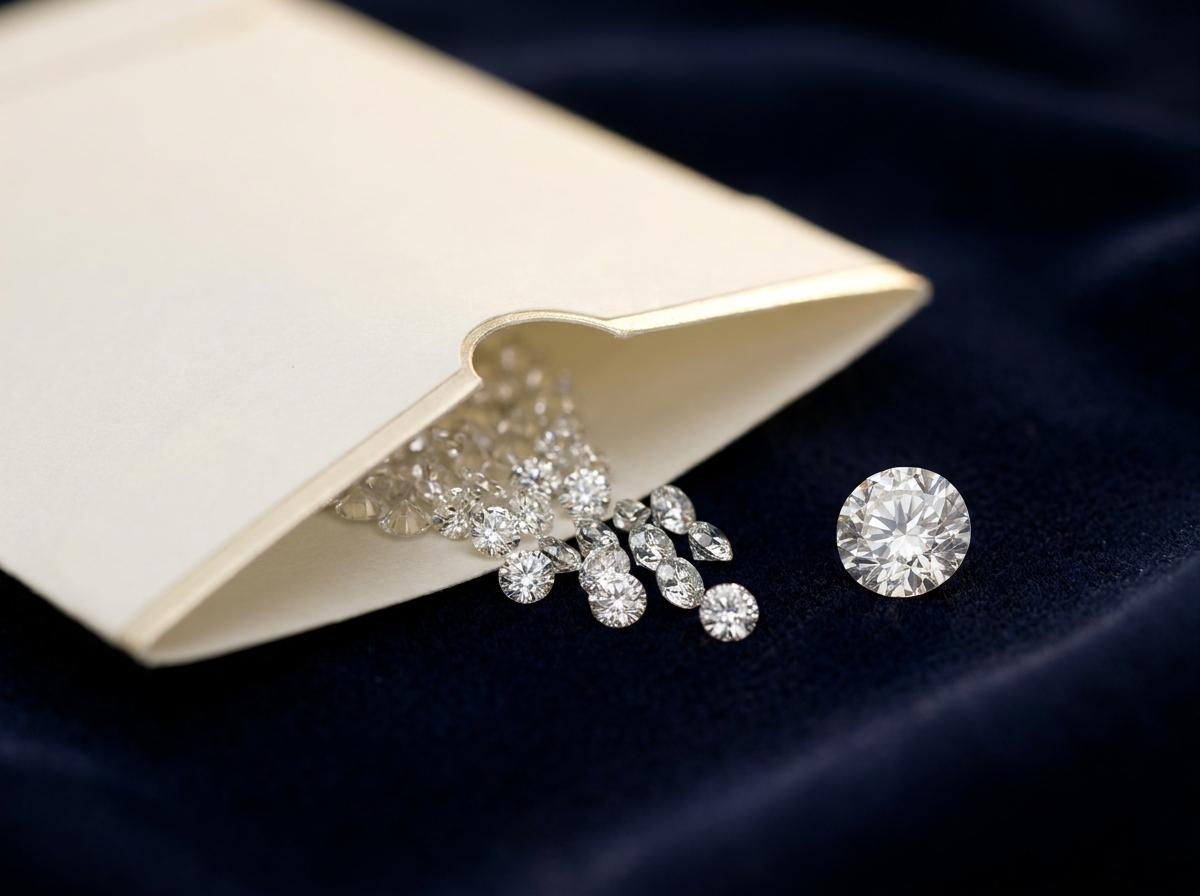
Instead of a report, the parcel is sorted comparatively against a master stone — a reference diamond held at the ordered grade that every stone in the parcel is checked against during sorting. That's how the trade holds a consistent color and clarity band across a few hundred or a few thousand small stones without grading each one individually. If a parcel reads noticeably off that reference when it lands on your bench, that's exactly the kind of thing to flag back to us — see the next section.
How Do You Inspect and Approve Your First Melee Parcel?
Three checks cover most of what matters on intake:
- Weigh the total parcel against the carat weight on your invoice. This is the fastest sanity check and catches most real discrepancies immediately.
- Spot-check size on a handful of stones with a loupe and gauge (or a leaf gauge if you have one) against the mm you ordered, allowing for the standard ±0.10mm tolerance.
- Spot-check color and clarity on a sample of stones under a loupe, reading them against the grade band you ordered — not against a single hand-picked "best" stone in the parcel, since a blended-range grid is expected to show some spread within the band.
If something reads meaningfully outside the ordered spec — size, weight, or grade — send it back to us over the same WhatsApp thread with what you're seeing. Because the order, the quote, and the spec are all in writing from the first message, resolving a genuine mismatch is a matter of comparing the parcel to what was actually agreed, not a dispute over what was meant.
Do this inspection before the parcel goes anywhere near production. A sizing or grade issue caught on intake is a straightforward exchange conversation. The same issue caught after stones are already set into a dozen pieces is a much more expensive problem to unwind, and it's the main reason the three checks above are worth the few minutes they take on every parcel, not just the first one.
What Are the Shipping and Delivery Options for Wholesale Orders?
Guru Diam operates two desks, and natural melee orders ship from whichever one you specify:
- New York — 36 West 47th Street, Suite 601A, New York, NY 10036. Same-day before 6pm EST.
- Los Angeles — 607 S Hill Street, Suite 241, Los Angeles, CA 90014. Same-day before 4pm PST.
Both offices carry the same natural melee spec sheet and quoting process — this isn't a New York-only line. Tell us which desk you want your parcel to ship from or picked up at when you send your order spec, and we'll confirm the cutoff that applies.
How Do You Reorder or Scale Up After Your First Purchase?
Once a first parcel has been checked against your bench and approved, reordering the same spec is simpler than the first order was — you already know the mm, the grade, and how it reads against your seats, so the WhatsApp message can just reference the prior order and the new carat weight you need. Guru Diam works with 2,000+ active wholesale accounts across natural and other lines, and repeat melee orders are the most common way that relationship runs day to day.
If you're moving from a trial parcel into standing production volume, say that explicitly when you request the reorder — larger, recurring carat weights at a fixed size and grade are worth flagging so pricing and availability get confirmed against that pattern rather than treated as a one-off request each time.
What Mistakes Do First-Time Natural Melee Buyers Make?
A handful of avoidable mistakes account for most of the friction on a first natural melee order:
- Ordering by stone count instead of carat weight. Melee is quoted and invoiced in carats — a request for "500 stones" forces a conversion that varies parcel to parcel; state the total carat weight you need instead.
- Leaving off the tolerance. A bare mm number invites goods anywhere within a wide practical range. State ±0.10mm and ±0.10ct explicitly, especially for channel or eternity work where consistency across a full row matters most.
- Assuming EF is available at the smallest sizes. It isn't, below roughly 1.70mm — GH is the only color option in that range currently, and no amount of asking changes that until the sourcing gap closes.
- Assuming fancy natural shapes are available. Round is the current scope for natural melee. If a design calls for an oval or princess natural accent, that's a conversation to have before the CAD is finalized, not after.
- Expecting a per-stone or per-parcel certificate. Melee ships as sieve-graded parcel goods sorted against a master stone — that's standard across the trade below roughly 0.20ct, not a gap specific to any one supplier.
- Skipping the trial parcel. Jumping straight to full production volume on a brand-new size or grade combination means you're testing fit and color/clarity read on your largest order instead of your smallest. A small first parcel is cheap insurance.
Most of these resolve the same way: put the full spec — mm, tolerance, grade, and total carat weight — in writing on every order, whether it's your first or your fiftieth.
Ready to place a first order or get a quote? Send your size, grade, and carat weight to +1 347 812 2006 on WhatsApp, or reach out through our contact page and we'll take it from there.
Frequently Asked Questions
What's the minimum order for natural melee diamonds? There's no single published minimum across every size and grade — it scales with how deep a given mm and quality band is sourced. Send your spec over WhatsApp and we'll confirm the real minimum for your exact order, and we can talk through a smaller trial parcel if this is your first order on the line.
Can I get natural melee in fancy shapes like oval or princess? Not currently. Round is the scope for natural melee right now — fancy natural shapes aren't priced or sourced yet. If your design needs a fancy natural accent, tell us up front and we'll be direct about where that stands rather than quote something we can't fill.
Does natural melee come with a certificate? No — and that's true trade-wide, not a Guru Diam shortcut. Certification cost exceeds stone value below roughly 0.20ct, so melee ships as sieve- and size-graded parcel goods sorted against a master stone, not with individual reports. Loose stones at 0.30ct and up are certified; melee is a different tier.
What color and clarity grades are available? Two colors by two clarities: EF (E-F) and GH (G-H), each in VS or SI. EF is available from roughly 1.70mm and up; GH covers the full priced range from about 0.8mm to 4.0mm. Both are blended-range grades, standard for parcel goods.
How do I request a quote from Guru Diam? Send your size in mm, color/clarity grade, total carat weight, and what it's going into (pavé, halo, eternity, tennis, or repair) to +1 347 812 2006 on WhatsApp, or use our contact page. We'll confirm pricing against the current rate for that exact size-and-grade cell.
What if my sample parcel doesn't match the size or grade I ordered? Weigh the parcel and spot-check a handful of stones against your ordered mm and grade band using a loupe and gauge. If it reads meaningfully outside the standard ±0.10mm / ±0.10ct tolerance or the color/clarity band, send that back to us on the same WhatsApp thread the order was placed on — since the spec is already in writing, resolving it is straightforward.
Related Articles
- Natural Melee Diamonds Wholesale: The Complete Buying Guide for Jewelers — the full pricing table and product overview this post's quoting section links back to.
- How to Calculate How Many Carats of Melee You Need — work out the total carat weight to send with your WhatsApp quote request before you order.
- How to Vet a Natural Melee Diamond Supplier: Questions to Ask — what to check before you commit past a first trial parcel.