
A diamond pinky ring is a ring, set with one or more diamonds, worn on the smallest finger rather than the ring finger — a category defined as much by its finger placement and the sizing and setting conventions that placement drives as by any single design style. For a jeweler, that placement matters commercially: pinky fingers run smaller and vary in proportion more than ring fingers, and the category skews toward a distinct buyer base and styling preference that a general ring line doesn't automatically serve.
This guide is written for the trade — retailers, designers, and manufacturers sourcing loose diamonds to build or expand a pinky ring line — not a consumer buying guide. It covers sizing conventions specific to this finger, stone and setting choices that suit a smaller, differently proportioned ring, buyer segments driving demand, and what to look for in a wholesale diamond supplier for this category.
Why Pinky Rings Are a Distinct Sourcing Category
A pinky ring isn't simply a smaller version of a standard ring finger design scaled down — the pinky finger has different proportions (typically shorter and, on many hands, more tapered) than the ring finger, which changes how a given setting style actually reads once worn. A wide statement setting that looks proportional on a ring finger can look bulky or overwhelming on a pinky, while a design built specifically for the pinky's shorter, sometimes more angular profile reads as intentional and well-fitted. Retailers sourcing for this category need to treat it as its own design and sizing problem rather than simply offering ring-finger designs in smaller sizes — a signet or band design carried over unchanged from a ring-finger collection typically needs real proportion adjustments (band width, face size, stone placement) before it wears and photographs well on a pinky, not just a smaller size run of the same construction.
Sizing Conventions for Pinky Rings
Pinky ring sizes run meaningfully smaller than ring finger sizes on the same hand — commonly two to four US sizes smaller, though this varies considerably by individual hand proportions. Because the pinky is also more likely than the ring finger to have a noticeably tapered or irregular shape (wider at the base, narrower toward the tip, or vice versa on some hands), proper fit is harder to achieve with a standard round band, and pinky rings see a higher rate of sizing adjustment requests than ring-finger pieces. Retailers should plan for a wider in-stock size range at the smaller end of standard sizing charts than a typical ring-finger line requires, and should set clear expectations with customers about the likelihood of needing a post-purchase resize.
| Factor | Pinky Ring | Ring-Finger Ring |
|---|---|---|
| Typical size range | Runs 2–4 sizes smaller than ring finger | Standard size chart range |
| Finger shape | More likely tapered/irregular | Generally more uniform |
| Dominant buyer | Skews male, signet/statement styling | Broad, engagement-driven demand dominates |
| Setting profile | Lower-profile preferred for daily-wear comfort | Wider range of profile heights |
Who Buys Pinky Rings: Understanding the Buyer Base
Pinky ring demand skews noticeably toward male buyers relative to diamond rings generally, and toward a distinct styling sensibility built around signet-style, family-crest, or bold statement designs rather than the solitaire and halo styles that dominate ring-finger demand. A meaningful secondary buyer segment is self-purchasing collectors and style-focused buyers of any gender who wear a pinky ring as a personal signature piece rather than tied to a relationship milestone, which distinguishes pinky ring demand from the engagement- and anniversary-driven purchase occasions that dominate most other diamond ring categories. Retailers should market and merchandise this category with that distinct buyer profile and purchase motivation in mind, rather than folding it into general "diamond rings" messaging built around engagement and bridal occasions.
Common Pinky Ring Styles
Signet-Style Pinky Ring
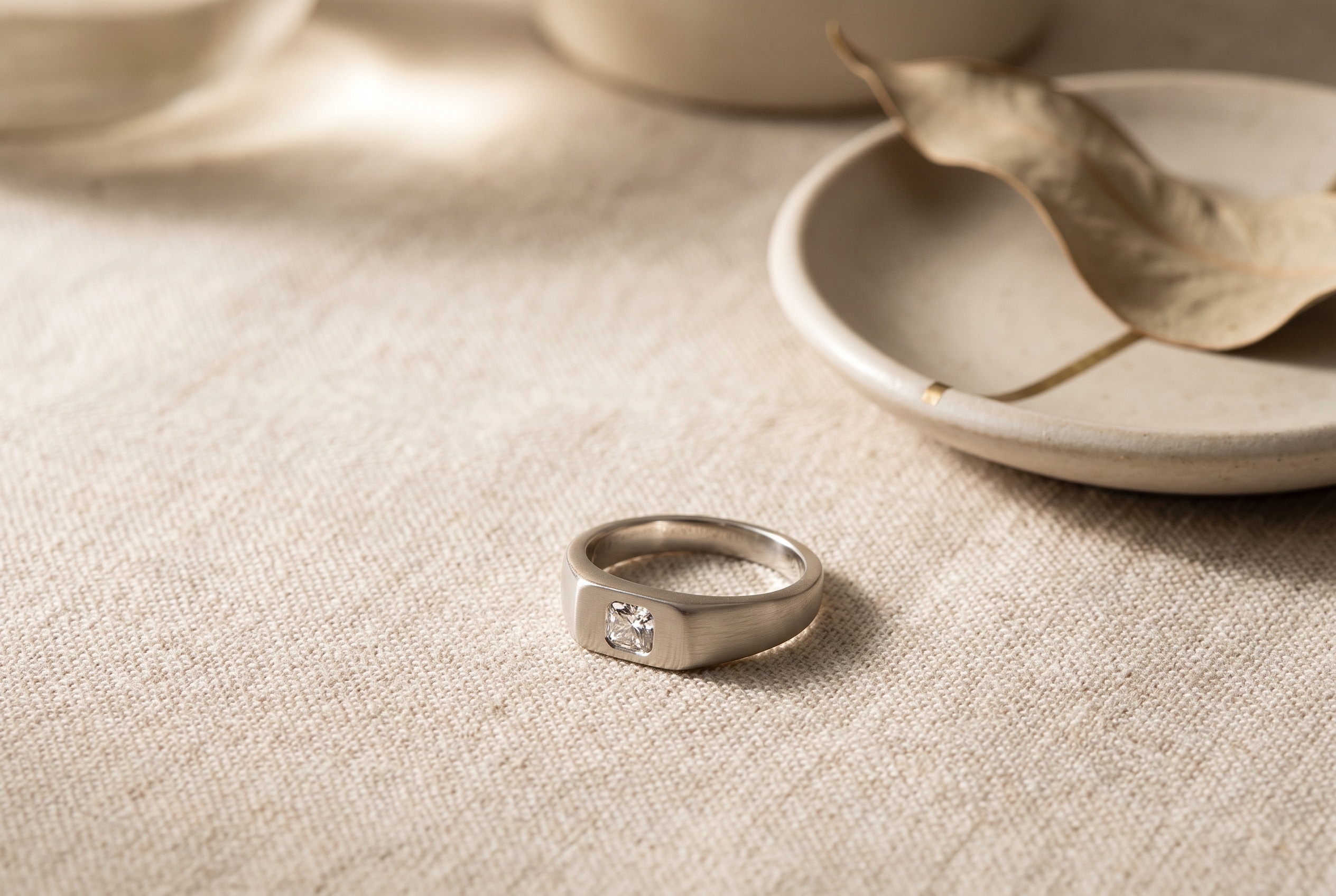
A flat or slightly raised face, often set with a single diamond or a small cluster, echoing the traditional signet ring silhouette historically used for family crests and monograms. This is one of the most enduringly popular pinky ring styles and pairs well with a single well-cut center stone in a low-profile bezel or flush setting.
Cluster/Pavé Pinky Ring
A face covered in small pavé or cluster-set diamonds rather than one dominant stone — a bolder, more maximalist look that has grown in popularity as a statement piece, particularly among buyers wanting a visibly diamond-heavy ring without a single large, expensive center stone.
Band-Style Pinky Ring
A simple diamond band, either full or partial eternity, worn as a pinky piece rather than a ring-finger wedding band. This style has grown alongside broader demand for stackable and minimalist diamond jewelry, and works well as a lower-cost entry point into the category.
Setting Considerations for a Smaller Finger
Because the pinky finger sees more incidental daily contact with surfaces (typing, gripping, general hand use) relative to its size than the ring finger does, low-profile settings — flush, bezel, and low-set prong mounts — are generally preferred for pinky rings intended for regular daily wear, for the same practical comfort and snag-resistance reasons they're preferred in men's earring and other close-to-the-body diamond jewelry categories. Taller, more elevated prong settings do appear in pinky ring designs meant primarily for occasional or evening wear, where maximizing light performance matters more than everyday durability, but a retailer building a core, wearable pinky ring line should weight inventory toward lower-profile settings.
Diamond Shape and Size Choices
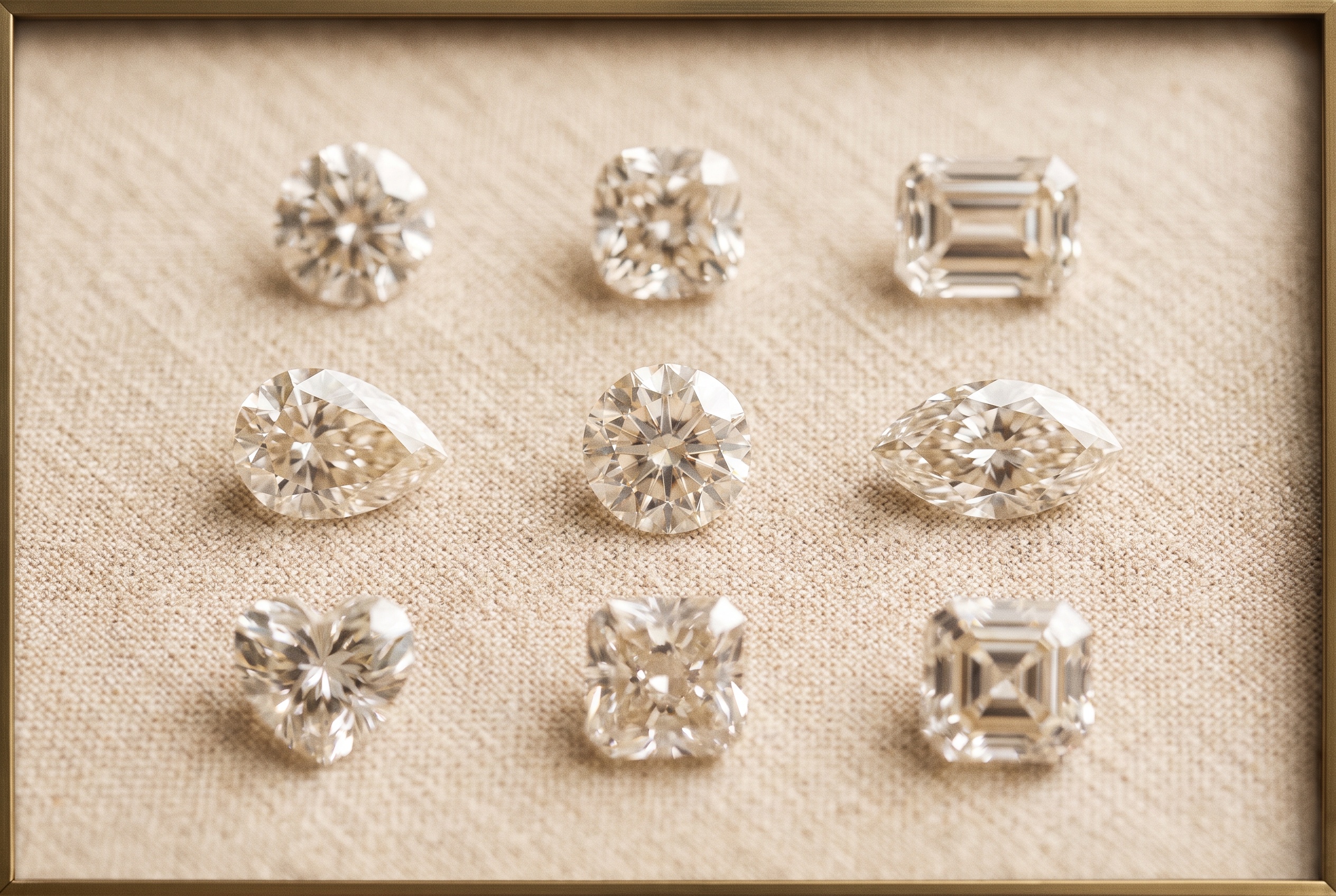
Round brilliant remains the most commonly sourced shape for pinky rings, for the same broad-compatibility reasons it dominates most diamond jewelry categories, but square and rectangular shapes — princess, emerald, and asscher in particular — appear more frequently in pinky rings than in many other categories, since their geometric outline suits the flat-faced signet silhouette especially well. Stone sizes in pinky rings commonly run smaller than in a comparable ring-finger piece, reflecting both the smaller finger itself and a styling preference in this category for a refined, understated look over a large, dominant center stone — though statement pinky rings with larger stones remain a real, if smaller, share of demand.
Color and Clarity Standards for Pinky Ring Stones
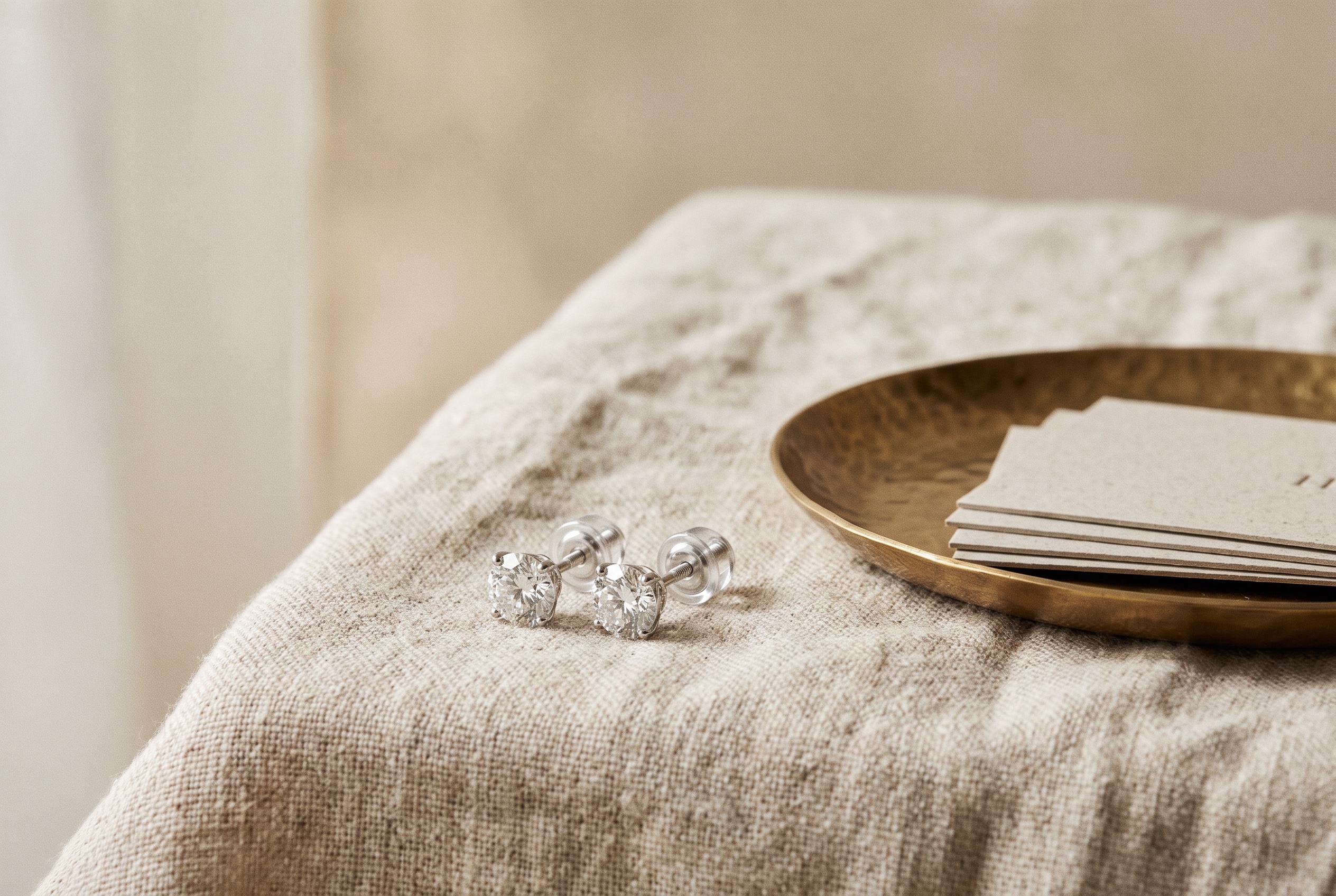
Because pinky ring center stones tend to run on the smaller side and are frequently set in low-profile flush or bezel mounts rather than light-maximizing prong settings, a G-H color and VS clarity commercial standard typically reads as clean and bright at these sizes and settings — closely mirroring the standard sourcing approach for men's stud earrings, which face a similar combination of smaller stone size and lower-profile setting. Reserving higher color and clarity grades for larger statement pinky ring stones, where the visual improvement from a tighter grade is more apparent, is generally the more efficient use of sourcing budget for the bulk of a pinky ring line.
Lab-Grown vs. Natural Diamonds for Pinky Ring Programs
Given that pinky ring center stones commonly run smaller and the category's core buyer is often price-sensitive relative to bridal and anniversary categories, CVD lab-grown diamonds are a natural fit for the bulk of a pinky ring line, delivering the same color and clarity range at meaningfully lower cost. Natural diamonds remain a reasonable choice for larger statement pinky rings, particularly signet-style pieces positioned as a long-term signature or heirloom piece rather than an everyday accessory, where natural provenance carries more weight with the buyer.
Metal Choices for Pinky Rings
Yellow gold has traditionally been the dominant metal choice for signet-style pinky rings specifically, reflecting the style's historical roots, though white gold and platinum have grown significantly as alternatives alongside the broader shift toward cooler-toned metals in men's jewelry generally. Black rhodium-plated and gunmetal-finished pieces have also grown as a distinct sub-category for buyers wanting a bolder, more modern statement look, following the same trend already well established in men's earrings and other cooler-toned men's jewelry categories.
Which Hand and Which Pinky: Does It Matter for Sourcing?
Pinky rings are traditionally worn on either hand depending on personal preference and regional convention — some markets and buyer segments lean toward the left pinky, others toward the right, and some buyers wear rings on both — but this has essentially no bearing on sourcing decisions, since finger sizing and setting choices don't meaningfully differ between hands for the same individual. Where hand does matter is dominant-hand wear comfort: a buyer who works with their hands extensively may prefer a pinky ring on their non-dominant hand specifically to reduce wear and impact exposure, which is worth a retailer mentioning as sizing and fit guidance during a sale rather than a sourcing consideration in itself.
Family Crest and Monogram Customization
A meaningful share of signet-style pinky ring demand comes from customization requests — a family crest, initials, or a monogram engraved or set into the ring's face, sometimes alongside or in place of a diamond. Retailers building a pinky ring program with strong signet-style demand should have a clear, priced custom engraving or crest-setting workflow available, since this customization request comes up often enough in this specific category (more than in most other diamond ring categories) that treating it as a one-off special order each time creates unnecessary friction and slows down what could otherwise be a routine, well-priced add-on service. A diamond can be set into the crest design itself (commonly at a corner or as a single accent point) or set separately alongside it, and offering both configurations as standard options — rather than requiring a fully custom design brief for every request — makes this a faster, more profitable service line.
Pricing a Pinky Ring: What Drives the Final Cost
Pinky ring pricing follows a somewhat different pattern than ring-finger diamond rings, since the category's typical smaller stone sizes mean metal weight, setting labor, and any customization (engraving, crest-setting) make up a proportionally larger share of total cost than in a stone-dominant engagement ring. A signet-style pinky ring with a modest center stone and custom crest engraving can carry a meaningfully higher finished price than its stone cost alone would suggest, purely on the strength of the metal weight (signet faces tend to use more metal than a comparable ring-finger band) and the skilled engraving labor involved. Retailers should price and market this category with that cost structure in mind, rather than defaulting to a stone-weight-driven pricing model borrowed from engagement ring merchandising — quoting and displaying pricing that breaks out stone, metal, and labor/customization separately helps a pinky ring buyer understand why a modest-stone signet piece can cost meaningfully more than its carat weight alone would suggest, which reduces price-objection friction at the point of sale.
Regional and Cultural Variation in Pinky Ring Demand
Pinky ring styling and demand intensity vary meaningfully by region and cultural context in ways worth factoring into inventory planning for a retailer serving a geographically broad customer base. Signet-style pinky rings carry particularly strong, longstanding demand in markets with an established family-crest or old-money aesthetic tradition, while cluster and pavé statement styles see stronger demand in markets more heavily influenced by hip-hop and streetwear-driven jewelry trends. A retailer serving multiple regional markets or a broad online customer base benefits from stocking across both styling traditions rather than assuming one dominant regional preference applies universally, and should be cautious about assuming a national or global online audience shares the same styling instincts as a single physical showroom's local walk-in customer base.
Building a Pinky Ring Program: Inventory Planning
- Stock a wider range of smaller sizes than a standard ring-finger line requires, since pinky sizes commonly run 2–4 sizes smaller.
- Prioritize low-profile flush and bezel settings for the core, everyday-wear portion of the line.
- Weight shape inventory toward round, princess, and emerald cuts, since square and rectangular shapes suit signet-style faces particularly well.
- Source a G-H/VS commercial standard as the default tier, reserving higher grades for larger statement pieces.
- Offer both yellow gold traditional styling and white metal/black rhodium modern alternatives to serve both ends of the category's styling spectrum.
Durability Considerations for a Daily-Wear Statement Ring
Because pinky rings marketed as a personal-signature piece are often intended for near-daily wear over years, durability deserves the same attention a retailer would give an everyday-wear wedding band, even though the category is stylistically closer to a statement piece. Flush and bezel settings hold up better under daily wear than exposed prong settings for the reasons already covered, but metal choice and thickness matter too — a thin, lightweight signet face will show wear (dents, edge rounding) faster than a substantially built one, and buyers purchasing a pinky ring as a long-term signature piece generally respond well to being sold on that durability upfront rather than discovering it as a disappointment after a year of wear. Retailers should stock signet and band-style pinky rings in at least two weight/thickness tiers — a lighter, lower-cost option and a substantially built option marketed specifically on longevity — to serve both the price-sensitive buyer and the buyer specifically looking for a piece built to last.
Cross-Selling Opportunities Alongside a Pinky Ring Purchase
Pinky ring buyers, particularly the self-purchase and personal-signature segment, are a strong cross-sell audience for other men's diamond jewelry categories built around similar styling and setting logic — men's diamond stud earrings using the same low-profile flush and bezel setting philosophy, and diamond-set cufflinks or tie bars that share the pinky ring's signet-adjacent, personal-signature positioning. Retailers who merchandise these categories together, rather than as entirely separate product lines, capture a buyer already in a men's-statement-jewelry mindset who may not have arrived intending to shop those adjacent categories but responds well to a coordinated presentation.
Trends Driving Pinky Ring Demand
Pinky rings have benefited from the same broader normalization of men's diamond jewelry driving growth in men's earrings and other categories, alongside a specific resurgence of interest in signet-style rings as a personal-signature or family-heritage piece rather than a purely decorative accessory. Hip-hop and streetwear culture has also been a meaningful influence on pinky ring styling specifically, pushing bolder cluster and pavé designs into mainstream demand alongside the more traditional signet silhouette. A growing self-purchase, non-occasion-driven buyer base — distinct from the gift and milestone-driven purchase patterns common in most other diamond ring categories — has also broadened the category's addressable market beyond its traditional core buyer.
Merchandising and Sizing Communication
Because sizing uncertainty is a real, recurring friction point in this category, retailers benefit from communicating pinky ring sizing clearly and proactively at the point of sale — explaining that pinky sizes commonly run smaller than ring-finger sizes and offering an in-store or mail-in sizing option rather than assuming a customer already knows their pinky size the way they'd typically know their ring-finger size. A retailer who builds sizing guidance directly into product listings and in-store consultation for this specific category, rather than treating it identically to a ring-finger sale, generally sees fewer post-purchase resize requests and a smoother overall buying experience.
Sourcing Diamonds for a Pinky Ring Line Wholesale
Guru Diam supplies loose CVD lab-grown and natural diamonds across the shapes, sizes, and quality tiers most relevant to pinky ring construction, with IGI, GIA, and GCAL certification available on stones at 0.30ct and above. Trade buyers can review current inventory through certified diamonds and matching pairs for cluster and pavé designs, and work with Guru Diam's custom jewelry team on signet and low-profile setting construction through custom jewelry. In-stock inventory ships same-day from Guru Diam's New York and Los Angeles locations. New trade accounts can apply through trade partner, with current terms available at the wholesale hub. For related sourcing fundamentals, see our men's diamond earrings guide, cathedral setting ring guide, and ring size chart guide.
Frequently Asked Questions
How much smaller is a pinky ring size than a ring-finger size?
Pinky ring sizes commonly run two to four US sizes smaller than ring-finger sizes on the same hand, though this varies considerably by individual hand proportions, and the pinky finger is also more likely to have a tapered or irregular shape that affects fit.
Who typically buys diamond pinky rings?
Demand skews toward male buyers and signet-style or statement designs, plus a meaningful self-purchase segment of style-focused buyers of any gender who treat the pinky ring as a personal signature piece rather than a relationship-milestone purchase.
What setting works best for a pinky ring worn daily?
Low-profile flush and bezel settings are generally preferred for daily-wear pinky rings, since the finger sees frequent incidental contact during normal hand use. Taller prong settings suit occasional or evening-wear pieces better.
Should pinky ring diamonds be lab-grown or natural?
CVD lab-grown diamonds suit the bulk of a pinky ring line well, given typically smaller stone sizes and a price-sensitive core buyer. Natural diamonds remain a reasonable choice for larger statement or heirloom-positioned signet pieces.
What diamond shape works best for a signet-style pinky ring?
Square and rectangular shapes — princess, emerald, and asscher in particular — suit the flat-faced signet silhouette especially well, though round brilliant remains the most broadly sourced shape across the category overall.
What metal is traditional for a diamond pinky ring?
Yellow gold has traditionally dominated signet-style pinky rings, though white gold, platinum, and black rhodium-plated finishes have grown significantly as alternatives alongside the broader shift toward cooler-toned metals in men's jewelry.
Can a pinky ring be customized with a family crest or monogram?
Yes — custom engraving and crest-setting requests are common in the signet-style segment of this category. A diamond can be set at a corner or accent point of the crest design, or set separately alongside it, and retailers with strong signet demand benefit from offering both as standard, priced options rather than treating every request as a one-off custom job.
Guru Diam is a trade-only wholesale diamond supplier with locations in New York and Los Angeles, supplying loose natural and CVD lab-grown diamonds with IGI, GIA, and GCAL certification available, for jewelers building pinky ring, signet, and other statement ring lines. Browse current inventory in certified diamonds or apply for a trade account through trade partner.