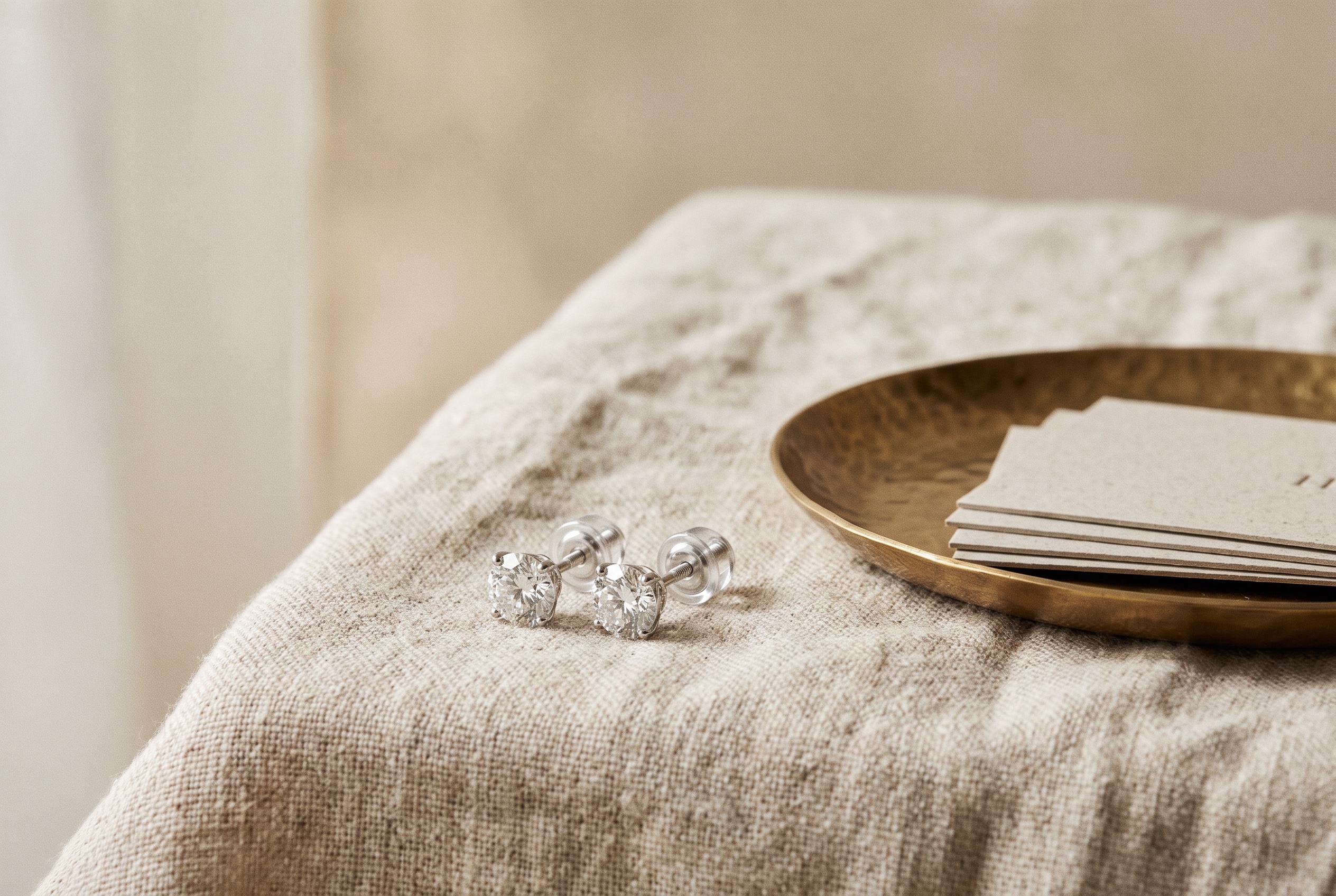

Men's diamond earrings are, from a sourcing standpoint, defined less by a distinct product type than by a distinct set of buyer preferences: smaller, more restrained carat weights, a strong lean toward low-profile bezel and flush settings over prong-set solitaires, frequent single-earring rather than pair purchases, and a heavier preference for white metal and black or gunmetal-toned accents. For a jeweler or retailer building a men's earring line, sourcing decisions need to reflect those preferences directly rather than simply scaling down a women's stud program.
This guide is written for the trade — retailers, jewelers, and designers sourcing loose diamonds to build or expand a men's earring line — not a consumer buying guide. It covers how men's earring demand differs from the broader stud and drop earring market, sizing and setting conventions specific to the category, single-earring inventory planning, and what to look for in a wholesale diamond supplier for this segment.
How Men's Diamond Earring Demand Differs From the General Market
The general diamond earring market skews heavily toward pairs, larger carat weights for statement pieces, and a wide range of prong-set brilliant styles. Men's diamond earring demand runs in a narrower, more specific band: smaller individual stone sizes (commonly well under a quarter carat per stone), a strong preference for settings that sit flush or close to the ear rather than an elevated prong mount, and — distinctively — meaningful single-earring demand, where a buyer wants exactly one stud rather than a matched pair. A retailer stocking or sourcing for this category needs to plan inventory around all three of those differences, not just offer a scaled-down version of an existing women's stud line.
Typical Carat Weights and Sizing for Men's Studs
Men's diamond stud earrings most commonly run in the range of roughly 0.10ct to 0.50ct per stone (0.20ct to 1.00ct total weight for a pair), with the bulk of retail and wholesale demand concentrated toward the lower half of that range. This is a meaningfully smaller average size than the general stud earring market, reflecting a buyer preference for a subtle, close-to-the-ear look rather than a large, highly visible stone. Retailers sourcing for this segment should weight inventory toward 0.10–0.25ct stones specifically, since that's where the bulk of actual sell-through in this category tends to concentrate, with larger sizes available but representing a smaller share of typical demand.
| Stone Size (per earring) | Typical Positioning | Relative Demand |
|---|---|---|
| 0.05–0.10ct | Entry-level, everyday-wear studs | High |
| 0.10–0.25ct | Core men's stud range — the bulk of category sell-through | Highest |
| 0.25–0.50ct | Statement studs for buyers wanting more visible presence | Moderate |
| 0.50ct+ | High-end statement pieces | Lower, niche demand |
Single-Earring Demand: A Category-Specific Sourcing Consideration
One of the more distinctive features of the men's diamond earring category is genuine demand for a single earring rather than a matched pair — a meaningfully larger share of purchases than in the general earring market, where pairs dominate almost universally. This has a direct sourcing implication: a retailer building a men's earring program benefits from being able to source and price loose diamonds individually rather than only as matched pairs, and from stocking settings designed to look complete and intentional as a single piece rather than only as half of a pair. Suppliers who can quote and fulfill single-stone orders at the same per-carat pricing structure as pair orders make this part of the category meaningfully easier to serve.
Setting Styles Preferred in Men's Earrings
Flush (Gypsy) Setting
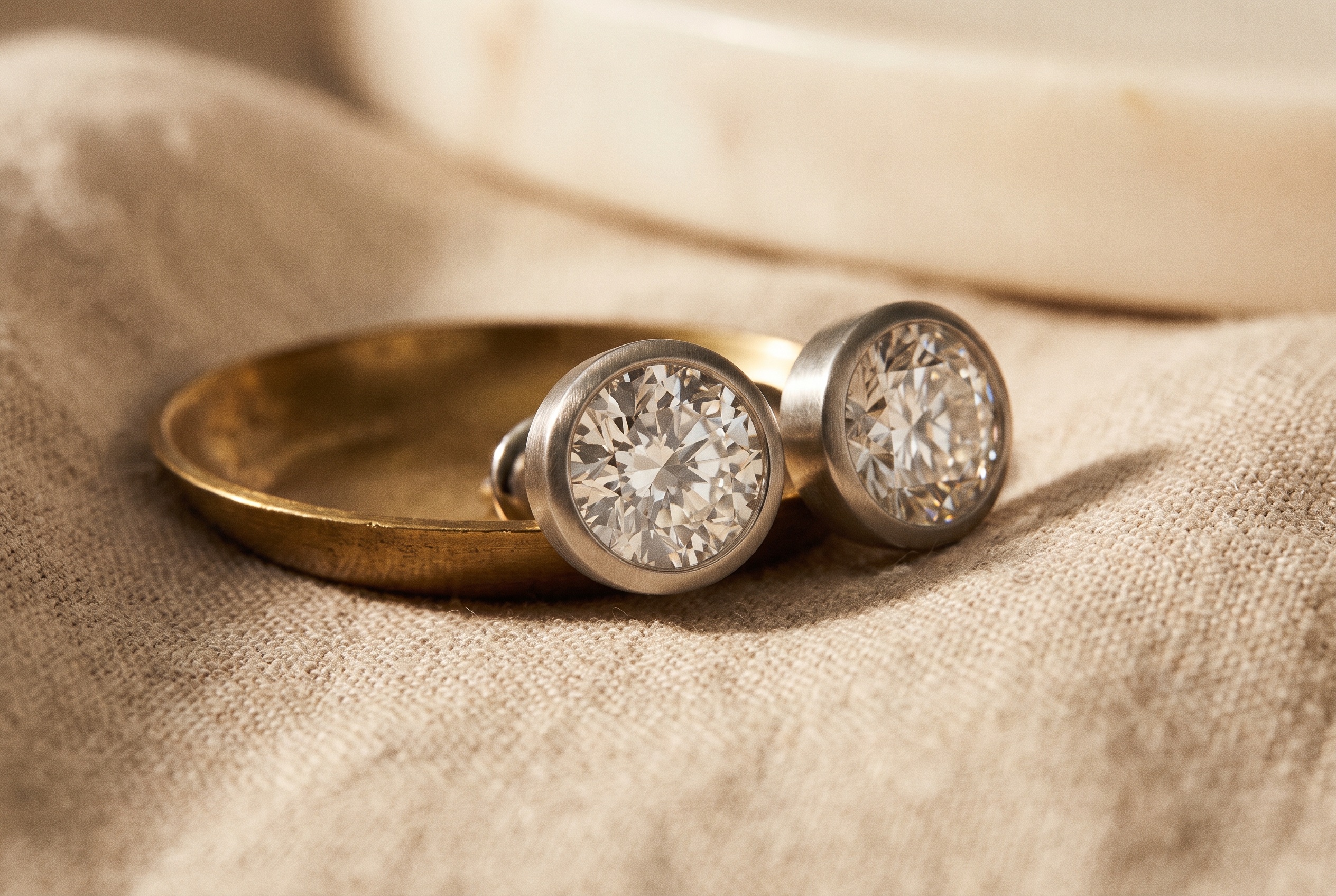
The diamond is set directly into a hole drilled into the metal, sitting flush with the surrounding surface rather than raised on prongs. This is the dominant setting style in the men's category specifically because it produces the low-profile, close-to-the-skin look that most buyers in this segment are looking for, and because a flush-set stone has no raised prongs to catch on hair, collars, or headphones during daily wear.
Bezel Setting
A thin metal rim fully surrounds the stone, offering a slightly more visible frame than a flush setting while still sitting low and close to the ear. Bezel settings are a common middle-ground choice between a flush setting's minimal profile and a traditional prong setting's higher visibility.
Prong (Martini/Solitaire) Setting
Traditional raised-prong settings do appear in the men's category, generally for larger statement stones where maximizing brilliance and light performance matters more than an ultra-low profile, but they represent a smaller share of overall men's stud demand than flush and bezel styles.
Diamond Color and Clarity Considerations for Men's Studs
Because men's studs run smaller on average and are frequently set in a low-profile flush or bezel mount rather than an elevated prong setting that maximizes light return, buyers in this category can often source slightly further down the color and clarity scale than they would for a comparable-size women's stud without a noticeable difference in finished appearance — a near-colorless G-H color range and VS clarity typically reads as clean and bright at these smaller sizes and lower-profile settings, at a meaningfully better price point than pushing for the top color and clarity tiers on a stone this size.
Metal and Finish Preferences
White metals — platinum, white gold, and increasingly black rhodium-plated or gunmetal-finished white gold — dominate men's earring demand by a wide margin over yellow or rose gold, reflecting a broader preference in men's jewelry generally for cooler, more understated metal tones. A retailer building out a men's earring line should weight metal options accordingly, with black rhodium and gunmetal finishes worth stocking as a distinct, growing sub-category rather than treating white gold as the only cool-toned option.
Lab-Grown vs. Natural Diamonds for Men's Earring Programs
Because men's stud sizing skews smaller and price-sensitivity in this category tends to be relatively high for what is often an everyday-wear piece rather than a milestone purchase, CVD lab-grown diamonds are a natural fit for the bulk of a men's earring line, offering the same color and clarity range at a meaningfully lower cost than natural material — allowing a retailer to hold margin or offer a more attractive retail price point at the sizes where most of this category's demand actually sits. Natural diamonds remain a reasonable choice for higher-end statement studs where a buyer specifically wants natural provenance, but lab-grown material is generally the more efficient sourcing choice for the core 0.10–0.25ct range that drives most of the category's volume.
Building a Men's Earring Program: Inventory Planning
- Weight core inventory toward 0.10–0.25ct stones — this is where the bulk of actual demand concentrates, and where CVD lab-grown material offers the strongest cost advantage.
- Stock both single-stone and matched-pair options — single-earring demand is a real, distinct share of this category and shouldn't be treated as an afterthought.
- Prioritize flush and bezel setting components over traditional prong mounts for the bulk of the line, reserving prong settings for larger statement pieces.
- Stock white metal options broadly, including black rhodium and gunmetal finishes, rather than defaulting to standard white gold or platinum alone.
- Source a G-H / VS commercial standard as the default tier for core-range studs, reserving tighter color and clarity grades for larger statement pieces where the improvement is more visually apparent.
Trends Driving Growth in Men's Diamond Earrings
Men's diamond earrings have moved from a niche category into a meaningfully larger share of overall diamond jewelry demand over the past several years, driven by a few converging trends. Broader mainstream acceptance of men's jewelry generally — extending well beyond earrings into chains, bracelets, and rings — has normalized diamond studs as a standard men's accessory rather than a specialty or subculture item. Hip-hop and streetwear culture's long-standing influence on jewelry trends has also pushed diamond studs further into mainstream men's fashion, while a separate, more understated trend toward minimalist, low-profile men's jewelry (flush and bezel settings specifically) has broadened the category's appeal beyond buyers seeking a bold, visible statement piece. For a retailer, this combination means the category now spans two fairly distinct buyer profiles — a minimalist, subtle-statement buyer and a bolder, larger-stone statement buyer — and a well-planned inventory should serve both rather than concentrating entirely on one end of that spectrum.
Diamond Shape Choices for Men's Studs
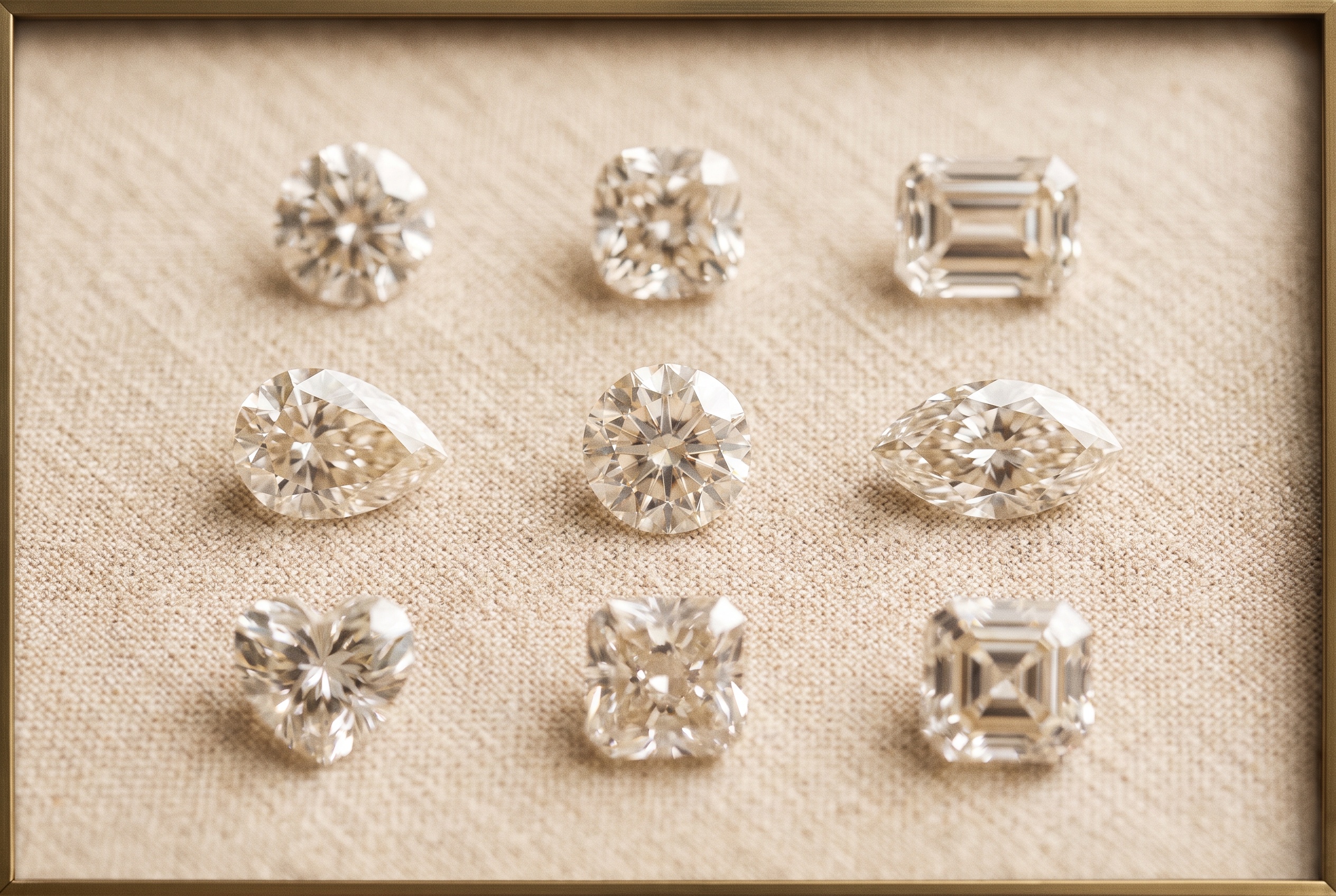
Round brilliant is by a wide margin the dominant shape choice for men's diamond studs, valued for maximum brilliance in a small stone and broad, universal styling that works across flush, bezel, and prong settings alike. Princess and cushion cuts appear as a secondary but real share of demand, generally among buyers wanting a slightly more distinctive, modern silhouette than the classic round stud. Fancy shapes like emerald, asscher, or marquise are a niche presence in this category specifically — their more elongated or angular outlines tend to read less cleanly at the very small sizes most common in men's studs, which is a practical, sizing-driven reason round brilliant remains the default recommendation for the bulk of a men's stud program.
Retail Merchandising Considerations
Because single-earring demand is a real, distinct part of this category, retailers should merchandise men's diamond studs differently than a standard paired-earring display — showing individual stud options clearly priced and displayed as complete, standalone pieces, not only as half of a paired listing. Case and display language that speaks directly to a men's buyer (rather than reusing general "earrings" merchandising copy built around women's stud and drop styles) also measurably affects conversion in this category, since a men's-specific buyer is often shopping with different reference points and vocabulary than the general earring customer. Retailers who've built out a dedicated men's jewelry case or online category, rather than folding men's studs into a general unisex earring listing, generally report stronger sell-through in this specific product line.
Price Point Strategy: Structuring a Men's Earring Line
A well-structured men's earring line typically spans three price tiers built around the sizing and setting patterns already covered above: an entry tier (0.05–0.10ct, flush-set, priced for everyday, low-commitment purchase), a core tier (0.10–0.25ct, flush or bezel-set, representing the bulk of expected sell-through), and a statement tier (0.25ct and above, often prong or bezel-set, for buyers wanting a more visible piece). Structuring inventory and pricing around these three tiers, rather than a single flat price point across the whole line, lets a retailer capture both the high-volume core buyer and the smaller but real statement-tier buyer within one coherent product line, without either segment feeling like an afterthought to the other.
Men's vs. Women's Stud Sourcing: A Side-by-Side Comparison
| Factor | Men's Diamond Studs | General/Women's Diamond Studs |
|---|---|---|
| Typical stone size | 0.10–0.25ct core range | Wider range, commonly extending well above 0.50ct |
| Dominant setting | Flush and bezel | Prong (martini/four-prong) most common |
| Single-stone demand | Meaningful, distinct share of purchases | Minimal — pairs dominate almost universally |
| Metal preference | White metals, black rhodium, gunmetal finishes | Broader spread across white, yellow, and rose gold |
| Shape preference | Round brilliant strongly dominant | Wider mix including fancy shapes |
Screw-Back vs. Push-Back: A Practical Sourcing and Merchandising Note
Post and closure hardware matters more in the men's category than it might seem, since men's ears on average tend to have slightly larger piercing gauges and men's studs see more incidental contact from hats, headphones, and collars during a typical day. Screw-back posts, which thread into place rather than simply pushing on, provide meaningfully more security against loss during active daily wear and are the more common choice for the category's core price tiers specifically for that reason. Push-back (friction) posts remain an option for lower-cost entry pieces, but a retailer should be explicit with customers about the tradeoff, since a lost stud from a friction back coming loose during normal activity is a common, avoidable source of customer dissatisfaction and return requests in this category.
Seasonal and Gifting Demand Patterns
Men's diamond earrings see a distinct seasonal demand pattern compared to women's fine jewelry, with a pronounced spike around major gifting occasions — particularly the holiday season and Father's Day — driven largely by purchases made as a gift rather than a self-purchase. This differs from categories like engagement rings, where self-directed or couple-directed shopping dominates year-round. Retailers planning inventory depth for this category should weight stock levels toward these gifting windows specifically, since demand outside those periods, while real and steady, runs measurably lower than the seasonal peaks.
Return, Resizing, and Warranty Considerations
Because men's studs are frequently purchased as gifts rather than selected in person by the wearer, this category carries a somewhat higher rate of post-purchase exchange than self-selected fine jewelry — most commonly a request to size up or down in carat weight rather than an actual defect or dissatisfaction with quality. Retailers who structure a men's earring line around clearly defined size tiers (as outlined earlier) rather than continuous, one-off carat weights make this kind of gift-driven exchange considerably easier to fulfill quickly, since a same-tier or adjacent-tier swap can typically be handled from existing stock rather than requiring a new custom order.
Sourcing Diamonds for a Men's Earring Line Wholesale
Guru Diam supplies loose CVD lab-grown and natural diamonds — sold individually or as matched pairs — across the sizes and quality tiers most relevant to a men's earring program, with IGI, GIA, and GCAL certification available on stones at 0.30ct and above. Trade buyers building or expanding a men's earring line can source single stones and matched pairs alike without a pair-only minimum, review current inventory in matching pairs and certified diamonds, and work with Guru Diam's custom jewelry team on setting and metal options through custom jewelry. In-stock inventory ships same-day from Guru Diam's New York and Los Angeles locations. New trade accounts can apply through trade partner, with current terms available at the wholesale hub. For general matched-pair sourcing principles that also apply to men's earring stones, our lab-grown diamond earrings guide covers matching fundamentals in more depth.
Building a First Men's Earring Order: A Practical Checklist
Retailers stocking this category for the first time benefit from a structured initial order rather than an ad hoc mix pulled from general earring inventory. A reasonable starting order weights roughly sixty percent of total stones toward the 0.10–0.25ct core range across a mix of flush and bezel setting components, twenty percent toward the 0.05–0.10ct entry tier for lower-commitment purchases and gifting, and the remaining twenty percent toward 0.25ct-and-above statement pieces to capture the higher end of the category without overcommitting to it. Sourcing single stones alongside matched pairs from the start — rather than adding single-stone capability later — avoids having to re-source or reconfigure inventory once single-earring demand shows up in early sell-through data, which it reliably does in this category based on the buying patterns described above.
Frequently Asked Questions
What size are men's diamond stud earrings usually?
Most men's diamond studs run between roughly 0.10ct and 0.50ct per stone, with the bulk of actual demand concentrated in the 0.10–0.25ct range — a meaningfully smaller average size than the general stud earring market.
Do men buy single earrings or pairs?
Both, but single-earring demand is a genuinely larger share of this category than in the general earring market. Retailers serving this segment benefit from sourcing and pricing loose diamonds individually, not only as matched pairs.
What setting is best for men's diamond earrings?
Flush (gypsy) settings are the most common choice, producing a low-profile, close-to-the-skin look with no raised prongs to catch on hair or clothing. Bezel settings are a common middle-ground, and prong settings appear mainly on larger statement studs.
Should men's diamond earrings use lab-grown or natural diamonds?
CVD lab-grown diamonds are a strong fit for the core 0.10–0.25ct size range that drives most of this category's demand, offering the same color and clarity range at a meaningfully lower cost. Natural diamonds remain a reasonable option for larger statement pieces.
What color and clarity grade works for men's studs?
A near-colorless G-H color and VS clarity commercial standard typically reads as clean and bright at the smaller sizes and lower-profile settings common in this category, at a better price point than pushing for the top color and clarity tiers. Reserving tighter color and clarity grades for larger statement studs, where the visual improvement is more apparent, is generally a more efficient use of sourcing budget than applying the same tight standard across the whole line.
What metal is most popular for men's diamond earrings?
White metals dominate — platinum, white gold, and increasingly black rhodium-plated or gunmetal-finished white gold — reflecting a broader preference for cooler, more understated tones over yellow or rose gold in men's jewelry generally.
Should men's studs use screw-back or push-back posts?
Screw-back posts are generally the safer, more secure choice for the category's core price tiers, since men's daily activities (hats, headphones, collars) create more incidental contact than typical for women's studs. Push-back posts remain a reasonable option for lower-cost entry pieces, but retailers should be upfront with customers about the added security a screw-back post provides.
When do men's diamond earrings sell best?
Demand spikes noticeably around major gifting occasions, particularly the holiday season and Father's Day, since a large share of purchases in this category are made as a gift rather than a self-purchase. Retailers should weight inventory depth toward these seasonal windows specifically, while maintaining steady baseline stock the rest of the year for self-purchase and everyday demand.
What shape diamond works best for men's studs?
Round brilliant is by far the dominant choice, valued for maximum brilliance at small sizes and broad compatibility with flush, bezel, and prong settings alike. Princess and cushion cuts appear as a smaller but real secondary share of demand for buyers wanting a more distinctive look.
How should a retailer structure a first men's earring order?
A reasonable starting mix weights roughly sixty percent of stones toward the 0.10–0.25ct core range, twenty percent toward an entry tier around 0.05–0.10ct, and twenty percent toward statement pieces at 0.25ct and above — while sourcing both single stones and matched pairs from the outset rather than adding single-stone capability later, since single-earring demand shows up reliably once a retailer starts tracking actual sell-through in this category.
Guru Diam is a trade-only wholesale diamond supplier with locations in New York and Los Angeles, supplying loose natural and CVD lab-grown diamonds — sold individually or as matched pairs — with IGI, GIA, and GCAL certification available, for jewelers building earring, ring, and finished jewelry lines. Browse current inventory in matching pairs or apply for a trade account through trade partner.