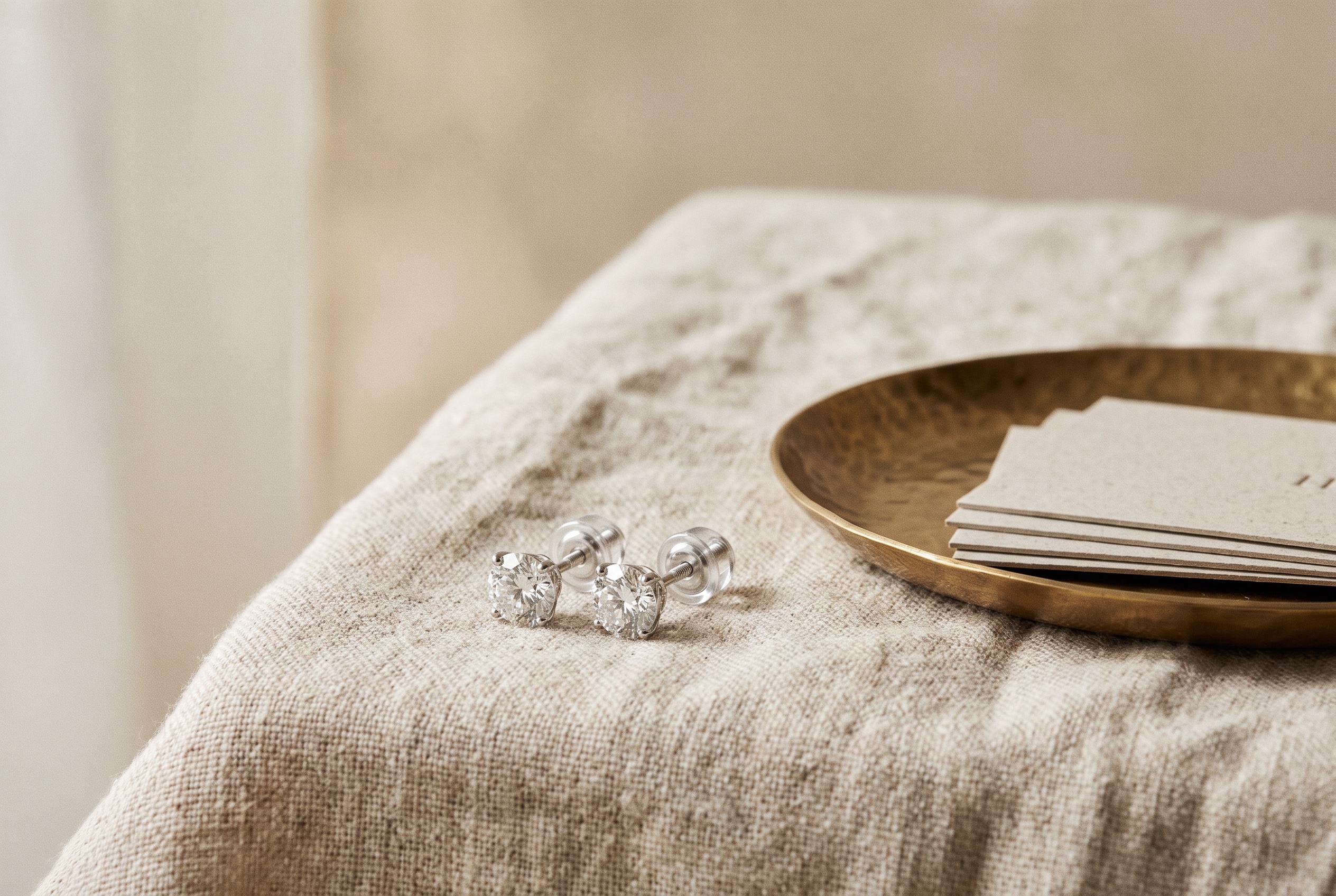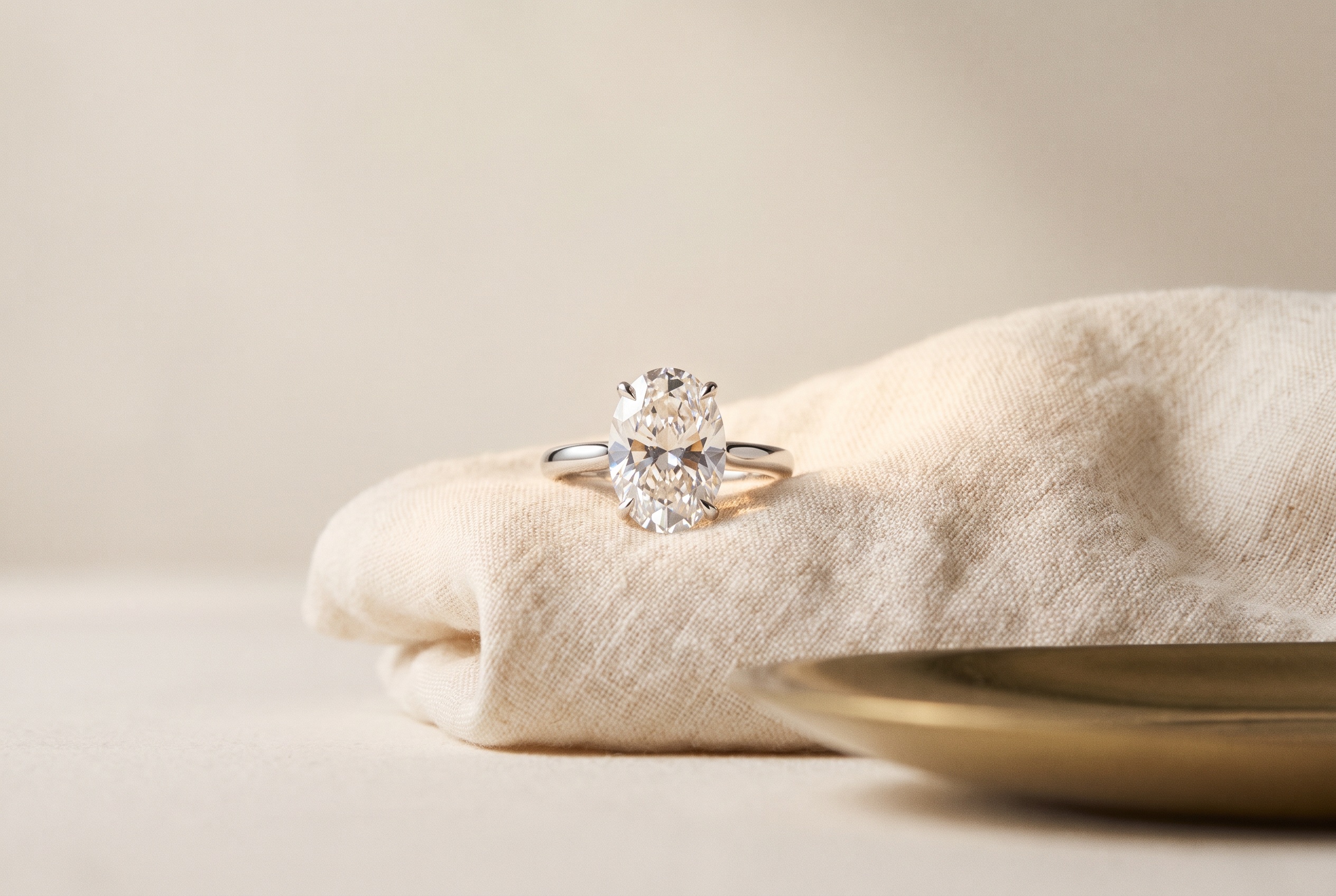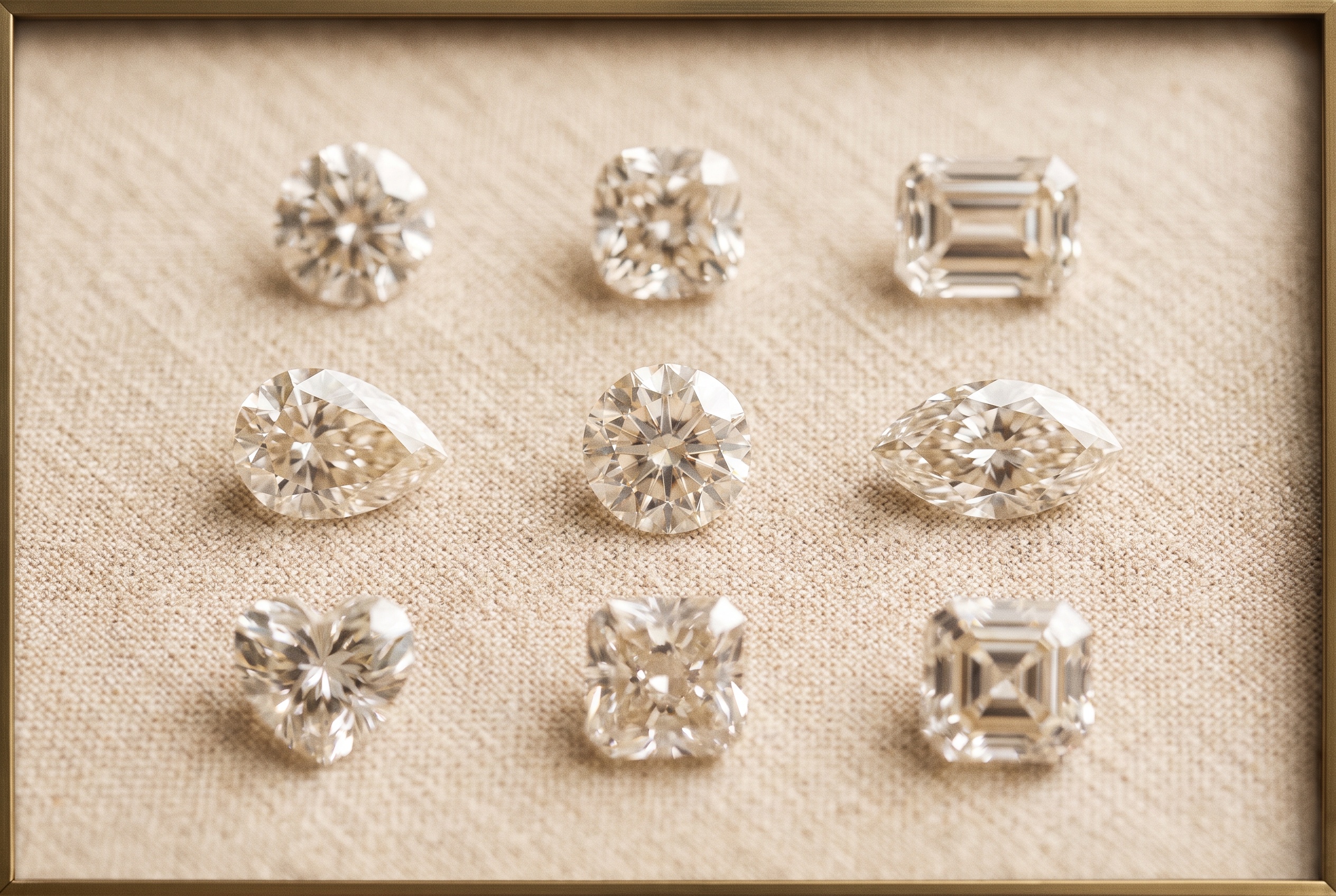

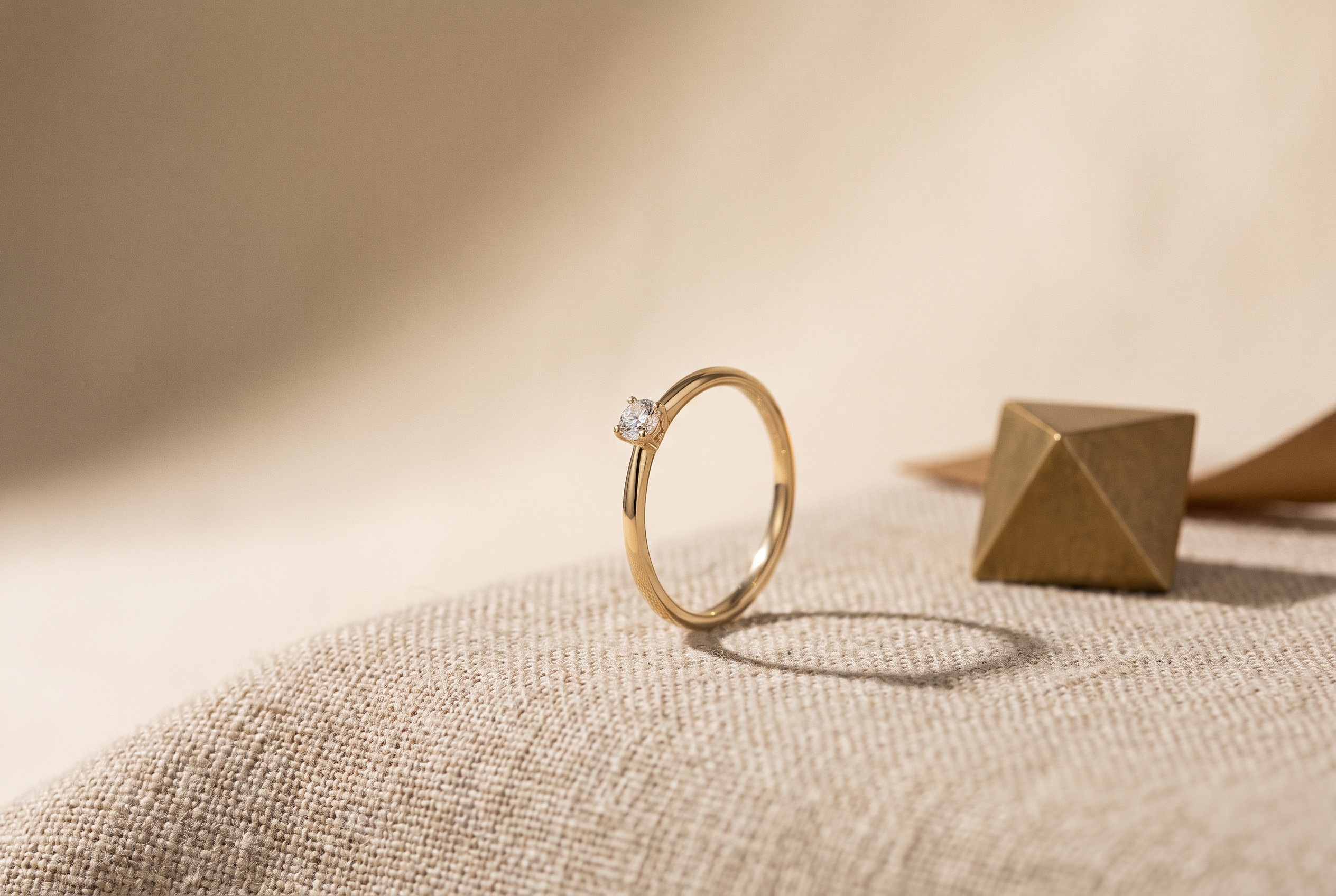
A diamond promise ring is a ring set with one or more diamonds, given as a symbol of commitment ahead of or separate from an engagement, typically at a smaller stone size and lower price point than an engagement ring. For a jeweler or retailer building a promise ring line, sourcing decisions center on a distinct buyer profile from engagement-ring shoppers: smaller carat weights, price sensitivity, and design language that signals "commitment" without directly imitating an engagement ring's traditional solitaire presentation.
This guide is written for the trade — retailers, jewelers, and designers sourcing loose diamonds to build or expand a promise ring line, not a consumer buying guide. It covers how promise ring demand differs from engagement ring demand, typical carat weights and price points, design and setting conventions specific to the category, and what to look for in a wholesale diamond supplier for this segment.
What Distinguishes a Promise Ring From an Engagement Ring
The functional difference between a promise ring and an engagement ring is entirely about meaning and buyer intent, not any fixed rule about design or diamond content — a promise ring can be given at any point in a relationship as a symbol of commitment, fidelity, or an intention to become engaged in the future, without carrying the specific "will you marry me" meaning an engagement ring carries. In practice, this difference in intent translates into real, consistent sourcing differences: promise rings run at meaningfully smaller carat weights and lower total price points than engagement rings, and design language tends to favor styles that read clearly as distinct from a traditional solitaire engagement ring, both so a promise ring doesn't visually "compete" with a later engagement ring and so it doesn't send an unintended engagement signal.
Typical Carat Weights and Price Points for Promise Ring Diamonds
Promise ring center stones most commonly run in the range of roughly 0.05ct to 0.30ct, with the bulk of retail and wholesale demand concentrated toward the smaller half of that range — meaningfully smaller than the 0.50ct-to-1.50ct range that dominates engagement ring center stones. This isn't simply a budget constraint; it also serves the category's core design goal of a ring that reads as thoughtful and symbolic without visually resembling an engagement ring's larger, more prominent center stone.
| Stone Size (center) | Typical Positioning | Relative Demand |
|---|---|---|
| 0.03–0.07ct | Entry-level, minimalist promise rings | High |
| 0.08–0.15ct | Core promise ring range — the bulk of category sell-through | Highest |
| 0.15–0.30ct | Upper-tier promise rings for buyers wanting more visible presence | Moderate |
| 0.30ct+ | Uncommon — this range typically shifts a piece toward engagement-ring positioning | Lower, niche demand |
Setting Styles Common to Promise Rings
Bezel Setting
The diamond is fully or partially surrounded by a thin metal rim rather than raised on prongs, giving a low-profile, modern look that reads clearly as distinct from a traditional prong-set solitaire engagement ring. Bezel settings are a common default choice for the category specifically because of that visual distinction, and because the enclosed setting style holds up well to the frequent, everyday wear a promise ring typically sees.
Cluster and Halo Settings
A small center stone surrounded by additional melee diamonds, which increases perceived size and visual presence without requiring a larger, more expensive center stone — a practical design lever for the category's smaller typical carat weight range.
Two-Stone and Multi-Stone Designs
Rather than a single center stone, some promise ring designs use two or three smaller stones side by side, a design choice frequently marketed around symbolic framing (two stones representing two people, or "past, present, future" for a three-stone design) that resonates with the category's commitment-focused positioning.
Band-Set (Eternity-Style) Designs
Small diamonds set into the band itself rather than as a raised center stone, a minimalist, everyday-wearable style that has grown in popularity for promise rings specifically because it avoids any visual resemblance to a traditional solitaire engagement ring entirely.
Design Language: Signaling "Commitment," Not "Engagement"
A meaningful share of promise ring sourcing and design decisions are driven by the need to avoid an unintended engagement signal — a real, practical concern for both retailers and end buyers, since a solitaire-style promise ring worn on the traditional engagement-ring finger can create genuine social confusion. Retailers building a promise ring line typically lean into bezel, cluster, two-stone, and band-set designs precisely because these styles read as visually distinct from the classic raised prong-set solitaire silhouette most people associate specifically with engagement, letting the ring communicate its intended meaning more clearly at a glance.
Lab-Grown vs. Natural Diamonds for Promise Ring Production
Because promise ring buyers are, as a category, meaningfully more price-sensitive than engagement ring buyers, the natural-versus-lab-grown decision has an outsized effect on what a retailer can offer at the category's typical price points. CVD lab-grown diamonds let a retailer offer a larger, better-quality center stone at the same price point a natural stone would require a much smaller or lower-grade stone to hit — a meaningful advantage in a category where buyers are actively comparing "how much ring" they get for a specific budget. Both natural and lab-grown material can meet the same quality standards; the origin decision is primarily a pricing and positioning choice for the retailer building out this category.
Diamond Quality Standards for Promise Rings
Given the category's smaller typical stone sizes, a DEF+/VS+ commercial standard (near-colorless to colorless, very slightly included or better) reads as clean and bright to the eye at the sizes most common in promise ring center stones and melee accents, without pricing the piece beyond what the category's typical buyer is looking to spend. Because clarity characteristics are naturally less visible in a smaller stone even before accounting for color, promise rings are a category where a slightly lower clarity grade than a buyer might choose for a larger engagement-ring center stone still reliably reads as eye-clean, giving retailers useful room to manage cost without a visible quality tradeoff.
Metal Choices for Promise Rings
White gold and sterling-adjacent white metals dominate the category for buyers wanting a neutral, versatile everyday piece, while rose gold has grown significantly in popularity for promise rings specifically, since its warmer tone reads as softer and more personal than the classic white-metal-and-solitaire engagement ring look. Yellow gold remains a smaller but consistent share of the category, often paired with vintage-inspired or two-stone designs. Metal choice in this category is driven more by personal style preference and current design trends than by any functional sourcing requirement tied to the diamonds themselves — a retailer sourcing settings across multiple metal options should still plan diamond quality standards centrally, since color grade in particular can read differently depending on the surrounding metal tone, even though the diamond specification itself doesn't need to change by metal choice.
Wholesale Pricing Structure for Promise Ring Diamonds
Because promise ring center stones sit at the smaller end of the certified loose-stone range and frequently below it, wholesale pricing for this category often runs through calibrated melee channels rather than individually certified center-stone inventory, particularly for stones under roughly 0.15ct. Retailers building a promise ring line benefit from a supplier who can quote consistent per-carat pricing across this smaller size range specifically, rather than only offering competitive pricing at the larger sizes more typical of engagement-ring center stones.
Building a Promise Ring Line Across Multiple Price Tiers
Retailers building out a promise ring category typically stock across at least two or three price tiers to capture the full range of buyer budgets within this already budget-conscious category: an entry-level single-stone bezel or band-set design at the smallest common carat weight, a core cluster or halo design that maximizes perceived size relative to actual carat weight, and an upper-tier two- or three-stone design for buyers wanting a more substantial piece while staying within the category's typical price ceiling. Planning diamond sourcing around this tiered structure from the outset lets a retailer negotiate melee and small-stone pricing across a larger combined order rather than sourcing each tier independently as demand arises.
Certification Considerations for Promise Ring Diamonds
Given typical promise ring stone sizes, most center stones in this category fall below the size threshold where individual certification is standard practice — melee and small accent stones are typically sold as graded parcel goods against a consistent quality baseline rather than with individual lab paperwork. For a retailer or buyer who does want a certified center stone in a promise ring design, certification is available the same way it is for any loose stone at 0.30ct and above through GIA, IGI, or GCAL, though this sits at the upper edge of what's typical for the category rather than the norm.
Which Finger a Promise Ring Is Worn On
Unlike an engagement ring, which has a firmly established convention (the left ring finger in most Western markets), a promise ring carries no single fixed convention for which hand or finger it's worn on — it's commonly worn on the left ring finger, the right ring finger, or occasionally a different finger entirely, depending on personal or cultural preference and, in some cases, a deliberate choice to visually distinguish it from where an eventual engagement ring will sit. This lack of a fixed convention is itself a useful piece of context for retail staff, since customers frequently ask about "correct" placement, and the honest answer is that there isn't one universally agreed rule the way there is for engagement rings.
Engraving and Personalization Trends
Promise rings see a meaningfully higher rate of interior-band engraving requests than engagement rings, since the category's symbolic, personal-commitment framing lends itself naturally to a short personal message, date, or initials engraved inside the band. Retailers building out a promise ring line should plan for engraving capability as a standard part of the category's fulfillment process, rather than an occasional special request, given how central personalization tends to be to how buyers select and gift a promise ring specifically.
Common Sourcing Mistakes Retailers Make in This Category
- Treating promise ring sourcing as a scaled-down engagement ring order. The category's design goals — avoiding engagement-ring resemblance, prioritizing price accessibility, and building around smaller stone sizes — call for genuinely distinct sourcing decisions, not simply a smaller version of an engagement-ring sourcing plan.
- Underestimating melee consistency requirements in cluster and halo designs. Because promise ring designs frequently rely on multiple small stones to build perceived size, lot consistency across those accent stones matters just as much as it would in a larger, more expensive piece.
- Not stocking a range of price tiers within the category. Promise ring buyers span a real range of budgets even within this generally lower-price category, and a single-price-point offering leaves real revenue on the table relative to a tiered assortment.
Promise Rings as a Gateway to a Future Engagement Ring Sale
For a retailer, a promise ring purchase frequently represents the first touchpoint in what can become a longer customer relationship — a meaningful share of promise ring buyers return to the same retailer months or years later for an engagement ring, particularly when the initial purchase experience was positive and the retailer maintained some form of ongoing contact or loyalty tracking. This makes the promise ring category worth stocking and merchandising thoughtfully even for a retailer primarily focused on higher-margin engagement ring sales, since it functions as a genuine acquisition channel for future higher-value purchases rather than a standalone, lower-priority product line.
Durability and Everyday-Wear Considerations
Because a promise ring is frequently worn as an everyday piece from the point of gifting onward, rather than reserved for special occasions the way some symbolic jewelry is, setting durability matters as much for this category as it does for an engagement ring meant for decades of daily wear. Bezel and flush-set styles, already common in the category for their design-distinction benefits described above, carry the added advantage of holding up well to daily wear and reducing the risk of a small center stone loosening or catching over years of use — a practical alignment between the category's design conventions and its actual wear pattern that's worth highlighting to customers at the point of sale.
Positioning a Promise Ring Line Against Fashion Rings
A retailer's promise ring assortment competes, in practice, with a broader category of fashion and stackable diamond rings that carry no specific symbolic framing at all — meaning a genuine promise ring line needs to differentiate itself through merchandising and messaging (commitment- and relationship-focused language, gift packaging, engraving options) rather than through the diamonds or settings alone, since the underlying product specifications frequently overlap heavily with a retailer's general small-stone fashion ring offering. Clear category signage and product naming in-store and online helps a promise-ring-specific buyer find the right product without having to sort through an undifferentiated small-stone ring assortment.
Seasonal Demand Patterns for Promise Rings
Promise ring demand sees meaningful seasonal spikes around Valentine's Day and the winter holiday gifting season, alongside a steadier baseline of demand tied to personal relationship milestones (anniversaries, graduations, moving in together) that don't cluster around a single calendar date the way engagement ring demand more heavily concentrates around proposal season. Retailers should plan melee and small-stone inventory to be in place ahead of the Valentine's Day and holiday peaks specifically, given typical setting and finishing lead times, while maintaining baseline stock year-round to serve the category's steadier non-seasonal demand.
Packaging and Gift Presentation Considerations
Because a promise ring is, almost by definition, a gift rather than a piece the recipient typically selects themselves, packaging and presentation play a larger role in the category's retail merchandising than they do for many other diamond jewelry categories. Retailers building out a promise ring line often invest in a distinct, gift-oriented box and card presentation separate from their standard fine jewelry packaging, since the unboxing moment is frequently part of the gifting occasion itself. This is a merchandising and packaging decision rather than a diamond-sourcing one, but it's worth planning alongside the diamond and setting sourcing described above, since both need to be finalized before a retailer can launch a complete, market-ready promise ring line.
Sourcing Promise Ring Diamonds Wholesale
Guru Diam supplies both calibrated diamond melee and certified loose stones across the size range used in promise ring production, in natural and CVD lab-grown material, at the DEF+/VS+ and tighter quality tiers common to this category. In-stock inventory ships same-day from Guru Diam's New York and Los Angeles locations, and trade accounts can review current melee stock in matching pairs, browse certified stones for a promise ring design that calls for one in certified diamonds, or explore fancy color options for a distinctive promise ring design in fancy color loose diamonds. Retailers and designers building a custom promise ring line can start at custom jewelry, and new trade accounts can apply through trade partner, with current terms available at the wholesale hub. For background on ring sizing conventions applicable across any ring category, our ring size chart guide is a useful companion reference, and buyers interested in a cluster-style promise ring design may also find our cathedral setting ring guide relevant for adjacent setting-style considerations.
Frequently Asked Questions
What size diamond is typical for a promise ring?
Most promise ring center stones run between roughly 0.05ct and 0.30ct, with the bulk of demand concentrated toward the smaller end of that range, meaningfully smaller than the 0.50ct-to-1.50ct range typical of engagement ring center stones.
What's the difference between a promise ring and an engagement ring?
The difference is primarily one of meaning and intent, not a fixed design rule — a promise ring symbolizes commitment or fidelity without carrying an engagement's specific "will you marry me" meaning. In practice, this translates to promise rings running at smaller carat weights, lower price points, and design styles chosen specifically to avoid resembling a traditional solitaire engagement ring.
Should a promise ring use natural or lab-grown diamonds?
Either can meet the same quality standard. CVD lab-grown diamonds let a retailer offer a larger or better-quality stone at the category's typical price points than natural material would allow at the same budget, which is a meaningful consideration given how price-sensitive promise ring buyers tend to be as a category.
What setting style is most common for promise rings?
Bezel, cluster/halo, two- or three-stone, and band-set (eternity-style) designs are all common, and are generally favored specifically because they read as visually distinct from a traditional prong-set solitaire engagement ring, avoiding any unintended engagement signal.
Are promise ring diamonds certified?
Most promise ring center stones fall below the size where individual certification is standard practice and are sourced as graded melee against a consistent quality standard. A certified center stone is available at 0.30ct and above for a design that calls for one, though this sits at the upper edge of what's typical for the category.
When do people typically buy promise rings?
Demand spikes around Valentine's Day and the winter holiday season, alongside a steadier year-round baseline tied to personal relationship milestones rather than a single concentrated proposal season the way engagement ring demand tends to cluster.
What finger does a promise ring go on?
There's no single fixed convention, unlike an engagement ring. Promise rings are commonly worn on the left or right ring finger, or another finger, depending on personal or cultural preference and sometimes a deliberate choice to distinguish it from where a future engagement ring will sit.
Do promise rings often get engraved?
Yes, at a meaningfully higher rate than engagement rings. The category's personal-commitment framing lends itself to short interior-band engravings — dates, initials, or a short message — and retailers building out a promise ring line should treat engraving as a standard fulfillment option rather than a rare special request.
Guru Diam is a trade-only wholesale diamond supplier with locations in New York and Los Angeles, supplying calibrated diamond melee and certified loose stones — natural and CVD lab-grown — for jewelers and retailers producing promise rings and other finished jewelry. Browse current melee inventory in matching pairs or apply for a trade account through trade partner.