
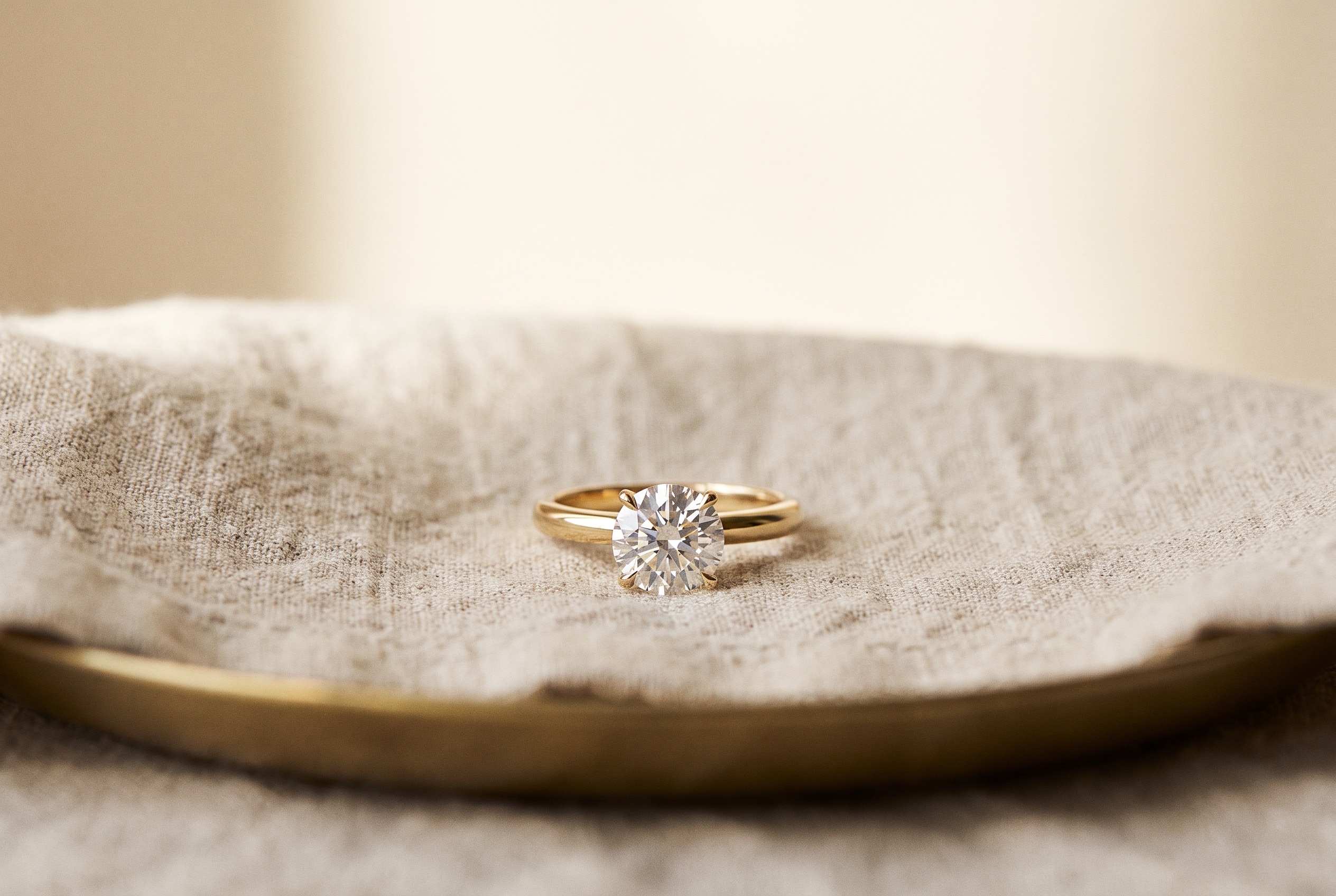
A 1 carat natural diamond's price is driven primarily by the interaction of cut, color, clarity, and certification — not carat weight alone — and can vary by a factor of ten or more between a lower-grade, uncertified stone and a top-grade, independently certified one at the same 1.00ct weight. There is no single "1 carat diamond price" that applies broadly; two stones can carry the identical carat weight and land in dramatically different price tiers depending on where they fall across the rest of the 4Cs.
For buyers and jewelers sourcing 1 carat natural diamonds — a size that sits right at the psychological and pricing threshold many retail buyers shop around — understanding what actually moves the number matters more than knowing a single average figure. This guide breaks down what drives 1 carat natural diamond pricing, how it compares to lab-grown at the same size, and what to check before buying or quoting.
Why "1 Carat" Isn't a Price Point on Its Own
Carat weight measures mass, not value — 0.2 grams, to be precise, for exactly one carat. Two 1 carat natural diamonds can be worth wildly different amounts because carat weight is only one of the four traditional grading criteria, and the other three (cut, color, clarity) each independently move price by significant multiples. A well-cut, colorless, flawless 1 carat natural diamond and a poorly cut, heavily included, deeply tinted 1 carat natural diamond both weigh exactly the same but can differ in price by ten times or more. Any "1 carat diamond price" quoted without reference to the other 4Cs is, at best, a very rough midpoint estimate — useful as a general orientation figure, but not something a buyer or jeweler should quote or budget against without the underlying grading specifics attached.
The Carat Premium: Why 1.00ct Specifically Costs More
Natural diamond pricing isn't linear with weight — it jumps at certain psychological size thresholds, and 1.00ct is the single most significant one. A 0.99ct diamond and a 1.00ct diamond of otherwise identical grade can carry a meaningfully different per-carat price, because rough-diamond cutters and dealers price around the "magic sizes" that retail buyers search for and request by name — 1 carat being the most requested weight globally for center stones. This means a stone cut to 0.99ct to preserve better proportions or clarity from the rough can sometimes be a better value than pushing for the full 1.00ct at the cost of cut quality, a trade-off wholesale buyers weigh regularly when sourcing.
How Cut Affects 1 Carat Natural Diamond Price
Cut grade (Excellent, Very Good, Good, Fair, Poor on a standard scale) affects price both directly — better cut grades command a premium — and indirectly, since cut quality determines how much visible size and sparkle a 1 carat stone actually shows face-up. A 1 carat diamond cut too deep concentrates weight in the pavilion, where it isn't visible, and can look smaller in millimeter diameter than a well-proportioned 1 carat stone, while also costing more per carat for a worse visual result. For buyers prioritizing appearance over a strict weight target, a well-cut 0.90–0.95ct stone can look just as large, and sparkle noticeably more, than a poorly cut full carat.
How Color Affects 1 Carat Natural Diamond Price
Color grade runs from D (colorless) to Z (light yellow/brown) on the standard scale, and price drops steadily as color grade moves down the scale, with some steeper jumps at certain grade boundaries (D–F "colorless," G–J "near colorless," and so on). At 1 carat, the difference between a D-color and a J-color stone of otherwise identical cut and clarity can be a substantial percentage of the total price, even though the color difference is often difficult for an untrained eye to detect, particularly once the stone is set and viewed against skin tone or a warmer metal like yellow or rose gold.
How Clarity Affects 1 Carat Natural Diamond Price
Clarity grade — from Flawless (FL) down through Included (I3) — measures internal inclusions and surface blemishes, and like color, price steps down at each grade boundary. At 1 carat, inclusions large enough to be graded SI or lower are sometimes visible to the naked eye depending on their size, type, and position, while VS and above are typically eye-clean, meaning invisible without magnification. Many value-focused buyers target VS2 or SI1 specifically at 1 carat, since it's often the range where a stone is reliably eye-clean while avoiding the steeper price jump into VVS and Flawless territory.
| Grade Tier (at 1.00ct, natural) | Relative Price Level | Typical Buyer Profile |
|---|---|---|
| D–F color / VVS–FL clarity / Excellent cut | Highest | Investment-grade or top-tier retail buyers prioritizing maximum quality |
| G–H color / VS clarity / Excellent–Very Good cut | High-mid | Buyers wanting a colorless, eye-clean look without paying for imperceptible top-tier grades |
| I–J color / SI clarity / Very Good cut | Mid | Value-focused buyers prioritizing size and eye-clean appearance over grading extremes |
| K+ color / I clarity / Good cut or below | Lowest | Budget-driven buyers, or buyers using the stone in a design where visible warmth/inclusions matter less |
Certification's Effect on 1 Carat Natural Diamond Price
An independently certified 1 carat natural diamond — graded by IGI, GIA, or GCAL — commands a premium over an uncertified stone of comparable apparent quality, because certification removes the guesswork and verifies the 4Cs claims through an independent third party rather than relying on a seller's own representation. At 1 carat and above, where individual stone value is high enough to matter significantly, buying uncertified is a real risk: without independent verification, there's no reliable way to confirm the stone is actually graded the way it's being sold, whether it's been treated (clarity-enhanced, color-treated, or irradiated) without disclosure, or in rarer cases whether it's even natural at all rather than lab-grown or simulated. Certification cost is a small fraction of a 1 carat stone's total value, which is why it's standard practice — not an optional upsell — for any transaction at this size.
Natural vs. Lab-Grown: The Biggest Price Lever at 1 Carat
The single largest price factor for a 1 carat diamond, larger than any individual 4Cs grade difference, is whether the stone is natural or lab-grown. A CVD lab-grown 1 carat diamond is typically available at a meaningful discount to a natural 1 carat diamond of comparable cut, color, and clarity, because lab-grown production doesn't carry the same rarity constraints as mined rough. This gap has widened as lab-grown production has scaled, giving buyers who prioritize size and grade over natural origin significantly more purchasing power at the same budget. Buyers specifically comparing the two should look at our companion 1 carat lab-grown diamond price guide for a direct breakdown of that gap and what drives it, and our general natural loose diamonds guide for the broader case for and against natural sourcing beyond price alone.
Market Factors That Move Natural Diamond Pricing Over Time
Beyond the individual stone's grading, broader natural diamond market conditions affect pricing over time: mine supply constraints, De Beers and other major producers' sales policies, macroeconomic demand shifts, and increasingly, competitive pressure from the growing lab-grown segment pulling price-sensitive demand away from lower and mid-tier natural stones specifically. Natural diamond prices at the very top of the quality range (exceptional color, clarity, and provenance) have generally held up better against these pressures than mid-market natural diamonds, which face the most direct competition from lab-grown alternatives at comparable size and grade.
Shape's Effect on 1 Carat Natural Diamond Price
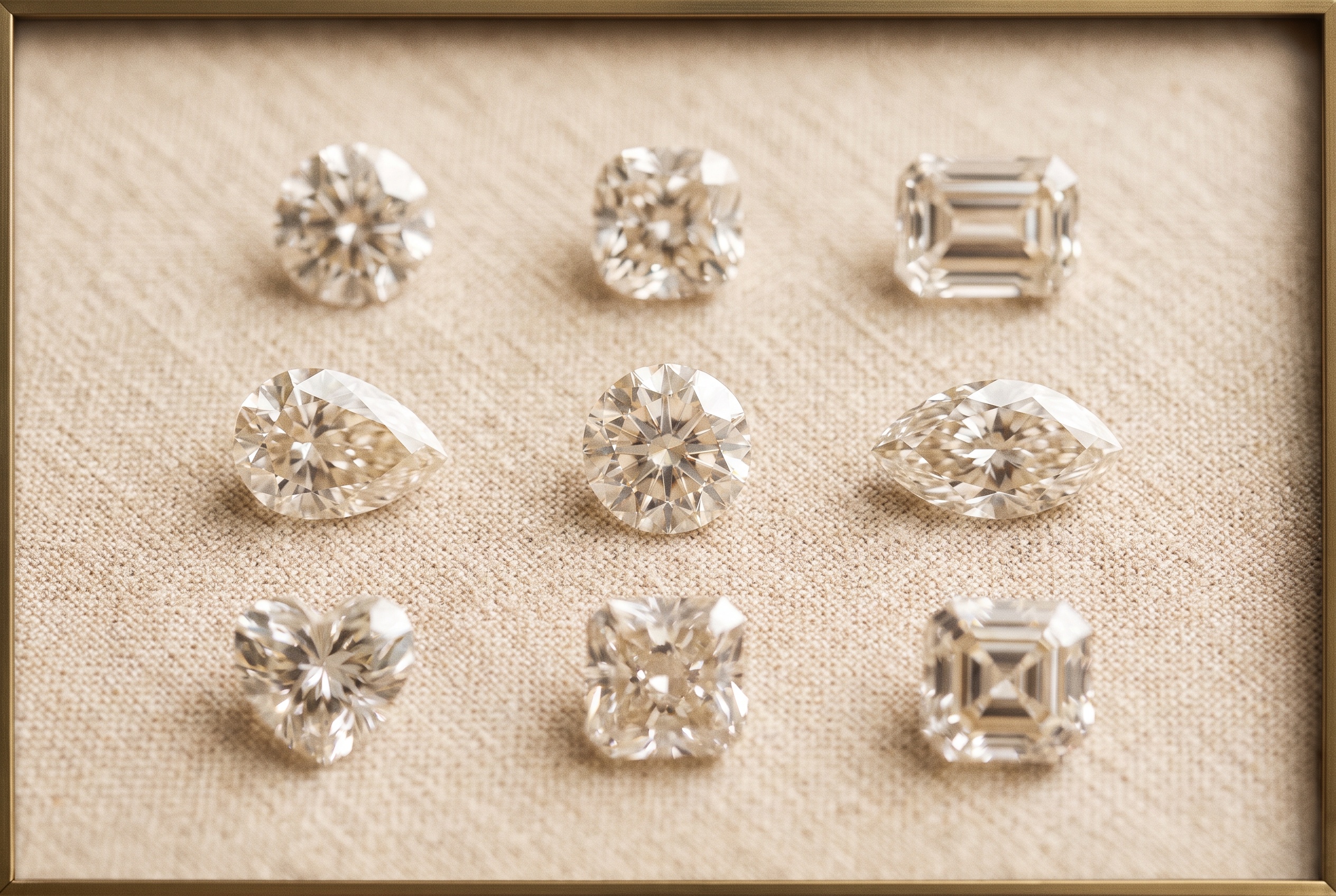
Shape is another significant lever at 1 carat that buyers sometimes underweight relative to the 4Cs. Round brilliant commands the highest price per carat of any shape, all else equal, for two compounding reasons: it requires cutting away more of the original rough crystal than fancy shapes (lower yield per rough stone), and it remains the most consistently requested shape for engagement rings and solitaires (steady, high demand). Fancy shapes — oval, pear, cushion, emerald, radiant, marquise — typically cost less per carat than round at the same grade, and several of them (oval and marquise especially, due to their elongated outlines) look larger face-up per carat than a round brilliant of identical weight, spreading the same mass across more visible surface area. A buyer prioritizing maximum visible size per dollar at 1 carat often finds better value in a well-cut fancy shape than in round; a buyer prioritizing maximum light performance and the classic solitaire look typically stays with round despite the premium.
Antique cuts — old mine, old European, and similar — occupy a different pricing logic entirely at 1 carat: they're a smaller, more specialized market with pricing driven more by rarity and the specific antique-cut aesthetic (a warmer, softer light performance than modern round brilliant) than by the standard shape-yield economics that set round-versus-fancy pricing. Buyers specifically seeking a 1 carat antique-cut natural diamond should expect a different, less standardized pricing structure than the mainstream round/fancy-shape market, and should budget extra sourcing time given the smaller supply of natural antique-cut rough being cut to that style today.
How Wholesale Buyers Should Think About Price Volatility
Natural diamond pricing at 1 carat isn't static even within a single grading tier — it moves with the broader natural diamond market on a rolling basis, unlike lab-grown pricing, which has followed a more consistently downward production-cost curve as manufacturing has scaled. For jewelers and designers building recurring natural-diamond inventory, this means pricing conversations benefit from checking current market levels close to the time of purchase rather than assuming last quarter's pricing still holds, particularly for larger orders where even a modest per-carat shift compounds into a meaningful total. Locking in supply relationships with a consistent wholesale source, rather than sourcing one-off from whichever market has the lowest price at a given moment, is generally the more reliable long-term approach for jewelers who need predictable natural-diamond availability and pricing to plan their own retail pricing around.
Natural Diamond Treatments and Their Effect on Price
Some natural diamonds on the market have been treated to improve their apparent color or clarity — clarity enhancement (filling fractures to reduce visibility) or color treatment (HPHT processing or irradiation to alter apparent color) are the most common. Treated stones sell at a significant discount to untreated natural diamonds of the same apparent grade, because the treatment isn't permanent in all cases and because most buyers specifically want an untreated, natural-state stone. Any treatment must be disclosed on a proper grading report — a certified report from IGI, GIA, or GCAL will note treatments explicitly, which is another reason certification matters specifically at the 1 carat-and-above size where treatment risk and its price impact are both meaningful.
Fluorescence and Its Small but Real Price Effect
Fluorescence — the glow some diamonds emit under ultraviolet light — is a minor but real factor in 1 carat natural diamond pricing that buyers sometimes overlook. Strong or Very Strong blue fluorescence can, in some cases, make a diamond appear slightly hazy or oily in strong UV-heavy daylight, and stones with strong fluorescence typically sell at a modest discount to otherwise identical non-fluorescent stones, particularly in higher color grades where the effect is more likely to be visible. In lower color grades (I–J and below), strong blue fluorescence can actually work in the buyer's favor, sometimes making the stone appear slightly whiter than its color grade alone would suggest. It's a secondary factor compared to cut, color, and clarity, but worth checking on the certificate for buyers optimizing price closely.
Regional and Seasonal Demand Effects on Price
1 carat natural diamond pricing also responds to seasonal and regional demand patterns, particularly because 1 carat is disproportionately the size requested for engagement rings. Demand — and by extension, price firmness — tends to run higher in the months leading into the fourth-quarter holiday season and again ahead of spring/early-summer proposal season, when engagement ring buying peaks in most Western markets. Regional demand shifts, particularly from fast-growing Asian markets where natural diamond preferences and grade priorities can differ from US buying patterns, also influence global natural diamond pricing over time, in ways that are largely outside any individual buyer's or jeweler's control but worth factoring into timing for large wholesale orders.
Buying vs. Sourcing: What Changes at Wholesale
Retail 1 carat natural diamond pricing includes significant markup layered on top of the stone's underlying wholesale cost — typically covering the retailer's overhead, marketing, and margin. Jewelers and designers sourcing 1 carat natural diamonds at the wholesale level are working much closer to the stone's actual underlying cost basis, which is why trade accounts matter for anyone regularly buying or setting natural center stones rather than sourcing one-off through retail channels. Wholesale sourcing also typically provides more direct access to full grading documentation and a wider range of grade combinations than a single retail selection, letting buyers optimize the specific 4Cs mix that matters most for their client or inventory rather than choosing from a narrower curated retail assortment.
Practical Buying Tips for 1 Carat Natural Diamonds
- Prioritize cut first. A well-cut stone at a slightly lower color or clarity grade will typically look better and sparkle more than a poorly cut stone with higher color/clarity numbers.
- Target the eye-clean threshold, not the top of the scale. VS2–SI1 clarity is frequently indistinguishable from higher grades to the naked eye at 1 carat, while costing meaningfully less.
- Confirm certification and treatment disclosure. Never buy a 1 carat-plus natural diamond without an independent report from IGI, GIA, or GCAL specifically noting any treatment.
- Compare against lab-grown at the same budget. A buyer with a fixed budget can often access a meaningfully higher grade in lab-grown than in natural at exactly 1 carat — worth weighing against the value placed on natural origin specifically.
- Check millimeter diameter, not just carat weight. Two 1 carat stones can measure differently in visible diameter depending on cut proportions.
- Factor in shape. Round brilliant carries the highest per-carat price of any shape; a well-cut fancy shape can deliver more visible size for the same budget.
- Check fluorescence on the certificate. Strong blue fluorescence carries a modest discount and, in lower color grades, isn't necessarily a downside.
Sourcing 1 Carat Natural Diamonds at Guru Diam
Guru Diam is a trade-only wholesale diamond supplier with locations in New York and Los Angeles, carrying certified natural loose diamonds alongside its CVD lab-grown catalog, calibrated melee, and finished jewelry — across every standard, antique, and exotic diamond shape. Natural loose stones at 1 carat and above ship with full grading documentation from IGI, GIA, or GCAL, giving buyers the independent verification standard practice requires at this size. Same-day shipping is available on in-stock natural loose diamond inventory from both locations, and custom pieces built around a natural center stone are finished in 4–6 days. See our broader natural loose diamonds guide for more on sourcing natural stones generally, and our GIA-certified natural diamonds guide for certification specifics.
Frequently Asked Questions
What is the price range for a 1 carat natural diamond?
Price varies enormously based on cut, color, and clarity — a lower-grade 1 carat natural diamond and a top-grade, independently certified one can differ by ten times or more. There's no single reliable "1 carat price" without specifying the full 4Cs combination.
Why is 1 carat specifically more expensive than 0.90 or 0.95 carat?
1.00ct is a "magic size" threshold that retail buyers specifically search for and request by name, which lets dealers and cutters price a full carat at a premium relative to stones just under that weight, even when the underlying quality is comparable.
Is a 1 carat natural diamond worth more than a 1 carat lab-grown diamond?
Yes, typically by a significant margin at comparable cut, color, and clarity. Natural diamond rarity commands a price premium over lab-grown diamonds of the same size and grade, though the gap varies depending on current market conditions for each category.
Does a 1 carat natural diamond need to be certified?
It isn't legally required, but it's standard practice and strongly recommended. Certification from IGI, GIA, or GCAL independently verifies the 4Cs and discloses any treatments, which matters significantly at 1 carat and above where individual stone value is high.
What clarity grade is best value for a 1 carat natural diamond?
VS2 or SI1 is commonly considered the best value range — typically eye-clean (no visible inclusions without magnification) while avoiding the steeper price jump into VVS and Flawless grades, where the difference is rarely visible to the naked eye.
Does cut matter more than carat weight for a 1 carat diamond's appearance?
Often, yes. A well-cut diamond slightly under 1 carat can look just as large and sparkle noticeably more than a poorly cut full-carat stone, since cut proportions determine both visible diameter and light performance.
Does fluorescence affect a 1 carat natural diamond's price?
Yes, modestly. Strong blue fluorescence typically discounts a diamond slightly, especially in higher color grades where it can occasionally cause a hazy appearance in strong UV light. In lower color grades, it can sometimes make the stone appear whiter, which some buyers view favorably.
Is now a good time to buy a 1 carat natural diamond?
Pricing fluctuates with mine supply, macroeconomic conditions, and lab-grown competition, so there's no universal answer. Buyers timing a large purchase should track current market conditions rather than relying on general seasonal guidance alone, and consider comparing natural against lab-grown pricing at the same budget before committing.
Guru Diam is a trade-only wholesale diamond supplier with locations in New York and Los Angeles, carrying certified loose diamonds, CVD lab-grown and natural stones, and finished jewelry across every standard, antique, and exotic diamond shape. Browse certified natural inventory in the certified diamonds category, source calibrated pairs through matching pairs, or build a custom piece through custom jewelry. Trade accounts can review current inventory and terms at the wholesale hub or apply through trade partner.