
Screw-back diamond earrings use a threaded post and a disc-shaped nut that screws onto it, rather than a friction-fit clutch, to hold the earring securely in the ear. For jewelers, they're the standard mounting for diamond studs above roughly 0.50ct per ear, because the extra retention justifies itself the moment a customer is carrying real stone weight on a single post. This guide covers how the mechanism is built, when to spec it over the alternatives, and what to check before adding screw-back styles to a wholesale program.
Diamond studs are one of the highest-repeat categories in a jeweler's case — they sell to first-time buyers, they sell as anniversary and push-present gifts, and they sell as upgrades when a customer trades a smaller pair in for something bigger. The backing mechanism is a small detail on paper, but it's the part of the piece a customer actually touches every day, and it's also the part most likely to generate a warranty claim if it's built cheap. This guide walks through how screw backs are constructed, how they compare to the other common backings, what drives cost in a wholesale build, what to check on quality, and how to think about stocking a program of them rather than one-off pairs.
How a Screw-Back Mechanism Works
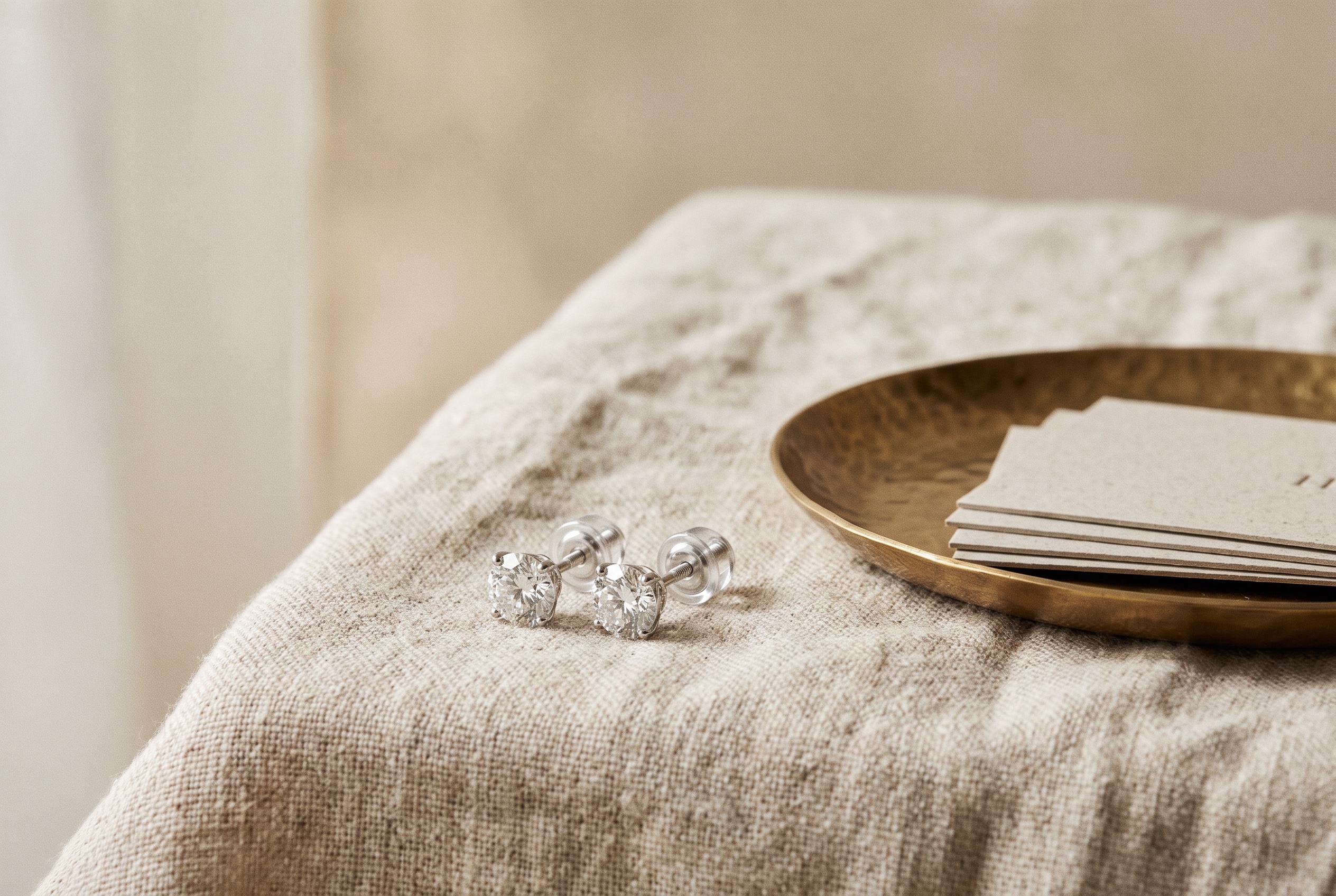
A screw-back earring has two parts on the post side: the post itself, which is externally threaded rather than smooth, and the back — a small disc, usually 5-6mm, with an internally threaded channel that turns down the post like a nut on a bolt. The customer pushes the earring through the ear, then rotates the disc clockwise until it seats snugly against the earlobe. Because the disc is threaded rather than pressure-fit, it can't slide off under normal wear the way a friction clutch can, and it takes a deliberate counter-rotation to remove — which is exactly the security profile that makes it the default choice for higher-value studs.
The post itself is typically 14k or 18k gold or platinum, matched to the head metal, and the threading is cut directly into the post rather than added as a separate part, so post gauge and thread quality both matter for how the mechanism feels and holds up. A well-cut screw back turns smoothly with light finger pressure and doesn't bind; a poorly cut one either strips after repeated use or requires enough force to turn that customers start avoiding removing the earrings at all, which isn't a great outcome either.
Why Jewelers Spec Screw Backs Over the Alternatives
Three backing types cover the large majority of diamond stud and drop earring sales, and each has a specific use case:
- Friction (push) backs — a simple clutch that slides onto a smooth post and holds by friction alone. Fast to put on and take off, standard on lower-carat and fashion pieces, but the friction can loosen over months of use and the back can work itself off without the wearer noticing.
- Screw backs — described above. The standard for diamond studs from roughly 0.50ct per ear upward, and frequently spec'd below that threshold too whenever a customer is buying for security rather than cost (children's earrings, gifts they don't want lost, daily-wear pieces).
- Lever backs — a hinged lever that locks into place, used almost exclusively on drop and dangle earrings rather than studs, because the mechanism needs the extra length of a drop design to work. Not really a screw-back alternative so much as a different earring category — see our diamond drop earrings guide for that side of the case.
The practical rule most jewelers use: friction backs below about a quarter carat per ear where the cost of upgrading isn't justified by the stone value, screw backs above that line and on any piece being marketed as a "forever" or milestone purchase, and lever backs reserved for drops and dangles regardless of stone size. Screw backs also see disproportionate demand for children's and first-piercing earrings, where a customer specifically wants a back that can't be pulled off by a small child, and for gifting occasions (anniversaries, graduations) where "harder to lose" is part of the pitch.
Screw Back vs. Push Back vs. Lever Back: Comparison
| Backing | Security | Ease of Use | Typical Use Case | Best Stone Weight Range |
|---|---|---|---|---|
| Screw back | High — threaded, resists accidental removal | Slower on/off, needs two hands | Diamond studs, milestone gifts, children's earrings | 0.25ct+ per ear, standard above 0.50ct |
| Push (friction) back | Moderate — can loosen over time | Fast, one-handed | Everyday fashion studs, lower-value pieces | Under 0.50ct per ear |
| Lever back | High for drops — locks shut | Fast, one-handed | Drop and dangle earrings | Any weight, style-dependent not weight-dependent |
| French wire (hook) | Low — open-ended, no lock | Fastest, no fastening step | Lightweight drops, fashion pieces | Under 0.25ct per ear typically |
What Drives Wholesale Cost on Screw-Back Studs
Three inputs make up the finished cost of a pair of screw-back studs, and each one is a separate sourcing decision for a jeweler building a program rather than a one-off:
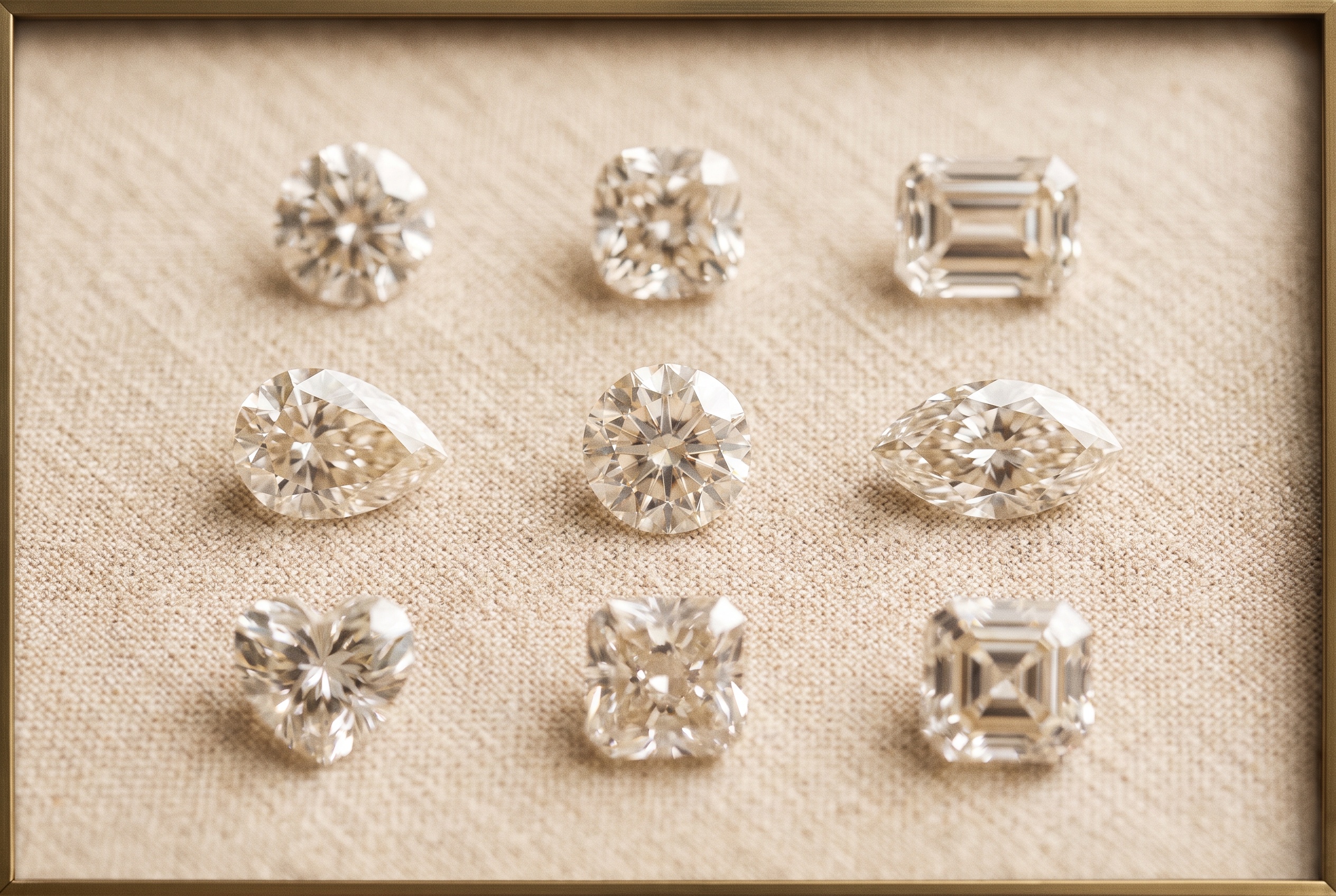
- Stone cost — the single largest input on any diamond-weight-driven piece. Round brilliant is by far the most common shape for studs because it maximizes perceived size per carat and its light performance holds up under close, repeated viewing (studs sit closer to the eye than almost any other jewelry category). Princess and cushion studs are the next most requested shapes.
- Metal and casting — 14k white gold is the volume default for studs, with 14k yellow, 18k, and platinum as upsell tiers. Casting a screw-back post correctly (threading cut cleanly, disc sized to sit flush) adds modest labor over a friction-back build but is not a major cost driver on its own.
- Setting labor — prong count and setting style (four-prong basket is the standard for stud security and light return) affect labor cost more than the backing choice does.
For a wholesale buyer, the practical sourcing question is less "how much does a screw back cost" and more "does my supplier build the post and disc as a matched, correctly threaded pair, or outsource them as generic stock parts that may not fit well together" — mismatched threading is the single most common quality complaint on lower-cost screw-back programs.
Quality Checks Before Stocking a Screw-Back Program
A handful of physical checks separate a well-built screw-back earring from one that will generate returns:
- Post gauge — thicker posts (typically 0.8-0.9mm) hold thread better and feel more substantial; thin posts are more prone to stripped or cross-threaded backs.
- Thread engagement length — the threaded portion of the post should be long enough that the disc engages several full turns before seating, not just one or two, which is what keeps the back from working loose.
- Disc fit and finish — the disc should sit flush against the earlobe without excessive play, and its edge should be smooth rather than sharp or burred.
- Head-to-post solder joint — on finished pieces, this joint takes the most repeated stress of any point in the earring; a weak joint is the most common failure point in returned studs, more often than anything related to the stone itself.
Asking a supplier directly how post and disc threading is cut and matched — machine-threaded to spec versus assembled from generic stock components — is a fair, specific question, and any wholesale supplier confident in their build should be able to answer it without hedging.
Stone Options for Diamond Studs
Round brilliant remains the default recommendation for stud programs because its facet structure performs consistently at the close viewing distance studs get, but a well-rounded case should carry alternatives:
- Princess and cushion — the next most requested shapes for studs, offering a different silhouette while still reading well at small sizes.
- Lab-grown (CVD) vs. natural — CVD lab-grown diamonds let a program hit a lower price point at the same visual carat weight, which matters directly on a stud program because customers are comparing total look-per-dollar across two earrings, not one stone. Natural stones remain the choice for buyers prioritizing rarity or resale positioning. See our lab-grown diamond guide for the full comparison.
- Matched pairs — because studs are sold and worn as a pair, color and clarity matching across the two stones matters more here than in almost any other category; a visibly mismatched pair is a common source of customer complaints even when each individual stone grades correctly on paper.
Certification on Stud Programs
Individual certification is standard practice for stones at 0.30ct and above going into stud programs, with IGI, GIA, or GCAL paperwork available depending on the supplier and the buyer's preference. Below that threshold, studs are frequently built from matched, quality-controlled melee-tier stones sold as parcel goods rather than individually certified — the tradeoff between per-stone paperwork and program cost is a decision a jeweler makes based on their own price point and customer base, not a fixed rule.
Building a Screw-Back Stud Program: What to Source
A jeweler stocking studs at scale typically wants a spread across three axes rather than a single SKU: carat weight (a run from roughly 0.25ct to 2ct+ per stone covers most demand), metal (14k white as the volume default, with yellow, rose, and platinum as upsell options), and stone type (lab-grown for the value tier, natural for the upper tier). Sourcing all three axes from one supplier — rather than piecing a program together from multiple vendors — is where consolidation actually pays off operationally: one certification standard, one quality bar, one reorder relationship instead of three.
Custom and White-Label Programs
Beyond stock SKUs, many jewelers build a private program of screw-back studs sold under their own name rather than a supplier's brand. A white-label build means the finished pieces ship unbranded, so the retailer can price and market them as their own line — useful for a jeweler trying to build a signature stud program without the overhead of running their own bench for every order.
Seasonal and Occasion-Driven Demand
Diamond stud demand isn't flat across the year, and a jeweler planning inventory around a screw-back program benefits from stocking ahead of the occasions that actually drive the category. Graduation season (late spring) and the winter holiday stretch are the two heaviest windows for gift-driven stud purchases, followed by a smaller but steady lift around Mother's Day and Valentine's Day. First-piercing and children's studs run on a different, less seasonal cycle tied more to individual family timing than to calendar occasions, which is part of why a program built only around holiday-driven adult sizing can leave a gap in the smaller end of the size range. Push presents and anniversary upgrades — where a customer trades in a smaller pair for a larger one — tend to cluster less predictably but skew toward the upper end of the carat range a program carries, which is worth accounting for when deciding how deep to stock the top tier of a stud line versus the entry tier.
Packaging and Presentation for Gift-Driven Sales
Because such a large share of stud sales are gift purchases rather than self-purchases, presentation carries more weight on this category than on many others in a jeweler's case. A screw-back mechanism reinforces a gift-appropriate message on its own — "built to stay on" reads as a considered, permanent gift in a way a friction-back pair doesn't communicate as clearly — but the packaging around it should match. Boxes sized to the earring rather than generic, and any accompanying paperwork (the stone's certification, care instructions specific to a screw-back mechanism) presented as part of the purchase rather than an afterthought, both measurably affect perceived value at a given price point. This is a low-cost lever compared to the stone or metal cost, but it's one that's easy to underinvest in relative to how much it affects the customer's first impression of a gift-driven purchase.
Common Mistakes When Sourcing Screw-Back Earrings Wholesale
- Buying backs and heads from separate vendors. Threading tolerances aren't universal, and mismatched parts are the most common cause of a stripped or wobbly back.
- Skipping matched-pair review on natural stones. Two individually well-graded natural diamonds can still look mismatched side by side; always review the actual pair, not just the two certificates.
- Underspeccing post gauge to save cost. A thinner post shaves a small amount off unit cost but meaningfully raises the return rate on a program, which costs more than the savings.
- Ignoring backing choice on gift-driven SKUs. Anniversary, graduation, and first-piercing purchases are exactly the occasions where "harder to lose" is part of what the customer is paying for — defaulting everything to friction backs to save cost undersells those occasions.
Post Length, Gauge, and Comfort
Fit is a detail that rarely comes up until a customer complains, and it's specific to screw backs in a way it isn't for friction backs. Because the disc has to travel the full length of the threaded post before it seats, post length needs to be matched to typical earlobe thickness — too short and the disc can't seat fully snug against thicker lobes; too long and excess threaded post is left exposed behind the ear, which is uncomfortable and can catch on hair or clothing. Most wholesale stud posts run in the 10-11mm range, which fits the large majority of ear types, but a program aimed at a broader customer base (including double-pierced or cartilage placements) benefits from stocking a slightly longer post option alongside the standard length rather than forcing every customer into one size. Gauge matters for comfort as much as it does for thread durability discussed above — a post that's too thin can feel sharp or flex slightly under the weight of a larger stone, which some customers notice immediately and others only after wearing the piece for a full day.
Returns and Warranty: Where Screw-Back Programs Actually Fail
When a stud program generates a return or warranty claim, the backing mechanism is disproportionately often the cause rather than the stone or the head setting — which is exactly why the quality checks above matter more than they might seem to on a line-item basis. The two most common claims a jeweler will see on a screw-back program are a back that has stripped its threading after repeated use, so it no longer holds tension and spins freely without seating, and a post that has bent or loosened at the solder joint where it meets the head. Both are avoidable at the sourcing stage: stripped threading traces back to soft metal alloys or shallow thread cuts on the original post, and solder joint failures trace back to inconsistent bench work rather than to the design of the backing itself. A supplier who can speak specifically to alloy hardness on posts and to solder joint testing on finished pieces is a meaningfully lower-risk source for a program a jeweler intends to reorder from repeatedly, since warranty claims on a repeat SKU compound in a way a one-off sale's problems don't.
Sourcing Screw-Back Diamond Earrings Through Guru Diam
Guru Diam supplies both CVD lab-grown and natural diamonds for finished jewelry programs, including screw-back stud builds, with IGI, GIA, and GCAL certification all available depending on the stone. Custom jewelry orders — including private, white-label stud programs — are handled in-house, with cutting, setting, and polishing all under one roof rather than split across subcontractors. Trade accounts work with a single supplier across loose stones, matched pairs, and finished jewelry — one vendor, one shipment, one relationship instead of piecing a program together across multiple sources — backed by same-day shipping on in-stock inventory out of both the New York and Los Angeles offices. Browse certified diamonds and matched pairs for stud-ready stones, or start a custom jewelry build for a private-label program. New trade accounts can review terms at the trade partner page or browse the full wholesale hub.
Frequently Asked Questions
What carat weight should switch a stud program from push backs to screw backs?
Most jewelers set the line around 0.50ct per ear, though many spec screw backs below that threshold whenever the piece is being sold as a milestone gift or for a customer who specifically wants extra security, such as a first-piercing or children's pair.
Are screw-back earrings more expensive to manufacture than push-back earrings?
The backing mechanism itself adds only modest labor cost over a friction-back build. Stone cost and setting labor are much larger drivers of the finished price than the choice of backing.
Can screw backs be added to an existing push-back earring?
Not without replacing the post, since screw backs require a threaded post that a plain friction post doesn't have. Converting an existing pair means resetting the stone into a new head and post assembly rather than simply swapping the back piece.
Do screw backs work with lightweight or drop earrings?
Screw backs are built for stud-style earrings that sit directly against the earlobe. Drops and dangles typically use lever backs instead, since the mechanism needs the added length of a drop design to lock properly.
Is CVD lab-grown diamond a good fit for a screw-back stud program?
Yes — lab-grown studs let a program hit a lower price point at the same visual carat weight, which is a direct advantage on a two-stone piece like studs where the customer is comparing total look per dollar. Certification (IGI, GIA, GCAL) applies the same way to CVD stones as to natural ones.
How do I evaluate a wholesale supplier's screw-back quality before placing a bulk order?
Ask specifically how the post and disc are threaded and matched, check post gauge and thread engagement length on a sample pair, and inspect the head-to-post solder joint, which is the most common failure point in returned studs.
What post length should a screw-back stud program stock?
Most wholesale posts run 10-11mm, which fits the majority of ear types, but a program serving a broader customer base — including double-pierced or cartilage placements — benefits from carrying a slightly longer post option alongside the standard length rather than a single fixed size.