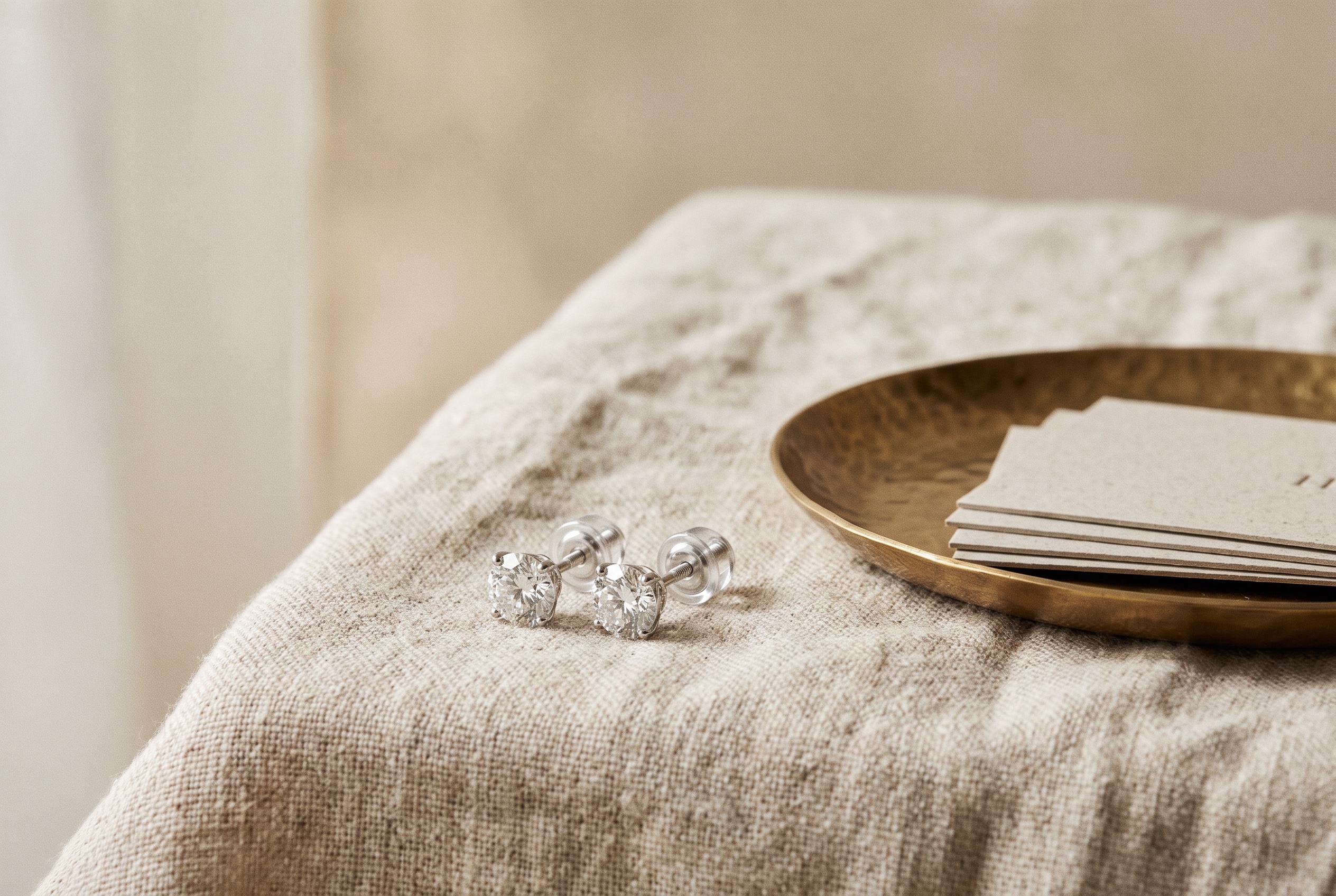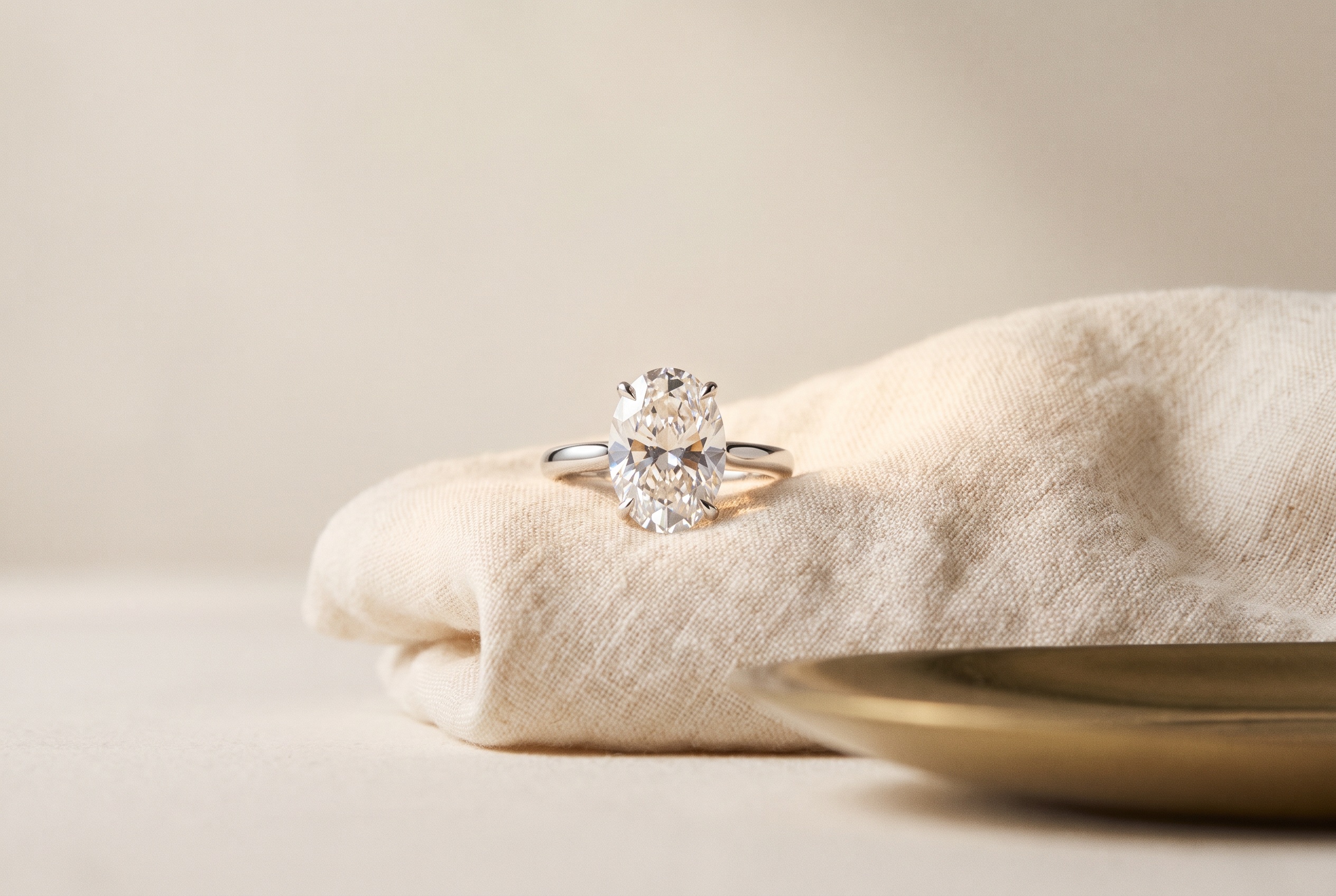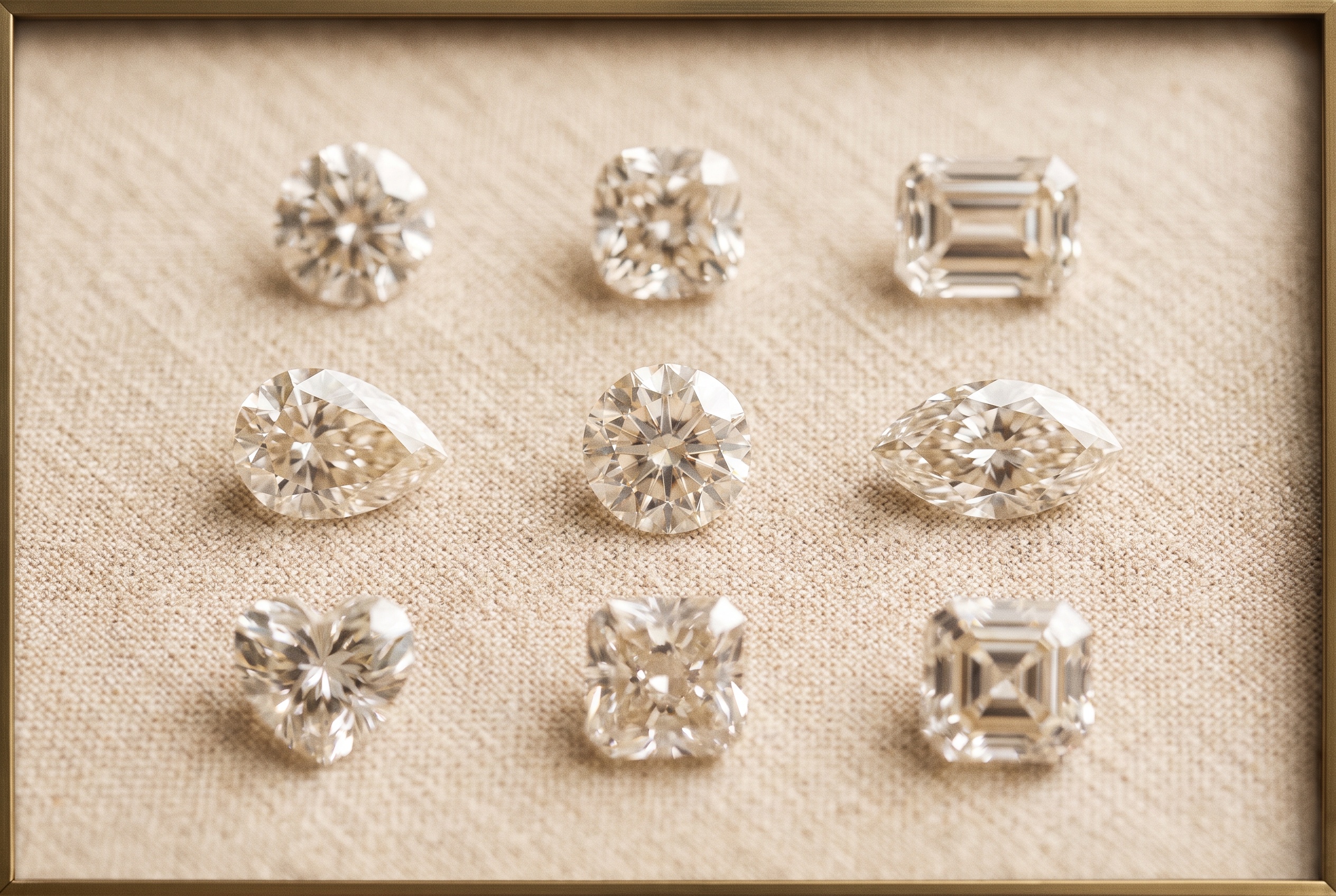

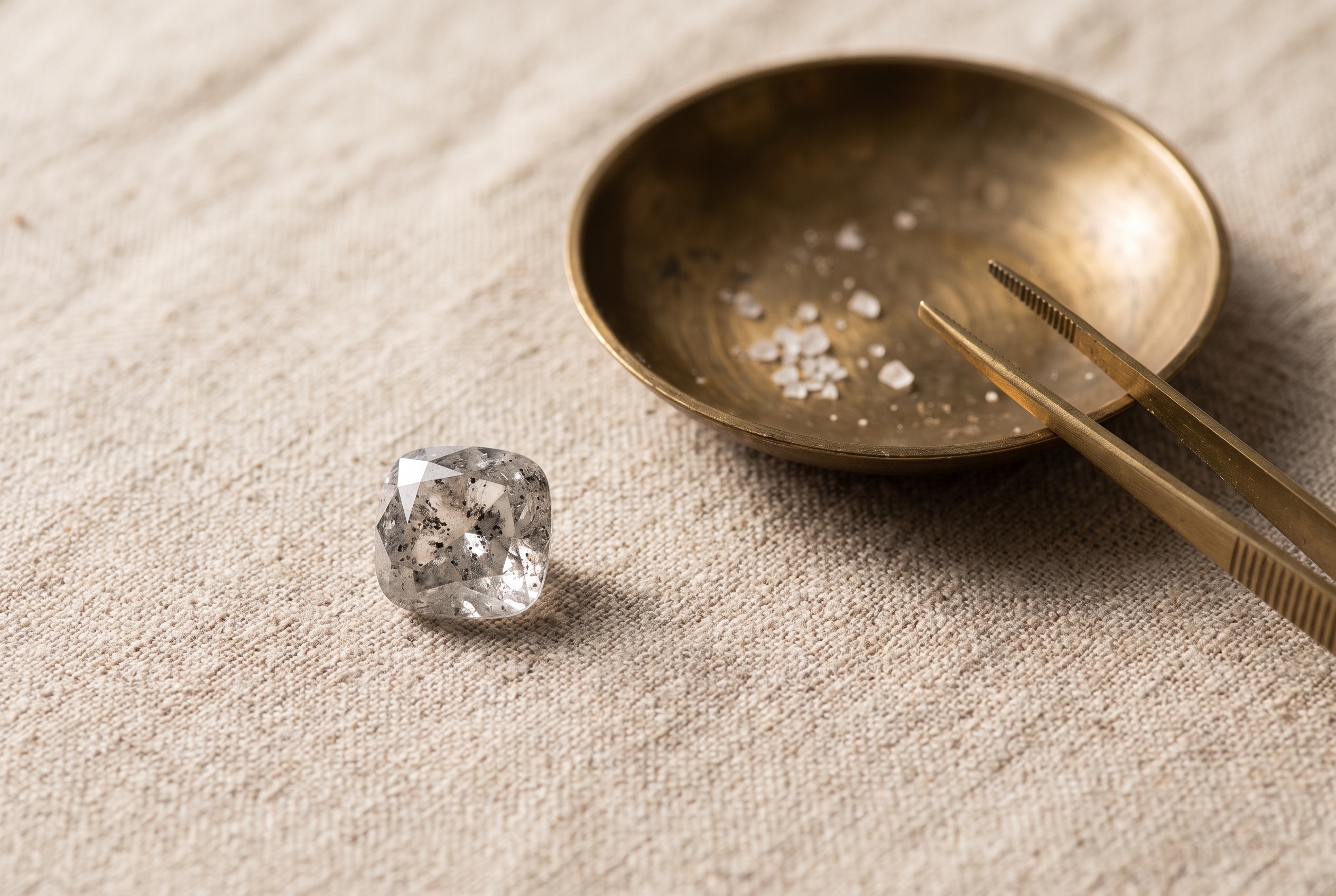
A salt and pepper diamond is a natural diamond with a dense scattering of visible black, grey, and white inclusions distributed throughout the stone, giving it a speckled, galaxy-like appearance instead of the clean, eye-clear look prized in traditional diamond grading. Rather than being graded on how few inclusions a stone has, salt and pepper diamonds are chosen and priced for the character, density, and pattern of those inclusions — making them a fundamentally different buying decision than a standard clarity-graded diamond.
The category has moved from an industrial-grade afterthought to a genuine design trend over the past several years, driven largely by the alternative and non-traditional engagement ring movement, and it now shows up constantly in searches from both end customers researching a one-of-a-kind stone and jewelers trying to figure out how to source, price, and describe it correctly. This guide covers what a salt and pepper diamond actually is, how it differs from a standard clarity-graded stone, why the standard FL-to-I3 scale doesn't really apply the same way, how pricing and cuts work, the honest durability tradeoffs, and how to source the category as a trade buyer.
What Is a Salt and Pepper Diamond?
"Salt and pepper" describes a visual category, not an official grading term. It refers to a natural diamond carrying a heavy concentration of inclusions — typically a mix of black inclusions (carbon, graphite, or other included minerals) and white inclusions (clouds, feathers, and pinpoints) — distributed across the stone in a way that's visible to the naked eye, sometimes densely and evenly, sometimes in dramatic clusters or streaks. The combination of dark and light specks against the diamond's natural brilliance is what gives the category its name and its signature "night sky" or "galaxy" look.
These are not a separate mineral or a treated stone — they're natural diamonds that formed with an unusually high concentration of trace inclusions, the same underlying phenomenon that produces every inclusion in every diamond, just present in far greater volume and visibility than what a jewelry buyer typically encounters in a center stone. What separates a salt and pepper diamond from a diamond that simply grades poorly on the standard clarity scale is framing: the industry increasingly treats the inclusion pattern as the point of the stone, not a flaw to be minimized.
How Salt and Pepper Diamonds Differ From Standard Clarity-Graded Diamonds
Every diamond sold for jewelry can, in principle, be evaluated on the GIA clarity scale — Flawless (FL) down through Included (I1, I2, I3) — which measures the number, size, position, and visibility of inclusions under 10x magnification. Salt and pepper diamonds technically sit at the bottom of that scale, since by definition they carry more visible inclusion material than any grade above I1 would allow. But in practice, the trade rarely markets or prices them using a clarity letter at all.
There are two reasons for that. First, once a diamond is heavily included enough to qualify as salt and pepper, the standard clarity scale stops being a useful differentiator — nearly every stone in the category lands in the same bottom tier (I2/I3), so a clarity letter alone doesn't tell a buyer anything meaningful about how a specific stone actually looks. Second, and more importantly, clarity grading was built around a single premise: fewer and less visible inclusions are better. Salt and pepper buyers are explicitly shopping for the opposite — a specific, visible, individual pattern — so the entire evaluation shifts from a letter grade to direct visual inspection: inclusion density, distribution (even speckling vs. clustered or streaked), contrast between black and white inclusions, and overall symmetry or asymmetry of the pattern.
This is the single most important thing to understand before buying or selling in this category: two salt and pepper diamonds of identical carat weight and shape can look completely different from each other, in a way that two G-color, VS2 round brilliants of the same size generally won't. For a full walkthrough of how standard clarity grading works on typical center stones, see our diamond clarity chart guide — useful context for understanding exactly what salt and pepper stones are opting out of.
A Natural Diamond Category, Not a Lab-Grown One
It's worth being precise here: salt and pepper is a natural-diamond phenomenon. The inclusion pattern is a byproduct of how the individual stone crystallized underground over the course of its formation — trace minerals, fluid, and carbon inclusions get trapped in the crystal lattice as it grows, and a salt and pepper stone is simply one that formed with an unusually dense and visible concentration of that trapped material. It isn't something manufactured or engineered into the diamond.
This matters for buyers comparing natural and lab-grown options. Lab-grown CVD diamonds are grown under controlled conditions specifically aimed at producing clean, high-clarity crystal structure — the growth process is optimized to minimize inclusions, not create a speckled pattern, so a genuine "CVD salt and pepper diamond" isn't a standard, established product category the way natural salt and pepper is. Buyers and jewelers researching the trend should treat it as a natural-diamond story: the appeal is explicitly tied to the idea that no two stones formed the same way, which is a natural-diamond narrative first and foremost.
The Aesthetic and Design Trend Behind Salt and Pepper Diamonds
Salt and pepper diamonds gained real market traction as part of the broader shift toward non-traditional, individualized engagement rings — a movement that pushed back against the idea that a center stone's value is defined by how closely it approaches "perfect" and colorless. Independent and artisan jewelry designers were early adopters, using salt and pepper stones specifically because no two are alike, which fits naturally with a customer who wants a ring that reads as personal rather than a standard catalog choice.
The visual language around the category leans heavily on celestial and organic imagery — "galaxy," "night sky," "storm cloud," "constellation" — descriptions that reframe heavy inclusions as intentional, almost painterly, rather than as defects. That reframing is the core of the trend: the same physical characteristic that would tank a stone's value on the standard clarity scale is the entire draw here. Buyers also frequently cite a sustainability-adjacent angle — using natural diamonds that would historically have been set aside for industrial use or sold at steep discount, rather than diamonds cut specifically to chase a top clarity grade.
The look pairs particularly well with minimalist, modern settings and with antique-inspired cutting styles, which is part of why salt and pepper diamonds are frequently seen alongside other unconventional center-stone choices in the alternative bridal space.
How Salt and Pepper Diamonds Are Priced
Because standard clarity grading rewards the absence of inclusions, a heavily included stone starts from a much lower baseline valuation than a comparable eye-clean diamond of the same carat weight — historically, stones this included were priced closer to industrial or near-industrial rates. That baseline carries over into the jewelry market: salt and pepper diamonds are generally significantly more affordable per carat than a near-colorless, eye-clean diamond of equivalent size, which is a major part of their appeal for buyers who want a larger, more dramatic center stone without a large-stone budget.
That said, pricing isn't flat across the category, and treating every salt and pepper stone as interchangeably cheap misses real variation in the market:
- Pattern rarity commands a premium. A stone with a strikingly symmetrical, high-contrast, or unusually attractive inclusion arrangement — sometimes described as having a "face" or a recognizable pattern — can sell for meaningfully more than a plainer, more randomly speckled stone of the same carat weight, because the buyer is paying for that specific, non-repeatable visual character.
- Cut style adds cost independent of the rough material. Hand-faceted rose cuts, portrait-style flat slices, and other specialty shapes used to showcase inclusion patterns take more cutting skill and time than a standard round brilliant, and that labor shows up in the final price regardless of how "cheap" the rough material was to begin with.
- Carat weight still scales price the way it does for any diamond — a larger salt and pepper stone costs more than a smaller one, even though the per-carat rate stays well below a comparable clarity-graded stone.
For jewelers pricing salt and pepper pieces for retail customers, it's worth setting the expectation early that "affordable" is relative to a clarity-graded diamond of the same size — an exceptional, high-demand pattern in a desirable cut can still be a genuine investment piece, just priced on different criteria than the 4Cs.
Salt and Pepper vs. Standard Clarity-Graded Diamonds vs. Moissanite
Buyers researching salt and pepper diamonds are frequently comparing them against two other options: a traditional near-colorless, eye-clean diamond, and moissanite, a popular diamond alternative. The three sit in genuinely different categories, not just different price points:
| Attribute | Salt and Pepper Diamond | Standard Clarity-Graded Diamond | Moissanite |
|---|---|---|---|
| Material | Natural diamond | Natural or lab-grown diamond | Silicon carbide (not a diamond) |
| Grading approach | Evaluated by inclusion pattern, density, and visual character rather than a clarity letter | Graded FL through I3 on the standard clarity scale | Not graded on the diamond clarity scale; sold by cut grade and near-colorless rating |
| Appearance | Speckled, galaxy-like, unique to each stone | Clean and bright, minimal visible inclusions | Very high fire/sparkle, often more rainbow flash than a diamond |
| Relative price per carat | Generally lower than clarity-graded diamonds; exceptional patterns command a premium | Highest, scales sharply with clarity, color, and cut | Lowest of the three |
| Best for | Buyers wanting a one-of-a-kind natural stone with visible character | Buyers prioritizing brightness, traditional appearance, and resale-recognized grading | Budget-focused buyers prioritizing maximum sparkle over diamond composition |
The practical takeaway: salt and pepper diamonds and standard clarity-graded diamonds are both genuine, natural (or lab-grown, for the clarity-graded side) diamond material — the difference is entirely in how each is evaluated and what a buyer is optimizing for. Moissanite is a different mineral altogether and shouldn't be confused with either diamond category, even though it's often shopped alongside them as a budget-conscious alternative. For buyers who ultimately want the traditional clarity-graded look, our diamond clarity chart guide covers the FL-to-I3 scale in depth, and certified stock across that full range is available through the certified diamonds category.
Common Cuts Used for Salt and Pepper Diamonds
The cutting style matters enormously for a salt and pepper stone, since the entire point is to display the inclusion pattern to best effect — a cut chosen for maximum light return (like a standard round brilliant) isn't necessarily the cut that shows off an interesting inclusion arrangement. Several cutting styles have become closely associated with the category:
| Cut Style | Visual Effect on a Salt and Pepper Stone |
|---|---|
| Rose cut | Flat-bottomed with a faceted dome and no pavilion; the open, low-relief shape lets the inclusion pattern read clearly through the top of the stone with a soft, antique-style glow. |
| Hexagon | Elongated step-cut facets create clean geometric panels that frame the inclusion pattern in distinct sections rather than blending it into overall sparkle. |
| Kite | A four-sided pointed shape often used as a dramatic center stone or as an accent stone flanking a larger center; its angular silhouette suits an editorial, geometric ring design. |
| Pear and marquise | Elongated silhouettes that stretch the inclusion pattern along the length of the stone, often producing a striking, asymmetrical "streak" effect. |
| Portrait/slice cut | A very thin, flat-cut diamond slice, sometimes irregular in outline, that displays the inclusion pattern almost two-dimensionally — popular in minimalist and stackable jewelry. |
| Old mine and old European cut | Antique round-cut styles with a high crown and softer light return; when applied to included rough, the warmer, less clinical brilliance complements a busier inclusion pattern rather than competing with it. |
Because old mine and old European cuts share this same hand-cut, character-forward philosophy, buyers drawn to salt and pepper diamonds frequently end up shopping antique cuts more broadly. Our old mine cut diamond guide covers that category in depth if a rounder, softer antique silhouette is part of the design brief alongside — or instead of — a heavily included stone.
Durability and Structural Considerations: An Honest Note
Diamond remains the hardest known natural material regardless of clarity grade, so a salt and pepper stone's surface scratch resistance is unaffected by its inclusion load — it will still outperform every other gemstone on a Mohs hardness comparison. Durability concerns with heavily included stones are about structural integrity, not surface hardness, and they're worth stating plainly rather than glossing over.
Dense or poorly positioned inclusions — particularly feathers (fracture-like internal breaks) or large inclusion clusters that sit close to the surface or near the girdle — can occasionally create planes of relative weakness in the stone. In a heavily included diamond, this risk is somewhat elevated compared to a clean, eye-clear stone, especially where a cut style leaves thin, exposed edges (kite shapes and portrait slices are more vulnerable than a chunkier rose cut or old mine cut) or where the piece sees daily wear and impact, like an everyday engagement ring versus a pendant or pair of earrings.
This isn't a reason to avoid the category — the overwhelming majority of salt and pepper diamonds hold up perfectly well in normal wear, and jewelers have been setting heavily included natural diamonds for generations without unusual failure rates. But it is a genuine, honest tradeoff worth disclosing to a customer, particularly for a daily-wear engagement ring: a specific stone's inclusion pattern and structure should be visually inspected (or reviewed via close-up photo/video) before setting, and a protective setting style — a bezel rather than exposed prongs, for instance — is a sensible choice for a stone with visible surface-reaching inclusions or a delicate cut. A reputable supplier or cutter should be able to flag a stone with an inclusion pattern that raises structural concerns rather than simply selling on pattern alone.
Salt and Pepper Diamonds in Engagement Ring Design
The center-stone engagement ring market is where salt and pepper diamonds have found their strongest foothold. Because each stone is genuinely one-of-a-kind, they suit customers specifically looking to avoid a mass-market look — a category of buyer that has grown substantially alongside the broader shift toward non-traditional and vintage-inspired bridal jewelry. Salt and pepper center stones pair well with simple, modern band designs (where the stone itself is the visual statement) and with antique-style settings that echo the stone's organic, hand-cut character.
They also show up frequently as accent or side stones — small kite or hexagon-cut salt and pepper diamonds flanking a clearer center stone create contrast and visual texture without committing an entire ring to the heavily included look. For jewelers building out a bridal collection that includes this option, custom settings are typically the path of least friction, since off-the-shelf mountings are usually designed around standard round or oval proportions rather than the more irregular outlines common to salt and pepper rose cuts and slices. Custom engagement ring builds are one of the more natural places to work salt and pepper stones into a finished-jewelry offering.
How to Evaluate a Salt and Pepper Diamond Before Buying
Since the standard 4Cs framework doesn't map cleanly onto this category, evaluation comes down to a different set of practical questions:
- Density and distribution. Is the inclusion pattern evenly speckled across the stone, or concentrated in one area? Neither is objectively better — it's a style preference — but density affects both look and, per the durability note above, structural risk if inclusions cluster near the surface.
- Contrast. Stones with a clear mix of both black and white inclusions tend to read as more visually dynamic ("true" salt and pepper) than stones that lean almost entirely toward one or the other.
- Pattern character. Some stones have symmetrical, almost deliberate-looking arrangements that buyers pay a premium for; others are more randomly scattered, which is typically the more affordable end of the category.
- Cut execution. Regardless of how interesting the inclusion pattern is, facet symmetry, polish, and proportions still affect how much life and brilliance the stone shows around its inclusions — a poorly cut salt and pepper stone can look muddy rather than striking.
- Photos and video under multiple lighting angles. Because no two stones look alike, buying from static specs alone is unreliable — real photography or video, ideally under more than one lighting setup, is the standard way to evaluate a specific stone before committing.
Sourcing Salt and Pepper Diamonds as a Trade Buyer
For jewelers and designers looking to stock the salt and pepper trend, sourcing works differently than ordering standard clarity-graded inventory. Because pattern and character vary stone to stone, curated, hand-selected sourcing — rather than blind parcel buying — generally produces a better retail assortment, particularly for pieces meant to be marketed on their individuality. It's also worth confirming upfront how a supplier documents natural origin and carat weight for these stones, since a full standard clarity-grade certificate isn't always the relevant document for a heavily included stone the way it is for a near-colorless center diamond — origin verification and accurate measurements matter more here than a clarity letter that will simply read at the bottom of the scale regardless of the specific stone.
Guru Diam is a trade-only wholesale supplier — buyers are independent jewelers, designers, and manufacturers, not end consumers — carrying natural diamonds, certified loose stones, and finished jewelry alongside our lab-grown CVD line, with IGI, GIA, and GCAL certification all available depending on the stone and documentation a buyer needs. Antique and character-forward cuts are a particular category strength, which lines up naturally with the rose-cut, hexagon, and kite shapes that define the salt and pepper trend, and cutting, setting, and polishing are handled all in-house. For jewelers building bridal or alternative-stone collections, custom engagement rings are finished in 4-6 days once a setting is selected, and in-stock inventory ships same-day out of both our New York (before 6pm EST) and Los Angeles (before 4pm PST) locations. Trade accounts can review current terms and open an account through the wholesale hub or apply directly via trade partner; jewelers building matched accent-stone sets around a salt and pepper center can also work through our matching pairs category, and bespoke settings for irregular or antique-cut center stones are available through custom jewelry. Unlike our fancy color loose diamonds, which are priced on saturated, intentional hue, salt and pepper stones are priced on inclusion character — two distinct ways a diamond can be valued for something other than the traditional colorless-and-clean standard.
Frequently Asked Questions
What is a salt and pepper diamond?
A salt and pepper diamond is a natural diamond containing a dense, visible mix of black and white inclusions distributed across the stone, giving it a speckled or galaxy-like appearance. It's valued for that unique inclusion pattern rather than for meeting a traditional clarity standard.
Are salt and pepper diamonds real diamonds?
Yes. Salt and pepper diamonds are genuine natural diamonds, chemically and physically identical to any other natural diamond — they simply formed with an unusually high concentration of visible inclusions. They are not a different material, a treated stone, or a simulant.
Are salt and pepper diamonds graded like normal diamonds?
Not in the same way. While they technically fall at the bottom of the standard clarity scale (I2/I3), that letter grade doesn't meaningfully differentiate one salt and pepper stone from another, so the trade evaluates them instead by inclusion density, distribution, contrast, and overall pattern character rather than a clarity grade alone.
Are salt and pepper diamonds cheaper than regular diamonds?
Generally yes — per carat, salt and pepper diamonds are typically more affordable than a near-colorless, eye-clean diamond of the same size, since heavy inclusion load has historically placed them at a much lower baseline value. Exceptionally striking or symmetrical patterns can still command a real premium within the category, however.
Are salt and pepper diamonds durable enough for an engagement ring?
Most hold up well in everyday wear, since diamond remains the hardest natural material regardless of clarity. That said, dense or surface-reaching inclusions can occasionally create structural weak points, so it's worth having a specific stone visually inspected and, where the inclusion pattern reaches near the surface, choosing a protective setting like a bezel.
What's the difference between a salt and pepper diamond and a black diamond?
A black diamond is either heavily and consistently included with dark material throughout (appearing essentially opaque and uniformly black) or, in some cases, color-treated to enhance that dark, uniform appearance. A salt and pepper diamond, by contrast, is translucent with a visible, contrasting mix of black and white inclusions scattered across an otherwise clear stone, rather than one uniform dark color.
Guru Diam is a trade-only wholesale diamond supplier with New York and Los Angeles locations, sourcing natural diamonds, certified loose stones, and finished jewelry alongside a separate CVD lab-grown catalog, with IGI, GIA, and GCAL certification available. Browse certified inventory in the certified diamonds category, source matched accent stones through matching pairs, or start a custom build through custom jewelry. Trade accounts can review terms at the wholesale hub or apply through trade partner.