
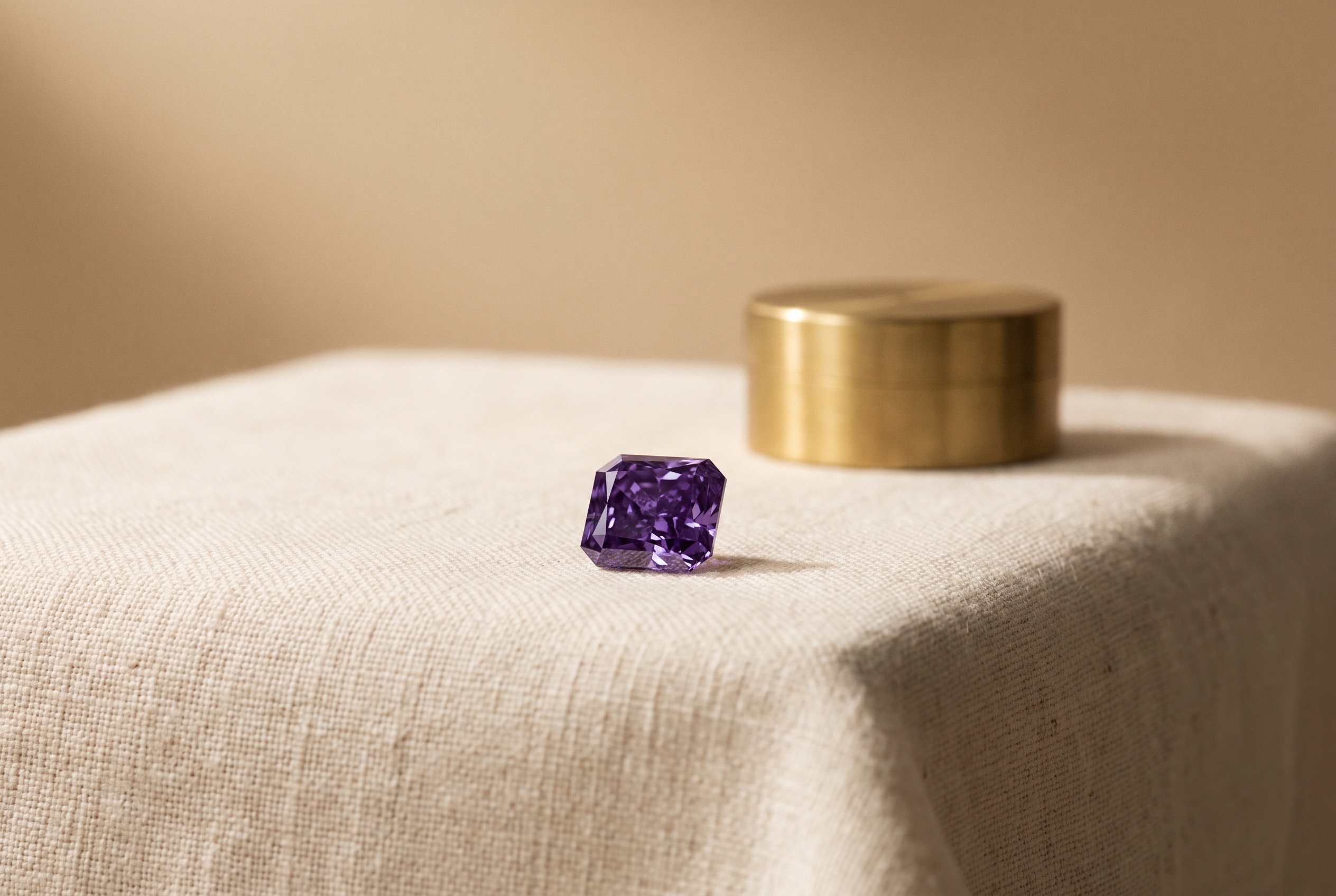
A purple diamond is a diamond colored by a lattice distortion mechanism related to the one responsible for pink diamonds, but with a violet or lavender component strong enough to register as purple rather than pink on a grading report. Genuine, gradable purple diamonds are extremely rare in nature, and — unlike blue, pink, yellow, and green — purple has not become a commercially viable lab-grown category at meaningful wholesale scale, which makes it a color trade buyers hear about far more often than they can actually source.
This guide covers what causes purple diamond color, how rare the category genuinely is, how grading labs classify purple relative to pink, why it hasn't become a stocked lab-grown wholesale category the way other fancy colors have, and what buyers interested in purple's visual character should look at instead, given the category's near-total absence from regular trade inventory.
What Causes Purple Diamond Color
Purple diamond color is generally attributed to the same broad family of causes as pink — a distortion in the crystal lattice known as plastic deformation, produced by intense pressure acting on the diamond during or after its formation deep in the earth. Where pink diamonds show that deformation's effect as a pink hue, a purple diamond shows a comparable distortion combined with an additional violet or lavender component that gemologists don't yet fully explain with the same clarity as the pink mechanism itself. This makes purple's underlying color science less well understood than blue (a well-characterized boron mechanism) or yellow (a well-characterized nitrogen mechanism), and closer in nature to the poorly reproducible extremes that also make true red diamonds so exceptionally rare.
Some purple diamonds also show a secondary grayish or brownish modifier alongside the core violet hue, which a grading report will note explicitly — a distinction that matters for both appearance and price, discussed further below.
Just How Rare Are Purple Diamonds?
Gradable purple diamonds are considered one of the rarer fancy color categories in nature, alongside blue and red, though the category is somewhat larger and better documented than true red. Most gem-quality purple diamonds that do surface are small, and pure, strongly saturated purple with minimal gray or brown modifier is especially uncommon — much of what gets loosely described as "purple" in casual conversation is more precisely graded as purplish-pink, a distinct and more available category that sits closer to pink on the fancy color hue circle.
This scarcity is a major reason purple diamond searches consistently outpace actual purple diamond transactions in the trade — the color generates real curiosity and "rarest diamond colors" content interest without a supply base to match it.
How Grading Labs Classify Purple
GIA's fancy color grading system evaluates hue, tone, and saturation for any colored diamond, and purple occupies a distinct position on the hue circle between pink and violet. A report will specify whether a stone is graded as a primary purple hue, or as purplish-pink, pinkish-purple, or a similar combined-hue designation — the exact wording matters considerably for both how the stone is described in the trade and how it's priced, since a primary "Fancy Purple" grade is treated as meaningfully rarer than a purplish-pink stone that leans closer to standard pink.
Common Purple-Family Grading Terms
- Fancy Purple — purple as the clearly dominant hue
- Purplish-Pink — pink as the dominant hue with a visible purple secondary modifier; more available and more affordable than primary purple
- Pinkish-Purple — purple as the dominant hue with a visible pink secondary modifier
- Grayish-Purple / Brownish-Purple — a purple stone with a muting secondary modifier, generally priced below a cleaner primary purple at comparable saturation
Purple vs. Other Rare Fancy Colors
| Color | Color-Causing Mechanism | Approx. Rarity | Commercially Available as CVD Lab-Grown? |
|---|---|---|---|
| Purple | Lattice distortion related to pink's mechanism, plus a less-understood violet component | Very rare in nature; limited lab-grown supply | Not at meaningful commercial volume |
| Red | Extreme plastic deformation (lattice distortion) | Fewer than ~30 known gem-quality stones worldwide | No |
| Pink | Plastic deformation (lattice distortion) | Extremely rare in nature; more available via lab growth | Yes |
| Blue | Trace boron in the crystal lattice | Extremely rare in nature; reliably reproducible via lab growth | Yes |
| Yellow | Trace nitrogen in the crystal lattice | The most common fancy color, in both natural and lab-grown material | Yes |
Why Purple Hasn't Become a Wholesale Lab-Grown Category
Blue, pink, yellow, and green have each become commercially viable lab-grown categories because their underlying color mechanisms are well enough understood to reproduce deliberately and repeatably during or shortly after CVD growth — controlled boron introduction for blue, controlled nitrogen introduction for yellow, and controlled growth-plus-treatment processes for pink and green. Purple's violet component sits in a similar position to red: gemologists can describe the phenomenon in stones that already exist without yet being able to reliably engineer it on demand at consistent quality and volume. Some limited lab-grown purple and purplish-pink material does exist, generally as a byproduct of pink-diamond production processes rather than a dedicated, consistently reproducible purple category, which is why it hasn't reached the same commercial wholesale scale as the four colors most suppliers actively stock.
Where Natural Purple Diamonds Have Been Found
Natural purple and purplish-pink diamond production has historically been associated with a small number of mining regions, most notably Australia's now-closed Argyle mine, which was, for decades, the single largest source of natural pink and purplish-pink diamonds in the world before its closure in 2020. Argyle's output included a meaningful share of the purplish-pink and, more rarely, primary purple stones that have entered the market and auction record over the past several decades. This is documented mining and gemological history, publicly available in industry references, rather than a claim about any current supplier's sourcing — and it's also part of why purple and purplish-pink diamond supply, already limited, has tightened further since Argyle's closure removed its primary natural source from the market.
Media and Search Interest vs. Market Reality
Purple diamonds generate a disproportionate amount of online search interest and "rare diamond color" content relative to their near-total absence from regular commerce — a gap worth naming directly, since it's easy for that search interest to create a false impression that purple diamonds are simply an unusual but obtainable premium category, the way an exceptional natural pink or blue might be for a well-capitalized buyer. In practice, primary-hue purple functions closer to a specialty auction category than a market segment with active listings, comparable sales data, or a reliable sourcing path a typical retailer or designer could follow. Recognizing that gap up front is useful context for anyone whose interest in purple diamonds started from a search query rather than direct trade experience with the category.
Purple in Jewelry Design: What a Buyer Actually Gets
For the rare buyer who does secure a genuine purple or purplish-pink diamond, design and setting considerations mirror those used for pink diamonds generally. White metals — platinum and white gold — provide a neutral backdrop that lets a cooler, more violet-leaning stone read at full strength, while rose gold can either complement or compete with the stone's own hue depending on how close the metal's tone sits to the diamond's secondary modifier. Because genuine purple-family stones at any meaningful size are typically one-of-a-kind acquisitions rather than inventory pulled from a matched lot, a jeweler working with one is usually designing a bespoke setting around that specific stone's individual color and proportions rather than sourcing to a standard specification the way a buyer would for a more commercially available fancy color.
Purple Diamonds in History and Notable Sales
Documented purple diamonds are far less numerous in gemological and auction literature than pink, blue, or yellow stones, though a handful of notable natural purple and purplish-pink diamonds have set record prices at major auction houses over the past two decades, reflecting the category's scarcity as much as any single stone's individual characteristics. These are documented historical and auction facts about specific, individually known stones, not a claim about current market availability or any supplier's own inventory.
How to Spot Purple Diamond Misrepresentation
Because purple diamonds are rare and frequently searched, the term occasionally gets applied loosely to stones that aren't genuinely graded purple at all. Buyers should treat a few patterns with caution:
- Purplish-pink stones marketed simply as "purple." A genuinely rarer primary "Fancy Purple" grade is a distinct designation from purplish-pink on a lab report — a seller's own descriptive language isn't a substitute for the specific hue designation the lab actually assigned.
- Treated stones misrepresented as naturally colored. Certain treatments can push a diamond's apparent color toward violet or purple tones; a legitimate lab report will disclose treatment status clearly.
- Purple gemstone simulants sold as "purple diamonds." Because true purple diamonds are so scarce, some sellers use the term loosely for purple-colored simulants or unrelated purple gemstones. A genuine diamond of any color should come with independent lab verification confirming it is, in fact, diamond.
The reliable check in every case is an independent grading report from a major lab (GIA, in particular, for natural fancy color) that explicitly states both the stone's identity as diamond and its specific hue designation, not a seller's descriptive language alone.
What to Look at Instead of Purple
Buyers drawn to purple diamonds out of curiosity or a desire for an unusual, high-saturation fancy color are, in practice, most often directed toward one of two paths: a deeply saturated purplish-pink or pinkish-purple diamond, which shares much of purple's visual character and rarity appeal while being modestly more available in both natural and limited lab-grown supply, or a strongly saturated Fancy Vivid pink diamond, which shares the same underlying lattice-distortion color mechanism and offers real rarity and visual intensity backed by genuine commercial wholesale supply. Guru Diam carries CVD lab-grown blue, pink, yellow, and green as certified loose stones and calibrated melee — the four fancy colors where lab-grown production has become genuinely commercially viable at wholesale scale — and does not stock purple, red, champagne, or cognac diamonds as part of its fancy color line, consistent with where the current lab-grown fancy color market actually exists.
Tone and Saturation Nuance Within the Purple Family
As with any fancy color, hue is only one part of a purple-family diamond's grade — tone (how light or dark the color is) and saturation (how strong or intense the color is) both shift the stone's overall appearance and price independently of whether it's designated primary purple, purplish-pink, or pinkish-purple. A lighter-toned stone in the purple family can appear almost lavender or lilac, a look some designers specifically favor for a softer, more wearable everyday piece, while a darker-toned, highly saturated stone reads as a much bolder, more dramatic statement color. Because so few purple-family stones of any tone or saturation come to market in a given year, buyers evaluating one typically can't rely on a broad comparison set the way they could with a more available color like pink or blue — direct evaluation of the individual stone against its own grading report, rather than against a general sense of "what purple diamonds usually look like," is the more reliable approach.
Common Misconceptions About Purple Diamonds
- "Purple diamonds are just pink diamonds with a different marketing name." Pink and purple are distinct hue designations on a grading report, and a genuine primary "Fancy Purple" grade is rarer and generally priced differently than a purplish-pink stone, even though the two share an underlying color mechanism.
- "Any lavender-colored diamond is a purple diamond." Lavender is a description of tone and saturation within the broader purple-to-pink hue family, not a separate grading category — a lab report will still classify the stone under a specific hue designation like Fancy Light Purple or light purplish-pink rather than using "lavender" as an official grade.
- "Because purple diamonds are so rare, any supplier offering one at a normal price is a good deal." Given how limited genuine purple diamond supply actually is, a stone priced well below what the category's real scarcity would suggest warrants closer scrutiny of the accompanying lab report and the specific hue designation actually printed on it, rather than being treated as a straightforward bargain.
Purple's Relationship to Pink: A Buyer's Guide to the Overlap
Because purple and pink share an underlying color mechanism, a meaningful share of stones marketed loosely as "purple" in consumer-facing content are, on an actual grading report, classified as purplish-pink — a designation with a real, gradable presence in Guru Diam's own pink diamond inventory. A buyer specifically drawn to purple's cooler, more violet character rather than a warmer, more classic pink should ask directly whether a candidate stone's grading report shows purple or pink as the dominant hue, since the visual and pricing difference between the two designations can be substantial even at similar overall saturation. This is a useful practical starting point for a buyer whose interest in "purple diamonds" is really an interest in the cooler, more violet end of what the pink diamond category already offers at genuine wholesale scale.
A Note on Diamond Rarity and Buyer Expectations
Purple diamonds are a useful case study in the gap between how a color performs in search interest and how it performs as an actual sourceable product. The honest, defensible position for any buyer or retailer is straightforward: purple is a genuinely fascinating, well-documented rarity worth understanding, but it is not, at present, a category that supports a normal wholesale sourcing relationship the way blue, pink, yellow, and green do. Framing purple content around that reality — rather than implying a buyer can simply place an order the way they would for any other fancy color — serves both the buyer's expectations and the retailer's credibility better than treating the category as a routine, if premium, line item.
Sourcing Fancy Color Diamonds Wholesale
While purple itself isn't a category any wholesale supplier realistically stocks at scale, Guru Diam carries certified CVD lab-grown fancy color diamonds in blue, pink, yellow, and green — the colors where reproducible lab growth exists commercially — as loose stones at 0.30ct and above and as calibrated melee for production-scale jewelry work, all with a choice of IGI, GIA, or GCAL certification. In-stock fancy color inventory ships same-day from Guru Diam's New York and Los Angeles locations. Trade buyers can browse current stock in the fancy color loose diamonds category, review certified inventory generally in certified diamonds, or apply for a trade account through trade partner. Current terms are available at the wholesale hub. For a deeper look at the fancy color that shares purple's underlying color science, see our pink diamond buying guide, and for background on the equally rare true-red category, our red diamond guide covers similar ground.
Frequently Asked Questions
Why are purple diamonds so rare?
Purple diamond color comes from a lattice distortion related to the mechanism that causes pink, combined with an additional violet component that gemologists don't yet fully understand or reliably reproduce. That combination of factors makes genuine, primary-hue purple diamonds one of the rarer fancy colors in nature.
Can you buy a lab-grown purple diamond?
Only in very limited supply. Unlike blue, pink, yellow, and green — all reliably produced as CVD lab-grown fancy color diamonds at commercial scale — purple's less-understood color mechanism means lab-grown purple material exists mostly as a byproduct of pink-diamond production rather than a dedicated, consistently available wholesale category.
What's the difference between a purple diamond and a purplish-pink diamond?
A grading report designates one hue as dominant. "Fancy Purple" means purple is the primary hue; "purplish-pink" means pink is the dominant hue with a visible purple secondary modifier. Purplish-pink stones are meaningfully more available than primary purple diamonds, in both natural and lab-grown supply.
How much does a purple diamond cost?
Because genuine primary-hue purple diamonds are so rare and infrequently traded, there's no standardized per-carat pricing the way there is for more available colors. Purplish-pink diamonds, being closer to standard pink in both mechanism and availability, follow pricing closer to the broader fancy pink market.
Can purple diamonds be certified?
Yes. GIA is the primary reference lab for natural fancy color grading and will specify the exact hue designation — Fancy Purple, purplish-pink, pinkish-purple, or a similar combined designation — on the report, which is the detail that matters most when evaluating a candidate stone.
If I want a purple diamond, what's actually available to buy?
A deeply saturated purplish-pink or pinkish-purple diamond shares much of purple's visual character and rarity appeal while being more available, and a strongly saturated Fancy Vivid pink diamond shares the same underlying color mechanism at genuine commercial wholesale scale. Guru Diam carries CVD lab-grown pink diamonds as certified loose stones and calibrated melee, but does not stock a dedicated purple category, consistent with where the lab-grown fancy color market currently exists.
Where do natural purple diamonds come from?
Historically, the largest source of natural purplish-pink and, more rarely, primary purple diamonds was Australia's Argyle mine, which closed in 2020. Since then, natural supply of purple-family diamonds has tightened further, reinforcing that the category isn't something a typical retailer or buyer can source at any reliable, ongoing volume.
Do any wholesale suppliers stock purple diamonds as regular inventory?
Essentially no wholesale supplier stocks true primary-hue purple diamonds as regular, repeatable inventory — the underlying color science hasn't reached the same reliable, commercial-scale reproducibility as blue, pink, yellow, or green. Buyers interested in the color are generally better served looking at a well-saturated purplish-pink or pinkish-purple stone, which is genuinely available through suppliers who carry pink as a stocked fancy color line.
Guru Diam is a trade-only wholesale diamond supplier with locations in New York and Los Angeles, carrying CVD lab-grown fancy color diamonds in blue, pink, yellow, and green, alongside natural diamonds, antique and standard cuts, and finished jewelry, with IGI, GIA, and GCAL certification available. Browse current fancy color inventory in the fancy color loose diamonds category or apply for a trade account through trade partner.